



News
Subsidy: Fuel price to hit N720/litre, marketers suspend imports



Oil marketers, on Sunday, indicated that the cost of Premium Motor Spirit, popularly called petrol, would rise to between N680/litre and N720/litre in the coming weeks should the dollar continue to trade from N910 to N950 at the parallel market.
They also hinted that dealers seeking to import PMS were being forced to put the plans on hold due to the scarcity of foreign exchange to import the commodity.
The warning came barely one week after the local currency crossed the N900/dollar ceiling, with the naira selling at over 945/dollar at the parallel market on Friday.
Oil dealers said the CBN Importers and Exporters official window for foreign exchange, which boast of a lower exchange rate of about $740/litre, had remained illiquid and unable to provide the $25m to $30m required for the importation of PMS by dealers.
This, they said, had led to the suspension petrol importation by dealers who were initially eager to import the commodity.

Operators said that the only marketer, Emadeb, who imported the commodity recently, was now finding it tough to recoup its investment due to the depreciation of the naira.
Senior officials of major oil dealers in separate interviews on Sunday, said PMS price hike was imminent unless the local currency appreciates in the coming weeks.
Leaders of the Major Oil Marketers Association of Nigeria of Nigeria, Independent Petroleum Marketers Association of Nigeria, and Petroleum Products Retail Outlets Owners Association of Nigeria said there was a need for the Federal Government to intervene to address the crisis.
The National Public Relations Officer, Independent Petroleum Marketers Association of Nigeria, Chief Chinedu Ukadike, explained that the price of petrol was now driven by the fluctuations in forex, hence Nigerians should expect a hike soon.
Asked whether oil marketers were considering an increase in petrol price, he replied, “Once there is a slack in the naira against the dollar, there is going to be an effect. The demand and supply of forex is a key factor. We should also understand that it is not only petroleum products that use forex.
“Other manufacturers who import one thing or the other are also searching for dollars. So, the surge for dollars has continued to increase. So now that the dollar is hitting N910 to N940, and approaching N1,000, you should expect to buy PMS at the rate of N750/litre.
“It is simple mathematics, once the dollar is going up, have it in mind that the prices of petroleum products would definitely increase because the products are dollar-driven.”
Ukadike stated that oil marketers were still sourcing dollars from the parallel market, as the CBN’s Importers and Exporters official window was illiquid.
“Nigerians should brace for a price regime of between N680 to N720 if the exchange rate stays around N910 to N950/$, but the price is going to hit N750 once the dollar rises to N1,000.
“This is because marketers still source dollars from the parallel market, and not only marketers but virtually all importers in Nigeria. There is no subsidy any more on petroleum products, so you expect the cost to fluctuate with the dollars,” he stated.
The IPMAN PRO also stated that the Nigerian National Petroleum Company Limited was still the major importer of petrol into Nigeria, though another importer, Emadeb, imported the commodity recently.
“NNPC is still the major importer for now. One other company, Emadeb, imported products recently, but because this product is being sold in naira, getting back their funds is another issue since the naira keeps depreciating, while PMS imports is in dollars.
“This is why it is often difficult to go back and buy again as an independent importer. That is the problem we are facing,” Ukadike stated.
On when Nigerians would start seeing the price increase, he said, “NNPC is like the sole distributor of petroleum products now, so once you see a change in the price of petrol at their outlets, then other marketers will implement it.”
By Okey Maduforo, Awka
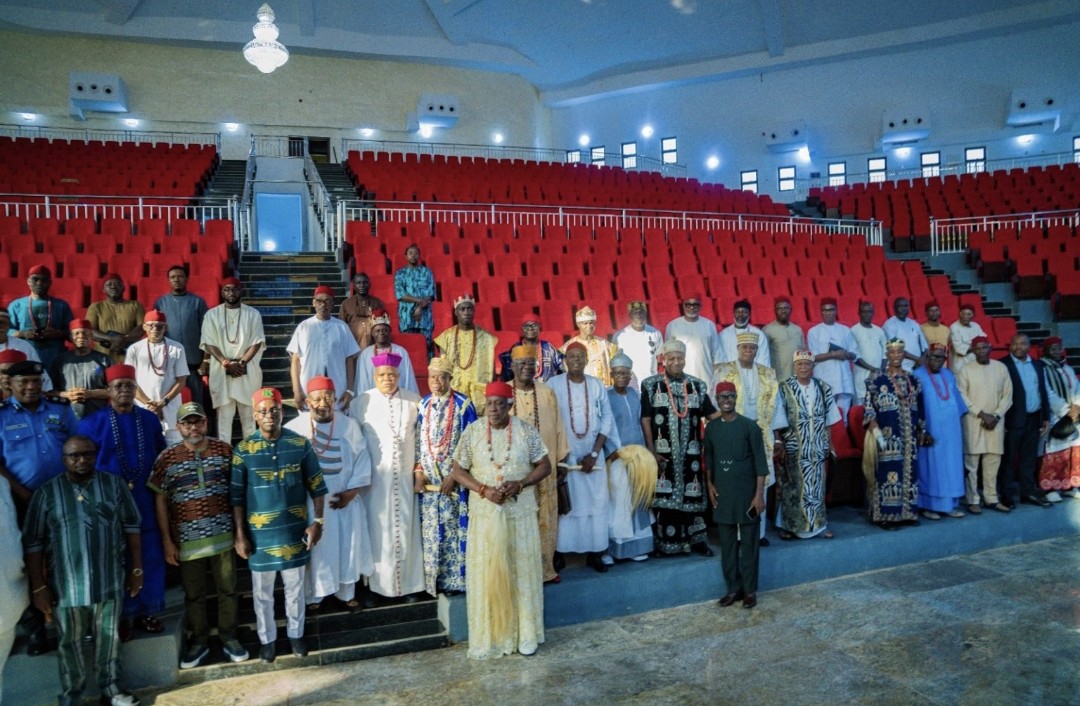
The indefinite curfew imposed on Aguleri and Umuoba Anam communities in Anambra State following their recent communal clash remains in force as Governor Chukwuma Soludo has set up a Judicial Commission of Inquiry to investigate the crisis.
The governor also ordered an immediate ceasefire, warning that the state government would not tolerate further lawlessness or any breach of peace and order in the two communities.
The directives followed a conflict-resolution meeting convened by the governor at the Light House, Awka, which was attended by traditional rulers and other leaders from the affected communities.
At the meeting, the stakeholders agreed that both communities must lay down their arms and embrace peace.
In a statement by the Chief Press Secretary to the governor, Christian Aburime, Soludo lamented the loss of lives and destruction of property, saying the violence was inconsistent with his administration’s vision of a peaceful and prosperous Anambra State.
“Opening the deliberations, the Governor decried the tragic loss of lives and the widespread destruction of properties, emphasizing that such lawlessness is entirely unacceptable to the administration,” the statement said.
Soludo also directed security agencies to maintain a round-the-clock presence in the affected areas to ensure compliance with the ceasefire.
The governor assured the parties that the government would remain “firm, fair, and uncompromising” in its pursuit of lasting peace and justice.
Community leaders, including Igwe Michael Idigo and Hon. Fidel Okafor, condemned the violence, particularly the killing of a minor and an unarmed person from Umuoba Anam, as well as the retaliatory destruction of the historic Idigo Palace.
They called for an immediate end to the hostilities and the prosecution of those responsible for the violence.
Speaking as an observer on behalf of the Umueri community, retired Justice Charles C. Okaa appealed for restraint and urged the state government to enforce the 1982 Supreme Court judgment on boundary matters involving Umueri and Aguleri as part of efforts to achieve a lasting resolution.
The stakeholders also agreed on the immediate cessation of hostilities, prosecution of perpetrators, accountability for community leadership and the rebuilding of the destroyed Idigo Palace.
Condemning the destruction of the traditional palace as an attack on the heritage of the state, Soludo announced that the state government would assist in rebuilding it and restoring its traditional dignity.
The governor also established a Judicial Commission of Inquiry to examine petitions, complaints and historical grievances connected to the crisis. The commission is expected to submit its comprehensive report within four months.
However, the state government has yet to make public the names and number of members of the commission.
Meanwhile, the indefinite curfew remains in force as security agencies continue to maintain heightened surveillance in the affected communities.

For Squadron Leader Ahamefule Aham Man-Ugwueje, Monday was supposed to be another routine day of duty. Instead, the Nigerian Air Force pilot lost his life in the crash of an ATR-42 aircraft in Igbokoda, Ondo State, barely 16 days after his wedding.
Man-Ugwueje had married Flight Lieutenant Damilola Adekunle on September 19, 2026, in an elaborate ceremony in Abuja.
The couple exchanged vows at the Redeemed Christian Church of God, The Masters Place, Utako, Abuja, before proceeding to the Nigerian Army Conference Centre, Asokoro, for the reception.
Details of the wedding were contained in the couple’s invitation and posts shared by vendors who participated in the ceremony. A videographer, Beejay Creates, also shared footage from the event, identifying the couple as bride Damilola and groom Ahamefule.
Man-Ugwueje, who was identified by the Nigerian Air Force as the co-pilot of the ill-fated aircraft, was among the five crew members and 20 passengers who died in the crash.
The aircraft, NAF 931, was on a routine mission from Benin to Lagos when it crashed in a swampy area around Igbokoda in Ilaje Local Government Area of Ondo State.
The Nigerian Air Force on Tuesday confirmed that all 25 people on board died in the accident and released the names of the victims.
The Chief of the Air Staff, Air Marshal Sunday Kelvin Aneke, described the incident as a deeply painful moment for the Nigerian Air Force and the nation, while commiserating with the families, friends and colleagues of the victims.
The Air Force also ordered a comprehensive investigation into the circumstances surrounding the crash.
Man-Ugwueje, whose Facebook profile listed Umuahia, Abia State, as his hometown and Abuja as his current city, was the son of retired Group Captain Man-Ugwueje.
Meanwhile, Ondo State Governor, Lucky Aiyedatiwa, said no survivor was found after security agencies, emergency responders and local residents joined the search for victims at the crash site.
Aiyedatiwa said he was informed of the crash at about 10:30am on Monday after receiving a call from the chairman of Ilaje Local Government Area.
According to the governor, residents across the river from the Nigerian Navy base in Igbokoda heard a loud sound and subsequently saw the aircraft plunge into the swamp.
He said Navy personnel initially exercised caution while trying to determine whether there was a fire or explosion before moving towards the crash site.
“When they noticed that it’s just an accident, they didn’t see any sign of fire. So they moved in, trying to see if they could rescue the people,” the governor said.
Personnel of the local emergency management agency, residents and members of the Amotekun Corps later joined the rescue operation.
However, the search ended in tragedy after authorities confirmed that there were no survivors.
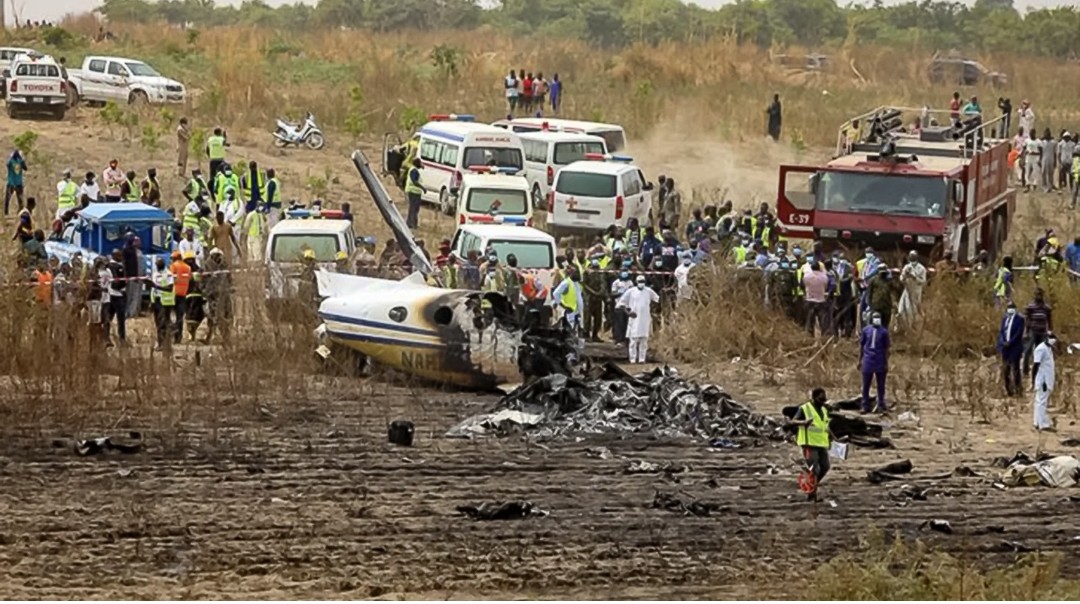
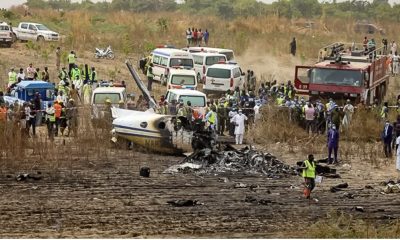
A Nigerian Air Force ATR-42 aircraft on a routine flight from Benin City to Lagos crashed into a swamp in Igbokoda, Ilaje Local Government Area of Ondo State, on Monday after reportedly disappearing from radar shortly after take-off.
The aircraft, with tail number NGR 931, lost communication with air traffic controllers at about 9:13am. A senior air traffic controller, who spoke anonymously, said repeated attempts to re-establish contact with the aircraft failed.
According to the source, personnel around Okitipupa later reported hearing a loud bang suspected to have come from the crash site.
The Minister of Aviation and Aerospace Development, Festus Keyamo, confirmed that the aircraft had disappeared from radar and that all efforts to raise it on radio were unsuccessful.
He later announced that the wreckage had been located near the Naval Base in Igbokoda.
Keyamo said 32 people—25 passengers and seven crew members—were on board.
The Nigerian Air Force confirmed the crash, saying the aircraft was on a routine mission from Benin to Lagos and that search-and-rescue operations had commenced in coordination with relevant authorities.
The crash site, located in a swampy creek, proved difficult to access, with military personnel, emergency responders and local fishermen joining the rescue operation.
Governor Lucky Aiyedatiwa said no survivor had been found as of Monday evening, although the authorities had yet to officially announce a death toll.
The governor said rescuers recovered parts of the aircraft, identification cards and military uniforms from the site.
President Bola Tinubu expressed sadness over the incident and directed the Nigerian Air Force to immediately commence a thorough investigation into the cause of the crash.
Investigators are expected to examine the wreckage, flight path, weather conditions, maintenance records and air traffic control communications. Efforts were also being made to recover the aircraft’s flight recorder, which could provide crucial information about its final moments.
The cause of the crash remains unknown.
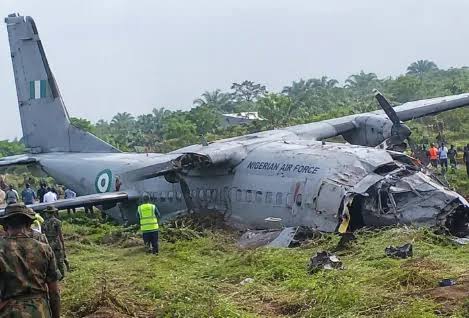
Ondo State Governor, Lucky Aiyedatiwa, has disclosed that no survivor has so far been found following the crash of a Nigerian Air Force aircraft in Igbokoda, Ilaje Local Government Area of the state.
Aiyedatiwa made this known during an interview with Channels Television on Monday, saying local residents, security personnel and emergency responders had searched the crash site without finding anyone alive.
The governor said he received information about the incident at about 10:30am after the chairman of the local government contacted him.
According to him, residents living across the river from the Nigerian Navy base in Igbokoda heard a loud sound and subsequently saw the aircraft plunge into a swampy area.
He explained that personnel of the Nigerian Navy initially stayed back to determine whether the crash had triggered a fire or explosion before proceeding to the site.
“When they noticed that it’s just an accident, they didn’t see any sign of fire. So they moved in, trying to see if they could rescue the people,” Aiyedatiwa said.
He added that officials of the state emergency management agency, local residents and personnel of the Amotekun Corps later joined the search and rescue operation.
“But from the information we got, no single life was saved up to this moment. They could not see any living soul that was in that aircraft,” the governor said.
Aiyedatiwa said searchers recovered parts of the aircraft, including pieces of the wings, identification cards and military uniforms, which helped establish that the aircraft was a military plane.
“But they saw the ruins, some of the wreckage from the wings of the aircraft, you know, some ID cards, I was told, and then uniform. That was when they knew it was a military aircraft,” he said.
The governor described the incident as a painful development, noting that the crash occurred not only in Ondo State but also in his home local government area.
“So it’s a sad situation today. And we’re all really, really agreed as a Nigerian. And also it happens in my own state, not just my state, even in my own local government where I’m from,” he said.
Aiyedatiwa expressed sympathy for the military personnel involved, describing them as officers assigned to protect the territorial integrity of Nigeria.
The Nigerian Air Force had earlier confirmed that an ATR-42 aircraft with tail number NGR 931 crashed in Igbokoda while on a routine mission from Benin, Edo State, to Lagos.
Minister of Aviation and Aerospace Development, Festus Keyamo, said preliminary information indicated that 25 passengers and seven crew members were on board the aircraft.
The Nigerian Air Force said search and rescue operations were ongoing following the crash.

“If You Have Evidence Against Stanley Mbam, Charge Him; Otherwise, Release Him” — Oganiru Izzi
A socio-cultural organisation of Izzi extraction, Oganiru Izzi, has challenged Ebonyi State Governor, Chief Francis Ogbonna Nwifuru, to either release the state’s sacked Commissioner for Works, Mr Stanley Mbam, or charge him before a competent court if the government has credible evidence of wrongdoing against him.
The group said the continued detention of the former commissioner without a formal charge raises concerns about due process, constitutional rights and the rule of law.
The leader of Oganiru Izzi, Mr Godwin Mbam, made the demand while speaking with correspondents of National Issue Newspapers at the Crack Department of the Ebonyi State Police Command in Abakaliki.
Mbam condemned what he described as the prolonged detention of Stanley Mbam without allowing a court to determine whether he had committed any offence.
He challenged the state government to produce evidence if it believes the former commissioner committed a criminal offence.
“If there is credible evidence against him, charge him to court and let the court decide. If there is no case against him, he should be released,” Mbam said.
He also appealed to the Ebonyi State Police Command to uphold the Constitution and resist any pressure that could result in unlawful detention.
Vanco Flyover: “We Will Reveal the Full Details”
Mbam also issued a three-day challenge to Governor Nwifuru, declaring that if the former commissioner was not released or charged to court, his organisation would make public what it described as the “full details” of the Vanco Flyover project.
According to him, the proposed disclosure would address issues surrounding the project, including its funding, payments, contractual arrangements and other financial details.
“We will let the world know the full details of the Vanco Flyover and how the funds were utilised,” he warned.
He further challenged the state government to demonstrate transparency by making relevant documents concerning the project available to the public.
“What About the Alleged ₦1.5 Billion Forfeiture?”
The Izzi group also questioned what it described as the selective application of the state government’s anti-corruption campaign.
Mbam referred to allegations involving an account reportedly frozen by the Economic and Financial Crimes Commission (EFCC) and an alleged ₦1.5 billion forfeiture to the Federal Government.
He questioned why, according to him, the governor had allegedly not taken similar action if the facts surrounding the matter warranted it.
Mbam stressed that he was not opposed to the fight against corruption but insisted that any anti-corruption campaign must be comprehensive, transparent and applied equally.
“If Governor Nwifuru wants to fight corruption, let him fight it holistically. Nobody should be targeted while other serious allegations are ignored,” he said.
“If Nwifuru Says He Knows Nothing, We Will Produce the Facts”
Mbam further challenged Governor Nwifuru to publicly state whether he was aware of alleged corruption issues within the Ministry of Works.
“If Nwifuru publicly claims that he is unaware of corruption in the Works Ministry, I will make public the facts available to me. The facts will shock the state,” he declared.
He insisted that the matter should not degenerate into a political vendetta, arguing that the appropriate place to determine criminal liability is a court of law.
According to him, the people of Ebonyi State deserve clear answers concerning the Vanco Flyover and other issues involving public funds.
“Everybody Should Be Subject to the Law”
The Oganiru Izzi leader maintained that the controversy should be resolved through transparency, documentary evidence and due process.
“If there is a case, charge him. If there is no case, release him. The government cannot claim to be fighting corruption while abandoning the principles of justice and the rule of law,” he said.
Mbam warned that failure to address the issues could compel the organisation to make further disclosures concerning the Vanco Flyover and other matters it considers to be in the public interest.

-

 Politics2 days ago
2027: Odii Will Not Step Down, Says Spokesperson
-
 News2 days ago
No Survivor Found Yet in Ondo Air Crash — Aiyedatiwa
-

 News4 days ago
Sacked Works Commissioner: Release or Charge Him to Court, Oganiru Izzi Challenges Nwifuru
-

 EverydayNews Telescope2 days ago
Nkalagu Cement Factory: Project or 2027 Political Promise?
-
 News2 days ago
How NAF Plane Vanished From Radar Shortly After Take-Off, Crashes In Ondo Swamp
-
 Crime4 days ago
Police Deploy DIG, Two Commissioners to Rescue 20 Abducted Prospective Corps Members
-
 Crime1 day ago
Court Denies Alleged Fake Pastor Bail as Seven Witnesses Await Trial
-

 News1 day ago
NAF Crash Claims Pilot 16 Days After Wedding