



News
Strike: Labour seeks Tinubu’s intervention as FG says economy under threat



President Bola Tinubu to personally intervene in the ongoing negotiation over minimum wage to avert the indefinite strike action scheduled to start on Monday.
This is as the Federal Government warned that the national minimum wage being demanded by labour could destabilise the economy.
Organised Labour had given a May 31, 2024 ultimatum on the new minimum wage.
On Tuesday, May 28, talks between the Federal Government and Organised Labour broke down after the government and the Organised Private Sector raised their offers to N60,000.

The government added N3,000 to its initial offer of N57,000 proposed last week, making the total figure N60,000. It was dismissed by labour at the meeting.
Several impeccable sources from both the Trade Union Congress and Nigeria Labour Congress, who spoke to Sunday PUNCH, stressed that the Federal Government and the organised private sector should not expect labour to accept anything less than a six-digit offer.
The unions said the government was not serious about the negotiations, adding that the shift from N48,000 to N57,000 was too meagre to be considered as ‘shifting grounds’.
They noted that the promise made by President Bola Tinubu when he became President and on Workers’ Day was that the Federal Government would pay a living wage, adding that N57,000 did not fall into that category.
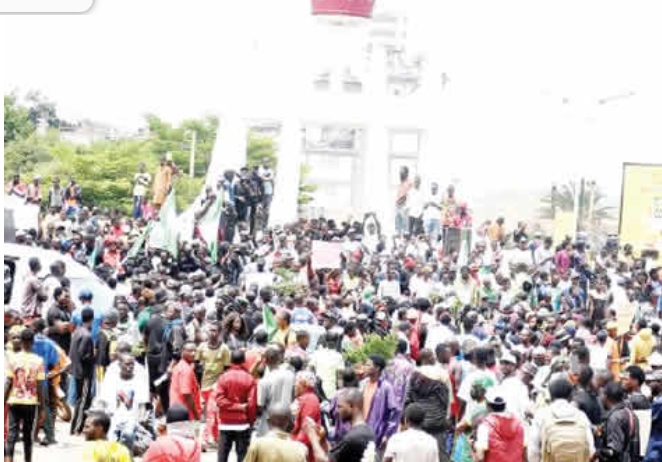
On Friday, the Nigeria Labour Congress declared an indefinite nationwide strike, starting on Monday, June 3, 2024, due to the Federal Government’s refusal to increase the proposed minimum wage above N60,000.
The President of the NLC, Joe Ajaero, announced that the strike followed failed negotiations between the government and organised labour.
Despite the government’s final offer of N60,000, which included a recent increase from an initial N57,000, the labour unions found the proposal insufficient.
At the meeting, labour revised its demand, reducing it by N3,000 from the initial N497,000 proposed last week, setting the new proposal at N494,000.
Despite this concession, the negotiations remained deadlocked as the government maintained its offer of N60,000, leading to the declaration of a nationwide indefinite strike.
However, speaking to our correspondent in a telephone interview in Abuja on Saturday, the Minister of State for Labour, Nkeiruka Onyecheoja, said the strike was unnecessary, urging the Organised Labour to return to the negotiation table for more discourse.
She said, “The government is still willing to accommodate them, to listen to words of reason and knowledge, and to know that the president is committed to the Nigerian workers and Nigerian citizens, all of us.”
Speaking on the N494,000 set by Labour, the minister noted that the government won’t be able to breathe.
She said, “By the time you do adjustments or anything, that means there won’t be…in short, the government will not breathe anymore.
“The government’s position is that the strike is unnecessary. If you say people are hungry, we know that people are hungry and that’s why we can increase the minimum wage, even when it’s not convenient.”
Also reacting to the decision of Organised Labour to embark on strike in protest, the Minister of Information and National Orientation, Mohammed Idris, said the sum of N494,000 national minimum wage demanded by organised labour, which cumulatively amounts to the sum of N9.5 trillion bill yearly was capable of destabilising the economy and jeopardiing the welfare of over 200 million Nigerians.
Speaking at a news conference in Abuja, the minister said the offer of N60,000 minimum wage by the Federal Government, which translates to a 100 per cent increase on the existing minimum wage of 2019, had been accepted by the Organised Private Sector, which is a member of the tripartite committee of the negotiations team.
Idris, according to a statement released by his Special Assistant (Media), Rabiu Ibrahim, on Saturday night stated further that labour’s demand could destabilise the economy, bring further hardship to over 200 million Nigerians and cause job loss in the private sector.
He said, “The Federal Government’s new minimum wage proposal amounts to a 100 per cent increase on the existing minimum wage. Labour, however, wanted N494,000, which amounted to 1,547 per cent on the existing wage.
“The sum of N494,000 national minimum wage which Labour is seeking would cumulatively amount to the sum N9.5tn bill to the Federal Government of Nigeria.
“Nigerians need to understand that whereas the FG is desirous of ample remuneration for Nigerian workers, what is most critical is that President Tinubu will not encourage any action that could lead to massive job loss, especially in the private sector, who may not be able to pay the wage demanded by the Organised Labour.”
The Minister said even though Labour was keen on the take-home pay of about 1.2 million workers, the Federal Government was concerned about the welfare of over 200 million Nigerians based on its guiding principle of affordability, sustainability, and the overall health of the nation’s economy.
Idris appealed to the Organised Labour to return to the negotiating table and embrace reasonable and realistic wages for their members.
He said because of the commitment of the Tinubu administration to the welfare of workers, the wage award of 35,000 for federal workers would continue until a new national minimum wage was introduced.
However, speaking with Sunday PUNCH, the National Treasurer of the Nigeria Labour Congress, Hakeem Ambali, urged Tinubu to personally intervene in the ongoing minimum wage negotiation by calling all parties to a parley to avert the strike, insisting that the offer of N60,000 from the government was unreasonable, considering the current rate of inflation.
Ambali insisted that it was the duty of the Federal Government to avert the strike, adding that the government had a whole month to negotiate a reasonable minimum wage with labour to prevent industrial action.
He said, “For a whole month, we have been going forward and backward between FG and Labour. Labour shows concern and perseverance. You will recall that on May 1, Labour gave an ultimatum that we would embark on strike after the last day of May. Those in government should have done what was needed to avert this. As of today, labour has taken a decision.”
Ambali, however, noted that President Tinubu could avert the strike if he personally intervened in the negotiation with Organised Labour.
He said, “Within 24 hours, the FG and Mr President can avert the strike if he (Tinubu) shows direct interest. He has the final say. The buck stops at his table.”
He also disagreed with the argument that the FG had done enough by doubling the minimum wage from N30,000 to N60,000, noting that the rate of inflation was much higher than the announced increament.
He said, “If the PMS price was increased by 100 per cent, then the 100 per cent increment would have been reasonable. What is the percentage ratio? It was N165 to N700. All the macroeconomic indices pointed to it that the inflation rate had increased dramatically. For Nigerian workers to be able to cope with this inflationary trend, something reasonable should have been done. When you look at 2019 when that N30,000 (minimum wage) was agreed upon; you will agree that it was looking good with the dollar equivalent then. What is the dollar equivalent of this N60,000 now? Is it not $45 or so?
“If you look at that, you will realise that the government still has the obligation to give a reasonable wage to workers. From our calculations, to feed a family of six, a worker needs N90,000. So, what are they saying? The government should show understanding. A well paid worker is an asset to national growth and development.”
Ambali also disagreed that the demand for higher minimum wage by labour would affect the economy negatively, stressing that it would rather have positive impacts.
He said, “Once workers are well paid, the purchasing power will increase. All the local manufacturing companies, the SMEs, and patronage will increase, and that will grow the economy. The government will also generate huge amounts of taxes from the workers.
“If the government shows that they are reasonable, Labour is ready to move. But, the peanut increment is as if we are not serious. Anything lower than six digits may not be reasonable. As an insider in the negotiation, I know that Labour will shift ground, but there must be commitment and seriousness from the government.”
Also reacting to the demands by Organised Labour, the Special Adviser on Information and Strategy to the President, Bayo Onanuga, said the Organised Labour should be reasonable in its demand, except if it was using the declared strike to display its frustration over the loss of the Labour Party in the 2023 presidential election.
“Labour leaders need to be reasonable and not paralyse our economy unless they are using the strike as a continuous ventilation of the frustration they had when their party lost the 2023 presidential election.
“Can you pay your driver or cleaner N500,000 a month? Let’s not befuddle the issue. The government is not saying it is not reviewing minimum wage, it is saying it will pay something affordable and sustainable. N500,000 or N615,000 is out of it,” Onanuga wrote on his verified X handle on Saturday.
No money to stock food– Workers
State and federal civil servants on Saturday had mixed reactions to the indefinite strike declared by Organised Labour in response to the Federal Government’s refusal to raise the proposed minimum wage from N60,000.
Speaking in separate interviews with Sunday PUNCH yesterday, some civil servants said even though the indefinite strike was long overdue due to the government’s insensitivity to labour’s demands, they did not have money to stock food in their homes ahead of the industrial action.
Speaking with our correspondent, a vice-principal in a public secondary school in Ibadan, Oyo State, identified only as Mr Olowojebutu, noted that even though the indefinite strike was long overdue due to the Federal Government’s mindlessness to workers’ welfare, he did not have money to buy foodstuff when the industrial action takes off on Monday.
He, however, said he was prepared for the strike, praying that the two parties (Organised Labour and the Federal Government) would eventually reach a befitting agreement after the strike.
Also, another civil servant, Joseph Ade, said surviving during the strike might be tough for his family, because he did not have any money to buy foodstuffs, because the notice of the industrial action was short.
“They should do everything to stop this strike. We don’t have money, the cost of fuel is high, food prices are high and now strike. They want to worsen the situation of Nigerians, and God will not allow them,” he said.
A government worker identified as Omobola Atilade in the Federal Capital Territory also supported the strike, but said she might not buy enough foodstuffs for the period due to lack of adequate funds.
“On this strike, I agree with the NLC because the Federal Government failed to reach an agreement with them. How will the Federal Government say they can only pay N60,000 as the minimum wage during this economic crisis?
“On Sunday, I will go to the market to buy some food items because no one can tell how long the strike will take. Although, I don’t have enough money to do that, I will manage the little one I have with me,” she told Sunday PUNCH.
However, a public servant based in Anambra State, Chima Uchenna, dismissed the seriousness of the announced strike, saying he didn’t believe it would affect businesses.
He said, “I don’t take NLC seriously. I am not bothered about the strike and I have no intention of stocking up because of it. The market will still be on as usual. I think it will be a sketchy strike.”

News
Enugu Youths Accuse Enugu Forest Guard Commander of Using AK-47-Wielding Gunmen to Harass Residents, Aid Land Grabbers

……calls for immediate removal of Dr. Olasoji as Enugu Forest Guard Commander.
Enugu Youths under the aegis of Ugwuaji Youths for Peace have accused the Enugu State Commander of the Forest Guard, Dr. Akinbayo O. Olasoji, of using AK-47-wielding unknown gunmen to harass residents and investors and allegedly aid land grabbers around some of their forests.
The youths also accused Olasoji of allegedly using forest guard personnel to intimidate residents and facilitate illegal land dealings in the area. They called on the police, military and other security agencies to intervene urgently, investigate the reported activities of the armed men and ensure the safety of residents and investors.
In a statement signed by the group’s chairman, Barr. Ogbodo Nwobodo, and sent to newsmen in Enugu on Friday, October 16, 2026, the youths categorically rejected Olasoji’s account of the reported incident at one of their forests on Friday, insisting that it did not reflect their people’s experiences.
They condemned what they described as the harassment and intimidation of residents by unidentified armed men allegedly operating under the guise of forest guard personnel.
According to the group, “Our people are wondering when forest guards started wielding AK-47 rifles and using their positions to intimidate residents over land matters. These men have subjected our people to intimidation, while our women have been beaten by these armed individuals. This is unacceptable and must not be allowed to continue in any civilised society.”
The group accused Olasoji of failing to address the concerns of residents over the activities of the armed men, questioning whether forest guard personnel were being used to facilitate land grabbing and illegal land transactions in the community.
“We find it disturbing that Dr. Olasoji, who should be promoting peace and ensuring that those under his command operate within the law, would issue a statement portraying the situation in a manner that fails to address the suffering of our people. We therefore call on him to exercise caution and desist from actions and statements capable of escalating tension in Ugwuaji.”
They further questioned the authority under which armed men carrying AK-47 rifles were operating without clearly identifiable uniforms, demanding that their identities, affiliations and chain of command be established.
The group called on the Commissioner of Police, Enugu State Command; the General Officer Commanding, 82 Division, Nigerian Army; the Garrison Commander; the Department of State Services; and other relevant security agencies to investigate the activities of the armed men, the reported assaults on women and other residents, and allegations of land grabbing and illegal land dealings in the area.
It also urged the authorities to examine the photographs and video recordings attached to the statement to establish the facts and ensure that anyone found to have engaged in unlawful activities was brought to justice.
“Available pictures and video recordings provided should be examined to establish the facts and ensure that those wielding AK-47 rifles are arrested and brought to justice,” the statement said.
The youths further called for the immediate removal of Olasoji as Forest Guard Commander in Enugu State, alleging that he had been involved in a series of actions inimical to peace and the vision of Governor Peter Ndubuisi Mbah. They urged the government and security agencies to protect residents and investors, investigate alleged land grabbing and illegal land transactions, restore confidence in the security of the area and prevent further tension.
The group also appealed to youths and residents to remain peaceful and avoid taking the law into their own hands, insisting that justice, accountability and the protection of lives and property must remain paramount.
The statement reads,
PRESS STATEMENT
Date: 16 October 2026
CALLS FOR URGENT SECURITY INTERVENTION AS AK-47-WIELDING UNKNOWN GUNMEN DISGUISE AS FOREST GUARDS, HARASS RESIDENTS AND INVESTORS AND ALLEGEDLY AID LAND GRABBERS
We Ugwuaji Youths, under the aegis of Ugwuaji Youths for Peace, wish to categorically reject the account presented by Dr. Akinbayo O. Olasoji, Deputy Commissioner of Police (Rtd) and Commander of the National Forest Guard, Enugu State Command, concerning the incident at the Enugu Smart City Estate forest on Friday, October 16, 2026. His account does not reflect what our people have experienced, and we consider it necessary to set the record straight and call on the appropriate authorities to intervene before the situation deteriorates.
We condemn the harassment and intimidation of our people by unidentified armed men operating in Ugwuaji under the guise of forest guard personnel. These men have been moving around our area without identifiable uniforms, carrying AK-47 rifles and creating fear among residents. Our people are wondering when forest guards started wielding AK-47 rifles and allegedly using their positions to intimidate residents over land matters. These people have subjected our people to intimidation, while our women have been beaten by these armed individuals. This is unacceptable and must not be allowed to continue in any civilised society.
We find it disturbing that Dr. Olasoji, who should be promoting peace and ensuring that those under his command operate within the law, would issue a statement portraying the situation in a manner that fails to address the suffering of our people. He did not explain the activities of the armed men operating in our forests or address the concerns of residents over alleged land grabbing and illegal land dealings in the area. We therefore call on him to exercise caution and desist from actions and statements capable of escalating tension in Ugwuaji.
We are particularly concerned that unknown gunmen are being presented as forest guard personnel and allegedly being used to intimidate and harass our people in connection with land matters. We wonder how individuals carrying AK-47 rifles can be allowed to operate around our community without clearly identifiable uniforms and without residents being able to establish their identities, authority and chain of command. We demand that the authorities establish who these armed men are, who deployed them and under whose authority they are operating, including whether their activities are connected to alleged land grabbing and illegal land transactions.
We wish to make it clear that Ugwuaji is not a lawless community, and our people will not accept a situation in which armed individuals move around our area, harass residents and beat women without consequences. We are particularly concerned about allegations that forest guard personnel are being used to intimidate residents and investors over land and to facilitate the activities of land grabbers. We respect legitimate security agencies and recognise their constitutional responsibility to protect lives and property. However, the presence of firearms does not place anyone above the law, and no security-related title should be used to justify intimidation, violence or illegal land dealings.
We therefore call on the Commissioner of Police, Enugu State Command; the General Officer Commanding, 82 Division, Nigerian Army; the Garrison Commander; the Department of State Services; and other relevant security agencies to intervene immediately. We demand a thorough investigation into the activities of these armed men, the identities of the individuals parading as forest guard personnel, the assault on our women and other residents, and allegations of land grabbing and illegal land transactions around some of our forests.
We further call on the police and military authorities to verify the identities and official affiliations of all armed persons operating around Ugwuaji lands and forests using the pictures attached to this release. The authorities should also investigate whether any personnel under Dr. Olasoji’s command have been involved in intimidating residents or investors to advance private land interests.
Available pictures and video recordings provided should be examined to establish the facts and ensure that those wielding AK-47 rifles are arrested and brought to justice.
We also call for the immediate removal of Dr. Olasoji as Forest Guard Commander, Enugu State, as he has allegedly been involved in a series of actions that are inimical to peace and the vision of His Excellency, Governor Peter Ndubuisi Mbah. We urge the state government and relevant security agencies to investigate the allegations of land grabbing and illegal land dealings and ensure that forest guard personnel are not used to advance private interests at the expense of our people.
We urge our youths and residents to remain peaceful and avoid taking the law into their own hands. Our demand is for justice, security and respect for the rights of our people. We will continue to speak against intimidation, violence and alleged land grabbing while insisting that the government and security agencies fulfil their responsibility to protect our community.
Signed:
Barr. Ogbodo Nwobodo
Chairman,
Ugwuaji Youths for Peace.

Another tragic road accident has reportedly claimed lives at the notorious Ugwu Onyeama axis in Enugu State, involving a passenger bus and a trailer.
Eyewitnesses said the collision left the bus completely crushed, with an unspecified number of people feared dead.
The driver of the trailer was reportedly still trapped in the wreckage as of the time of filing this report.
Welders were said to have been deployed to the accident scene with specialised equipment in an attempt to cut through the wreckage and rescue the trapped driver.
The exact number of fatalities and injured persons could not be immediately ascertained.
The latest incident has again raised concerns over the recurring fatal accidents along the Ugwu Onyeama stretch of the Enugu-Onitsha Expressway.
Further details are expected as rescue operations continue.
See video
News
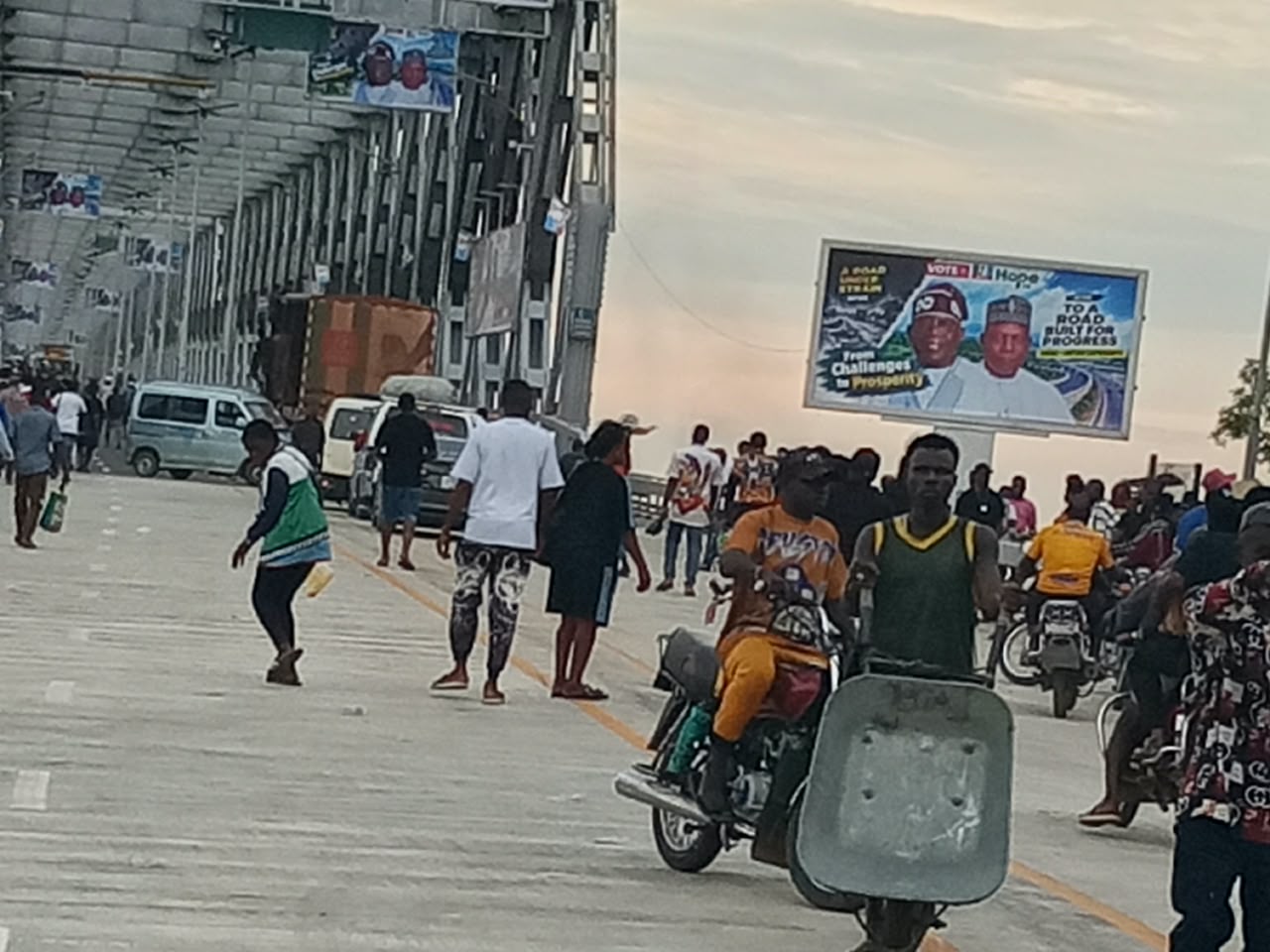
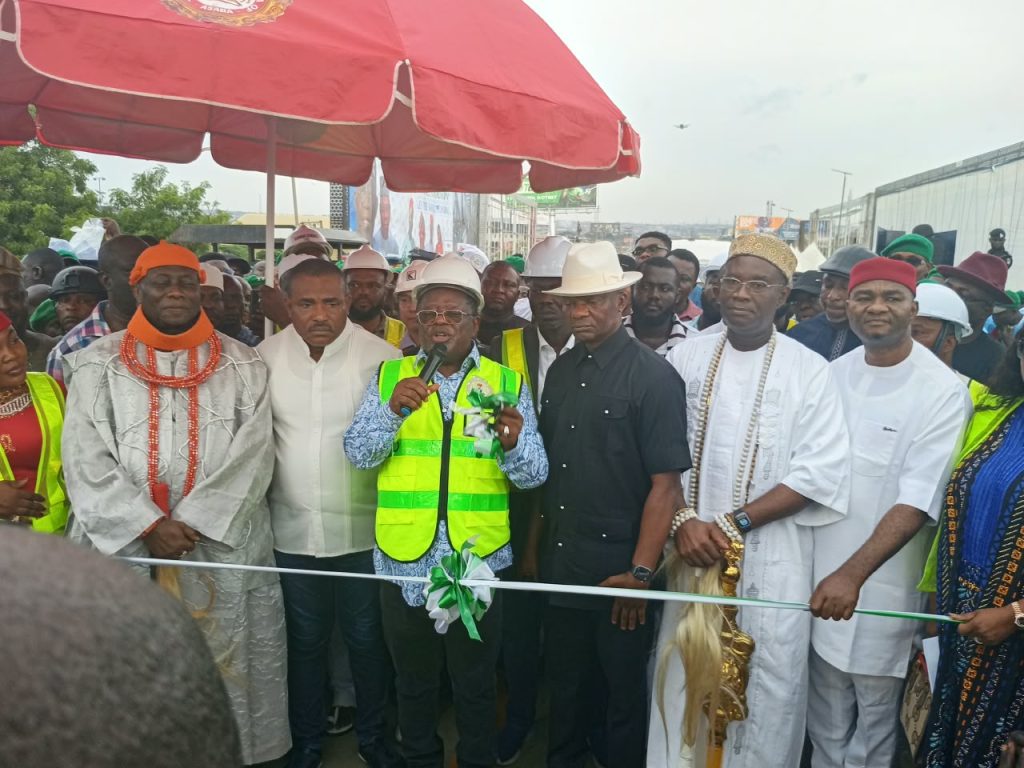
FG Reopens First Niger Bridge After 38 Days of Rehabilitation, Umahi Rallies Support for Tinubu’s Re-election
News
NCDMB Tasks Anambra Journalists on Local Content Advocacy, Accountability in Oil and Gas Sector
By Okey Maduforo, Awka
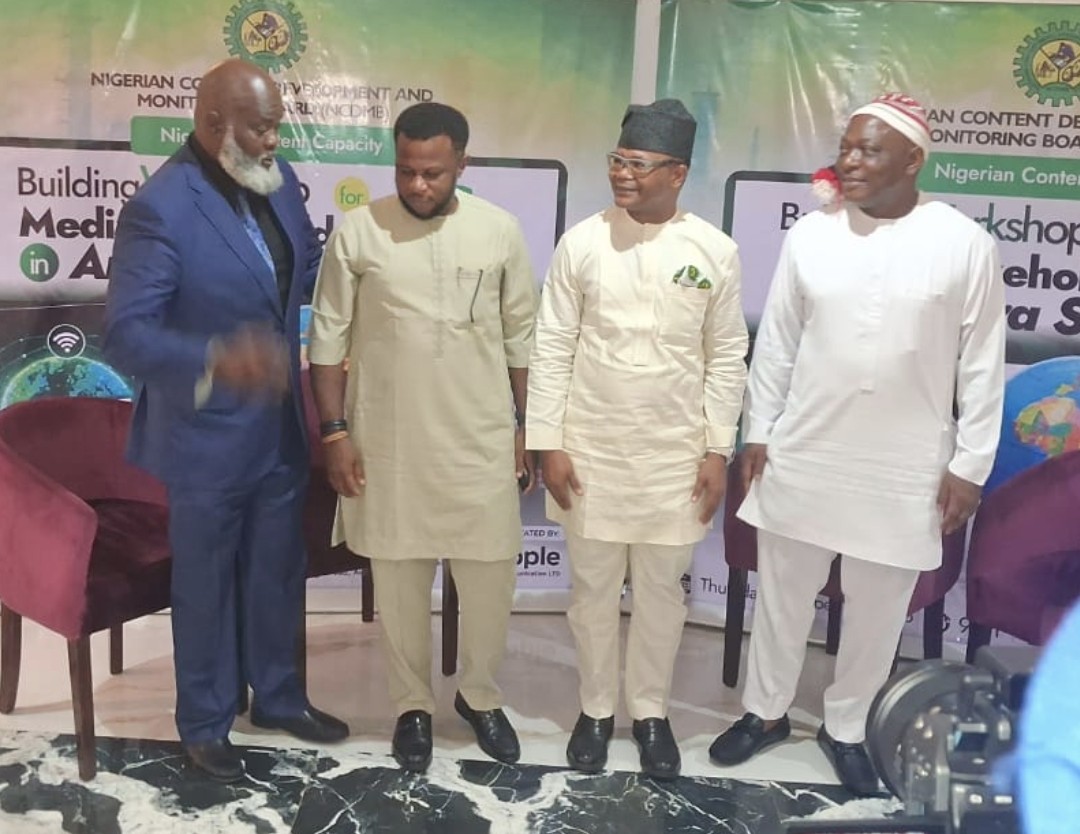
The Nigerian Content Development and Monitoring Board (NCDMB) has charged journalists in Anambra State to intensify advocacy for local content development in Nigeria’s oil and gas industry while holding operators accountable for compliance with statutory requirements.
The Board also urged media practitioners to give greater prominence to Nigerian Content issues to enable more indigenous businesses, professionals and communities to take advantage of opportunities in the oil and gas value chain.
The General Manager, Corporate Communications of NCDMB, Dr. Obinna Ezeobi, gave the charge on Thursday during the Nigerian Content Media Stakeholders Workshop for Editors and Journalists in Anambra State, held at Golden Tulip, Awka.
Ezeobi described the media as a critical stakeholder in the implementation of the Nigerian Oil and Gas Industry Content Development (NOGICD) Act, stressing that journalists must go beyond routine reportage to set agendas, educate the public and monitor compliance with local content obligations.
He urged journalists to leverage their roles as agenda-setters and gatekeepers to draw attention to developments in the industry, highlight opportunities for Nigerian businesses and professionals, and demand accountability from oil and gas operators.
According to him, the workshop was designed to deepen journalists’ understanding of the Nigerian Content framework, improve the quality of industry reportage and strengthen collaboration between the Board and media organisations in Anambra State.
Ezeobi described Anambra as a strategic location for the engagement, noting that the state is recognised as an oil-producing state and ranks as the second-highest oil producer in the South-East, with an estimated production capacity of 3,000 barrels per day.
He also identified the presence of prominent indigenous oil and gas entrepreneurs, including Emeka Okwuosa of OilServ and Ernest Nnaemeka Azudialu-Obiejesi, founder of the Nestoil Group, as further evidence of the state’s significance in Nigeria’s energy industry.
The NCDMB spokesman maintained that journalists must acquire adequate knowledge of the local content law and the Board’s interventions to effectively inform residents about opportunities available to businesses, professionals and host communities.
He recalled that since the enactment of the NOGICD Act and the establishment of NCDMB in 2010, the Board had consistently recognised the media as a strategic partner in advancing Nigerian Content development.
Ezeobi explained that the Act mandates the Board to deploy media platforms, communication channels and stakeholder engagement initiatives to promote the development of indigenous capacity in the oil and gas sector.
He further noted that the Board’s 10-year Nigerian Content Strategic Roadmap, developed in 2017, identified collaboration and stakeholder engagement as key enablers of its implementation.
He credited the media with helping to elevate Nigerian Content into a national development agenda, adding that Nigeria’s achievements in the sector had influenced other African countries to adopt similar policies.
According to him, effective communication and stakeholder engagement have equally contributed to NCDMB’s recognition as the best federal agency on four consecutive occasions in the rankings of the Presidential Enabling Business Environment Council (PEBEC).
Speaking on the economic significance of Nigerian Content, Ezeobi explained that the policy seeks to develop indigenous human and material capacity, strengthen local businesses, enhance technical expertise and expand Nigeria’s industrial base.
He said the objective was to ensure that competent Nigerian companies increasingly supply goods and services required by the oil and gas industry while indigenous professionals acquire the technical skills necessary to compete effectively.
He added that strengthening local manufacturing and productive capacity would help retain greater economic value within Nigeria, create employment opportunities and stimulate the growth of domestic enterprises.
The General Manager disclosed that the Board had introduced several programmes and interventions to achieve these objectives, assuring participants that the workshop would provide further insights into its mandate, achievements and available opportunities.
He said the event would also feature a panel discussion on Nigerian Content and community development, as well as a session on award-winning journalism and building a purpose-driven career, particularly in technical sectors such as oil and gas.
Ezeobi expressed optimism that the engagement would equip journalists in Anambra with the knowledge required to produce more comprehensive industry reports, promote local participation and strengthen accountability among operators.
He encouraged participants to engage actively in the discussions, ask critical questions, challenge assumptions and share their professional experiences to ensure that the workshop achieved its objectives.
The workshop forms part of NCDMB’s broader stakeholder engagement initiatives aimed at promoting awareness of its mandate, programmes and opportunities under the Nigerian Content framework.

By Okey Maduforo, Awka
The political cold war between the All Progressives Congress (APC) and the ruling All Progressives Grand Alliance (APGA) in Anambra State has deepened ahead of the 2027 general elections, following growing disagreements over the parties’ support for President Bola Ahmed Tinubu’s second-term ambition.
At the centre of the controversy is APGA’s political slogan, Progressives Are Working Together, which the Anambra APC alleges is a smokescreen designed to hijack the President’s re-election campaign structures in the state.
The tension has been further heightened by the appointment of Governor Charles Soludo as a member of Tinubu’s Presidential Campaign Council, a development APC stakeholders in the state have criticised as a slight on loyal party members.
The disagreement came to the fore at a meeting of the Anambra State Elders Council in Awka, where members faulted Soludo’s directive urging APGA supporters to vote for Tinubu in the presidential election while backing APGA candidates in the National and State Assembly elections.
Speaking at the meeting, APC chieftain Bunty Onuigbo questioned the political wisdom of the arrangement, arguing that it could undermine the President’s chances of securing a supportive majority in the National Assembly.
“Where is the sense in voting for Tinubu of APC and voting for APGA in the rest of the general elections?
“If Tinubu becomes President without his party members having a majority in the House of Representatives and Senate, it amounts to political suicide,” he said.
Onuigbo alleged that the APGA-led government was exploiting the purported progressive alliance to take control of political activities meant for the APC in Anambra.
He recalled that during a recent visit by First Lady Senator Oluremi Tinubu, APC stakeholders in the state were allegedly sidelined while APGA officials dominated the arrangements.
“An APGA member was appointed minister, alongside other appointments, when we have qualified APC members who can serve in those positions. Today, the leader of another political party has been appointed to the Presidential Campaign Council even though he is not a member of our party,” he lamented.
APGA Rules Out Alliance Beyond Presidential Election
However, the Anambra State Chairman of APGA, Barrister Ifeatu Obi-Okoye, dismissed suggestions of confusion within his party, insisting that its understanding with the APC was strictly limited to Tinubu’s re-election.
“Let me state categorically that there is no other political or electoral collaboration with the APC beyond the re-election of President Bola Ahmed Tinubu, and that is it.
“For the senatorial elections, they are on their own. For the House of Representatives elections, they are on their own, and for the State House of Assembly elections, they are equally on their own.
“There is no contractual or political alliance between APGA and APC concerning the other elections,” he declared.
Obi-Okoye maintained that APGA would field candidates for all three senatorial districts, 11 House of Representatives seats and 30 State House of Assembly constituencies in Anambra.
According to him, the party’s decision to support Tinubu does not amount to surrendering its electoral interests or political identity to the APC.
He also dismissed fears that the arrangement could confuse voters, describing the Anambra electorate as politically sophisticated and capable of making independent choices across party lines.
“Our people know what to do, and you will see it play out on election day. There will be no confusion of any form or manner.
“Besides, voters will be given separate ballot papers for the presidential, senatorial and House of Representatives elections. Confusion could only arise if all three elections were conducted using a single ballot paper,” he explained.
Despite APGA’s clarification, the disagreement has exposed growing cracks in the political understanding between the two parties, particularly over who controls Tinubu’s campaign machinery in Anambra.
With the 2027 elections approaching, APGA candidates now face the delicate task of campaigning for an APC presidential candidate while simultaneously seeking to defeat APC candidates contesting other elective positions in the state.
The unfolding situation raises fresh questions about the sustainability of the much-publicised progressive alliance and whether the competing political interests of both parties can be reconciled ahead of the polls.
Tighten the opening for sharper impact
Make the political conflict more balanced
Remove repetition and streamline quotations

-

 Politics1 day ago
UNPOPULAR? Abati Seeks Confirmation of Ebonyi Gov’s Name During Interview With Anyichuks
-
 Politics5 days ago
2027: Enugu Alleges Opposition Plot to Import Armed Thugs, Bandits
-
 Opinion5 days ago
EBONYI GUBER 2027: Are Clergy, Youths, Political Stakeholders Becoming Accomplices in Bad Governance?
-
 Features5 days ago
New Cement Factory: Is Ebonyi Governor Misleading the People Over Proposed Nkalagu Project?
-
 Politics2 days ago
Ebonyi Students Endorse ANYICHUKS, Declare ‘We Won’t Support a Failure’
-
 News4 days ago
Mbah Calls for Impartial Probe into Violence at Political Gathering in Enugu
-
News1 day ago
2027: APC, APGA Rift Deepens Over Support for Tinubu’s Re-election
-

 Crime4 days ago
Enugu Police Investigate Viral Video of Alleged Torture of 60-Year-Old Woman in Nkanu East