


News
Panel of enquiry: Enugu Monarch dismisses allegations of high handedness, intimidation, others



..urges panel to scrutinize his evidence
By Our Reporter
The Traditional ruler of Amankanu Community in Nkanu East Local Government Area of Enugu State, HRH, Igwe Bennett Ikenna has publicly denied all the allegations made against him by some aggrieved community members.
Igwe made this denials during a public hearing organized by a 6 man committee panel of enquiry on Thursday at Amankanu square while responding to the 25 petitions written against him by some individuals and group of people in the community.
Recall that Igwe Ikenna was suspended by the Honourable commissioner for Ministry of Local Government, Rural Development & Chieftancy Affairs, Deacon Okey Ogbodo on the 17th of March 2025 and panel of enquiry was set up to address the issue.
These allegations, documented in 25 petitions, include highhandedness, intimidation, illegal sale of community and individual lands, cutting down valuable trees, adulteration, mismanagement of community funds and others.

Igwe Ikenna responded to the accusations leveled against him in accordance with local customs, he removed his shoes and held his ofo staff which is the symbols of truth and honesty.
He claimed that the petitioners are motivated by hatred and political rivalry, particularly since many of them had contested against him in elections and lost. He explained that the conflicts date back to the time of Governor Ugwuanyi’s administration, suggesting that political issues have fueled ongoing tensions.
“Most of the people that brought petition here have been writing petitions during the tenure of Gov. Ifeanyi Ugwuanyi. To answer my question, this has been escalating since the time of Gov. Ugwuanyi. They are doing it out of hatred and jealousy.
“This village we are now and other village, Amanzugba used town crier to announced that anybody who votes for me will pay N20,000 as well be excommunicated and since then, the two communities are still on my neck. And I want to tell you that most of the people that wrote petition did so because they contested against me and failed.
“All I am appealing is for you to scrutinize my evidence. I know that the truth must be revealed. There is nothing to say here that’s not written in my evidence. One thing is that the enemies of the community do not clearly want me and they never voted for me. There is nothing to do for somebody who hate you, for him to love you.
“I will take the last petitioner, I cannot say that I and cabinet members did not seal the health center, the nurse in that hospital, Nkechi went and brought one boy and introduced him as her husband and they started selling Indian helm in the hospital. They turned the hospital to herbs selling but after few weeks of sealing to rectify the whole thing, we opened it.
Earlier, the chairman of Administrative Panel of Enquiry,
Amankanu Community, HRH Igwe Hycenth Eze, emphasized the importance of peace, unity, and community development.
He highlighted that Amankanu has remained relatively peaceful compared to other communities experiencing violence, attributing this to divine grace.
The chairman urged community members to seek understanding and for traditional rulers and legal professionals to promote peace as the foundation for progress.
“I want to use this opportunity to tell you people that Amankanu have good luck because there is a community if they are having this kind of issue, all you will be hearing is that about 5, 7 or 10 person were killed around so, so place but I have not heard such bad news.
“But by the grace of God nobody has been reported killed because human beings are sacred. it’s true that temptation came and nobody was killed in the process. Thank God for the grace.
“Anybody that loves a leader should not only praise him asking him not to worry, the day he will worry, it will be bad. If not that I am a lover of lawyers, I would have said that they don’t help us, but eventually, I have three lawyers in my house. What lawyers should do is to advise not to claim right. Claiming right those not bring peace. What brings peace is understanding.
“What bring progress is peace, I was wondering when will we reach Amankanu without knowing that it’s a thick forest like this. Sorry to say that. I couldn’t find a good building here. But I am asking God who gave us Gov. Peter Mbah that is doing all these work in Enugu State that after today, good things will start happening here in Amankanu.
“There are some certain things we do and thought is wisdom but it’s foolishness. Some of you will have a good house in Enugu but don’t have anything in your father’s land. May be I will see the main Amankanu Community next time I will come. I enjoined all the traditional rulers here and lawyers to advice people about peace because it’s only peace that bring progress and development.
News
National Assembly Receives Proposals for New LGAs as Lagos Seeks 37, Akwa Ibom Missing from Lis

The National Assembly has reportedly received proposals for the creation of additional local government areas (LGAs) across Nigeria, with Lagos State seeking 37 new councils, while Akwa Ibom State is conspicuously missing from a published list of submissions.
The proposals, according to a report by The Insight Lens Project, cover various communities across the country’s six geopolitical zones and reflect demands for administrative restructuring, improved grassroots representation and better access to government services.
However, the complete list of submissions has not been independently verified, and the proposals do not constitute approval for the creation of new local government areas.
In the North-East, the reported requests include Bidoma and Michika South in Adamawa State, Boi-Tapshin in Bauchi, Banki in Borno, Cham in Gombe, Gudi in Yobe and Wukari in Taraba State.
In the North-West, the proposed areas reportedly include locations in Jigawa, Piriga in Kaduna, Dankama in Katsina, as well as Moriki and other communities in Zamfara State.
The North-Central zone also features in the reported submissions, with proposals covering Agasha and other communities in Benue State, alongside several areas in Kogi, Kwara, Nasarawa, Niger and Plateau states.
In the South-East, the list includes Abiriba in Abia State, proposed councils around Obosi in Anambra State, several communities in Ebonyi State and numerous proposed local government areas in Imo State.
The South-West proposals reportedly include Eso-Obe and Gbonyin in Ekiti State, Ogijo and other areas in Ogun State, as well as additional proposed councils in Osun and Oyo states.
Lagos State stands out with a reported request for 37 new local government areas, although the published report did not provide the names and proposed boundaries of all the councils.
In the South-South, the reported proposals include Akassa and other communities in Bayelsa State, Ughievwen in Delta State, several areas in Edo State, and Ataba, Evo and Alesa in Rivers State.
Cross River State is also listed, with proposed councils around Mbube and Calabar. Akwa Ibom State, however, has no clearly identified entry in the published list, raising questions about whether the state submitted proposals or was omitted from the report.
Constitutional Requirements
The creation of new local government areas is governed by Section 8 of the 1999 Constitution of Nigeria, which prescribes a series of procedures involving consultations, a referendum, legislative approval and the submission of relevant records to the National Assembly.
The constitutional process must be completed before newly created councils can be recognised and reflected in the relevant constitutional schedules.
Consequently, proposals submitted by states or communities do not automatically translate into legally recognised local government areas.
The reported development comes amid broader constitutional review efforts by the National Assembly. In October 2025, the legislature reported receiving 278 requests for additional local government areas and 55 proposals for the creation of new states.
Nevertheless, the specific state-by-state submissions contained in the latest published list, including Lagos State’s reported demand for 37 additional councils and the absence of Akwa Ibom, remain subject to confirmation through official National Assembly records.
The proposals, if confirmed, could reopen discussions on administrative boundaries, grassroots governance and the constitutional procedures required for the creation of additional local government areas in Nigeria.

By Okey Maduforo, Awka
The Mayor of Onitsha North Local Government Area of Anambra State, Ezennia Emelie Ibekwe, has issued a stern warning to traders and residents against indiscriminate dumping of refuse and blockage of drainage channels, threatening sanctions against those who fail to comply with sanitation directives.
Ibekwe, who handed down the warning during an inspection of Ajasa Market, expressed displeasure over the deteriorating environmental conditions in parts of the commercial city, describing the situation as unacceptable and detrimental to healthy living and business activities.
During the inspection, the Mayor observed that refuse and other waste materials generated from market activities were being dumped into drainage channels, obstructing the free flow of water and exposing traders, residents and their properties to flooding.
“This practice contributes to flooding whenever it rains, putting traders, residents and their properties at risk.
“An environment of this nature is not conducive to business and healthy living. It does not speak well of a commercial city that houses one of the largest markets in sub-Saharan Africa,” he stated.
Consequently, Ibekwe directed traders and other persons responsible for the blocked drainage channels to ensure their immediate clearance, giving them until the following day to comply.
He further announced that he would return to the market for another inspection to ascertain the level of compliance with the directive.
“People should be alive to their responsibilities by ensuring a clean and healthy environment. Government alone cannot handle this effectively without the active participation of residents and traders.
“I am going to come back here to see what you have done,” he warned.
The Mayor stressed that the sanitation directive was not restricted to Ajasa Market but extended to all markets within Onitsha North Local Government Area.
He consequently charged market leaders to take responsibility for enforcing environmental sanitation regulations within their respective markets, warning that the council would no longer tolerate practices capable of worsening flooding and environmental degradation.
“It is not only Ajasa Market but all the markets in Onitsha North Local Government Area. Market leaders should ensure that this directive is not compromised,” Ibekwe declared.
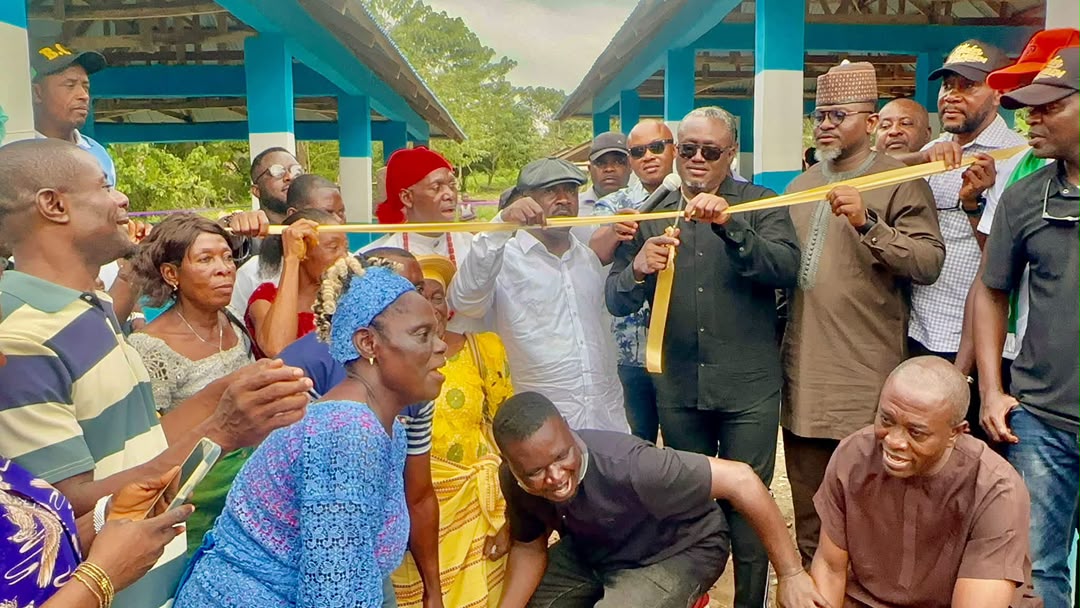
The Speaker of the Cross River State House of Assembly, Rt. Hon. Elvert Ayambem, has commissioned a community market in Afi, Ikom II State Constituency, as part of his commitment to sustainable development and improved living conditions in rural communities.
The project, facilitated and completed by the Speaker, was identified as one of the priority needs of the community following consultations by the Constituency Needs Assessment Team established by Ayambem to evaluate infrastructure and identify projects that would directly benefit the people.
The team was mandated to identify critical infrastructure capable of improving the livelihoods of residents and promoting sustainable economic growth across the constituency.
According to community members, the absence of a suitable trading environment had been a major challenge for years, forcing traders to conduct business under harsh weather conditions, including rain and intense sunshine.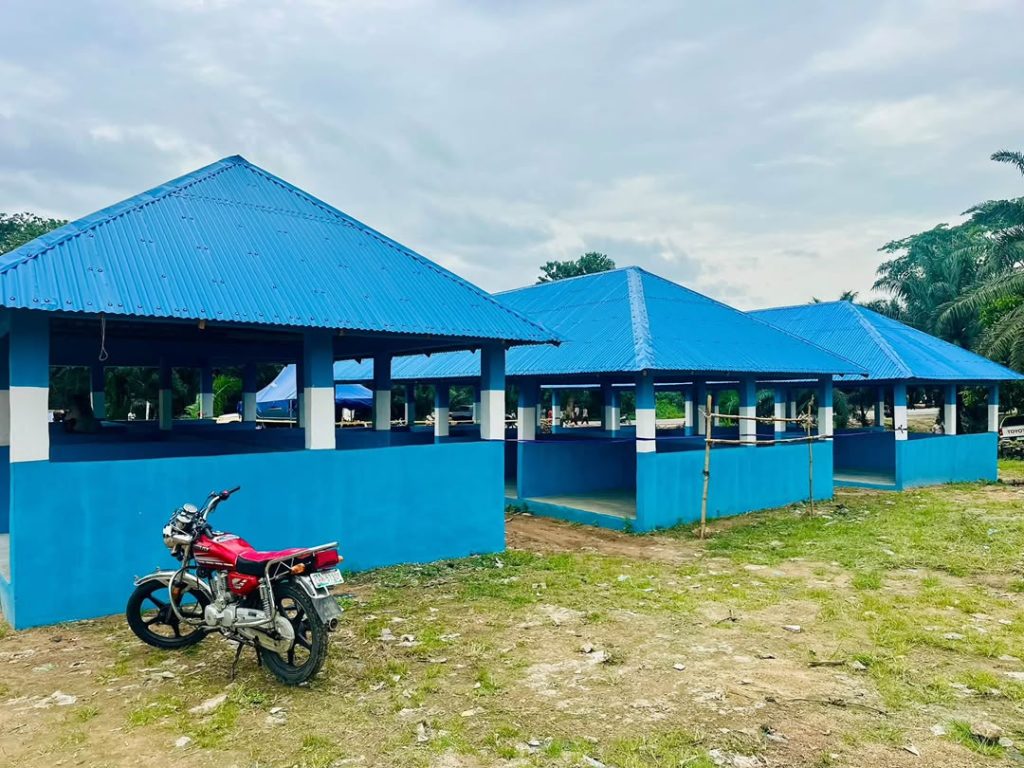
Speaking on behalf of the community, the village head, Chief Etta Ekawor, commended Ayambem for the intervention, describing the market as a miracle and a blessing that would transform the fortunes of the people.
In his remarks, Ayambem expressed appreciation to the Cross River State Governor, Senator Bassey Edet Otu, for his continued support for people-oriented projects and development initiatives across rural communities in the state.
He also thanked the people for their patience, support for his leadership and commitment to the All Progressives Congress (APC).
The Speaker was accompanied by the member representing Yala I State Constituency, Hon. Brian Odey; the Vice Chairman of Ikom Local Government Area, Hon. Maurice Ndome; and the Assistant Financial Secretary of the APC in Cross River State, Hon. Akanya Agbor.
Other stakeholders from Nde Ward who attended the commissioning included the former Vice Chairman of Ikom Local Government Area, Hon. Asinya Ntan, and the Community Relations Officer, Hon. Abang Neji.
Matthew Okache
Chief Press Secretary to the Speaker
October 22, 2026
News
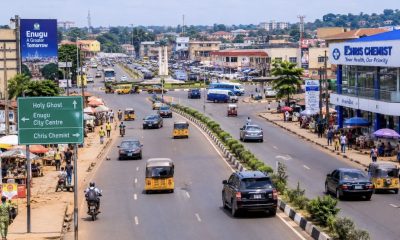
Holy Ghost Transformation: How Enugu North Chairman Ibenaku Onoh Ended Years of Traffic Chaos, Roadside Trading
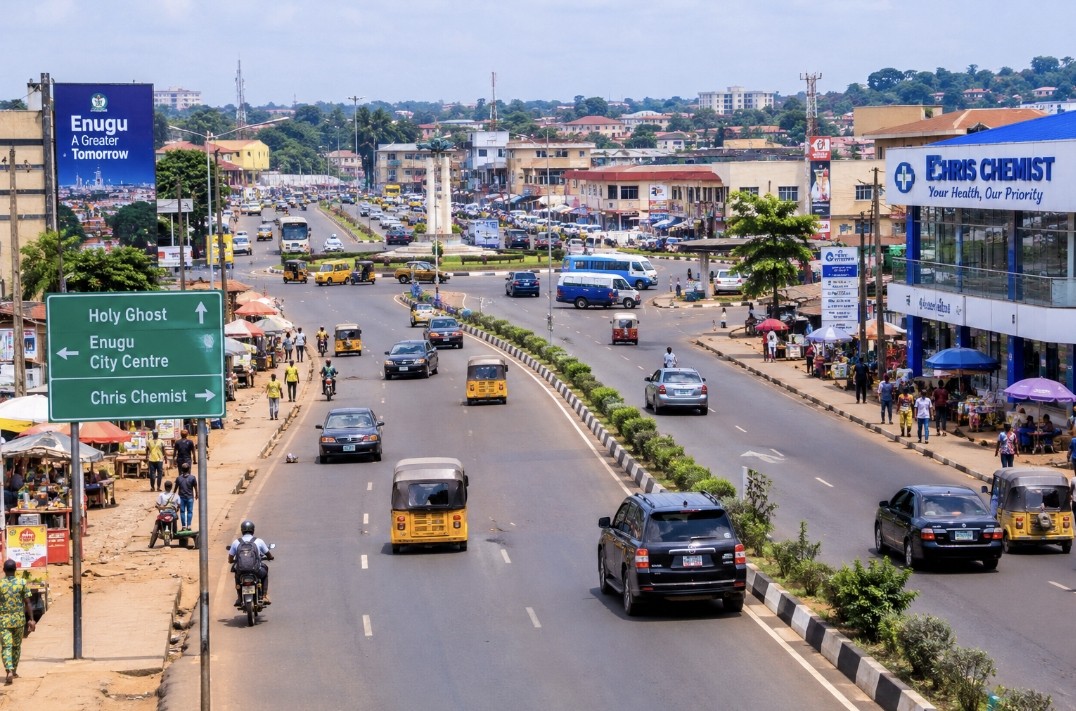
Driving through Holy Ghost and Chris Chemist Roundabout in Enugu metropolis was, until recently, a nightmare many motorists dreaded. Those who dared to navigate the busy commercial corridor often had unpleasant tales to tell.
Beyond the chaotic traffic situation, the area was notorious for rowdy and unorganised roadside trading, indiscriminate parking, commercial buses competing for passengers and the activities of illegal levy collectors who allegedly extorted motorists under various guises, including car radio licences and local government levies.
It was a situation that appeared to have defied successive interventions, leaving residents and motorists wondering whether sanity could ever return to one of Enugu’s busiest commercial districts.

Onoh, Executive Chairman Enugu North
Today, however, the Chairman of Enugu North Local Government Area, Hon. Ibenaku Onoh, appears to have achieved what many considered almost impossible.
Through a combination of political will, infrastructural adjustments and sustained enforcement, the once-chaotic Holy Ghost corridor has witnessed a remarkable transformation, with improved traffic flow and a significant reduction in the disorder that previously characterised the area.
Onoh explained that his decision to tackle the perennial congestion was inspired by the massive road rehabilitation, urban renewal and aesthetic improvements being undertaken across Enugu metropolis by Governor Peter Mbah.
According to him, having witnessed the governor’s determination to give Enugu a modern outlook through infrastructural development and beautification, he considered it necessary for the local government to key into the vision by sanitising Holy Ghost and its adjoining commercial areas.
He noted that it would amount to a contradiction for the state government to invest heavily in road rehabilitation and urban renewal while one of the city’s busiest commercial corridors remained overwhelmed by traffic congestion, illegal trading and environmental disorder.
Consequently, Onoh identified the Holy Ghost traffic situation as one of his administration’s immediate priorities upon assuming office.
He disclosed that he visited the area four times within his first week in office to personally assess the challenges before approaching Governor Mbah with a proposal to remove the Chris Chemist Roundabout.
“When I came on board, I paid attention to that area. In my first week of working here, I went there like four times. And I knew that was the problem. So I told the governor that the Chris Chemist Roundabout was a problem and that it had to go. The governor told me, go ahead and do whatever you want,” he recalled.
Armed with the governor’s approval, the council commenced the removal of the roundabout, expanded and asphalted portions of the road, and redesigned the median separating traffic moving into and out of Holy Ghost.
The chairman explained that the median had virtually become a market, with traders occupying every available space and contributing to the perennial congestion.
Rather than merely displacing the traders, his administration reconstructed the median in a manner that made it uncomfortable and unsuitable for roadside trading, thereby discouraging their return.
He also acknowledged the contribution of the new Holy Ghost transport terminal constructed by the Mbah administration, noting that commercial buses which previously clustered along the roads had been moved into the facility.
“The terminal has also helped. We thank the governor for that terminal. Some of these buses that used to cluster the road, we have now pushed them into the terminal,” he stated.
But beyond the physical transformation, Onoh identified sustained enforcement as the greatest challenge in restoring sanity to the area.
He explained that roadside traders and other operators frequently attempted to return to prohibited locations despite repeated efforts to remove them.
According to him, the situation required not only determination but also the establishment of a legal framework to deal with persistent offenders.
Consequently, the council approached the Chief Judge and subsequently enacted a by-law establishing a mobile court for the local government.
Onoh said the court provided a legal mechanism for prosecuting offenders, ensuring that resistance to enforcement would no longer end in mere confrontations with council officials.
He further alleged that some individuals had attempted to compromise enforcement efforts by offering monthly financial inducements, insisting that his administration would not sacrifice its objectives for personal gains.
“For me, I know exactly what I want, and once I see what I don’t want, I know I don’t want it. I think it is also that discipline, strength and consistency that have made us sustain it for as long as we have,” he said.
The chairman disclosed that enforcement remained a daily exercise, recalling how he recently directed his Chief Security Officer to remove wheelbarrows that had resurfaced around the council premises.
He maintained that without consistency, the gains recorded in Holy Ghost could easily be reversed by individuals determined to reclaim public spaces for unauthorised commercial activities.
Meanwhile, the council has shifted attention to another major environmental challenge in the area: indiscriminate waste disposal.
Onoh disclosed that his administration recently took delivery of about 35 large waste bins procured from Lagos, which would be deployed across the commercial district.
He explained that additional metal fabrication was being carried out to make the bins compatible with evacuation trucks operated by the Enugu State Waste Management Authority (ESWAMA).
According to him, the initiative would provide traders, residents and commuters with designated refuse disposal points before the council intensifies prosecution of environmental offenders.
“People just come and dump their waste on the road. What I have said is to give them an option. I will give you an option of where you are supposed to put waste. But when you don’t do it, by the time we take you to mobile court and have you arraigned there, you will know that you had an option,” he explained.
For motorists familiar with the old Holy Ghost, the difference is striking. What was once regarded as an unavoidable traffic nightmare is gradually becoming an example of how local government leadership can complement the urban renewal agenda of the state government.
For Onoh, however, the achievement is not merely about removing a roundabout or displacing roadside traders. It is about ensuring that the massive investments being made by Governor Mbah in transforming the Enugu capital are complemented by discipline, environmental responsibility and orderliness at the grassroots.
The challenge now is to sustain the transformation and ensure that the disorder which once defined the Holy Ghost and Chris Chemist corridor does not return.
By Chinedu Sabastine
The Enugu State House of Assembly has thrown its weight behind the establishment of state police, saying decentralising the country’s policing architecture would improve security and strengthen the protection of lives and property.
The lawmakers expressed their positions on Tuesday, November 20 during plenary while considering a proposed constitutional amendment to provide for the establishment of State Police Service and related matters.
Supporting the proposal, the member representing Ezeagu Constituency, Hon. Chima Obieze, said the establishment of state police would make policing more effective by bringing security operations closer to the people.
According to him, “The establishment of State Police will decentralise the policing architecture of the country and make it more effective in the protection of lives and property across the state.”
Similarly, the member representing Nkanu East Constituency, Hon. Okey Mbah, said state police could help tackle recurring security challenges, including violence and attacks attributed to herders in different parts of the state.
Mbah maintained that a decentralised policing system would enable authorities to respond more effectively to security threats within their respective communities.
He said the establishment of state police would help “curtail incessant violence and herdsmen attacks in different parts of the state.”
However, the member representing Igbo-Eze South Constituency, Hon. Harrison Ogara, cautioned that the proposed state police system could be abused by political officeholders if adequate safeguards were not established.
Ogara expressed concern that state police formations might be used to intimidate political opponents, stressing that effective oversight and accountability mechanisms were necessary to protect the institution from political interference.
He said, “State Police formations could be used to intimidate political opponents if adequate safeguards are not put in place.”
The lawmaker also called for professional standards, transparent accountability structures and sustainable funding arrangements to ensure that state police personnel discharge their duties without undue political influence.
According to him, effective oversight would be essential to ensuring that the proposed security structure serves the public interest rather than the interests of those in power.
The Speaker of the House, Chief Uche Ugwu, said the proposed changes to the naming of Nigeria’s policing institutions could also influence institutional orientation and the attitudes of personnel.
The proposal includes changing the name of the Nigeria Police Force to the Federal Police Service, alongside the establishment of the State Police Service.
Ugwu said the changes could contribute to a shift in institutional orientation and personnel attitudes, potentially improving the delivery of policing services.
The proposed constitutional amendment comes amid growing calls for the decentralisation of Nigeria’s security architecture to enable states to respond more effectively to local security challenges.
Proponents argue that state police would improve intelligence gathering and response times, while critics have raised concerns about possible political abuse, inadequate funding and the need for strong accountability mechanisms.

-
 News3 days ago
C’RIVER 2027 BUDGET: GOV OTU PRESENTS ₦987.8bn ESTIMATES TO ASSEMBLY
-

 EverydayNews Telescope3 days ago
Enugu East Senate: The Dark Side of Ada Ogbu, NDC Candidate
-
 News5 days ago
BREAKING: Former Delta Governor, Emmanuel Uduaghan, Dies at 71
-

 Opinion5 days ago
Christian Chinyeaka Ohaa: THE BUTTERFLY THAT THINKS IT’S A BIRD!
-
 News4 days ago
Tension Mounts in Awka Anglican Diocese as Supervising Bishop Ezeofor Moves to Take Over Wednesday
-
 News2 days ago
Holy Ghost Transformation: How Enugu North Chairman Ibenaku Onoh Ended Years of Traffic Chaos, Roadside Trading
-
News5 days ago
Awka Anglican Diocese Rejects Primate’s Six-Month Suspension of Archbishop Ibezim, Threatens Exit
-
 EverydayNews Telescope3 days ago
Ebonyi 2027: The People’s Quest For ODII Vs Compromised Stakeholders