



News
Model Ranch: Ebonyi, Benue 20 others apply as FG begins funds disbursement

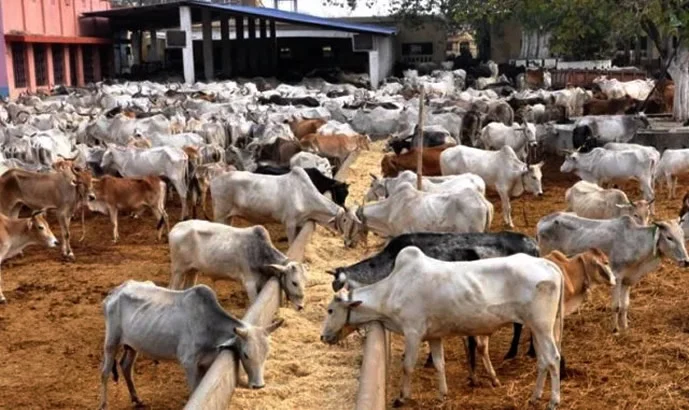

No fewer than 22 states have written to the Federal Government to indicate interest in the National Livestock Transformation Programme.
The Senior Special Assistant to the President on Agriculture, Andrew Kwasari, who also coordinates the NLTP, disclosed this in an interview on Tuesday, adding that the Federal Government would start disbursing funds for model ranches in the next one week.
According to him, states whose governors have written the Federal Government include, Kaduna, Benue, Taraba, Adamawa, Plateau, Zamfara, Kano, Ondo, Katsina, Bauchi, Yobe, Borno, Gombe, Nasarawa, Niger, Sokoto, Ekiti, Kogi, Ebonyi and Kwara.
Following incessant clashes between farmers and herders, the Federal Government in 2018 came up with various ranching models, including Ruga and the NLTP, to settle nomadic herdsmen, who are mostly Fulani.
On Sunday, the President’s spokesman, Garba Shehu, in a write-up in response to a story published by The Economist of London, said the Federal Government’s ranching programme had reduced insecurity in the country in the last 12 months.
He, therefore, urged state governors, who had not embraced the scheme, to do so

Kwasari said, “I have the list of all the governors, who have written to participate in the NLTP. There are 22 governors, who wrote to express interest in the NLTP.
“That is the first condition in the NLTP document. This project is not just something that is done on paper. There are guidelines as approved by the National Economic Council.”
Although he did not specify the amount that would be disbursed, the presidential aide said two of the states, Nasarawa and Plateau, would be getting financial support from the Federal Government for the establishment of model ranches in about a week.
He stated, “In fact, this morning (Tuesday), I was following up with the accountant-general’s office concerning the pilot money to Nasarawa and Plateau.
“We are expecting the Federal Government to credit Nasarawa and Plateau’s accounts; their sites are ready for take-off to build the first ranch and to train pastoralists in how to build ranches.”
Kwasari said Adamawa and Kaduna states were among the 10 states that had established offices and prepared for the programme.
“The government will support them, but they have their own contributions to make. We are also working with the Dutch Government, which has also given some support,” he added.
The presidential aide explained that the model ranches would be used to train pastoralists and help them build their own ranches.
He noted that some people had described the NLTP as another Ruga project.
He stated, “But the bottom-line is that the NLTP is an ecosystem approach. It has six pillars that address all the things that have gone wrong with our livestock production system.
“I just spoke with the office of the accountant-general and by Friday or in a week’s time, I should be able to tell you that the money has been credited to the Nasarawa and Plateau NLTP accounts.
“I will also be able to tell you when work will start on the model projects; to me, that is the most important thing.”
Kwasari added that states like Nasarawa, Adamawa, Plateau, Taraba, Gombe, Kogi, Kwara and Ondo, which had met the NLTP conditions, should be supported by the Federal Government in establishing model ranches.
Asked how much the Federal Government would give as support, he stated, “To build a pilot ranch for the training of pastoralists and crop farmers costs about N400m.
“However, some states have counterpart funding; for instance, Nasarawa has counterpart funding of up to 50 per cent from the Dutch Government. So, to build the ranch and run it for three years will cost about N400m.”
Animals in the ranches will not be allowed to leave the facility all year round, while households will send in representatives, who will be trained in the model ranches in the pilot states.
Kwasari noted that once the pastoralists were able to get feed and water for their livestock, they would have no business moving cattle from one state to another.
We’ve submitted business plan, says Ondo
When contacted, the Ondo State Government confirmed that it had submitted its business plan to the NLTP.
The Special Adviser to Governor Rotimi Akeredolu on Agriculture and Agric-business, Mr Akin Olotu, said the decision was in response to the Presidency asking the governors to provide land for ranching.
Olotu, however, did not say if the state would give land for ranching or not, but noted that Ondo was waiting for the NLTP’s action on the business plan.
“We have submitted our business plan to the National Livestock Transformation Programme since last year and we are still waiting for action on their part,” he simply stated.
Animal production a private venture – Enugu
But the Enugu State Government said that rearing cattle was a private venture like every other livestock production business.
The state Commissioner for Agriculture, Mr Matthew Idu, stated this in an interview with one of our correspondents.
When asked if the state government would provide land for ranching, Idu asked, “Is it the Federal Government that is rearing the cattle? There are questions you people shouldn’t be asking; cattle rearing is an individual business, just as you have people rearing fish and other livestock.”
Ekiti has keyed into FG’s NLTP – Commissioner
On his part, the Ekiti State Commissioner for Agriculture, Dr Olabode Adetoyi, said the state already had a ranch at Ikun Ekiti in the Moba Local Government Area of the state.
Adetoyi, who said there had been no discussion on the Federal Government’s appeal to states for land, said, “We already have a ranch at the Ikun Dairy Farm. There is no farm without a ranching facility there. For now, that is what we have on the ground.
“We have keyed into the National Livestock Transformation Plan. The Ikun Dairy Farm is the best ranch that any government can have in the country. It is a public-private partnership between the Ekiti State Government and Promasidor, the makers of Cowbell Milk, where we target the production of 10,000 litres of milk per day. At present, we are producing more than 100,000 litres per month.”
Herdsmen should buy land, Delta insists
The Delta State Government says it supports ranching as a panacea for the herders-farmers’ crises in the country.
The state Commissioner for Information, Charles Aniagwu, stated this in an interview with The PUNCH in Asaba.
He said, “Delta is in total support of ranching, but we do not have land to give. Without ranching, there can’t be any reasonable solution.
“Cattle rearing is a private business and anybody who engages in the business should look for land and acquire it.
“It is not the duty of the government to do so. If we begin to get land for cattle rearing, we should also get land for those who are into poultry and other businesses.”
Katsina earmarks 122,000 hectares for cattle grazing
In Katsina State, there are over 122,000 hectares of land for grazing sites out of which 7,000 hectares are currently being utilised for ranching.
It was also found out that ranching was being executed in 10 local government areas of Batsari, Jibia, Kurfi, Dutsin-ma, Safana, Danmusa, Kankara, Faskari, Sabuwa and Dandume.
Oyo rules out building ranches for herders
The Chief Press Secretary to the Oyo State Governor, Taiwo Adisa, stated that the anti-grazing law enacted by the Seyi Makinde administration would strictly guide livestock production in the state.
He stated, “Oyo State has an anti-open grazing law, which was signed into law in 2019. This has comprehensively spelt out the processes for the establishment of ranches by any intending livestock farmer.
“The Oyo State anti-open grazing law sees ranching as a personal business. Herdsmen are free to apply for land for that purpose.
“The disposition of the Oyo State Government is not in support of giving land for grazing reserves. The grazing control law does not give land, but for the herder to rent and renew land at intervals. The landowner too cannot sell land to any herdsman.”
PUNCH
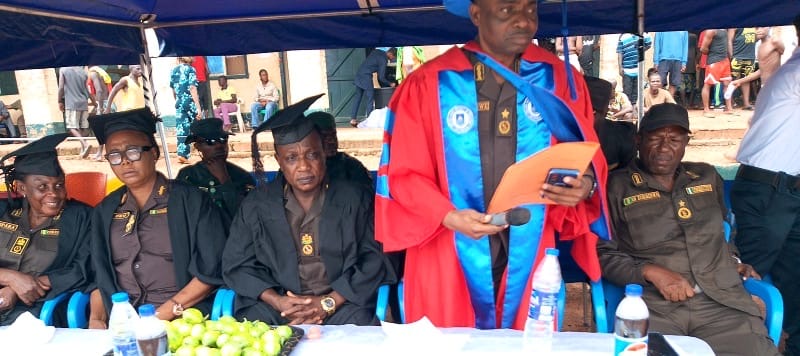
The National Open University of Nigeria (NOUN) has matriculated 70 inmates enrolled in various undergraduate programmes at its Special Study Centre within the Maximum-Security Custodial Centre, Enugu.
The matriculation took place on Wednesday during the 31st matriculation ceremony of the centre.
In an address at the ceremony, the Controller-General of the Nigerian Correctional Service (NCoS), Sylvester Nwakuche, described the event as a milestone in the Service’s commitment to using education as an instrument for the reformation, rehabilitation and reintegration of inmates.
Nwakuche, who was represented by the Assistant Controller-General of Corrections in charge of Zone M, Prisca Oku, said the NCoS would continue to strengthen correctional education and expand opportunities for academic, vocational and skills development across custodial centres.
He encouraged the matriculating inmates to remain focused, abide by the rules and regulations of both the university and the Service, and strive to become worthy ambassadors of the correctional education programme.
“I therefore encourage our matriculating inmates to remain focused, uphold the rules and regulations of the University and the Service, and strive to become worthy ambassadors of the correctional education programme,” he said.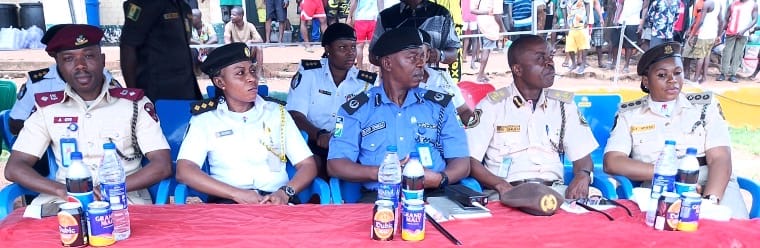
He added: “To the matriculating students, I also urge you to embrace this opportunity with seriousness, discipline and determination.
“Your present circumstances should not define your future; rather, let this opportunity equip you with the knowledge, skills and character needed to build a productive and responsible life beyond custody.
“Your academic journey is not merely about obtaining a qualification; it is also about transforming your mindset, broadening your horizons and preparing yourselves for meaningful reintegration into society.”
Speaking at the ceremony, the Vice-Chancellor of NOUN, Prof. Udoma Oji Udoma, said the university had continued to provide quality and accessible higher education to inmates by offering 100 per cent tuition-free education at all levels.
Udoma, who was represented by the Director of NOUN Enugu Study Centre, Prof. Loveth Ekwueme, said the university had consistently championed inclusivity by providing educational opportunities for inmates.
“NOUN affirms its belief that education is a fundamental right, not a privilege,” he said.
According to him, the initiative reflects NOUN’s commitment to national development, social justice and the rehabilitation of citizens who deserve a second chance.
“To our new students: today you pledge to uphold the values of scholarship, discipline, and integrity. Your enrollment signifies courage, determination, and the desire to transform your lives through knowledge.
“Remember that education is the most powerful tool for personal renewal and societal reintegration,” he said.
The Controller of Corrections in Enugu State, Mr Valins Obizue, encouraged inmates to take advantage of the free educational opportunities available to them and pursue academic qualifications that could improve their lives.
Obizue commended the Controller-General of the NCoS and NOUN for providing a veritable and accessible platform for the reformation and academic advancement of inmates across the country.
In his welcome address, the Officer-in-Charge of the NCoS Maximum-Security Custodial Centre, Enugu, Dr Sunday Igwe, said the study centre commenced in July 2011 with 12 students but had grown to 262 students.
Igwe described the growth as more than a numerical increase, saying it represented “262 dreams, 262 aspirations, 262 opportunities and 262 journeys towards personal and professional development.”
He said the NCoS firmly believed that education was one of the most powerful instruments for human development, reformation, rehabilitation, reintegration, empowerment and positive transformation.
“Our custodial environment is not only about security and safe custody. It is also about preparing individuals for meaningful contributions to society.
“The presence and growth of NOUN academic activities within this environment demonstrates that education can flourish wherever there is commitment, discipline and determination.
“NOUN remains and offers the foremost Open and Distance Learning opportunity in Nigeria,” he said.
One of the matriculating inmates, whose name was withheld, appreciated the Controller-General of the NCoS and the Vice-Chancellor of NOUN for providing the educational and reformative programme and making it accessible to inmates.
The newly admitted undergraduates enrolled in various programmes, including Public Administration, Peace and Conflict Resolution, and Criminology and Security Studies, among others.
Highlights of the ceremony included the administration of the matriculation oath to the new students and the cutting of the matriculation cake.
By Okey Maduforo, Awka
The indefinite curfew imposed on Aguleri and Umuoba Anam communities in Anambra State following their recent communal clash remains in force as Governor Chukwuma Soludo has set up a Judicial Commission of Inquiry to investigate the crisis.
The governor also ordered an immediate ceasefire, warning that the state government would not tolerate further lawlessness or any breach of peace and order in the two communities.
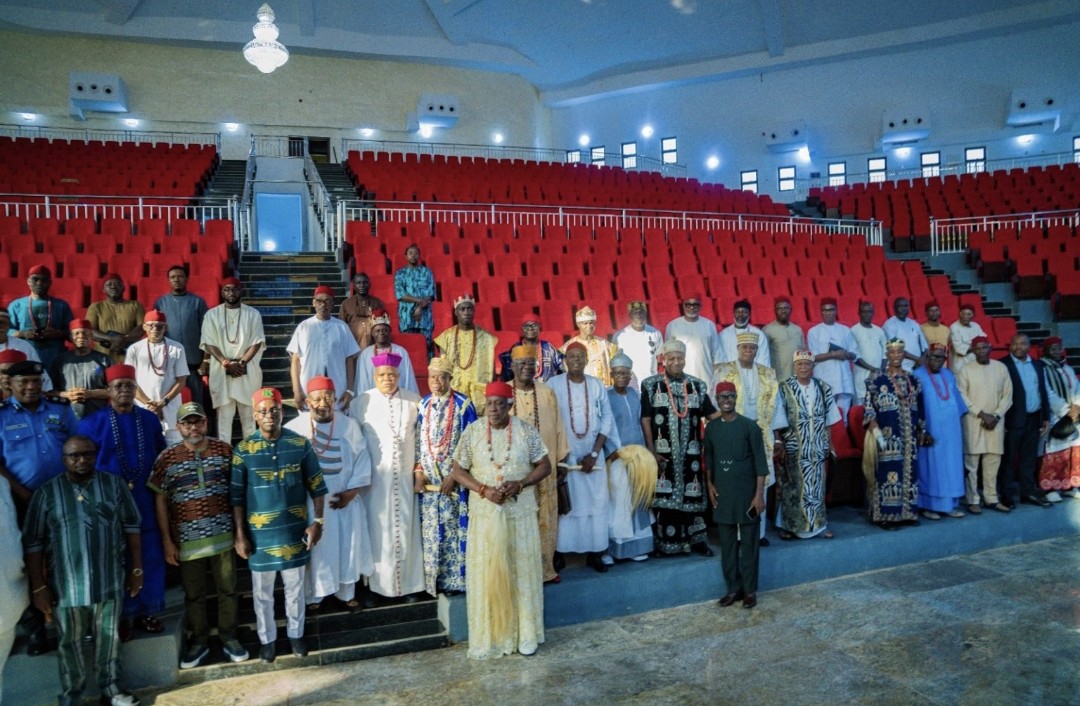
The directives followed a conflict-resolution meeting convened by the governor at the Light House, Awka, which was attended by traditional rulers and other leaders from the affected communities.
At the meeting, the stakeholders agreed that both communities must lay down their arms and embrace peace.
In a statement by the Chief Press Secretary to the governor, Christian Aburime, Soludo lamented the loss of lives and destruction of property, saying the violence was inconsistent with his administration’s vision of a peaceful and prosperous Anambra State.
“Opening the deliberations, the Governor decried the tragic loss of lives and the widespread destruction of properties, emphasizing that such lawlessness is entirely unacceptable to the administration,” the statement said.
Soludo also directed security agencies to maintain a round-the-clock presence in the affected areas to ensure compliance with the ceasefire.
The governor assured the parties that the government would remain “firm, fair, and uncompromising” in its pursuit of lasting peace and justice.
Community leaders, including Igwe Michael Idigo and Hon. Fidel Okafor, condemned the violence, particularly the killing of a minor and an unarmed person from Umuoba Anam, as well as the retaliatory destruction of the historic Idigo Palace.
They called for an immediate end to the hostilities and the prosecution of those responsible for the violence.
Speaking as an observer on behalf of the Umueri community, retired Justice Charles C. Okaa appealed for restraint and urged the state government to enforce the 1982 Supreme Court judgment on boundary matters involving Umueri and Aguleri as part of efforts to achieve a lasting resolution.
The stakeholders also agreed on the immediate cessation of hostilities, prosecution of perpetrators, accountability for community leadership and the rebuilding of the destroyed Idigo Palace.
Condemning the destruction of the traditional palace as an attack on the heritage of the state, Soludo announced that the state government would assist in rebuilding it and restoring its traditional dignity.
The governor also established a Judicial Commission of Inquiry to examine petitions, complaints and historical grievances connected to the crisis. The commission is expected to submit its comprehensive report within four months.
However, the state government has yet to make public the names and number of members of the commission.
Meanwhile, the indefinite curfew remains in force as security agencies continue to maintain heightened surveillance in the affected communities.

For Squadron Leader Ahamefule Aham Man-Ugwueje, Monday was supposed to be another routine day of duty. Instead, the Nigerian Air Force pilot lost his life in the crash of an ATR-42 aircraft in Igbokoda, Ondo State, barely 16 days after his wedding.
Man-Ugwueje had married Flight Lieutenant Damilola Adekunle on September 19, 2026, in an elaborate ceremony in Abuja.
The couple exchanged vows at the Redeemed Christian Church of God, The Masters Place, Utako, Abuja, before proceeding to the Nigerian Army Conference Centre, Asokoro, for the reception.
Details of the wedding were contained in the couple’s invitation and posts shared by vendors who participated in the ceremony. A videographer, Beejay Creates, also shared footage from the event, identifying the couple as bride Damilola and groom Ahamefule.
Man-Ugwueje, who was identified by the Nigerian Air Force as the co-pilot of the ill-fated aircraft, was among the five crew members and 20 passengers who died in the crash.
The aircraft, NAF 931, was on a routine mission from Benin to Lagos when it crashed in a swampy area around Igbokoda in Ilaje Local Government Area of Ondo State.
The Nigerian Air Force on Tuesday confirmed that all 25 people on board died in the accident and released the names of the victims.
The Chief of the Air Staff, Air Marshal Sunday Kelvin Aneke, described the incident as a deeply painful moment for the Nigerian Air Force and the nation, while commiserating with the families, friends and colleagues of the victims.
The Air Force also ordered a comprehensive investigation into the circumstances surrounding the crash.
Man-Ugwueje, whose Facebook profile listed Umuahia, Abia State, as his hometown and Abuja as his current city, was the son of retired Group Captain Man-Ugwueje.
Meanwhile, Ondo State Governor, Lucky Aiyedatiwa, said no survivor was found after security agencies, emergency responders and local residents joined the search for victims at the crash site.
Aiyedatiwa said he was informed of the crash at about 10:30am on Monday after receiving a call from the chairman of Ilaje Local Government Area.
According to the governor, residents across the river from the Nigerian Navy base in Igbokoda heard a loud sound and subsequently saw the aircraft plunge into the swamp.
He said Navy personnel initially exercised caution while trying to determine whether there was a fire or explosion before moving towards the crash site.
“When they noticed that it’s just an accident, they didn’t see any sign of fire. So they moved in, trying to see if they could rescue the people,” the governor said.
Personnel of the local emergency management agency, residents and members of the Amotekun Corps later joined the rescue operation.
However, the search ended in tragedy after authorities confirmed that there were no survivors.
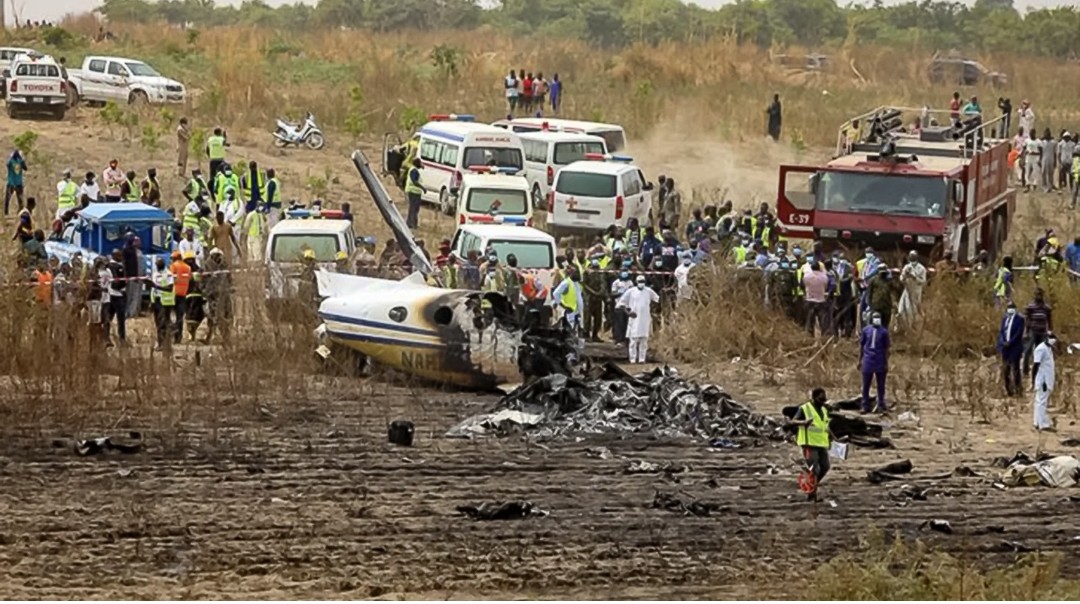
A Nigerian Air Force ATR-42 aircraft on a routine flight from Benin City to Lagos crashed into a swamp in Igbokoda, Ilaje Local Government Area of Ondo State, on Monday after reportedly disappearing from radar shortly after take-off.
The aircraft, with tail number NGR 931, lost communication with air traffic controllers at about 9:13am. A senior air traffic controller, who spoke anonymously, said repeated attempts to re-establish contact with the aircraft failed.
According to the source, personnel around Okitipupa later reported hearing a loud bang suspected to have come from the crash site.
The Minister of Aviation and Aerospace Development, Festus Keyamo, confirmed that the aircraft had disappeared from radar and that all efforts to raise it on radio were unsuccessful.
He later announced that the wreckage had been located near the Naval Base in Igbokoda.
Keyamo said 32 people—25 passengers and seven crew members—were on board.
The Nigerian Air Force confirmed the crash, saying the aircraft was on a routine mission from Benin to Lagos and that search-and-rescue operations had commenced in coordination with relevant authorities.
The crash site, located in a swampy creek, proved difficult to access, with military personnel, emergency responders and local fishermen joining the rescue operation.
Governor Lucky Aiyedatiwa said no survivor had been found as of Monday evening, although the authorities had yet to officially announce a death toll.
The governor said rescuers recovered parts of the aircraft, identification cards and military uniforms from the site.
President Bola Tinubu expressed sadness over the incident and directed the Nigerian Air Force to immediately commence a thorough investigation into the cause of the crash.
Investigators are expected to examine the wreckage, flight path, weather conditions, maintenance records and air traffic control communications. Efforts were also being made to recover the aircraft’s flight recorder, which could provide crucial information about its final moments.
The cause of the crash remains unknown.
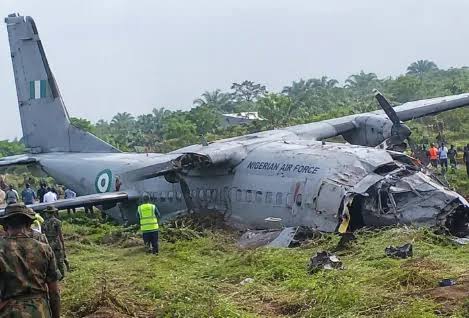
Ondo State Governor, Lucky Aiyedatiwa, has disclosed that no survivor has so far been found following the crash of a Nigerian Air Force aircraft in Igbokoda, Ilaje Local Government Area of the state.
Aiyedatiwa made this known during an interview with Channels Television on Monday, saying local residents, security personnel and emergency responders had searched the crash site without finding anyone alive.
The governor said he received information about the incident at about 10:30am after the chairman of the local government contacted him.
According to him, residents living across the river from the Nigerian Navy base in Igbokoda heard a loud sound and subsequently saw the aircraft plunge into a swampy area.
He explained that personnel of the Nigerian Navy initially stayed back to determine whether the crash had triggered a fire or explosion before proceeding to the site.
“When they noticed that it’s just an accident, they didn’t see any sign of fire. So they moved in, trying to see if they could rescue the people,” Aiyedatiwa said.
He added that officials of the state emergency management agency, local residents and personnel of the Amotekun Corps later joined the search and rescue operation.
“But from the information we got, no single life was saved up to this moment. They could not see any living soul that was in that aircraft,” the governor said.
Aiyedatiwa said searchers recovered parts of the aircraft, including pieces of the wings, identification cards and military uniforms, which helped establish that the aircraft was a military plane.
“But they saw the ruins, some of the wreckage from the wings of the aircraft, you know, some ID cards, I was told, and then uniform. That was when they knew it was a military aircraft,” he said.
The governor described the incident as a painful development, noting that the crash occurred not only in Ondo State but also in his home local government area.
“So it’s a sad situation today. And we’re all really, really agreed as a Nigerian. And also it happens in my own state, not just my state, even in my own local government where I’m from,” he said.
Aiyedatiwa expressed sympathy for the military personnel involved, describing them as officers assigned to protect the territorial integrity of Nigeria.
The Nigerian Air Force had earlier confirmed that an ATR-42 aircraft with tail number NGR 931 crashed in Igbokoda while on a routine mission from Benin, Edo State, to Lagos.
Minister of Aviation and Aerospace Development, Festus Keyamo, said preliminary information indicated that 25 passengers and seven crew members were on board the aircraft.
The Nigerian Air Force said search and rescue operations were ongoing following the crash.

-

 Politics3 days ago
2027: Odii Will Not Step Down, Says Spokesperson
-

 EverydayNews Telescope2 days ago
Nkalagu Cement Factory: Project or 2027 Political Promise?
-
 News2 days ago
How NAF Plane Vanished From Radar Shortly After Take-Off, Crashes In Ondo Swamp
-

 News4 days ago
Sacked Works Commissioner: Release or Charge Him to Court, Oganiru Izzi Challenges Nwifuru
-
 News3 days ago
No Survivor Found Yet in Ondo Air Crash — Aiyedatiwa
-
 Crime4 days ago
Police Deploy DIG, Two Commissioners to Rescue 20 Abducted Prospective Corps Members
-
 Crime2 days ago
Court Denies Alleged Fake Pastor Bail as Seven Witnesses Await Trial
-
 News5 hours ago
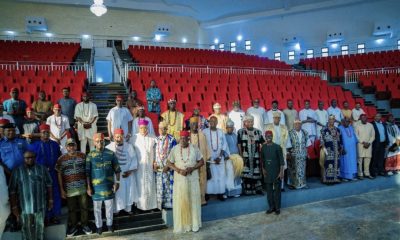
Curfew Continues as Soludo Sets Up Commission of Inquiry Over Aguleri–Umuoba Anam Clash