


News
May 29: Tinubu’s inauguration must hold, FG, 65 world leaders invited



The inauguration programmes will begin on Thursday with the investiture of Tinubu with the Grand Commander of the Order of the Federal Republic and the Vice-President-elect, Kashim Shettima, as the Grand Commander of Order of the Niger.
A director in the Ministry of Foreign Affairs confirmed on Thursday that several African leaders had indicated interest in attending the inauguration ceremony which would take place at Eagle Square, Abuja.
“We have 54 countries in Africa and most of them have been invited to the inauguration; so, we don’t expect less than 65 world leaders from Africa, Europe and America at the event,’’ said the director, who spoke on the condition of anonymity because he was not authorised to speak on the issue.
Representatives of Nigeria’s traditional allies such as the United States, the United Kingdom, Canada, France, Saudi Arabia, United Arab Emirates, Pakistan, China, Germany, Finland, Jamaica, Japan, Israel, Turkey and several others are expected at the high-profile event.

Addressing journalists in Abuja on Thursday as activities for the transition of power to the incoming administration began, the Secretary to the Government of the Federation, Boss Mustapha, disclosed that scores of world leaders would attend the event.
The preparation for the swearing-in of the former Lagos State governor is gathering steam as the battle to nullify his election victory by the standard bearer of the Peoples Democratic Party, Atiku Abubakar and his Labour Party counterpart, Peter Obi continues at the Presidential Election Petitions Court.
On Thursday, the PEPC adjourned further proceedings in Atiku’s petition till Friday (today) to continue further pre-hearing sessions as well as to hear pending applications that were filed by the respondents.
The Justice Haruna Tsammani-led panel said the court would decide on the number of witnesses that would be allowed for each of the parties, the time to be allocated to them, as well as the time to be allowed for cross-examination.
He urged the parties to put heads together and agree on further modalities to be adopted.
The court had similarly adjourned Obi’s petition till today following the failure of the parties to harmonise the documents germane to their pleadings.
But unveiling the inauguration programmes, Mustapha, who doubles as the Chairman of the Presidential Transition Council, disclosed that Tinubu and the Vice President-elect, Kashim Shettima would be honoured with the Grand Commander of the Order of the Federal Republic and Grand Commander of Order of the Niger, respectively, on May 25.
Reeling out the activities for the event, he further disclosed that transition documents would be handed over to Tinubu and Shettima on the same day.
Inauguration lecture
Similarly, he said the former president of Kenya, Uhuru Kenyatta, would deliver the inauguration lecture.
The lecture titled, ‘Deepening Democracy for Integration and Development’ would be held on May 27.
Other activities include the Regimental Dinner in honour of the Commander-in-Chief at the Armed Forces Officers Mess slated for Tuesday, May 23; the Valedictory Federal Executive Council Meeting at the Council Chambers inside the Presidential Villa on May 24; Public Lecture and Juma’at prayer at the National Mosque on May 26; Children’s Day Parade and Party on May 27 and an Inter-denominational Church Service at the National Christian Centre on May 28.
Also, the Inauguration Dinner/Gala Night at the State House Conference Centre is billed for May 28 while the inauguration/swearing-in of the president-elect and the vice president-elect will take place on May 29 accompanied by an inauguration parade at the Eagle Square.
There will also be a post-inauguration luncheon strictly for the President with his colleague Presidents, Heads of Government and guests at the State House Banquet Hall after the inauguration ceremony.
The SGF revealed that many world leaders had indicated interest in attending the event.
“So far, invitations have been sent to Presidents and Heads of Government as well as Heads of international organisations. We are also glad to report that many of these invitees have confirmed attendance in person,’’ he affirmed.
But when asked about the identities of the leaders, the SGF said, “Diplomatic privilege does not allow us to announce the number of people coming. If you know what is happening globally, we cannot tell you who is coming. We leave that to their embassies to make it public.”
Mustapha insisted that the handover would hold despite the court cases seeking the cancellation of the ceremony.
The transition committee chairman noted, “The inauguration would not be stopped pending the determination of the cases in court. This is not the first time we have had elections. In my political life, I have seen different transitions.
‘’From Shagari’s period to Buhari, the inauguration went on despite court cases. In 2003, Buhari spent months at the tribunal up till the Supreme Court. He repeated the process three times. The only election that was not litigated was in 2015 when Jonathan conceded defeat. With or without litigation, the handover will be held on May 29. The Constitution and Electoral Act are clear on this.”
The SGF disclosed that the theme for the inauguration is, ‘Nigeria: Better Together,’ adding that the event is historic for the country as well as the international community.
He added, “The upcoming event is historically significant to this great nation and the international community, particularly Africa because of the democratic values and lessons in nationhood. For these reasons, we have chosen, ‘Nigeria: Better Together’, as the theme for the 2023 transition.
‘’I am delighted to inform you that May 29, 2023, will mark the seventh consecutive democratic transition of power in Nigeria and on that day, we shall all be ushering in the 16th President of the Federal Republic of Nigeria.
According to him, the transition council interfaced and learnt from the transition processes practised in the United States of America and Kenya, expressing hope that Nigeria would have legislation on presidential transition soon.
Mustapha said, “In furtherance of discharging its functions, the PTC also interfaced with leading democratic nations including the United States of America and the Republic of Kenya, as part of its learning efforts to pick up useful lessons in line with international best practices.
“It is important to also state that these countries have specific legislations on Presidential Transition, some of which date back to 1963. It is our expectation that specific legislation on presidential transition in Nigeria would be passed soon.”
On the security of the venues and guests, Mustapha said adequate measures had been put in place.
News
Awka Anglican Diocese Rejects Primate’s Six-Month Suspension of Archbishop Ibezim, Threatens Exit
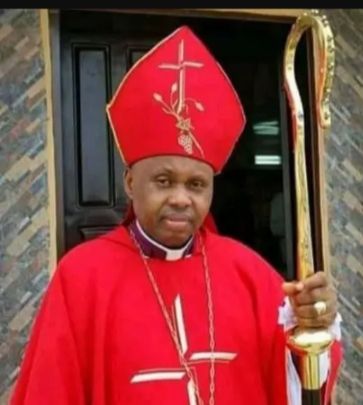
The Diocese of Awka of the Anglican Communion has rejected the directive by the Primate of the Church of Nigeria, Most Revd Henry C. Ndukuba, ordering Archbishop Alexander C. Ibezim to proceed on six months’ compulsory leave, describing the decision as unlawful and unconstitutional.
The diocese also rejected the appointment of the Bishop of Aguata Diocese, Rt. Revd Samuel C. Ezeofor, as supervising bishop of Awka Diocese and coordinating bishop of the Province of the Niger, warning that it would not tolerate any interference in its affairs.
The positions were contained in a communiqué issued after an emergency meeting of the Diocesan Board held on Friday, October 16, 2026, at the Chapel of Divine Favour, Anglican Village, Ifite-Awka, Anambra State.
The communiqué was signed by Sir B.E.I. Nwofor, SAN, Lord Chancellor of the Diocese; Ven. K.E.N. Chukwukamma, PhD, Synod Secretary; and Mr Eugene Chukwudi Okonkwo, Lay Synod Secretary.
The board said it had carefully considered a letter dated October 13, 2026, issued by the Primate, before unanimously rejecting its directives concerning Archbishop Ibezim and the administration of the diocese.
According to the board, the appointment of Ezeofor and the compulsory leave directive were made despite pending court cases involving Ibezim, the Primate and other parties.
It cited three cases before the High Court of Anambra State: Suit No. A/Misc. 446/2025, involving Ibezim and the Economic and Financial Crimes Commission (EFCC); Suit No. A/Misc. 494/2026, involving Ibezim and the Inspector-General of Police and others; and Suit No. A/371/2026, involving Ibezim, Ndukuba and another party.
The board argued that the issues raised in the cases remained before the court and that the parties should refrain from actions capable of interfering with the judicial process.
It further alleged that existing injunctions and pending applications for injunctive relief concerning the matter had not been given due consideration, warning that actions capable of pre-empting the court’s decision could have legal consequences.
The communiqué also questioned the authority of the Primate to direct a fellow bishop and archbishop to proceed on compulsory leave or appoint another bishop to assume his responsibilities.
It maintained that neither the 2020 Constitution and Canons of the Church of Nigeria (Anglican Communion) nor the 2023 Constitution and Regulations of the Diocese of Awka empowered the Primate to take such action.
The board specifically disputed the application of Section 29(1) of the church’s constitution, which it said did not confer the powers exercised in the October 13 letter.
It also argued that the directive violated Sections 36(5) and 38(1) of the 1999 Constitution of Nigeria, as amended, relating to the presumption of innocence and freedom of thought, conscience and religion.
On the stated objective of facilitating an impartial investigation and promoting peace and reconciliation, the board alleged that the Primate had previously constituted two panels to investigate allegations against Ibezim.
It identified the first panel, headed by Justice Babashola Ogunade, as having been constituted in August 2025, while the second, headed by Archbishop Blessing Enyindah, was established in June 2026.
According to the board, both panels had submitted their reports to the Primate, but the findings had not been released.
The board argued that withholding the reports violated provisions of the church’s Constitution and Canons requiring the findings and recommendations of such panels to be submitted to the Episcopal Synod for consideration, with further review and ratification by the appropriate church authorities.
The diocese consequently reaffirmed its confidence in Ibezim, insisting that he remained the Archbishop of the Province of the Niger and Bishop of Awka Diocese and should continue discharging his official responsibilities.
It described the diocese as peaceful, united and progressive, while expressing confidence in Ibezim’s integrity, competence, commitment and leadership.
The board also dismissed allegations of financial impropriety against the archbishop, declaring that no diocesan funds had been missing, stolen, misused or misappropriated by him. It further claimed that the two investigative panels had not indicted him for financial misconduct.
However, these assertions reflect the position of the Diocesan Board, and the allegations and legal issues cited in the communiqué remain subject to the relevant proceedings and any official findings.
Commending Ibezim for what it described as significant infrastructural development across the diocese, the board urged him to remain focused on his duties despite the ongoing controversy.
It also warned Ezeofor against interfering in the affairs of Awka Diocese, urging him to concentrate on his responsibilities as Bishop of Aguata Diocese.
The board said it would not hesitate to seek legal remedies and involve law enforcement agencies if its warning was ignored.
In a further directive, the board instructed all organs of Awka Diocese to remain loyal to Ibezim and continue their lawful activities, while rejecting directives or interference from Ezeofor. It warned that non-compliance could attract appropriate sanctions.
The communiqué concluded with a strong warning to the Primate and Ezeofor, stating that the diocese could withdraw from the Church of Nigeria (Anglican Communion) and continue under the Church of England if what it described as unlawful interference in its affairs persisted.
The latest development signals a deepening dispute within the Anglican Church, with the Awka Diocesan Board insisting that the leadership question and related allegations should be handled in accordance with the church’s governing instruments and the rule of law.
As of the issuance of the communiqué, the board’s position was that Ibezim remained in office and should continue to exercise his episcopal responsibilities.
The positions of the Primate and Ezeofor on the claims and threats contained in the communiqué were not included in the document.
Awka Diocese Demands Release of Two Investigative Panel Reports, Rejects Coordinating Bishop
By Okey Maduforo, Awka
The Archbishop of Awka Anglican Diocese, Most Rev. Alexander Chibuzo Ibezim, has described the lingering crisis rocking the Diocese as a spiritual battle against principalities and powers rather than a confrontation against flesh and blood.
This comes as the leadership of the Diocese demanded the immediate release of reports submitted by two panels of inquiry constituted by the Primate of the Church of Nigeria (Anglican Communion), Most Rev. Henry Ndukuba, to investigate allegations surrounding land sales and other matters involving Archbishop Ibezim.
Addressing worshippers shortly after Holy Communion during Sunday’s service at St. Faith’s Cathedral, Awka, Ibezim urged members of the Diocese to remain steadfast in prayer, stressing that the ongoing crisis should not be approached through physical confrontation.
“At this time of trial, at this moment, let us recognise that we are not fighting against flesh and blood. It is spiritual warfare; it is a battle against principalities and powers, rulers of darkness of this world, spiritual wickedness in high places. And so, our battle is not a battle of flesh and blood,” he declared.
He further admonished the congregation against resorting to violence.
“The Bible enjoins us that we should not fight physically. This is not a time to fight with guns or fight with cutlasses, but it is a fight that is spiritual,” he stated.
The Archbishop called on members of the Cathedral to remain united, pray together and sustain their fellowship, describing the Cathedral altar as a point of contact for prayers across the Diocese and the Province of the Niger.
Meanwhile, the leadership of Awka Diocese has questioned the decision of the Primate to place Archbishop Ibezim on compulsory leave despite the reported completion of investigations by two separate panels earlier constituted to examine allegations against him.
In a resolution signed by the Lord Chancellor of the Diocese, Sir B.E.I. Nwafor, SAN; the Synod Secretary, Ven. K.E.N. Chukwukamma, PhD; and Mr. Eugene Chukwudi Okonkwo, the Diocese described the justification for the compulsory leave as unacceptable.
According to the resolution, the Primate’s explanation that the leave was intended to facilitate an impartial inquiry into the affairs of the Diocese and promote peace and reconciliation was a ruse, given that two previous investigative panels had already submitted their findings.
The Diocese recalled that the first panel was constituted through the Primate’s letter dated August 13, 2025, and headed by Honourable Justice Babashola Ogunade, while the second was established through another letter dated June 17, 2026, under the chairmanship of Archbishop Blessing Enyindah.
It alleged that despite the completion of their assignments, the Primate had neither released the reports nor disclosed their findings.
The resolution further accused Ndukuba of violating Sections 75(3), (4) and (5), as well as 76(3), (4) and (5) of the Constitution and Canons of the Church of Nigeria (Anglican Communion), 2020.
According to the Diocese, the provisions require the Primate to submit the findings and recommendations of such panels to the Episcopal Synod for consideration.
It maintained that the Episcopal Synod is empowered to review, modify, reject or adopt the recommendations, subject to the approval of the Standing Committee and subsequent ratification by the General Synod, whose decision is final and binding.
Diocese Rejects Coordinating Bishop
In a further escalation of the dispute, the leadership of Awka Diocese rejected any attempt by the newly appointed Coordinating Bishop, Rt. Rev. Samuel Ezeofor, to interfere in its affairs.
“The Board emphatically warns that it will not accept any interference with the affairs of the Diocese of Awka by Rt. Revd. Ezeofor and urges him to concentrate on his work as Bishop of Aguata Diocese and not to be used as an instrument to destabilise or foment trouble in our peaceful Diocese of Awka,” the resolution stated.
It also directed all organs of the Diocese to maintain their loyalty to Archbishop Ibezim and continue their lawful activities.
“The Board directs all organs of the Diocese of Awka to remain loyal to His Grace, The Most Revd. Alexander Chibuzo Ibezim, PhD, and to go ahead with their lawful activities and reject any interference or directive from Rt. Revd. Ezeofor,” it added.
As of the time of filing this report, Bishop Ezeofor, who was appointed by the Primate to oversee the affairs of Awka Diocese, had yet to assume office.
Efforts to obtain reactions from the authorities concerned were unsuccessful.
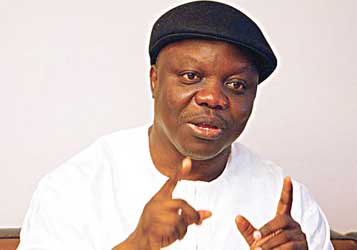
Former Governor of Delta State, Dr. Emmanuel Eweta Uduaghan, has passed away at the age of 71 following a brief illness.
Uduaghan reportedly died on Monday morning, October 19, 2026.
His death was confirmed in a statement issued by the Uduaghan family and signed by Toju Andre Uduaghan.
The family expressed profound grief over the loss, describing the former governor as a beloved father, brother, uncle and patriarch whose contributions to public service touched countless lives across Delta State and Nigeria.
“It is with hearts weighed down by immeasurable grief and profound sorrow that we announce the passing to glory of our beloved Father, Brother, Uncle, and Patriarch,” the statement read.
The family described his passing as a devastating loss, noting that he was a source of strength, a respected elder and a father figure whose memories and legacy would remain cherished.
Uduaghan served as Delta State Commissioner for Health between 1999 and 2003 before becoming Secretary to the State Government from 2003 to 2007.
He subsequently emerged as Governor of Delta State, serving two terms from 2007 to 2015.
According to the family, his years in public office were marked by a commitment to human and infrastructural development across the state.
“His passing is a profound loss to our family, the people of Delta State, and Nigeria at large. We are grateful to Almighty God for his life, his service, and the legacy he leaves behind,” the statement added.
The family prayed for the peaceful repose of his soul and divine comfort for relatives, friends, political associates, former colleagues and others mourning his death.
Details of his funeral arrangements were not included in the announcement.
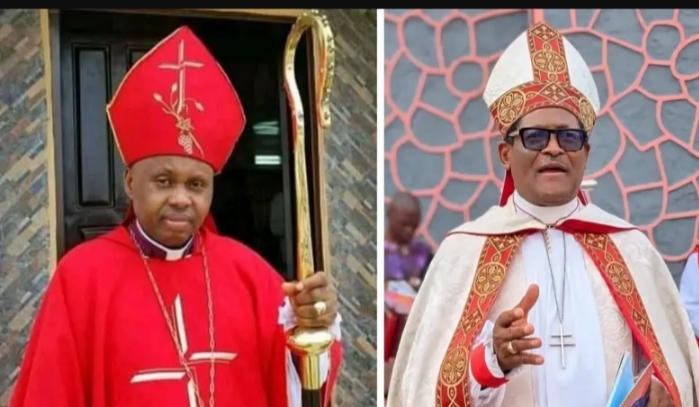
Diocesan Board Rejects Primate’s Directive, Threatens Withdrawal from Church of Nigeria
By Okey Maduforo, Awka
A major crisis is brewing in the Anglican Diocese of Awka following a threat by its Diocesan Board to withdraw from the Church of Nigeria (Anglican Communion) over the six-month compulsory leave imposed on Archbishop Alexander Chibuzo Ibezim by the Primate, Most Rev. Henry Ndukuba.
The development marks a fresh escalation of the face-off between the two senior clerics over allegations surrounding the sale of church land and other administrative matters in the Diocese.
Recall that Primate Ndukuba had, in a letter dated October 13, 2026, directed Archbishop Ibezim to proceed on six months’ compulsory leave to allow for an impartial investigation into the affairs of the Diocese.
The directive prompted Ibezim to institute legal action at the Anambra State High Court, challenging both the Primate’s decision and the constitution of the panel investigating the allegations against him.
However, rising from an emergency meeting, the Awka Diocesan Board rejected the directive in its entirety, warning that continued interference in the affairs of the Diocese could force it to sever ties with the Church of Nigeria.
In a resolution signed by the Lord Chancellor of the Diocese, Sir B.E.I. Nwafor, SAN; the Synod Secretary, Ven. K.E.N. Chukwukamma, PhD; and Mr Eugene Chukwudi Okonkwo, the Board insisted that Archbishop Ibezim remained the legitimate Bishop of Awka and Archbishop of the Province of the Niger.
“The Board emphatically rejects in its entirety the said letter. More specifically, the Board rejects the directive to His Grace, The Most Revd Alexander C. Ibezim, PhD, Archbishop, Province of the Niger and Bishop, Diocese of Awka, to proceed on six months compulsory leave,” the resolution stated.
Board Rejects Appointment of Supervising Bishop
The Board also rejected the appointment of the Bishop of Aguata Diocese, Rt. Rev. Samuel C. Ezeofor, as Supervising Bishop of Awka Diocese and Coordinating Bishop of the Province of the Niger.
It argued that the appointment disregarded pending litigations involving Archbishop Ibezim, including Suit No. A/Misc. 446/2025 against the Economic and Financial Crimes Commission (EFCC), filed on September 4, 2025, and Suit No. A/Misc. 494/2026 against the Inspector General of Police and others, filed on October 2, 2026.
It further cited Suit No. A/371/2026, instituted by Archbishop Ibezim against Primate Ndukuba and another party on October 13, 2026.
According to the Board, the cases remain pending before the Anambra State High Court, making it inappropriate for the Church leadership to take actions capable of prejudicing their determination.
It maintained that both the Primate and Bishop Ezeofor were aware of the pending suits and should refrain from interfering with their subject matter.
The Board also referred to subsisting injunctive orders reportedly issued by the High Court on September 9, 2025, and renewed by consent of the parties on October 14, 2025.
It further disclosed that a pending motion in Suit No. A/371/2026 seeks to restrain the Primate from issuing any suspension letter or taking steps capable of truncating Ibezim’s tenure as Archbishop and Bishop of Awka.
“The Primate and Rt. Revd Ezeofor are fully aware that no one is above the law irrespective of his or her position or status, and ought to be law-abiding and respect the court where the allegations against Archbishop Ibezim are pending for determination,” the Board stated.
Primate Lacks Constitutional Powers, Board Insists
The Diocesan Board further contended that neither the Constitution and Canons of the Church of Nigeria (Anglican Communion) 2020 nor the Constitution and Regulations of Awka Diocese 2023 empowers the Primate to compel a serving Archbishop to embark on compulsory leave.
It specifically disputed the application of Section 29(1) of the Church’s Constitution, cited in the Primate’s October 13 letter, arguing that the provision does not authorise the removal of a Bishop from active duties or the transfer of his episcopal responsibilities to another Bishop under such circumstances.
The Board described the decision as oppressive, vindictive and unjust, alleging that it violated Archbishop Ibezim’s constitutional rights under Sections 36(5) and 38(1) of the 1999 Constitution of the Federal Republic of Nigeria, as amended.
It maintained that Ibezim was entitled to the presumption of innocence and freedom of religion, including the right to participate in worship and other religious activities.
Board Questions Previous Investigative Panels
The Board also questioned the justification for another investigation, alleging that the Primate had previously constituted two separate panels to investigate allegations against Archbishop Ibezim.
According to the resolution, the first panel, headed by Justice Babashola Ogunade, was constituted on August 13, 2025, while the second, chaired by Archbishop Blessing Enyindah, was inaugurated through a letter dated June 17, 2026.
It alleged that both panels completed their assignments and submitted reports to the Primate, who had yet to release their findings.
The Board argued that withholding the reports violated Sections 75 and 76 of the Church’s Constitution and Canons, which provide procedures for submitting investigative findings to the Episcopal Synod and other appropriate Church organs for consideration and ratification.
It consequently dismissed the explanation that the compulsory leave was intended to facilitate an impartial inquiry and promote peace and reconciliation.
No Diocesan Funds Missing – Board
Expressing confidence in Archbishop Ibezim’s leadership, the Board maintained that no diocesan funds had been stolen, misappropriated or misused by him.
“The Board unequivocally affirms that no money of Awka Diocese is missing, stolen, misused, or misappropriated by Archbishop Ibezim. Even the two panels set up by the Primate have not disclosed any indictment of financial misdeed by Archbishop Ibezim,” it declared.
It reaffirmed its confidence in the Archbishop’s integrity, competence and commitment to his episcopal responsibilities, insisting that he should continue to discharge his duties without interference.
Diocese Warns Bishop Ezeofor, Threatens Breakaway
In a strongly worded warning, the Board urged Bishop Ezeofor to concentrate on his responsibilities in Aguata Diocese and refrain from interfering in the administration of Awka Diocese.
It warned that any attempt to enforce the disputed appointment could attract legal action and the involvement of law enforcement agencies.
The Board equally directed all organs of Awka Diocese to remain loyal to Archbishop Ibezim, continue their lawful activities and disregard directives from Bishop Ezeofor.
It warned that failure to comply with the resolution would attract appropriate sanctions.
In its most far-reaching declaration, the Board threatened to withdraw from the Church of Nigeria if the Primate and Bishop Ezeofor continued what it described as unlawful interference in the affairs of Awka Diocese.
“The Board emphatically states that if the Primate and Bishop Ezeofor continue threatening the peace of Awka Diocese and its Archbishop and Bishop and unlawfully interfere with its affairs, it shall withdraw from the Church of Nigeria and continue with Church of England which never disturbed the Diocese,” the resolution concluded.
The development raises the prospect of a major ecclesiastical confrontation within the Anglican Communion, as the dispute between the Primate and Archbishop Ibezim moves beyond the courts to the wider leadership and membership of Awka Diocese.
The threatened withdrawal, however, remains a declaration of intent by the Diocesan Board, rather than a completed separation from the Church of Nigeria.
Trim repetitive legal arguments
Use more legally cautious wording
Clarify the timeline of the dispute
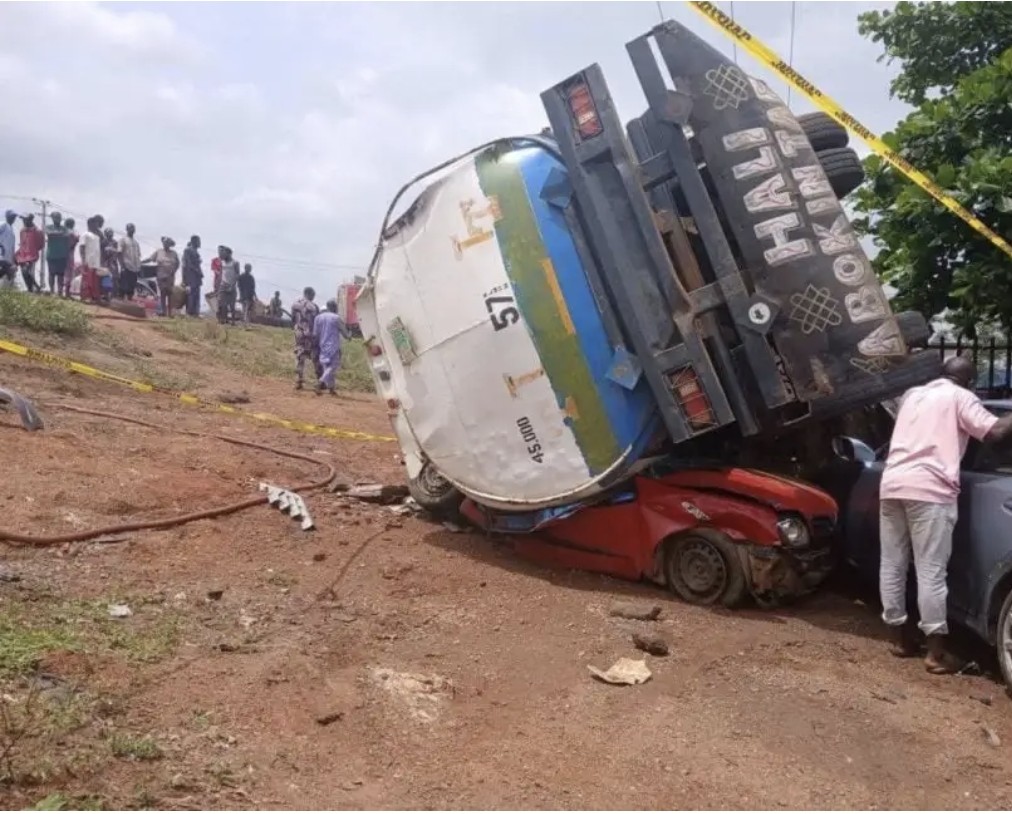
At least five persons have been confirmed dead, while several others were trapped following a fatal accident involving a fully loaded diesel tanker and four commercial vehicles in Ibadan, the Oyo State capital, on Saturday.
The accident occurred at Aduloju Bus Stop, opposite Dominion City, along the busy Iwo Road–Ojoo Expressway.
Eyewitnesses said the tanker, reportedly travelling at high speed, lost control and rammed into four Nissan Micra cars conveying passengers, leaving the vehicles badly mangled.
The impact reportedly trapped several occupants inside the wreckage, prompting desperate rescue efforts by sympathisers and emergency responders.

-
 Politics4 days ago
UNPOPULAR? Abati Seeks Confirmation of Ebonyi Gov’s Name During Interview With Anyichuks
-
 Politics5 days ago
Tinubu Inaugurates APC Presidential Campaign Council, Vows to Renew Covenant With Nigerians in 2027
-
 News4 days ago
NCDMB Tasks Anambra Journalists on Local Content Advocacy, Accountability in Oil and Gas Sector
-
Politics5 days ago
I will be busy fixing Nigeria, will not attend all campaigns- Tinubu
-
 News4 days ago
2027: APC, APGA Rift Deepens Over Support for Tinubu’s Re-election
-
 News4 days ago
FG Reopens First Niger Bridge After 38 Days of Rehabilitation, Umahi Rallies Support for Tinubu’s Re-election
-
 Agriculture3 days ago
Mbah vows to eradicate hunger, poverty through agriculture
-
 News2 days ago
BREAKING: Mbah Extends Enugu Curfew to 10pm, Stops Ticketing of Keke Riders