



Crime
Immigration officer shoots protester dead in Ogun community

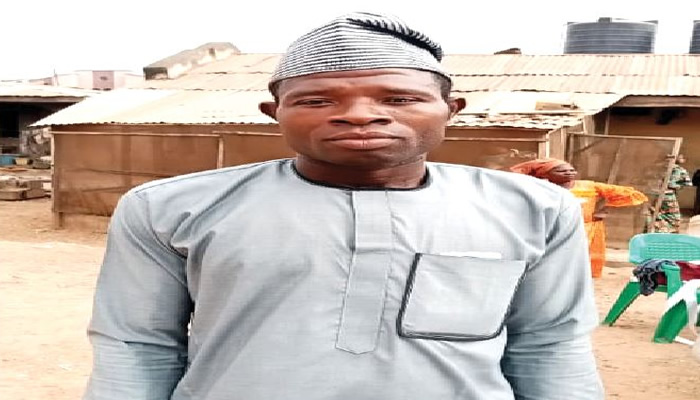

Our correspondent learnt that Bamgbola refused to accede to the officers’ request, noting that he did nothing wrong to warrant him being allegedly extorted of N200.
The situation led to an argument and while some of the officers were busy interrogating other motorists, Benjamin took advantage of the fact that much attention was not on him and zoomed off.
On getting to his sister’s place, Bamgbola dropped his niece and proceeded to inform some youths in the community about his encounter with the immigration officers.
A source in the community told our correspondent that the youths, some of whom had also experienced similar encounters bordering on alleged extortion by immigration officers on the road, mobilised other youths to the house of a chief in the community, Moses Faleye, to protest about the development.

The source said during the protest, the immigration officers stormed the premises and while trying to disperse the protesters, allegedly shot Bamgbola dead.
He said, “Bamgbola went to carry his sister’s daughter and on his way back, he met immigration officers on the road. Those officers are always there at the checkpoint. They stopped him and wanted to collect N200 from him but he refused.
“He told them that he is a son of Otun village and why should he pay them anything. After he left, he complained to some youths and the youths mobilised themselves to the Baale’s house to register their grievances over the activities of the officers.
“But within some minutes, the immigration officers came in a van and while the Baale was trying to calm the situation, they started shooting and in the process, one of them known as Lamba shot Bamgbola. The youths were rushing Bamgbola to the hospital when he died.”
“Just come to this side of the road and see how police, Customs officers, immigration officers, and others would just mount roadblocks and extort money from motorists. It is becoming too much,” he said.
Falaye, when contacted, said the events that claimed Bamgbola’s life was unfortunate, adding that the matter should have been settled amicably.
He said, “It happened in front of my house. Youths in the town came to register their displeasure over the activities of the immigration officers in our community.
“While I was trying to placate them, some immigration officers came and when they saw the youths, they started to shoot in the air. In the process, one person was hit by the bullet and he died.
“After the incident, the case was reported at the Igbokofi Police Station and the policemen came with cameras and they took statements from us.”
The state Police Public Relations, SP Omolola Odutola, said she was not aware of the case but promised to find out and get back to our correspondent.
She had yet to do so as of the time this report was filed.
Contacted, the spokesperson for the NIS in the state, Olajide Oshifeso, said, “The matter is already being investigated and when it is completed, details of the matter would be made public.”

By Our Reporter
The Forum of Peoples Democratic Party (PDP) State Chairmen has called on President Bola Tinubu, security agencies and the international community to intervene in Ebonyi State over allegations of political intimidation, attacks, abductions, killings and restrictions on opposition activities ahead of the 2027 general elections.
The forum, led by its chairman, Austin Nwachukwu, made the call at a press conference in Abakaliki, where it accused Governor Francis Nwifuru’s administration of creating an atmosphere of fear for opposition members.
The allegations were contained in a statement in which the forum expressed concern over the reported attacks on PDP leaders, candidates, executives and supporters, as well as the alleged destruction of property and unlawful detention of party members.
“No governor owns the state, no political party owns the people, and no public office holder or office confers a licence to intimidate, assault or silence citizens,” the forum declared.
It called on Nwifuru, the Nigeria Police Force, the Department of State Services (DSS), the National Security Adviser and President Tinubu to take urgent steps to protect lives, investigate the allegations and safeguard democratic participation in the state.
The forum alleged that the PDP state secretariat was sealed on May 25, 2026, following an order reportedly issued by the governor, with more than 150 security personnel deployed to cordon off the premises.
According to the group, the action prevented members of the party’s State Working Committee from accessing their offices.
It further alleged that the governor made threatening remarks against opposition members in June and September, including a reported directive to local government chairmen to deal harshly with the PDP.
The forum cited several incidents of alleged political violence, including an attack on PDP members attending a rally in Ezza South Local Government Area on August 1, which reportedly left 10 people critically injured.
It also alleged that the residence of a 73-year-old party leader, Chief Christopher Ngwuta, was attacked on August 4 during a consultative meeting.
The statement claimed that Ngwuta’s wife, Blessing, subsequently lost a four-month pregnancy following the incident.
Other incidents highlighted included an alleged attack on the PDP House of Representatives candidate for Ohanaivo Federal Constituency, Igboke Felix Ogbonna, and his aides on August 16, as well as the reported destruction of property belonging to PDP leader Arinze Oyibe in Abaomege on September 9.
The forum further alleged that armed men disrupted a PDP political and economic summit at Veneza Hotel in Abakaliki on September 19, injuring participants and robbing attendees of valuables.
It also expressed concern over the reported arrest and continued detention of the PDP State Woman Leader, Chinyere Nwele, on October 15.
The group urged the police to disclose the legal basis for her detention and ensure that due process was followed.
The forum also alleged that Jimo Guest House, owned by PDP youth leader Jimo Abu, was sealed by government agents on October 20, before Abu was reportedly abducted the following day.
According to the statement, Abu was allegedly forced at gunpoint to renounce his PDP membership and declare support for the governor.
The group called for an investigation into the reported attack on security personnel in Amaezekwe village, Ezza South Local Government Area, on October 22.
It also demanded an investigation into the alleged abduction and killing of Elder Onwe Obochi of Oshege village in Ohaukwu Local Government Area.
On the conduct of security agencies, the forum expressed dissatisfaction with what it described as the police response to complaints involving alleged attacks on opposition members.
It also raised questions about a reported accommodation arrangement involving the Ebonyi State Commissioner of Police and Meritona Hotel in Abakaliki, which the forum alleged was owned by the governor.
The group acknowledged that the reported arrangement did not, in itself, establish wrongdoing but called for clarification to protect public confidence in the impartiality of the police.
The forum urged the Inspector-General of Police to establish an independent investigative team to examine the reported attacks, threats, abductions, killings, armed robbery and destruction of property.
It also called on the DSS to conduct an independent security assessment of the allegations and work with relevant agencies to prevent further attacks.
The National Security Adviser was urged to coordinate preventive measures and brief the Federal Government on the reported security concerns, while President Tinubu was asked to ensure impartial investigations and equal protection for citizens regardless of political affiliation.
The forum also appealed to the United Nations, African Union, Economic Community of West African States (ECOWAS), diplomatic missions and international human rights organisations to monitor credible reports of political violence and restrictions on democratic freedoms in Ebonyi.
On political activities, it alleged that some parties enjoyed access to public facilities while PDP gatherings faced restrictions, insisting that public authority should not be used to disadvantage opposition parties.
The group urged Nwifuru to publicly condemn political violence, clarify the alleged threats against PDP members, explain the legal basis for the reported sealing of the party secretariat and Jimo Guest House, and cooperate with independent investigations.
It maintained that anyone found culpable after a credible investigation should face the appropriate legal consequences, irrespective of political affiliation or official position.
The forum concluded by urging the PDP governorship candidate in Ebonyi State, Chief Ifeanyi Chukwuma Odii, to remain focused and continue engaging residents peacefully ahead of the 2027 governorship election.
The allegations require independent investigation, and responses from the Ebonyi State Government and the relevant security agencies would be important in establishing the facts surrounding the reported incidents.
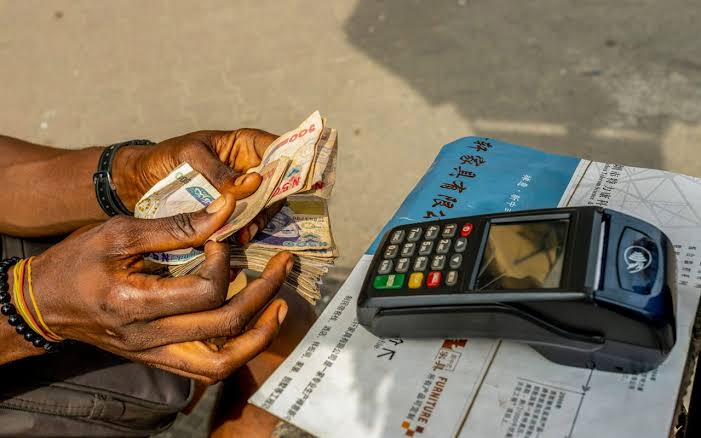
A 28-year-old suspected gunman allegedly robbed a female Point-of-Sale (POS) operator of N200,000 at gunpoint in Obollo-Afor, Udenu Local Government Area of Enugu State, threatening to shoot anyone who attempted to pursue him.
The incident occurred at about 9 a.m. on October 17, 2026, at the victim’s POS shop along Old Orba Road, Uhulor, Obollo-Afor.
The suspect, identified as Michael Ayisa, reportedly stormed the business premises armed with a pistol and dispossessed the operator of N200,000 before fleeing the scene.
It was gathered that the victim raised an alarm during the robbery, attracting the attention of residents, but the suspect allegedly threatened to open fire on anyone who attempted to apprehend him.
Confirming the incident in a statement on Sunday, the Enugu State Police Public Relations Officer, SP Daniel Ndukwe, said operatives of the Udenu Police Division, assisted by members of the Neighbourhood Watch Group, subsequently launched an operation that led to the suspect’s arrest.
According to him, Ayisa was apprehended at about 12:26 p.m. on October 18, barely 28 hours after the robbery.
A Beretta-like pistol and an expended 9mm ammunition shell were recovered during the operation.
Ndukwe disclosed that the suspect confessed to the crime during interrogation and would be arraigned in court upon the conclusion of investigations.
Meanwhile, the Commissioner of Police, Mamman Bitrus Giwa, has commended the operatives and members of the Neighbourhood Watch Group for their roles in the arrest.
He reiterated the Command’s commitment to tackling armed robbery and other criminal activities across Enugu State, urging residents to remain vigilant and promptly report suspicious movements to security agencies.
Clarify the Arrest Timeline
Tighten the Opening Paragraph
Use More Cautious Crime Wording

A police corporal attached to the Ajaokuta Division of the Kogi State Police Command has reportedly shot his girlfriend dead before taking his own life with his service rifle.
The incident allegedly occurred around 9 p.m. on Friday, October 23, 2026, leaving both the officer and the woman dead.
According to a report by Veracity News, the officer allegedly shot the woman at close range before turning the weapon on himself.
The circumstances surrounding the incident remain unclear, while the motive behind the alleged killings has yet to be established.
The bodies of the deceased were reportedly evacuated to a mortuary as investigations into the incident commenced.
Efforts to obtain an official reaction from the Kogi State Police Command were unsuccessful, as the command’s Public Relations Officer, ASP Saliu Afusat, could not be reached for comment, according to the publication.
The incident is expected to be investigated to establish the circumstances leading to the deaths and determine the events that preceded the shooting.
As of the time of filing this report, no further details about the identities of the deceased or the outcome of the investigation had been provided in the original report.
Editor’s note: The incident and details in this report have not been independently verified. An official statement from the Kogi State Police Command would be needed to confirm the circumstances of the deaths.

A young woman identified as Messioma Nwaora, who was earlier reported missing, has reportedly been found dead in Uga, Aguata Local Government Area of Anambra State.
Unverified reports circulating on social media allege that her former boyfriend, identified as Chima Emmanuel and said to be from Ebonyi State, killed her after she ended their relationship. The reports further claim that he strangled her with clothing, placed her body in a bag and transported it on a commercial motorcycle, popularly known as an okada.
The alleged confession and the circumstances surrounding the woman’s death have not been independently verified. Therefore, it cannot be conclusively established that the former boyfriend killed her.
As of the time of filing this report, the Anambra State Police Command had not issued an independently confirmed statement establishing the cause of death, confirming the identity of the deceased or stating whether a suspect had been arrested.
The reported death has prompted calls for a thorough investigation. Outstanding questions include where the body was recovered, how the woman died, whether Chima Emmanuel has been detained and whether investigators have obtained evidence linking him to the incident.
Further details are expected as reliable information becomes available.

A birthday party organised by popular Enugu socialite Nnaji Izuchukwu, popularly known as Stone, at Bull Hotel, Asata, Enugu, reportedly turned chaotic following a misunderstanding that allegedly prompted the hotel management to invite the police.
Stone, who was the celebrant, reportedly died from gunshot injuries sustained during the ensuing police operation.
Information available to Everydaynewsngr.net indicated that the misunderstanding at the birthday party degenerated into chaos, prompting the hotel management to call in operatives of the police Anti-Cultism Section.
In the confusion that followed, Stone was said to have attempted to escape through a window alongside another person before he sustained gunshot injuries.
However, the exact circumstances surrounding the shooting remained unclear as of the time of filing this report.
The Enugu State Police Command has since confirmed Stone’s death and ordered an investigation into the incident.
In a press release issued on Friday, October 23, 2026, the command said the Commissioner of Police, CP Mamman Bitrus Giwa, had directed a thorough investigation to establish the circumstances surrounding the death and determine whether the operation and use of firearms complied with established operational standards and applicable laws.
According to the police, operatives of the Anti-Cultism Section of the Violent Crime Response Unit (VCRU) stormed Bull Hotel during an intelligence-led operation targeting Nworie Chidera Kelvin, popularly known as Akidi, an alleged drug dealer and member of the Vikings Confraternity.
The police said Akidi was suspected of involvement in several cases relating to cultism and unlawful possession of firearms.
The operation reportedly led to the arrest of Akidi and nine other suspects, comprising males and females aged between 17 and 28.
The police also said quantities of dried weeds suspected to be cannabis, a weighing scale allegedly used for measuring illicit drugs, and ₦43,400 in cash were recovered during the operation.
Giving its account of how Stone died, the command said preliminary findings indicated that he and another suspect jumped through a window in an attempt to escape.
The statement added that an operative pursuing the two suspects was allegedly confronted by them as they attempted to disarm him.
According to the police, the officer’s firearm discharged during the ensuing struggle, leaving Stone with gunshot injuries, while the other suspect escaped.
Stone was rushed to a hospital, where he was later confirmed dead. His remains have been deposited in a mortuary for preservation and autopsy.
CP Giwa has directed the Assistant Commissioner of Police in charge of the State Intelligence Department to establish the facts of the incident and determine whether the officers involved complied with operational standards and applicable laws.
The commissioner assured that any officer found culpable would face appropriate disciplinary action.
He also urged Stone’s family, associates and members of the public to remain calm, stressing that professionalism, ethical conduct and strict adherence to operational standards, particularly those governing the use of firearms, must be upheld during police operations.
The police statement was signed by the Command’s Public Relations Officer, SP Daniel Ndukwe, on October 23, 2026.


-

 News5 days ago
Onitsha North LG Boss Reads Riot Act to Traders, Residents Over Poor Sanitation
-

 Health5 days ago
Nigeria’s Ebola Patient Identified as Wife of Swiss Diplomat, Infection Traced to Uganda
-

 Entertainment5 days ago
Nollywood Thrown Into Mourning as Veteran Actor Francis Duru Dies at 57
-
 Politics5 days ago
2027: It’s Not South-East’s Turn, Obi Not Our Best Presidential Candidate – Umahi
-
 Politics5 days ago
2027: APGA, APC Set for Joint Meeting in Anambra to Mobilise Support for Tinubu’s Re-election
-

 Politics5 days ago
2027: Minister Udeh to Unveil ‘ATM’ Political Group for Tinubu, Mbah’s Re-election
-
 News4 days ago
National Assembly Receives Proposals for New LGAs as Lagos Seeks 37, Akwa Ibom Missing from Lis
-

 Education5 hours ago
Caleb British International School Wins Zenith Bank Young Innovators Challenge, Bags ₦5m Prize