


Economy
Hon. Alex Ikwechegh Marks One Year of Transformative Leadership in Aba North/South



In just one year, Hon. Alex Mascot Ikwechegh has made a profound impact as the House of Representatives member for Aba North/South federal constituency. His unwavering dedication to the constituency has yielded tremendous positive changes.
On Sunday, November 17, Hon. Ikwechegh marked a significant milestone – the one-year anniversary of his service as the representative of his esteemed constituents. In a post on his Facebook page, Hon. Alex said, “This occasion is a poignant reminder of the trust and confidence you have placed in me to advance the aspirations of our community.”
He reflected on the past year, describing it as “nothing short of extraordinary.” He expressed gratitude for the strides made together, addressing critical challenges, advocating for collective interests, and championing initiatives for sustainable growth and development.


“Over the past year, this journey of leadership has been nothing short of extraordinary. I am deeply gratified by the strides we have made together—addressing critical challenges, advocating for our collective interests, and championing initiatives designed to spur sustainable growth and development. Every step taken has been driven by an unwavering resolve to effect meaningful and lasting change.”
“Although challenges have inevitably arisen, my optimism for our shared future remains steadfast. I am invigorated by the resilience of our people and the boundless potential that resides within our constituency. With renewed vigor, I look forward to continuing this journey of service, fostering collaboration, and driving the progress that our community so richly deserves” Hon Alex said.
Infrastructure Development
Within a year, Hon. Ikwechegh has championed numerous infrastructure projects, including road rehabilitation and expansion, attraction of over 15 electricity transformers to Aba North and South. This has significantly improved power supply, augmenting productivity, commercial activities, and security in the area. Additionally, he has purchased over 1500 solar-powered streetlights, illuminating the streets and further enhancing security at night.
Education and Empowerment
As a testament to his commitment to education, over 200 students have been awarded university scholarships, nurturing future leaders of tomorrow. He has also invested in the educational infrastructure of his constituency, installing solar energy at Abia poly Library, Providing books, chairs and countless materials for learning to Eziama central School, Riverside Primary Schools, and constitution crescent Primary Schools; also donating two coaster buses to aid student free transportation within the constituency.
Through his training programs, over 5,000 individuals have been equipped with valuable skills in various trades like tailoring, driving, tiling, beauticians, auto mechanics, solar panel installation, auto electricians, aluminum profile making and installation, shoe making and leather works, plumbing, etc, enabling them to become self-reliant and economically independent. His entrepreneurial empowerment programs have transformed lives, providing hundreds of women and youth with starter packs, sewing machines, and financial aid to ignite their business journeys.
Hon. Alex has also supported youth empowerment through sports by sponsoring local teams and organizing tournaments, inspiring young athletes to achieve their dreams.
Humanitarian Support
Additionally, he has distributed countless trailer loads of food palliatives, relief materials, and other products to alleviate economic challenges faced by the people. His foundation, the Alex Mascot Foundation, has also distributed free petrol and kerosene to thousands of residents in Aba North and South, a program that has ran for over 10 years, demonstrating his dedication to alleviating the hardships faced by his constituents.
Legislative Achievements
As a lawmaker, Hon. Mascot has been actively involved in sponsoring many bills that promote the welfare of his constituents, with some bills passing the second reading. One of his notable bills is the “Bill for an Act to Establish Federal Technical and Vocational Training Centre, Aba,” which has passed its first reading at the House of Representatives. This bill aims to promote self-reliance and curb unemployment amongst the populace by providing training, certification, and registration of trained artisans.
In conclusion, Hon. Alex Mascot Ikwechegh’s first year in office has been marked by significant achievements, transforming the lives of countless individuals in Aba North/South. His commitment to education, empowerment, humanitarian support, and legislative achievements has earned him recognition as a beacon of hope for the people.

• Says economic reforms have placed Nigeria on recovery path
• Shettima insists economy would have collapsed without tough decisions
President Bola Tinubu has declared that his administration has no regrets over the removal of petrol subsidy, insisting that Nigeria will never return to the old subsidy regime despite criticisms from political opponents.
Tinubu made the declaration on Monday evening at an event tagged Together Till 2027: An Evening with Original City Boy, organised by the City Boy Movement in collaboration with the Relax-Tinubu-Is-Fixing-Nigeria movement.
Defending his decision to remove fuel subsidy on May 29, 2023, the President said Nigeria was heading towards bankruptcy when he assumed office, stressing that the country could no longer sustain the financial burden.
Drawing an analogy from the biblical account of Moses leading the Israelites out of Egypt, Tinubu said returning to the subsidy regime would amount to reversing Nigeria’s journey towards economic recovery.
“You cannot ask Moses to go back to Egypt. We wake up with ideas, original thoughts, and deep thinking to move this country forward. With your energy, your support, Nigeria will never go back to Egypt. No regrets,” he declared.
The President also took a swipe at his political opponents, particularly former Vice President Atiku Abubakar, who had proposed restoring a modified petroleum subsidy arrangement if elected in 2027.
Tinubu maintained that his administration inherited enormous economic challenges, including depleted foreign reserves, outstanding obligations to foreign airlines and unsustainable government borrowing.
He explained that rather than dwell on the shortcomings of the previous administration, he accepted responsibility for addressing the country’s economic difficulties.
According to him, the difficult decisions taken by his government have begun yielding positive results, with the economy recording steady growth.
Turning to the 2027 presidential election, Tinubu urged young Nigerians to mobilise support for his administration and ensure that eligible voters obtain their Permanent Voter Cards.
He maintained that the forthcoming election should be about securing the country’s future rather than advancing the personal ambition of any candidate.
“You are not campaigning for me. You are campaigning for your own future, and that future is Renewed Hope,” he stated.
The President also defended the Students Loan Act, revealing that more than one million students had benefited from the Nigerian Education Loan Fund, NELFUND.
He commended his son, Seyi Tinubu, and members of the City Boy Movement for mobilising young Nigerians, urging them to intensify their grassroots engagements ahead of the election.
Speaking earlier, Vice President Kashim Shettima insisted that Nigeria’s economy would have collapsed without the far-reaching reforms introduced by the Tinubu administration.
Shettima argued that the President demonstrated courage by implementing difficult policies at a time when the country’s economic outlook was increasingly uncertain.
He cited economic growth of 4.43 per cent in the last quarter and foreign reserves reportedly approaching $60 billion as evidence of the administration’s progress.
Acknowledging the hardship experienced by Nigerians, the Vice President maintained that the situation could have been worse without the government’s intervention.
He also assured Nigerians that the administration was preparing measures to address agricultural challenges and bring down food prices.
“The President has to be commended, not demonised. Yes, Nigerians have gone through some tough times, but it could have been worse,” Shettima said.
In his remarks, Deputy Senate President Barau Jibrin described the City Boy Movement as a technology-driven political organisation capable of strengthening Tinubu’s reelection campaign.
He urged the group to deploy artificial intelligence in communicating the President’s policies, achievements and political philosophy while responding to opposition narratives.
Similarly, Speaker of the House of Representatives, Tajudeen Abbas, called on political officeholders to present verifiable accounts of projects and interventions delivered under the Tinubu administration.
Abbas disclosed plans to publish an audit of federal government interventions in his Zaria constituency within 14 days, challenging other public officeholders to demonstrate what they had achieved for their constituents.
He urged the City Boy Movement to independently verify government projects and provide feedback from ordinary Nigerians.
Earlier, the Director-General of the movement, Francis Shoga, assured Tinubu that Nigerian youths were prepared to mobilise nationwide in support of his Renewed Hope agenda.
Shoga described members of the organisation as committed partners in the administration’s national transformation programme, pledging to take its message to communities across the country.
Tinubu’s latest declaration comes amid continuing debate over the economic consequences of fuel subsidy removal, which triggered sharp increases in petrol prices and contributed to rising living costs across Nigeria.
By Francis Onoh
It is the right of every Nigerian to be financially included in the system. Data from the country’s foremost financial institution, the Central Bank of Nigeria (CBN) and the organisation Enhancing Financial Innovation and Access show that approximately 40% of Nigerians adults are financially excluded.
Attaining the 3.4% projected growth in the economy’s GDP will be difficult if not impossible, if the petty traders, the local skill workers and the roadside sellers are excluded from financial services and products that can aid their businesses. Enhancing financial inclusion for economic growth requires that financial literacy be extended and incorporated into the activities of organisations that work at the grassroots, for example, religious institutions.
Although with low levels of literacy, Emeka, Haruna or Bankole as devoted adherents of their various religions, are more likely to understands that their money is secure in the financial sector, that products such as pension plan, health insurance schemes and access to credit are available for citizens who are financially included, if and only if leaders of their religion introduce financial literacy to them. Combining their obligation to teach articles of their faith with introducing their members to financial literacy is one way to go if our country has to remedy the financial exclusion created by poverty and limited access to formal education.From the Global Multidimensional Poverty Index, the dimensions of poverty are Health, Education and Standard of Living.
Access to financial services can encourage people to enrol in a health insurance scheme to ensure good health within a manageable expenditure. A financially included person will have formal or informal education by association, which will invariably improve the living standard.
A financially included person is more likely to increase their business share if they access credit facilities in the financial sector and stand a better chance to benefit from government poverty alleviation programmes or even access funds from international development.
Making about 40% of Nigerian adults, which is about 35 million people, financially included will enhance capital formation assets, improve citizens’ disposable income, grow the nation’s financial sector and in extension catalyse industrialisation, which the country direly needs at this time. Financial inclusion for all is a necessary good that should be pursued by the Nigerian government at all levels, and stakeholders, such as religious leaders, must be made aware of their obligation in this space.
The time to do this is now.
Francis Onoh writes from Enugu
The Bank gave this warning on Monday during the public presentation of its latest Nigeria Development Update report titled ‘Building Momentum for Inclusive Growth’ in Abuja.
President Bola Tinubu signed the 2025 Appropriation Act into law, approving a record budget of N54.99tn, the highest in Nigeria’s history.
The budget was raised from the initial proposal of N49.7tn submitted to the National Assembly.
The fiscal plan makes provisions for N13.64tn in recurrent expenditure, N23.96tn for capital projects, N14.32tn for debt servicing, and N3.65tn for statutory transfers, while projecting a deficit of N13.08tn, to be financed through domestic and external borrowing.
The budget assumptions include a crude oil benchmark of $75 per barrel, oil production at 2.06 million barrels per day, an average exchange rate of N1,400/$, and an inflation target of 15 per cent.
Speaking at the event, the World Bank’s Lead Economist for Nigeria, Mr Alex Sienaert, said that despite strong revenue gains recorded in 2024, Nigeria’s 2025 budget assumptions remain optimistic and may prove difficult to meet.
He said, “It’s a very ambitious budget. Even with the very positive revenue sort of tailwind that we have… even considering that, it looks like it’s going to be pretty hard to meet some of the ambitious revenue targets that are in there.”
According to him, key assumptions such as average daily crude oil production of 2.1 million barrels per day and a benchmark oil price of $75 per barrel are unlikely to hold, noting that current production figures are closer to 1.6 million barrels per day.
He also cited uncertainty over how much revenue would flow from the removal of the petrol subsidy and the planned windfall tax on foreign exchange gains, saying these could weaken the Federal Government’s revenue position.
“This is important because if it does turn out that the revenue targets are not met, then that could mean that the financing requirements are more than budgeted. And if the financing requirements exceed what’s budgeted, then that’s either going to create arrears pressures… or it could renew risks of recourse to things like deficit monetisation under large-scale Ways and Means,” he said.
Sienaert warned that although Nigerian authorities had pledged not to resort to the CBN’s overdraft facility, doing so again could derail the country’s fragile macroeconomic recovery.
“The authorities have been very clear that they will by no means be going back to large-scale use of Ways and Means, but were that to happen, it would be just extremely disruptive to the whole rebuilding of confidence in fiscal sustainability and in the naira ultimately,” he noted.
On broader fiscal matters, the World Bank called on the Federal Government to eliminate the electricity subsidy, which it described as a “wasteful, regressive subsidy.”
Sienaert said key fiscal reforms such as the removal of the petrol subsidy and the adoption of a market-reflective exchange rate had helped improve the government’s fiscal position, but further reforms were needed.
“There’s still a range of fiscal policy and fiscal management issues where more can be done to safeguard the gains that have already been achieved… just to name, there is still one kind of wasteful regressive subsidy, which is the electricity subsidy. So work to address that,” he said.
He also advocated for improved oil revenue transparency and a reduction in the cost of governance, saying efforts to increase non-oil revenue must continue.
Sienaert noted that although the Nigerian National Petroleum Company Limited began applying official exchange rates for fiscal transactions in October 2023, only half of the revenue gains from the subsidy removal had been remitted to the Federation Account by January 2025.
“It’s just going to be important in the coming months to keep tracking this, and ultimately that the full revenue gains from the difficult job of eliminating the subsidy do flow to the Federation so that that can support a continued healthy fiscal picture and, in turn, spending on development priorities,” he said.
On inflation, the World Bank economist said monetary policy reforms had helped reduce inflationary pressures but noted that consumer prices remained high.
“We do need to acknowledge that price pressures remain elevated,” he said. “The battle against inflation continues, and to extend the military analogy a little bit, there’s a kind of fog of war… quite dense just at the moment.”
He added that recent changes to the Consumer Price Index by the National Bureau of Statistics had made it difficult to determine the current trend in inflation, noting, however, that continued coordination between fiscal and monetary authorities would be critical to restoring confidence.
The World Bank further urged the government to ramp up implementation of its targeted cash transfer programme aimed at cushioning the cost of reforms on poor households. The programme currently offers N25,000 monthly for three months to 15 million recipients.
“The implementation has just been quite slow. So only about a third of those recipients have received transfers so far. The good news is that this is being scaled up… and just important that that effort really continues so that as many people as possible get help,” Sienaert said.
Looking ahead, he called for a new growth strategy based on a “private-led, public-facilitated” model.
The World Bank also stressed the need to reduce costs of governance, including cutting “wasteful expenditures that are not essential, such as purchase of vehicles, external training, etc.” and reducing “the cost of collection of GOEs (FIRS, NCS, NMDPRA, NUPRC, etc.).”
He emphasised the need for increased investment in education and health, noting that Nigeria’s combined spending in these sectors remained among the lowest globally.
“In 2022, Nigeria was only spending 1.2 per cent of GDP on education and 1.8 per cent on health, or $23 per Nigerian per year on education, $15 per Nigerian per year on health,” he said.
He said private sector growth must also be supported by improving the competitive landscape and reviewing trade policies that restrict access to essential production inputs.
“Competition is like the sort of secret sauce that drives innovation and economic transformation. And in Nigeria, there’s some evidence… that actually there are elements of competition policy, and there are conditions that are needed for good competition that actually even compared to some of Nigeria’s immediate peers… the Nigerian competitive landscape lags some of those,” he said.
The Bank believes that following through with these reforms will position Nigeria to achieve its goal of becoming a $1tn economy by 2030.
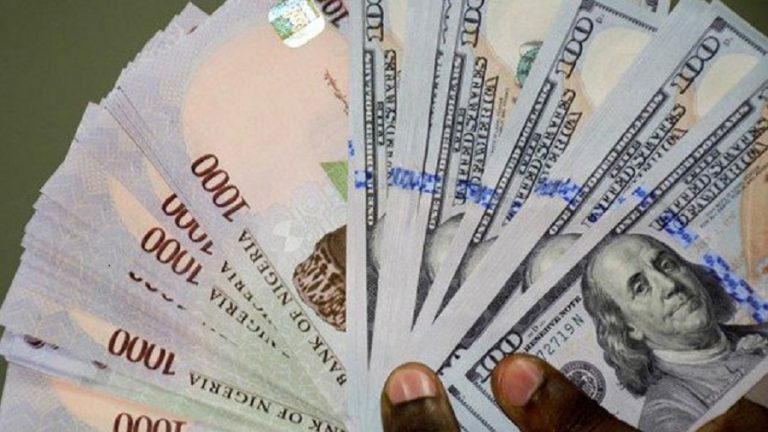
The Naira depreciated to N1,600 per dollar in the Nigerian Foreign Exchange Market (NFEM) today after three months of being on the N1,500 per dollar threshold.
Data published by the Central Bank of Nigeria, CBN, showed that the indicative exchange rate for the naira rose to N1,600 per dollar from N1,569 per dollar on Thursday, indicating N31 depreciation for the naira.
Likewise, the naira depreciated to N1,565 per dollar in the parallel market from N1,555 per dollar on Thursday.
Consequently, the margin between the parallel market and NFEM rate widened to N35 per dollar from N14 per dollar on Thursday.
Vanguard News
Fasua, who spoke on the Mic On Podcast hosted by Seun Okinbaloye on Saturday, also addressed how poverty is measured globally, saying many Nigerians misunderstand what is termed “multi-dimensional poverty.”
He said, “Some people don’t understand the meaning of multi-dimensional poverty.
“They think multi-dimensional poverty is worse than food poverty. What multi-dimensional means is that maybe the school your children attend is too far from you, or the hospital, and they categorise you as multi-dimensional.”
“$1 is N1,500 – it’s a lot of money for many people in Nigeria. $10 won’t buy you lunch anywhere in the US, sometimes you need at least $20, that is N30,000 in Nigeria,” Fasua stated.
Offering examples from everyday life, Fasua added, “I will tell you what you can do with $5 – that is N7,500 – if you are not going to eat in some highbrow places. In Gwarinpa, there are some people that sell Boli and fish and you will eat for N1,500. If you know where you are coming from.

-
 News3 days ago
C’RIVER 2027 BUDGET: GOV OTU PRESENTS ₦987.8bn ESTIMATES TO ASSEMBLY
-

 EverydayNews Telescope3 days ago
Enugu East Senate: The Dark Side of Ada Ogbu, NDC Candidate
-

 Opinion5 days ago
Christian Chinyeaka Ohaa: THE BUTTERFLY THAT THINKS IT’S A BIRD!
-
News5 days ago
Awka Anglican Diocese Rejects Primate’s Six-Month Suspension of Archbishop Ibezim, Threatens Exit
-
 News4 days ago
Tension Mounts in Awka Anglican Diocese as Supervising Bishop Ezeofor Moves to Take Over Wednesday
-
 News2 days ago
Holy Ghost Transformation: How Enugu North Chairman Ibenaku Onoh Ended Years of Traffic Chaos, Roadside Trading
-
 EverydayNews Telescope3 days ago
Ebonyi 2027: The People’s Quest For ODII Vs Compromised Stakeholders
-
News5 days ago
We Are Fighting Principalities, Spiritual Forces, Not Flesh and Blood – Archbishop Ibezim