



Opinion
Governor Ugwuanyi Rising To the Occasion in Protecting Enugu State Residents as Yuletide Approaches

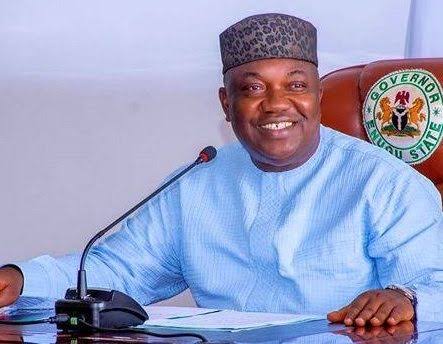

The influx of people from all nooks and crannies of Nigeria and the Diaspora into the state has become a testimony to the government’s commitment in keeping Enugu relatively safe as the yuletide is fast approaching and shopping for the celebrations is on the air.
In a church service attended by the Governor, the Bishop of Catholic Diocese of Enugu, Most Rev. Callistus Onaga, in his sermon, commended Gov. Ugwuanyi for the sacrifices he makes to ensure that Enugu State remains peaceful and secure, describing the governor as “a man of peace and a very nice man who feels the pulse of the people”.
Professor Adeniyi Olatunbosun (2019) noted that government should invest a lot to ensuring that security of lives and property are guaranteed. Because that is the essence we have government in place. The primary duty of government is to ensure that security of lives of the citizens are protected and guaranteed under the law. But the current wave of insecurity in many parts of Nigeria has gotten to an alarming level that kidnapping, banditry, terrorism are of daily occurrence. It is no surprise that many Southeasterners living in many parts of northern Nigeria have either relocated their families to Enugu State or have relocated entirely to the State. The same is applicable to many indigenes and residents of neighboring states like Anambra and Ebonyi, who have choosen to stay in Enugu and operate their business in these states. A clear case in point was during the just concluded Anambra Governorship election, Enugu was heavily choked with human and vehicular traffic that movement around Enugu metropolis was at a snail pace. It was a true test of what a peaceful environment can offer when the government in power makes protection of lives and property a priority.
The philosopher, Thomas Hobbes in his 1651 book titled, Leviathan espoused the famous social contract theory, the view that persons’ moral and/or political obligations are dependent upon a contract or agreement among them to form the society otherwise known as Government in today’s understanding. The said government shall offer protection to all while the residents shall pay taxes to maintain the government. This theory justifies the power and authority that law enforcement can exert over the population as a whole (Evans and MacMillan, 2014). The coercive power to arrest and apprehend a perceived violator of the law is as a result of the contract. The government is responsible for ensuring that those entitled to maintain the law are well taken care of, for them to put their lives in danger on daily basis for the protection of all. The poor treatment of the Nigeria Police Force is very deplorable and in return they offer the worst security to the citizens, ever preferring to be an orderly or an attache to a well to do person’s convoy where one can be assured of a three Square meal and get paid extra money to supplement poor salary.
Unfortunately, the Nigerian scenario has not lived up to the expectations of the citizenry. In fact, the Nigerian government has failed the security architecture of the country and in so doing the security architecture has failed Nigerians. All kinds of vices, killings, crimes of strange magnitude have become the order of the day. My goodness, the citizenry should blame themselves for the type of human beings they elect to govern them. Unfortunately, some of the country’s leaders are unqualified in all ramifications to govern and of course can’t give what they don’t have or arbitrary have choosen to turn their backs on the citizenry. One can accurately assert that most Nigerian leaders are more interested in protecting themselves with convoy of police officers at the expense of the general public, no wonder, men of the underworld realized this weakness and choose to rake havoc on the innocent citizens, who are helpless and unprotected by the government of the day. Well, this should be a matter for another day.
The Enugu scenario offers hope as residents and citizenry can attest to the fact, that the state is relatively safe when compared with the atrocities being committed in other states across Nigeria. Governor Ugwuanyi’s tireless efforts to maintain security in the state should be commended. The peace and security prevailing in the State can be attributed to his doggedness in maintaining peaceful relationships with the Hausa and Fulani communities, who are mostly in charge of cattle markets and herders in the State, ensuring that the federal law enforcement architures are given necessary equipment such as vehicle and other motivations to complement the resources coming from federal Government, establishment of neighborhood watch groups in every community and forest Guard groups in every ward. Funding and providing resources for these local quasi security groups is very instrumental to the security at the grassroots.
As the Christmas celebration approaches, many more Diasporans will return back to Enugu and more often, they will be the target of bad relatives who plot robbery and other crimes against these innocent returnees. Therefore, there is a need to beef up security in all the nooks and crannies of the State. It can further be enhanced by organizing an in service training to educate these local vigilante groups on improved operations during the yuletide. Splitting the teams into 2 shifts of 12 hours coverage for both night and day times. Ensuring that they are provided with equipment to effectively and efficiently service their respective neighborhoods. Regiging communication between the local vigilante groups and police divisions covering these respective neighborhoods.
On another critical aspect of free movement in December, the Ministry of Transport should be rewarded for holding forth despite not having enough MOT personnel to control and enforce traffic congestion at strategic locations in Enugu metropolis such as Ogui rd (Artesan) by Tunnel, otigba Roundabout, Zoo Roundabout Abakaliki rd, Abakpa Junction, Amurri rd at Texaco, Abakpa market, nowas, savage Crest, garden ave by Tunnel, works rd by new market, kingsway rd by club rd (Secretariat), Prisons roundabout, CPS by old UNTH road, Akwatta Roundabout, Zik Avenue at Edozie st, CIC rd by Mbanugo rd, Agbani Road by mbanugo (coal camp), Stretch of Neni street by queens school to Unec, Edozie by Robinson st, nise at Agbani rd, obioma by Agbani rd, mayor market at Agbani Road, Amechi rd by Agbani rd, Osumenyi / Kenneth rd at Amechi rd, Amechi rd at Ebony paint Rd, one day Rd by Agbani rd, Meniru at Agbani rd, Gariki market, Abakpa market, Emene rd by Carritas Rd. Savage crescent at Abakaliki rd (ESCET), chris chemist Roundabout, Egbuna Roundabout (P&T) throughHoly ghost, and 9th mile corner,etc. Residents of the metropolis are close to suffering Road rage and it will get worse before It gets better because of the influx of vehicles in the peaceful city. Thanks to Gburugburu for making Enugu a peaceful destination of choice for those coming home for the Christmas celebration.
The keke operators and mini bus drivers are out of control and causes fender bender accidents on daily basis without any retribution. In fact, driving in Enugu metropolis during rush hours of 7 am to 10am, 3pm to 9pm is becoming a nightmare. A friend of mine, who returned from lagos a few weeks ago narrated his experience on traffic holdups in Enugu by saying that Enugu is worse than lagos because drivers in Enugu form many lines in a single lane road grounding flow of vehicles to a standstill. But in lagos, fear of lastma is the beginning of wisdom. This really makes it very important that additional MOT personnel are recruited and trained to alleviate potential Road rage and accidents in addition to facilitating free movement of road users and earn revenue for the government through legitimate enforcement of traffic regulations.
Finally, the Governor has also done marvelously well in equipping the Enugu State fire service, another critical sector in protection of lives and properties. The State fire service is more than ever ready to counter the regular fire outbreaks during hamatttan season. The Chief fire officer of the State, Engr. Ohaa has been touring every local government of the state conducting in service training on fire prevention and clearing of brush around buildings as incessant brush fire is always rampant during the dry season. Teaching loca
l vigilante groups how to use fire extinguishers and other methods of preventing and stopping fire outbreaks. David Harper, former Supreme Court Judge in Australia once wrote that a government’s first duty is to protect its citizens against imminent danger; and protection at times of present and future peril necessitates policy based upon facts and logic. He made the statement while identifying the principal cause, and severity, of the fires burning since spring in parts of Australia. Many citizens do not know the investment the Governor has made in upgrading the capacity of Enugu State Fire Service to serve the State. The fire service is probably the best in east of he Niger. The state fire service is ever ready to respond to fire incidents on a timely manner. The fire service can be further beefed up by having two police patrol units dedicated to them on a 24 hour basis because the police in developed countries are the first responders and often clears the way for fire engines to enter and do their work. The Police also serves to cordon off the crime scene for proper investigation that takes place after fire has been controlled.
In conclusion, one can comfortably say that the Governor of Enugu State, H.E. Rt. Hon. Dr. Ifeanyi Ugwuanyi has truly kept fate with his oath of office in carrying out the most important function of government, security of lives and property as embedded in the famous social contract theory between the people and government. To that effect, Enugu State remains the coal city, home for all, and a peaceful environment, where one can comfortably stay and enjoy the Christmas season.
Hon. John Egbo
A veteran law enforcement officer

By Felix Oboagwina
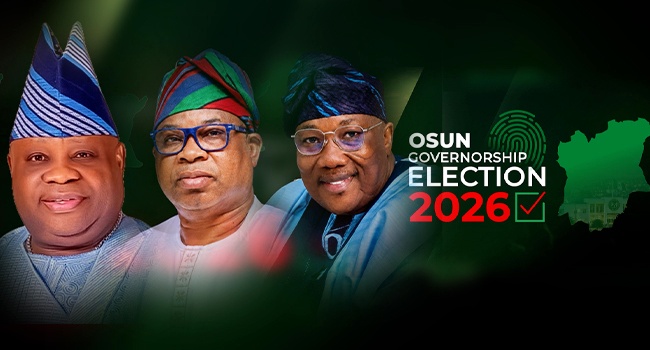
Towards the Osun State governorship election of August 15, not a few expected heaven to fall. All the signs were there. “Dead body surplus,” as they say on the streets. No fewer than 29 corpses laid underneath the soil, lives cut short for a purely political reason. Records cited 79 violent incidents. Thugs had been imported to complement local thugs.
When E-Day came, Nigeria’s ruling All Progressives Congress (APC) invaded Osogbo, the state capital, with all its Federal might. Up to 16 governors, alongside national figures like the Senate President and Speaker, vacated their comfort zones and migrated with brazenly loud–mouthed and foul–mouthed foot–soldiers into Osun, a state their party had declared a warzone they must conquer at all costs.
It did not matter to these APC goons that what they desired did not desire them. Osun people did not hide their love for their dancing Governor Ademola Adeleke. For these citizens, this beautiful soul with a distinguished family pedigree had not only waltzed his way into their hearts, he had in performance and projects surpassed the last two APC governors.
The Nigerian police had taken sides. They were unabashedly pro-APC. For all the killings unleashed against Accord, Adeleke’s party, the police still haven’tbrought any murderer to trial. Unfettered andunrestrained, the death squad roamed the streets of Osun seeking Accord people to devour. But as the Yoruba say, the craftiness of a concubine’s inner-circle can be equally matched by the cunningness of the husband’s own. Accord supporters also showed that, when pushed to the wall, they could match fire for fire. They made APC members too to pay the supreme price. Miffed with the fight-back, a certain Senator publicly egged his people to “kill Accord” members on sight. He spoke openly and on record. Yet the police failed to rein him in. On the other hand, Osun State Government VIPs, like the Chief of Staff, were rounded up. The Chief of Staff to the Governor, ANY GOVERNOR, is His Excellency’s nerve centre. Picking up Adeleke’s CoSamounted to going for Adeleke himself. But this was police victimising the victim.
The Progressives’ usual bad boys breezed in from Lagos and Abuja. They dared the Governor. They brazenly defied his efforts to enforce the peace. With police serving as their rear guard, they raided bus–stops. When Navyofficers, equally brought in to provide security, picked up these goons and guns, police trampled upon “espirit de corps,” attacked this sister Force and freed the hoodlums.
In the midst of all this bizarreness, Grammy nominee musician and nephew to the Governor, Davido, internationalised APC’s iniquity. He swore to drag the Federal-ruling party to the US, the UN, the UK and the EU if it rigged the election results.
However, the most important element in Nigeria’s election is the umpire: INEC. Would the Independent National Electoral Commission (INEC) withstand or would it kowtow to the Federal ruling party like the police had done? It all boiled down to the new man running the commission.
When the newest Sheriff landed in INEC in October 2025, sceptics shook their fists in anger. Like the President, Professor Joash Amupitan is Yoruba. And sceptics quickly disparaged the appointment of this University of Jos Law Professor as fitting into the established profile of the President as a regional, Yoruba-centric leader. Multifarious attacks landed from several sides. The appointee’s anonymity did not help matters. Who was this Amupitan? Unlike Professor Attahiru Jega, Justice Victor Ovie–Whiskey, Justice Tayo Akpata, Professor Maurice Iwu, Professor Humphrey Nwosu and others who hugged the klieg–lights long before securing the electoral umpire job, Amupitan came from the shadows. No one knew him. UNIJOS, from where he obtained his Bachelor’s, Master’s and Doctorate degrees, hardly made the news –much less this Professor of Law who earned his silk as a Senior Advocate of Nigeria in 2014. Even the little known about this UNIJOS teacher, who rose to become its Deputy Vice Chancellor, sparked controversy and rendered him politically incorrect to the powers-that-be in the Northern establishment. Why? One paper he wrote undid him. In the paper he presented in 2020, this Christian Prof had dared to pontificate against the terrorism that ravaged the North and the Fulani militants behind the bloodshed. Titling his paper as, “Nigeria’s Silent Slaughter,” the Senior Advocate of Nigeria called for urgent international intervention to stop what he termed “pogrom and attacks against the Christians and minority groups in Nigeria” by two extremist movements —Boko Haram and Fulani herdsmen. He didn’t stop with just naming and shaming these two genocide squads. Amupitan went ahead and committed the unpardonable sin of criticising the government for recognising Boko Haram as a terrorist organisation but failing to officially label Fulani herdsmen as terrorists. And in 2020, when Amupitan wrote that paper, remember, the Pan-Fulani Muhammadu Buhari held sway as President.
For that singular literary work, the Northern oligarchydeclared the North-Central Kogi State-born Amupitan an anathema. They piled pressure on Tinubu to discard him like a menstrual rag. The President stubbornly paid them deaf ears.
Amupitan appears to have justified Tinubu’s confidence, and that of those who spoke up for this SAN. Under this 62-year-old Prof, INEC has held by-elections and off-cycle elections, and not one governorship poll has been returned inconclusive. None!
Think! This was the same INEC which, under its last Chairman Mahmood Yakubu, littered the entire country with “inconclusive” elections. In Mahmood’s first four years (2015-2019), his INEC conducted 46 inconclusive elections. In 2019 alone, Mahmood delivered seven inconclusive governorship elections: Sokoto, Bauchi, Adamawa, Benue, Kano, Plateau, Rivers and Kano. But Amupitan’s tenure looks like a breath of fresh air.
Same INEC!
Same Commissioners!
Same Resident Electoral Commissioners!
So what changed? A new man steers INEC’s wheel! A new sheriff came to town! Not many have sung his praise. But the Osun elections proved just how stubborn and principled this gentleman can be. Governors, 16 of them, encamped in Osun. They came with tons of cash and foot–soldiers primed to snatch, grab and run. But all theirthunder and their shenanigans fizzled out into a whimper. But their efforts didn’t die easily. Phone calls assailed Amupitan from all corners –the National Assembly, The Presidency– ordering him: Stop the counting! Announce the election as inconclusive! But the UNIJOS Prof turned deaf ears and insisted the process ran its course. At the end of the day, votes counted. This unsung hero, Amupitan, ensured this happened in Osun. It took guts! It took strength of character! Say it: Yes, it took the fear of God!
What many don’t know is that Amupitan happens to be one of these public servants who cannot but flaunt their born-again toga. He is an Elder of the Christ Apostolic Church, CAC. Those who know him testify that he has lived by the CAC creed and grail. To boot, he holds no less a position than the Pro-Chancellor of the CAC-owned Joseph Ayo Babalola University, JABU. The Prof practises not orthodox Christianity, but the fire-bred brand of fundamental Christianity.
What does all this portend for 2027? When it matters mostto Nigerians, will the saintly principles of this unsung hero of the Osun State election goad him to deliver a credible election? Can he? Will he?
OBOAGWINA, JOURNALIST, AUTHOR AND MEDIA CONTENT PROVIDER, SENT THIS PIECE FROM LAGOS, AND WILL WELCOME FEEDBACK VIA “FOBOAGWINA@GMAIL.COM”
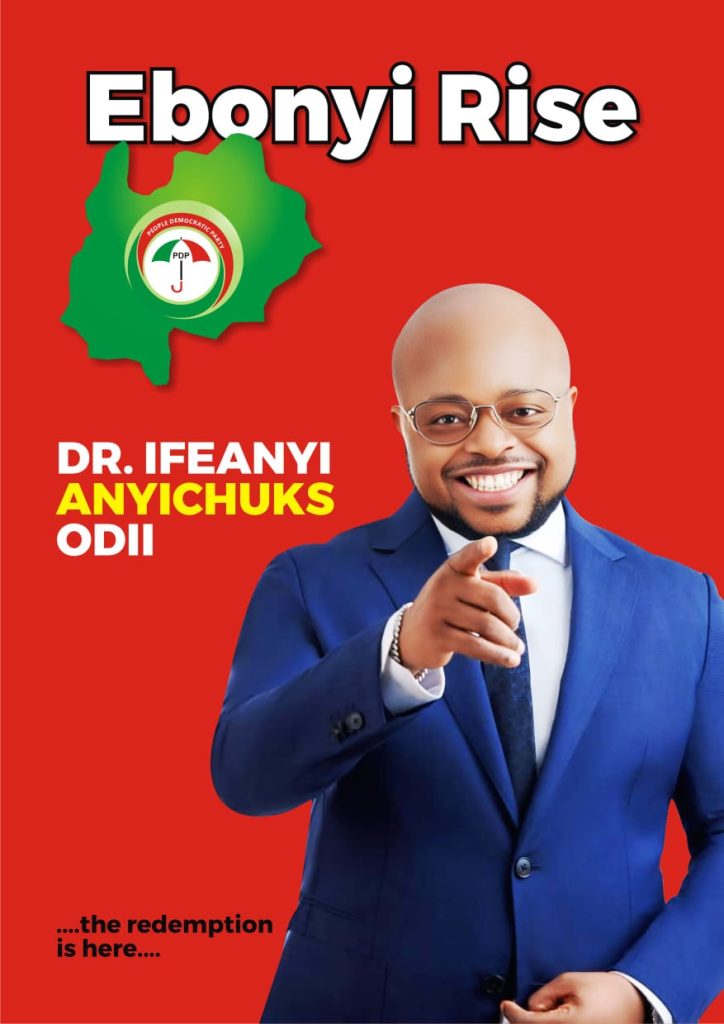
The 2027 governorship election in Ebonyi State must not be viewed as just another political contest. For many Ndi Ebonyi, it represents a defining moment — an opportunity to reflect on the direction of the state and make a decisive choice about the kind of leadership they want for the future.
Across the vast lands of Ebonyi, there is a growing sense of frustration and uncertainty. Many citizens are asking difficult questions about security, youth empowerment, employment opportunities, poverty alleviation and the welfare of vulnerable groups, particularly women and young girls.
The concerns are real, and they deserve serious political attention.
A state blessed with human and natural resources should be one where young people can look to the future with confidence, where women have meaningful opportunities to thrive, and where government policies translate into tangible improvements in the lives of ordinary citizens.
It is against this backdrop that Anyichuks Odii has emerged as a political figure attracting growing attention among those seeking a different direction for Ebonyi.
To his supporters, Anyichuks Odii represents a combination of experience, vision, capacity and determination — qualities they believe are necessary to reposition the state and restore hope among its people.
The argument is straightforward: Ebonyi needs leadership that does not merely administer the state but actively creates opportunities for its people.
The youths need more than political promises. They need practical skills, access to opportunities, entrepreneurship support, employment pathways and an environment where their talents can translate into sustainable livelihoods.
Women need more than symbolic representation. They need economic empowerment, access to finance, skills development, education and policies that enable them to become stronger contributors to their families and communities.
And every citizen deserves to feel secure enough to live, work and pursue legitimate aspirations without fear.
The 2027 election therefore provides Ndi Ebonyi with an opportunity to critically assess the records, ideas and capacity of every candidate seeking their mandate.
Democracy ultimately belongs to the people. Their voter cards are their instruments of choice, and their votes should reflect their aspirations for a better Ebonyi.
Already, political conversations are intensifying across the state. One of the songs gaining attention among supporters captures the mood of those calling for a change in political direction:
“Nwifuru kwakoro naba, onye ndozi abiago, naba, onye ndozi abiago, naba… Ka Anyichuks bata.”
For the supporters of Anyichuks Odii, the message is clear: they believe a new chapter is possible and that the 2027 governorship election could be the moment when Ndi Ebonyi choose the leadership they believe can deliver that change.
But beyond slogans and political songs, the real test will be the issues.
Ebonyi deserves a serious conversation about security, economic development, infrastructure, education, healthcare, youth employment, women’s empowerment and inclusive governance.
The people must demand clear plans, measurable commitments and accountability from all contenders.
If 2027 is indeed to become a moment of redemption, it must ultimately be a redemption achieved through the informed choice of the people.
And for those who believe Anyichuks Odii embodies the leadership Ebonyi needs, the journey to 2027 has already begun.
The message from his supporters is unmistakable:
Ebonyi is ready for a new conversation. Ebonyi is ready to choose. Ebonyi is ready for a new direction.
By Dr. Kenneth Anozie, Political Strategist
By Emma Igwe
The decision by the Minister of Works, Engr. David Umahi, to institute a defamation action against Linda Ikeji, Linda Ikeji TV Limited and Stella Ifeoma Okengwu should not be dismissed as an attempt to silence criticism.
At the heart of the case is a much more fundamental question: how far can individuals and media platforms go in publishing serious allegations against a person’s character and reputation without being held accountable if those allegations are found to be false?
Umahi has approached the High Court of the Federal Capital Territory, Abuja, with suit No. GWD/CV/264/26, filed on August 24, 2026. He alleges that publications and videos circulated between March 2025 and March 2026 contained allegations of bribery, corruption, intimidation, sexual misconduct, land grabbing, sexual harassment and claims that he was unfit for public office. He maintains that the allegations were false, malicious and calculated to damage his reputation.
These are not minor accusations.
A public official can be criticised over policies, projects, political decisions and performance. That is an essential part of democracy. But allegations of corruption, bribery and sexual misconduct are qualitatively different. If such allegations are published without adequate factual foundation and are ultimately found to be false and defamatory, the damage to the subject’s reputation can be enormous.
THE SCALE OF PUBLICATION MATTERS
Another important consideration is the alleged reach of the publications.
According to the reports on the suit, Umahi alleges that material posted by Stella Okengwu was subsequently amplified through Linda Ikeji’s media platforms, including Linda Ikeji TV and its Instagram platform.
That distinction matters.
An allegation whispered privately to a few people is one thing. An allegation disseminated through platforms with substantial online audiences is another.
If the court ultimately finds that defamatory statements were repeatedly disseminated to a large audience, the extent of publication would naturally become relevant when assessing the injury allegedly suffered by the claimant.
UMAHI SAYS HE DID NOT RUSH TO COURT
The minister also says that his lawyers first demanded that the alleged publications be removed, that an unreserved apology be issued and that the defendants undertake not to repeat similar allegations.
He alleges that those demands were not complied with.
If that account is established before the court, it strengthens the argument that litigation was not necessarily his first response, but followed an alleged failure to resolve the dispute through a demand for correction and retraction.
WHY THE CLAIM FOR DAMAGES IS SIGNIFICANT
Umahi is seeking ₦500 million in general damages and ₦2 billion in exemplary damages, making ₦2.5 billion in damages. He is separately seeking ₦500 million as costs of the action and 10 percent post-judgment interest.
The amount claimed should not, however, be confused with an amount already awarded by a court.
It is a claim that must be proved.
And that is precisely why the court process is important.
If Umahi can establish that the publications were false and defamatory, that they caused serious injury to his reputation and that the defendants were legally responsible for their publication or republication, then compensation would serve more than a personal purpose.
It would reinforce the principle that freedom of expression does not automatically translate into freedom from responsibility for demonstrably false and defamatory statements.
THIS IS NOT ABOUT PROTECTING POLITICIANS FROM CRITICISM
There is a dangerous tendency in Nigeria to treat every defamation action involving a politician as an attempt to suppress free speech.
That approach is too simplistic.
Democracy requires vigorous criticism of public officials. Journalists, bloggers and citizens must remain free to investigate government and expose genuine wrongdoing.
But democracy also requires accountability for what is published.
If a journalist has evidence of corruption, the appropriate response is to present the evidence and defend the publication in court. If a person makes an allegation and can prove its substantial truth, that too is a legitimate defence.
But if a court eventually determines that serious allegations were knowingly or recklessly published without justification and caused reputational damage, the law must provide a remedy.
THE COURT SHOULD DECIDE — NOT SOCIAL MEDIA
This is perhaps the most important aspect of the Umahi case.
At present, the allegations made by Umahi in his Statement of Claim remain allegations before the court. The defendants had not, according to reports available as of August 25, been served with the writ, and no hearing date had been fixed. They will have the opportunity to present their defence.
Therefore, neither Umahi nor his opponents should declare victory prematurely.
The proper question is not whether Umahi is powerful enough to sue.
The proper question is whether the publications complained of were true, substantially true, fair comment, privileged, or defamatory and unjustified.
That is what evidence and the judicial process should determine.
THE REAL TEST
Umahi deserves compensation if he proves his case.
If the court establishes that he was falsely accused of serious criminal, corrupt or sexually improper conduct; that the allegations were defamatory; that the defendants were legally responsible for the publications; and that he suffered compensable injury, then a substantial award would not be an attack on journalism.
It would be an application of the law.
Conversely, if the defendants can substantiate their allegations or establish a recognised legal defence, the court should equally protect their right to publish matters of legitimate public interest.
That is the essence of the rule of law.
The court — not social media, not political supporters, and not bloggers — should have the final word.

In life, evil never lasts forever. *Change must always come*! Many believe today that 2027 is *FREEDOM TIME FOR EBONYI PEOPLE*
In the midst of these cacophonic political noise, a man of the people has arisen to clean the tears that Ebonyi has suffered under an *ifuru* guy whose legendary for corruption and sleaze is unquantifiable..
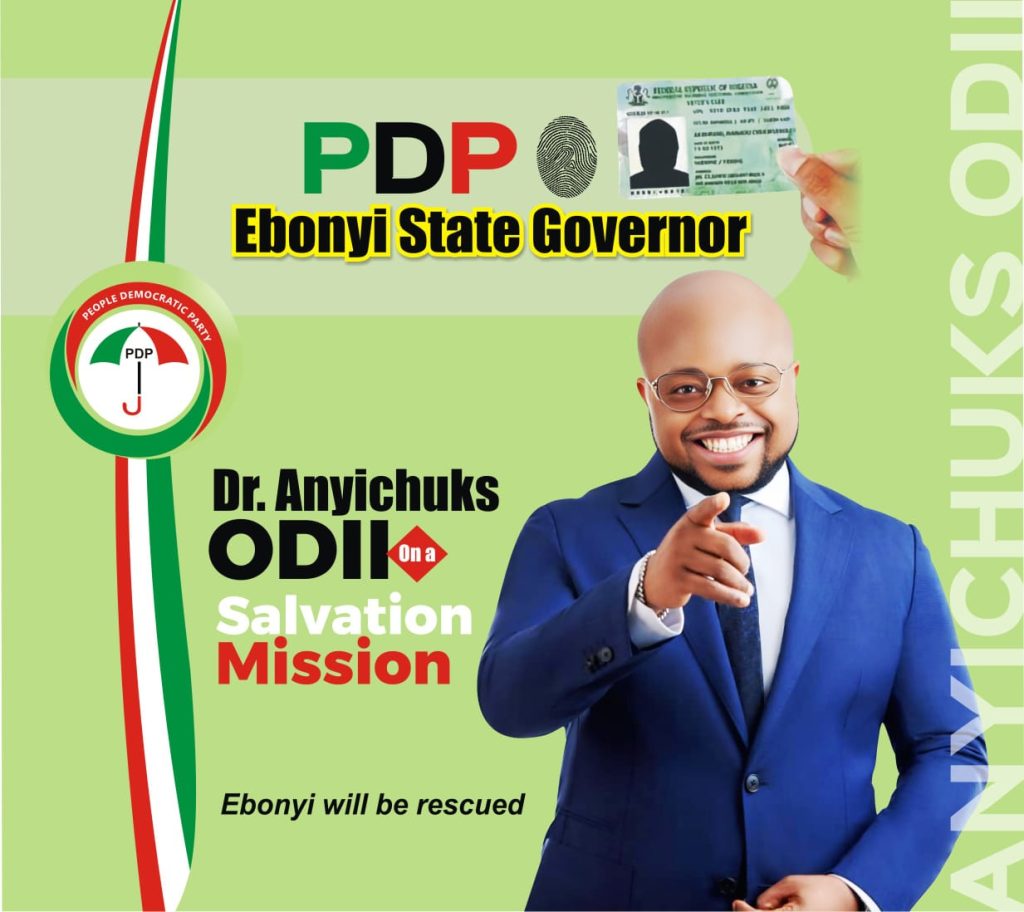
*DR. ANYICHUKS ODII IS FINALLY HERE*! The people are excited. The vision is classic which will turn Ebonyi around.
1. Infrastructure.
2. Industrialization.
3. Farming improvement
4. ICT development
5. Youth empowerments
6. Government restructuring.
7. Securing lives and property
8. Expanded governance to touch all parts of Ebonyi
9. Education expansion and offer of scholarships to indigent students & pupils.
More will come with a leader who, as a private businessman made all these possible, as well as developed sporting activities around Ebonyi State.
Ndi Ebonyi, look at the man; *ANYICHUKS ODII*
Dr. Kenneth Anozie
Political Analyst
Kenneth Anozie
Soon, the INEC regulations will lift the lid on campaigns to start. In Ebonyi state, there will be a lot of political noise. The political timberlines will be sounding cacophonously. The noise will be unbearable.
However, only one campaign, the Governorship candidate of People’s Democratic Party, PDP, *DR. ANYICHUKS ODII* will be the only mandate the good people of Ebonyi need to be hearing and standing on. His mandate merits all the noise because he has served the people and has been a source of succour for thousands of families in many aspects.
The vision of Anyichuks Odii on health care, education, social safety, security and agriculture/industrialization as well as youth empowerments are all top notch. They are all well spelt out, which will be released as his manifesto will be released soon.
Already, we have seen a glimpse of it in our previous revelations and analysis. As it stands today, only on the mandate of Anyichuks Odii as the governorship candidate of PDP are people expected to stand on.
The mandate has character, capacity, compassion and great vision.
*EBONYI PEOPLE, BLIGHT ANY OTHER MANDATE, ANYICHUKS ODII IS THE MANDATE WE SHALL ALL STAND ON*
Dr. Kenneth Anozie
Political Analyst

-
 News3 days ago
Sacked Works Commissioner: Release or Charge Him to Court, Oganiru Izzi Challenges Nwifuru
-

 News1 day ago
No Survivor Found Yet in Ondo Air Crash — Aiyedatiwa
-

 News19 hours ago
How NAF Plane Vanished From Radar Shortly After Take-Off, Crashes In Ondo Swamp
-

 Politics1 day ago
2027: Odii Will Not Step Down, Says Spokesperson
-
 Crime3 days ago
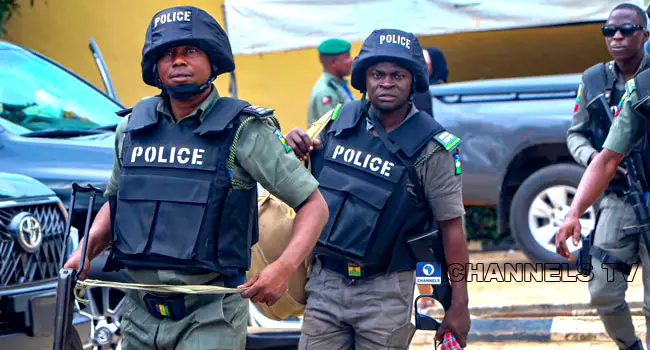
Police Deploy DIG, Two Commissioners to Rescue 20 Abducted Prospective Corps Members
-
 EverydayNews Telescope19 hours ago
Nkalagu Cement Factory: Project or 2027 Political Promise?
-
 Crime3 hours ago
Court Denies Alleged Fake Pastor Bail as Seven Witnesses Await Trial
-

 News3 hours ago
NAF Crash Claims Pilot 16 Days After Wedding