
Foreign
Food crisis: 82 million Nigerians may go hungry soon, UN warns


The United Nations has again predicted that 82 million Nigerians, about 64 per cent of the country’s population, may go hungry by 2030, calling on the government to tackle climate change, pest infestations, and other threats to agricultural productivity.
The prediction comes in the wake of a persistent hike in food prices in the country.
According to the National Bureau of Statistics, Nigeria’s food inflation rate hit a record high of 40.66 per cent in May 2024, surpassing the previous month’s 40.53 increase.
This surge represents the largest year-on-year increase in food prices since records began in 1996.

Historically, food inflation in Nigeria has averaged 13.42 per cent, with the lowest point of -17.50 per cent in January 2000.
In 2023, the Food and Agriculture Organisation predicted that no fewer than 2.6 million Nigerians in Borno, Sokoto and Zamfara states, and the FCT may face a food crisis between June and August 2024.
According to a government-led Cadre Harmonisé analysis released in March, 2024, approximately 4.8 million people in Borno, Adamawa and Yobe states are experiencing severe food insecurity, the highest level in seven years.
Also, as Nigerian workers commemorated the 2024 May Day, Organised Labour expressed concern about the country’s rising food prices and fuel scarcity, saying that the current situation threatened the survival of workers.
A Senior Advocate of Nigeria, Olisa Agbakoba, also recently warned that a hunger riot might soon break out in Nigeria, calling on the Federal Government to act fast.
Speaking recently at the launch of CropWatch in Abuja, the Resident Humanitarian Coordinator of the Food and Agriculture Organisation, represented by one of the UN officials, Taofiq Braimoh, said, “The government of Nigeria, in collaboration with others, conducts an annual food security survey. This year’s results are alarming: approximately 22 million Nigerians will face food insecurity in 2023, and around 80-82 million are at risk of severe food insecurity by 2030.
“Nigeria, like many countries, grapples with food insecurity, climate change, unreliable water patterns, pest infestations, and other threats to agricultural productivity. As an agrarian society, our farms’ success directly impacts food availability for our population. Leveraging technology is crucial to strengthening our agriculture sector and ensuring food security.”
He stressed that satellite-based crop monitoring provided real-time data on crop conditions, enabling farmers and policymakers to make informed decisions and optimise agricultural practices.
He noted that the technology could help expedite the accomplishment of sustainable development goals in food and agriculture.
‘Climate change fuelling high hunger rate’
An agricultural economist from the Centre for Agricultural Development and Sustainable Environment at the Federal University of Agriculture, Abeokuta, Tobi Awolope, attributed the high hunger rate in Nigeria to climate change, which has severely affected smallholder farmers, the main players in food production.
Awolope, who spoke to our correspondent on Friday, noted that those farmers had a low adaptive capacity to cope with the effects of climate change, such as irregular rainfall patterns and lack of irrigation.
“Climate change has reversed the progress towards achieving Sustainable Development Goals 1 and 2, which aim to eradicate poverty and hunger. Smallholder farmers are struggling to adapt to the changing climate, and this has led to declining food availability and rising prices,” she said.
She emphasised the need for government support for farmers, including subsidising production inputs, and providing technology and irrigation assistance.
“Farmers cannot mitigate the effects of climate change alone. The government needs to step in and support them to ensure food security,” she stated.
Awolope also stressed the importance of utilising research recommendations to inform policy decisions, saying, “This is not the time to leave research output on the shelf. We need to use those recommendations to make informed decisions that will support our farmers and ensure food availability.”
Transform agriculture with science, technology — Expert
Meanwhile, the Director General of the National Space Research and Development Agency, Dr Adepoju Mathew, highlighted the importance of science, technology, and innovation in advancing agricultural development and food security.
“The world population is projected to reach 9.5 billion by 2050, and food production must increase by 70 per cent to meet this demand.
“Space science, technology, and innovation play a crucial role in transforming agriculture and enhancing food security,” he added.
UN report reflects real situation— Farmers
Speaking with Saturday PUNCH, the National Secretary of the All Farmers Association of Nigeria, Dr Yinusu Alidu, said the UN report should be taken seriously, noting that it reflects the real situation in the country.
He said, “What the UN said is trending at the moment, because it reflects the real situation in the country. It is not magic; the UN is only gathering reports, and speaking to the current situation. They are using global warming, climate change, insecurity, and other factors to make the report. People like us on the field know already that the UN’s report is becoming real.
“This is July and there is not enough rain yet. Weather forecast experts have predicted that there is going to be a drought. They predicted that there was going to be a short rain period, and that rain may not fall after August. They advised farmers to plant crops that will yield and mature fast. If not, the crops will be stunted and will not yield well. If people use conventional modes of planting, their farms will be affected by drought.”
Alidu urged the government to act on the report to prevent a food crisis.
He said, “It is the responsibility of the government to prevent a food crisis. The government should encourage irrigation farming systems. The government needs to create dams and channel waste water for farming purposes. Water is being wasted a lot. This is the right time for the government to be serious about off-season farming. Seventy per cent of crops grown in Nigeria are planted with direct rain; few people use irrigation systems. The government has a responsibility to make farming easy for farmers. They should support the irrigation system.
“I don’t know why the government is taking a lackadaisical approach to farming. Maybe they believe they have the money to buy anything they want, regardless of the price, because they have money. What about the average Nigerian? I would only advise farmers to be smart and fast in farming.”
‘UN report reflection of govt failure’
Also speaking with our correspondent, the President of Integrated Agricultural Services, South-West, Mr Adeyemi Adejare, described the UN’s report as a pointer to the government’s failures in supporting agriculture and farmers.
Adejare said Nigeria was already witnessing a shortage of food, saying only aggressive farming could help Nigeria out of the crisis.
He said, “The only way to avert the UN’s prediction is to engage in aggressive farming, and get genuine support from the government. Nigeria is facing food insecurity already, so we can’t shy away from what the UN said. It is a pointer to the government’s failure to support agriculture.
“The food industries and our farming system must reach a sustainable level to avert the prediction, and that requires a holistic approach. We need to discard the old farming, storing, and processing systems. Government at all levels must be genuinely committed to promoting agriculture.
“The government must empower farmers and encourage mechanised farming for the youth. The government must also provide soft loans and subsidise farming inplements for genuine farmers.”
Adejare noted that the UN report was correct, adding that the nation must take proactive actions to end food insecurity.
He said, “The UN report is correct. Currently, it will take Nigeria 30 uninterrupted farming and harvesting seasons to achieve food security, because of the shortage we have already.
“The government has not been fair to farmers. The northern farmers are enjoying little benefits from the government, but the South-West governors are not helping the farmers at all. The governors have not been helpful; they have been paying lip service to the promotion of agriculture.”
Source: PUNCH




The Nigerian community in the United States has been thrown into mourning following the sudden death of Eric Ezeokoli, a student of California State University, Long Beach.
Ezeokoli, who was born on October 6, 1960, reportedly died on Friday, April 11, 2026, at Saint Mary’s Hospital after a brief illness.
Until his death, he was studying Engineering at the university, also known as Long Beach State University. Sources disclosed that he had previously lived in San Jose before relocating to the Los Angeles area.
Tragically, at the time of his passing, Ezeokoli was said to be homeless and living in his car, with no fixed address.
The deceased was originally from Anambra State, although details about his exact hometown remain unclear. There are indications he may have hailed from Aguata, but this has not been officially confirmed.
Efforts are currently underway to locate his family members and relatives in Nigeria. Members of the Nigerian community and concerned individuals are appealing to anyone with useful information about Ezeokoli’s background or family to come forward.
A contact person, Paul Kizito Eze, has been designated to receive information that could help trace the deceased’s relatives.
The appeal has also been extended to people from Anambra State, particularly those familiar with communities in Aguata, to assist in identifying and notifying the family.
The situation has sparked renewed concern over the welfare of some Nigerians living abroad, especially those facing hardship and isolation.
Anyone with relevant information is urged to reach out urgently to assist in reconnecting the late Ezeokoli with his family for proper burial arrangements.

President Donald Trump doubled down Monday on his threat to wreck Iran’s civilian infrastructure, warning US forces could destroy every bridge and power plant in the country within four hours and that a truce proposal from international mediators was not yet enough.
Five weeks into the Middle East war triggered by a joint US-Israeli air assault on Tehran, the US leader has demanded that Iran reopen the Strait of Hormuz to international shipping by midnight GMT on Tuesday, or face a newly devastating round of bombing.
Both Trump and Iran have said that a proposal touted by international mediators for a 45-day ceasefire is not yet ready, and in a Washington press conference, the US president dialled up his warlike rhetoric once again.
“We have a plan — because of the power of our military — where every bridge in Iran will be decimated by 12 o’clock tomorrow night, where every power plant in Iran will be out of business, burning, exploding and never to be used again,” Trump said.
Trump had earlier accepted the ceasefire plan was a “significant proposal”, but went on to say it was not good enough. Iranian state media quotes officials stating that Tehran too “has rejected a ceasefire and insists on the need for a definitive end to the conflict”.
Trump said intermediaries “are negotiating now” on improving the ceasefire proposal, which US media reported was being mediated by Pakistan, Egypt and Turkey.
Iran’s military said it would “continue the war as long as the political authorities see fit”.
Trump’s latest threats, including a profanity-laced social media post on Sunday, have sent shockwaves through the international community.
International Committee of the Red Cross chief Mirjana Spoljaric warned that “deliberate threats… against essential civilian infrastructure” are illegal.
But talk of a ceasefire came as the US and Israel were striking targets across Iran, including major petrochemical facilities, and as Iran continued missile and drone attacks around the region.
Iran’s virtual blockade of Hormuz has sent oil and gas prices soaring and pushed countries around the world to enact measures to contain the fallout.
Earlier Monday, Israeli strikes had hit major Iranian petrochemical facilities, including in Asaluyeh on the Gulf coast, the country’s biggest, and another outside Shiraz in central Iran.
Israel’s military said it had also struck Iranian air force targets, including planes and helicopters at airports in Tehran and elsewhere.
Iran’s Guards posted on Telegram on Monday that their intelligence chief Majid Khademi, had been killed at dawn in US-Israeli strikes.
Israel’s military also said it had killed Asghar Bagheri, commander of the Guards’ Quds Force special operations unit, on Sunday.
“We will reach anyone who seeks to harm us,” Israeli Prime Minister Benjamin Netanyahu said.
The Guards’ Intelligence Organisation vowed a “major retaliatory strike” against those responsible for killing their commanders, their official Sepah News website reported.
Yemen’s Houthi rebels said they launched an attack targeting Israel, supporting their backer Iran and Lebanon’s Hezbollah.
The war, which erupted on February 28 with US-Israeli strikes on Iran that killed Supreme Leader Ayatollah Ali Khamenei, has engulfed the Middle East and roiled the global economy.
The worldwide oil squeeze has hit aviation, with Indonesia on Monday saying it would increase a jet fuel surcharge and low-cost carrier Air Asia X announcing ticket price hikes of up to 40 per cent.
South Korea will send ships to fetch oil from Saudi Arabia’s Red Sea port of Yanbu, avoiding Hormuz altogether, a ruling party MP said, while Taiwan’s government said it too would take the Red Sea route.
Gulf nations allied with the US have also been sucked into the war, with Kuwait and the UAE reporting strikes and injuries from Sunday to Monday.
Iran has continued to launch attacks at Israel, where the military and medics said four bodies were recovered from a residential building in the northern city of Haifa that was struck by a missile.
Iranian media reported several attacks on residential areas of Tehran, while the state broadcaster said gas outages hit parts of the capital after a strike on a university.
AFP

Some Nigerians in India have raised the alarm over what they described as increased racial profiling and brutalisation by the Indian police.
They lamented visa regularisation challenges and high renewal fees, which they said had made life unbearable in the Asian country.
Some of the residents alleged that some Nigerian students were physically assaulted, adding that reporting to the authorities had changed nothing.
NANS issued a seven-day ultimatum to the Federal Government for urgent diplomatic engagement, warning that it would escalate advocacy actions nationwide if the issues were not addressed.
Speaking with journalists during the demonstration, the NANS Vice President (Special Duties), Abubakar Mallawa, decried the alleged ill-treatment of Nigerians, adding that the association had received multiple distress reports from students in Indian cities, particularly Mumbai, over visa challenges, discriminatory practices and systematic profiling.
He noted that the affected students and other Nigerians engaged in legitimate businesses had faced difficulties in renewing visas, mass arrests linked to immigration status, denial of rental accommodation based solely on nationality, closure of Nigerian-owned shops, confiscation of goods, and, in some cases, forceful entry into residences and detention under degrading conditions.
The group also raised concerns over the visa application process, alleging that Nigerian applicants were often required to pay interview and processing fees but denied visas without clear explanations.
In a recent interview on Arise TV, the National Secretary of NANS, Anzaku Shedrack, said the group had been receiving disturbing videos showing the brutalisation of Nigerians in several parts of India, and called on the Ministry of Foreign Affairs to intervene.
A video clip played by the tv station showed some suspected Indians attacking and stoning an individual, said to be a Nigerian, on the floor.
In an interview with Saturday PUNCH, the Education Coordinator of the Association of African Students in India, Rajasthan chapter, Abisola Williams, said Nigerians were going through tough times in India.
Williams also admitted that Nigerian students were seriously affected by regularisation challenges.
The third-year physiotherapy student explained that India does not grant permanent residency to international students.
“It’s either you’re a student or a professional with a work visa. As for Nigerians, we have to renew our visas every year, as students or professionals,” she said.
Williams noted that Indian authorities reserved the right to deny visa extensions to students who failed to meet academic or financial obligations.
Another Nigerian student in Delhi, who spoke on condition of anonymity, alleged that Nigerians were required to pay 10,000 rupees (about N146,000) every three months to renew their visas, a fee she claimed is lower for students from other African countries.
“Other students from other African countries do not pay for it. We were told it was an agreement between the Indian and Nigerian governments for students to pay every three months. I know Zimbabweans who are not paying to renew visas, while Ghanaians pay a maximum of 500 rupees, which is about N8,000. This is just unfair. That’s the cross Nigerians bear to regularise their stay in India. They don’t give us enough time to raise the money. But for other nationals like Zimbabweans, they get about eight months before their next visa expires,” the student said.
She added that the fee was not disclosed during visa processing in Nigeria and that many students only became aware of it after arriving in India.
The student further alleged that Indian police actively track Nigerians, whose visas had expired, leading to arrests, intimidation and deportation.
“When my visa was about to expire, I went to renew it, but was surprised to learn it was 10,000 rupees. After that, the police came looking for me because I had not renewed my visa.
“I have seen male students who were bullied and harassed because of this. They don’t believe we live by the rules. Anything that goes wrong is attributed to Nigerians, and it’s unfair.
“There are people who have faced serious injustice in the hands of these officers. Some were taken to deportation camps. I knew someone who was deported to Nigeria for this,” she said.
Drug crimes in India
No fewer than 50,000 Nigerians are believed to be resident in India.
Analysts believe that the Nigerian community is being targeted due to increased arrests of some people from the country for alleged drug trafficking.
In 2024, Indian agencies arrested 660 foreign nationals for drug-related crimes.
No fewer than 106 of the suspects were reported to be Nigerians, the second highest. Nepal was first on the list with 203 nationals.
Also, 2,356 Nigerians were deported by India between 2019 and 2024, with removals quadrupling from 339 in 2021 to 1,470 in the 2023-2024 fiscal year.
Nigerians are police informants – Diplomat
But a diplomat in India said some Nigerians were being used as informants by the Indian police.
The official, who spoke on condition of anonymity, alleged that such people were usually induced with money.
“Fellow Nigerians report one another to the police when they have disputes. They become informants because the authorities give them a share. When Nigerians are arrested, the police extort money from them, and the informants take a cut. These practices put the country in a bad light,” the source said.
The source also urged Nigerians to comply with local laws.
The official added, “People should ask why Nigerians are being maltreated. What offence did they commit? You are in another country and must obey their laws. Some individuals have overstayed for years without valid visas. Once caught, there may be consequences.”
On the quarterly visa renewal, the official said the issue also affects Nigerian diplomats and called for reciprocal measures.
“As diplomats, our families renew visas yearly. It is an issue we have raised at the highest level, but nothing has been done. The best approach is reciprocity. We should ensure their families get similar terms, while we consider shorter durations for their students.”
PUNCH

The UK Home Office has announced increases in fees for a wide range of visas, residency applications, and citizenship processes, effective April 8, 2026.
The revised fee schedule shows hikes across nearly all categories of applications made both within and outside the United Kingdom. The changes will impact Nigerians and other foreign nationals seeking to visit, study, work, or settle in the UK.
Nigeria remains one of the largest sources of visa applicants to the UK, with hundreds of thousands applying annually for visit, student, and work visas.
Under the new structure, the short-term visit visa (up to six months) will increase from £127 to £135, while student visa fees will rise from £524 to £558. Applicants seeking indefinite leave to remain will now pay £3,226, up from £3,029. Similarly, the cost of naturalising as a British citizen will increase from £1,605 to £1,709.
In a rare exception, the fee for registering a child as a British citizen has been reduced from £1,214 to £1,000—a decrease of £214. Most other fees have either increased or remained unchanged. Notably, fees for the Tier 1 (Investor) visa and the High Potential Individual visa remain unchanged at £2,000 and £880 respectively.
Breakdown of Key Changes
Visit Visas:
Short-term (up to 6 months): £127 → £135
Long-term (2 years): £475 → £506
Long-term (5 years): £848 → £903
Long-term (10 years): £1,059 → £1,128
Visiting academic (over 6 months up to 12 months): £220 → £234
Private medical treatment (over 6 months up to 11 months): £220 → £234
Direct airside transit visa: £39 → £41.50
Landside transit visa: £70 → £74.50
Student Visas:
Student (main applicant and dependants): £524 → £558
Child Student: £524 → £558
Short-term student (English language): £214 → £228
Work Visas:
Skilled Worker (up to 3 years): £769 → £819
Skilled Worker (over 3 years): £1,519 → £1,618
Health and Care Visa (up to 3 years): £304 → £324
Health and Care Visa (over 3 years): £590 → £628
Innovator Founder: £1,274 → £1,357
Start-up: £465 → £495
Scale-up: £880 → £937
High Potential Individual: unchanged at £880
Graduate Route: £880 → £378.72
Settlement and Indefinite Leave:
Route to settlement: £1,938 → £2,064
Indefinite leave to remain: £3,029 → £3,226
Visitor extension (in-country): £1,100 → £1,172
Leave to remain – other: £1,321 → £1,407
Travel Documents:
Certificate of travel (adult): £300 → £320
Certificate of travel (child): £151 → £161
Convention travel document (adult): £94.50 → £102
Convention travel document (child): £61.50 → £66.50
Nationality and Citizenship:
Naturalisation (British citizenship): £1,605 → £1,709
Registration as British citizen (adult): £1,446 → £1,540
Registration as British citizen (child): £1,214 → £1,000 (reduced)
Renunciation of nationality: £482 → £513
Nationality review: £482 → £513
Status letter: £459 → £489
Non-acquisition letter: £459 → £489
The updated fees underscore the rising cost of migration to the UK, sparking concerns among prospective applicants, particularly from high-demand countries like Nigeria.

A 23-year-old Nigerian graduate based in the United States, Oluwalayomi “Layo” Fadero, has been killed after a wrong-way driver fleeing from police crashed into her vehicle in Nashville, Tennessee.
According to WSMV Nashville on Tuesday, the incident occurred last Friday when the suspect, identified as Ray Eugene Padgett, allegedly drove into oncoming traffic while attempting to evade arrest.
Fadero, a recent graduate of Fisk University, was reportedly heading into her neighbourhood along Murfreesboro Pike when the suspect’s vehicle struck her car on the driver’s side, killing her on the spot.
Metro Nashville Police confirmed the crash followed a series of incidents earlier in the day, beginning with the theft of a Ford F-250 truck from a car lot in North Nashville. Investigators said the suspect rammed the vehicle owner’s car while fleeing the scene before later crashing into an unmarked police SUV, triggering a pursuit that lasted about five minutes and reached speeds of approximately 80 miles per hour.
“At about 2:30 p.m., the suspect drove into oncoming traffic and struck the victim’s vehicle,” police authorities were quoted as saying.
The impact reportedly forced Fadero’s car about 100 yards into a ditch, with emergency responders confirming her dead at the scene. Authorities described her as an uninvolved motorist who had no connection to the chase.
Padgett, 52, was later arrested and taken to hospital with non-life-threatening injuries before being taken into custody.
Police said he is facing multiple felony charges, including criminally negligent homicide, vehicular homicide by recklessness, attempted criminal homicide, and reckless endangerment. Authorities also disclosed that the suspect was on parole at the time of the incident and had at least 20 prior convictions across five counties in Tennessee.
Fadero was said to have recently completed her degree and was pursuing an accelerated nursing programme at another institution before her death.
“She was one of the most compassionate and kindest of people that you would’ve ever met,” her former professor, Janet Walsh, said.
Another alumna, Jessica Williams, described her death as “heartbreaking,” noting that she was killed close to her residence.
A makeshift memorial has since been created at the crash site, while counselling support has been made available to students and members of the university community.
Meanwhile, a fundraiser organised by supporters has raised over $13,000 to assist with funeral expenses, as family and friends continue to mourn her sudden death.
Police said investigations into the crash and the events leading up to it are ongoing.
-
 News1 day ago
“Go and Verify”: How Sunday Umeha Is Redefining Representation in Ezeagu/Udi
-
 Politics4 days ago
Mass exodus: Obi, Kwankwaso exit rocks ADC, 18 lawmakers join NDC
-
News1 day ago
Chief Sir Paul Chukwuma Lays His Beloved Sister to Rest
-
 Politics2 days ago
Anambra Communities Boil As Group Carpets Traditional Rulers Over Zoning
-
 News3 days ago
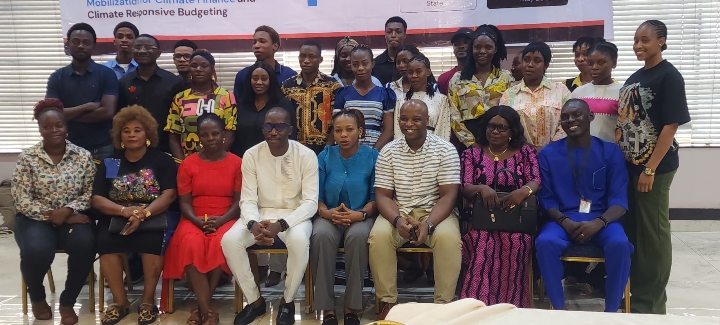
Enugu, SSDO advance domestic resource mobilisation for climate responsive budgeting
-
 Politics4 days ago
2027: Akpabio Moves to Block Ex-Governors from Contesting for Senate President
-
 Crime3 days ago
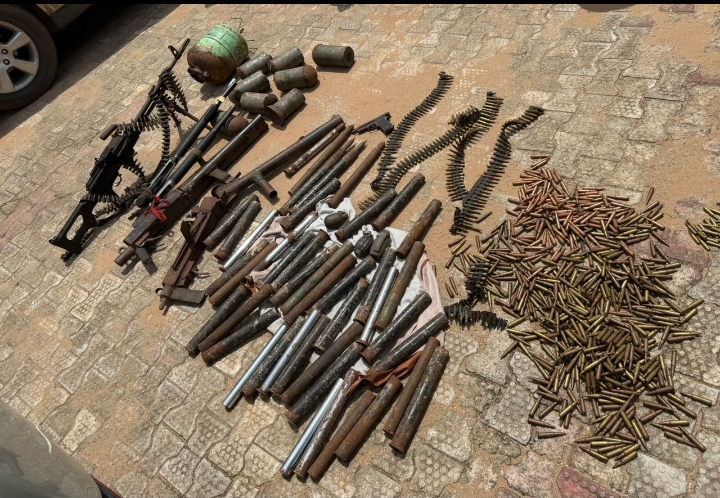
Anambra Police Burst Gunmen Armoury in Orumba
-
 News2 days ago
2027: Anambra ADC Intact Despite Obi, Kwankwaso Departure – Guber Candidate