


EverydayNews Telescope
ENUGU: Time to appoint Perm Secs, Commissioner’s, fill vacant positions in Govt



EverydayNews commends Governor Ifeanyi Ugwuanyi’s efforts towards arresting the current security challenges in the state.
We also commend his recent visit and offer of automatic employment to widows of policemen killed by unknown gunmen at a checkpoint in the state.
May we further commend His Excellency for appointing Administrators for the 68 Development Centers in the state.
This may have taken a long time, having long been expected, but it’s better late than never.
Now, that you have started, your Excellency, please don’t stop because there are needs to fill the vacant positions for the smooth running of the Government.
Starting from the vacant Commissioner position in the State Ministry of Transportation, we have also confirmed that over 14 Permanent Secretary positions are vacant. These include PUblic Service Department, ENRUWASA, Rural Development, Gender, Sports, Information among others. These require urgent attention.
There is also the issue of rotation of Permanent Secretary to make them more responsive. A situation where a permanent secretary remains at a place for four years is presently causing problems in the Ministries.
Your Excellency, only EverydayNews Telescope can reveal to you that people are talking behind closed doors that majority of those who started with you are being recycled to the detriment of many who have remained on the bench and sideline.
Even the recently announced administratiors, some chairmen are not happy that the lists they submitted did not count.
Some who had high hopes of appointment are also complaining that people who did not work for the party were rather appointed.
While appointments are purely at your descretion we urge you to use your wisdom in the best interest of the state.


Beyond beautiful photographs and political endorsements, the electorate deserves to know the woman seeking to represent them.
The closest a woman came to occupying a senatorial seat in Enugu State was during the administration of former Governor Sullivan Chime, when his then Chief of Staff, Chief Mrs Ifeoma Nwobodo, narrowly missed securing the Peoples Democratic Party (PDP) senatorial ticket.
Those were the days when the PDP held sway in Enugu politics. A period when securing the party’s ticket was almost synonymous with winning the election itself.
Ifeoma Nwobodo did not emerge from political obscurity. She had a pedigree. She had been tested and trusted. Her years in public administration were open to scrutiny, while her political antecedents, family background and record of service were largely in the public domain.
Love her or hate her, the electorate had something substantial upon which to assess her suitability for higher public office.
Today, as the political permutations ahead of the 2027 general elections gather momentum, another woman, Ada Ogbu, has entered the conversation surrounding the Enugu East Senatorial District.
But beyond the political excitement, attractive photographs, publicity materials and growing attention surrounding her ambition, there are questions that deserve answers.
And these questions are neither personal attacks nor an attempt to discourage women from seeking elective positions.
They are questions of public accountability.
One would not hastily conclude that Ada Ogbu is a political mistake or an unsuitable choice for the Senate without first allowing her to present her credentials before the electorate.
However, the burden of establishing her suitability rests substantially on her shoulders.
Who is Ada Ogbu?
Where is she coming from?
What is her professional background? What has she accomplished in her chosen career? What measurable contributions has she made to the development of Enugu East Senatorial District?
What is her record of community service? What public responsibilities has she previously undertaken, and how successfully did she discharge them?
What is her political history, and what principles have guided her involvement in public affairs?
What informed her decision to seek a seat in the Senate?
These are legitimate questions that every serious aspirant should be prepared to answer.
Her family and personal background, to the extent relevant to her public claims and qualifications, should also be sufficiently transparent to enable the electorate to understand the individual seeking their mandate.
The Senate is not a beauty contest. Neither is it a platform for political experimentation.
The political influence of former Anambra State Governor and Labour Party presidential candidate Peter Obi remains a significant factor in political conversations across the South-East.
However, whatever political platform or endorsement Ada Ogbu may enjoy, such association cannot substitute for personal competence, demonstrable capacity and a convincing record of service.
The electorate must resist the temptation to assess candidates solely through the popularity of their political sponsors.
Peter Obi cannot be the curriculum vitae of every politician associated with his political movement.
Every candidate must carry his or her own credentials.
Ada Ogbu must therefore tell the people of Enugu East why she deserves their votes, independent of the personalities or political structures behind her ambition.
Yes, Madam Ada Ogbu, your photographs are beautiful. Your public presentation may be appealing, and your ambition is legitimate.
But this is the Senate we are talking about.
This is the institution constitutionally entrusted with lawmaking, representation, oversight and the protection of the interests of the Nigerian people.
Enugu East needs a senator who understands the challenges confronting its communities, from infrastructure and youth unemployment to economic development, education and access to federal opportunities.
It needs someone who can articulate the district’s interests on the floor of the National Assembly, interrogate national policies and attract meaningful legislative attention to the constituency.
What does Ada Ogbu intend to do differently?
What is her legislative agenda? What are her positions on the pressing issues affecting the district? What practical interventions does she envisage for the people?
These questions cannot be answered through campaign photographs, political slogans or carefully packaged social media appearances.
They require substance.
The dark side of Ada Ogbu’s senatorial ambition, at least from the standpoint of public scrutiny, is not necessarily an allegation of wrongdoing.
It is the unanswered questions surrounding her suitability for the office she seeks.
Political ambition should naturally invite examination. Indeed, the higher the office, the greater the responsibility to submit oneself to public scrutiny.
This is particularly important at a time when Nigerians are increasingly questioning the quality of representation they receive from elected officials.
Enugu East cannot afford to send someone to Abuja merely to occupy a seat, enjoy the privileges of office and disappear into the crowd of legislators.
The district deserves an informed, accessible, courageous and competent representative.
It is therefore important that Ada Ogbu presents a comprehensive account of herself to the electorate.
Let her tell her story. Let her publish her credentials. Let her explain her achievements and demonstrate her understanding of the enormous responsibilities of the office she seeks.
Let her engage the people in open conversations rather than leave political promoters to define her candidacy.
The fact that she is a woman should neither count against her nor exempt her from the scrutiny applied to male aspirants.
Indeed, a credible female candidate with the right qualifications and vision would represent an important opportunity to strengthen women’s participation in the political leadership of Enugu State.
But gender alone cannot be the qualification for legislative representation.
The ultimate consideration must be competence, character, credibility and capacity.
Until these questions are satisfactorily addressed, the people of Enugu East have every reason to continue asking:
Ada Ogbu, beyond the beautiful pictures, who are you, what have you done, and why should we send you to the Senate?
By PETRUS OBI.
As Ebonyi State approaches the 2027 governorship election, the question is no longer simply which political bloc should produce the next governor. The more urgent question is whether Ebonyi should continue under a system that prioritises political interests over performance or embrace a new direction anchored on service, accountability, and the welfare of the people.
For an increasing number of those demanding change, Chief Ifeanyichukwu Odii, popularly known as Anyi Chuks, represents that alternative.
The controversy surrounding the alleged Ebonyi Charter of Equity has once again exposed the contradictions in the state’s political arrangements. While some insist that an agreement existed before Ebonyi was created in 1996, others dispute its existence or question its terms and implementation.
The emergence of Sam Egwu of the PDP as the state’s first civilian governor in 1999, despite the location of the capital in the Abakaliki axis, remains central to arguments about the alleged arrangement. The participation of aspirants from different parts of the state in that contest also raises questions about claims that the governorship was exclusively reserved for Ebonyi North.
Nearly three decades later, the people deserve clarity. If the charter was never consistently implemented, why should it suddenly become an unquestionable instrument for determining who governs Ebonyi in 2027?
Equity should promote inclusion, not political entitlement. No disputed agreement should be manipulated to deny citizens their democratic choice.
The central issue is the performance of Governor Francis Nwifuru’s administration and whether it has earned another four years. Critics have raised concerns about infrastructure delivery, including the Vanco Flyover, as well as the governor’s announcement concerning the acquisition of three aircraft for the state’s moribund airport. These concerns deserve clear answers, verifiable timelines, and evidence of delivery.
Ebonyians need completed projects, employment opportunities, functional healthcare, quality education, support for farmers, and an economy that creates prosperity. They cannot be expected to judge a government by announcements and political endorsements alone.
A second term is not an entitlement. It must be earned through performance.
This is where the case for ODII becomes compelling.
Chief Ifeanyichukwu Odii is being presented by his supporters as more than an alternative candidate. He represents an opportunity to challenge a political establishment they believe has placed too much emphasis on elite consensus and too little on the everyday needs of ordinary Ebonyians.
His philanthropic record is central to that appeal. His Building over 158 houses for less-privileged people in the state, point to a substantial commitment to social intervention. At a time when vulnerable families need tangible support, his supporters see this record as evidence of a willingness to deploy personal resources to improve lives.
Ebonyi needs a governor who can translate compassion into public policy, private initiative into economic opportunity, and promises into measurable results. Odii is offering a clear programme for job creation, agricultural transformation, industrial investment, education, healthcare, infrastructure, and transparent governance.
He has shown desire to demonstrate that leadership is not about occupying the Government House, but about improving the lives of the people who make government possible.
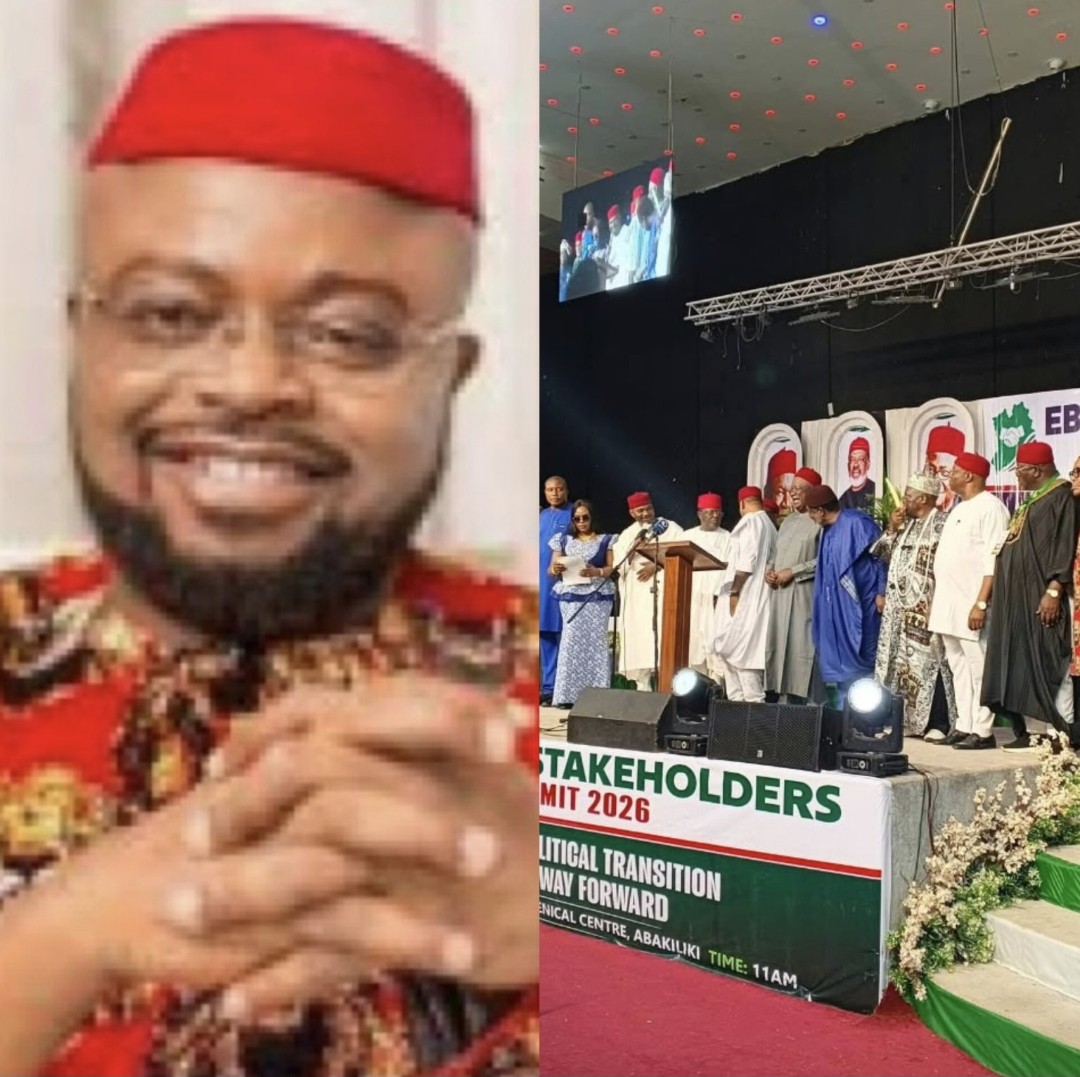
The controversial summit endorsing Nwifuru for a second term makes the choice facing Ebonyi even more significant. Political stakeholders are entitled to express their preferences, but they cannot substitute their endorsements for the people’s verdict. A gathering of compromised individuals does not automatically represent the aspirations of millions of citizens.
If the governor has performed, his record should speak for him. If stakeholders must organise elaborate political gatherings to manufacture an impression of consensus, the public is entitled to ask whether that consensus genuinely exists beyond the walls of the summit.
No group of political patrons should be allowed to determine Ebonyi’s future behind closed doors. Traditional rulers, community leaders, party officials, and former officeholders have important roles to play, but the ultimate power to choose a governor belongs to the electorate.
Nor should the Charter of Equity be weaponised to foreclose a legitimate contest. If rotation is necessary to promote fairness, it should rest on a transparent, mutually accepted arrangement. It must never become a convenient shield against scrutiny of a government’s performance.
The 2027 election should be a contest of records, ideas, competence, and vision. Odii and his supporters, fortunately, have seized the moment to present a credible development agenda that answers the questions ordinary Ebonyians ask: Where will the jobs come from? How will farmers prosper? How will schools and hospitals improve? How will public money be accounted for? And what practical steps will make life better for families across the state?
These are the issues that should determine the next governor, not the interests of those who benefit from the existing political order.
Ebonyi stands at a crossroads. It can allow political stakeholders to narrow the choices available to the electorate, or it can embrace a democratic contest in which every candidate must earn public confidence.
For those rallying behind Chief Ifeanyichukwu Odii, the message is clear: the demand for change must be organised around a compelling vision, credible commitments, and a readiness to be held accountable. His candidacy offers an opportunity to make the welfare of ordinary people the central measure of leadership.
Governor Nwifuru must equally face the test of his record. No amount of political endorsement can exempt an incumbent from accountability, and no appeal to equity should prevent the people from asking whether their lives have improved.
Ebonyi does not belong to its political elite. It belongs to its people. The governorship is a public trust, not a reward to be distributed among influential stakeholders.
In 2027, the state deserves a choice based on merit, performance, compassion, and a clear commitment to development.
ODII FOR A NEW DIRECTION. ODII FOR PEOPLE-CENTRED LEADERSHIP. ODII FOR GOOD GOVERNANCE.
The future of Ebonyi must not be imposed by compromised stakeholders. It must be decided by the people.
By PETRUS OBI.
The proposed establishment of a new cement factory in Nkalagu, Ebonyi State, has come under scrutiny, with questions being raised over the geological, licensing and investment groundwork for the project, as well as its timing ahead of the 2027 general elections.
The state government has announced plans for a new cement factory reportedly estimated at about N150 billion, presenting the project as a major industrial investment capable of boosting economic activities, employment and internally generated revenue in the state.
However, critics of the project are asking whether the necessary technical and regulatory processes have been completed to support the government’s claim.
Among the questions being raised is whether geological and geophysical studies have been conducted to establish the availability and commercial viability of limestone for the proposed plant.
There are also questions over the mineral title and other relevant licences required for the exploitation of limestone, as well as whether the proposed factory has access to a distinct limestone deposit separate from the mineral interests associated with the existing NIGERCEM operation and the interests held by businessman, Dr. Cletus Ibeto.
The controversy has become more significant following recent public statements by Ibeto over his mineral rights in the area.
Ibeto had insisted that his mineral titles remain valid until 2045 and maintained that he was not opposed to the establishment of another cement factory, provided his existing rights were respected.
Against this background, observers say the Ebonyi State Government needs to provide greater clarity on the exact location of the limestone deposit for the proposed factory, the geological studies conducted, the relevant licences obtained and the ownership or status of the mineral resources upon which the proposed investment would depend.
The timing of the announcement has also generated political questions.
With the 2027 elections approaching, some opposition voices have described the proposed N150 billion factory as potentially another ambitious political promise designed to demonstrate industrial development and strengthen the administration’s re-election campaign.
They have particularly drawn comparisons with the abandoned Vanco Flyover project, which has become one of the major points of criticism against the administration of Governor Francis Nwifuru.
Critics argue that the inability of the government to complete the flyover, despite its strategic importance to the state capital, makes its claim of delivering a N150 billion cement factory within a relatively short period deserving of closer scrutiny.
They contend that the government should first demonstrate that the fundamental requirements for the cement plant, including access to limestone, geological certification, mineral titles, environmental approvals, financing arrangements and a clearly identified investor, are in place.
The issue has also raised concerns among potential investors.
Industry stakeholders argue that anyone considering investing in a cement plant in the Nkalagu area would need certainty over access to raw materials and the legal status of the underlying mineral resources before committing billions of naira to the project.
They maintain that any investor who puts money into the area would ultimately have to contend with the existing mineral interests and the legal status of the limestone deposits.
For critics, therefore, the central question is not whether Ebonyi State needs another cement factory. Rather, it is whether the proposed project has moved beyond political announcements to the stage of demonstrable technical preparation and bankable investment.
They are consequently challenging the state government to publish the geological and geophysical studies, identify the limestone belt upon which the factory would operate, disclose the relevant mineral licences and approvals, and name the investors and financing partners behind the proposed project.
Until these details are made public, they argue, questions will continue to surround whether the Nkalagu cement project is a genuine industrial undertaking or another major promise being unveiled ahead of the 2027 elections.
The state government is expected to clarify these issues and provide evidence of the technical and financial preparations for the proposed factory.

By PETRUS OBI.
As political calculations gather momentum ahead of the 2027 general elections, the contest for the Enugu East Senatorial seat is already generating conversations across the district. While names will dominate headlines in the coming months, the bigger question is not who wants the seat, but what Enugu East truly needs.
The senatorial district—comprising Enugu East, Enugu North, Enugu South, Nkanu East, Nkanu West and Isi-Uzo local government areas—has produced distinguished political figures over the years. From Jim Nwobodo and Ken Nnamani to Chimaroke Nnamani, the zone has never lacked experienced representation.
Yet, many constituents argue that representation in today’s Nigeria must go beyond prestige or political pedigree.
The next senator must be a lawmaker who understands that effective representation is measured by legislative impact, constituency engagement and the ability to attract federal projects. At a time of economic hardship, unemployment and worsening infrastructure, Enugu East needs a senator who can influence national policy while remaining accessible to the people.
Security also remains a major concern, particularly in parts of Isi-Uzo and surrounding communities. Farmers need protection, roads require attention, and young people demand opportunities through skills development, entrepreneurship support and quality education. Healthcare, digital infrastructure and industrial investments should equally feature prominently on the agenda.
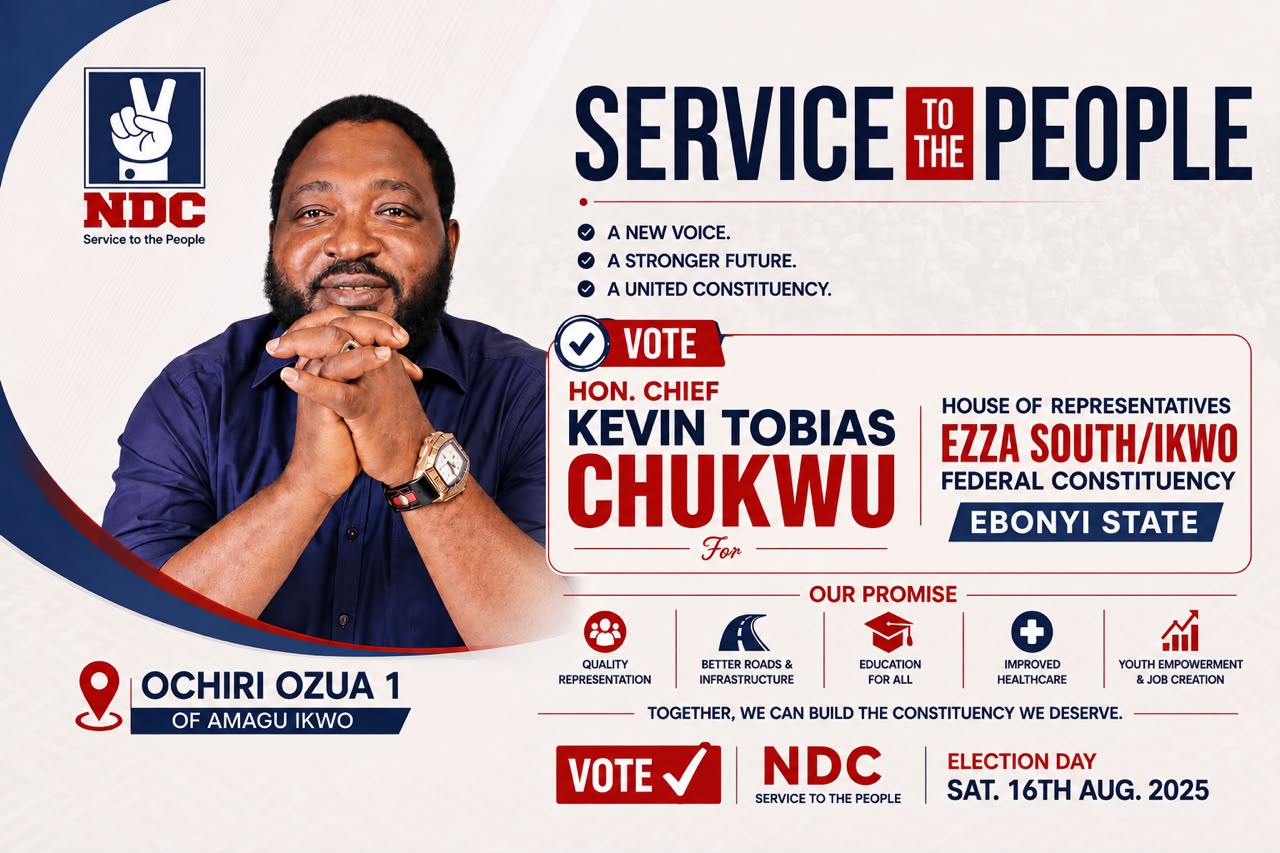
Politics, however, is rarely decided on competence alone. Party structures, zoning considerations, grassroots acceptance and political alliances will all shape the outcome. The APC has already produced Kelvin Chukwu as its senatorial candidate for 2027 through its primary, while other parties are expected to unveil their candidates in due course.
Ultimately, the people of Enugu East must resist the temptation to reduce the election to popularity contests or political godfatherism. The district deserves a senator who combines integrity, legislative capacity, accessibility and the courage to speak for the people irrespective of party interests.
In the end, the question is not merely who wants the job. The real question is who has the vision, credibility and capacity to deliver it. That is the cap that truly fits.
Keep a date as Everydaynews Telescope takes on the candidates who the cap fits ahead of the elections.

The handful opposition in Enugu appears trapped in a contradiction of its own making.
On one hand, they insist that Governor Peter Mbah has done nothing tangible with the resources available to Enugu State. On the other hand, many of the same critics complain privately and publicly that the governor has refused to patronize politicians with contracts, appointments, and project allocations.
Both claims cannot be true at the same time.
If there are no projects, then what exactly are politicians allegedly being denied access to?
The reality is that the Mbah administration has shifted the focus of governance from political patronage to project delivery. For decades, many politicians measured government performance by the number of contracts awarded to political associates, the number of loyalists placed on government payrolls, and the volume of public resources distributed through political networks.
Today, the complaints are different.
Some are unhappy because government contracts are no longer being shared as political compensation. Some are unhappy because projects are being executed through centralized procurement and professional contractors rather than through political middlemen. Others are frustrated because public funds are being tied to measurable outcomes instead of political settlements.
This explains why critics spend more time questioning visible projects than explaining where the money supposedly disappeared to.
The Smart Schools are everywhere.
The healthcare facilities speak for themselves.
Road projects are ubiquitous.
Urban renewal projects are all over the place.
Security infrastructure is top-notch.
Water projects are unprecedented.
Tourism and economic assets are being revived.
In fact, a fair-minded critic should be able to acknowledge at least one positive achievement of the administration while still raising concerns about areas that require improvement. That is what constructive criticism looks like. No government is perfect, but credibility is strengthened when critics are willing to recognize both successes and shortcomings.
When critics refuse to acknowledge any visible progress whatsoever, despite the evidence across communities and sectors, it raises legitimate questions about whether their objections are driven by facts or by political dissatisfaction. Genuine accountability requires honesty. It requires the ability to admit when something has been done well, even while demanding better performance elsewhere.
It is therefore bad politics and weak argumentation to claim that an imaginary ₦1.7 trillion vanished without a trace.
The opposition in a campaign of calumny is sharing what it claims to be a review of public funds received in Enugu from June 2023 to May 2025, arriving at a total of ₦1.702 trillion.
In the claim being circulated on social media, the caption asks the question, “Where is the money?”
Such a claim does not stand up against the visible transformation taking place across Enugu State. Those making such allegations should be able to explain how massive investments in education, healthcare, roads, security, water infrastructure, urban renewal, and economic development can simply be wished away in public discourse.
The real question may not be “Where is the money?”
The real question is whether some political actors are uncomfortable with a system where public funds are increasingly tied to public projects rather than political patronage.
Ndị Enugu should separate legitimate accountability from political grievance.
The two are not the same.
Edit

-
 News3 days ago
C’RIVER 2027 BUDGET: GOV OTU PRESENTS ₦987.8bn ESTIMATES TO ASSEMBLY
-

 EverydayNews Telescope4 days ago
Enugu East Senate: The Dark Side of Ada Ogbu, NDC Candidate
-

 News3 days ago
Holy Ghost Transformation: How Enugu North Chairman Ibenaku Onoh Ended Years of Traffic Chaos, Roadside Trading
-
 News5 days ago
Tension Mounts in Awka Anglican Diocese as Supervising Bishop Ezeofor Moves to Take Over Wednesday
-
 EverydayNews Telescope4 days ago
Ebonyi 2027: The People’s Quest For ODII Vs Compromised Stakeholders
-
 Politics2 days ago
One Feared Dead, Several Injured as Thugs Attack Ebonyi NDC Assembly Candidate, Burn Campaign Vehicle
-
 Politics4 days ago
2027: Tinubu Has No Hand in Alleged Assassination Plot Against Atiku – APC
-
 Economy5 days ago
Fuel Subsidy Removal Irreversible, Nigeria Won’t Return to Egypt — Tinub