




Features
Enugu: The Rich History and Cultural Heritage of Ogugu Community



The original and actual name of the community was Ogwuwgu. Ogugu as it is currently called was a dialectical difference between the native dialect and that of the white men whose own dialect dominated ours and hence, Ogugu.
The name was derived by the founder based on the physical feature of the area. The community is situated in a fertile valley (ogwugwulu) surrounded by hills which gave it a natural protection. The valley (Ogwugwulu) where the community is situated gave rise to the name, Ogwugwu, now Ogugu.
By geographical location, Ogugu is bounded on the north by owelli town, on the south by the rolling low land of Nenwe, on the east by Ọgbaku hills and on the west by Ugbo/Mmaku hills all in Awgu Local Government Area of Enugu State.
The legendary story of the community’s ancestral lineage of Ntu-egbenese clan as recorded by Rev FR SN Onuigbo and acknowledged by members of the clan had it that, Ajakuba, an adventurous hunter from Akeze in the present Ivo local Government Area of Ebonyi state arrive at the valley (ogwugwu) and located a convenient cave known as Isiogba cave, located at the present day Ezioha village in Ogugu and settled at “Nkolo Isiogba”.
Having settled and established at the cave, with his wife, Ajakuba got a son he named “Ajakonwe” who in turn, married and got his own son named Ubo-Ogeneguegwu. Ubo ogeneguegwu also got married and begot Anumkpume, who thereafter, married and begot Shikeoke-Ntegbe.

Shikeoke-Ntegbe was the father of Ntegbenese. He was said to have married to Uzuma, a woman from Mgbowo and the couple had six children, five sons and a daughter-Mgbọkwọ, who was said to have got married to Ubatoke, a man from Ituku. The five sons of Shikeoke-Ntegbe in order of seniority were – Shikeoke – Anyichi, Ebe, Shikeaguma, Oshianeke, and osagwede. They all lived at Isiogba cave and it’s environs. Just like their father and other descendants of Ejakuba, they were all wise, adventurous, and highly skilled in hunting, tapping of palm wine, farming, and trading.
However, the 2nd son (Ebe) proficient in wine tapping migrated birthed the current day owelli, the third son (Shikeaguma) proficient in hunting, migrated and birthed Ihe, the fourth son – Oshianeke, proficient in farming, migrated and birthed Agbogugu, the fifth son – Osagwede, proficient in trading, migrated to present-day Akegbe ugwu, settled and became the ancestral father of the present-day, Okunano (Akagbe Ogwugwueze). The first son, Shikeanu – Anyichi, proficient in tapping wine, stayed back in their father’s land at Isiogba cave and birthed the present day Ogugu which however, became the ancestral home as well as the cultural head of Ntegbe Clan.
There are some significant present-day events that were told by oral history that proved Ogugu the head of Ntegbenese clan such as the Nkolo Isiogba cave Mkpumenese Ntegbe, Anụ-Ntegbenese, Ọhọ Ntegbenese all situated in Ogugu and handled by various communities.
Shikeanu – Anyichi who birthed Ogugu, had three sons namely, Ezioha, Amanokee, and Ibite Oli.
According to verifiable oral Ogugu was attacked by Eda warriors which made some of its descendants to run for safety and found the present day: Nara Unateze, Nomeh – Unateze, Amagunze and so on.
The Economic Crop Ogugu includes: Yama, cocoyam, cassava, okro, palm oil amongst others.
The community is made up of farm settlements such as: Ebo, Ululo, And Upata.
The traditional market is Nkwo, which happens every 4 days and offers people across the world the opportunity of coming to buy natural farm products from the village.
Religiously, Ogugu has Ancient deities that bind them such as; Anụ ogwugwu deity, Hojoku, Eja Ọmụmụ, Etubanaile, etc.
The community also has its unique cultural music such as Ụbọ, ikpirikpo, igede, ịkpa, Nkwa (Okenkwe), Opueke, Ikiti Okom,.
According to intelligent reports by Beaumound (1933) the British colonial masters visited Awgu area first in 1909 and toured round communities with Ogugu inclusive before they established Awgu division in 1919.
Some of the notable sons and daughters of Ogugu community includes: Late Chief John chukwura, the first standard six certificate holder and first civil servant, Late ìgwè GU Ochi, teacher grade 2 holder and first higher elementary teacher in Ogugu, Mrs Gladys udechoke (Nee Onovo) first female Teacher, Chief Dr Hycient Chike – Ochi, the first university graduate, Rtd Police constable Late Chief Paul Nwokolo first Public servant In Ogugu, Dr Nweze Celestine, first medical doctor, Dr Godwin Udibe, first academic doctor, Barr Nwonye James, first Lawyer, Barr Mrs Agnes Nweze, first female lawyer, Rev FR Ikenna Mathew Onovo, first indigenous Catholic Priest, Rev Sis Jacinta Emenike, first indigenous Rev Sister.
The Leadership started with the era of warrant chief between 1919 to 1932 (Beaumound 1933) Egbochionu Anekeolie became the warrant chief in 1920 and supervised the construction of Enugu – Okigwe road (Nenwe – Ogugu – Axis). Between 1933-1957, Chukwu Okolie took over from chief Egbochionu as the leader of Ogugu. When the colonial masters established native authorities in 1934, Chief Nwogbo Aniude became the paramount chief under whose leadership, birthed the present day, St Mary’s primary school Ogugu. Other native councillors include: Mr Igboekwe Madu, Paul Chime, Chukwu Onuoha, Udechoke Alo, Chukwunta Anụ, Anuchukwu Ude and so on. The men served the community with utmost sincerity and commitment to development.
In about 1959, Chief GU Ochi offered leadership service to the community and was generally accepted by the people and in about 1971, he was proclaimed, the Chief of Ogugu community until in 1979, he was crowned, the ìgwè of Ogugu community, a position he held until his demise in the year 2000.
Between 1960 and 2015, the community has had series of post-independent leadership such as: Ogugu Improvement Union, Ogugu Yagazie Union, The Ogugu United Front, and the present Ogugu Progressive Union General Assembly (Opuga) which started in 1988.
Some of the past president Generals of the community include: Chief Emma Ogbonna, (1988-1996) Mr Cammy Chukwueze (1996-1997), Late Ogbuefi C Chinenyeze (1998-2000), Engr Innocent Ude (2000-2003), Chief Cosmas Ude (2003-2007), Ogbuefi Jonas Uchenwa, (2007-2015).
Ogugu community also had some great ancient men that originated from it such as: Obasi Chukwu Aniorj (Famous rainmaker) Ajanu – Anụ from Ibite (Great magician), Ngene Anike from Uhuokpo (Warrior), Ntaa ANEKE from umuanekegwu-Ugwuoma (Powerful seer), Anuchukwu Ude from Ibite (Wise like biblical Solomon), Udechukwu Ofido from Ezioha (Great Philosopher), Chief Ogbuefi C Chinenyeze (Great political leader), Chief Aloysius Ogbonna from umumbaike (Great philosopher), HRH Gu Ochi (First ìgwè), Dr Chike Ochi (Academic and Former Rector of IMT).
Religiously, there are some other ancient minor deities in Ogugu such as: Anụ ihumbala Egwú, Ebose, Ngwu, Nwangene, Iyiogwe, Ngene – Eguy, Ọgba, Ojukwu Umuanekegwu-Ugwuoma, Ụzụ.
The community also has its taboos such as: murder/manslaughter, adultery, incest, desecrating of shrines, and so on.
References:
Ogugu Progressive Union, Enugu branch. (2015). Ogwugwu Ntu-egbe: History, culture and tradition.
Meek. (1934). Intelligent report on Awgu (National archive No. ONP 8/1/4753).
Beaumont. (1933). Intelligent report on Ntegbenese clan.
Onuigbo, F. R. S. N. (2000). The history of Ntu-egbenese.

By Petrus Obi
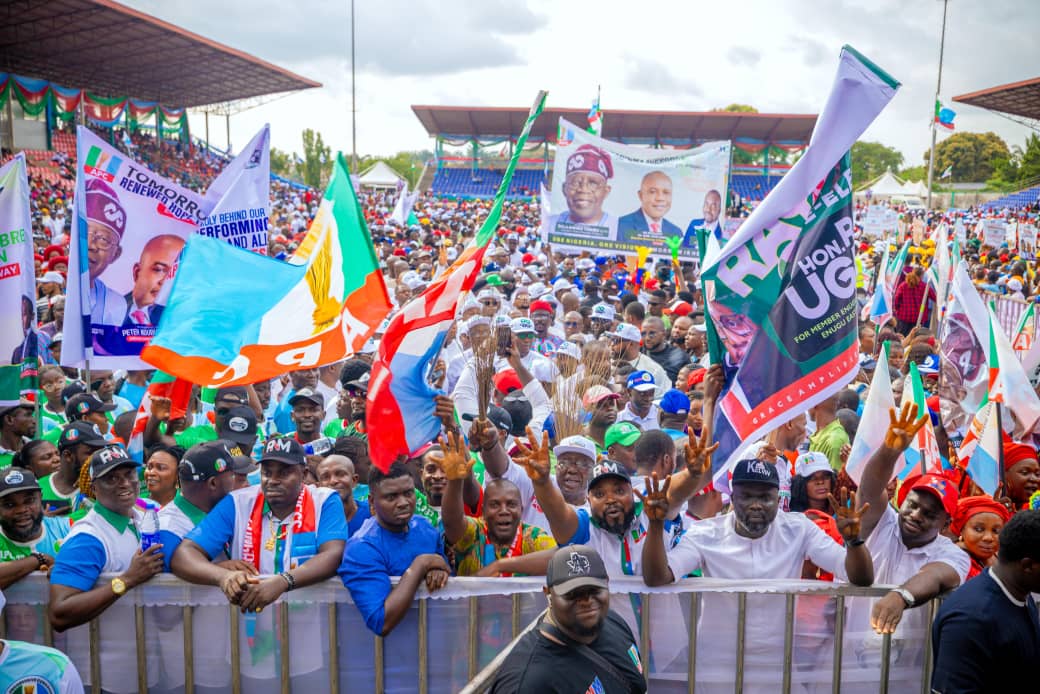
It was a remarkable demonstration of political loyalty, solidarity and appreciation as the university town of Nsukka came to a virtual standstill during the flag-off of the Enugu State chapter of the All Progressives Congress (APC) campaign, with thousands of enthusiastic supporters trooping out to identify with Governor Peter Mbah and his administration.
From the massive turnout to the palpable excitement that greeted the governor’s arrival, the event offered a compelling picture of the growing political momentum behind Mbah in Enugu North Senatorial District.
Economic and social activities were significantly disrupted as residents, party faithful, traditional and community leaders, youth groups, women organisations and other supporters converged on Nsukka to be part of the historic political gathering.
For many observers, the mammoth crowd was more than an ordinary party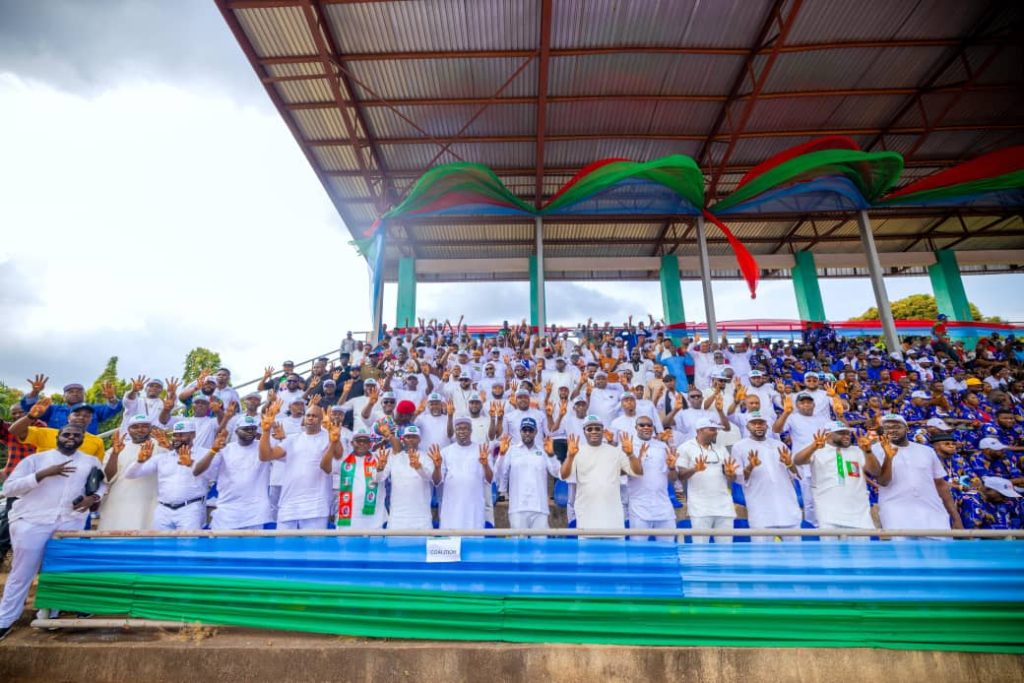 mobilisation. It was an eloquent expression of appreciation by a people who believe that the Mbah administration has brought renewed attention to their zone and demonstrated a commitment to balanced development across Enugu State.
The excitement surrounding the campaign flag-off was particularly significant given Nsukka’s strategic position in the state’s political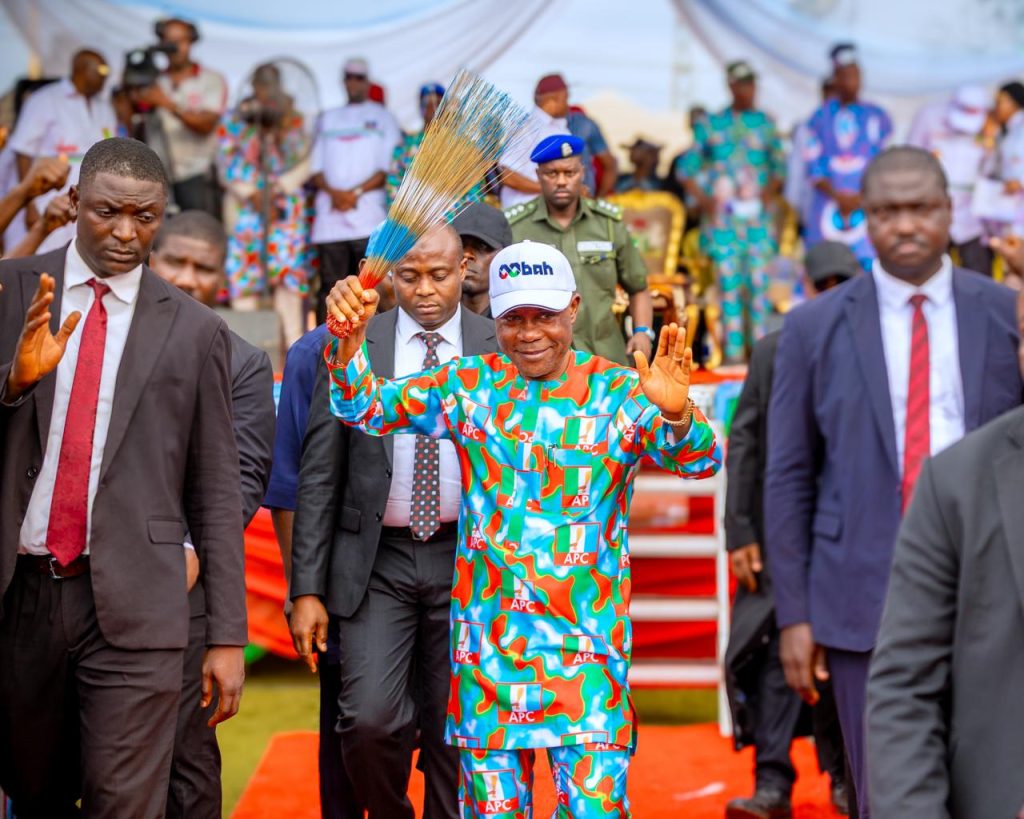 equation. As the headquarters of Enugu North Senatorial District and home to the University of Nigeria, Nsukka, the town occupies an important place in the political, educational, commercial and cultural life of the state.
The enthusiastic reception accorded Governor Mbah therefore carried considerable political significance.
It was also a moment for the people to publicly identify with a governor whose development agenda has continued to place infrastructure, education, healthcare, security and economic expansion at the centre of governance.
Beyond the party banners, colourful displays and political speeches, the gathering reflected something deeper: the desire of the people of Nsukka and the wider Enugu North Zone to be part of the development story unfolding in the state.
Governor Mbah’s administration has consistently projected a vision of a new Enugu built on modern infrastructure, improved public services, investment attraction and economic transformation. From the construction and rehabilitation of roads to the modernisation of schools, healthcare facilities and security architecture, the administration has pursued an ambitious development agenda.
For the people of Nsukka, the campaign flag-off provided an opportunity to demonstrate their support for that vision and signal their desire for its continuation.
The turnout also reinforced the importance of political inclusion and the governor’s engagement with communities across the three senatorial zones. In a state where political support is often shaped by perceptions of fairness, development distribution and accessibility to government, the reception in Nsukka was a strong statement of confidence.
The university town, which has historically played a major role in shaping intellectual and political discourse in the South-East, once again became a centre of political activity, with residents turning out in large numbers to welcome the APC campaign.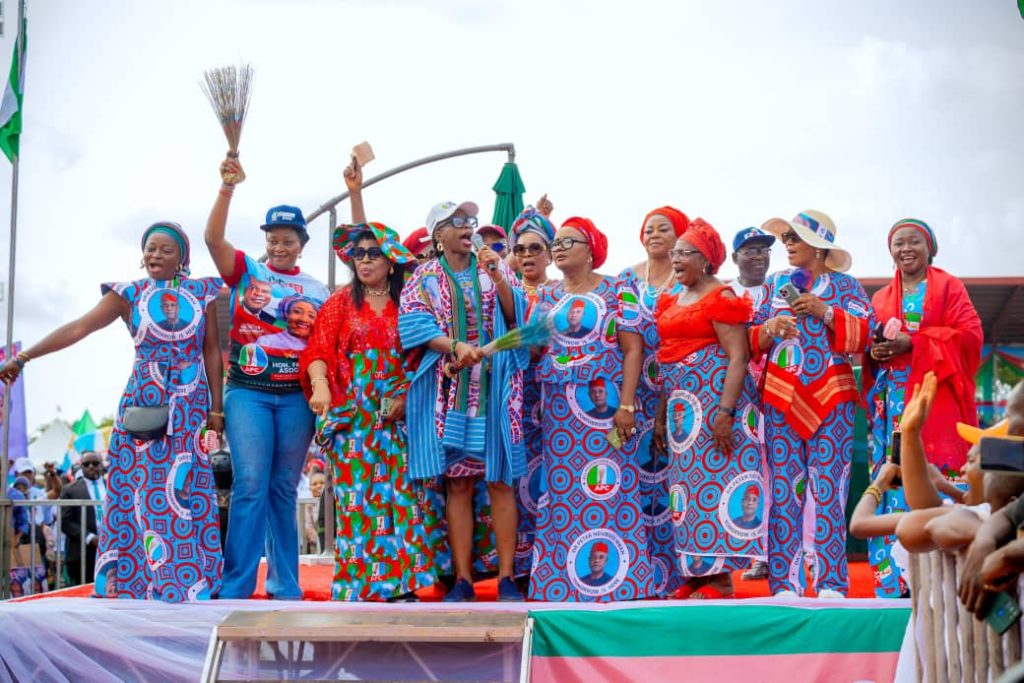
Indeed, the scale of the mobilisation suggested that the Mbah administration’s political appeal in Enugu North is not limited to party structures alone but is also being projected through community participation and the enthusiasm of ordinary residents.
For Governor Mbah, the Nsukka outing was an important opportunity to consolidate political support, strengthen the APC’s grassroots structures and take the administration’s message directly to the people.
For the people of Nsukka, it was equally an opportunity to make a statement of their own: that they appreciate the direction of governance in Enugu State and want to remain part of the journey towards a more prosperous future.
The message from the university town was unmistakable. Nsukka turned out in impressive numbers, and the enthusiasm surrounding the campaign flag-off offered a powerful reminder that political support is often expressed most convincingly through the people themselves.
As the APC campaign gathers momentum across Enugu State, the Nsukka reception will undoubtedly stand out as one of the defining moments of its engagement with the Enugu North political constituency.
Features
New Cement Factory: Is Ebonyi Governor Misleading the People Over Proposed Nkalagu Project?

By Okey Maduforo
From the boundaries of Awka and Enugu State across the Ezu River, through the swamp rice fields of Awba–Ofemili, and from the borders of Igbariam in Anambra East to Achalla, the headquarters of Awka North Local Government Area, the story was once the same: ten communities largely abandoned and resigned to fate.
Predominantly agrarian, Awka North for decades presented the picture of rustic settlements struggling for basic infrastructure. Before the creation of the old Anambra State, many communities could not boast of electricity, while pockets of development recorded in a few areas were largely due to their proximity to Awka, the state capital.
Successive administrations at the local government level made attempts to stimulate development, but the scale of neglect meant that critical projects continued to beg for attention.
The ThankGod Anagu Intervention
In just 14 months since the emergence of the Mayor of Awka North Local Government Area, Chief ThankGod Anagu, the narrative has begun to change. His administration has pursued what many describe as a coordinated and people-centred delivery of social infrastructure, repositioning the once-forgotten council area and highlighting its vast socioeconomic potential.
Under his watch, a total of 39 classroom blocks have been renovated and fully equipped, significantly improving the learning environment across communities. In addition, more than 12 roads have either been constructed or attracted through his administration, easing movement and boosting economic activities.
To address insecurity, the Anagu administration installed security surveillance cameras across strategic communities, a move that has strengthened crime prevention and enhanced public safety.
The Achalla Local Government Secretariat, previously a shadow of itself, has also received a comprehensive facelift. Renovation works covered the main administrative building, the conference hall, and the Rt. Hon. Justice P.K. Nwokedi Hall, restoring dignity and functionality to the council complex.
Tackling Flooding and Erosion
Communities along river lines that had long suffered perennial flooding and erosion have not been left out. Erosion control projects executed in Ebenebe and neighbouring towns have helped protect over 36,000 buildings and vast farmlands, preserving livelihoods and preventing further environmental degradation.
Agricultural Outreach and Empowerment
As an agrarian society, Awka North has also benefited from targeted agricultural interventions. Through collaboration with the Anambra State Government, farmers have been empowered via outreach programmes such as the Farming to Feed initiative and the Palm Revolution, both of which have accelerated agricultural productivity and rural economic growth.
As Chief ThankGod Anagu continues to chart a new course for Awka North, many indigenes believe that with more time, the council area could fully consolidate its developmental gains and evolve into a modern, smart local government with agriculture, security, and infrastructure as its pillars.

On Sunday, the 4th of April, history stirred quietly beneath the ancient hills of Nike as we — alongside the CEO of Landmark Africa, Dr Paul Onwuanibe and others ; the custodians of the iconic Nike Lake Resort — stepped into a journey that promises to reshape the landscape of tourism in Enugu State.
Guided by the visionary momentum of His Excellency, Governor Peter Ndubuisi Mbah, we traced the green spine of the Nike-Ohum Tourism Corridor — a corridor not merely of geography, but of destiny. From the rhythmic whispers of the Nike caves to the majestic gaze of the Udi escarpment, the land told stories waiting to be heard by the world.
This wasn’t just a site visit. It was a pilgrimage into promise, a handshake between heritage and opportunity. It signaled that Mbuluoweje, once a hidden jewel in the hills, is now poised to become a beacon of eco-tourism, cultural revival, and sustainable prosperity.
We went, not just with eyes open — but with hearts aligned to a future already unfolding. For indeed, tomorrow is no longer a distant horizon. It has arrived, dressed in the colors of innovation, investment, and inclusive growth.
The Governor’s transformative tourism blueprint — forged with intentionality earlier this year — is no longer ink on paper. It is spirit on terrain. And in that spirit, we walked. We envisioned a world-class tourism ecosystem — resorts nestled in nature, trails that tell stories, and villages turned vibrant through the power of shared culture and commerce.
This visit will be remembered not just as a meeting of minds, but as a turning of keys — unlocking Mbuluoweje Zone to the world.
To the people of Nike, to the youth, to investors, and to dreamers across Nigeria: prepare for the unveiling. The world is coming to Enugu, and the hills are ready to sing.
Ozo Ossy Onuko the MD Awka Capital Territory Development Authority ACTDA writes from China where he is currently on a working visit and takes a look of ine the hospitalities and culture of the Asian Tiger.
As I sit calmly in my 26th-floor hotel room, overlooking the beautiful city of Changsha, glancing through my new book – Chimamanda’s masterpiece, “Dream Count,” I’m immersed with thoughts, kind thoughts I must say about the emerging new world order – CHINA. I’m reminded of China’s remarkable journey. Some 45 years ago, China opened itself to the rest of the world, ready to deal. After undergoing significant disruptive economic and administrative reforms, a new China emerged from the rubble of numerous wars including the 2nd World War and the Cold War that followed.
I was shocked to learn that in 1839 Britain/Europe brutalised China in a war for refusing the sale of opium to its citizens by the British government in a bid to balance China/Europe’s trade deficit… opium a hard drug with strong addiction tendencies impacted the youth population of China, in other words, Britain was pushing hard drugs to China – keep pondering on that as I continue.
The superior military advantages enjoyed by European forces led to several easy victories over the Chinese military, with the consequence that China was compelled to sign unequal treaties to grant favourable tariffs, trade concessions, reparations and territory to Western powers. One of which was ceding Hong Kong to Britain.
China a poor country, now with a 1.4 Billion population, almost negligible in global affairs then contributed less than 1% to global GDP and in 1978, the year China began to open and reform its economy its GDP increased to 149.5 billion dollars, accounting for 1.7% of the world economy.
Since then, GDP growth has averaged over 9 per cent a year, and almost 800 million people have been lifted out of poverty.
Today, China’s GDP stands at 18.5 trillion US dollars accounting for 19.6% of the global economy. Generally far higher than the contribution of the entire European countries and particularly a far cry from the UK’s 2.0% contribution to global GDP.
China is projected to contribute 22.5% of the global GDP by 2030 and “economic marabouts” prophesy that China will surpass the United States in ten years to become the world’s largest economy and that if that happens, it will be impossible for the US to catch up given the speed of their growth.
Now one wonders less why Donald Trump shouts America First at the top of his voice…it could be that the marabouts have also leaked these things to him. His man Friday, Elon Musk was once amazed at China’s growth, so astonished that he tweeted thus, “China’s progress in advanced infrastructure is more than 100 times faster than the US” – Elon Musk, 27th Feb 2018.
The US is the world’s economic powerhouse, with a GDP of 29 trillion US dollars, contributing approximately 26.3% of the global GDP, its continued economic dominance is threatened by this emerging new world order…the future of the United States lies solely on the ongoing economic reforms under President Trump. While various opinions continue to trial Trump’s reforms, the global magazine The Economist published an article on April 10th, 2025, with the topic “Trump’s incoherent trade policy will do lasting damage”. Whichever way it goes, the jury is out.
Still savouring the bliss of Changsha – the Capital City of Hunan Province of China. Changsha has a population of 10 million people and occupies 11,819 km² space, which is more than five times the size of New York.
This morning, I flew for two hours from Beijing to Changsha, my guide, the delightful and ever-smiling Vivi ( not her real name, you know Chinese names rumple tongues), told me a lot about the history and development of Changsha especially the fact that it is the shoppers delight, as it’s notable amongst many guides they emphasize on shopping areas believing that foreigners have a lot of shopping appetite.
If she had not told me the City was more than 3,000 years old, I would have passed it as a newly emerging green city of China, I was thrilled by the urban regeneration that has transformed a 3000-year-old city into a modern infrastructural masterpiece, the type I have not seen anywhere else.
Can one ever overemphasize the friendly nature of the Chinese, especially those not familiar with blacks? When we walk the streets of urban areas of China, we can be called celebrities. Chinese – couples, students, old and young grapple to either say a cheering and sincere “Ni hao” (hello or hi China), or a selfie photo with you.
We don’t often get that treatment in the West where there’s an overbearing sense of dominance of whites over blacks. Permit me to posit a hypothesis and let our scholars put it to the rigourous test…” blacks are tolerated in the West but celebrated in China”.
As I retire to sleep tonight, it will be unfair not to mention a young Chinese I met at one of the Macdonalds in Chengsha.
When I rushed to grab lunch today, I was greeted with so much warmth and given endearing attention by this McDonald’s staff in a manner I have not experienced anywhere else, regardless of the language barrier between us, we related seamlessly. He would bring out his translator to interpret every word I speak or translate his. But mentioning him here is simply to highlight the National Culture Consciousness I observed in China amongst its teaming youth population.
Because of how cordial the young man was with me, I mistook him for an adult and asked him for a pub where I could ease off. The young man cheerful replied to me and said he’s a minor and by law, he’s not allowed to have such discussions with me…I froze, I just had to.
To make my new foreign friend happy, I would in his shoes simply point at the bars around, but that was not him, he knew the law and didn’t want to flout it. Then again I offered him a tip after my meal, tips elsewhere are a ritual almost like a compulsory part of a bill, he also declined and told me in clear terms that in China, my satisfaction mattered more to him than my tip, that it is their culture.
While I cannot generalise with this isolated case in McDonald in Changsha, it is a strong indication of a strong national orientation anchored on shared values and rooted in excellence where hard work and diligence take priority over rent-seeking and frivolity, a similar social orientation promoted in Nigeria by Prof. Charles Chukwuma Soludo CFR, Executive Governor of Anambra State.
Did I mention that there’s an emerging zinger in China now? Your guess is as good as mine…”America second!”

Ozo Ossy Onuko the MD Awka Capital Territory Development Authority ACTDA, wrote from China.


-
 Politics3 days ago
Wike Defends ₦10m Reward for Councillors, Insists It Is Not Vote-Buying
-
 News4 days ago
FG Seeks Fresh $500m World Bank Loan Ahead of 2027 Presidential Inauguration
-
 Health3 days ago
Enugu Shuts Down Four Illegal Private Hospitals, Warns Operators Against Unsafe Practices
-

 Entertainment4 days ago
Mbah Appoints Nollywood Actress Destiny Etiko as Senior Special Assistant
-
 News4 days ago
Mass Protest Looms in Abacha Community, Anambra, Over PG Election Dispute
-

 Crime1 day ago
Tragedy At UNN As Six Fresh Graduates Are Found Dead In Nsukka Apartment
-
 News4 days ago
US Lecturer Alleges Tinubu Never Attended Chicago State University
-
 Sports4 days ago
Toxic Politics: NFF Officials Block Peter Obi From Greeting Flamingos