


Politics
Enugu APC: Agballah battles to save his job following fraud allegations



The last may not have been heard about the crisis bedeviling the Enugu State chapter of the All Progressives Congress (Congress), as it is reliably gathered that the state party chairman, Chief Ugochukwu Agballah is said to have embarked on a desperate move to save his job over allegations of corruption and the boycott of the parties presidential rally in Enugu by the state’s party big wigs.
This fear in Agballah camp, it is gathered followed the decision of the national leadership of the party and the APC Presidential Campaign Council to postpone the party’s presidential rally in Taraba State following the alleged embezzlement of N200 million campaign fund by the leadership of the party in Taraba, a similar allegation that led to the flop of the party’s presidential rally in Enugu, recently.
Reliable party sources said that the national leadership of the APC and the APC Presidential Campaign Council, which appear to have learnt from their Enugu experience may have finally made up their minds to sack the embattled party chairman to save what remains of the party’s hope of securing 25 per cent of votes in Enugu in the February 25 presidential election and equally save the party from total collapse in the state.
The decision by the party followed a recent massive protest at the national headquarters of the APC by aggrieved members of the party in Enugu under the auspices of the Concerned Enugu APC members at the party’s national headquarters accusing Ugochukwu Agballah and the Enugu APC governorship candidate, Chief Uche Nnaji of “impunity, gross misconducts, divisiveness, maladministration and embezzlement of party funds to tune of over N1.3bn”.
The protesters demanded Agballah’s removal and restitution of said N1.3bn and additional funds said to be running into hundreds of millions of naira donated by a South East governor of the APC extraction for the hosting of the presidential rally in Enugu by Asiwaju Ahmed Tinubu and his running mate, Senator Kashim shettima.

The party is also peeved by the boycott of presidential rally of the party at Okpara Square, Enugu, by the leaders of the party in the State such as former Senate President, Senator Ken Nnamani; Minister of Foreign Affairs, Geoffrey Onyeama; former governor of the Enugu State, Sullivan Chime; former Speaker of the state’s House of Assembly, Hon. Eugene Odoh; Director-General of the News Agency of Nigeria, Mr. Osita Okechukwu; Member of the Police Service Commission, Chief Onyemuche Nnamani, among a host of other major APC stakeholders in Enugu State.
However, party sources said that Agballah is lobbying the South East party stakeholders in the region to help weather the storm.
Confirming the development, the pioneer deputy chairman of APC and chairman of Enugu Mainstream APC, Comrade Adolphus Ude, said the Concerned Enugu APC Members, which he leads have been justified, adding that the party should have saved itself the “embarrassment of the flopped presidential rally organised by Agballah by postponing the rally, just as they did in Taraba”.
“Yes, I can confirm to you that the factional chairman of the party in our state is in deep trouble. Unfortunately, while wisdom teaches us that you don’t dig further when you are in a hole, Agballah continued to dig and dig until he buried himself in his own conceitedness and greed.
“It is true he is running from pillar to pole to save a job he didn’t deserve or get in the first place, as he was never an APC member. But for how far can he run because the noose is too tight. The evidences of how he and Uche Nnaji short-changed party faithful to the tune of N1.3 billion plus the last hundreds of million released by a governor for the Enugu APC presidential rally are too clear and real to be ignored by the national party leadership. In fact, the party should have postponed the rally as they just did in Taraba.
“Importantly, at the end of the day, every party wants to win elections. But it is clear to the party now that there is no hope of APC in Enugu with Agballa in the saddle. So, he has to go”, Ude stated.
By PETRUS OBI
That Enugu has become a construction site is no longer news. That Governor Peter Mbah is determined to turn promises into tangible projects is increasingly evident in the scale of infrastructure development across the state.
When Mbah promised to tackle urban roads across Enugu, many were sceptical. Today, road construction and rehabilitation have become prominent features of the state’s development drive. In three years the governor has extinguished whatever record in road rehabilitation and overall infrastructural developments.
Now, the governor has pledged to rehabilitate the remaining 1,022 urban roads, reaffirming his administration’s commitment to improving connectivity, reducing travel time and easing the burden on motorists and commercial transport operators.
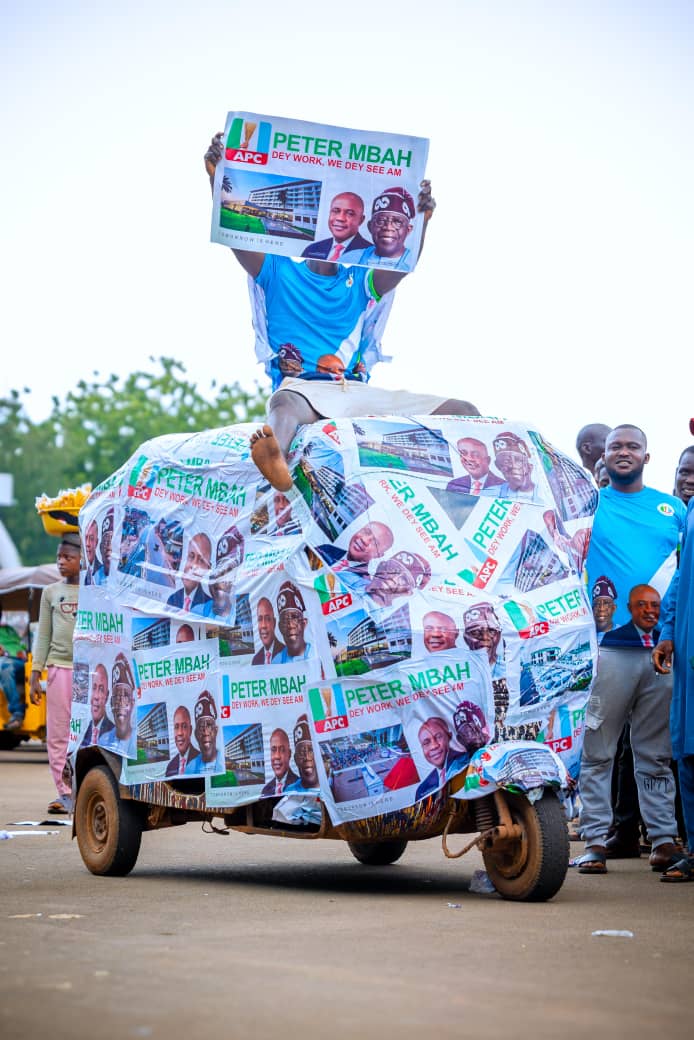
Mbah gave the assurance on Saturday at Okpara Square, Enugu, during the grand finale of the Tricycle Riders Association of Nigeria’s “One Million March,” where Keke riders endorsed him and President Bola Tinubu for re-election in 2027.
Beyond the road promise, the governor announced the abolition of the N750 daily ticketing fee for tricycle operators, extended their operating hours from 9pm to 10pm and reaffirmed their free access to the state’s modern transport terminals.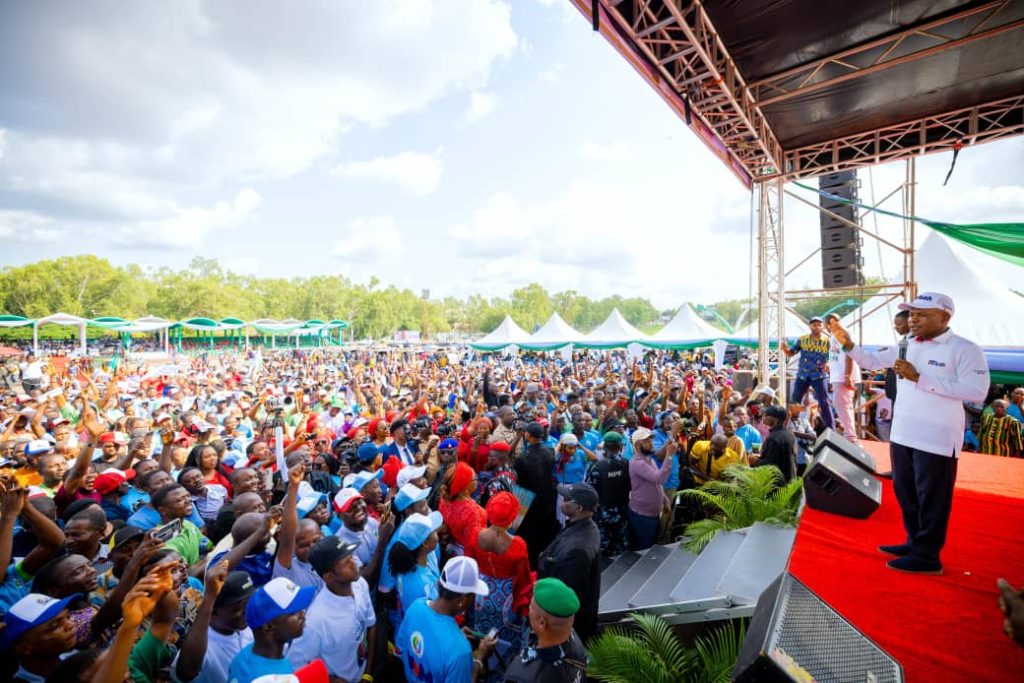
According to Mbah, the measures are designed to reduce operating costs and increase the disposable income of riders whose services remain essential to the movement of workers, students, traders and other residents.
He explained that poor roads impose additional costs on operators through frequent repairs and lost working hours, adding that areas such as Emene, Abakpa, Trans-Ekulu, Awkunanaw, Coal Camp, New Haven, Thinkers Corner and Uwani have roads that are already paved or undergoing construction.
“I can assure you that there will be no road in our city that will be unpaved. We are going to pave all the remaining 1,022 roads,” the governor declared.
The riders’ endorsement, according to the association’s Enugu State Chairman, Comrade Kingsley Edeh, reflects their assessment of improvements in security, infrastructure and social amenities. He also highlighted the 267 Smart Green Schools and the completion of previously abandoned projects, including the International Conference Centre, Nigergas Limited, Sunrise Flour Mills and Hotel Presidential.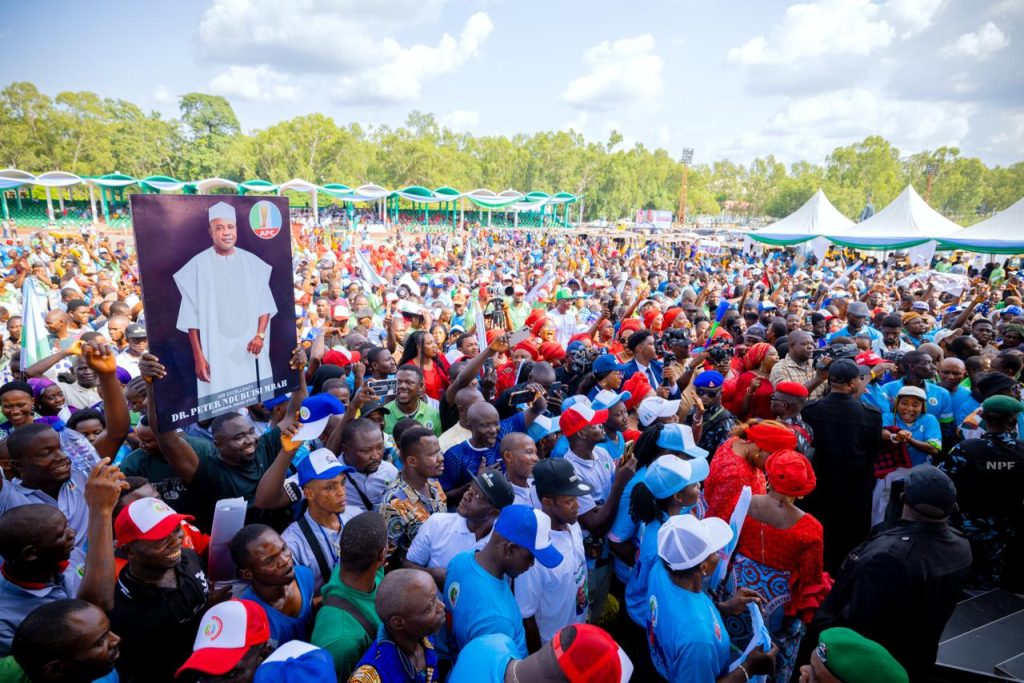
The association’s National Secretary, Comrade Sunday Enang, commended the administration’s investments in roads, modern transport terminals, Enugu Air and an asphalt plant, describing them as initiatives aimed at improving transportation and supporting economic activities.
Mbah also reiterated his administration’s zero tolerance for political violence, warning that no individual or group would be allowed to undermine the peace and security of the state. He vowed that anyone found attempting to disrupt public order would be dealt with in accordance with the law.
The governor urged eligible voters to obtain their Permanent Voter Cards ahead of the 2027 elections, while the association declared its intention to support APC candidates.
With the promise to rehabilitate the remaining 1,022 urban roads, attention now turns to the delivery of the projects and their impact on residents, businesses and commuters.
With Peter Mbah, the deal is as good as done and the roads will soon be delivered.
For Enugu residents, the expectation is clear: better roads, lower transport operating costs and sustained security. As the administration presses ahead with its infrastructure agenda, the governor’s latest pledge adds another major commitment to the state’s ongoing urban transformation.
Politics
2027: Your votes do not count, the Courts Will Endorse It Unless We Do Something-Dele Farotimi warns
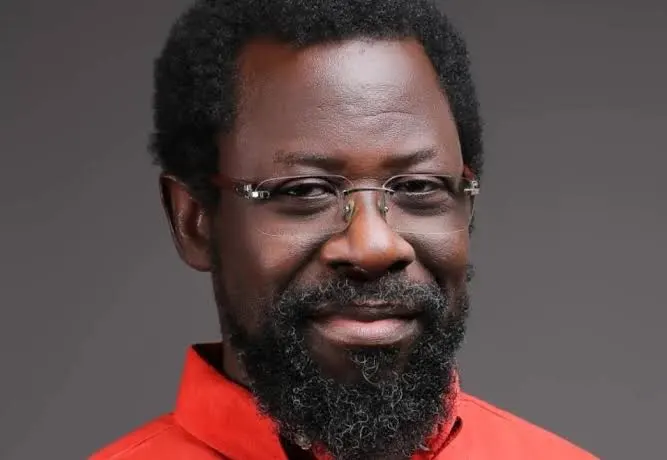
Human rights lawyer and political activist Dele Farotimi has called for a revolution to save Nigeria, urging citizens to unite behind a common national vision and push for fundamental changes to the country’s political and governance systems.
Farotimi made the remarks while expressing concerns about Nigeria’s democracy, the credibility of its electoral process and the role of the judiciary in resolving electoral disputes.
According to the activist, Nigerians risk losing confidence in democracy if their votes are not adequately protected and electoral outcomes are not respected. He warned that public passivity could create conditions for authoritarian rule.
“Your votes do not count and the judiciary will endorse it unless we decide to do something about it, because we are sleeping whilst a dictatorship is being installed in our country, demon-cratically,” he said.
Farotimi argued that Nigeria needs to be restructured and reimagined to address its persistent political challenges. He maintained that meaningful change would require citizens to come together around a clearly defined vision for the country’s future rather than placing their hopes solely in individual politicians.
He said a critical mass of Nigerians who are dissatisfied with the existing system must be mobilised to support an alternative approach to governance.
“The one thing I have never been shy about is to tell you what it will take to save Nigeria. It will take a revolution to save Nigeria,” Farotimi declared.
The activist suggested that such a revolution could be achieved through the ballot box, although he expressed doubts about whether the current political process, on its own, could deliver the transformation Nigeria needs.
He stressed that a credible national vision, backed by purposeful leadership, could encourage greater citizen participation and strengthen public resolve to defend electoral choices.
Farotimi’s remarks highlight broader concerns about electoral integrity, judicial accountability and the need for structural reforms in Nigeria. His call for a democratic revolution centres on collective action, political restructuring and the emergence of a shared vision capable of mobilising citizens towards meaningful change.
As the country approaches another general election cycle, debates over electoral credibility, institutional trust and the future of Nigeria’s democracy are likely to remain central to the national conversation.
By PETRUS OBI.
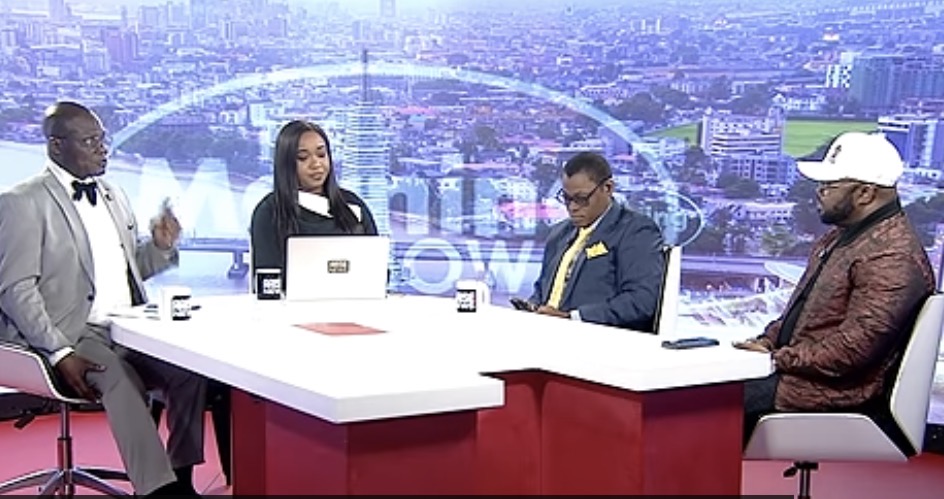
Veteran journalist and ARISE News presenter, Dr Reuben Abati, appeared uncertain about the name of Ebonyi State Governor, Francis Nwifuru, during a live television interview with the Peoples Democratic Party (PDP) governorship candidate in the state, Chief Ifeanyi Odii, popularly known as Anyichuks.
While questioning Odii on the political situation in Ebonyi ahead of the 2027 general elections, Abati, in a video which has gone viral on social media remarked:
“…Are you aware that Governor Nwifuru, I think that’s the name of Ebonyi Governor…”
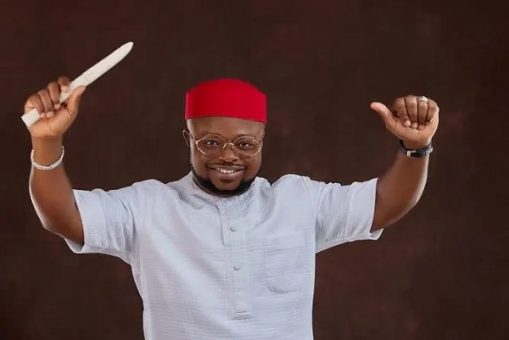
Popular Ebonyi Guber Candidate ANYICHUKS
The remark, which appeared to be an attempt to confirm the governor’s name, has raised questions about Nwifuru’s visibility beyond Ebonyi State, particularly amid growing criticism of his administration over allegations of poor performance.
During the interview, Odii accused Governor Nwifuru of allegedly intimidating opposition parties in the state, claiming that incidents involving attacks on opposition supporters had been reported to security agencies.
He also criticised an alleged threat by the governor to sack local government chairmen who allow opposition parties to campaign in their council areas, describing such a move as unconstitutional and an affront to democratic principles.
Odii urged his supporters to remain peaceful and law-abiding, stressing that the governor has a constitutional responsibility to protect all residents, irrespective of their political affiliations.
Speaking on the PDP’s support for President Bola Tinubu’s re-election bid, the governorship candidate explained that the arrangement formed part of a broader political understanding involving factions of the PDP and the ruling All Progressives Congress (APC).
He dismissed suggestions that supporting Tinubu could undermine his governorship ambition, insisting that the presidential and governorship elections were separate political contests.
On his economic agenda, Odii pledged to attract ₦2 trillion in investments to Ebonyi within his first six months in office if elected governor.
He identified solid minerals, manufacturing, real estate, healthcare and hospitality as key sectors through which his administration would stimulate economic growth, attract investment and generate employment opportunities.
The PDP candidate maintained that his business experience, grassroots connections and record of community interventions had adequately prepared him to attract investors, create jobs and improve the living standards of Ebonyi residents.

President Bola Tinubu has said he will not attend every campaign rally ahead of the 2027 general election, explaining that he must balance his re-election campaign with the demands of governing Nigeria.
Tinubu made this known on Wednesday in Abuja during the inauguration of the All Progressives Congress (APC) Presidential Campaign Council, where he urged members to take the party’s message to Nigerians across the states, local government areas and wards.
The President said he agreed with concerns that the demands of campaigning should not distract him from his responsibilities as head of state, stressing that the country needed his attention at a critical time.
“You’ve warned me not to allow the rigour of the campaign to distract me from governance, I hear you. I am in full agreement with your decision. Nigeria needs more attention now,” he said.
Tinubu explained that his decision to limit his attendance at campaign events was also influenced by the need to meet the country’s financial obligations.
“So, you will excuse me from going everywhere with you, we have bills to pay. The American creditors cannot wait,” the President stated.
He also highlighted the importance of attracting investors who would make long-term commitments to Nigeria, noting that sustained investment was essential to building a better future for the country’s children.
“We want those investors to come in, be here to stay, to invest for the future of our children,” he said.
Despite his plan to reduce his presence at campaign rallies, Tinubu assured Nigerians that he would still engage directly with voters during the campaign period.
“However, I will still make time to speak directly with Nigerians, even as you lead the campaign in the states and local government areas,” he added.
The President described the inauguration of the campaign council as more than a routine political event, saying it represented a renewed commitment to Nigerians and the responsibility entrusted to the APC as the ruling party.
“We have not gathered merely to inaugurate a council. We have gathered to renew a covenant. A covenant with Nigerian people and the historic responsibility they have entrusted to us as Nigeria’s governing party,” Tinubu said.
He charged members of the council to communicate the administration’s vision, achievements and policy agenda to Nigerians nationwide, expressing confidence in their ability to mobilise support for the party at every level.
“This council will carry our vision, our records and our agenda to every Nigerian, and it will carry them to victory every ward of this country,” he said.
Tinubu also praised APC members for successfully completing the party’s congresses, recalling predictions that the exercise could trigger an internal crisis.
According to the President, the party overcame the anticipated challenges and completed the process with members participating from the ward level to the national leadership.
“They said there will be implosion. We passed through it. We did not fail. You didn’t let us down. We got here together,” he stated.
Tinubu’s remarks signal an approach to the 2027 election campaign in which he intends to maintain focus on governance and economic management while relying on the APC Presidential Campaign Council to coordinate nationwide mobilisation and promote the party’s message ahead of the polls.
Politics
Tinubu Inaugurates APC Presidential Campaign Council, Vows to Renew Covenant With Nigerians in 2027
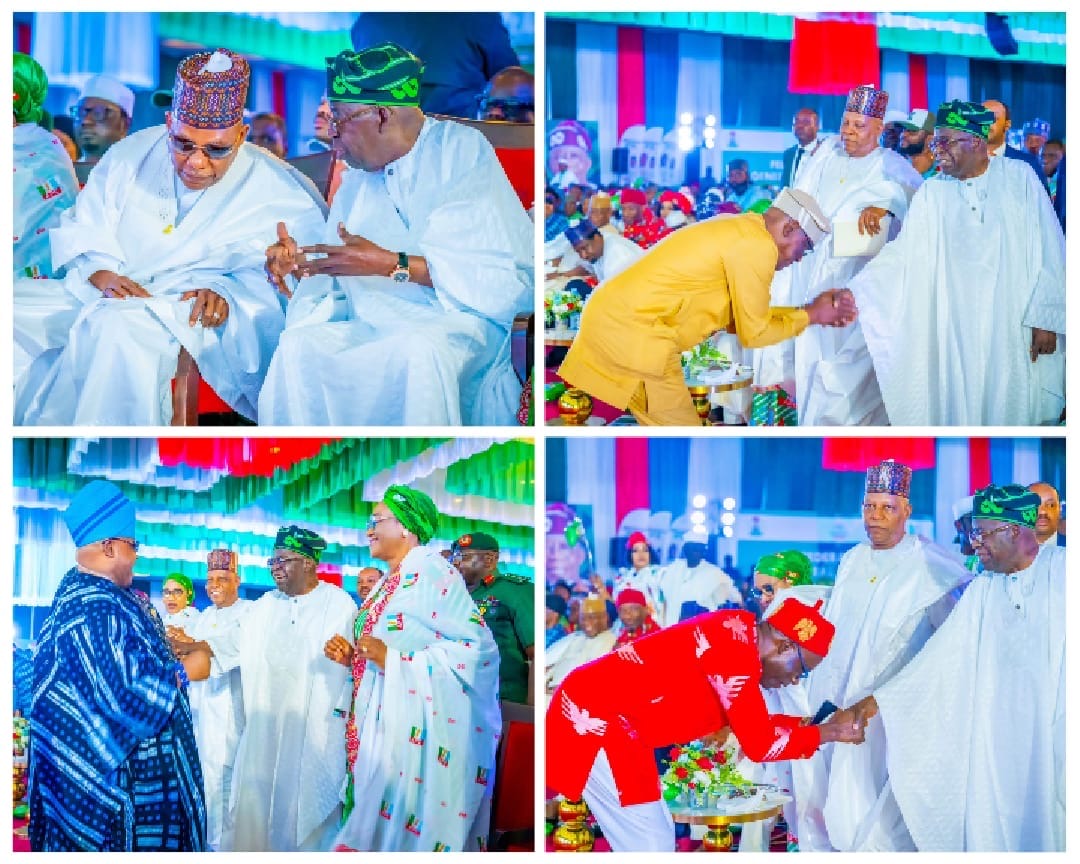
ABUJA— President Bola Ahmed Tinubu has inaugurated the All Progressives Congress (APC) Presidential Campaign Council (PCC) ahead of the 2027 general election, declaring that the party is united and prepared to seek a renewed mandate from Nigerians.
Tinubu inaugurated the council on Wednesday at the State House Conference Centre in Abuja, charging members and party leaders to demonstrate unity, discipline and commitment while sustaining his administration’s governance priorities.
Addressing the gathering, the President expressed gratitude to party members for their support during the previous election but stressed that their political assignment would only be complete when they secured victory in the next polls.
“I thank all of you for the last election, but no one gets credit for an incomplete assignment until you deliver the next election, until you deliver your electoral wards, until you deliver the votes,” he said.
Tinubu acknowledged advice from Imo State Governor and Chairman of the Progressive Governors Forum, Hope Uzodimma, who urged him to remain focused on governance despite the demands of the election campaign.
The President said he would continue to engage directly with Nigerians while the campaign council coordinated mobilisation across states and local government areas.
He also highlighted the need to meet the country’s financial obligations and attract foreign investment, saying international creditors and investors remained important to Nigeria’s economic future.
“We have bills to pay. The American creditors cannot wait. We want those investors to come in and invest for the future of our children,” Tinubu said.
Shettima Defends Tinubu, Criticises Opposition Figures
Vice President Kashim Shettima praised Tinubu’s commitment to democracy, citing his support for former Vice President Atiku Abubakar’s presidential ambition in 2007 under the platform of the defunct Action Congress of Nigeria.
Shettima also defended the dignity of the presidency in response to criticism of Tinubu, insisting that the office must be respected regardless of political differences.
“You can call him Bola, if you like, call him Adekunle, but he is the President of the Federal Republic of Nigeria,” he said.
The Vice President also criticised Peter Obi, the presidential candidate of the National Democratic Movement, accusing him of using misleading statistics and making comparisons between Nigeria and other countries without sufficient context.
APC Promises Nationwide Mobilisation
APC National Chairman, Professor Nentawe Yilwatda, said the inauguration reflected the party’s determination to build a better Nigeria and secure Tinubu’s re-election.
Yilwatda urged campaign council members to communicate the administration’s policies and achievements clearly, while demonstrating how its reforms could translate into tangible improvements in the lives of Nigerians.
He pledged that the party would intensify grassroots mobilisation across electoral wards, local government areas and states to ensure a strong voter turnout in 2027.
The APC chairman also called for a peaceful election focused on ideas, records and policies, rather than hostility.
Uzodimma Defends Tinubu’s Economic Reforms
Uzodimma, who serves as secretary of the campaign council, expressed confidence that the administration’s policies would strengthen the campaign’s message.
He praised Tinubu for removing the petrol subsidy and reforming the foreign exchange system, arguing that previous administrations had avoided tackling the challenges because of their potential political consequences.
According to Uzodimma, the reforms had imposed hardships on Nigerians but were necessary to address longstanding economic weaknesses.
He also cited Nigeria’s economic growth, which he put at 4.43 per cent, compared with 4.23 per cent a year earlier, and praised the administration’s tax reforms.
Uzodimma maintained that the campaign would focus on issues and the government’s record rather than political rhetoric.
Adeleke, Soludo and Wike Back Tinubu’s Re-election
Osun State Governor Ademola Adeleke, Anambra State Governor Charles Soludo and Minister of the Federal Capital Territory Nyesom Wike were among those who delivered goodwill messages in support of Tinubu’s second-term bid.
Adeleke, who belongs to the Accord Party, drew cheers from attendees with his trademark dance moves during the event.
Wike, a prominent figure in the Peoples Democratic Party (PDP), said he supported Tinubu because of what he described as the President’s bold leadership and willingness to address problems previous administrations had left unresolved.
He challenged governors to work towards delivering their states for Tinubu in the 2027 election.
The event also featured messages from Senate President Godswill Akpabio, Speaker of the House of Representatives Tajudeen Abbas, Special Adviser to the President on Political Affairs Ibrahim Kabiru Masari and elder statesman Tanko Yakassai, who called for support for Tinubu’s second term.
Tinubu, meanwhile, urged the campaign council to conduct its activities responsibly, engage Nigerians constructively and promote the administration’s Renewed Hope Agenda while ensuring that governance remains a priority.
The inauguration formally sets the APC’s campaign machinery in motion as the party prepares to seek another presidential mandate in 2027.

-

 Politics3 days ago
UNPOPULAR? Abati Seeks Confirmation of Ebonyi Gov’s Name During Interview With Anyichuks
-
 Politics4 days ago
Ebonyi Students Endorse ANYICHUKS, Declare ‘We Won’t Support a Failure’
-
 News3 days ago
2027: APC, APGA Rift Deepens Over Support for Tinubu’s Re-election
-
 Politics4 days ago
Tinubu Inaugurates APC Presidential Campaign Council, Vows to Renew Covenant With Nigerians in 2027
-
 News3 days ago
NCDMB Tasks Anambra Journalists on Local Content Advocacy, Accountability in Oil and Gas Sector
-
 Politics4 days ago
2027: Kwashy and Friends For Peter Mbah Vows Landslide Victory for All APC Candidates
-
Politics4 days ago
I will be busy fixing Nigeria, will not attend all campaigns- Tinubu
-
 News3 days ago
FG Reopens First Niger Bridge After 38 Days of Rehabilitation, Umahi Rallies Support for Tinubu’s Re-election