By Okey Maduforo Awka .
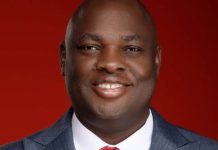
Governor Charles Soludo of Anambra state has lamented lack of research in public policy making contending that academic research with positive impact on governance is sterial.
He further challenged the academic community to step up it’s intellectual works towards solving contending issues that shape the wellbeing of the immediate society.
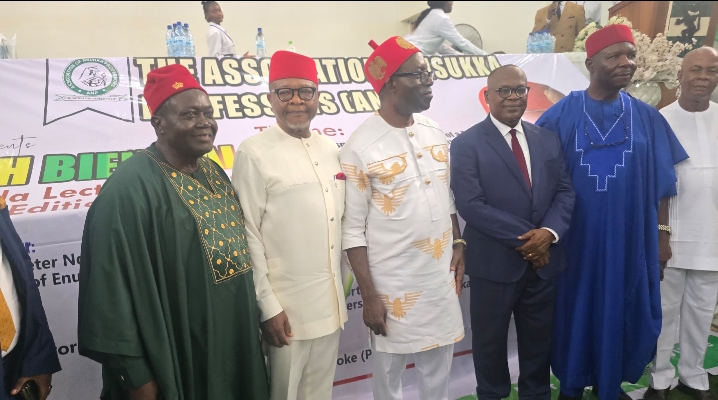
The Governor who delivered a lecture at the 6th Biennial Adada Lecture Series 2026 convened by Association of Nsukka Professors noted that gone are those days when intellectual works end up at the University book shelf without transforming the socioeconomic needs of any given society.
Soludo observed that the “fusion of thought and action” remains the only bridge to a national rebirth.
Soludo questioned why academic discussions have seemingly lost their authority in national life. Despite producing thousands of professors and journals, he noted a “severed link” between academic research and public policy.
“If you have 200 Professors as members, how is the Adada zone not a first world?” he asked, challenging the audience to move beyond the walls of the university. “We produce journal articles, but how many have become policies? Intellectualism without activism is sterile.”
The Governor further advocated for “Productive Intellectualism,” where critical thinking guides public purpose. Drawing from his first tenure as Governor over the last four years, Governor Soludo highlighted how he has attempted to bring intellectualism to governance through “sacrificial volunteerism” and how he succeeded in laying the foundation for the African Dubai-Taiwan-Silicon Valley.
He emphasized that nations do not develop by resources alone, but by ideas that precede institutions; citing historical giants like Isaac Newton, Nnamdi Azikiwe, Obafemi Awolowo, Kwame Nkrumah, Ahmadu Bello, and a host of others, as examples of a shared pattern of logical thinking that yield ideas and then built.
“This is a challenge to the intellectuals and the wider academic community: to multi-task, as the modern intellectual must be both a thinker and a doer, Question the Status Quo which remains a fundamental element of true intellectualism”
“Standing akimbo is too expensive,” Soludo warned. “We don’t just live; we live to matter. It is time to get back to basics and drive the African renaissance through active participation.”
Speaking earlier, Professor Osita Ogbu, presiding as Chairman, observed that the true benchmark of academic excellence is not found in the complacency of achievement, but in an unyielding hunger for discovery and the courage to apply that knowledge to real-world challenges. He asserted that intellectuals are never satisfied, they keep working.
Also speaking, the Vice Chancellor of the University of Nigeria, Nsukka, Professor Simon Ortuanya, framed the gathering as a significant homecoming for Governor Soludo. He offered a glowing tribute to the Governor, commending his transformative contributions to the Nigerian state and his broader dedication to the service of humanity.