
Economy
2024: Harder times ahead, economic disaster, fuel may hit N1,200/litre


“Once to every man and nation comes the moment to decide, in the strife of truth and falsehood, for the good or evil side.” James Russell Lowell, 1819-1891.INTRODUCTION
No two years are ever alike in the history of any country. But, 2024 in Nigeria, will be characterised by three words: SCARCITY, FAILURE AND CHAOS.
Scarcity will be the most pervasive. The year is already going to start with cash scarcity – which is a hangover from the disastrous currency change programme early in the year. Others to expect include the following: foreign exchange, food, manufactured goods, drugs, jobs, university lecturers, doctors, nurses, and accommodation.
Scarcity, meanwhile, induces recurrent inflation – which means that, contrary to the assumptions in the budget, inflation in 2024 might top 30 per cent. Furthermore, a look at the list above should reveal to the reader that the situations in Nigeria make the shortages of supply inevitable.
For too long, Nigerians have been led by one political falsehood after another. As we start 2024, we are once more confronted with the government’s increasing credibility gap. Trust in governments, which binds the people of the great nations together, has been missing in Nigeria since 1960.

Governments, at Federal, State and Local Government levels now deceive the people so shamelessly and without remorse. Except for those in government, the beneficiaries of their activities (whatever those might be) and their party members few people believe the leaders anymore. Yet, rapid social, economic and political development will continue to elude us until faith in governments is restored.
Two quick questions will illustrate the point and lead us to the forecasts for 2024 – which unbelievably promises to be worse than any year before it. Hope delayed.
FUEL SUBSIDY REMOVED; TRUE OR FALSE?
“Subsidy is gone.” President Bola Tinubu, May 29, 2023.
On vital national issues, a President should not speak flippantly and without meaning it; because lives of millions of stakeholders depend on his utterances. Thus, when Tinubu announced that “Subsidy is gone” in his inaugural address, and was roundly applauded for his “courage” and for “hitting the ground running”, my first comment on June 4, 2023, was “Talk is cheap”. Something told me that Tinubu had not fully considered all the implications of the policy decision. In less than 72 hours after, some of the repercussions came tumbling in.
Rattled, Tinubu was forced to call an Emergency Meeting of the National Economic Council, NEC. The NEC, which should have been consulted before making the announcement, joined the President in promising a lot of palliatives; most of which have not been delivered till today.
Right now a question which should have only one answer – Yes or No – has two answers; depending on who is talking. FG’s credibility and the fate of Nigerians in 2024 hang on the truth. Below are the answers given to the most important question for 2024.
Federal Government
“Subsidy is gone , and the President told Nigerians from his first day in office that there won’t be subsidy…..There are instances where the government needs to come in to see that things don’t go bad…Every rule will also have its self-adjusting mechanism…” Mohammed Idris, Minister of Information and National Orientation on Channels TV.
World Bank
“It does seem like petrol prices are not fully adjusting to market conditions. So, that hints at the partial return of the subsidy….We think the price of petrol should be around N750 litre – more than the N650/litre currently paid by Nigerians.” Alex Sienaert, Economist, World Bank.
Marketers
“How can you say subsidy is gone? No reasonable person who knows the dynamics of the market globally will say that…The government is subsidising PMS [petrol] because, if it gets to N1000/litre, the country could be set on fire.”
Chief John Kekeocha, Secretary, Independent Petroleum Marketers Association of Nigeria.
“Since the dollar is now about N1,100, if you buy it at that price for the purpose of importing petrol, that means PMS should be selling around N950 or N1000/litre…there is no magic about this.
Chief Ukadike Chinedu, National Public Relations Officer, IPMAN.
Governments’ spokesmen are not appointed for their intelligence; but, for ability to dissemble publicly with a straight face. Obviously, irrespective of what the FG says, Nigerians should expect the following in 2024.
•Fuel subsidy officially returns
•Despite that PMS price ranging between N750-1200/litre
President Tinubu will soon find out that talking first, thinking later can produce disastrous consequences.
ECONOMY 2024
Three major uncertainties hang on our heads like a sword – global price of crude, prevailing fuel price and exchange rates — we turn to the economy in 2024.
BUDGET
Only God knows when Nigeria will ever have a realistic budget presented by the FG to the National Assembly, NASS. As it is, the NASS is wasting time deliberating on a 2024 Budget that is already shredded by events beyond FG’s control. The budget will never be implemented. Here are the reasons.
•False Hope: Based on constant dollars, the Budget for 2024 represents 23 per cent decline from the 2023 Budget as shown below.
•The 2023 Budget was later amended with a Supplementary appropriation to bring the total to N24.82tn.
Obviously, in more stable dollar terms, the 2024 Budget is 23 per cent less than the 2023 Budget. Hope? Forget it.
•Crude revenue estimates might not be achieved: USA and South American Non-OPEC Producers now pumping more oil; reducing OPEC/Nigeria’s share of crude oil exports. Export will average less than 1.6 million barrels per day on the average.
•Stunted Development: “Nigeria’s revenue not enough to support development — IMF.” “Dilapidated Power Plants, and erratic power supply will remain obstacles to economic development.
•Fuel Supply and Price Uncertainty: Despite Dangote Refinery coming on stream and the wasted efforts to revive Nigeria’s four refineries, the uncertainty of supplies and prices will make planning impossible for consumers. Expect either a return to subsidy or fuel price above N1000/litre in 2024.
•Expect more devaluation: The Budget was based on the N750/$1 exchange rate. CBN on December 17, 2023, announced a new exchange rate – N951/$1. That has already torn the 2024 to shreds.
•Inflation certainly above 30%: With the crude revenue target likely to be missed and total revenue in jeopardy, deficit spending will increase above budget and push inflation above 30 per cent in 2024.
•Scarcity of everything: cash scarcity, forex scarcity, food scarcity, imported inputs scarcity, housing scarcity, lecturers scarcity, proprietary drugs scarcity, job scarcity etc will propel inflation higher. Food scarcity deserves special mention. Hoodlums have a stranglehold on Nigeria’s food baskets – Kaduna, Katsina, Sokoto, Zamfara, Benue, Borno, Niger and Plateau. Yet, in 2024 Nigeria’s population will increase by at least six million mouths to feed while the 2023 harvest is estimated to be lower than what we had in 2022. Massive food importation is certain or else unprecedented famine will result.
•Manufacturing decline inevitable: the departure of multinationals, closure of their local suppliers; scarcity of cash, inputs and dollars portend shutdown of many manufacturing companies.
•Foreign Airlines Departure imminent: “$792M TRAPPED FUNDS: Foreign airlines at breaking point; may exit Nigeria” Report, December 11, 2023. the airlines face the same challenges as GSK and P&G; they cannot obtain dollars to remit their funds. For them, operating in Nigeria has become a matter of throwing good money after bad. The end is not in sight for intractable dollar scarcity.
•FDI declines further: “Chevron, ExxonMobil snub Nigeria in 2024 spending plan.” BUSINESSDAY, December 18, 2023. Capital is a coward; it seldom rushes in where others before it are jumping out in droves. To GSK and P&G, you can add, fully or partially, Jumia and Shoprite among those heading for the exit gate. Despite the over-blown successes of Tinubu’s foreign trips, the results are still in doubt. What is never in dispute is how foreigners determine whether to invest in an economy. Nigeria is losing on the major indices.
•Deficit/Loans/Debt burden/Repayment: tied together like quadruplets, the expectations for 2024 are the worst since the FG published annual budgets in Nigeria. Higher-than-expected deficits will start from January 1, 2024 as Nigeria’s export of crude will not reach 1.7 million per day. Higher deficits invariably lead to more loans than was budgeted. That inexorably means increased debt burden and higher debt to revenue ratio. Altogether, Nigerians can expect a dreadful performance in 2024.
•Unemployment: Bad news everywhere. “GSK, P&G: Over 20,000 direct jobs lost to divestment, NECA cries out “. Report December 12, 2023. That is only a fraction of jobs lost or about to be lost. Indirectly, about three times as many jobs would have disappeared by the time the ripple effects are felt. Meanwhile, Nigeria’s tertiary institutions will graduate close to 500,000 new job seekers. Nearly 95 per cent of them will end up unemployed for years to come.
•POWER SUPPLY: “Power supply worsens as key plant shuts down.” Report, December 21, 2023. Rapid economic and social economic progress in invariably propelled by adequate power supply. In December 2023, power supply went as low as 4,212.86MW; it was 4,360.12MW, on the average, in December 2015 – seven months after Buhari mounted the saddle. Obviously, no progress was made in eight years. There is no provision for significant improvement in the 2024 Budget. Hope? Forget it.
SUMMARY
Just about every index of a sound economy is discouraging. The 2024 Budget has already derailed; more foreign businesses and airlines are heading for the exit gate, scarcity of everything looms and there will be six million more mouths to feed with dwindling domestic food harvest.
SECURITY
The challenges are mounting; effective response uncertain. The major threats are: banditry, kidnapping, illicit drugs, cyber-crimes and political assassination induced by weaponisation of building demolition.
•Banditry/Kidnapping: Only two forms of insecurity show signs of abatement – Boko Haram and herdsmen assault on Fellow Nigerians. The rest appear to be on the increase nationwide; particularly in the Federal Capital Territory, FCT. Youth and adult unemployment, rising numbers of Internally Displaced Persons, IDPs, will create more individuals with nothing to lose.
·Illicit Drugs: “N800bn illicit drugs seized, 42,105 offenders nabbed – Marwa.” Report, December 19, 2023. When the Decree 48 of 1989 was signed into law by President Babangida, Nigeria was only a major transit nation for illicit drugs. The FG, correctly, anticipated the nation’s transition to a major consuming nation. Today, Nigeria is both a leading consuming and transit nation. General Marwa has done , by far, the best job of any Director-General of the NDLEA. But, he increasingly labours in vain. Lagos State reflects the situation nationally.
The arrest of one culprit merely opens a vacancy for other willing adventurers to fill and the beat goes on. What should worry us are the sources of funds to buy the N800bn seized. A great shock awaits us in 2024.
•Political assassinations becoming more likely: Four states have pushed us near the point of frequent political assassinations; which might prove contagious.
•Demolition weaponised: When the Land Use Decree of 1978 vested all the lands in state Governors, it never occurred to Obasanjo/Yar’Adua that Governors would abuse the power for their own naked political interest. Now, Governors give 48 hours notice to owners of buildings declared in violation of regulations to remove structures it took up to five years to build.
Today, despite housing shortage nationwide, buildings are being demolished. More will follow in 2024. Law of the Hammer (modified): let a child get hold of a hammer, he soon determines that everything in sight should be hammered. Governors in various states of Nigeria have discovered the hammer of Land Use Decree 1978. Nigeria, starting 2024 will never be the same again.
EXTERNAL FACTORS
The Hamas-Israel war has pushed the Russia-Ukraine conflict into the background. The latter is still influencing global trade relations negatively. As Israel has once again humiliated Palestinians, Arabs, and Muslims in the Middle East, the world can expect the usual repercussions — reduced crude oil supply, global terrorism against Israel, USA and other European allies, attempted disruption of shipping in the Red Sea and Jewish interests worldwide. It is too early to determine the specific measures that will be taken. But, disruption of global trade and security is guaranteed. How it will affect Nigeria is unknown now; but no nation will escape the consequences of the war which started on October 7, 2023, when Hamas attacked Israel. The entire world will pay dearly for a decision made by a few Hamas leaders without seeking our consent.
CONCLUSION
Nigerians should get ready for the toughest year in our history. Government propaganda machinery will be in top gear to convince us that things are getting better. Thank God, no government on earth today can cover up all the facts they consider unflattering to the President. The truth will be known sooner or later.
VANGUARD



By Francis Onoh
It is the right of every Nigerian to be financially included in the system. Data from the country’s foremost financial institution, the Central Bank of Nigeria (CBN) and the organisation Enhancing Financial Innovation and Access show that approximately 40% of Nigerians adults are financially excluded.
Attaining the 3.4% projected growth in the economy’s GDP will be difficult if not impossible, if the petty traders, the local skill workers and the roadside sellers are excluded from financial services and products that can aid their businesses. Enhancing financial inclusion for economic growth requires that financial literacy be extended and incorporated into the activities of organisations that work at the grassroots, for example, religious institutions.
Although with low levels of literacy, Emeka, Haruna or Bankole as devoted adherents of their various religions, are more likely to understands that their money is secure in the financial sector, that products such as pension plan, health insurance schemes and access to credit are available for citizens who are financially included, if and only if leaders of their religion introduce financial literacy to them. Combining their obligation to teach articles of their faith with introducing their members to financial literacy is one way to go if our country has to remedy the financial exclusion created by poverty and limited access to formal education.From the Global Multidimensional Poverty Index, the dimensions of poverty are Health, Education and Standard of Living.
Access to financial services can encourage people to enrol in a health insurance scheme to ensure good health within a manageable expenditure. A financially included person will have formal or informal education by association, which will invariably improve the living standard.
A financially included person is more likely to increase their business share if they access credit facilities in the financial sector and stand a better chance to benefit from government poverty alleviation programmes or even access funds from international development.
Making about 40% of Nigerian adults, which is about 35 million people, financially included will enhance capital formation assets, improve citizens’ disposable income, grow the nation’s financial sector and in extension catalyse industrialisation, which the country direly needs at this time. Financial inclusion for all is a necessary good that should be pursued by the Nigerian government at all levels, and stakeholders, such as religious leaders, must be made aware of their obligation in this space.
The time to do this is now.
Francis Onoh writes from Enugu
The Bank gave this warning on Monday during the public presentation of its latest Nigeria Development Update report titled ‘Building Momentum for Inclusive Growth’ in Abuja.
President Bola Tinubu signed the 2025 Appropriation Act into law, approving a record budget of N54.99tn, the highest in Nigeria’s history.
The budget was raised from the initial proposal of N49.7tn submitted to the National Assembly.
The fiscal plan makes provisions for N13.64tn in recurrent expenditure, N23.96tn for capital projects, N14.32tn for debt servicing, and N3.65tn for statutory transfers, while projecting a deficit of N13.08tn, to be financed through domestic and external borrowing.
The budget assumptions include a crude oil benchmark of $75 per barrel, oil production at 2.06 million barrels per day, an average exchange rate of N1,400/$, and an inflation target of 15 per cent.
Speaking at the event, the World Bank’s Lead Economist for Nigeria, Mr Alex Sienaert, said that despite strong revenue gains recorded in 2024, Nigeria’s 2025 budget assumptions remain optimistic and may prove difficult to meet.
He said, “It’s a very ambitious budget. Even with the very positive revenue sort of tailwind that we have… even considering that, it looks like it’s going to be pretty hard to meet some of the ambitious revenue targets that are in there.”
According to him, key assumptions such as average daily crude oil production of 2.1 million barrels per day and a benchmark oil price of $75 per barrel are unlikely to hold, noting that current production figures are closer to 1.6 million barrels per day.
He also cited uncertainty over how much revenue would flow from the removal of the petrol subsidy and the planned windfall tax on foreign exchange gains, saying these could weaken the Federal Government’s revenue position.
“This is important because if it does turn out that the revenue targets are not met, then that could mean that the financing requirements are more than budgeted. And if the financing requirements exceed what’s budgeted, then that’s either going to create arrears pressures… or it could renew risks of recourse to things like deficit monetisation under large-scale Ways and Means,” he said.
Sienaert warned that although Nigerian authorities had pledged not to resort to the CBN’s overdraft facility, doing so again could derail the country’s fragile macroeconomic recovery.
“The authorities have been very clear that they will by no means be going back to large-scale use of Ways and Means, but were that to happen, it would be just extremely disruptive to the whole rebuilding of confidence in fiscal sustainability and in the naira ultimately,” he noted.
On broader fiscal matters, the World Bank called on the Federal Government to eliminate the electricity subsidy, which it described as a “wasteful, regressive subsidy.”
Sienaert said key fiscal reforms such as the removal of the petrol subsidy and the adoption of a market-reflective exchange rate had helped improve the government’s fiscal position, but further reforms were needed.
“There’s still a range of fiscal policy and fiscal management issues where more can be done to safeguard the gains that have already been achieved… just to name, there is still one kind of wasteful regressive subsidy, which is the electricity subsidy. So work to address that,” he said.
He also advocated for improved oil revenue transparency and a reduction in the cost of governance, saying efforts to increase non-oil revenue must continue.
Sienaert noted that although the Nigerian National Petroleum Company Limited began applying official exchange rates for fiscal transactions in October 2023, only half of the revenue gains from the subsidy removal had been remitted to the Federation Account by January 2025.
“It’s just going to be important in the coming months to keep tracking this, and ultimately that the full revenue gains from the difficult job of eliminating the subsidy do flow to the Federation so that that can support a continued healthy fiscal picture and, in turn, spending on development priorities,” he said.
On inflation, the World Bank economist said monetary policy reforms had helped reduce inflationary pressures but noted that consumer prices remained high.
“We do need to acknowledge that price pressures remain elevated,” he said. “The battle against inflation continues, and to extend the military analogy a little bit, there’s a kind of fog of war… quite dense just at the moment.”
He added that recent changes to the Consumer Price Index by the National Bureau of Statistics had made it difficult to determine the current trend in inflation, noting, however, that continued coordination between fiscal and monetary authorities would be critical to restoring confidence.
The World Bank further urged the government to ramp up implementation of its targeted cash transfer programme aimed at cushioning the cost of reforms on poor households. The programme currently offers N25,000 monthly for three months to 15 million recipients.
“The implementation has just been quite slow. So only about a third of those recipients have received transfers so far. The good news is that this is being scaled up… and just important that that effort really continues so that as many people as possible get help,” Sienaert said.
Looking ahead, he called for a new growth strategy based on a “private-led, public-facilitated” model.
The World Bank also stressed the need to reduce costs of governance, including cutting “wasteful expenditures that are not essential, such as purchase of vehicles, external training, etc.” and reducing “the cost of collection of GOEs (FIRS, NCS, NMDPRA, NUPRC, etc.).”
He emphasised the need for increased investment in education and health, noting that Nigeria’s combined spending in these sectors remained among the lowest globally.
“In 2022, Nigeria was only spending 1.2 per cent of GDP on education and 1.8 per cent on health, or $23 per Nigerian per year on education, $15 per Nigerian per year on health,” he said.
He said private sector growth must also be supported by improving the competitive landscape and reviewing trade policies that restrict access to essential production inputs.
“Competition is like the sort of secret sauce that drives innovation and economic transformation. And in Nigeria, there’s some evidence… that actually there are elements of competition policy, and there are conditions that are needed for good competition that actually even compared to some of Nigeria’s immediate peers… the Nigerian competitive landscape lags some of those,” he said.
The Bank believes that following through with these reforms will position Nigeria to achieve its goal of becoming a $1tn economy by 2030.
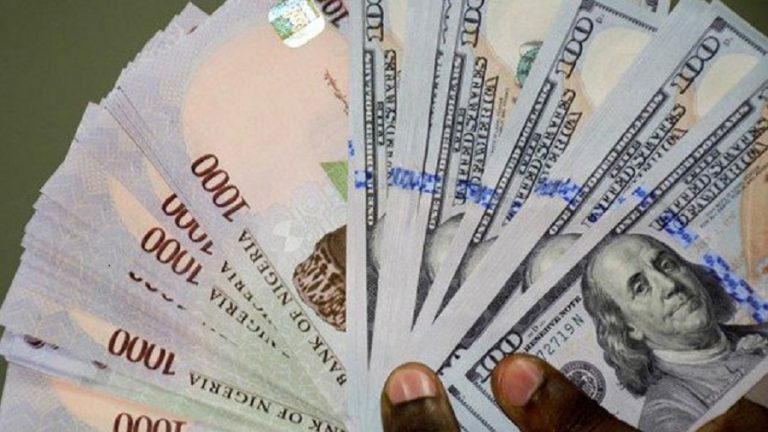
The Naira depreciated to N1,600 per dollar in the Nigerian Foreign Exchange Market (NFEM) today after three months of being on the N1,500 per dollar threshold.
Data published by the Central Bank of Nigeria, CBN, showed that the indicative exchange rate for the naira rose to N1,600 per dollar from N1,569 per dollar on Thursday, indicating N31 depreciation for the naira.
Likewise, the naira depreciated to N1,565 per dollar in the parallel market from N1,555 per dollar on Thursday.
Consequently, the margin between the parallel market and NFEM rate widened to N35 per dollar from N14 per dollar on Thursday.
Vanguard News
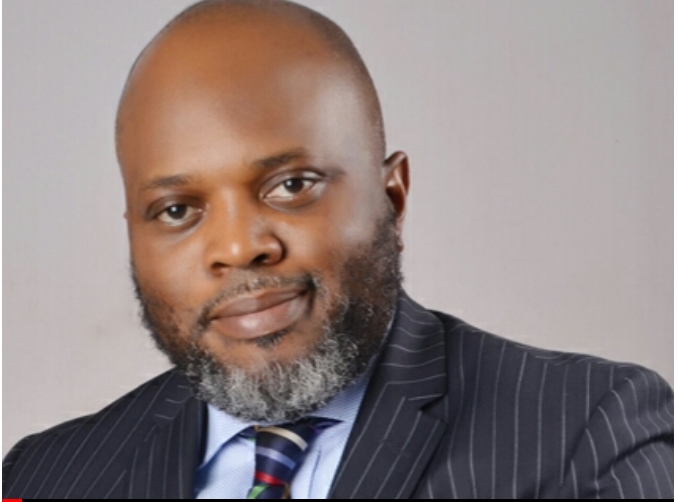
Fasua, who spoke on the Mic On Podcast hosted by Seun Okinbaloye on Saturday, also addressed how poverty is measured globally, saying many Nigerians misunderstand what is termed “multi-dimensional poverty.”
He said, “Some people don’t understand the meaning of multi-dimensional poverty.
“They think multi-dimensional poverty is worse than food poverty. What multi-dimensional means is that maybe the school your children attend is too far from you, or the hospital, and they categorise you as multi-dimensional.”
“$1 is N1,500 – it’s a lot of money for many people in Nigeria. $10 won’t buy you lunch anywhere in the US, sometimes you need at least $20, that is N30,000 in Nigeria,” Fasua stated.
Offering examples from everyday life, Fasua added, “I will tell you what you can do with $5 – that is N7,500 – if you are not going to eat in some highbrow places. In Gwarinpa, there are some people that sell Boli and fish and you will eat for N1,500. If you know where you are coming from.

Experts at investment house Afrinvest have asserted that Nigeria’s debt profile requires immediate action to forestall further deterioration.
This was stated in their latest macroeconomic update titled ‘Nigeria’s Debt Statistics… High Risk or Not?’ which dwelt on the outcome of the recent country visit of IMF’s First Deputy Managing Director, Gita Gopinath.
During the visit, Gopinath described Nigeria’s debt level as moderate rather than high risk, offering a somewhat optimistic assessment of the country’s fiscal position.
On Nigeria’s debt sustainability, Gopinath said, “We (IMF) assess debt sustainability for countries every year, and we did this for Nigeria in our report for 2024. Our assessment was that the risk of sovereign stress for Nigeria is moderate and not high risk.”
She, however, warned that the IMF’s verdict was not a license for the country to take on more debt, saying, “No, I will not go that path. The point is that you want to stay moderate, and you don’t want to move into a high-risk debt level. I just want to highlight the fact that while the country’s sovereign debt is said to be moderate, we are living in a world with a lot of shocks and a large amount of uncertainty.
“And if you look at the interest payment as a share of revenues, 75 per cent of revenues go into interest payment. That means there is hardly any money for social support or development spending. Therefore, to make sure that debt stays at a manageable level, it is also important to do more domestic revenue mobilisation.”
Gopinath also emphasised that savings from fuel subsidy removal should be redirected into government reserves rather than spent inefficiently.
Overall, the IMF Deputy Director stressed the need for Nigeria to optimise its revenue streams by strengthening tax collection, curbing leakages, and ensuring fiscal discipline.
“Specifically, domestic debt rose 3.3 per cent quarter-on-quarter to N73.4tn, marking a 24.2 per cent increase as of 9M:2024. The local debt accounted for 51.6 per cent of total public debt—within the DMO’s 70.0 per cent domestic debt mix cap. Meanwhile, external debt jumped 9.2 per cent q/q to N68.9tn, reflecting an 80.2 per cent increase, largely due to the continued depreciation of the naira, which fell 11.9 per cent in Q3 to average N1,579.22/$,” the investment house stated,.
The analysts pointed out that the total public debt-to-GDP ratio reached 52.8 per cent (based on 9M debt and FY nominal GDP), exceeding the 40.0 per cent limit set in the 2020–2023 Medium-Term Debt Management Strategy and nearing the 55 per cent risk threshold for developing countries.
Speaking on the high debt servicing allocation in the 2025 budget and deficit, the Minister of Budget and Economic Planning, Atiku Bagudu, revealed that a sustained positive economic condition may reduce it.
Bagudu said this on Monday at the KPMG budget 2025 day aired on Arise TV. He said, “On the deficit of N14tn, given what we saw is the innovative approaches to financing, first, because you don’t have recourse to the Central Bank of Nigeria at all. So, under no circumstance would the Central Bank be going above the legal limit of five per cent. So, we are going to market, and we are going to market in different ways. Innovative financing and innovative approaches: local bonds have been issued where governments have raised money. This, of course, represents a statement of intention, just to ensure that those whom we have borrowed from will be confident that we will have enough to meet our debt service obligation. But if, as we anticipate, economic conditions will continue to improve, we may not need to spend up to that in debt service.”
Meanwhile, Jimi Ogbobine, head of Agusto Consulting, a subsidiary of Agusto & Co., has asserted that the current administration of President Bola Tinubu was a big-spending government, hence heightened concerns about the fiscal deficit.
Speaking at the rating firm’s 2025 Economic Roundtable, Ogbobine said, “For Nigeria, we have about 10 key uncertainties, the first being our debt sustainability. Nigeria’s debt sustainability is a key worry point for us, so we have to pay attention to it. Many of us say that our political parties do not have ideologies, but that is not absolutely true. They may not have it in theory, but they have it in practice. This current party is a big government party, and that is why debt sustainability is a key concern. Nigeria’s Fiscal Responsibility Act says that fiscal deficit should be three per cent of the GDP. It is not a law; it is guidance even though it is written in a law.”
-
 News1 day ago
“Go and Verify”: How Sunday Umeha Is Redefining Representation in Ezeagu/Udi
-
 Politics4 days ago
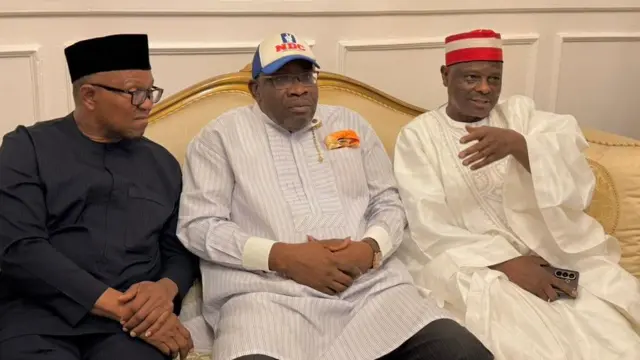
Mass exodus: Obi, Kwankwaso exit rocks ADC, 18 lawmakers join NDC
-
News1 day ago
Chief Sir Paul Chukwuma Lays His Beloved Sister to Rest
-
 Politics2 days ago
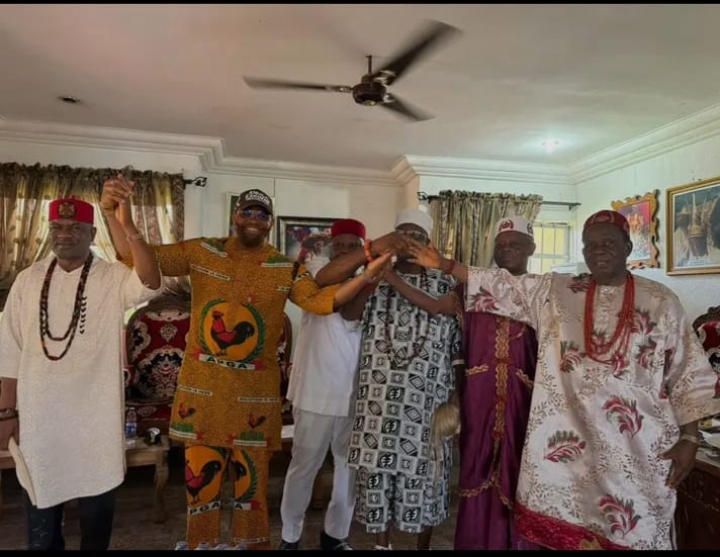
Anambra Communities Boil As Group Carpets Traditional Rulers Over Zoning
-
 News3 days ago
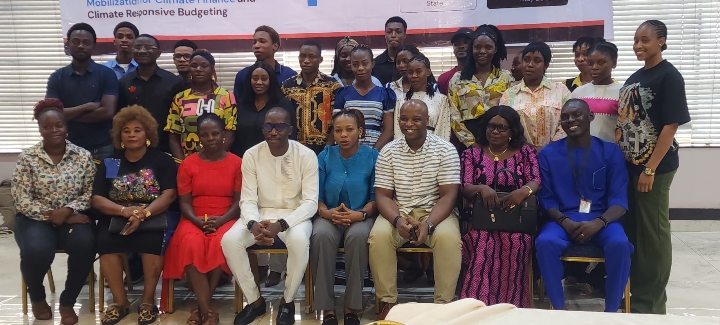
Enugu, SSDO advance domestic resource mobilisation for climate responsive budgeting
-
 Politics4 days ago
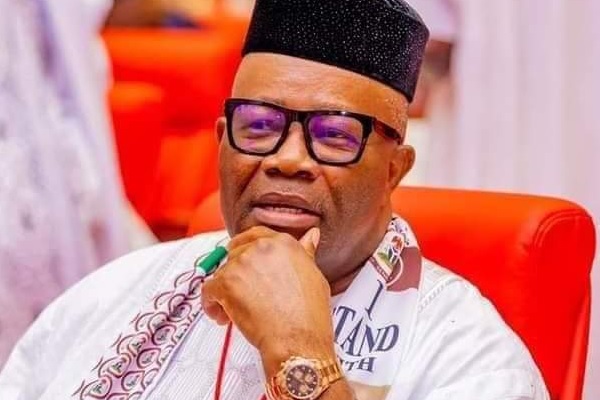
2027: Akpabio Moves to Block Ex-Governors from Contesting for Senate President
-
 Crime3 days ago
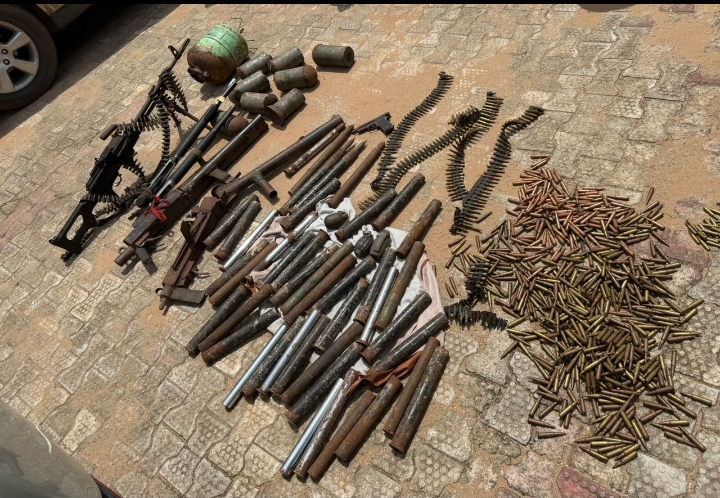
Anambra Police Burst Gunmen Armoury in Orumba
-
 News2 days ago
2027: Anambra ADC Intact Despite Obi, Kwankwaso Departure – Guber Candidate