



News
2027 Presidency: Tinubu Accused of Disregarding Federal Character, Religious Balance, Fairness



Shettima’s confirmation for the 2027 presidential election has reopened debate over the APC’s Muslim-Muslim ticket, with political parties and stakeholders divided over whether religion or competence should shape leadership choices.
The APC’s decision ended months of speculation that Tinubu could replace Shettima with a Northern Christian, while reviving arguments that dominated the build-up to the 2023 election.
Although critics had argued that the same-faith ticket undermined Nigeria’s religious balance, Tinubu and Shettima won the presidency, and the ruling party has now opted to retain the combination for a second term.
While some opposition parties, including the All Progressives Grand Alliance and the Young Progressives Party, have downplayed concerns over the same-faith ticket, others have warned that religious balance remains an important factor in Nigeria’s politics.

The renewed debate followed the APC’s confirmation on Friday that Tinubu would contest the 2027 election with Shettima, a move that effectively ended months of speculation that the President could pick a Northern Christian as his running mate.
Ahead of the announcement, several names had been linked to the position, including the Minister of Defence, Gen Christopher Musa (retd.); the Catholic Bishop of Sokoto Diocese, Most Rev Hassan Kukah; and former Speaker of the House of Representatives, Yakubu Dogara.
The APC’s decision has revived arguments that dominated the 2023 election after Tinubu, a Muslim from the South-West, selected Shettima, also a Muslim from the North-East, as his running mate.
Critics had argued that the ticket broke with Nigeria’s tradition of balancing presidential tickets along religious lines to reflect the country’s diversity. However, Tinubu and Shettima went on to win the election, defeating candidates of the Peoples Democratic Party, Atiku Abubakar; the Labour Party, Peter Obi; and the New Nigeria Peoples Party, Rabiu Kwankwaso.
Reacting to the development, APGA said the focus of elections should be on leadership capacity rather than religion.
The party’s National Publicity Secretary, Ejimofor Opara, said Nigeria must move beyond identity politics and judge leaders by their performance.
“Competence should remain the defining issue in 2027, not whether candidates are Muslims or Christians,” he said.
The Young Progressives Party also argued that character, competence and integrity should outweigh religious or ethnic considerations in leadership selection.
Its spokesman, Wale Egbeola-Martins, said Nigeria’s major challenge had been poor leadership rather than the religious identities of those in power.
“The real challenge confronting our nation since the return to democratic rule has not been the ethnic or religious identity of those in power, but the persistent deficit of purposeful and accountable leadership,” he said.
The party said it would continue to support politics based on merit, service and national interest rather than religious or ethnic considerations.
APC defends retention
Meanwhile, the APC has defended its decision to retain Shettima, insisting that the choice was based on national interest and a careful assessment of political realities.
The party’s Director of Publicity, Bala Ibrahim, said the Muslim-Muslim ticket had not produced the religious tensions predicted by critics ahead of the 2023 election.
“The decision was reached after a careful assessment of the situation. The party is conscious of religious sensitivities but is also mindful of the broader interests of Nigerians,” he said.
Ibrahim dismissed fears that the ticket could fuel religious division, arguing that the administration had promoted interfaith harmony since assuming office.
The National Chairman of the Action Democratic Party, Yabagi Yusuf, and a leader of the Coalition of United Political Parties, Mark Adebayo, also argued that issues such as security, the economy and governance performance would dominate the 2027 campaign rather than religious identity.
Yusuf said the APC’s decision was largely influenced by electoral considerations, particularly the need to secure support across key voting blocs.
He argued that while religious considerations remain part of political discussions, parties ultimately consider the electoral strength and acceptability of their candidates when making strategic decisions.
Yusuf said the APC’s decision was driven by electoral calculations rather than religious considerations.
According to him, political parties are primarily concerned with assembling tickets capable of attracting the broadest electoral support.
“It’s politics. They must have done their calculations and concluded that this is their best chance of winning. In the end, elections are about where the votes are,” he said.
The immediate past National Publicity Secretary of the Coalition of United Political Parties, Mark Adebayo, also argued that the Muslim-Muslim ticket is unlikely to generate the level of controversy it did in 2023.
He said issues such as security, the economy and governance would dominate the 2027 campaign.
The Ijaw Youths Council also dismissed religious identity as the basis for evaluating political leaders.
The President of IYC Worldwide, Jonathan Lokpobiri, said Nigerians should focus on competence and good governance rather than the faith of candidates.
“What we need is a competent, focused and compassionate leader who can take difficult decisions and improve the lives of Nigerians. Religion should not be the yardstick for leadership,” he said.
Groups oppose ticket
However, the Coalition of South East Youth Leaders criticised the APC’s decision, describing the retention of the Muslim-Muslim ticket as insensitive to Nigeria’s religious diversity.
Its President-General, Goodluck Ibem, said overlooking the opportunity to nominate a Northern Christian could deepen feelings of exclusion among many Nigerians.
“In a nation as religiously and culturally diverse as ours, leadership must not only be fair but must also be seen to be fair,” he said, urging the APC to embrace greater inclusiveness.
Similarly, the South-South Youths Initiative rejected Shettima’s renomination.
Its National President, Imeabe Oscar, argued that the APC’s decision was politically motivated and alleged that the party retained the Vice President largely for electoral advantage in Northern Nigeria.
‘Christians feel excluded’
The National President of the Middle Belt Forum, Dr Pogu Bitrus, criticised the APC’s decision, describing the retention of the Muslim-Muslim ticket as a slight on Christian Nigerians.
“To retain a Muslim-Muslim ticket after 2023 sends the wrong signal in a country as religiously diverse as Nigeria,” he said, urging the APC to reconsider its decision in the interest of national unity.
The Chairman of the Centre for Accountability and Open Leadership, Debo Adeniran, however, said fears expressed over the Muslim-Muslim ticket before the 2023 election had not materialised.
“The fears widely expressed in 2022 did not happen. The President and the Vice President have worked together, and that relationship appears to have remained stable,” he said.
Adeniran added that Shettima’s loyalty and working relationship with Tinubu may have influenced the President’s decision to retain him.
APC backs Shettima
Stakeholders of the APC in Abia State also defended the President’s decision.
The state chairman of the party, Chijioke Chukwu, said there was no justification for replacing Shettima, describing the President and Vice President as a team that had worked harmoniously since assuming office.
“It’s unreasonable to drop him (Shettima). Tinubu is a Muslim from the south and has been supporting Christians. Going for his second tenure, it is proper for the President to pick from the North. They have collaborated well without any problems between the Vice President and the President. There is no reason for a new VP. To us, this is a wonderful decision,” he said.
Similarly, Ohanaeze chieftain Justice Rowland Ajuzieogu said Tinubu was constitutionally entitled to choose his running mate, adding that Shettima had remained loyal throughout the administration.
“Tinubu looks at loyalty. Shetima is loyal.”
Industrialist and politician Sam Ohuabunwa also backed the decision, saying the Tinubu-Shettima ticket had already secured victory in 2023 and there was no compelling reason to alter it.
“Since Tinubu made the choice, heaven did not fall. He can do it again, and I believe that is the right thing to do.”
Afenifere faults decision
A faction of Afenifere led by Oba Olaitan Oladapo, however, faulted the renomination of Shettima.
Its National Publicity Secretary, Justice Faloye, said retaining another Muslim-Muslim ticket failed to reflect fairness, religious balance and inclusiveness in a multi-faith country.
Speaking on Tinubu’s choice of Shettima, Faloye said “President Tinubu has continued to show disregard for federal character and religious balance and fairness.
“Most important is that we can expect more of the same if he chooses to coronate himself in 2027. May God save Nigeria sociopolitically and economically from this regime.”


Motorists in Abuja have received fresh relief following a ₦70 reduction in the pump price of petrol by MRS filling stations across the Federal Capital Territory.
The latest adjustment, which took effect on Tuesday, November 24, 2026, saw the retail price of petrol drop from ₦1,365 to ₦1,295 per litre.
A market survey conducted by DAILY POST showed that the reduction followed a downward review of the gantry price by Dangote Refinery over the weekend.
The refinery reportedly reduced its gantry price from ₦1,159 to ₦1,060 per litre, representing a ₦99 reduction.
The latest development marks the second petrol price reduction by MRS within four days.
Four days earlier, the company had reduced its pump price by ₦34 per litre, bringing it down to ₦1,365.
Similarly, the Nigerian National Petroleum Company Limited (NNPC) had reduced its retail price by ₦25 per litre within the same period, bringing its pump price to ₦1,300 per litre.
With the latest adjustment, MRS is now selling petrol at ₦1,295 per litre, which is ₦5 lower than the NNPC price previously reported.
However, petrol prices across Abuja remain varied, with other filling stations dispensing the product between ₦1,325 and ₦1,380 per litre.
The latest reduction is expected to provide some relief to motorists and other consumers amid continuing fluctuations in the downstream petroleum market.
The development also highlights the influence of Dangote Refinery’s gantry price adjustments on retail petrol prices, particularly among marketers sourcing products from the refinery.
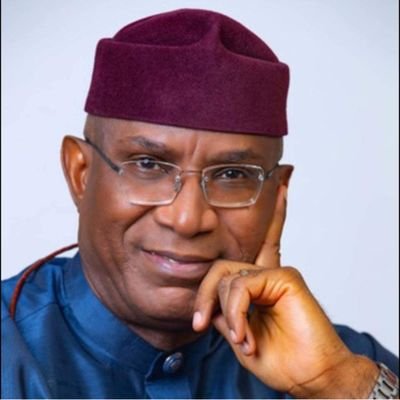
The Federal High Court sitting in Warri, Delta State, has nullified the nomination of former Deputy President of the Senate, Senator Ovie Omo-Agege, as the Nigeria Democratic Congress (NDC) candidate for Delta Central Senatorial District in the 2027 general elections.
The court, presided over by Justice Hyeladzira Ajiya Nganjiwa, ordered the Independent National Electoral Commission (INEC) to remove Omo-Agege’s name from its list of candidates for the election and restrained him from parading himself as the party’s senatorial candidate.
The court also reportedly held that the statutory window for conducting fresh primaries to nominate another candidate had elapsed, thereby raising questions about the NDC’s ability to field a replacement for the former deputy Senate president.
The judgment followed a suit instituted by Professor Alexander Osondu Akpodiete, marked FHC/WR/CS/120/2026, challenging the validity of Omo-Agege’s emergence as the NDC candidate.
Akpodiete had questioned Omo-Agege’s resignation from the All Progressives Congress (APC), his membership of the NDC and his eligibility to participate in the party’s senatorial primary.
Delivering judgment, Justice Nganjiwa reportedly dismissed five preliminary objections raised by Omo-Agege, the NDC and INEC challenging the competence of the suit before proceeding to determine the substantive issues.
The court held that the NDC failed to comply with the mandatory provisions of the Electoral Act regarding the submission of its membership register to INEC ahead of its primary election.
Specifically, the judge found that Omo-Agege’s name was not contained in the NDC membership register submitted to INEC at least 21 days before the party conducted its primary.
The court also reportedly held that the NDC failed to provide credible evidence establishing that the membership register was subsequently updated and submitted within the statutory period.
On Omo-Agege’s previous membership of the APC, the court reportedly relied on INEC’s revised electoral timetable and evidence relating to the APC senatorial primary held on May 18, 2026.
According to the judgment as reported, his participation in the APC primary established that he was still a member of the party at the material time.
Justice Nganjiwa maintained that only persons whose names appeared in a political party’s membership register submitted to INEC in accordance with the Electoral Act were eligible to participate in its primaries.
On the admissibility of a previously withdrawn affidavit, the court held that a party was entitled to withdraw an affidavit already filed in a proceeding, adding that once withdrawn, such an affidavit ceased to form part of the court records and could not be relied upon in determining the matter.
The judge further stressed that a political party’s nomination process must comply with statutory requirements, noting that INEC could not recognise a candidate whose emergence was founded on a process that violated the Electoral Act.
Consequently, the court invalidated Omo-Agege’s nomination, ordered INEC to delist him and restrained him from presenting himself as the NDC candidate for Delta Central Senatorial District.
The ruling marks a major development in the political contest for the Delta Central senatorial seat, particularly as the court reportedly held that the statutory period for conducting fresh primaries had expired.
The development also raises questions about the legal options available to the NDC and whether the party can challenge the judgment on appeal.
The full certified judgment was not available at the time of filing this report. Responses from Omo-Agege, the NDC and INEC were also being awaited.

The National Independence Electoral Commission (INEC) says that no fewer than 520 polling units, two per registration area, will be used for upcoming Mock voting in Enugu State on Saturday.
The INEC Resident Electoral Commissioner (REC) in Enugu State, Dr Chukwuemeka Chukwu, disclosed this during the Combined Stakeholders’ Meeting on Preparations for the 2027 General Elections held in Enugu on Monday.
Chukwu said that the commission had scheduled a nationwide “Mock Accreditation Exercise” for Nov. 28, to test the functionality and operational readiness of its accreditation technology and election-day processes.
“To ensure effective implementation, a total of 1,040 personnel will be deployed for the exercise, comprising two personnel assigned to each of the 520 selected Polling Units (PUs).
“This arrangement is intended to ensure adequate personnel coverage, effective coordination and a proper assessment of the commission’s accreditation technology and operational procedures ahead of the 2027 General Elections.
“I encourage all stakeholders, particularly political parties, civil society organisations and the media, to support the exercise and sensitise voters in the selected areas,” he said.
On staff capacity building, the REC said that the commission just-concluded a three-day training for Electoral Officers (EOs) and Assistant Electoral Officers (AEOs) from Nov. 16 to Nov. 18.
“The training strengthened officers’ capacity in election planning, coordination, implementation and compliance with established guidelines; thus, ensuring that officers demonstrate professionalism, neutrality, discipline and accountability in the discharge of their responsibilities,” he said.
Chukwu said that INEC held a meeting with the Inter-Party Advisory Council (IPAC) on Nov. 20, to discuss preparations for the 2027 General Elections and strengthen cooperation with political parties.
The REC said that the commission organised an Electoral Risk Management Sensitisation Workshop on Oct. 29 to familiarise stakeholders with the commission’s Electoral Risk Management Framework and strategies for identifying and mitigating electoral risks.
“The Commission has continued to promote inclusive electoral participation through people living with disability sensitisation as well as gender-related and youths activities.
“A total of 540 women from the 17 LGAs were sensitised already through organised workshops,” he said.
Speaking, CP Fidelis Ogarabe, the Commissioner of Police and Co-Chairman on Election Security, assured that security agencies would provide security for all INEC programmes and activities in the state.
“Security agencies are always ready. We are assuring INEC and residents of the state of adequate security before, during and after the elections.
“We are ready; call on us and tell us the security challenges and we will resolve it on time,” Ogarabe assured.Contributing, the Chairman, Enugu State Traditional Rulers’ Council, Igwe Samuel Asadu, urged INEC to do more enlightenment and awareness on its statewide programmes and activities, especially those affecting residents in localities.
Asadu noted that more should be done on awareness concerning collection of Permanent Voter Cards, upcoming mock voting, need for mass participation in the electoral process and frequent engagement of stakeholders for them to ginger the people to participate.
The combined stakeholders’ meeting involved political parties, security agencies, traditional and religious institutions, civil society organisations, organisations of Persons with Disabilities, media, INEC head of departments and electoral officers in the state.
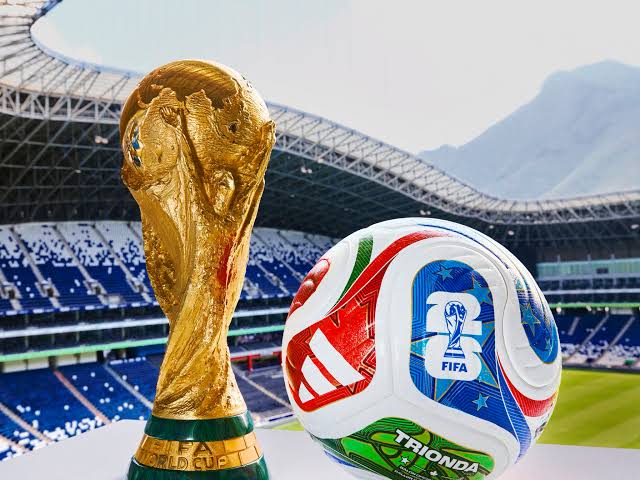
Nigeria is not currently equipped to host the FIFA World Cup due to inadequate infrastructure, particularly stadiums, airports and transportation networks, FIFA President Gianni Infantino has said.
Infantino made this assessment during an exclusive interview with ARISE News in Abuja on Monday while responding to a question on whether Nigeria could host a tournament of the magnitude of the World Cup.
“Today, no. But tomorrow, why not?” he said.
The FIFA president, however, expressed optimism that Nigeria could become capable of hosting the competition in the future, noting that the country had the resources, passion and determination to pursue the ambition.
According to him, the key requirements for hosting the tournament include world-class stadiums, airports and efficient transportation infrastructure.
“The key to hosting a World Cup is obviously the infrastructure, the stadiums, the airports, transportation, and this is where best practice is needed,” Infantino said.
He added that Nigeria had the resources and political will to move forward with planned sporting infrastructure projects.
“I think Nigeria has the resources, has the passion, has the will as well to move ahead with the projects that are planned in terms of stadiums,” he said.
Infantino also spoke positively about some football facilities he had visited in Abuja and Warri, describing them as impressive.
“For example, I visited a national training centre in Abuja, in Warri as well. A very nice stadium. Very nice,” he said.
His comments came days after he inspected the ongoing FIFA Forward Technical Centre project at the Moshood Abiola National Stadium in Abuja and the renovated Warri City Stadium in Delta State.
The Abuja technical centre, being developed in collaboration with the Nigeria Football Federation, received $4.88m in funding from FIFA under its Forward 3.0 programme.
The project includes a 68-room players’ hostel, two training pitches and other facilities designed to support the development of Nigeria’s national teams.
Meanwhile, the Warri City Stadium, which has a seating capacity of 15,000, is undergoing extensive remodelling as part of efforts to upgrade sporting facilities in Delta State.
Africa has hosted the men’s FIFA World Cup only once, with South Africa making history as the first African country to stage the tournament in 2010.
Morocco will become the second African host in 2030 when it co-hosts the competition with Spain and Portugal. Uruguay, Argentina and Paraguay are also scheduled to host one centenary celebration match each.

The Creek To Creek Movement has learned with deep sadness the tragic boat mishap involving mourners traveling for a funeral in Southern Ijaw Local Government Area of Bayelsa State.
The last reports available to the Creek To Creek Movement state that the number of deaths from this unfortunate accident has risen to 29, with over 50 survivors receiving treatment in hospitals.
We wish to deeply commiserate with His Excellency, Senator Duoye Diri, Governor of Bayelsa State, the families of the victims, and the entire Bayelsa State for this avoidable tragedy.
While we cannot overstate the importance of heeding all protocols for safety and best practices in all forms of transportation, and, indeed, in the daily lives of our people in the creeks, and all over the Federal Republic of Nigeria, we wish to extend our hands to support the Government, the families of the victims and the people of Bayelsa State as they recover and heal from this tragedy.
It continues to be our objective in the Creek To Creek Movement to continue to partner with authorities to advance the cause of the creek communities and work to help in improving the living conditions of our people.
Signed:
Chief Mike Ebi Ayapaye
Founder/Director-General


-
 News3 days ago
37th NAFEST Kicks Off In Enugu As Mbah Seeks Unity, Economic Gains Through Culture
-
 News5 days ago
Ferotex CEO, Festus Oshaba-Onuh, Dies In Fatal Road Accident
-
 Crime4 days ago
Enugu Police Launch Manhunt for Kidnappers After 73-Year-Old Victim’s Release
-
 Politics5 days ago
‘Bamayi’ Chant Sparks Violence As Suspected Mob Attack APC Convoy, 5 buses destroyed
-
 News5 days ago
ESUT to be renamed after Jim Nwobodo – Mbah
-
 Opinion3 days ago
PETER MBAH AND THE QUESTION OF CONTINUITY: A CALL FOR REFLECTION
-
 News4 days ago
Soludo Approves N50,000.00 December Bonus For Anambra Civil Servants
-
 News3 days ago
Ex-Super Eagles Captain, Segun Odegbami, Survives Machete Attack