



Politics
Rivers in turmoil: APC leaders intervene as Fubara faces fresh impeachment threat



Some APC bigwigs have reportedly begun moves to find a “political solution” to the unfolding crisis.
“There are underground moves already aimed at dousing the tension and resolving the matter. A political solution is being sought. Both the governor and the FCT minister are already being reached out to,” a top source close to the APC leadership told one of our correspondents.
Findings by the newspaper showed that, to avoid another round of violent crisis in the state, political gladiators and some top officials of the Federal Government close to the two parties had begun moves towards resolving the matter.
“The Presidency is being briefed about the developments. The President will intervene. However, key members of the government, as well as some top politicians, are already reaching out to both men,” a top politician familiar with the development said.

The political crisis in Rivers State escalated on Thursday as the Rivers State House of Assembly commenced fresh impeachment proceedings against Fubara and Odu, issuing them a seven-day notice to respond to allegations of gross misconduct.
At plenary presided over by the Speaker, Martin Amaewhule, the House said the action was prompted by the governor’s alleged refusal to present the 2026 Appropriation Bill for legislative consideration.
The 27 lawmakers aligned with the Minister of the Federal Capital Territory, Nyesom Wike, accused the governor and his deputy of deliberately frustrating the Assembly’s constitutional responsibilities, describing the alleged infractions as impeachable offences.
The impeachment process was initiated following a motion moved by the Deputy Speaker, Dumle Maol, and seconded by Silvernus Nwankwo.
Allegations
Earlier, the Majority Leader, Major Jack, formally read a notice of allegations of gross misconduct against the governor, relying on Section 188 of the 1999 Constitution (as amended).
Jack listed seven allegations against Fubara, including the demolition of the Assembly complex, alleged extra-budgetary spending, withholding of funds meant for the Assembly Service Commission, and refusal to comply with Supreme Court rulings on the financial autonomy of the legislature, seizing salaries and allowances of the state lawmakers and the Assembly Service Commission, among others.
Following the presentation of the notice against the governor, the Deputy Leader, Linda Stewart, also submitted a notice of gross misconduct against the deputy governor.
The allegations against the deputy governor include reckless and unconstitutional spending of public funds; obstructing the House from performing its constitutional duties; conniving to allow unauthorised persons to occupy government offices without legislative screening; seeking budgetary approval from an unauthorised group instead of the legitimate House of Assembly; and seizure of salaries and allowances meant for the Assembly and the Assembly Service Commission.
Speaker faults governor
Amaewhule said the alleged misconducts were largely centred on the presentation of the budget and spending outside the state’s appropriation law.
“It is important to note that the particulars of these allegations relate mainly to the presentation of the budget and spending outside the appropriation law,” the Speaker said.
“But we are not here to debate the notice. The notice has been served, and the impeachment process has commenced.
“In any case, the governor does not even want to present any budget. If he wanted to, he would have done so long ago. Siminalayi Fubara is a mistake. Rivers State has never had it this bad.”
Amaewhule claimed that Rivers State was the only sub-national government in Nigeria yet to present a 2026 appropriation bill.
“In the entire Nigeria, Siminalayi Fubara and Prof. Ngozi Odu are the only people at the sub-national level who have not presented an appropriation bill for 2026,” he said.
“I doubt if anywhere in Africa you will find a government that has not presented an appropriation bill in this 21st century.”
The Speaker further alleged that even when the Assembly approved spending in 2023, the governor abandoned the approved budget and awarded contracts outside the appropriation law.
“He approved spending in 2023, but he abandoned the budget and started awarding contracts outside the law. Our schools are not functioning properly, roads are bad, hospitals are not fully operational, and our youths are unemployed,” Amaewhule alleged.
“So, in other words, what the governor is doing with our funds, funds of Rivers people, the poor Rivers men and women who have paid taxes, is to change our money to dollars and give to Rivers people to stop us from surviving the constitution.
“For how long are we going to allow this to happen? Our schools are not functioning. Our schools are not functioning the way they should. The Rivers people are suffering. Our youth are not being employed. Our roads are bad.
“Our hospitals, health centres are not fully functional. A lot of them are having issues. Rather than follow through the process, what the governor has decided to do is to save money, change it to dollars to subvert the will of the Rivers people, to subvert the constitution.”
‘Threat to democracy’
Describing the governor as a threat to democracy, Amaewhule declared that “enough is enough,” insisting that the law must take its course.
He claimed President Bola Tinubu had intervened severally to persuade the governor to change course.
“Mr President has done his best. He gave the governor a second chance, and another one, but the governor refused to change,” he said.
“Let the law take its course. The law has to take its course. We thank Mr President. He is a father. Mr President has done his best. Mr President has spoken to the governor. In my presence, Mr President told the governor, ‘I’m giving you a second chance.’ The governor refused.
“He gave him another one, but the governor refused. How many times? Distinguished colleagues, I thank you for your contributions. Prayers have been properly conveyed by members.
“Distinguished colleagues, by this motion, this house thereby condemns the refusal of the governor of Rivers state to present the 026 Medium-Term Expenditure Framework and Appropriation Bill 2026 in line with the Rivers State laws and the constitution, respectively, as well as reckless spending from the Consolidated Revenue Fund of Rivers State.
“On this, the house is declaring that the house will not proceed with any action for presentation of the 026 Medium-Term Expenditure Framework and Appropriation Bill 2026 until the investigation of gross misconduct levelled against the governor has been completed,” Amaewhule declared.
He said a formal communication will be made to the governor so he can respond to the allegations within seven days.
“I am in receipt of the letter, and in pursuance of the 1999 constitution, I will ensure that the letter is forwarded to the governor within seven days,” he noted.
The Speaker added that the House would suspend consideration of the 2026 Medium-Term Expenditure Framework and Appropriation Bill until the impeachment investigation is concluded.
He announced that a formal communication would be forwarded to the governor, giving him seven days to respond to the allegations, in line with constitutional provisions.
The House thereafter adjourned proceedings until January 15.
State Government urges calm
Governor Fubara had yet to respond to the development. Still, a senior official, who spoke on condition of anonymity, said the government would only react after receiving a formal notice from the Assembly.
“There are procedures for these things. Any response now would imply that the government has received a notice, which it has not,” the source said.
“Let them have their field day. The world is watching. Our priority is peace and stability in Rivers State.”
APC rejects impeachment
The All Progressives Congress in Rivers State, aligned with former Minister of Transportation Rotimi Amaechi, rejected the impeachment process.
In a statement by its Publicity Secretary, Darlington Nwauju, the party described the development as unfortunate, warning against importing internal PDP disputes into the APC.
The APC noted that during the emergency rule in the state, President Tinubu transmitted a budget to the National Assembly, which was approved in June and July 2025.
“That budget, totalling N1.485tn, is expected to run until August 2026. The constitution also allows a six-month spending window into a new fiscal year,” the party stated.
“Our position as of today on this matter is that we solemnly reject the resort to an impeachment process against our governor and his deputy.
“It will be totally untenable for our party to keep quiet when an obvious hangover from strife that occurred within the PDP is allowed to resurface in our great party.
“It is important to say to Rivers people and Nigerians that since the latest threat of impeachment centers on the budget, may we remind ourselves that under the period of emergency rule, a budget was transmitted to the National Assembly by the President and Commander-in-Chief in May 2025 which was approved by the Senate on 25 June 2025 and subsequently by the House of Representatives on July 22 2025 for a total sum of N1.485tn.
“Interestingly, this budget is for one year and should run up till August 2026 and if the governor is comfortable with the composition of the said budget, he may elect not to present any supplementary budget. Besides, the constitution allows for a six-month spending window into the new fiscal year by a state governor,” the party stated.
The APC urged its members in the Assembly to resist external pressures and discontinue the impeachment process.
By Okey Maduforo, Awka
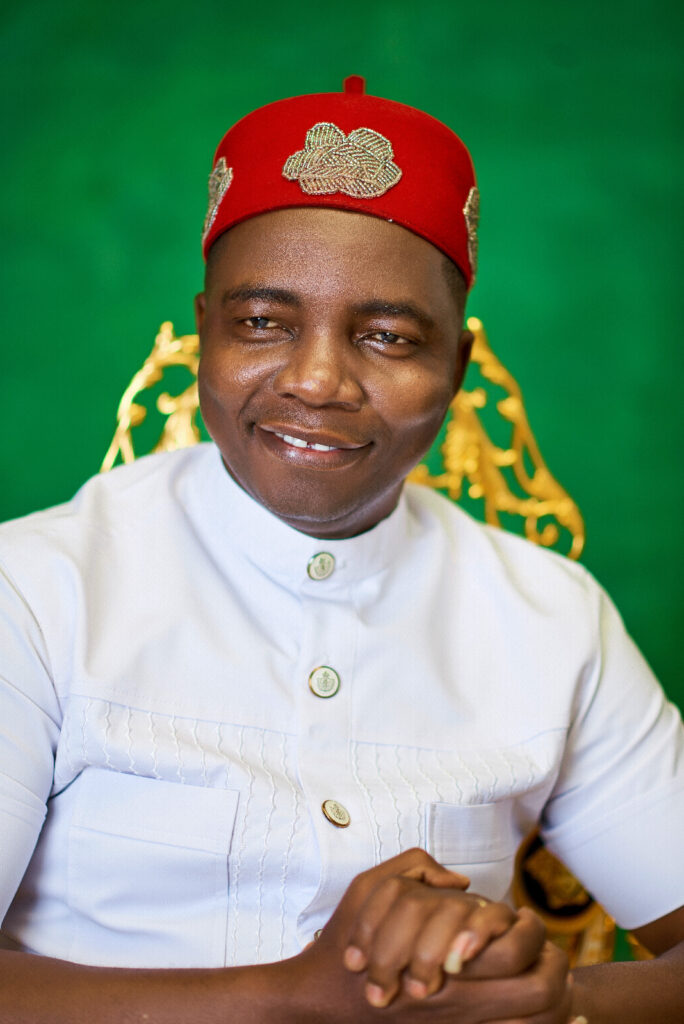
Ahead of the 2027 National Assembly elections, a mass protest voting movement may be building up in Anambra South Senatorial District, following reported moves by members of major political parties to support the candidate of the Nigeria Democratic Congress (NDC), Chief Ebuka Onunkwo.
The development is said to be linked to grievances among some members of the All Progressives Grand Alliance (APGA), All Progressives Congress (APC), African Democratic Congress (ADC) and remnants of the Peoples Democratic Party (PDP) over the treatment allegedly meted out to Onunkwo during previous political contests.
Onunkwo, who had previously contested the Anambra South senatorial seat under APGA, later emerged as the NDC candidate for the 2027 election.
Although the ADC is currently embroiled in legal disputes over the authentic candidates and the conduct of its primary elections, some members of the APC and APGA are also reportedly dissatisfied with developments within their respective parties.
It was gathered that a section of APGA members, in particular, are backing Onunkwo as a form of protest over the conduct of the party’s senatorial primary, while some members of other parties are also believed to be considering voting for him irrespective of their party affiliations.
Confirming the growing support for Onunkwo, the Chief Executive Officer of NOWAS Oil and Gas Limited and a major stakeholder in Anambra South politics, Chief Ignesus Ikechukwudere Nnubia, said the NDC candidate currently enjoys widespread acceptability across party lines.
Nnubia said the growing support for Onunkwo had made his party affiliation less significant, arguing that voters would ultimately vote according to their conscience and assessment of the candidates.
He said, “At the moment, the number of APGA members with him and supporting him makes one wonder what is left of that party. Even the remnants of the PDP have pitched their tents with him, while members of the ruling APC at the national level are also behind him.
“So, the party that he belongs to is not a factor at all. You know that it is a game of numbers, and people are going to vote according to their conscience and not necessarily because of the political party they belong to.
“People are not bound to vote for their party, and some of them are ready and willing to vote for him.
“We are not talking about the party because he will surely get votes from the NDC, APGA, APC and even other political parties that are already closing ranks to support him as their candidate.”
Nnubia further described Onunkwo as the candidate currently standing tall among the contenders for the Anambra South senatorial seat, expressing confidence that his emergence would usher in what he described as a “new dawn” for the district.
He said political parties should not be the major consideration for voters, stressing that what matters most is the ability of elected representatives to improve the lives of their constituents.
According to him, political parties exist because of the people, and therefore the influence of party structures and incumbency has its limits during elections.
Nnubia said those factors would ultimately be tested by the electorate in the 2027 election, which he described as a contest in which voters’ choices would determine the outcome.
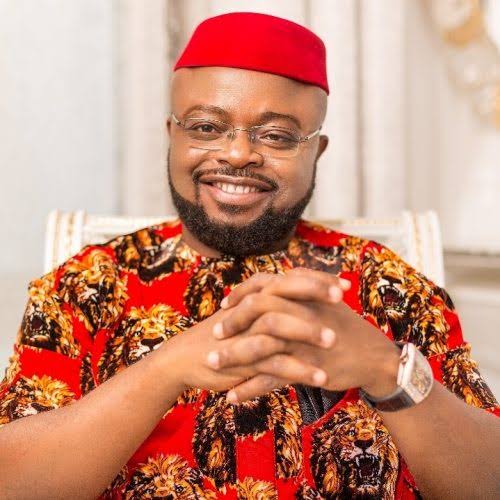
The Peoples Democratic Party (PDP) governorship candidate for the 2027 Ebonyi State election, Chief Ifeanyi Chukwuma Odii, has pledged to attract more than ₦2 trillion in private-sector investment to the state within six months of assuming office if elected.
Odii made the pledge while addressing supporters in Lagos ahead of the formal commencement of his campaign.
He said his investment strategy would cover key sectors of the Ebonyi economy, including mining, hospitality, real estate and manufacturing.
According to the PDP candidate, he has identified more than 2,000 prospective investors, each capable of investing about ₦1 billion in the state.
“I have over 2,000 people who can invest ₦1 billion each. When you multiply it, you will get over ₦2 trillion. This has been structured in such a way that all aspects of the economy will be involved,” Odii said.
He said the proposed investment drive was designed not only to inject capital into the state but also to create jobs, expand the productive base of the economy and provide opportunities for young people and entrepreneurs.
Odii said Ebonyi’s natural resources and strategic location placed it in a strong position to attract large-scale investments if its economic potential was properly harnessed.
He promised that his administration would prioritise private-sector participation, industrialisation and job creation while creating an enabling environment for both local and foreign investors.
The candidate also said existing businesses in the state would be supported to expand, while new investors would be encouraged to establish operations across various sectors.
His pledge comes amid growing political activities ahead of the 2027 governorship election, with economic development, employment generation and wealth creation featuring prominently in his campaign message.
The proposed ₦2 trillion investment target within six months, if achieved, would represent a significant boost to Ebonyi’s economy and rank among the most ambitious private-sector investment mobilisation plans proposed in the state.
By Okey Maduforo, Awka
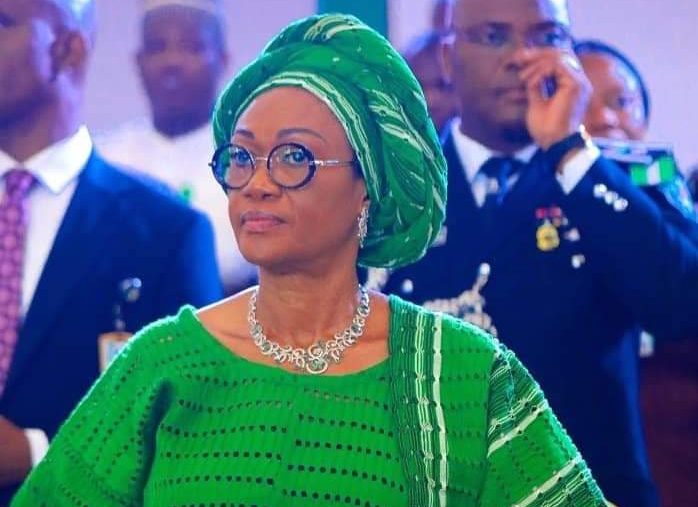
The planned visit of the First Lady of Nigeria, Senator Oluremi Tinubu, to Anambra State has sparked controversy following a protest by the state Chairman of the All Progressives Congress (APC), Senator Emma Anosike, that the party was not informed about the visit.
Anosike said the APC in Anambra was never consulted or briefed about the proposed visit, adding that the party was taken aback by reports that the wife of the party’s national leader and presidential candidate, President Bola Ahmed Tinubu, would be visiting the state without recourse to the state chapter.
He said, “It is indeed strange that the First Lady of our presidential candidate is visiting Anambra State without recourse to the party in the state.
“The party wishes to state categorically that we are not part of the arrangements for the reception of our First Lady, Senator Oluremi Tinubu, because the party was never put in the picture.”
Anosike also dismissed the mantra that “The Progressives Are Working Together”, being canvassed by the All Progressives Grand Alliance (APGA), describing it as a smokescreen by the ruling party in Anambra to hijack President Tinubu’s re-election from the APC.
He said, “For instance, the APGA-led government in Anambra State did not interface with us on the organisation of the visit, and the party wonders if the progressives are indeed working together.”
The APC chairman, however, said the development would not compromise the First Lady’s visit, urging all APC members and supporters in the state to turn out and give Senator Oluremi Tinubu a warm welcome.
He stressed that despite the party’s reservations over the arrangements, APC members remained committed to welcoming the First Lady to Anambra State.
Former Deputy Governor of Bauchi State, Sagir Saleh, has resigned his membership of the All Progressives Congress (APC).
Saleh, who served as deputy governor under former Governor Isa Yuguda, announced his resignation in a letter submitted to the party leadership in Katagum Local Government Area.
He cited personal reasons for his decision but did not provide further details.
His exit comes amid growing disagreements within the Bauchi APC following the party’s 2027 governorship primary. Other prominent members, including former governorship aspirant Bala Jibrin and Sunusi Kunde, an associate of Coordinating Minister of Health and Social Welfare, Prof. Ali Pate, have also reportedly left the party.
Jibrin, a former National Auditor of the defunct Congress for Progressive Change (CPC), resigned on August 31, 2026, following his opposition to the emergence of former Bauchi Governor Muhammad Abubakar as the APC’s 2027 governorship candidate.
He had criticised the primary process and questioned how the candidate emerged.
Kunde also resigned from the APC in August, submitting his resignation to the party chairman of Beti Ward in Misau Local Government Area.
The latest departures are coming as efforts continue to resolve internal disputes and disagreements among APC members in the state.
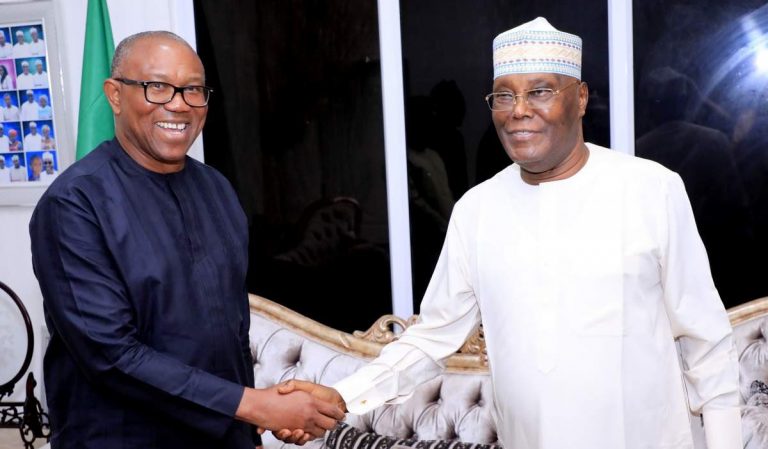
The Leader of INRI Evangelical Spiritual Church, Primate Elijah Ayodele, has raised the alarm over an alleged plot to assassinate former Anambra State Governor, Peter Obi, and former Vice President Atiku Abubakar ahead of the 2027 general election.
Ayodele issued the warning in a video shared on his verified X account on Sunday, urging both opposition figures to strengthen their security and remain vigilant.
The cleric did not identify those allegedly behind the purported plot but claimed that attempts were being made to eliminate Obi and Atiku.
According to him, divine intervention would prevent the alleged plan from succeeding.
“Obi and Atiku, be very conscious of your security. They are looking for any means to eliminate Obi and Atiku.
“But God will never allow it to happen. Watch out and be cautious about your security,” he said.
Ayodele also urged President Bola Tinubu to reconsider travelling to the United States, alleging that there were forces in America working against his political fortunes.
The claims come as political activities and realignments intensify ahead of Nigeria’s 2027 general elections.

-
 News5 days ago
Dangote Reveals He Bought First Private Jet at 22
-

 Health3 days ago
UNTH Begins Contact Tracing After Suspected Diphtheria Case
-

 Entertainment5 days ago
Poco Lee Granted Bail in UK Ahead of September 15 Court Hearing
-

 News4 days ago
Poor Lighting, Sanitation Frustrate Work At First Niger Bridge
-
 Crime4 days ago
Police Place Nigeria on Red Alert Over Planned Attacks
-
 Crime3 days ago
Two Policemen Killed As Gunmen Attack DPO’s Convoy in Benue
-
 Entertainment3 days ago
Veteran Actor Olu Jacobs Dies at 84
-

 News3 days ago
SEDC to Launch 50,000-Hectare Agro-Mechanisation Project in Enugu to Tackle Unemployment, Insecurity