


Politics
Bodija: N30bn FG fund remains unused, Makinde shocks Fayose, quotes account


The explanation was contained in a statement issued on Thursday by the Commissioner for Information, Prince Dotun Oyelade.
The state government also disclosed that the N30bn released by the Federal Government in November 2024 remains untouched in a dedicated bank account, as it is still awaiting the release of the outstanding N20bn balance from the N50bn approved for the reconstruction of Old Bodija and its environs.
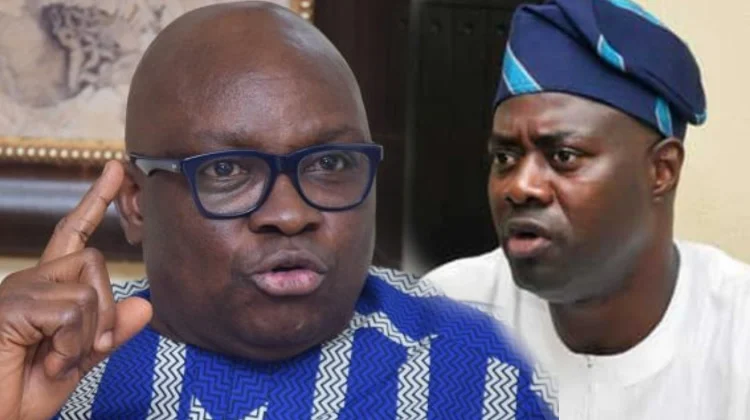
The explanation comes in the wake of revelation by former governor of Ekiti State governor, Ayodele Fayose, that the Federal Government gave Governor Makinde intervention support for the explosion victims.

In response, Makinde, through his media aide, Sulaimon Olanrewaju, revealed that indeed N50bn intervention fund was approved but only N30bn was released.
Further addressing the matter on Thursday, Oyo information commissioner said the N30bn remained untouched and domiciled in the Oyo State Government Infrastructure Support Account (No. 2045199879) with FirstBank of Nigeria since it was released in 2024.
Oyelade said the state government deliberately refrained from accessing the funds because the remaining N20bn had been withheld by relevant federal agencies without any official explanation.
“Out of the approved N50bn, the Federal Government, through the Central Bank of Nigeria, released N30bn to Oyo State on November 4, 2024.
“As of Thursday, December 31, 2025, the N30bn remained untouched in the Oyo State infrastructure account with the First Bank. Interested members of the public may verify this information with the bank.
“The Oyo State government has deliberately refrained from utilising the N30bn already released in recognition of the fact that the remaining N20bn has remained withheld by the relevant federal agencies for reasons that have not been communicated to the state.
“Given the disgraceful drama of the last couple of days from the Federal Government on the approval, the government of Oyo State is convinced on the wisdom of its decision to ‘wait and see’ before deciding what to do with the money.
“Almost two years after the disaster, the Federal Government is yet to release the outstanding balance of N20bn from the approved sum of N50bn.
Providing background, the state government recalled that following the January 16, 2024 explosion in Bodija, Governor Makinde wrote to President Bola Tinubu on January 19, 2024, requesting federal financial support to manage the disaster.
In the letter, the governor outlined immediate actions taken by the state government, including search-and-rescue operations, deployment of earth-moving equipment, hospitalisation of injured victims with medical bills fully covered by the state, provision of ambulances and medical personnel, and accommodation for displaced residents at government expense.
He also identified areas requiring federal assistance, such as debris clearance, integrity tests and demolition of unsafe buildings, compensation for affected property owners, reconstruction of Old Bodija and adjoining areas, expansion of emergency response infrastructure, environmental impact assessments, logistics support, and broader infrastructural restoration.
“To address these needs, the Oyo State government estimated the cost of intervention at N100bn and requested the President’s approval for that amount. The president, however, approved N50bn— half of the requested sum.
“The purpose of the approved fund was clearly stated by the Federal Government as ‘Support for the reconstruction of Old Bodija and environs after the Bodija explosion’. (See memo dated 29 August, 2024, from the Accountant General of the Federation to the Minister of Finance, released by the political agent of the Federal Government, Mr. Ayo Fayose),” he said.
The state government said while the intervention came only in November 2024, nearly a year after the disaster, it had on its own taken actions to mitigate the effects of the disaster.
“The state government did not wait for federal intervention, which came in November, 2024, almost a year after the incident. As of today January 1, 2026, the Oyo State government has spent N24.6bn from its own resources on Bodija and its environs in direct response to the explosion and its consequences. This includes N20.1bn spent on the reconstruction of infrastructure in Bodija and surrounding areas, as well as N4bn paid as support and compensation to victims of the explosion. These expenditures were fully borne by the Oyo State Government.
“Documents released by the Federal Government through its agent, Mr Ayo Fayose, indicate that a total of N915.5bn was approved as intervention funds for states across the country. The list of beneficiary states shows that one South-West state received N150bn, while another received N50bn. Oyo State, despite experiencing one of the most devastating incidents, received one of the lowest allocations among beneficiary states. Interested members of the public may consult the list for verification.
“Special intervention funds, when released, are received as capital grants. In line with standard practice and legal requirements, such funds are subjected to the budgeting process before expenditure and are duly reflected in the financial statements of the state. They do not require special public announcements upon receipt. This explains why other states that received significantly larger amounts did not publicly advertise the receipt of such funds.”
The government insisted that it had “nothing to hide and will continue to engage the public transparently on all issues, including this one.”
The government thanked residents for their understanding and accused “desperate political actors” of attempting to exploit the Bodija tragedy for political gain “undeserved foothold in our state for personal and political gains”.
By Okey Maduforo, Awka
Ahead of the 2027 National Assembly elections, a mass protest voting movement may be building up in Anambra South Senatorial District, following reported moves by members of major political parties to support the candidate of the Nigeria Democratic Congress (NDC), Chief Ebuka Onunkwo.
The development is said to be linked to grievances among some members of the All Progressives Grand Alliance (APGA), All Progressives Congress (APC), African Democratic Congress (ADC) and remnants of the Peoples Democratic Party (PDP) over the treatment allegedly meted out to Onunkwo during previous political contests.
Onunkwo, who had previously contested the Anambra South senatorial seat under APGA, later emerged as the NDC candidate for the 2027 election.
Although the ADC is currently embroiled in legal disputes over the authentic candidates and the conduct of its primary elections, some members of the APC and APGA are also reportedly dissatisfied with developments within their respective parties.
It was gathered that a section of APGA members, in particular, are backing Onunkwo as a form of protest over the conduct of the party’s senatorial primary, while some members of other parties are also believed to be considering voting for him irrespective of their party affiliations.
Confirming the growing support for Onunkwo, the Chief Executive Officer of NOWAS Oil and Gas Limited and a major stakeholder in Anambra South politics, Chief Ignesus Ikechukwudere Nnubia, said the NDC candidate currently enjoys widespread acceptability across party lines.
Nnubia said the growing support for Onunkwo had made his party affiliation less significant, arguing that voters would ultimately vote according to their conscience and assessment of the candidates.
He said, “At the moment, the number of APGA members with him and supporting him makes one wonder what is left of that party. Even the remnants of the PDP have pitched their tents with him, while members of the ruling APC at the national level are also behind him.
“So, the party that he belongs to is not a factor at all. You know that it is a game of numbers, and people are going to vote according to their conscience and not necessarily because of the political party they belong to.
“People are not bound to vote for their party, and some of them are ready and willing to vote for him.
“We are not talking about the party because he will surely get votes from the NDC, APGA, APC and even other political parties that are already closing ranks to support him as their candidate.”
Nnubia further described Onunkwo as the candidate currently standing tall among the contenders for the Anambra South senatorial seat, expressing confidence that his emergence would usher in what he described as a “new dawn” for the district.
He said political parties should not be the major consideration for voters, stressing that what matters most is the ability of elected representatives to improve the lives of their constituents.
According to him, political parties exist because of the people, and therefore the influence of party structures and incumbency has its limits during elections.
Nnubia said those factors would ultimately be tested by the electorate in the 2027 election, which he described as a contest in which voters’ choices would determine the outcome.
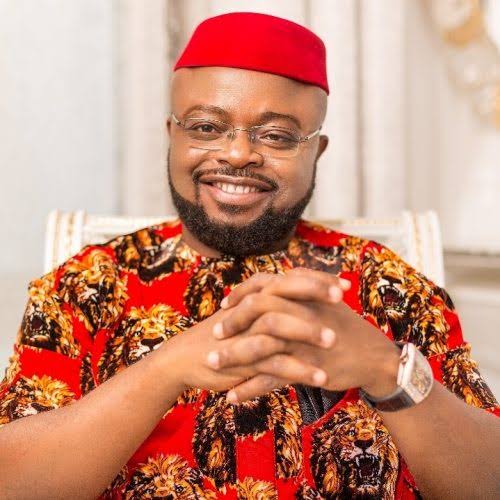
The Peoples Democratic Party (PDP) governorship candidate for the 2027 Ebonyi State election, Chief Ifeanyi Chukwuma Odii, has pledged to attract more than ₦2 trillion in private-sector investment to the state within six months of assuming office if elected.
Odii made the pledge while addressing supporters in Lagos ahead of the formal commencement of his campaign.
He said his investment strategy would cover key sectors of the Ebonyi economy, including mining, hospitality, real estate and manufacturing.
According to the PDP candidate, he has identified more than 2,000 prospective investors, each capable of investing about ₦1 billion in the state.
“I have over 2,000 people who can invest ₦1 billion each. When you multiply it, you will get over ₦2 trillion. This has been structured in such a way that all aspects of the economy will be involved,” Odii said.
He said the proposed investment drive was designed not only to inject capital into the state but also to create jobs, expand the productive base of the economy and provide opportunities for young people and entrepreneurs.
Odii said Ebonyi’s natural resources and strategic location placed it in a strong position to attract large-scale investments if its economic potential was properly harnessed.
He promised that his administration would prioritise private-sector participation, industrialisation and job creation while creating an enabling environment for both local and foreign investors.
The candidate also said existing businesses in the state would be supported to expand, while new investors would be encouraged to establish operations across various sectors.
His pledge comes amid growing political activities ahead of the 2027 governorship election, with economic development, employment generation and wealth creation featuring prominently in his campaign message.
The proposed ₦2 trillion investment target within six months, if achieved, would represent a significant boost to Ebonyi’s economy and rank among the most ambitious private-sector investment mobilisation plans proposed in the state.
By Okey Maduforo, Awka
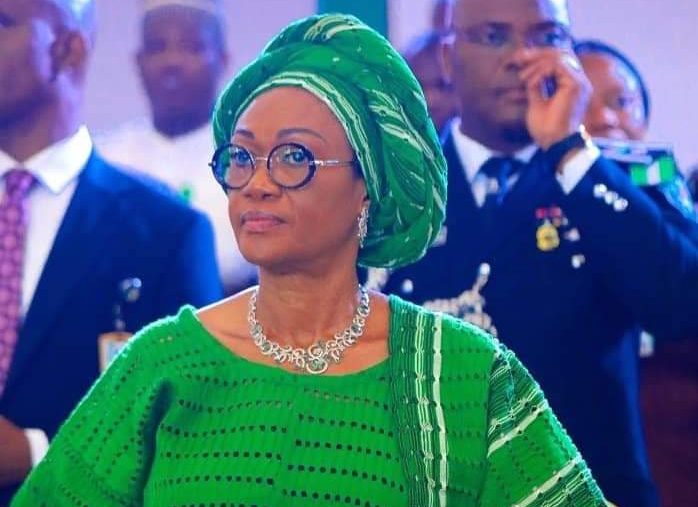
The planned visit of the First Lady of Nigeria, Senator Oluremi Tinubu, to Anambra State has sparked controversy following a protest by the state Chairman of the All Progressives Congress (APC), Senator Emma Anosike, that the party was not informed about the visit.
Anosike said the APC in Anambra was never consulted or briefed about the proposed visit, adding that the party was taken aback by reports that the wife of the party’s national leader and presidential candidate, President Bola Ahmed Tinubu, would be visiting the state without recourse to the state chapter.
He said, “It is indeed strange that the First Lady of our presidential candidate is visiting Anambra State without recourse to the party in the state.
“The party wishes to state categorically that we are not part of the arrangements for the reception of our First Lady, Senator Oluremi Tinubu, because the party was never put in the picture.”
Anosike also dismissed the mantra that “The Progressives Are Working Together”, being canvassed by the All Progressives Grand Alliance (APGA), describing it as a smokescreen by the ruling party in Anambra to hijack President Tinubu’s re-election from the APC.
He said, “For instance, the APGA-led government in Anambra State did not interface with us on the organisation of the visit, and the party wonders if the progressives are indeed working together.”
The APC chairman, however, said the development would not compromise the First Lady’s visit, urging all APC members and supporters in the state to turn out and give Senator Oluremi Tinubu a warm welcome.
He stressed that despite the party’s reservations over the arrangements, APC members remained committed to welcoming the First Lady to Anambra State.
Former Deputy Governor of Bauchi State, Sagir Saleh, has resigned his membership of the All Progressives Congress (APC).
Saleh, who served as deputy governor under former Governor Isa Yuguda, announced his resignation in a letter submitted to the party leadership in Katagum Local Government Area.
He cited personal reasons for his decision but did not provide further details.
His exit comes amid growing disagreements within the Bauchi APC following the party’s 2027 governorship primary. Other prominent members, including former governorship aspirant Bala Jibrin and Sunusi Kunde, an associate of Coordinating Minister of Health and Social Welfare, Prof. Ali Pate, have also reportedly left the party.
Jibrin, a former National Auditor of the defunct Congress for Progressive Change (CPC), resigned on August 31, 2026, following his opposition to the emergence of former Bauchi Governor Muhammad Abubakar as the APC’s 2027 governorship candidate.
He had criticised the primary process and questioned how the candidate emerged.
Kunde also resigned from the APC in August, submitting his resignation to the party chairman of Beti Ward in Misau Local Government Area.
The latest departures are coming as efforts continue to resolve internal disputes and disagreements among APC members in the state.
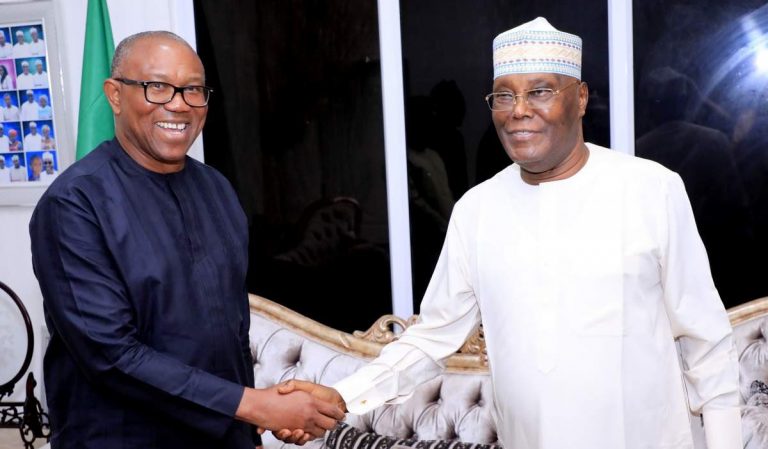
The Leader of INRI Evangelical Spiritual Church, Primate Elijah Ayodele, has raised the alarm over an alleged plot to assassinate former Anambra State Governor, Peter Obi, and former Vice President Atiku Abubakar ahead of the 2027 general election.
Ayodele issued the warning in a video shared on his verified X account on Sunday, urging both opposition figures to strengthen their security and remain vigilant.
The cleric did not identify those allegedly behind the purported plot but claimed that attempts were being made to eliminate Obi and Atiku.
According to him, divine intervention would prevent the alleged plan from succeeding.
“Obi and Atiku, be very conscious of your security. They are looking for any means to eliminate Obi and Atiku.
“But God will never allow it to happen. Watch out and be cautious about your security,” he said.
Ayodele also urged President Bola Tinubu to reconsider travelling to the United States, alleging that there were forces in America working against his political fortunes.
The claims come as political activities and realignments intensify ahead of Nigeria’s 2027 general elections.

-
 Health3 days ago
UNTH Begins Contact Tracing After Suspected Diphtheria Case
-
 News5 days ago
Dangote Reveals He Bought First Private Jet at 22
-
 Entertainment5 days ago
Poco Lee Granted Bail in UK Ahead of September 15 Court Hearing
-
 News4 days ago
Poor Lighting, Sanitation Frustrate Work At First Niger Bridge
-
 Crime4 days ago
Police Place Nigeria on Red Alert Over Planned Attacks
-
 Entertainment3 days ago
Veteran Actor Olu Jacobs Dies at 84
-
 Crime3 days ago
Two Policemen Killed As Gunmen Attack DPO’s Convoy in Benue
-
 News3 days ago
SEDC to Launch 50,000-Hectare Agro-Mechanisation Project in Enugu to Tackle Unemployment, Insecurity