





News
Nigeria imports 828m litres of petrol to avert nationwide scarcity



Fuel security slowed in October as the Dangote Petroleum Refinery supplied only an average of 17.1 million litres per day of the nation’s petrol needs, forcing the country to rely heavily on imports despite earlier hopes of self-sufficiency. The Federal Government, through its Nigerian Midstream and Downstream Petroleum Regulatory Authority, revealed this.
The regulator, in its just-released October 2025 Fact Sheet on the state of the midstream and downstream sector, disclosed that the Dangote refinery supplied only 512.4 million litres of petrol in October, far below the 1.5 billion litres required to meet the country’s monthly demand. This left imported refined products to fill the gap, contributing an average of 27.6 million litres daily.
The report obtained by our correspondent on Sunday showed that marketers had to import a total of 828 million litres of petrol during the month to meet the national daily supply requirement of 50 million litres. It also showed that national petrol consumption rose to 56.74 million litres per day, indicating a sustained increase in demand despite efforts to promote greater domestic production.
The figures reaffirmed a persistent pattern in which imported petrol remains Nigeria’s dominant supply source, despite the commencement of operations at the Lekki-based Dangote Refinery in September 2024. The development also comes despite repeated assurances by officials of the Dangote Refinery that its output would be sufficient to meet the country’s petrol demand.
On November 1, 2025, officials of the refinery reaffirmed their commitment to ensuring a steady and uninterrupted supply of petrol and diesel across the country. They stated that its production output has now surpassed the nation’s daily consumption.

The Group Chief Branding and Communications Officer of Dangote Industries Limited, Anthony Chiejina, in a statement, said the refinery was currently loading over 45 million litres of Premium Motor Spirit and 25 million litres of diesel daily, volumes that exceed the country’s demand. “Our refinery is currently loading over 45 million litres of PMS and 25 million litres of diesel daily, which exceeds Nigeria’s demand,” he said.
These domestic assurances may have encouraged the Federal Government to consider slamming a 15 per cent import duty on all imported refined petrol and diesel products. Recall that on October 30, 2025, President Bola Tinubu approved the introduction of 15 per cent ad-valorem import duty on petrol and diesel imports into Nigeria.
In a letter dated October 21, 2025, reported publicly on October 30, 2025, and addressed to the Federal Inland Revenue Service and the Nigerian Midstream and Downstream Petroleum Regulatory Authority, Tinubu directed immediate implementation of the tariff as part of what the government described as a “market-responsive import tariff framework.”
The initiative was aimed at protecting local refineries and stabilising the downstream market, but it is likely to raise pump prices. However, following push-back from operators and concerns over supply stability, the policy was reversed and its implementation suspended until the first quarter of 2026.
The newly released data has now laid bare the true state of the industry, revealing that Dangote Refinery still fell short of the required supply targets in the same month the government announced the import tax.
The regulator explained that domestic supply volumes were computed from disport or discharged figures combined with refinery truck-outs, while import volumes were based on shore-receipt data from depots. It added that the figures were reconciled for the period between August 2024 and September 2025, noting that October data was still being finalised.
“Domestic supply volumes are based on disport/discharged figures + refinery truck-outs. Import volumes are based on shore receipt figures at depots. This data is based on reconciliation for Aug. 2024-Sep. 2025. October data yet to be reconciled,” it said.
Figures from the NMDPRA also provided a clearer picture of the Dangote Refinery’s performance over one year. Between October 2024 and October 2025, the refinery supplied an average of 18.03 million litres of PMS per day, barely half of its planned daily output of 35 million litres.
The shortfall highlights the widening gap between projected and actual production at the 650,000-barrel-per-day facility, whose ramp-up has been closely tied to the government’s push to cut dependence on imported fuel. The plant had projected 35 million litres/day, but between October 2024 and October 2025, it averaged 18.03 million litres/day, less than 52 per cent of its target.
Output climbed steadily towards the end of 2024, reaching about 9.5 million litres per day in December, and then surged to 18 million litres daily in January 2025. The refinery recorded its highest performance in February 2025, supplying 25 million litres per day, its strongest showing and the closest it came to meeting half of the country’s petrol demand.
However, the momentum softened in subsequent months. Supply dipped to 23 million litres per day in March and 22 million litres in April, followed by another drop to 18 million litres in May and about 16.5 million litres in June. The refinery recovered slightly to 19.8 million litres in July but slipped again to 17.6 million litres in August.
By September and October 2025, Dangote’s output had stabilised at 17.1 million litres per day, significantly below its planned 35-million-litre daily supply target and insufficient to close the widening gap in national petrol demand.
Commenting, the President of the Petroleum Products Retail Outlets Owners Association of Nigeria, Billy Gillis‑Harry, said the association remains fully supportive of the Dangote Refinery project, but insists that the latest industry data confirms Nigeria is still far from achieving adequate in-country production to meet daily petrol demand.
“We are not against Dangote at any time. We want the refinery to succeed because it would be the best thing to happen to this country and to Africa,” the PETROAN President said.
“However, our position is that every part of the industry should be growing just as the refinery is growing. Every part of the industry should add value and contribute its quota to the growth of our economy.”
He noted that despite the refinery’s efforts, the data released by the regulator shows that current domestic output is not yet sufficient to meet national consumption. “The reality is that at this time, we cannot say there is enough in-country production to meet our daily demands. But we still need to patronise Dangote to encourage the refinery,” he said.
The PETROAN official added that the figures in the report justify the association’s earlier warning that petrol prices would have risen sharply if the Federal Government had proceeded with the proposed 15 per cent import duty on refined petroleum products.
“This data just confirms the price increase we predicted if the government had gone ahead with the 15 per cent import duty tariff,” he said.
The report also shows a significant decline in national petrol sufficiency. While Nigeria maintained an average of 20 days of PMS sufficiency between October and December 2024, sufficiency crashed to 9 days in October 2025, comprising 7 days of inland stock and 2 days of marine stock.
This worsening trend increases the risk of supply shocks in the event of import delays, bad weather at ports, or forex disruptions. Diesel and aviation fuel, however, recorded more comfortable sufficiency levels at 38 days and 35 days, respectively.
PUNCH


…Commits N24 Million Monthly to Beneficiaries Across Southern Ijaw and Ekeremor LGA’s
Dr. Joshua MacIver has expanded his monthly welfare programme for elderly women in Bayelsa State to include more beneficiaries in Ekeremor Local Government Area, bringing the total number of women enrolled in the initiative to 800.
The expansion adds 150 elderly women to the existing 650 beneficiaries across Olodiama Clan in Southern Ijaw Local Government Area, further strengthening the programme’s reach and providing additional financial support to vulnerable elderly women.
According to Izon-Tukpa Media, the latest expansion includes 50 women from Opuama Main Town and 100 women from Ogbotobo Community, both in Ekeremor Local Government Area.
The development also increases the allocation for Opuama Main Town to 100 beneficiaries.
With the expansion, the total number of beneficiaries has increased from 650 to 800, while MacIver’s monthly financial commitment to the programme has risen to N24 million.
The expanded welfare package is scheduled to commence in November 2026, marking a significant increase in the coverage of the initiative.
The programme is designed to provide regular financial assistance to elderly women, particularly those facing economic challenges and requiring sustained support to meet their basic needs.
The inclusion of communities in Ekeremor Local Government Area marks a further extension of the initiative beyond its original coverage in Olodiama Clan, Southern Ijaw, bringing more elderly women into the welfare network.
The latest expansion highlights the importance of sustained social welfare interventions in supporting vulnerable groups, particularly elderly women, whose welfare and economic needs deserve continuous attention.
News
APC Presidential Rally: Borno stands still as Chief Emeka Okafor Joins President Bola Tinubu, Shettima in Maiduguri
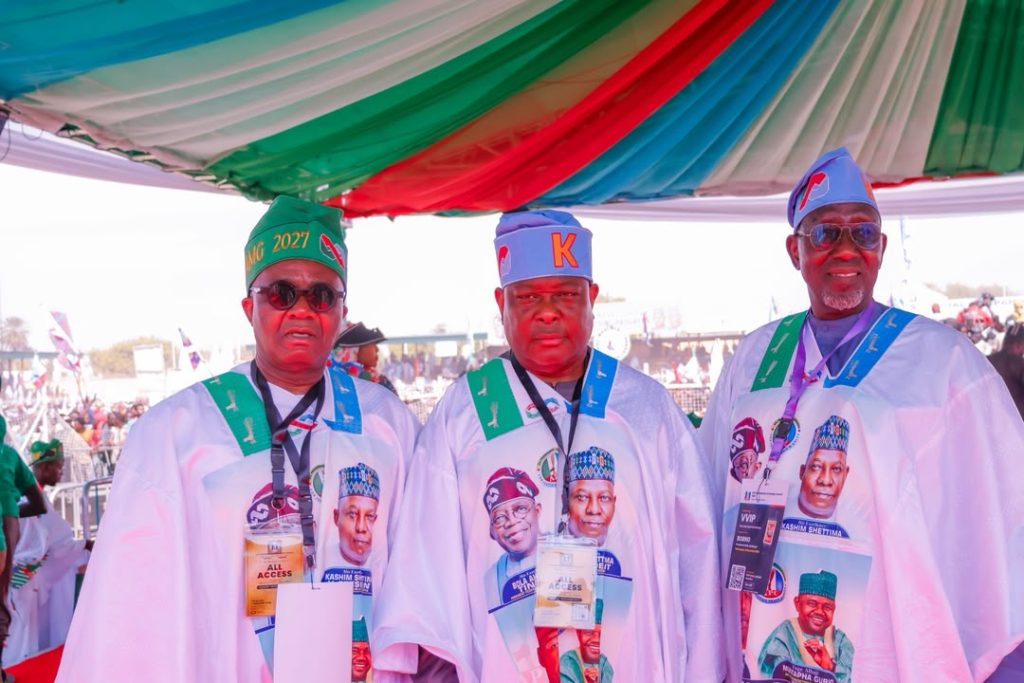
The Deputy National Organising Secretary of All Progressives Congress, Chief Emeka Okafor Esq, yesterday joined President Bola Ahmed Tinubu, Vice-President Kashim Shettima, National Chairman of All Progressives Congress and other party Leaders and Stakeholders of All Progressives Congress at the Presidential Campaign rally in Maiduguri Borno State in support and Mobilisation of Party Members and Electorates for President Bola Ahmed Tinubu’s re-election bid.
Speaking to Newsmen, Chief Emeka Okafor, urged Ndi Igbo in Borno State and Nigerians to support President Bola Tinubu’s re-election in 2027, saying a second term would help sustain economic reforms and complete major infrastructure projects across the Country.
The Key Highlights from the Rally were Security and Peace, which Mr President pledged.
The President thanked residents for their steadfast support, warm reception and solidarity with his administration, describing his return to Borno as a family reunion with supporters.
On Economic Reforms and State Development, The Vice President Kashim Shettima addressed economic hardships, stating that fuel subsidy removal and anti-smuggling measures were necessary reforms and that increased revenues which have enabled APC governor ls and others to fund infrastructure and pay salaries regularly.
“President Bola Tinubu has laid the foundations for sustainable economic growth and national development and deserves to be strengthened. His re-election will consolidate economic reforms and infrastructure gains, ” he said.
The Presidential Campaign Rally had President Bola Ahmed Tinubu, First Lady Oluremi Tinubu, Vice President Kashim Shettima, and Hajiya Nana Shettima, National Assembly Leadership led by the Senate President Godswill Akpabio, Deputy Senate President Barau Jibrin, and Speaker of the House of Representatives Tajudeen Abbas in attendance. Others present are APC National Chairman Prof. Nentawe Yilwatda, The APC Deputy National Chairman (North) Hon. (Dr.) Ali Bukar Dalori, The Presidential Campaign Council Director-General Senator Abdulaziz Yari, Chief of Staff to the President, Hon Femi Gbajabiamila, Kwara State Governor AbdulRahman AbdulRazaq, and Ogun State Governor Dapo Abiodun, Members of National Working Committee of the Party.
News
Ebonyi 2027: Anyi Chuks Vows to Fix Controversial Vanco Flyover, Bring Experts to Examine Structural Defects
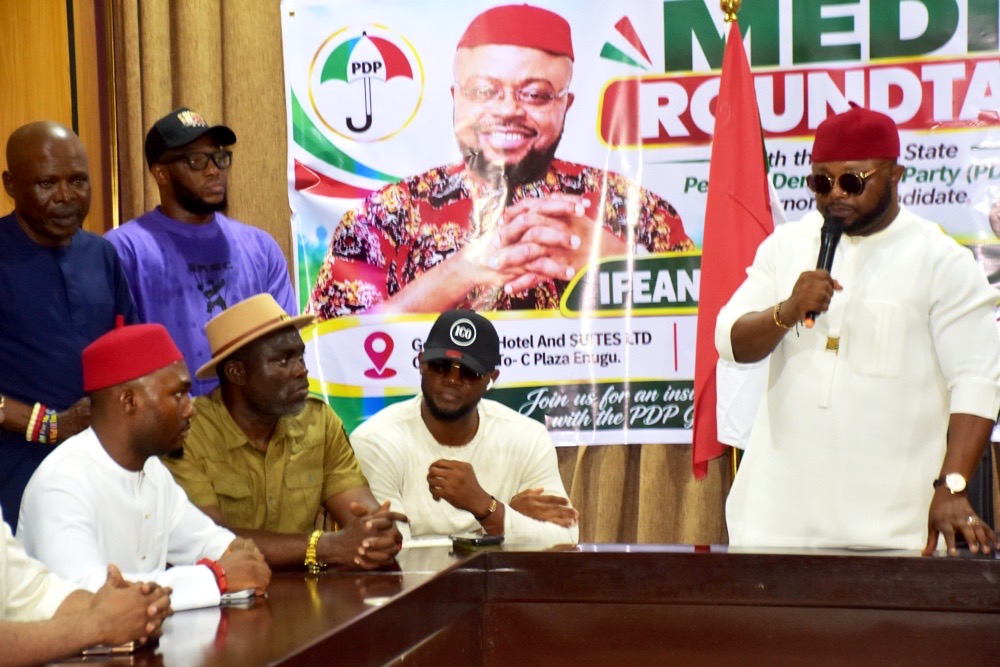
Peoples Democratic Party (PDP) governorship candidate in Ebonyi State, Chief Ifeanyi Chukwuma Odii, popularly known as Anyi Chuks, has promised to bring in construction and structural engineering experts to examine the controversial Vanco Flyover project and identify the defects delaying its completion if elected governor in 2027.
The flyover, which has remained unfinished for more than two months, has reportedly become a source of concern, with government contractors apparently struggling to complete the project.
Odii, while outlining his development agenda ahead of Thursday’s official flag-off of his governorship campaign, said his administration would ensure that the structural challenges affecting the project were professionally investigated and addressed.
He promised to engage qualified experts to conduct a thorough assessment of the flyover, identify the problems and recommend appropriate engineering solutions to ensure that the project is safely and properly completed.
The PDP candidate’s position forms part of his broader commitment to infrastructure development, accountability and continuity in governance, insisting that public projects should not be abandoned or allowed to become wasted investments.
He maintained that his administration would not abandon ongoing or uncompleted projects but would undertake a comprehensive assessment of their status, relevance and financial requirements to determine the best approach to completing them.
Speaking on his development blueprint, Odii explained that his manifesto would address the present realities of Ebonyi State, its developmental challenges and the aspirations of residents for a better future.
According to him, governance should not be about making political promises that cannot be fulfilled but about identifying critical needs, deploying resources responsibly and ensuring that projects are properly executed.
“We will never abandon any project. If we must do it, we will have to do it properly,” he declared.
His pledge to subject the Vanco Flyover to an expert structural assessment is expected to generate interest among residents who have expressed concerns over the prolonged delay in completing the project.
Odii also emphasised the need to strengthen Ebonyi’s economic base, arguing that a stronger economy would improve the state’s capacity to provide infrastructure, create employment opportunities and deliver essential services.
On political violence, intimidation and thuggery, the PDP candidate condemned all forms of electoral violence, insisting that his ambition was driven by a genuine desire to bring about a change in governance.
He expressed confidence that intimidation and other political obstacles would not derail his determination to contest the 2027 governorship election.
“We mean business. We are not joking. We are fighting for a change in government. We know it, but by the grace of God, nothing can stop us,” he said.
Thursday’s campaign flag-off is expected to formally unveil Odii’s political message and development agenda to Ebonyi voters as the contest for the Government House in Abakaliki intensifies.
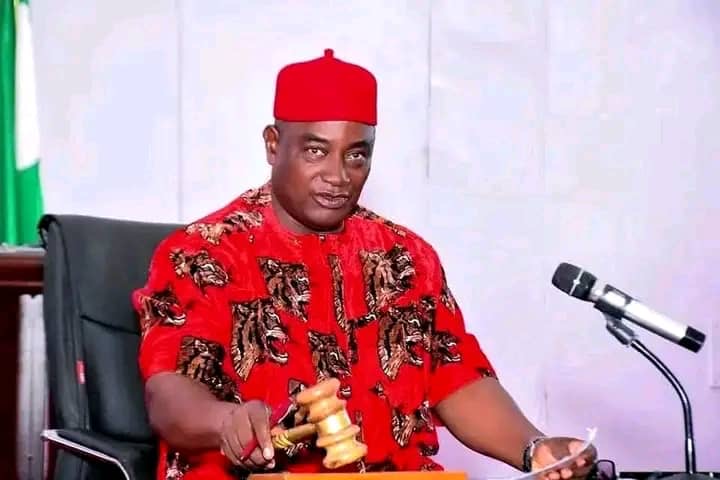
Members Fault Governor Nwifuru’s Alleged Protection of Speaker
Tension has heightened in the Ebonyi State House of Assembly following allegations of financial recklessness, embezzlement, misappropriation of public funds, incompetence, high-handedness and negligence levelled against the Speaker, Rt. Hon. Moses Ije Odunwa, by some members of the House.
The lawmakers reportedly accused the Speaker of mismanaging funds allegedly released for the construction of the new Assembly complex, as well as funds meant to facilitate a medical trip to Dubai for members of the legislature.
According to the allegations, the Speaker misappropriated funds earmarked for the medical trip, thereby denying about nine members the opportunity to participate in the exercise.
The aggrieved lawmakers reportedly questioned the Speaker’s failure to disclose the amount released to him by Governor Francis Nwifuru for the trip.
They also expressed displeasure over what they described as the Speaker’s handling of the arrangements, including his decision to independently process the visas without involving other members. They alleged that the development had created distrust, suspicion and divisions within the Assembly.
The lawmakers further accused Odunwa of asking members to pay for meals he provided during their stay in Abuja, describing the action as insensitive and unbecoming of the office of the Speaker.
Another major allegation against him concerns the nomination of candidates for admission into Ebonyi State University (EBSU). The members accused the Speaker of singlehandedly altering the list of nominees submitted for admission, describing the alleged action as an abuse of office and an exhibition of excessive control.
The aggrieved lawmakers also expressed disappointment over what they described as the Speaker’s inability to facilitate a meeting between members of the Assembly and Governor Nwifuru in the past year.
They accused him of adopting a self-centred approach to issues affecting members, particularly matters relating to their welfare and other concerns requiring government intervention.
According to them, the Speaker had consistently neglected their welfare, leaving some members to face personal and official challenges without the necessary support.
“Our welfare has never been taken seriously by the Speaker. He has neither shown genuine concern nor made any meaningful effort to address the issues affecting members. Everybody is left to face their challenges alone,” a member was quoted as saying.
A source familiar with the development told journalists that a mild drama unfolded during an executive sitting of the House on Tuesday, November 24, 2026, when members reportedly demanded the Speaker’s resignation.
The lawmakers allegedly threatened to continue boycotting plenary sessions until their demand for his resignation was addressed.
The disagreement reportedly threatened to disrupt the passage of a bill presented to the House by Governor Nwifuru, forcing the Speaker to make efforts to pacify the aggrieved lawmakers.
The source claimed that the Speaker, in an apparent move to calm tensions, pleaded with members and promised to change his approach to issues affecting the House.
The situation was reportedly brought under control following appeals from the executive arm of the state government, which urged the lawmakers to reconsider their position and allow legislative activities to continue.
Although the members eventually heeded the appeal, they were said to have maintained their position that the boycott could resume if concrete steps were not taken to address their grievances.
A member of the Assembly, who spoke on condition of anonymity, expressed disappointment over what he described as Governor Nwifuru’s continued protection of an incompetent Speaker.
The lawmaker argued that the governor’s alleged interference in the internal affairs of the legislature had contributed to the crisis and weakened the Assembly’s ability to function effectively.
However, the crisis appears far from over, as several lawmakers are reportedly still aggrieved over the alleged mismanagement of funds, the controversy surrounding the Dubai medical trip, the purported alteration of EBSU admission nominees and other complaints against the Speaker.
The allegations have yet to be independently verified, and the Speaker and the state government are expected to respond to the claims.
Motorists in Abuja have received fresh relief following a ₦70 reduction in the pump price of petrol by MRS filling stations across the Federal Capital Territory.
The latest adjustment, which took effect on Tuesday, November 24, 2026, saw the retail price of petrol drop from ₦1,365 to ₦1,295 per litre.
A market survey conducted by DAILY POST showed that the reduction followed a downward review of the gantry price by Dangote Refinery over the weekend.
The refinery reportedly reduced its gantry price from ₦1,159 to ₦1,060 per litre, representing a ₦99 reduction.
The latest development marks the second petrol price reduction by MRS within four days.
Four days earlier, the company had reduced its pump price by ₦34 per litre, bringing it down to ₦1,365.
Similarly, the Nigerian National Petroleum Company Limited (NNPC) had reduced its retail price by ₦25 per litre within the same period, bringing its pump price to ₦1,300 per litre.
With the latest adjustment, MRS is now selling petrol at ₦1,295 per litre, which is ₦5 lower than the NNPC price previously reported.
However, petrol prices across Abuja remain varied, with other filling stations dispensing the product between ₦1,325 and ₦1,380 per litre.
The latest reduction is expected to provide some relief to motorists and other consumers amid continuing fluctuations in the downstream petroleum market.
The development also highlights the influence of Dangote Refinery’s gantry price adjustments on retail petrol prices, particularly among marketers sourcing products from the refinery.


-
News4 days ago
Motorists Get Relief As MRS Slashes Petrol Price By ₦70
-

 Crime5 days ago
Police Arrest Suspect, Recover Three Firearms in Enugu Raids
-
 Politics4 days ago
Kwankwaso and I Agreed to Join APC After Supreme Court Victory – Kano Governor
-

 News5 days ago
Daura Emir Faces Sexual Assault Allegation as Amnesty Demands Probe
-
 News2 days ago
Ebonyi Assembly Moves To Impeach Speaker Over Fraud Allegations
-

 Finance5 days ago
Moniepoint Disburses $700m Loans to MSMEs, Plans Six Regional Offices
-

 Opinion4 days ago
HONOURABLE SADIQ ANGO ABDULLAHI: GOOD HEART, GOOD MIND, GENEROUS SOUL
-
 Politics4 days ago
Tinubu Must Go Leader Rejects 750sqm Land Allocation From Government