



Politics
Kwankwaso’s next move awaited, could change political equations ahead 2027



By any political barometer, the former governor of Kano State and former Minister of Defence, Senator Rabiu Kwankwaso, is not your everyday Nigerian politician. He is a phenomenon, an institution built on charisma, grassroots connection, and stubborn ideological defiance.
For years, his political trajectory has been one of rebellion, reform, and resilience. He defied odds to become the governor of Kano State twice, navigated Nigeria’s tumultuous political waters as a senator, and in the 2023 general elections, led the New Nigeria People’s Party to a surprise “third force”. Yet, today, conversations are shifting: what if Kwankwaso makes the most dramatic move of his career by re-joining the All Progressives Congress?
This conversation is even more intense following the sudden resignation of the APC National Chairman, Alhaji Abdullahi Ganduje. While the public narrative suggests “internal restructuring”, insiders and analysts see the move as a calculated sacrifice, a strategic detour, to clear the path for Ganduje’s long-time rival and one of the most influential politicians in northern Nigeria to rejoin the party.
Ganduje’s resignation is more than just the fall of a party chieftain; it is a political brinksmanship aimed at leveraging the popularity of Kwankwaso in Kano State for a huge political fortune come the 2027 elections.
The Tinubu administration, increasingly criticised by northern elites for executing a “Yoruba agenda” and abandoning the region that largely installed it in power, now finds itself in urgent need of a northern political redeemer, someone with street credibility, cult-like grassroots following, and electoral weight to bridge a growing trust deficit.

For the APC, Kwankwaso fits the bill. His Kwankwasia Movement is a formidable political platform in Kano State and beyond. For Kwankwaso, this “invitation to power” could be the launch pad for the presidency he has long dreamt of.
If he chooses to align with the APC, it will be a gamble, but one with high stakes and possibly higher returns. For the party, it would signal a rebirth. For Kwankwaso, it might just be the final chapter in a storied career, the path to Aso Rock that no structure alone could pave, but only influence could unlock.
In a recently circulated and strongly worded statement personally signed by him last month, Kwankwaso emphasised that the APC had inflicted untold hardship, economic deterioration, and deepened insecurity on Nigerians since assuming power.
He condemned the party’s track record of what he described as “reckless governance, policy failures, and a disconnect from the everyday realities of the Nigerian people”.
He said that though the President had personally reached out to him to consider rejoining the party despite the flattering promises, he made it crystal clear to him that he would rather quit politics entirely than return to the APC, a party that had inflicted immense hardship on Nigerians.
Part of the statement reads: “I wish to state clearly and unequivocally that President Tinubu personally reached out to me on multiple occasions, urging me to return to the APC fold. He called me directly and made several overtures, both in private and through mutual contacts, in a bid to lure me back to a party that I once helped build but ultimately had to leave due to its departure from principle and justice.”
Kwankwaso said that during one of his conversations with the President, he was assured that the party would meet all the conditions he gave before he could rejoin the fold. “Despite the flattering promises, I made it crystal clear to him (Tinubu) that I would rather quit politics entirely than return to the APC, a party that has inflicted immense hardship on Nigerians,” he said.
At face value, this idea borders on irony. For long, Kwankwaso has dismissed the APC as an unfit house of contradictions, a political contraption built on shifting sands. But the big question that stares Nigerians in the face is: could Kwankwaso’s long-standing rivalry with Abdullahi Ganduje, former Kano governor and immediate past APC national chairman, be the reason he never wanted to do anything with APC? Was Ganduje sacrificed to accommodate Kwankwaso in the party?
But politics, like war, obeys the law of strategic necessity. And 2027 is not just another election year; it is a turning point in Nigeria’s democratic journey. The ruling APC, battered by public discontent, internal cracks, and a leadership struggling with economic hardship and insecurity, faces the monumental task of renewal or rejection. In that context, Rabiu Kwankwaso will not just be another defector, but a potential political dividend too significant to ignore.
The most potent threat to Tinubu’s 2027 ambition is not just the anger of the masses, it is the quiet convergence of powerful political rivals, former allies, and embittered party insiders who are now aligning, not out of love for one another, but out of a shared goal: “Stop Tinubu”.
From PDP governors who feel sidelined in national politics, to the anti-Tinubu Northern elites led by el-Rufai, the groundswell of opposition to Tinubu’s reelection is growing by the day.
This has prompted Tinubu to turn to what he knows best: the politics of bargaining, coalition-building, and recruiting influence as a substitute for popularity.
With 2027 drawing closer, Kwankwaso now finds himself at the centre of Nigeria’s political chessboard. The APC is rumoured to be considering offering him the vice-presidential ticket — a power-sharing arrangement meant to seduce his northern base and tap into his electoral machinery.
On paper, the deal seems attractive: national visibility, institutional resources, and a credible path to the presidency by 2031.
But beneath the surface lies a more sobering possibility: that Kwankwaso could simply be a means to an end, a disposable political tool to retain Northern votes for a Southern presidential candidate, only to be discarded post-election. It is a tactic as old as Nigerian politics itself: bait the North, win the votes, and then shift the power dynamics.
This isn’t the first time northern political figures have been wooed into national alliances with promises of future power. Think of Atiku Abubakar under Olusegun Obasanjo, or Namadi Sambo under Goodluck Jonathan, both powerful in their zones, yet relatively politically neutered in the larger governance arrangement. The question before Kwankwaso is simple: Will history repeat itself—or will he rewrite it?
Unlike some of his predecessors, Kwankwaso commands an ideological movement, not just political followers. The Kwankwasiyya Movement has shown remarkable staying power and electoral resilience, especially in Kano and some northern states. This gives him leverage — but only if he negotiates from strength, not desperation.
Kwankwaso’s political capital is not limited to titles. It resides in the enduring loyalty of the “Kwankwasiyya Movement” — a cult-like following of red-capped supporters across Northern Nigeria, especially in Kano, which remains one of the most electorally decisive states in the country.
In 2023, with limited structure and resources, Kwankwaso’s NNPP clinched Kano decisively and carved out a national conversation on third-force politics. This feat was not achieved because of a strong party infrastructure; it was the result of influence.
And therein lies the point: APC needs influence more than it needs more structure. The party already has a bloated organisational skeleton. What it lacks is a charismatic mobiliser to inject fresh electoral energy and grassroots vibrancy, and Kwankwaso offers just that.
Should Kwankwaso take the bait, the immediate effect will be seismic. APC’s northern base would be reinvigorated. Disillusioned northern voters, who see the current Tinubu-led APC government as indifferent to their economic and security concerns, may find renewed hope. Kano, long the electoral goldmine of the North, could be locked down, and other states like Jigawa, Katsina, and Kaduna may follow suit. It would be the shockwave APC needs, a game-changing recalibration of political arithmetic.
However, Kwankwaso risks alienating his core loyalists, many of whom view the APC as the embodiment of everything he has fought against — elitism, betrayal, and exclusion.
If his move is perceived as opportunistic or transactional, he may find his influence diluted, his movement fractured, and his legacy tainted. In other words, he may win the vice presidency and lose the soul of Kwankwasiyya.
Many of Kwankwaso’s loyalists would see such a move as a betrayal of principle, especially after years of painting the party as the face of Nigeria’s dysfunction. He may risk a portion of his credibility, and the pain could also be personal, not just political.
But politics in Nigeria has a short memory and a long eye on the future. Should Kwankwaso be able to navigate internal politics, he would likely emerge as the northern arrowhead in APC’s 2027 equation, potentially positioning himself as either kingmaker or king.
With President Tinubu constitutionally limited to one more term and internal power tussles looming, Kwankwaso could stake a bold claim on the presidency, representing a powerful Northern resurgence within a fractured ruling party.
In a political climate where structure is often mistaken for power, Kwankwaso’s case reminds us that influence and cult followership remain the ultimate currency. While other politicians trade loyalty for relevance, Kwankwaso has maintained a rare authenticity.
His ability to mobilise people, shape narratives, and tilt electoral outcomes even outside of Nigeria’s traditional party machines proves he is greater than any banner he flies under.
The APC, facing diminishing returns from old alliances and internal fatigue, may find its best bet in a man who once stood outside its gate, fists clenched in protest. But now, with an open hand and strategic ambition, Kwankwaso may become its most valuable political dividend yet, not just for 2027, but for the future shape of Nigerian politics.
Senator Kwankwaso now stands at a historic intersection. He can maintain his third-force purity and risk political isolation, or he can seize the APC lifeline and with it, a genuine shot at national power. But this is no ordinary defection; it is a test of strategy, legacy, and foresight.
If played right, Kwankwaso could redefine APC and rewire the path to the Nigerian presidency.
Kalu Okoronkwo, a leadership and good governance advocate, writes from Lagos via kalu.okoronkwo@gmail.com
By Okey Maduforo, Awka
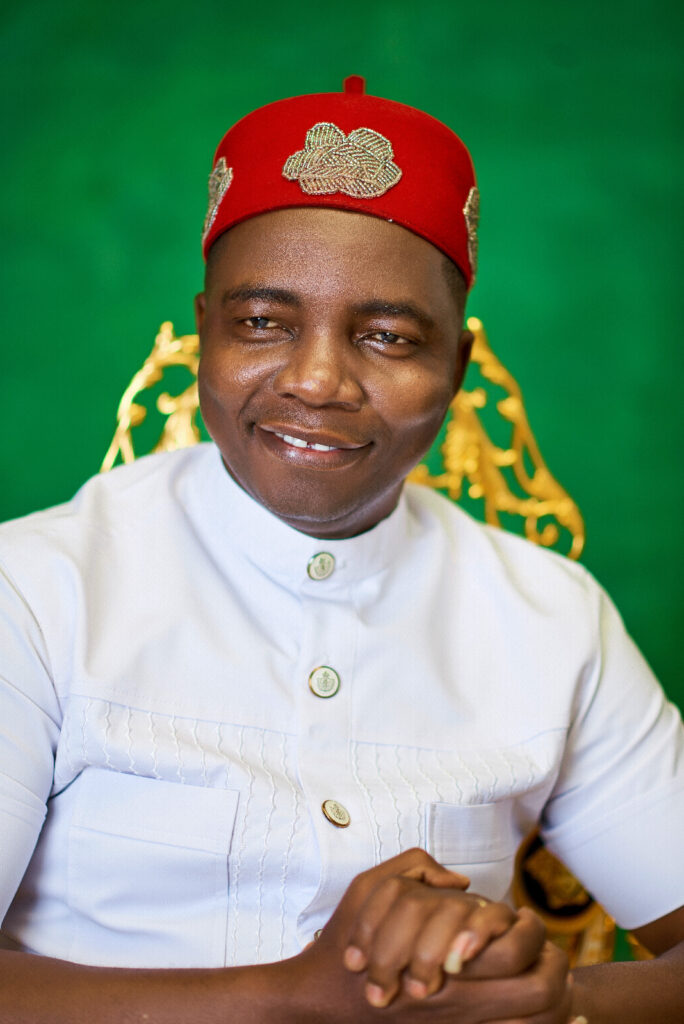
Ahead of the 2027 National Assembly elections, a mass protest voting movement may be building up in Anambra South Senatorial District, following reported moves by members of major political parties to support the candidate of the Nigeria Democratic Congress (NDC), Chief Ebuka Onunkwo.
The development is said to be linked to grievances among some members of the All Progressives Grand Alliance (APGA), All Progressives Congress (APC), African Democratic Congress (ADC) and remnants of the Peoples Democratic Party (PDP) over the treatment allegedly meted out to Onunkwo during previous political contests.
Onunkwo, who had previously contested the Anambra South senatorial seat under APGA, later emerged as the NDC candidate for the 2027 election.
Although the ADC is currently embroiled in legal disputes over the authentic candidates and the conduct of its primary elections, some members of the APC and APGA are also reportedly dissatisfied with developments within their respective parties.
It was gathered that a section of APGA members, in particular, are backing Onunkwo as a form of protest over the conduct of the party’s senatorial primary, while some members of other parties are also believed to be considering voting for him irrespective of their party affiliations.
Confirming the growing support for Onunkwo, the Chief Executive Officer of NOWAS Oil and Gas Limited and a major stakeholder in Anambra South politics, Chief Ignesus Ikechukwudere Nnubia, said the NDC candidate currently enjoys widespread acceptability across party lines.
Nnubia said the growing support for Onunkwo had made his party affiliation less significant, arguing that voters would ultimately vote according to their conscience and assessment of the candidates.
He said, “At the moment, the number of APGA members with him and supporting him makes one wonder what is left of that party. Even the remnants of the PDP have pitched their tents with him, while members of the ruling APC at the national level are also behind him.
“So, the party that he belongs to is not a factor at all. You know that it is a game of numbers, and people are going to vote according to their conscience and not necessarily because of the political party they belong to.
“People are not bound to vote for their party, and some of them are ready and willing to vote for him.
“We are not talking about the party because he will surely get votes from the NDC, APGA, APC and even other political parties that are already closing ranks to support him as their candidate.”
Nnubia further described Onunkwo as the candidate currently standing tall among the contenders for the Anambra South senatorial seat, expressing confidence that his emergence would usher in what he described as a “new dawn” for the district.
He said political parties should not be the major consideration for voters, stressing that what matters most is the ability of elected representatives to improve the lives of their constituents.
According to him, political parties exist because of the people, and therefore the influence of party structures and incumbency has its limits during elections.
Nnubia said those factors would ultimately be tested by the electorate in the 2027 election, which he described as a contest in which voters’ choices would determine the outcome.
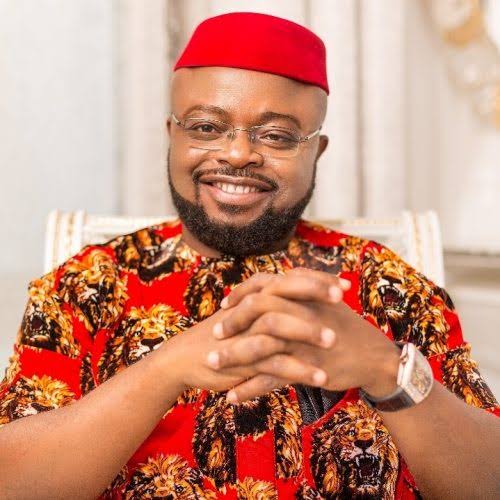
The Peoples Democratic Party (PDP) governorship candidate for the 2027 Ebonyi State election, Chief Ifeanyi Chukwuma Odii, has pledged to attract more than ₦2 trillion in private-sector investment to the state within six months of assuming office if elected.
Odii made the pledge while addressing supporters in Lagos ahead of the formal commencement of his campaign.
He said his investment strategy would cover key sectors of the Ebonyi economy, including mining, hospitality, real estate and manufacturing.
According to the PDP candidate, he has identified more than 2,000 prospective investors, each capable of investing about ₦1 billion in the state.
“I have over 2,000 people who can invest ₦1 billion each. When you multiply it, you will get over ₦2 trillion. This has been structured in such a way that all aspects of the economy will be involved,” Odii said.
He said the proposed investment drive was designed not only to inject capital into the state but also to create jobs, expand the productive base of the economy and provide opportunities for young people and entrepreneurs.
Odii said Ebonyi’s natural resources and strategic location placed it in a strong position to attract large-scale investments if its economic potential was properly harnessed.
He promised that his administration would prioritise private-sector participation, industrialisation and job creation while creating an enabling environment for both local and foreign investors.
The candidate also said existing businesses in the state would be supported to expand, while new investors would be encouraged to establish operations across various sectors.
His pledge comes amid growing political activities ahead of the 2027 governorship election, with economic development, employment generation and wealth creation featuring prominently in his campaign message.
The proposed ₦2 trillion investment target within six months, if achieved, would represent a significant boost to Ebonyi’s economy and rank among the most ambitious private-sector investment mobilisation plans proposed in the state.
By Okey Maduforo, Awka
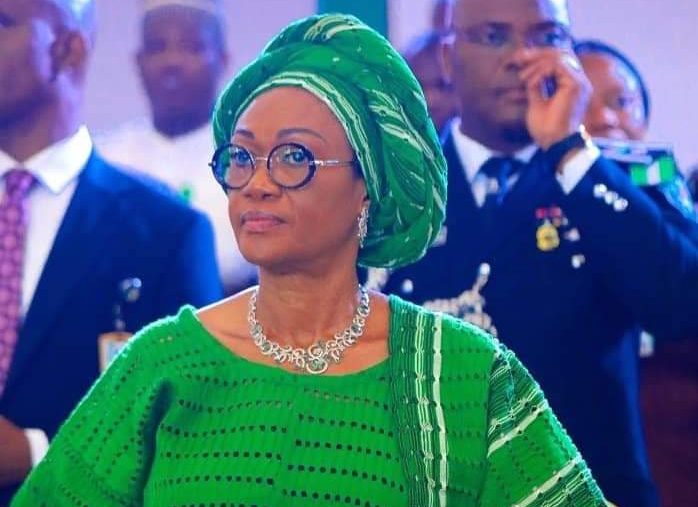
The planned visit of the First Lady of Nigeria, Senator Oluremi Tinubu, to Anambra State has sparked controversy following a protest by the state Chairman of the All Progressives Congress (APC), Senator Emma Anosike, that the party was not informed about the visit.
Anosike said the APC in Anambra was never consulted or briefed about the proposed visit, adding that the party was taken aback by reports that the wife of the party’s national leader and presidential candidate, President Bola Ahmed Tinubu, would be visiting the state without recourse to the state chapter.
He said, “It is indeed strange that the First Lady of our presidential candidate is visiting Anambra State without recourse to the party in the state.
“The party wishes to state categorically that we are not part of the arrangements for the reception of our First Lady, Senator Oluremi Tinubu, because the party was never put in the picture.”
Anosike also dismissed the mantra that “The Progressives Are Working Together”, being canvassed by the All Progressives Grand Alliance (APGA), describing it as a smokescreen by the ruling party in Anambra to hijack President Tinubu’s re-election from the APC.
He said, “For instance, the APGA-led government in Anambra State did not interface with us on the organisation of the visit, and the party wonders if the progressives are indeed working together.”
The APC chairman, however, said the development would not compromise the First Lady’s visit, urging all APC members and supporters in the state to turn out and give Senator Oluremi Tinubu a warm welcome.
He stressed that despite the party’s reservations over the arrangements, APC members remained committed to welcoming the First Lady to Anambra State.
Former Deputy Governor of Bauchi State, Sagir Saleh, has resigned his membership of the All Progressives Congress (APC).
Saleh, who served as deputy governor under former Governor Isa Yuguda, announced his resignation in a letter submitted to the party leadership in Katagum Local Government Area.
He cited personal reasons for his decision but did not provide further details.
His exit comes amid growing disagreements within the Bauchi APC following the party’s 2027 governorship primary. Other prominent members, including former governorship aspirant Bala Jibrin and Sunusi Kunde, an associate of Coordinating Minister of Health and Social Welfare, Prof. Ali Pate, have also reportedly left the party.
Jibrin, a former National Auditor of the defunct Congress for Progressive Change (CPC), resigned on August 31, 2026, following his opposition to the emergence of former Bauchi Governor Muhammad Abubakar as the APC’s 2027 governorship candidate.
He had criticised the primary process and questioned how the candidate emerged.
Kunde also resigned from the APC in August, submitting his resignation to the party chairman of Beti Ward in Misau Local Government Area.
The latest departures are coming as efforts continue to resolve internal disputes and disagreements among APC members in the state.
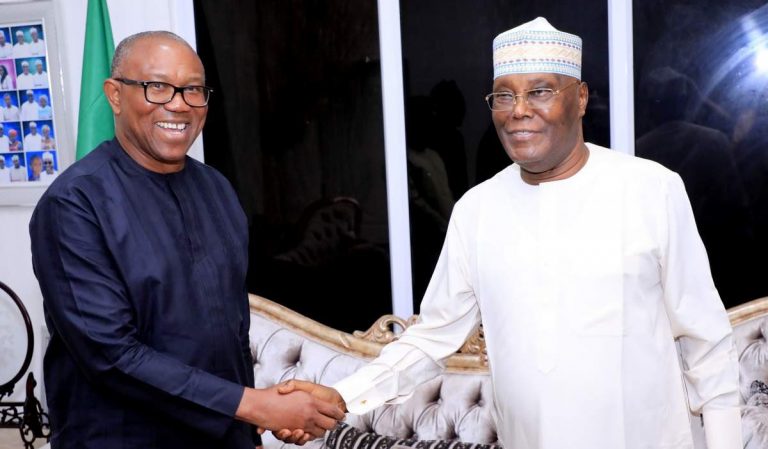
The Leader of INRI Evangelical Spiritual Church, Primate Elijah Ayodele, has raised the alarm over an alleged plot to assassinate former Anambra State Governor, Peter Obi, and former Vice President Atiku Abubakar ahead of the 2027 general election.
Ayodele issued the warning in a video shared on his verified X account on Sunday, urging both opposition figures to strengthen their security and remain vigilant.
The cleric did not identify those allegedly behind the purported plot but claimed that attempts were being made to eliminate Obi and Atiku.
According to him, divine intervention would prevent the alleged plan from succeeding.
“Obi and Atiku, be very conscious of your security. They are looking for any means to eliminate Obi and Atiku.
“But God will never allow it to happen. Watch out and be cautious about your security,” he said.
Ayodele also urged President Bola Tinubu to reconsider travelling to the United States, alleging that there were forces in America working against his political fortunes.
The claims come as political activities and realignments intensify ahead of Nigeria’s 2027 general elections.

-

 News5 days ago
Commissioner Dies Suddenly at Abuja Hospital
-

 News5 days ago
Sept. 26 Polls: ‘ENSIEC is over 90% ready’ – Chairman
-

 Uncategorized5 days ago
UK Confirms Koi Herpesvirus Outbreak, Restricts Fish Movement
-
News5 days ago
Niger Delta Chambers Unveils Plan to Transform Region Into Investment Hub
-
News5 days ago
Niger Delta Chamber Breaks Silence on Alleged Summit Trademark Dispute
-

 Health3 days ago
UNTH Begins Contact Tracing After Suspected Diphtheria Case
-
 News4 days ago
Dangote Reveals He Bought First Private Jet at 22
-

 News4 days ago
Poor Lighting, Sanitation Frustrate Work At First Niger Bridge