


News
Federal revenue agencies face shake-up as Tinubu signs tax bills



President Bola Tinubu on Thursday signed into law four tax reform bills, declaring that it signals Nigeria’s readiness for modern economic growth and international investment.
Following Tinubu’s assent to four tax reform bills, key revenue-generating agencies, including the Nigeria Customs Service, Nigerian Upstream Petroleum Regulatory Commission, and several federal ministries and agencies, may lose their tax collection mandates.
The development, which establishes the Nigeria Revenue Service as the sole body responsible for collecting federally chargeable taxes, is expected to trigger major restructuring across the federal revenue architecture.
“We have opened the door for new economic and business opportunities. We are showing that Nigeria is truly ready and open for business. Easy in, easy out,” said Tinubu at the signing ceremony held at the State House in Abuja.
The President acknowledged the complexities involved in tax reforms but praised stakeholders for demonstrating leadership and courage through the process.

Commending the collaborative effort behind the legislative process, he added, “What you have provided is leadership and courage in the face of mounting dispute. Nowhere in the world will tax reforms be any easier.”
According to him, the signing marks a turning point in the nation’s fiscal direction: “We are in transit. We have changed the rule. We have changed some of the misgivings. The question of our tax-to-GDP and all other formulas will be obsolete,” he said.
Thursday’s signing comes nearly two years after President Tinubu, on July 7, 2023, approved the establishment of a Presidential Committee on Fiscal Policy and Tax Reforms.
He appointed Mr Taiwo Oyedele, a Fiscal Policy Partner and Africa Tax Leader at PriceWaterhouseCoopers, as committee chairman. It came hours after he signed four Executive Orders, suspending the five per cent excise tax on telecommunication services and the excise duty escalation on locally manufactured vehicles.
The committee, inaugurated on August 8, 2023, comprised experts from both the private and public sectors. It was mandated to retrofit various aspects of tax law reform, fiscal policy design and coordination, harmonisation of taxes, and revenue administration.
On October 24, 2023, Oyedele presented a 30-day quick-wins report to President Tinubu, recommending the merger of over 200 taxes paid by Nigerian businesses into 10. In the months that followed, the committee undertook extensive engagements with stakeholders, culminating in the tax bills presented to the National Assembly in late 2024.
However, the bills faced resistance at the National Assembly and among some state governors, who rejected their passage. The Comptroller-General of the Nigeria Customs Service, Bashir Adeniyi, earlier said that the proposed tax reform bills are in jurisdictional conflict with the NCS and threaten the agency’s existence.
At the NASS, the bills sparked heated debate, particularly around the revenue-sharing structure, which governors from the North opposed. They warned that a shift toward derivation-based allocations, especially with VAT, could tilt fiscal balance in favour of southern states with stronger consumption bases.
After prolonged dialogue, the VAT rate remained at 7.5 per cent, and a new exemption was introduced to shield minimum wage earners from personal income tax. By May 2025, the National Assembly passed the harmonised versions with broad support, driven in part by pressure from economic stakeholders and international observers who welcomed the clarity and efficiency the reforms promised.
The four bills include the Nigeria Tax Bill (Fair Taxation), Nigeria Tax Administration Bill, Nigeria Revenue Service (Establishment) Bill, and the Joint Revenue Board (Establishment) Bill.
According to the President, “They will unify our fragmented tax system, eliminate wasteful duplications, cut red tape, restore investor confidence, and entrench transparency and coordination at every level.”
Tinubu added that the long-standing burden of Nigeria’s tax structure had unfairly weighed down the vulnerable while enabling inefficiency. Tinubu emphasised that the signing marks the beginning of Nigeria’s tax evolution.
Meanwhile, the Executive Chairman of the National Revenue Service (formerly the Federal Inland Revenue Service), Zacch Adedeji, has announced that the newly signed tax reform bills will take effect on January 1, 2026.
Adedeji, who briefed State House correspondents after Tinubu signed the four tax bills into law, said this would give the administration six months for planning, education, and alignment with the fiscal calendar.
He explained, “Based on best practices globally, because when you have this kind of change, it takes time for all the stakeholders, participant operators, and even the regulator to change the system. So with the magnanimity of the National Assembly, Mr. President, the effective date will be January 1, 2026, by the special grace of Almighty God.”
Adedeji stressed the importance of launching the reforms at the start of a new calendar year, saying, “When you have this kind of change, it’s not what you do mid-year. Because if the application of the law is better, you start from the beginning of the year.
“So effective dates, by God’s grace, will be first of January 2026,” he added. This timeline, the revenue chief explained, allows for adequate sensitisation, planning, and harmonisation with government budgeting frameworks.
For his part, the Chairman of the Presidential Fiscal Policy and Tax Reforms Committee, Taiwo Oyedele, described the newly signed tax laws as “pro-poor,” saying they will ease the burden on low-income earners, small business owners, and everyday Nigerians.
He said, “More than 1/3 of workers in both the private and public sectors will now be exempted completely from PAYE. They will not have to pay personal income tax. Small businesses, over 90 per cent of small and micro, nano businesses, we no longer have to worry about paying corporate income tax or charging VAT or even deducting withholding tax or paying PAYE for their employees.”
Oyedele added that the reforms will leave “more money in the hands of the ordinary Nigerian to take care of their daily needs,” and announced a new zero‑rate VAT framework on essential items.
“Any traces of VAT in food, in education, in medical and health care are now removed completely, so we should see prices of those items come down,” Oyedele explained.
He also emphasised relief for sectors where households spend most, clarifying that “transportation, accommodation and housing is exempt from VAT… collectively account for more than 80 per cent of where Nigerians spend their money. That’s a huge relief for them.”
Appearing as a guest on Channels Television Politics Today programme on Thursday, Oyedele explained that the current system of revenue was opaque, noting that the new system, operated by the Nigerian Revenue Service will require the government to be more transparent and transparent.
“The current system is opaque. And usually, if you’re hiding stuff from me, I need to be suspicious of you. It’s hard to trust you if you’re not open and transparent. That’s exactly what we have today in Nigeria. So, these new laws require that government should be more transparent. There are requirements around the standard of reporting, the timeliness of those reporting, and making them accessible to the public, by the agencies like the Nigerian Revenue Service.
“(We’re changing) from FIRS to NRS, Nigerian Revenue Service. And that Nigerian Revenue Service will then work in collaboration with subnationals,” he said. The chairman explained that the NRS will operate a digitised system that will collect data like National Identity Numbers, phone numbers, and bank information, to prevent tax evasion by high-income individuals.
Oyedele emphasised that the new tax reform bills were designed with three principal objectives in mind, including ensuring that they were people-centric, efficiency-driven, and growth-focused.
Highlighting where revenue would come from, Oyedele said, “Two places where money would come from are tax evasion. We estimate that the tax gap, which is how much we are collecting and how much we could be collecting, is in the region of 70 per cent, so we are only collecting 30 per cent. We want to close that gap. Imagine if we just close it by another 30 per cent, that is double what we collect now.
“Number two is that we have lots of wasteful incentives. They are not just wasteful, they are also distortionary, so we lose money and create problems for the economy. So, we fixed that as well, so that’s money coming to the government without raising the tax on the people. Then there is the one to do with just ensuring that government resources are more effectively utilised. These areas combined will be where we will initially make money from.
“Ultimately, the money will come from the economy growing. If we get 10 per cent of $200bn, it is more than 100 per cent of one billion. That is where the money is coming from. It is not about going to the person who is trying to survive and asking them to give; they have nothing more to give.”
The Chairman of the Senate Committee on Finance, Senator Sani Musa, stated that the newly signed tax reform laws reflect the true aspirations of Nigerians and are the product of broad consultations, especially with stakeholders who initially opposed the reforms.
Addressing journalists at the signing, Musa acknowledged the initial public backlash—particularly from the northern—but said the National Assembly approached the task with balance and diligence.
He added, “With the consultations and the painstaking nature of the legislative processes that we’ve taken, I believe we are bringing out, we brought out bills that seek the aspirations of Nigerians.
“And what are those aspirations, just as has been highlighted by the Chairman of the Presidential Task Force, we consider the less privileged in terms of earnings, and see that we don’t add burdens on them.”
The senator noted that one of the significant breakthroughs of the legislative process was the harmonisation of Nigeria’s fragmented and duplicative tax system.
He said the review also extended to vital sectors such as oil and gas and the Export Processing Zones, ensuring the laws supported industrial growth and competitiveness.
Chairman of the House Committee on Finance, Hon. James Faleke, described the passage of the bills as a once “mission impossible” task made successful through national cooperation.
Faleke commended the efforts of lawmakers, governors, and the Nigerian public for what he called a united effort to overhaul the country’s tax regime. He emphasised that the reforms do not introduce new tax burdens but rather expand the efficiency of collection and plug leakages.
The Nigeria Employers’ Consultative Association on Thursday lauded President Bola Tinubu’s assent to four major tax reform bills, describing it as a significant step towards ending over 10 years of crippling multiple taxation on businesses in Nigeria.
Speaking on the sidelines of the 4th Employers Summit in Abuja, NECA’s Director-General, Adewale-Smatt Oyerinde, said the legislation, which harmonises taxes, levies and fees across all levels of government, was a long-awaited relief for the Organised Private Sector.
“Our immediate reaction is ‘uhuru’, we thank God because we have canvassed this for a long time,” Smatt-Oyerinde told journalists. “The challenges of multiplicity of taxes, levies and fees have been a major issue for the Organised Private Sector for over 10 years.”
The NECA boss noted that while the assent marks a major milestone, the true test lies in effective implementation. “The main work is implementation, and it will come with its own challenges that we are not all aware of right now,” he said. “But we’re happy that he has signed it. The reality for organised businesses in the context of harmonised taxes, levies and fees has begun.”
Smatt-Oyerinde stressed that the issue was not only about tax rates but also the chaotic and inefficient method of collection that had long discouraged business growth.
“The efficiency of tax collection has been a recurring concern for every rational stakeholder. That was why we supported the establishment of the Presidential Committee on Fiscal Policy and Tax Reforms, which did a very humane and consultative job with the bill,” he explained.
He added that the bills are interconnected and were designed to stimulate growth across all levels of the economy, from micro, small and medium enterprises to large corporations.
“You don’t grow from the top. You grow by promoting businesses. Some parts of the reform affect MSMEs, others SMEs, big businesses, and individuals. It’s a chain reaction that we believe will catalyse the entire economy,” he added.
NECA President, Dr Ifeanyi Okoye, in his remarks, echoed similar sentiments, stressing that the reforms must not end with legislation but must lead to practical improvements for Nigerian businesses.
“For over six years, NECA has remained committed to promoting a stable, predictable, and enabling policy environment where all businesses, regardless of sector or size, can thrive,” Okoye said.
He challenged the federal government to show commitment to implementing actionable outcomes from the summit, warning against treating the platform as “another talk shop.”
“This must be a catalyst for the policy coherence and reform implementation that businesses, and indeed, the country urgently need,” he said.
Smatt-Oyerinde further disclosed that NECA had worked closely with the Presidential Committee throughout the drafting of the tax bills and would remain actively engaged with the Federal Inland Revenue Service, the lead agency for implementation.
“We are ready to deepen our collaboration with FIRS to ensure that these reforms work in practice, not just on paper,” he said.
Following the signing of four major tax reform bills by President Bola Tinubu on Thursday, the Special Adviser to the President on Energy, Olu Verheijen, has revealed that the new laws have codified four key executive orders aimed at stimulating investment in Nigeria’s oil, gas, and clean energy sectors.
She said the act has already helped unlock over $6 billion in fresh investments into Nigeria’s oil and gas industry.
Reacting in a post on her official X (formerly Twitter) handle shortly after the presidential announcement, Verheijen described the signing as a “historic moment” and a clear demonstration of the administration’s commitment to driving energy sector reforms through long-term policy clarity.
She explained that the act enshrines into law Presidential Directive 40 and three other key executive instruments. Among the codified executive orders are: Presidential Directive 40: A framework for fiscal incentives targeting upstream, midstream gas, and deep offshore oil projects.
“The 2024 VAT Modification Order: This grants value-added tax exemptions for Compressed Natural Gas, Liquefied Petroleum Gas, and other clean energy products.
“The 2025 Upstream Petroleum Cost Efficiency Order: Designed to reduce operational overheads in the upstream oil sector. Other incentive orders focused on energy transition and infrastructure localisation.
“These reforms have already helped unlock over $6bn in new Oil & Gas investments. With their codification, the administration has delivered long-term certainty and regulatory clarity, ensuring these critical incentives are protected from future policy reversals,” Verheijen stated.
She praised the development as a strategic win for the public and private sectors, stressing that the energy industry now has a legal framework that assures investors of continuity regardless of future political changes.

Police, Agunechemba Reinforce Security Operations
By Okey Maduforo, Awka
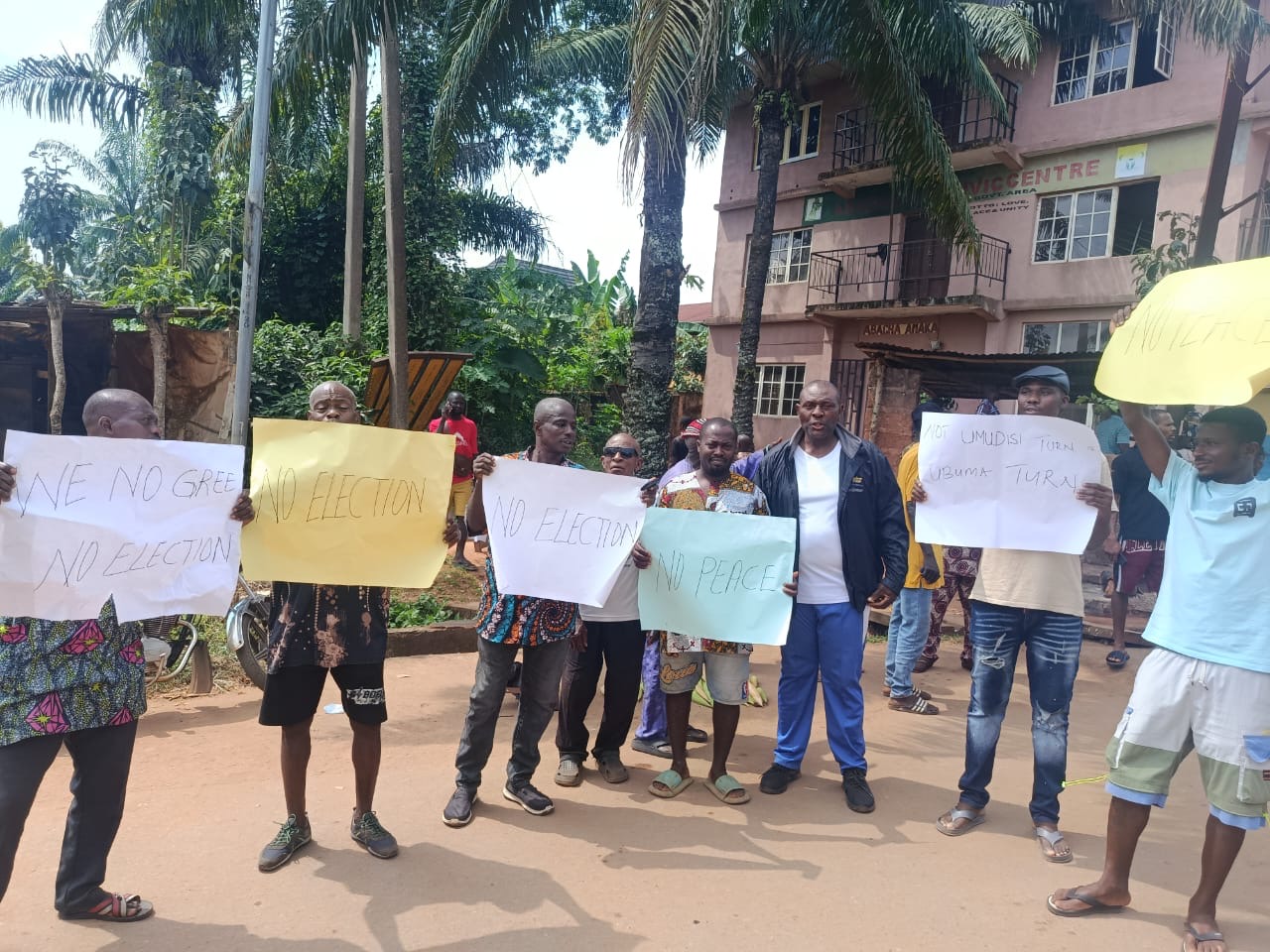
Tension has heightened in Abacha Community, Idemili North Local Government Area of Anambra State, following the conduct of an election for the position of President-General of the town.
The election reportedly took place despite a pending petition by the Akanato quarter of the community before the Ministry of Local Government and Chieftaincy Affairs.
Representatives of the Ministry, led by Mr Chukwuma Joseph Echidiegwu, were present at the election and reportedly advised the parties to establish a peace committee to address the lingering dispute.
However, the situation was brought under control following the intervention of officers of the Anambra State Police Command, led by the Divisional Police Officer (DPO), alongside operatives of the Agunechemba Security Squad.
The intervention became necessary after aggrieved members of the community stormed the election venue, insisting that the exercise should not proceed.
The disagreement reportedly centres on allegations of imbalance in the distribution of traditional and community leadership positions.
Members of the Akanato quarter argued that Umudisi Village, which currently occupies the positions of traditional ruler and Prime Minister, was also seeking to produce the next President-General of the community.
They described the arrangement as unjust and marginalising, insisting that leadership positions should be distributed equitably among the constituent villages.
Consequently, the Akanato quarter boycotted the election, maintaining that allowing one section of the community to occupy all the major leadership positions was unacceptable.
Speaking on the development, the leader of the Akanato quarter, Chief Jonahs Okafor, said the arrangement amounted to a deliberate shortchange of other sections of the community.
“So this is actually the matter and, as a matter of fact, we boycotted the election. Those who participated in the election were people from the other quarter of the community,” he said.
Okafor further disclosed that the Chairman of the Electoral Committee, Mr Obinna Obika, resigned on the eve of the election, explaining that he could not be part of any process capable of destabilising the peace of the community.
In his resignation letter, made available to journalists by Okafor, Obika cited growing disagreements and divisions among the various clans over the distribution of leadership positions.
He stated that the controversies had created an atmosphere of tension, mistrust and uncertainty, turning what should have been a collective exercise into a source of division and hostility.
“It is deeply painful to witness a situation where brothers who ought to stand together for the common good of Abacha have been divided into opposite camps, with threats of legal action also taking a considerable toll on my personal peace of mind, well-being and health,” he stated.
Obika added that his decision to step aside was in the interest of his personal well-being and, more importantly, the peace and stability of the community.
Explaining their position further, Okafor appealed to Governor Chukwuma Charles Soludo to intervene, noting that Abacha Community comprises seven villages, with four belonging to one section and three to the other.
He urged the governor to address what he described as an imbalance and marginalisation in the sharing of leadership positions.
“The Akanato people are peace-loving, respect constituted authority and are law-abiding. We cannot take the law into our hands.
“Hence, we appeal to our governor, who believes in equity, fairness and good conscience, to intervene in this matter. We have implicit confidence that he will do the needful,” he said.
Meanwhile, security operatives have reportedly reinforced their presence in the community and remain on alert to respond swiftly to any possible breakdown of law and order.
By Chinedu Sabastine
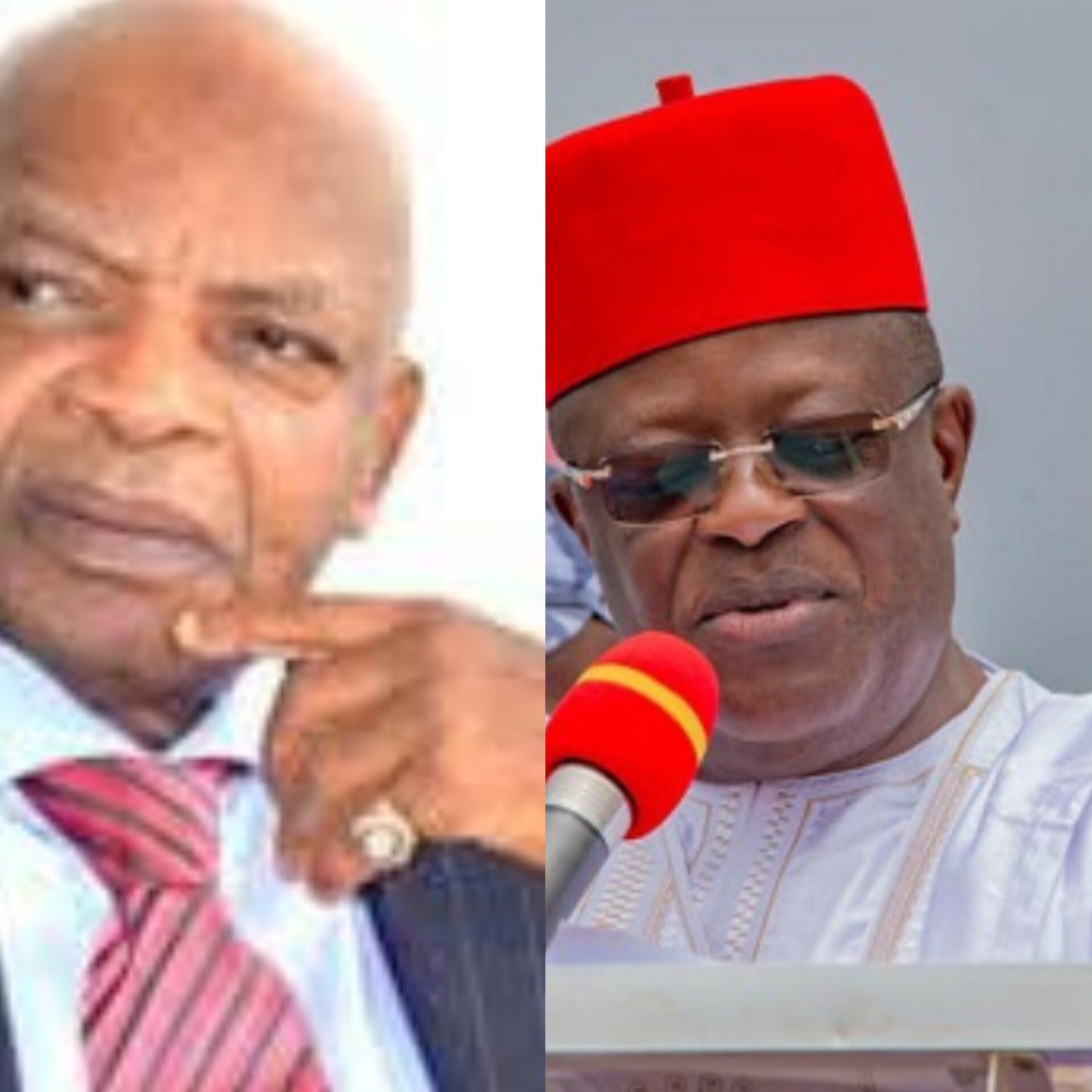
The Nigeria Union of Journalists (NUJ), Enugu State Council, South-East, will on November 5, 2026 induct renowned businessman, Engr. Arthur Eze, into its Hall of Fame during its annual Press Week celebration in Enugu.
The union will also honour the Minister of Works, Senator David Umahi, with the Pillar of the South-East Bridge Builder Award in recognition of his contributions to the region.
The event, scheduled to hold at the International Conference Centre (ICC), Enugu, is expected to attract more than 500 journalists and media executives, government officials, business leaders, traditional rulers, political stakeholders and other distinguished personalities.
The annual Press Week provides a platform for stakeholders to deliberate on issues affecting the media, governance and society.
Engr. Eze was the first person to renovate the NUJ Secretariat at No 4, Rangers Avenue Independence Layout, Enugu to ensure that media practitioners are being safe in a good environment.
He has contributed to the development of media practitioners, individual, institutions, churches and families across the Nation, his human capital development is massive.
Your nomination is a recognition of the remarkable legacy you have built over the years through your outstanding contributions to human empowerment, media practitioner empowerment, philanthropy, enterprise development, mentorship, capacity building, community advancement and the creation of opportunities for individuals and communities to prosper.
Your life and accomplishments stand as a compelling testimony to the power of vision, resilience, enterprise and service. Through your initiatives and interventions, you have demonstrated an uncommon commitment to lifting people, strengthening communities and opening pathways of opportunity for generations.
At a time when societies require individuals with the courage and capacity to transform dreams into possibilities, your remarkable journey continues to distinguish you as an outstanding builder of people, creator of opportunities and philanthropist of enduring impact.
The NUJ Enugu State Council considers this recognition particularly significant because your contributions go beyond material philanthropy. They represent a profound philosophy of investing in humanity, empowering the less privileged, nurturing enterprise, supporting communities and creating platforms through which individuals can achieve their potential.
This year’s press week celebration is expected to bring together key figures from different sectors to celebrate outstanding contributions and promote dialogue on the role of the media in society.
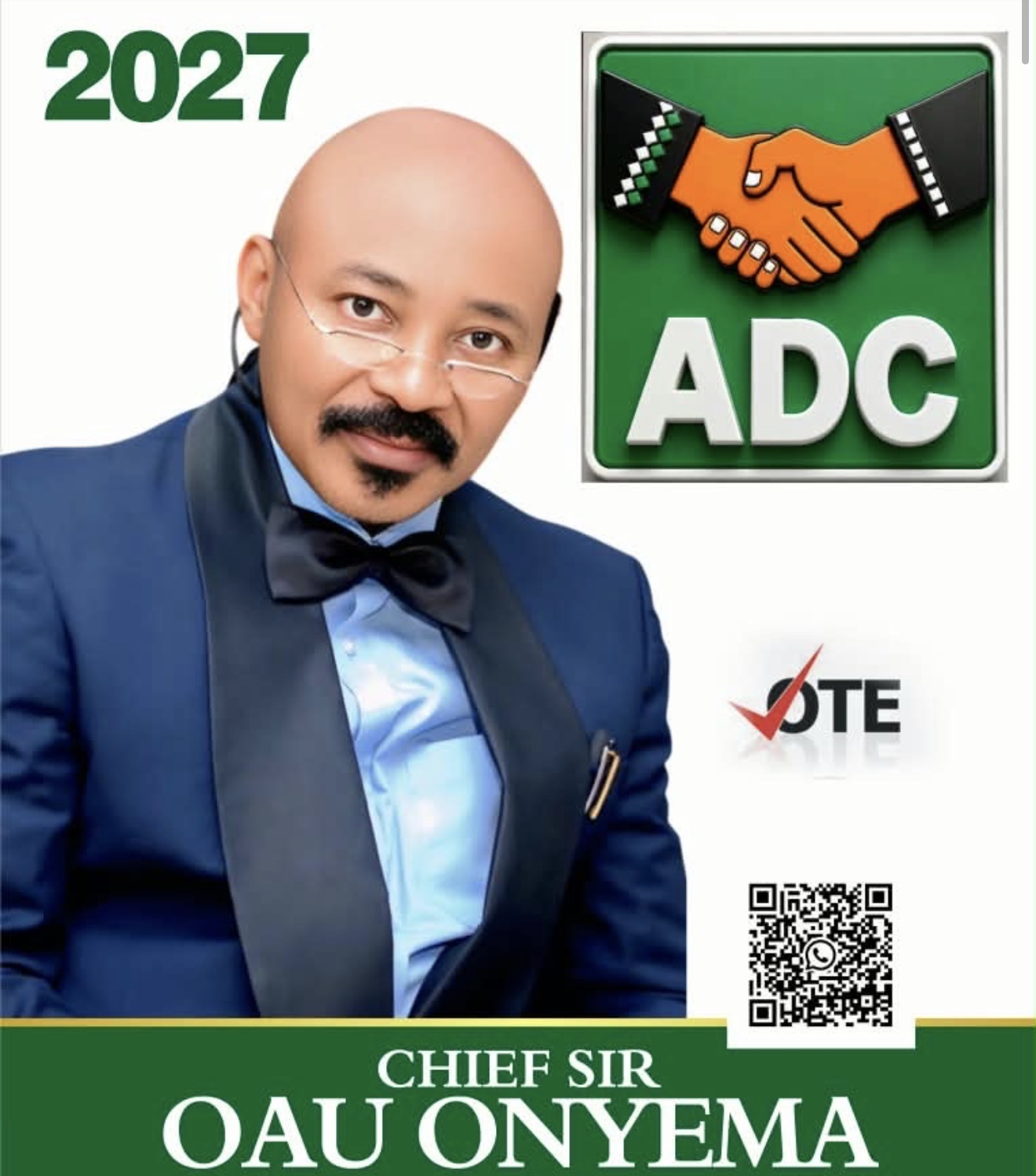
A Federal High Court sitting in Enugu has dismissed a suit challenging the candidacy of Hon. Barr. Sir OAU Onyema as the African Democratic Congress (ADC) candidate for Enugu West Senatorial District in the 2027 National Assembly election.
The suit, marked No. FHC/SKC/EN/CS/218/2026, was instituted by Evangelist Mrs Juliet Ani against the Independent National Electoral Commission (INEC), the ADC and Onyema, with the plaintiff laying claim to the party’s senatorial ticket.
However, the court, presided over by Justice Ogubanjo, reportedly dismissed the suit on Thursday, October 30, 2026, bringing to an end the legal challenge to Onyema’s emergence as the party’s candidate.
Sources familiar with the dispute said the plaintiff had indicated an intention to discontinue the case after the ADC national secretariat reaffirmed Onyema’s candidacy. However, proceedings reportedly continued before the court eventually dismissed the suit.
Speaking with journalists shortly after the court proceedings at his chambers, Akpagu Chambers, Presidential Road, Enugu, Onyema described the legal challenge as a temporary distraction that had slowed down his campaign activities but insisted that it would not derail his senatorial ambition.
He expressed confidence that his political experience, longstanding relationships and record of service across Enugu West would give him the needed advantage in the election.
“We are moving into the field for campaigns. Sir OAU Onyema has networked his person into families across Enugu West Senatorial District.
“The network I have built will sell. I have served as Secretary of Ohanaeze Ndigbo in Enugu State, Deputy Chairman and Vice President-General of Ohanaeze Ndigbo Worldwide. I have also served under three successive administrations in Enugu State.
“I will rely on my records of service, relationships and what I have done for the people to win this election,” he said.
Onyema further declared that, with the legal distraction now over, he would intensify his participation in the ADC’s statewide campaigns, working to promote not only his senatorial ambition but also other candidates of the party.
He said his immediate priority was to reconnect with the grassroots, consolidate existing political structures and take the ADC’s message to communities across the district.
Also speaking, the Enugu State Chairman of ADC, Major General Chris Ezeh (retd.), reaffirmed that Onyema emerged as the party’s candidate through a substituted primary election.
Ezeh alleged that external forces had attempted to frustrate the party’s decision but expressed satisfaction that the legal challenge had finally been resolved.
He described Onyema as a major political asset to the ADC in Enugu State, noting that his longstanding involvement in the party and experience in public service would strengthen its electoral fortunes.
The party chairman also identified Onyema as one of the founding members of ADC in Enugu State and said his emergence as the Enugu West senatorial candidate was a significant development for the party.
Checks by TCM further indicated that Onyema’s political ambition has consistently centred on representing Enugu West in the Senate, having reportedly never sought election to any other political office since venturing into partisan politics.
With the legal challenge dismissed, Onyema is expected to intensify his grassroots mobilisation and join other ADC leaders in building support for the party ahead of the 2027 general election.

The Police Service Commission (PSC) has approved the promotion of thousands of senior police officers, including two Deputy Inspectors-General of Police (DIGs), 10 Assistant Inspectors-General of Police (AIGs) and 17 Commissioners of Police (CPs).
The promotions followed the successful completion of promotion examinations and oral interviews conducted by the commission.
According to a statement issued on Thursday, the approvals were granted during the commission’s plenary meeting in Abuja, presided over by its Chairman, retired DIG Hashimu Salihu Argungu.
The two officers elevated to the rank of Deputy Inspector-General of Police are Olaolu Adegbite, Head of the INTERPOL National Central Bureau, Abuja, and Dankombo F. Morris, who heads Zone 4 Headquarters, Makurdi.
Adegbite holds a Bachelor of Arts degree in Russian Language from the University of Lagos and a Master’s degree in Philology from the Pushkin Institute, Moscow.
A recipient of the national honour of Member of the Order of the Federal Republic (MFR), he is also a member of the FBI National Academy Associates and an alumnus of Harvard Kennedy School. He previously served as Director of Operations at the Economic and Financial Crimes Commission (EFCC).
Morris, an indigene of Gombe State, holds a degree in History from the University of Maiduguri and a Diploma in Police Science. He previously served as Commissioner of Police in Adamawa State.
The 10 officers promoted from Commissioner of Police to Assistant Inspector-General are Omosanyin Olusegun, Ogbodo Ugobueze, Ohagwu Felix Ndukwe, Taylor Lennox Olanrewaju, Regina Cosmas Udoette, Afolabi Wilfred Olutokunbo, Nwogoh Martin, Shetima Jauro Mohammed, Ibrahim D. Gotan and Danjuma I. Yahaya.
The commission also approved the elevation of 17 Deputy Commissioners of Police to the rank of Commissioner of Police.
They include Nache Bashir Liman, Sirajo Lawal Salihu, Ayeleye Adegboyega, Isiaka O. Salau, Usman Shaik Adamu, Aminu Maiwada Garba, Abdulkarim Musa Waziri, Muhammad Yusuf Adamu, Sani Adamu Nufawa, Bello M. Adamu, Okezie Chikezie, Aminu Usman Gusau, Abiodun Onuoha, Salisu Bello Fago, Adegoke A. Alani, Wuwa Auwal Muhammad and Benedict U. Agbo.
In another round of promotions, 85 Assistant Commissioners of Police were elevated to Deputy Commissioners of Police.
Among the beneficiaries are Dr Ruth Oyinmearelu Okunbo, Medical Director of MD Abubakar Police Hospital, Deidei, and ASR Police Reference Hospital, Utako, Abuja; Isah Adejoh of the Police Staff College, Jos; and Mannir Yusuf Gafai of the Kano State Command.
Similarly, 49 Chief Superintendents of Police were promoted to Assistant Commissioners of Police, while 245 Superintendents of Police advanced to Chief Superintendents.
Notable among those elevated to CSP are Josephine Adeh, Police Public Relations Officer of the Federal Capital Territory Command, and Suleiman Yahaya Nguroje, spokesperson of the Adamawa State Police Command.
Other beneficiaries include Abah James of Rivers State Command, Okere Romanus of Isiowulu Division in Anambra State, Ugochukwu Ozoude Alex of Zone 9, Umuahia, Vincent Elekwa of Rivers State Command, Umar Sani of FCT Command and Mustapha Mohammed.
The PSC further approved the promotion of 498 Deputy Superintendents of Police to Superintendents of Police, including Isa Osu of the Border Patrol Force Headquarters, Abuja; Samaila Amadu Bangajiya of the 12 Police Mobile Force Squadron, Minna; and Akadu Godwin of the Tactical Intelligence Unit, Force Headquarters.
Another 3,218 Assistant Superintendents of Police were elevated to Deputy Superintendents.
Among them are Frank Okafor, former Chief Security Officer of Jaiz Bank and Intelligence Coordinator at Government House, Uyo; Samson Sule, Chief Security Officer to the Executive Secretary of the Nigeria Police Trust Fund; Ibrahim Abuh of Force Headquarters; Dauda Yusuf Olatunji; Sarauta Mohammed Mohammed; and Yusuf Mukarram Ado of the Airport Police Command, Ikeja.
Congratulating the newly promoted officers, Argungu charged them to see their elevation as a call to greater responsibility, professionalism and dedication to duty.
He urged them to redouble their commitment to protecting lives and property, maintaining public order and enforcing the law.
The PSC chairman stressed that Nigerians expected improved performance, discipline and accountability from officers entrusted with higher responsibilities.

The Nigeria Security and Civil Defence Corps (NSCDC) has suspended Deputy Superintendent of Corps (DSC) Onoja Babayo Samuel over his alleged involvement in a shooting incident at Kubwa Market, Abuja, on October 25, 2026.
The Corps has also ordered an Orderly Room Trial and referred the officer to its disciplinary committee to determine his level of culpability.
In a statement issued on Thursday by its National Public Relations Officer, Babawale Afolabi, the NSCDC disclosed that Samuel was arrested by the Federal Capital Territory (FCT) Police Command after allegedly firing gunshots into the air during a confrontation with traders at the market.
The Corps described the alleged conduct as a gross violation of its rules of engagement and Standard Operating Procedures (SOP), particularly those regulating the use of firearms.
Consequently, the Commandant General of the NSCDC, Prof. Ahmed Abubakar Audi, directed the officer’s immediate suspension pending the conclusion of investigations and disciplinary proceedings.
Following the directive, Samuel has been relieved of all official duties and stripped of his responsibilities until the disciplinary process is concluded.
According to the statement, the disciplinary committee at the Corps’ National Headquarters in Abuja will examine the circumstances surrounding the incident alongside the Orderly Room Trial.
The NSCDC assured the public that the outcome of the proceedings would be made known upon conclusion.
Reaffirming his administration’s zero tolerance for professional misconduct and the misuse of firearms, Audi warned that no officer found culpable of violating operational guidelines would be shielded from appropriate sanctions.
He reiterated the Corps’ commitment to protecting lives, maintaining professionalism and ensuring public safety, stressing that personnel must conduct themselves within established operational procedures at all times.


-

 Education4 days ago
Caleb British International School Wins Zenith Bank Young Innovators Challenge, Bags ₦5m Prize
-
 Crime4 days ago
Political Violence: PDP Chairmen Storm Ebonyi, Warn Nwifuru To Leave Opposition Alone Or…
-
 Politics4 days ago
Transport Allowance: Payment Begins November, Beneficiaries to receive N420,000
-
 News4 days ago
TUC Rejects Tinubu’s N70,000 Transport Allowance
-

 Crime4 days ago
Police Arrest Suspected Fake Lawyer After 11 Years of Practice in Ebonyi
-
 Crime4 days ago
Police Arrest Suspected Serial Rapist in Enugu, Recover Victims’ Nude Videos
-
 Politics3 days ago
Mbah Warns Opposition Against Defamation, Denies Blocking Town Hall Meeting
-
 News4 days ago
Governor’s Convoy Kills Five in Auto Crash