



News
Federal revenue agencies face shake-up as Tinubu signs tax bills



President Bola Tinubu on Thursday signed into law four tax reform bills, declaring that it signals Nigeria’s readiness for modern economic growth and international investment.
Following Tinubu’s assent to four tax reform bills, key revenue-generating agencies, including the Nigeria Customs Service, Nigerian Upstream Petroleum Regulatory Commission, and several federal ministries and agencies, may lose their tax collection mandates.
The development, which establishes the Nigeria Revenue Service as the sole body responsible for collecting federally chargeable taxes, is expected to trigger major restructuring across the federal revenue architecture.
“We have opened the door for new economic and business opportunities. We are showing that Nigeria is truly ready and open for business. Easy in, easy out,” said Tinubu at the signing ceremony held at the State House in Abuja.
The President acknowledged the complexities involved in tax reforms but praised stakeholders for demonstrating leadership and courage through the process.

Commending the collaborative effort behind the legislative process, he added, “What you have provided is leadership and courage in the face of mounting dispute. Nowhere in the world will tax reforms be any easier.”
According to him, the signing marks a turning point in the nation’s fiscal direction: “We are in transit. We have changed the rule. We have changed some of the misgivings. The question of our tax-to-GDP and all other formulas will be obsolete,” he said.
Thursday’s signing comes nearly two years after President Tinubu, on July 7, 2023, approved the establishment of a Presidential Committee on Fiscal Policy and Tax Reforms.
He appointed Mr Taiwo Oyedele, a Fiscal Policy Partner and Africa Tax Leader at PriceWaterhouseCoopers, as committee chairman. It came hours after he signed four Executive Orders, suspending the five per cent excise tax on telecommunication services and the excise duty escalation on locally manufactured vehicles.
The committee, inaugurated on August 8, 2023, comprised experts from both the private and public sectors. It was mandated to retrofit various aspects of tax law reform, fiscal policy design and coordination, harmonisation of taxes, and revenue administration.
On October 24, 2023, Oyedele presented a 30-day quick-wins report to President Tinubu, recommending the merger of over 200 taxes paid by Nigerian businesses into 10. In the months that followed, the committee undertook extensive engagements with stakeholders, culminating in the tax bills presented to the National Assembly in late 2024.
However, the bills faced resistance at the National Assembly and among some state governors, who rejected their passage. The Comptroller-General of the Nigeria Customs Service, Bashir Adeniyi, earlier said that the proposed tax reform bills are in jurisdictional conflict with the NCS and threaten the agency’s existence.
At the NASS, the bills sparked heated debate, particularly around the revenue-sharing structure, which governors from the North opposed. They warned that a shift toward derivation-based allocations, especially with VAT, could tilt fiscal balance in favour of southern states with stronger consumption bases.
After prolonged dialogue, the VAT rate remained at 7.5 per cent, and a new exemption was introduced to shield minimum wage earners from personal income tax. By May 2025, the National Assembly passed the harmonised versions with broad support, driven in part by pressure from economic stakeholders and international observers who welcomed the clarity and efficiency the reforms promised.
The four bills include the Nigeria Tax Bill (Fair Taxation), Nigeria Tax Administration Bill, Nigeria Revenue Service (Establishment) Bill, and the Joint Revenue Board (Establishment) Bill.
According to the President, “They will unify our fragmented tax system, eliminate wasteful duplications, cut red tape, restore investor confidence, and entrench transparency and coordination at every level.”
Tinubu added that the long-standing burden of Nigeria’s tax structure had unfairly weighed down the vulnerable while enabling inefficiency. Tinubu emphasised that the signing marks the beginning of Nigeria’s tax evolution.
Meanwhile, the Executive Chairman of the National Revenue Service (formerly the Federal Inland Revenue Service), Zacch Adedeji, has announced that the newly signed tax reform bills will take effect on January 1, 2026.
Adedeji, who briefed State House correspondents after Tinubu signed the four tax bills into law, said this would give the administration six months for planning, education, and alignment with the fiscal calendar.
He explained, “Based on best practices globally, because when you have this kind of change, it takes time for all the stakeholders, participant operators, and even the regulator to change the system. So with the magnanimity of the National Assembly, Mr. President, the effective date will be January 1, 2026, by the special grace of Almighty God.”
Adedeji stressed the importance of launching the reforms at the start of a new calendar year, saying, “When you have this kind of change, it’s not what you do mid-year. Because if the application of the law is better, you start from the beginning of the year.
“So effective dates, by God’s grace, will be first of January 2026,” he added. This timeline, the revenue chief explained, allows for adequate sensitisation, planning, and harmonisation with government budgeting frameworks.
For his part, the Chairman of the Presidential Fiscal Policy and Tax Reforms Committee, Taiwo Oyedele, described the newly signed tax laws as “pro-poor,” saying they will ease the burden on low-income earners, small business owners, and everyday Nigerians.
He said, “More than 1/3 of workers in both the private and public sectors will now be exempted completely from PAYE. They will not have to pay personal income tax. Small businesses, over 90 per cent of small and micro, nano businesses, we no longer have to worry about paying corporate income tax or charging VAT or even deducting withholding tax or paying PAYE for their employees.”
Oyedele added that the reforms will leave “more money in the hands of the ordinary Nigerian to take care of their daily needs,” and announced a new zero‑rate VAT framework on essential items.
“Any traces of VAT in food, in education, in medical and health care are now removed completely, so we should see prices of those items come down,” Oyedele explained.
He also emphasised relief for sectors where households spend most, clarifying that “transportation, accommodation and housing is exempt from VAT… collectively account for more than 80 per cent of where Nigerians spend their money. That’s a huge relief for them.”
Appearing as a guest on Channels Television Politics Today programme on Thursday, Oyedele explained that the current system of revenue was opaque, noting that the new system, operated by the Nigerian Revenue Service will require the government to be more transparent and transparent.
“The current system is opaque. And usually, if you’re hiding stuff from me, I need to be suspicious of you. It’s hard to trust you if you’re not open and transparent. That’s exactly what we have today in Nigeria. So, these new laws require that government should be more transparent. There are requirements around the standard of reporting, the timeliness of those reporting, and making them accessible to the public, by the agencies like the Nigerian Revenue Service.
“(We’re changing) from FIRS to NRS, Nigerian Revenue Service. And that Nigerian Revenue Service will then work in collaboration with subnationals,” he said. The chairman explained that the NRS will operate a digitised system that will collect data like National Identity Numbers, phone numbers, and bank information, to prevent tax evasion by high-income individuals.
Oyedele emphasised that the new tax reform bills were designed with three principal objectives in mind, including ensuring that they were people-centric, efficiency-driven, and growth-focused.
Highlighting where revenue would come from, Oyedele said, “Two places where money would come from are tax evasion. We estimate that the tax gap, which is how much we are collecting and how much we could be collecting, is in the region of 70 per cent, so we are only collecting 30 per cent. We want to close that gap. Imagine if we just close it by another 30 per cent, that is double what we collect now.
“Number two is that we have lots of wasteful incentives. They are not just wasteful, they are also distortionary, so we lose money and create problems for the economy. So, we fixed that as well, so that’s money coming to the government without raising the tax on the people. Then there is the one to do with just ensuring that government resources are more effectively utilised. These areas combined will be where we will initially make money from.
“Ultimately, the money will come from the economy growing. If we get 10 per cent of $200bn, it is more than 100 per cent of one billion. That is where the money is coming from. It is not about going to the person who is trying to survive and asking them to give; they have nothing more to give.”
The Chairman of the Senate Committee on Finance, Senator Sani Musa, stated that the newly signed tax reform laws reflect the true aspirations of Nigerians and are the product of broad consultations, especially with stakeholders who initially opposed the reforms.
Addressing journalists at the signing, Musa acknowledged the initial public backlash—particularly from the northern—but said the National Assembly approached the task with balance and diligence.
He added, “With the consultations and the painstaking nature of the legislative processes that we’ve taken, I believe we are bringing out, we brought out bills that seek the aspirations of Nigerians.
“And what are those aspirations, just as has been highlighted by the Chairman of the Presidential Task Force, we consider the less privileged in terms of earnings, and see that we don’t add burdens on them.”
The senator noted that one of the significant breakthroughs of the legislative process was the harmonisation of Nigeria’s fragmented and duplicative tax system.
He said the review also extended to vital sectors such as oil and gas and the Export Processing Zones, ensuring the laws supported industrial growth and competitiveness.
Chairman of the House Committee on Finance, Hon. James Faleke, described the passage of the bills as a once “mission impossible” task made successful through national cooperation.
Faleke commended the efforts of lawmakers, governors, and the Nigerian public for what he called a united effort to overhaul the country’s tax regime. He emphasised that the reforms do not introduce new tax burdens but rather expand the efficiency of collection and plug leakages.
The Nigeria Employers’ Consultative Association on Thursday lauded President Bola Tinubu’s assent to four major tax reform bills, describing it as a significant step towards ending over 10 years of crippling multiple taxation on businesses in Nigeria.
Speaking on the sidelines of the 4th Employers Summit in Abuja, NECA’s Director-General, Adewale-Smatt Oyerinde, said the legislation, which harmonises taxes, levies and fees across all levels of government, was a long-awaited relief for the Organised Private Sector.
“Our immediate reaction is ‘uhuru’, we thank God because we have canvassed this for a long time,” Smatt-Oyerinde told journalists. “The challenges of multiplicity of taxes, levies and fees have been a major issue for the Organised Private Sector for over 10 years.”
The NECA boss noted that while the assent marks a major milestone, the true test lies in effective implementation. “The main work is implementation, and it will come with its own challenges that we are not all aware of right now,” he said. “But we’re happy that he has signed it. The reality for organised businesses in the context of harmonised taxes, levies and fees has begun.”
Smatt-Oyerinde stressed that the issue was not only about tax rates but also the chaotic and inefficient method of collection that had long discouraged business growth.
“The efficiency of tax collection has been a recurring concern for every rational stakeholder. That was why we supported the establishment of the Presidential Committee on Fiscal Policy and Tax Reforms, which did a very humane and consultative job with the bill,” he explained.
He added that the bills are interconnected and were designed to stimulate growth across all levels of the economy, from micro, small and medium enterprises to large corporations.
“You don’t grow from the top. You grow by promoting businesses. Some parts of the reform affect MSMEs, others SMEs, big businesses, and individuals. It’s a chain reaction that we believe will catalyse the entire economy,” he added.
NECA President, Dr Ifeanyi Okoye, in his remarks, echoed similar sentiments, stressing that the reforms must not end with legislation but must lead to practical improvements for Nigerian businesses.
“For over six years, NECA has remained committed to promoting a stable, predictable, and enabling policy environment where all businesses, regardless of sector or size, can thrive,” Okoye said.
He challenged the federal government to show commitment to implementing actionable outcomes from the summit, warning against treating the platform as “another talk shop.”
“This must be a catalyst for the policy coherence and reform implementation that businesses, and indeed, the country urgently need,” he said.
Smatt-Oyerinde further disclosed that NECA had worked closely with the Presidential Committee throughout the drafting of the tax bills and would remain actively engaged with the Federal Inland Revenue Service, the lead agency for implementation.
“We are ready to deepen our collaboration with FIRS to ensure that these reforms work in practice, not just on paper,” he said.
Following the signing of four major tax reform bills by President Bola Tinubu on Thursday, the Special Adviser to the President on Energy, Olu Verheijen, has revealed that the new laws have codified four key executive orders aimed at stimulating investment in Nigeria’s oil, gas, and clean energy sectors.
She said the act has already helped unlock over $6 billion in fresh investments into Nigeria’s oil and gas industry.
Reacting in a post on her official X (formerly Twitter) handle shortly after the presidential announcement, Verheijen described the signing as a “historic moment” and a clear demonstration of the administration’s commitment to driving energy sector reforms through long-term policy clarity.
She explained that the act enshrines into law Presidential Directive 40 and three other key executive instruments. Among the codified executive orders are: Presidential Directive 40: A framework for fiscal incentives targeting upstream, midstream gas, and deep offshore oil projects.
“The 2024 VAT Modification Order: This grants value-added tax exemptions for Compressed Natural Gas, Liquefied Petroleum Gas, and other clean energy products.
“The 2025 Upstream Petroleum Cost Efficiency Order: Designed to reduce operational overheads in the upstream oil sector. Other incentive orders focused on energy transition and infrastructure localisation.
“These reforms have already helped unlock over $6bn in new Oil & Gas investments. With their codification, the administration has delivered long-term certainty and regulatory clarity, ensuring these critical incentives are protected from future policy reversals,” Verheijen stated.
She praised the development as a strategic win for the public and private sectors, stressing that the energy industry now has a legal framework that assures investors of continuity regardless of future political changes.
“If You Have Evidence Against Stanley Mbam, Charge Him; Otherwise, Release Him” — Oganiru Izzi
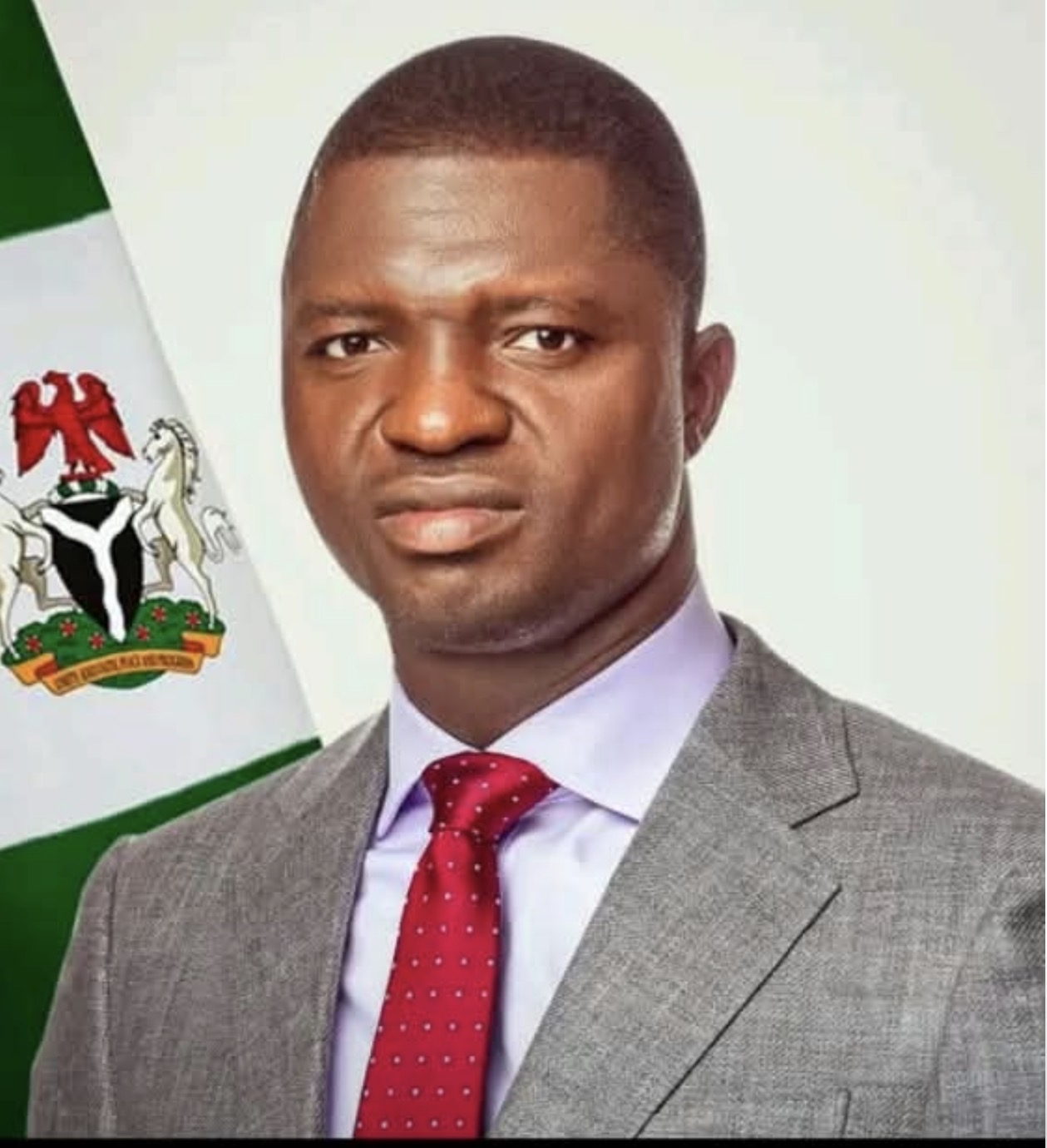
A socio-cultural organisation of Izzi extraction, Oganiru Izzi, has challenged Ebonyi State Governor, Chief Francis Ogbonna Nwifuru, to either release the state’s sacked Commissioner for Works, Mr Stanley Mbam, or charge him before a competent court if the government has credible evidence of wrongdoing against him.
The group said the continued detention of the former commissioner without a formal charge raises concerns about due process, constitutional rights and the rule of law.
The leader of Oganiru Izzi, Mr Godwin Mbam, made the demand while speaking with correspondents of National Issue Newspapers at the Crack Department of the Ebonyi State Police Command in Abakaliki.
Mbam condemned what he described as the prolonged detention of Stanley Mbam without allowing a court to determine whether he had committed any offence.
He challenged the state government to produce evidence if it believes the former commissioner committed a criminal offence.
“If there is credible evidence against him, charge him to court and let the court decide. If there is no case against him, he should be released,” Mbam said.
He also appealed to the Ebonyi State Police Command to uphold the Constitution and resist any pressure that could result in unlawful detention.
Vanco Flyover: “We Will Reveal the Full Details”
Mbam also issued a three-day challenge to Governor Nwifuru, declaring that if the former commissioner was not released or charged to court, his organisation would make public what it described as the “full details” of the Vanco Flyover project.
According to him, the proposed disclosure would address issues surrounding the project, including its funding, payments, contractual arrangements and other financial details.
“We will let the world know the full details of the Vanco Flyover and how the funds were utilised,” he warned.
He further challenged the state government to demonstrate transparency by making relevant documents concerning the project available to the public.
“What About the Alleged ₦1.5 Billion Forfeiture?”
The Izzi group also questioned what it described as the selective application of the state government’s anti-corruption campaign.
Mbam referred to allegations involving an account reportedly frozen by the Economic and Financial Crimes Commission (EFCC) and an alleged ₦1.5 billion forfeiture to the Federal Government.
He questioned why, according to him, the governor had allegedly not taken similar action if the facts surrounding the matter warranted it.
Mbam stressed that he was not opposed to the fight against corruption but insisted that any anti-corruption campaign must be comprehensive, transparent and applied equally.
“If Governor Nwifuru wants to fight corruption, let him fight it holistically. Nobody should be targeted while other serious allegations are ignored,” he said.
“If Nwifuru Says He Knows Nothing, We Will Produce the Facts”
Mbam further challenged Governor Nwifuru to publicly state whether he was aware of alleged corruption issues within the Ministry of Works.
“If Nwifuru publicly claims that he is unaware of corruption in the Works Ministry, I will make public the facts available to me. The facts will shock the state,” he declared.
He insisted that the matter should not degenerate into a political vendetta, arguing that the appropriate place to determine criminal liability is a court of law.
According to him, the people of Ebonyi State deserve clear answers concerning the Vanco Flyover and other issues involving public funds.
“Everybody Should Be Subject to the Law”
The Oganiru Izzi leader maintained that the controversy should be resolved through transparency, documentary evidence and due process.
“If there is a case, charge him. If there is no case, release him. The government cannot claim to be fighting corruption while abandoning the principles of justice and the rule of law,” he said.
Mbam warned that failure to address the issues could compel the organisation to make further disclosures concerning the Vanco Flyover and other matters it considers to be in the public interest.
By Our Correspondent
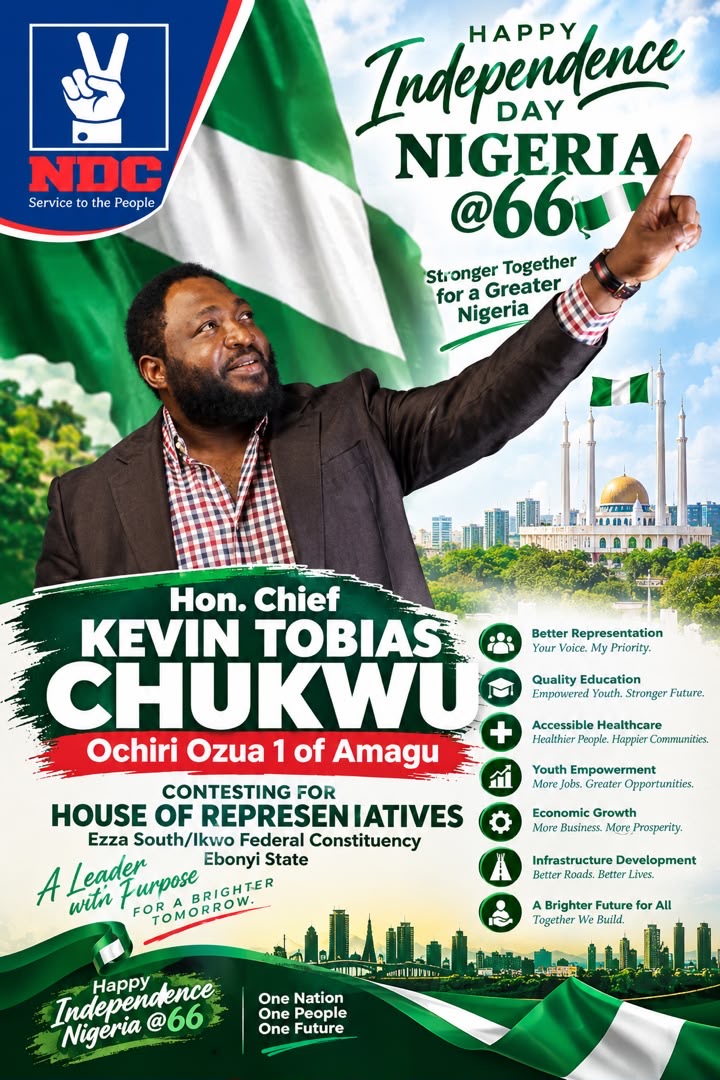
As Nigeria celebrates its 66th Independence Anniversary, the candidate for the House of Representatives seat representing the Ezza South/Ikwo Federal Constituency, Hon. Chief Kevin Tobias Chukwu, has called on Nigerians to remain hopeful and committed to building a better country.
Chukwu, also known as Ochiri Ozua 1 of Amagu Ikwo, made the call in an Independence Day message to Nigerians, particularly the people of Ezza South/Ikwo Federal Constituency and Ebonyi State.
He described the anniversary as not only a moment for celebration but also an opportunity to reflect on the state of the nation and the responsibilities of leaders in building a Nigeria that meets the aspirations of its citizens.
According to him, Nigeria’s journey since independence has been marked by significant challenges, with millions of citizens currently facing economic hardship, while young people continue to search for opportunities and many communities contend with insecurity and uncertainty.
Despite these challenges, the Ebonyi politician said the resilience of Nigerians remained a source of hope for the country’s future.
“I believe in the resilience of our people. I believe in the ingenuity of our youths, the strength of our women, the wisdom of our elders and the determination of ordinary Nigerians who wake up every morning and refuse to give up on this country,” he said.
Chukwu, however, stressed that hope must be matched by responsible leadership, arguing that public office should be viewed as a responsibility rather than a privilege.
He called for leadership that prioritises the protection of lives, creation of economic opportunities, provision of infrastructure, strengthening of institutions and responsible management of national resources.
The candidate also emphasised the need to create an environment where young Nigerians can pursue successful lives within the country and where hard work, merit and enterprise are rewarded.
He said Nigeria had “come too far to surrender to hopelessness,” urging citizens and leaders alike to remain committed to the country’s progress.
“A better Nigeria is still possible, but it will require responsible leadership, accountable institutions and citizens who refuse to give up on their country,” he said.
Chukwu concluded by expressing optimism about Nigeria’s future, declaring: “Nigeria will rise. Nigeria must rise. And together, we must build the Nigeria we deserve.”
He also paid tribute to the nation’s past heroes, praying that their sacrifices would continue to inspire the country.
“May the labour of our heroes past never be in vain,” he said, as he wished Nigerians a happy 66th Independence Anniversary.
By Okey Maduforo, Awka
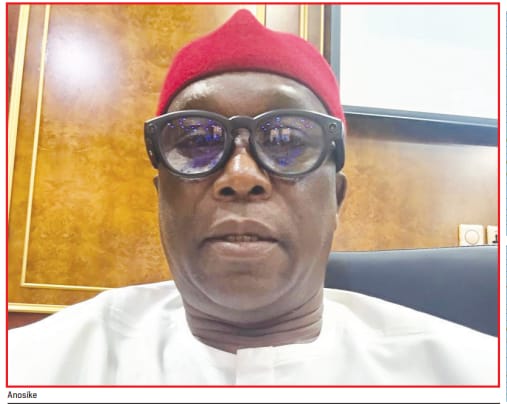
As Nigeria celebrates its 66th anniversary of independence from colonial rule, democracy in the country has continued to evolve and deepen, the Anambra State Chairman of the All Progressives Congress (APC), Senator Emma Anosike, has said.
Anosike made the observation in a message to mark Nigeria’s Independence anniversary, noting that despite the challenges the country had encountered since 1960, its democratic system had continued to improve under successive administrations.
According to him, since the return to democratic rule in 1999, Nigeria has witnessed relatively smooth transitions from one administration to another, while citizens have continued to exercise their fundamental rights to hold governments accountable for their performance.
“Before the return of the democratic process, it was indeed difficult and near taboo to challenge the leadership of the country, and those who may have attempted it in the past faced grave consequences.
“Similarly, we have had smooth transitions from one dispensation to another, producing five presidents through the ballot and not through the barrel of the gun. These elected presidents were produced by different political parties.”
Anosike said the administration of President Bola Ahmed Tinubu had sustained the country’s democratic principles and created an avenue for Nigerians, irrespective of tribe, race or religion, to express their views on government policies and programmes.
“Under the stewardship of President Bola Ahmed Tinubu, Nigerians have been enjoying the freedom to express themselves over issues, policies and programmes of government, and those expressions have been shaping and guiding the administration of Mr President,” he said.
The APC chairman said Nigeria’s 66th independence anniversary provided an opportunity for citizens to reflect on the country’s journey as a nation and the progress made since independence.
He said President Tinubu’s Independence Day broadcast had offered another opportunity for Nigerians to renew their hope for a greater and more prosperous country.
Anosike also commended what he described as the “enormous infrastructural development” taking place across the country under the Tinubu administration.
He urged Nigerians to continue to support and have faith in the administration as the country approaches the 2027 general elections.
An Elder Statesman, Chief Hycienth Ngwu, has called on political leaders and policies formulators to ensure governmental policies and programmes directly touch lives of the people and reduce hardship in the country.
Ngwu, who is a prominent community leader in Enugu, urged Nigerians to maintain peace within neighbourhoods and communities, as no meaningful development can take place without peace.
The statesman made the call on Thursday in Enugu while reacting to the developmental efforts of Nigeria at its 66th Independence.
He said that previous and present administrations had put in place policies and programmes to reset the socioeconomic fabric of the nation.
Ngwu said that while the removal of fuel subsidy, and unification of the foreign exchange had good intentions, their impact is yet to reflect on the lives and livelihoods of vast majority of Nigerians.
He urged leaders to ensure that public resources were properly managed while citizens remained patient with reforms aimed at improving the socioeconomic status of the country.
The elder statesman noted that at 66th independence, the country was still struggling on keeping its peace and co-existence as a country; adding that the founding leaders of Nigeria envisaged a closely united, bonded and peaceful country.
He called for return to policies that promote local production, indigenous industries and entrepreneurship, arguing that excessive dependence on imports had continued to weaken the country’s productive capacity.
According to him, we are yet to achieve economic independence even as we needed to do more on non oil revenue earns as the greater part of the world is moving towards greener and clean energy.
“Greater emphasis should be on skills acquisition, creativity and entrepreneurship education system, as academic qualifications without practical skills could leave graduates dependent on scarce white collar jobs.
“We ought to be economically productive nation capable of producing and exporting goods while developing its human capital,” he said.
Ngwu noted that current insecurity and social instability could be partly attributed to poverty and ignorance, while calling for greater honesty and trust between leaders and citizens.
“Corruption, tribalism and selfishness must be addressed if Nigeria is to achieve peace and lasting progress,” he added.
He also called for the scrapping of state electoral commissions as they have not helped in deepening democracy at that level. The National Election body should take over that responsibility.

As Nigeria marks its 66th Independence Day, Macmaduson Concepts Limited, a leading provider of HVACR,industrial parts, sensors, electrical and plumbing materials, has extended warm Independence Day greetings to its customers, clients and business partners across the country.
In a goodwill message to mark the occasion, the company expressed appreciation to its valued customers for their continuous support, trust and partnership over the years.
Macmaduson Concepts Limited, which specialises in HVACR,Industrial Materials, sensors, air-conditioners, refrigerators, cold rooms, chillers, refrigerants, electrical materials and plumbing materials, said the occasion provides an opportunity to celebrate Nigeria and reflect on the nation’s journey.
The company wished Nigeria continued growth, unity, peace and prosperity, while expressing hope for a brighter future for all Nigerians.
The message from the company reads in part:
At Macmaduson Concepts Limited, we celebrate our great nation, Nigeria, and appreciate our valued clients for their continuous support, trust and partnership. May Nigeria continue to grow in unity, peace and prosperity.”
The company concluded its Independence Day message with the theme: “One Nation, One People, A Brighter Tomorrow.”
Happy Independence Day, Nigeria!
Happy 66th Independence Anniversary from Macmaduson Concepts Limited.

-
 Business5 days ago
No Bad Blood Over New Cement Factories, But Our Mining Rights Run Till 2045 — Ibeto Tells Ebonyi Govt
-

 Sports5 days ago
Enugu Speaker’s boxing talent hunt unearths 5 budding stars
-
News5 days ago
Nigeria at 66: Macmaduson Concepts Limited Sends Independence Day Greetings to Clients
-
 News5 days ago
66th Independence: Elder statesman wants policies to reduce hardship, calls for peace
-
 Politics5 days ago
Ebonyi Guber: ‘Our People Deserve Better Government,’ Odii Insists
-
 News4 days ago
Nigeria @66: Democracy Evolving, Says Anambra APC Chairman Anosike
-
 News4 days ago
Nigeria at 66: Ebonyi Reps Candidate Urges Nigerians to Keep Hope Alive
-
 News2 days ago
Sacked Works Commissioner: Release or Charge Him to Court, Oganiru Izzi Challenges Nwifuru