


Politics
June 12: IBB’s regrets annulling MKO Abiola’s victory belated – Afenifere

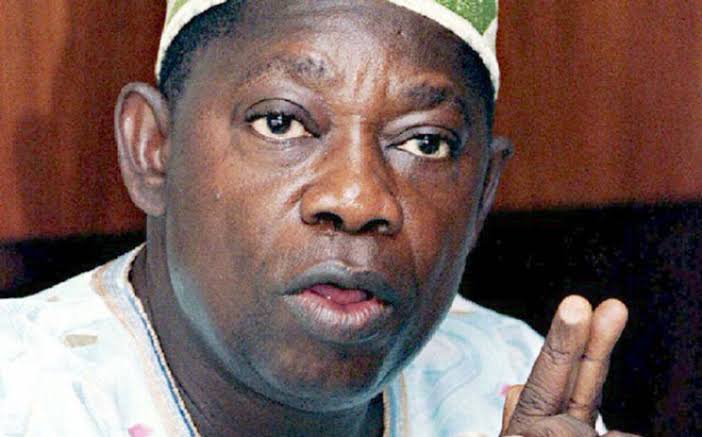

In the concluding section of the 12th chapter of his autobiography launched Thursday in Abuja, titled, ‘A Journey In Service,’ the former leader described the annulment of the election as an “accident of history.”
His remorse, however, attracted knocks and reactions from various individuals and pro-democracy groups, including the Afenifere, Coalition of Northern Groups, former Ogun State governor, Segun Osoba, Mike Ozhekome (SAN), and other prominent Nigerians.
However, the Abiola family was silent on IBB’s admission. Calls to Abiola’s children, including Hafsat and others, did not elicit any response.
The June 12, 1993, election, won by the businessman and politician, Abiola, was considered Nigeria’s freest and fairest.

However, Babangida annulled the results, citing concerns over national security.
The annulment sparked nationwide protests and political unrest, forcing Babangida to resign and leading to a prolonged struggle for democracy before the return to civilian rule in 1999.
Admitting his error, the ex-military leader said, “Although I am on record to have stated after the election that Abiola may not have won the election, upon deeper reflection and a closer examination of all the available facts, particularly the detailed election results…there was no doubt that MKO Abiola won the June 12 election.
“Upon closer examination of the original collated figures from the 110,000 polling booths nationwide, it was clear that he satisfied the two main constitutional requirements for winning the presidential elections, mainly majority votes and geographical spread, having obtained 8,128,720 votes against Tofa’s 5,848,247 votes and securing the mandatory one-third of the votes cast in 28 states of the federation, including Abuja.”
Nonetheless, Babangida noted that Abiola would have been eliminated all the same had he assumed the Presidency.
“Unfortunately, the forces gathered against him after the June 12 elections were so formidable that I was convinced that if he became President, he would be quickly eliminated by the same very forces who pretended to be his friends,” he added.
Speaking at the official launch of his autobiography and fundraiser for the IBB Presidential Library in Abuja, Babangida acknowledged that credible, free and fair elections occurred on June 12, 1993.
He observed, however, that the administration responsible for creating a near-perfect electoral system and overseeing those exemplary elections could not finalise the process.
He described this shortfall as a lamentable “accident of history” while noting that the nation was justifiably owed an expression of his remorse.
“Undoubtedly credible, free and fair elections were held in June, on June 12, 1993. However, the tragic irony of history remains that the administration that devised a near-perfect electoral system and conducted those near-perfect elections could not complete the process.
“That accident of history is most regrettable. The nation is entitled to expect my impression of regret,” said Babangida.
Accepting full responsibility for all decisions made during his leadership of the military government, the former Nigerian leader further noted that the events of June 12 unfolded on his watch, with errors, oversights and misjudgements occurring rapidly.
Nevertheless, he maintained that each action was taken in the overriding interest of Nigeria’s survival.
He also expressed regret that the country’s democratic progress was interrupted, yet emphasised that both Nigeria and its democracy endure.
“As a leader of the military administration, I accept full responsibility for all decisions taken under my watch. And June 12 happened under my watch; mistakes, oversights and missteps happened in quick succession, but I say in my book, in all matters, we acted in the supreme national interest so that Nigeria could survive.
“Our nation’s march to democracy was interrupted, a fact I deeply regret. But Nigeria’s democracy is still alive, a testament to commitment,” he noted.
While reviewing the book, former Vice President Yemi Osinbajo revealed that Babangida found the 1993 election arguably the most challenging chapter of his life.
“The June 12 elections were the most challenging of my life. If I have to do it all over again, I’ll do it differently,” Osinbajo said, quoting a section from the book.
The former vice president also quoted Babangida in the book as thanking former President Muhammadu Buhari for honouring MKO Abiola with the Grand Commander of the Federal Republic, the highest rank of the president of the country.
The book, which offers insights into key moments in the country’s history, also addresses other national controversies, including the 1976 coup attempt that led to the assassination of then-Head of State, Murtala Muhammed, and the 1986 letter bomb that killed investigative journalist, Dele Giwa.
While denying any involvement in Dele Giwa’s death, Babangida said he expected the truth to be unravelled one day.
He said, “The Giwa, like all mysterious murders, has remained unsolved after so many years. I keep hoping it will be uncovered in our lifetime or after us. More often than not, mysterious crimes are solved long after their commission.
“When the Obasanjo civilian administration reopened the Giwa case at the Oputa Panel on Human and Civil Rights, I expected that the police and lawyers would come forward with new evidence as to their findings on the Giwa murder over the years. Nothing of such happened.”
The IBB book launch drew an elite gathering of past and present leaders who reflected on his legacy and the state of democracy in West Africa.
Discussions ranged from Babangida’s contributions to Nigeria’s political history to concerns over the resurgence of military coups in the region.
In his keynote address, former Ghanaian President Nana Akufo-Addo emphasised the importance of multi-party democracy in Africa’s development.
He warned against the growing wave of military takeovers, calling them a setback to democratic progress.
“Multiple parties are good for our continent,” Akufo-Addo said, urging leaders to protect democratic institutions.
President Bola Tinubu praised the former leader for his “unparalleled contributions to national unity and economic growth.”
Tinubu pledged, as President, to continue making decisions—no matter how difficult—in the supreme interest of the nation, following the example set by Babangida.
“I’m glad about the revelation on June 12…I’m not here to read a speech; I’m here to pay homage and say thank you for everything, for who you are, what you are, and what you have contributed to the history of this great country.
“All I can promise as the President is to strive to do the best, put the best forward, and make decisions, no matter how difficult they are, in the interest of the country.
“You have done so, and you have laid the example. Thank you very much,” he stated.
Former Nigerian Head of State, Gen Yakubu Gowon (retd.), lauded Babangida’s rise from aide-de-camp to head of state, describing him as a “boss of bosses.”
Gowon also expressed gratitude for Babangida’s decision to restore his rank of General after it was stripped following the 1976 coup.
The former head of state said, “Thank you for restoring my rank,” reflecting on how Babangida’s leadership impacted his life.
Another former military head of state, Gen Abdulsalami Abubakar, shared personal anecdotes about his long-standing relationship with Babangida which, he said, spans over 80 years.
Abubakar recalled a childhood prophecy foretold Babangida’s rise to power and commended him for documenting his life’s journey.
“Your memoir will enrich the country,” he stated.
For his part, former President Goodluck Jonathan described Babangida as one of Nigeria’s most charismatic leaders and called for the creation of presidential libraries to preserve the country’s political history.
“IBB brought us here today to celebrate his book and library. His home has become somewhat of a pilgrimage site,” Jonathan noted.
Representing immediate-past President Muhammadu Buhari, ex-Minister of Transportation, Jaji Sambo, delivered a congratulatory message, expressing hope that Babangida would continue offering valuable counsel to Nigeria’s leadership.
Reacting to IBB’s admission on the June 12, 1993 election, the pan-Yoruba political organisation, Afenifere, described it as belated and insufficient to address its far-reaching consequences.
In a statement by its Organising Secretary, Kole Omololu, the group asserted that Babangida’s acknowledgement of the election’s credibility did not absolve him or his associates of the monumental and irreversible damage caused by the annulment.
“His belated acknowledgement that the election was indisputably free, fair, and credible merely reaffirms what Nigerians have known for over three decades—that Chief Moshood Kashimawo Olawale Abiola was the rightful winner of that historic election,” Omololu said.
“It does not restore the lives lost, nor does it atone for the enduring scars of oppression, bloodshed, and the suppression of democracy. The consequences of that reckless annulment remain irreversible.
“The Yoruba nation, and indeed all Nigerians, bore the brunt of Babangida’s self-serving power grab. His decision plunged the country into chaos and ushered in an era of state-sponsored terror against democracy activists, pro-democracy media, and innocent citizens who dared to demand justice,” it stated.
The group pointed to the monumental consequences of IBB’s annulment, including the assassination of Kudirat Abiola, the cold-blooded murder of Alfred Rewane, and the relentless persecution of Pa Abraham Adesanya, among others, which it said, remained an indelible stain on Nigeria’s conscience.
“Many distinguished Yoruba sons and daughters suffered grave injustices—exiled, imprisoned, or tragically eliminated—under the despotic military regimes of Babangida and Abacha, which were determined to silence the will of the people,” it added.
Afenifere reiterated its demand that all privileges and recognitions befitting a legitimately elected President be conferred on the late MKO Abiola.9
The group also emphasised that his family should be accorded the honour and recognition deserved by a leader whose mandate was unjustly stolen.
“We reiterate our unequivocal demand that his (Abiola’s) name must be inscribed in the annals of Nigeria’s history, not as a mere political casualty but as the rightful President-elect who was denied the opportunity to serve.
“Anything short of this remains a continued affront to justice and historical truth.
“Afenifere salutes MKO Abiola as a towering symbol of courage, a visionary whose unwavering commitment to democracy was matched only by his willingness to make the ultimate sacrifice for the emancipation of his people.
“Babangida’s so-called remorse rings hollow, for true atonement is measured not by words but by actions. His admission, far from being redemptive, serves only as a reminder of the grievous wrongs that remain unaddressed,” Afenifere said.
A former Secretary to the Government of the Federation, Chief Olu Falae, waived off IBB’s remorse, stating that he said nothing new.
Falae, who recalled how he was incarcerated for two years for fighting to uphold Abiola’s mandate, stated, “We formed NADECO to fight for the fact that Abiola won the election and should be declared president. I was detained for two years for fighting that cause.
“We gave the military an ultimatum to hand over Abiola’s mandate, but they started arresting us. I was kept in detention for two years. What he said is nothing new—we have always known and believed that Abiola won the election.”
A chieftain of the National Democratic Coalition, Ayo Opadokun, also dismissed the ex-Nigerian leader’s admission, describing it as unsurprising.
According to Opadokun, it was already evident to him and many Nigerians that Abiola won the election.
Speaking on the consequences of Babangida’s decision, Opadokun said he was more interested in reading Babangida’s autobiography to understand the circumstances the former president claimed led to the annulment of the historic election.
“The fact that he admitted that Abiola won the election does not bring any new revelation. We had the documents immediately after the election; we knew that Abiola won,” Opadokun said.
“What matters now is the context of his admission. I want to read the book and see what Babangida is admitting and in what context. I watched him express regret over annulling the election, but that no longer holds any significance to me because of the monumental consequences of his actions, consequences that he is now regretting 32 years later,” he noted.
But the Coalition of Northern Groups praised the former military leader for having the courage to own up to his faults over the annulment of the June 12 presidential election.
The CNG, in a statement by its National Coordinator, Jamilu Charanchi, described Babangida as an exemplary leader who distinguished himself by taking responsibility for his decision.
“It clearly shows that IBB is an exemplary leader who distinguished himself from so-called leaders who shy away from taking responsibility for decisions made by their cabinet,” Charanchi said.
He also noted that Babangida’s statement reaffirmed his commitment to the unity and progress of the country.
Charanchi said, “It clearly shows that IBB is an exemplary leader who distinguished himself from the so-called leaders that shy away from taking responsibility for the decisions taken by their cabinet.
“It equally reaffirms his commitment to the unity and progress of the country, and we believe that they took the decision for the best interest of the country, he is a true and patriotic leader who leads with a philosophy of messengers of God.”
Former governor of Ogun State, Osoba, said Abiola would be “laughing his head off in heaven” following the confession by the former military president.
Osoba said he had always been a firm believer that time heals every situation.
He said, “Time is healing the wounds of the situation created by the military regime. On my part, I keep thanking God for the life of MKO Abiola whom I work for to win the June 12 election. Even the man himself will be happy in heaven now.
“He has left a legacy by paying the supreme price for the democracy we are enjoying today. So what is more important to me is the legacy he left behind.”
On whether he is certain time will indeed heal all the anger, trauma and deaths recorded in the wake of the annulment, Osoba responded, “I am not a prophet. I should not be guessing for anybody (on how they feel). As far as I am concerned, God is working His wonders.
“You know we were all friends. All of us, including Babangida, myself, MKO Abiola and those who were involved in the whole thing. We were all deeply close. So, as I said, MKO will be in heaven laughing at all of us and enjoying the whole thing.”
Former Governor of Plateau State, Jonah Jang, commended Babangida for admitting that Abiola won the election and expressing regrets for annulling it.
In an interview in Jos, on Thursday, Jang praised Babangida’s honesty, stating, “I want to thank Babangida for owning up to that fact of what he did and it shows we are making progress as a country where we can tell ourselves the truth.”
Jang believed Babangida’s admission would help heal old wounds, saying, “I believe that will finally close some wounds that have long been open.”
The former governor also emphasised that the government should provide adequate compensation to the family of MKO Abiola, considering the government’s continuity.
“Since the government is a continuum, the MKO family should be adequately compensated,” Jang, who spoke through his Media Consultant, Clinton Garuba, said.
Speaking on the development, Ozekhome (SAN), said, I have read and listened carefully to General Ibrahim Gbadamosi Babangida’s remorse and regret over the annulment of the 1993 presidential elections.
“I want to very quickly say that it takes a man with strong guts and a man who has become born again and has seen the face of God to publicly recount his earlier deed and offer apologies to the entire nation to heal and mend wounded hearts.
“I want to salute Babangida for owning up like a man that everything that happened during the June 12 crisis happened under him as the head of state and the president. He was also the Commander-in-Chief of the Armed Forces.
“I salute him for acknowledging that his government held unarguably the freest, fairest and most credible election in the electoral calendar in the electoral history of Nigeria which introduced option A4 from electoral books that were never known to Nigeria or the world.
“I believe that Nigerians should forgive him because to err is human and to forgive is divine. I personally have now forgiven him, because the June 12 crisis threw up all manner of challenges where, in my very youth, in my thirties, I found myself marching on the street of Lagos every day from Ikeja bus stop roundabout to Ikorodu road, up to Tejuosho market from there to Surulere to Mushin to Shomolu. Every day we were on the streets protesting the annulment.”
Another Senior Advocate of Nigeria, Wahab Shittu, welcomed the public expression of regret by the former military leader, saying it was a necessary admission that a grave injustice had been done to the Nigerian nation.
“That is an admission that, at some point in time, a wrong was committed against the Nigerian nation, against our democracy. Having expressed his regret, he should be forgiven, and the Abiola family should be compensated,” Shittu said.
A former President of the Committee for the Defence of Human Rights, Malachy Ugwummadu, said Babangida’s regret over the June 12 annulment “was good for the health and sanity of the country to find closure.”
He expressed concerns over the narrative presented in the book and the General’s apology, saying it was a failed attempt to rewrite the history of Nigeria.
At the book presentation, the President and Chief Executive of Dangote Industries Limited, Aliko Dangote, praised Babangida for implementing policies that liberated the private sector in Nigeria during his regime.
Africa’s wealthiest man donated N8bn to the IBB Presidential Library, to be paid at N2bn annually over the four years allocated for the project’s completion.
He further pledged that if the project extends beyond this timeframe, he would continue to donate N2bn annually until it is finished.


A former spokesperson of the Pan Niger Delta Forum (PANDEF), Chief Anabs Sara-Igbe, has called on the Department of State Services (DSS) and the Economic and Financial Crimes Commission (EFCC) to arrest and investigate the Minister of the Federal Capital Territory (FCT), Nyesom Wike, over his reported pledge of N10 million to each of Rivers State’s 319 councillors for delivering their respective wards to President Bola Tinubu in the 2027 general election.
Sara-Igbe described the alleged pledge as a threat to the integrity of Nigeria’s electoral process, insisting that Wike’s position as a serving minister should not shield him from investigation.
Wike, a former governor of Rivers State, reportedly made the promise during a media chat last week, urging the councillors to ensure that President Tinubu wins their respective wards in the 2027 elections in exchange for N10 million each.
With 319 councillors representing the state’s 319 wards across 23 local government areas, the proposed financial commitment would amount to N3.19 billion if fully implemented.
Speaking in an interview with The Southern Examiner, Sara-Igbe questioned why the FCT Minister had not been invited for questioning by security agencies and the Independent National Electoral Commission (INEC) over the reported statement.
He argued that the alleged pledge raised serious concerns about compliance with electoral laws, particularly provisions relating to financial inducements and electoral malpractice.
“We are not in a banana republic where anything goes, no laws. Our security personnel must prove to Nigerians and the entire world that our laws are not implemented haphazardly, depending on who is involved,” he said.
The Kalabari elder also criticised INEC for what he described as its silence over the matter, insisting that electoral regulations must apply equally to all Nigerians, regardless of their political influence or official positions.
Sara-Igbe, who acknowledged that Wike was once his close associate, said Nigeria’s democracy could only develop when citizens rejected injustice, unfairness and inequality.
He warned that political statements capable of encouraging financial inducements could undermine public confidence in the electoral process.
“Utterances such as the one Wike spewed out from his mouth could truncate our hard-won democracy and expose our nation to public ridicule. This is why the matter should not be swept under the carpet. Wike must be made to pay for such an unguarded statement,” he added.
Meanwhile, Sara-Igbe denied allegations that he was involved in instigating the renewed political disagreement between Wike and Rivers State Governor, Siminalayi Fubara.
He also dismissed claims that his position was motivated by ethnic considerations, maintaining that his disagreement with Wike was based on political principles and what he described as the need to protect Rivers State’s interests.
He accused Wike and his supporters of attempting to undermine Fubara’s administration, arguing that the governor should be allowed to exercise his constitutional mandate without undue political interference.
Sara-Igbe further disclosed that his political position informed his decision to support the presidential candidate of the Nigeria Democratic Congress (NDC), Peter Obi, and the party’s Rivers State governorship candidate, Chief Dumo Lulu-Briggs, ahead of the 2027 elections.
He described Lulu-Briggs as a candidate with the capacity to pursue economic development in the state, highlighting proposals to decongest Port Harcourt, develop other urban centres such as Ahoada, Omoku and Bori, and harness Rivers State’s tourism potential.
He also criticised the Rainbow Coalition over what he described as the introduction of ethnic considerations into the search for an APC governorship candidate in Rivers State.

The Independent National Electoral Commission (INEC) has fixed November 28, 2026, for a nationwide mock accreditation and voting exercise ahead of the 2027 general elections.
The exercise is aimed at testing upgrades to the commission’s Bimodal Voter Accreditation System (BVAS) and electronic results transmission ahead of the polls.
The development comes as INEC disclosed that it had commenced the distribution of non-sensitive election materials to some states in preparation for the 2027 general elections.
INEC Chairman, Prof. Joash Amupitan (SAN), announced the planned mock exercise on Thursday during a dialogue at Chatham House in London.
The event, organised in partnership with the Kimpact Development Initiative, was themed, “Nigeria’s 2027 Elections: Democratic Trajectory and Regional Stability Beyond the Ballot.”
According to a statement issued in Abuja and signed by the Chief Press Secretary and Media Adviser to the INEC Chairman, Adedayo Oketola, Amupitan said the exercise would simulate the presidential election and enable the commission to assess the efficiency of its accreditation and electronic results transmission systems.
“On the 28th of this month, we will conduct a mock accreditation and voting exercise across all states of the federation to simulate the presidential election and verify that we have gotten both accreditation and electronic result transmission right,” the INEC chairman said.
Amupitan also disclosed that the commission had introduced additional technical safeguards to prevent inaccurate polling unit results and figures indicating over-voting from being uploaded to its Result Viewing Portal.
He said the measures were part of efforts to strengthen the credibility, transparency and reliability of the electoral process ahead of the 2027 general elections.
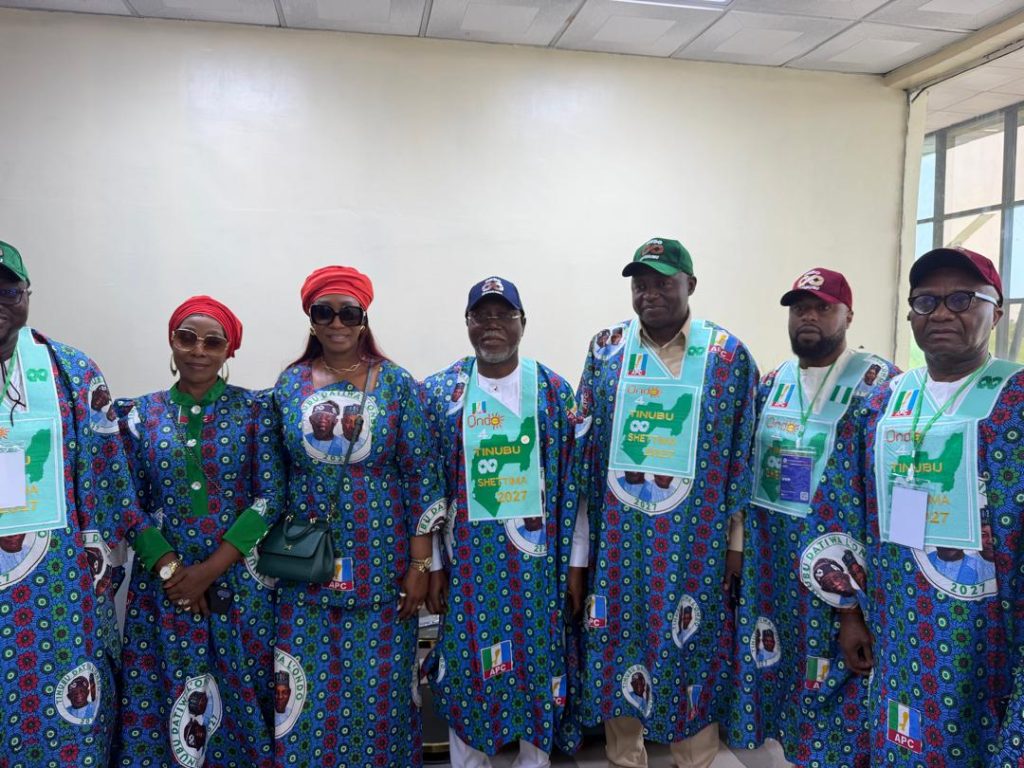
The Deputy National Organising Secretary of All Progressives Congress, Chief Emeka Okafor Esq, has called on Voters of Igbo Extraction living in Ondo State to come out in their numbers and vote massively for APC and President Bola Ahmed Tinubu on 16th of January 2026.
Chief Emeka Okafor made the call in Akure during the All Progressives Congress Presidential Campaign Rally which took place in Akure, Ondo state.
The Deputy National Organising Secretary stated that South East and Ndi Igbo have benefitted massively from the administration of President Bola Ahmed Tinubu and All Progressives Congress. He opined that President Bola Ahmed Tinubu meant well for the Country and the President’s reform is yielding the necessary results.
Barr Emeka Okafor stated that Ndi Igbo has always been part of National Party. “Being with the Party at Centre has always been beneficial to Ndi Igbo and 2027 will not be an exception. He urged Igbo Voters in Ondo to support APC and Mr President’s re-election bid.
The chieftain also urged stakeholders to support all APC candidates for the National and State Assemblies in the forthcoming elections, saying party members must work hard to deliver the desired results.
Barr Okafor made the appeal as He joined the Vice President Kashim Shettima, Senator Abdulaziz Yari, other APC leaders and stakeholders at the party’s campaign rallies in Akure, the Capital of Ondo state.
The Independent National Electoral Commission (INEC) has cautioned political actors against the use of the controversial slogan, “Rig and Die”, ahead of the 2027 general elections, warning that such inflammatory rhetoric could trigger electoral violence and endanger innocent lives.
The Commission also warned that electoral officials, including ad hoc staff, who compromise the integrity of elections would face prosecution in accordance with the law.
INEC National Commissioner and Chairman of its Information and Voter Education Committee, Mohammed Kudu Haruna, gave the warnings during a media engagement forum for journalists and media executives from the South-East, South-South and South-West geopolitical zones held in Enugu.
Haruna expressed concern over the increasing use of inflammatory political statements and threats, noting that such utterances could put the lives of presiding officers, electoral ad hoc personnel, party agents and election observers at risk.
He urged political parties and their supporters to embrace peaceful participation, stressing that grievances arising from election outcomes should be addressed through established legal channels, including INEC, security agencies and the courts, rather than through violence.
The National Commissioner also called for stronger collaboration between INEC and the media to promote credible, peaceful and transparent elections in 2027.
He described the media as an indispensable partner in the electoral process, noting that public confidence in elections depended largely on accurate, balanced and professional reporting.
Haruna warned journalists against publishing unverified results, manipulated videos, misleading projections and sensational political narratives capable of misleading the public and undermining confidence in the electoral process.
He specifically cautioned against premature result announcements, insisting that only INEC, through its duly appointed returning officers, had the authority to declare election results.
“Results are declared only by the Commission through its duly appointed returning officers. Projections and unofficial figures must be clearly labelled as such,” he said.
He further advised media organisations to verify allegations against the Commission through appropriate channels before publication and exercise caution when reporting electoral incidents.
Haruna also advocated inclusive election coverage, urging journalists to give adequate attention to women, youths and persons with disabilities, particularly the challenges affecting their participation in the electoral process.
He encouraged media organisations to intensify voter education on Permanent Voter Cards (PVCs), accreditation procedures, electronic transmission of results and peaceful participation.
Journalists Urged to Uphold Professional Ethics
In a separate presentation on ethical and professional standards in election reporting, resource person, Mr Osaretin Imahheyierobo, urged journalists to familiarise themselves with the Electoral Act 2026, INEC’s election coverage guidelines and the Nigerian Broadcasting Code.
He expressed concern that some journalists covering elections were not sufficiently conversant with the legal and regulatory frameworks governing electoral reporting.
Imahheyierobo urged media organisations to establish dedicated election desks, develop editorial guidelines and strengthen fact-checking mechanisms ahead of the 2027 polls.
He also stressed the need for journalists to understand INEC’s technological innovations, particularly the Bimodal Voter Accreditation System (BVAS) and the INEC Result Viewing Portal (IReV), to ensure accurate reporting of accreditation, voting and result-management processes.
He warned media practitioners against compromising professional ethics for financial inducements, commonly referred to as brown envelopes. He maintained that political candidates should be subjected to objective scrutiny rather than having their claims and manifestoes amplified without proper examination.
The resource person also called for equitable media coverage of all political parties and candidates, noting that voters relied on credible information to make informed electoral decisions.
Earlier, the Enugu State Resident Electoral Commissioner (REC), Dr Chukwuemeka Chukwu, disclosed that INEC had received approximately 35,000 Permanent Voter Cards for distribution across the state’s 260 wards.
He appealed to journalists to support public enlightenment campaigns to ensure that eligible voters collected their PVCs ahead of the 2027 general elections.
Chukwu described the media as a strategic partner in voter education, public opinion formation and institutional accountability, warning that misinformation could erode public confidence in the electoral process.
While acknowledging the media’s independence and watchdog responsibilities, the REC urged journalists to uphold accuracy, objectivity, fairness and professionalism in their coverage of electoral activities.
He assured stakeholders that the Commission remained committed to conducting credible, transparent, inclusive and peaceful elections in 2027, adding that it was open to constructive criticism and recommendations from media practitioners.
NUJ Raises Concerns Over Election Logistics
In his remarks, the Chairman of the Nigeria Union of Journalists (NUJ), Enugu State Council, Comrade Obinna Ogbuka, commended INEC for organising the engagement but regretted that the initiative had not commenced early enough to accommodate more journalists before the election cycle gathered momentum.
Ogbuka also raised concerns over the apparent lack of adequate budgetary provisions for journalists’ logistics during election assignments, stressing that media practitioners required sufficient support to perform their duties effectively.
He further called on INEC to take deliberate steps to rebuild public confidence in the Commission ahead of the 2027 elections.
Participants at the engagement commended INEC’s preparations but urged the Commission to address weaknesses observed in previous elections, particularly the technical challenges that affected the electronic transmission of results during the 2023 presidential election.
They also called on INEC to recognise journalists as critical stakeholders in the electoral process and involve them more meaningfully in its preparations for the 2027 general elections.

Minister of the Federal Capital Territory (FCT), Nyesom Wike, has defended his promise to reward councillors with ₦10 million each for delivering their respective wards ahead of the 2027 general elections, insisting that the offer is a reward for political commitment and not an attempt to buy votes.
Wike made the clarification on Tuesday during an inspection tour of ongoing infrastructure projects in Abuja, dismissing criticisms of the proposed incentives.
He argued that rewarding political mobilisers for their hard work and electoral performance should not be confused with inducing voters to influence election outcomes.
The minister had reportedly pledged ₦10 million to each councillor who successfully mobilises support and delivers their ward, a promise that sparked concerns over the possibility of vote-buying ahead of the 2027 general elections.
Responding to the criticism, Wike said he never instructed the councillors to share money among voters in exchange for their votes. Rather, he challenged them to demonstrate commitment and deliver the expected electoral results.
“I didn’t tell them, ‘Take this money and go and buy votes.’ I said, ‘Go and work. Show commitment. Demonstrate that you really mean what you are talking about. When you win, come and we are going to reward you,’” he said.
To justify the offer, Wike compared the proposed political incentive to rewards given to athletes who win international competitions, arguing that such promises motivate people to achieve outstanding results.
He cited instances where athletes are promised houses and other benefits for returning from competitions with trophies, questioning why similar incentives in politics should automatically be considered bribery.
The FCT minister also faulted sections of the media for what he described as their failure to distinguish between legitimate performance-based rewards and vote-buying.
He argued that political parties and candidates routinely spend money on campaign advertisements without attracting similar criticism.
Wike challenged journalists to examine the distinction between financial inducements intended to influence voters and rewards promised to political organisers for meeting mobilisation targets.
Meanwhile, the minister expressed satisfaction with the progress of ongoing infrastructure projects in Abuja, including Interchange Section 2 (ISEX 2), the Southern Parkway and the S1 Road, which incorporates a fire station.
He said the projects were expected to be completed by December 15, ahead of the January 16, 2027 general elections.
Wike further argued that the infrastructure achievements of President Bola Tinubu’s administration would provide a strong basis for its re-election campaign.
He maintained that his support for Tinubu was driven by the administration’s development agenda rather than party affiliation, insisting that Nigerians who genuinely desire progress should support policies and programmes aimed at national development.


-
Politics4 days ago
Wike Defends ₦10m Reward for Councillors, Insists It Is Not Vote-Buying
-
 Health4 days ago
Enugu Shuts Down Four Illegal Private Hospitals, Warns Operators Against Unsafe Practices
-

 Entertainment5 days ago
Mbah Appoints Nollywood Actress Destiny Etiko as Senior Special Assistant
-
 Crime2 days ago
Tragedy At UNN As Six Fresh Graduates Are Found Dead In Nsukka Apartment
-
 News5 days ago
US Lecturer Alleges Tinubu Never Attended Chicago State University
-
 Sports5 days ago
Toxic Politics: NFF Officials Block Peter Obi From Greeting Flamingos
-
Politics4 days ago
2027 Elections: INEC Raises Alarm Over ‘Rig And Die’ Slogan, Warns Of Impending Violence
-
Politics1 day ago
2027: INEC Fixes November 28 For Nationwide Mock Presidential Election