



News
Budget: Ex-presidents, former VPs, others get N13.8bn upkeep allowance

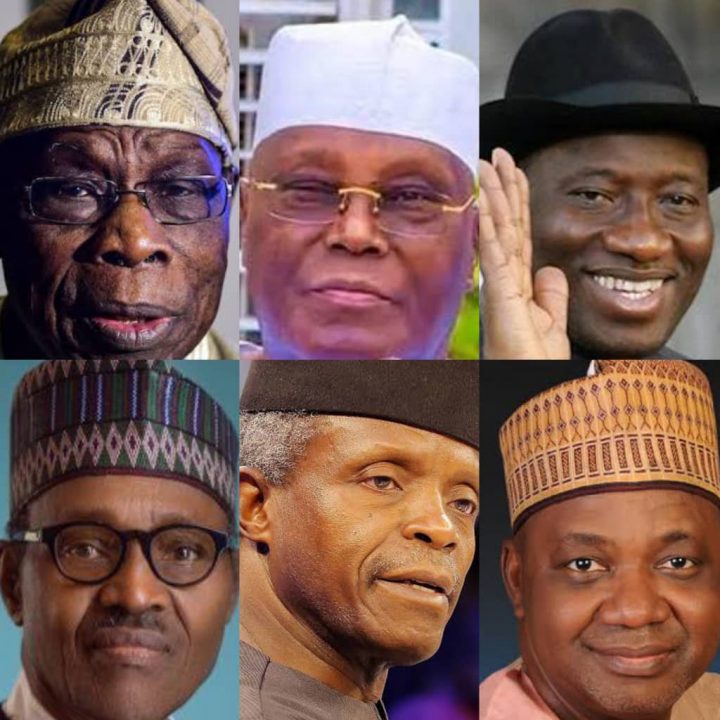

The Federal Government has earmarked a total of N13,805,814,220 for the upkeep of former presidents, vice-presidents, heads of state, Chiefs of General Staff, retired heads of service, permanent secretaries, as well as retired heads of government agencies and parastatals in the 2024 fiscal year.
The beneficiaries include former Presidents Olusegun Obasanjo, Goodluck Jonathan and Muhammadu Buhari, as well as ex-vice-presidents Atiku Abubakar, Namadi Sambo and Prof Yemi Osinbajo.
Also expected to benefit from the windfall are ex-military Heads of State, General Yakubu Gowon and General Abdusalami Abubakar, as well as a former dictator and self-styled military President, General Ibrahim Babangida, and a former Chief of General Staff, Commodore Ebitu Ukiwe (retd.).
Also, N1tn was provisioned for the public service wage adjustment for government Ministries, Departments and Agencies (including arrears of promotion and salary increases, and payment of severance benefits and minimum wage-related adjustments).
A breakdown shows that the entitlements of former presidents/heads of states and vice-presidents/chief of general staff will cost N2.3bn, while N10.5bn is proposed as benefits for retired heads of service, permanent secretaries and professors.

The payment of severance benefits to retired heads of government agencies and parastatals is proposed to cost N1bn.
Other allocations include N65bn for the Presidential Amnesty Programme for the reintegration of transformed ex-militants; N1bn for the Office of the Presidential Adviser on Energy; and N108bn for unnamed special projects.
The government is also proposing the sum of N40bn to offset electricity debts owed power distribution companies by all MDAs.
The item listed as ‘Settlement of MDAs’ electricity debts’, was contained in the sectoral allocation details released by the Chairman, Senate Committee on Appropriations, Solomon Adeola.
According to Adeola, the details of the budget have been released to allay the fears of lawmakers and Nigerians.
He noted that the details had been circulated to allow lawmakers to study and see the allocations TO various sectors.
The Executive Director, Association of Nigerian Electricity Distributors, Sunday Oduntan, in January 2022 revealed that all the Federal Government MDAs and the military owed the electricity distribution companies at least N90bn.
He said though discussions were ongoing as regards settlement, the debt had continued to pile up over the years since the power sector was privatised in November 2013.
He said, “All MDAs’ debt is more than N90bn and the military is part of that. We came on board in 2013 and since then, how much has been paid by the MDAs?
“There was a time when a former minister of power said they (the government) had concluded arrangements on how to settle the debt, but as I speak with you, the bills are still unpaid. Since privatisation, there have been issues around the MDAs’ debt.”
Though the government budgeted N27bn in 2022 and N40bn in 2023 for the settlement of the debt, it is unclear if it made payments to the Discos.
The ministries of Works, Finance, Education and Defence and others got lion’s shares of the N8.7tn capital component of the N27.5tn 2024 budget as contained in sectoral allocation details.
In the proposed budget, the Ministry of Works is allocated N521.3bn, followed by the Ministry of Finance with N519.9bn, while N308.2bn is earmarked for the Ministry of Defence.
Similarly, the Federal Ministry of Health and Social Welfare is to get N304.4bn, while the Education ministry has an allocation of N265.4bn.
Others are Ministry of Power, N264.2bn, government-owned enterprises, N820.9bn; Tertiary Education Trust Fund, N665bn; Housing and Urban Development ministry, N96.9bn; Water Resources ministry, N87.7bn; and Police Affairs ministry, N69bn.
The National Assembly under statutory transfers gets N198bn; the Niger Delta Development Commission, N324.8bn; Universal Basic Education Board, N251.4bn; National Judicial Council, N165bn; North East Development Commission, N126bn; and Basic Health Care Provision Fund, N125.7bn.
Under capital supplementation, zonal intervention, otherwise called constituency projects for federal lawmakers, gets N100bn; special projects, N108bn; contingency (capital), N200bn; aid and grants funded projects, N685.6bn; and National Social Investment Programme Agency, N100bn.
Minister on budget
Meanwhile, the Minister of Information and National Orientation, Mohammed Idris, on Saturday expressed optimism that the 2024 budget would mark a transformative era in the country once it was passed by the National Assembly.
The minister, while declaring open the Kaduna State chapter of the Nigerian Institute of Public Relations Annual Public Lecture/Annual General Meeting, noted that the budget signified a pivotal step towards the realisation of Tinubu administration’s Renewed Hope Agenda.
In addition to its focus on development priorities, the minister noted that the budget demonstrated a commitment to fiscal responsibility.
According to him, the administration recognises the importance of prudent financial management as the foundation for long-term economic stability.
Idris said, “Just this week, he (Tinubu) presented the 2024 Appropriation Bill of N27.5tn to the National Assembly, the first full-year budget of his administration. The budget as presented signifies a pivotal step towards the realisation of his Renewed Hope Agenda by aligning fiscal strategies and priorities with broader national development objectives.
“As the 2024 appropriation bill moves through the legislative process, we are very optimistic that its passage will mark the beginning of a transformative era, bringing tangible improvements to the lives of Nigerians. Before the budget presentation, President Tinubu had assented to an equally important supplementary budget, signed several landmark bills and Executive Orders into law, and inaugurated special presidential initiatives on fiscal policy reform, Compressed Natural Gas, food security, MSME support, and other critical areas of the economy. The goal has been to deliver relief to the Nigerian people and lay the groundwork for true and lasting prosperity.
“At this juncture, let me remind us that one of the pillars of President Bola Ahmed Tinubu’s eight-point agenda is inclusivity, which means inclusive policies and programmes for all segments of the population, especially youths and women. You can see manifestations of this even in the array of appointments made by the President so far, and the prominence given to young people and to women. This is not to say we have done enough, and can therefore rest on our laurels. No.
“We can still do better, and I can assure you that President Tinubu will continue to push the envelope in this regard. In addition to appointments and representation, the Tinubu Administration has very importantly been rolling out policies targeted at creating the enabling environment for Nigerians to thrive across all demographic categories.”

Governor Francis Nwifuru of Ebonyi State has removed the Commissioner for Works, Engr. Stanley Lebechi Mbam, from office with immediate effect.
The governor’s directive was contained in a statement issued on Friday by his Chief Press Secretary, Dr. Monday Uzor.
According to the statement, Mbam was directed to immediately hand over all government property in his possession, including his official vehicle, to the Secretary to the State Government.
He was also ordered to transfer the responsibilities of the Ministry of Works to the Permanent Secretary pending further directives from the state government.
The statement read in part: “The Governor of Ebonyi State, His Excellency, Rt. Hon. Francis Ogbonna Nwifuru, has directed the immediate removal from office of the Honourable Commissioner for Works, Engr. Stanley Lebechi Mbam.
“He is to hand over all government property in his possession, including his official vehicle, to the Secretary to the State Government and transfer responsibilities to the Permanent Secretary in the ministry.”
The governor, according to the statement, assured residents that his administration remained committed to effective governance and improving public infrastructure across the state.
No reason was given for Mbam’s removal.
The development comes months after Nwifuru suspended Mbam and the Commissioner for Infrastructure Development and Concession, Engr. Ogbonnaya Obasi-Abara, in February 2026 over alleged dereliction of duty.
The earlier suspension was also announced by Uzor, who directed the affected commissioners to surrender government property and official vehicles to the SSG.
Mbam’s latest removal has reportedly generated concern within the State Executive Council, particularly amid calls for improved performance by government officials.
Former Commissioner for Information and State Orientation under the administration of former Governor David Umahi, Senator Emmanuel Onwe, had recently called on Nwifuru to overhaul his State Executive Council and ensure that officials who were underperforming lived up to expectations.
The government has not indicated whether Mbam’s removal is connected to the earlier suspension or any specific issue concerning the Ministry of Works.
News
SEDC to Launch 50,000-Hectare Agro-Mechanisation Project in Enugu to Tackle Unemployment, Insecurity
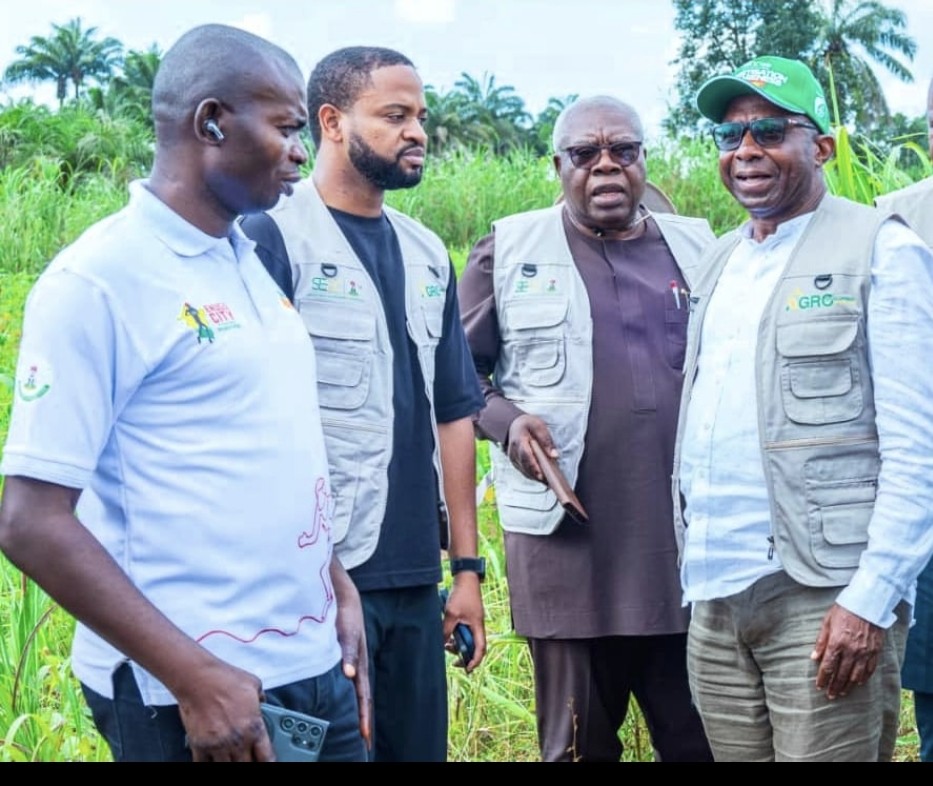
The South-East Development Commission (SEDC) has concluded arrangement for the kick-off the zone-wide 50,000-hectare agro-mechanisation project in Enugu community meant to tackle insecurity, unemployment and food insecurity.
The SEDC zone-wide 50,000-hectare agro-mechanisation, which is meant to be established in each of the 15 senatorial zones of the five South-East states, would commence at a pilot scheme level on Sept. 22.
This is contained in a statement issued by the media aide to the Governor of Enugu State, Chief Uche Anichukwu, on Wednesday in Enugu.
The Managing Director of the Commission, Mr Mark Okoye, disclosed this during a community engagement at the pilot project site in Nomeh Unateze community in Nkanu East Local Government Area of Enugu State on Tuesday.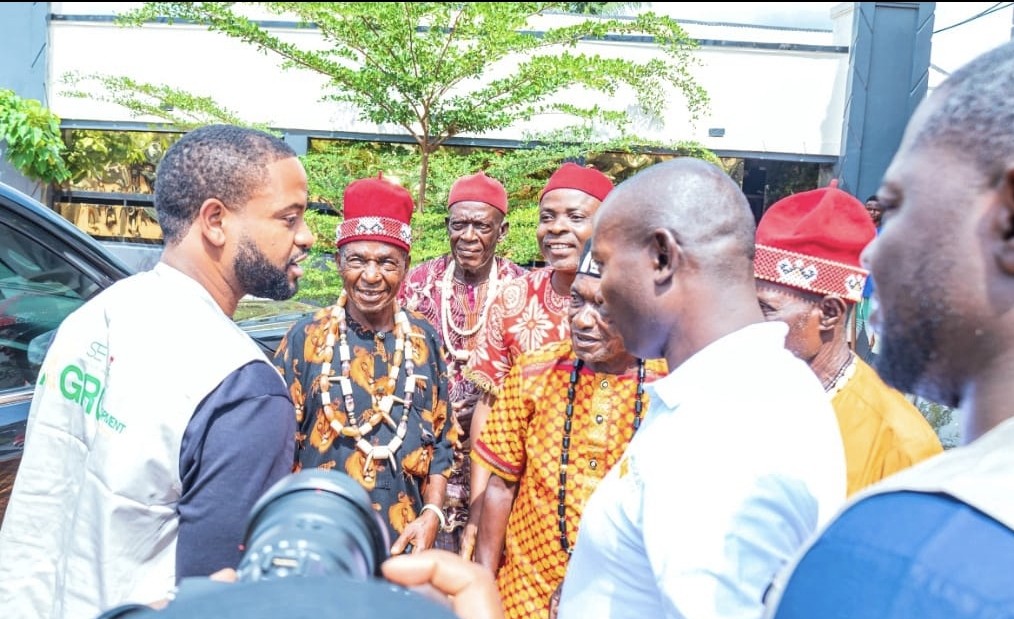
Okoye said the SEDC had, following its establishment in 2024, used the first year to do extensive studies and design a blueprint that cuts across different areas of the South-East economy.
He said the agro-mechanisation projects, remained a major part of the commission’s blueprint, explaining that it would address insecurity, unemployment, and food security.
According to him, so, what we are here for is one of our flagship initiatives, which is called the South-East Agro Mechanisation Programme or the South East Agro Development Programme.
Okoye said that the SEDC was committed to develop up to 50,000 hectares of land and that would be used for mechanised farming across the region.
“We are here for a pre-assessment, pre-flag-off visit to see the area, understand the level of work that needs to be done and ensure that contractors can start mobilising so that once we hit the site we start running.
“Because a big part of what we are looking at is how to address food insecurity and unemployment, ensuring that we are producing what we put on the table.
“We are starting with pilot programmes where we are taking 200 to 300 hectares of farmland across 15 senatorial zones and developing them to standard farms.
“Where you not only have cassava, maize, some of our staple crops, but also some cash crops. In some areas, there will be the centres for learning and centres for productivity,” he said.
Okoye said that Gov. Peter Mbah would flag off the project on Tuesday, adding the SEDC team came to assess the area, meet with the community and ensurr that all the plans are in place.
“And within the second we put this investment here, at least N4 billion or N5 billion of added investment will come in,” he said.
Okoye commended President Bola Tinubu for addressing the long yearning by the South-East for a commission to mobilise resources and coordinate development in the region.
He urged the people to reciprocate the numerous gestures by supporting the Tinubu to continue the development efforts post 2027.
He further revealed that the commission would soon roll ou an investment agency to help mobilise local and Diaspora investments for the region’s speedy development.
A community leader in the community, Chief Uche Anichukwu, described the agro-mechanisation project as one of the blessings of the APC, Tinubu and Mbah administrations to Enugu State in general and Nomeh Unateze in particularly.
Anichukwu, who is also media aide to the Governor of Enugu State, said that the Nenwe-Nomeh-Mburubu-Nara road, with a spur to Oduma, had created ready and multiple access to market for the proposed agricultural project.
Speaking, Chairman, Nomeh Unateze Town Union Caretaker Committee, Dr Chukwudi Anyianuka, and other community stakeholders, reiterated their support for the project.
They commended Tinubu and Mbah for siting the project in their community.
“We are very happy. We cannot wait to see it actualised and we promise that we are going to provide everything that is necessary to make sure that this is established.
“The Commission has taken a methodical approach to regional development.
“Rather than the pitfall of throwing money at development challenges, it undertook a study of the region and came up with a master plan, which includes this initiative, to reinvent the South-East,” Anyianuka added.
Also present at the interactive session were the members of the traditional council of Nomeh Unateze and community heads.
…As Onitsha South Mayor Empowers Workers
By Okey Maduforo, Awka
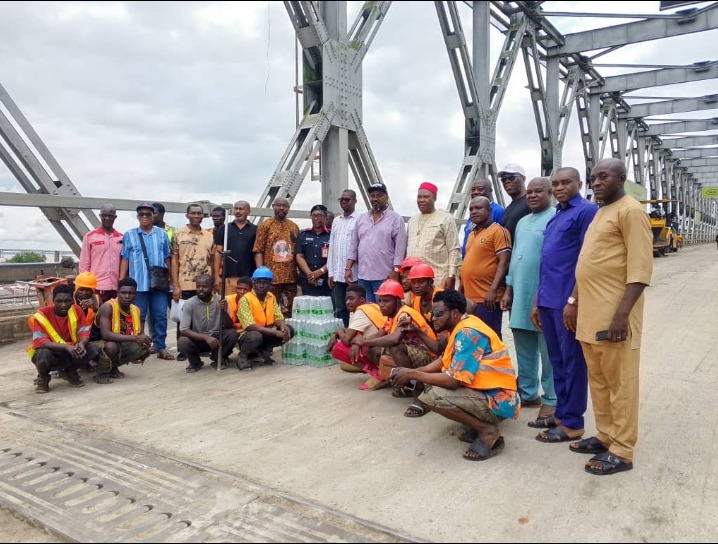
Maintenance and rehabilitation works at the recently closed First Niger Bridge are being hampered by poor lighting during night shifts and inadequate sanitary facilities at the site.
Recall that before the closure of the bridge, the Minister of Works, Engr. Dave Umahi, had disclosed that efforts would be made to carry out some of the rehabilitation works at night.
However, some of the workers at the site said poor lighting was affecting effective monitoring of activities on the bridge, while the poor sanitary condition of the area was also posing a threat to their health.
The workers made the complaints during a working visit to the bridge by the Mayor of Onitsha South Local Government Area, Chief Emeka Orji.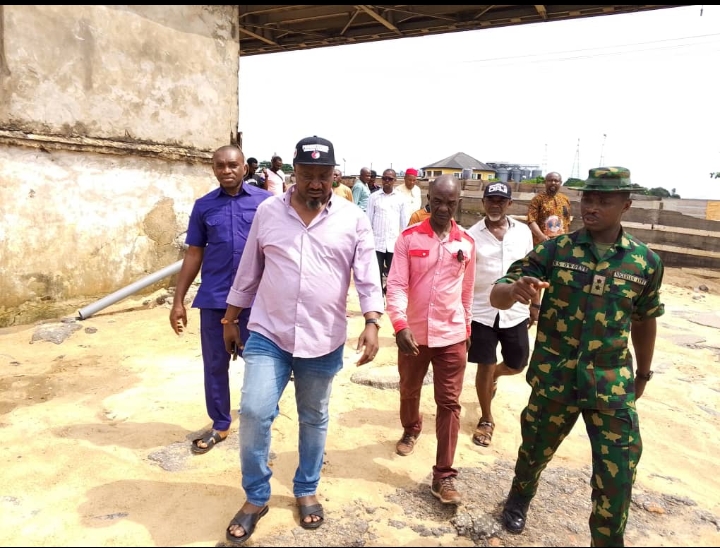
Orji, who was accompanied by the Secretary of the Local Government, Barr. Paul Onuachalla, and executives of the Fegge Community Landlords/Tenants Welfare Association, led by its Chairman, Chief Nnamdi Onugha, provided cooked meals and packs of bottled water to the personnel and workers at the site.
Speaking after the visit, Orji said the gesture was aimed at supporting the workers and showing solidarity with the Federal Government’s rehabilitation efforts on the bridge.
He said, “To support the workers and give them a sense of belonging, that is why we came to appreciate them. We will continue doing so from time to time as part of our Corporate Social Responsibility.”
The Mayor also disclosed that the council had provided facilities, including mobile toilets and water tanks, while arrangements were being made for water tankers to supply water to the tanks.
Orji further stressed the importance of the military presence in Onitsha South, noting that the personnel would contribute to security, rapid response and protection of the bridge, Onitsha South and parts of Ogbaru Local Government Area.
He added that the council would continue to strengthen its collaboration with security agencies to ensure maximum security across Onitsha South Local Government Area.
Earlier, after inspecting the environment with the Mayor, the Officer in Charge, who pleaded anonymity, identified poor lighting at the bridge at night as one of the major challenges confronting the personnel.
According to him, the situation makes it difficult to effectively monitor activities around the bridge, particularly during night shifts.
He also complained about the poor sanitary condition of the under-bridge environment where the personnel camp, saying they had to clean up the area themselves upon arrival.
The officer further appealed for improved accommodation and food support for the personnel.
He, however, commended the Mayor for the visit and assistance, saying the gesture made the workers feel appreciated.
“We feel loved and appreciated. We are happy seeing you around,” he said.

Africa’s richest industrialist, Aliko Dangote, has revealed that he bought his first private jet at the age of 22 and a half.
Dangote made the disclosure on Monday in Lagos during the formal launch of the Initial Public Offering (IPO) of Dangote Petroleum Refinery and Petrochemicals on the Nigerian Exchange.
Reflecting on his business journey, the billionaire said he had enjoyed travelling by private jet over the years but was now comfortable using commercial flights.
He also urged wealthy Nigerians to channel more of their resources into productive investments rather than luxury assets.
Dangote particularly appealed to affluent Nigerians who spend huge sums on private aircraft to consider investing such wealth in industries and businesses that could contribute to Nigeria’s economic growth.
“I try as much as I can to encourage people who are riding $900 million aircraft to please go and put that into production. We are not going to be a great nation without doing something productive,” he said.
He stressed that directing private wealth towards productive ventures would help strengthen the economy, create jobs and provide greater opportunities for national development.

The Niger Delta Chamber of Commerce, Industry, Trade, Mines and Agriculture (NDCCITMA) has rejected claims that it appropriated or “stole” the idea of Niger Delta Economic and Investment Summit from another organisation whose application was reportedly pending before the Federal Ministry of Trade.
NDCCITMA considers the allegation misleading and wishes to set the record straight.
The concept of Niger Delta Economic and Investment Summit is a broad and widely recognised platform used globally to bring together government, the private sector, investors, businesses, development partners and other stakeholders to deliberate on economic growth and development. The use of the term “Economic Summit” does not, in itself, establish exclusive ownership of the concept by any individual or organisation.
More importantly, the chronology of events does not support the allegation being made against NDCCITMA.
While the said application was reportedly still pending before the Ministry of Trade as at September 2025, NDCCITMA had already gone through the appropriate processes and received approval from the Ministry of Trade in August 2025.
NDCCITMA did not rely on, copy, or appropriate the pending application of any other party in arriving at its name or identity
It is also important to distinguish between a concept and legally protected intellectual property, such as a registered trademark, proprietary material or other enforceable intellectual property right.
NDCCITMA remains committed to conducting its activities in accordance with applicable laws and regulatory requirements.Most importantly, in Suit No: FHC/PHC/CS/57/2026 filed on same subject matter in Portharcourt by the petitioner, the learned Judge had restrained the plaintiff from further interfering with the Summit being planned by the NDCCITMA. NDCCITMA will continue respect the rule of law
We therefore urge the public, stakeholders, the media to disregard any narrative unless such claims are supported by verifiable facts and relevant legal documentation.
NDCCITMA firmly rejects the allegation and maintains that its activities and identity were developed and pursued independently and through the appropriate regulatory channels.
The organisation remains focused on its mandate of promoting commerce, industry, trade, agriculture, investment and sustainable economic development across the Niger Delta region.
Signed:
Management
Niger Delta Chamber of Commerce, Industry, Trade, Mines and Agriculture (NDCCITMA)

-

 News5 days ago
Commissioner Dies Suddenly at Abuja Hospital
-
 News5 days ago
Sept. 26 Polls: ‘ENSIEC is over 90% ready’ – Chairman
-

 Crime5 days ago
Kidnappers Dump 16-Year-Old Enugu Boy Near Onitsha Checkpoint, Police Rescue Him
-
 Politics5 days ago
2027: Mass Protest Vote Looms in Anambra South as NOWAS Backs Onunkwo
-

 Uncategorized5 days ago
UK Confirms Koi Herpesvirus Outbreak, Restricts Fish Movement
-
News5 days ago
Niger Delta Chambers Unveils Plan to Transform Region Into Investment Hub
-
News4 days ago
Dangote Reveals He Bought First Private Jet at 22
-
News5 days ago
Niger Delta Chamber Breaks Silence on Alleged Summit Trademark Dispute