



News
Subsidy: Poor Nigerians will rise above 100 million without palliatives – W’Bank


This was disclosed during the launch of the June 2023 edition of the Nigeria Development Update on Tuesday in Abuja.
The Washington-based lender also said about 7.1 million poor Nigerians would become poor if the Federal Government failed to compensate or provide palliatives for them, following the removal of fuel subsidy.
According to World Bank data, 89.8 million Nigerian were poor as of the beginning of this year. The lender noted that additional four million Nigerians became poor between January and May this year, raising the figure to 93.8million.
Latest projection means the number of poor Nigerians will rise to 100.9 million if the government fails to compensate vulnerable citizens for fuel subsidy removal.

The World Bank Nigeria Development Update report noted that Nigeria’s inflation has risen to a 17-year high, and has been driven by a number of factors, such as CBN funding of budget deficit, previous multiple exchange rates, devaluation, and trade restrictions.
The report read, in part, “Consumer price inflation has surged and is currently one of the highest globally, which is related to Nigeria’s fiscal imbalance and points to the urgency of reform efforts. Inflation in Nigeria has been high for many years due to structural factors, but it escalated in 2022, to the point where consumer prices increased at their fastest pace for 17 years.
“The consumer price index further accelerated in 2023 through May, up to 22.4 percent y-o-y. High inflation has been driven by the monetization of the fiscal deficit by the CBN, multiple exchange rates and exchange rate depreciation in the parallel market, and intensified trade restrictions, exacerbated by the spike in global food and energy prices.
“The CBN implemented measures to control rising inflation, including raising the monetary policy rate by 700 basis points, but these proved ineffective and monetary policy remained loose overall in the first half of the year. The loss of purchasing power from high inflation has increased poverty in the short-term, pushing an estimated 4 million Nigerians into poverty between January and May 2023.”
The National Bureau of Statistics recently disclosed that inflation in the country rose to 22.41 per cent in May, which is the highest in about 19 years.
Also, the NBS, in its National Multidimensional Poverty Index report, disclosed that 133 million Nigerians are multi-dimensionally poor.
The NBS said 63 per cent of Nigerians were poor due to a lack of access to health, education, living standards, employment, and security.
The Multidimensional Poverty Index offered a multivariate form of poverty assessment, identifying deprivations across health, education, living standards, work, and shocks.
In its new report, the Washington-based bank noted that the loss of purchasing power increased the poverty headcount rate by an estimated 2 percentage points or 4 million people.
This may mean that the total number of poor people in the country has risen to 137 million this year.
The World Bank added that the number of poor people in rural areas increased by an estimated 4 percent, while in urban settings, there was an estimated increase of 11 per cent.
The Brenton Woods institution further noted that with the removal of fuel subsidy, about 7.1 million people are at risk of becoming poor if no form of compensation is provided by the government.
The report read, “In the immediate term, the removal of the petrol subsidy has caused an increase in prices, adversely affect ting poor and economically insecure Nigerian households. Petrol prices appear to have almost tripled following the subsidy removal.
“The poor and economically insecure households, who directly purchase and use petrol as well as those that indirectly consume petrol, are adversely affected by the price increase. Among the poor and economically insecure, 38 percent own a motorcycle and 23 percent own a generator that depends on petrol. Many more use petrol dependent transportation.
“The poor and economically insecure households will face an equivalent income loss of N5,700 per month, and without compensation, an additional 7.1 million people will be pushed into poverty.
The World Bank warned that many newly poor and economically insecure households will likely resort to consequential coping mechanisms, such as “not sending children to school, or not going to the health facilities to seek preventative healthcare or cutting back on nutritious dietary choices.”
The bank stressed the need for adequate compensation, noting that compensating transfers will be essential in helping to shield Nigerian households from the initial price impacts of the subsidy reform.
The lending institution further applauded the removal of the subsidy and FX management reforms, which are crucial measures to begin to rebuild fiscal space and restore macroeconomic stability.
The report added, “Following a bold start with the recent PMS subsidy reforms and FX reforms, the urgency remains for Nigeria to seize the opportunity to chart a new course with ambitious and comprehensive reforms to raise long-term growth prospects.”
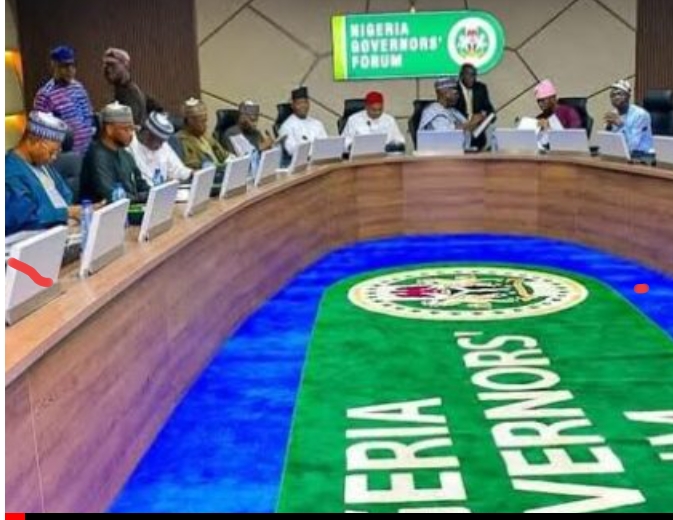
In his remarks, the governor of Oyo state, Seyi Makinde, said the reforms of the new administration are a step in the right direction.
However, he said there is a need to ensure that social safety nets are put in place because other than the local disruptions, there are also global headwinds that affect Nigeria as well.
“Social protection programs must be taken with a systemic approach towards long-term objectives,” he said.
Abia State Governor Alex Otti stressed the need for deregulation in the oil sector in order to maintain the reforms in this sector.
“What is important is not that the subsidy is removed, but the ability to sustain that removal, and the only way to do is moving from regulation to deregulation,” he said.
He further stressed the need for a sustainable cash transfer programme and other programmes that are well-targeted to the poor affected by the reforms in the country.
The Resident Representative for Nigeria of the International Monetary Fund, Ari Aisen, noted that the current reforms of the new administration are expected to have side effects.
He said, “There were so many distortions accumulated in the past, it is naturally that when these policies are implemented, you have some side effects. We should all expect that.”
Aisen added that inflation will likely keep rising, and stressed the need for policies that would curb inflation.
“Here, inflation is the main culprit in the room. We have seen inflation already high before the implementation of these policies. Inflation is likely to increase further. In our view, it is going to be critical to tailor macroeconomic policies to reduce inflation,” he said.
The IMF Representative further said that there is a need for further tightening of the monetary rates, which he said, remain loose.
He added that the IMF hopes to continue its long-term relationship with Nigeria, supporting the country with capacity building, policy advisory, and financing.
The Director General, Debt Management Office, Ms Patience Oniha, noted that although the government can borrow from the Central Bank of Nigeria through the Ways and Means Advances, it is important to stick to the limit.
She further stressed the need for urgent support from multilateral organisations in addressing the tough time Nigerians are going through.
Oniha said, “These are tough times because the policies have all been introduced now. In what ways can we get real support? We do appreciate all the concessional funding that we get from the multilaterals. In this short time, in what way can we get that assistance?”
The Special Adviser to the President, Bola Tinubu, on Monetary Policies, Wale Edun, said that other than the $800m loan from the World Bank, there may need for additional financing to ensure the sustainability of the bold reforms under the administrations.
“We have identified some sources of funding, but we are going after many more,” he said.
The World Bank Country Director for Nigeria, Shubham Chaudhuri, further disclosed that Nigeria is the biggest beneficiary of concessional financing from the World Bank, with over $10.5bn since February 2020.
The World Bank lead economist for Nigeria, Alex Sienaert, during a presentation at the event, said that Nigeria is projected to save up to $5.1bn (N3.9tn) in 2023 alone after the removal of fuel subsidy and reforms of its foreign exchange market.
Sienaert also said that the gains from these policies are expected to reach over N21tn between 2023 and 2025.



“If You Have Evidence Against Stanley Mbam, Charge Him; Otherwise, Release Him” — Oganiru Izzi
A socio-cultural organisation of Izzi extraction, Oganiru Izzi, has challenged Ebonyi State Governor, Chief Francis Ogbonna Nwifuru, to either release the state’s sacked Commissioner for Works, Mr Stanley Mbam, or charge him before a competent court if the government has credible evidence of wrongdoing against him.
The group said the continued detention of the former commissioner without a formal charge raises concerns about due process, constitutional rights and the rule of law.
The leader of Oganiru Izzi, Mr Godwin Mbam, made the demand while speaking with correspondents of National Issue Newspapers at the Crack Department of the Ebonyi State Police Command in Abakaliki.
Mbam condemned what he described as the prolonged detention of Stanley Mbam without allowing a court to determine whether he had committed any offence.
He challenged the state government to produce evidence if it believes the former commissioner committed a criminal offence.
“If there is credible evidence against him, charge him to court and let the court decide. If there is no case against him, he should be released,” Mbam said.
He also appealed to the Ebonyi State Police Command to uphold the Constitution and resist any pressure that could result in unlawful detention.
Vanco Flyover: “We Will Reveal the Full Details”
Mbam also issued a three-day challenge to Governor Nwifuru, declaring that if the former commissioner was not released or charged to court, his organisation would make public what it described as the “full details” of the Vanco Flyover project.
According to him, the proposed disclosure would address issues surrounding the project, including its funding, payments, contractual arrangements and other financial details.
“We will let the world know the full details of the Vanco Flyover and how the funds were utilised,” he warned.
He further challenged the state government to demonstrate transparency by making relevant documents concerning the project available to the public.
“What About the Alleged ₦1.5 Billion Forfeiture?”
The Izzi group also questioned what it described as the selective application of the state government’s anti-corruption campaign.
Mbam referred to allegations involving an account reportedly frozen by the Economic and Financial Crimes Commission (EFCC) and an alleged ₦1.5 billion forfeiture to the Federal Government.
He questioned why, according to him, the governor had allegedly not taken similar action if the facts surrounding the matter warranted it.
Mbam stressed that he was not opposed to the fight against corruption but insisted that any anti-corruption campaign must be comprehensive, transparent and applied equally.
“If Governor Nwifuru wants to fight corruption, let him fight it holistically. Nobody should be targeted while other serious allegations are ignored,” he said.
“If Nwifuru Says He Knows Nothing, We Will Produce the Facts”
Mbam further challenged Governor Nwifuru to publicly state whether he was aware of alleged corruption issues within the Ministry of Works.
“If Nwifuru publicly claims that he is unaware of corruption in the Works Ministry, I will make public the facts available to me. The facts will shock the state,” he declared.
He insisted that the matter should not degenerate into a political vendetta, arguing that the appropriate place to determine criminal liability is a court of law.
According to him, the people of Ebonyi State deserve clear answers concerning the Vanco Flyover and other issues involving public funds.
“Everybody Should Be Subject to the Law”
The Oganiru Izzi leader maintained that the controversy should be resolved through transparency, documentary evidence and due process.
“If there is a case, charge him. If there is no case, release him. The government cannot claim to be fighting corruption while abandoning the principles of justice and the rule of law,” he said.
Mbam warned that failure to address the issues could compel the organisation to make further disclosures concerning the Vanco Flyover and other matters it considers to be in the public interest.
By Our Correspondent
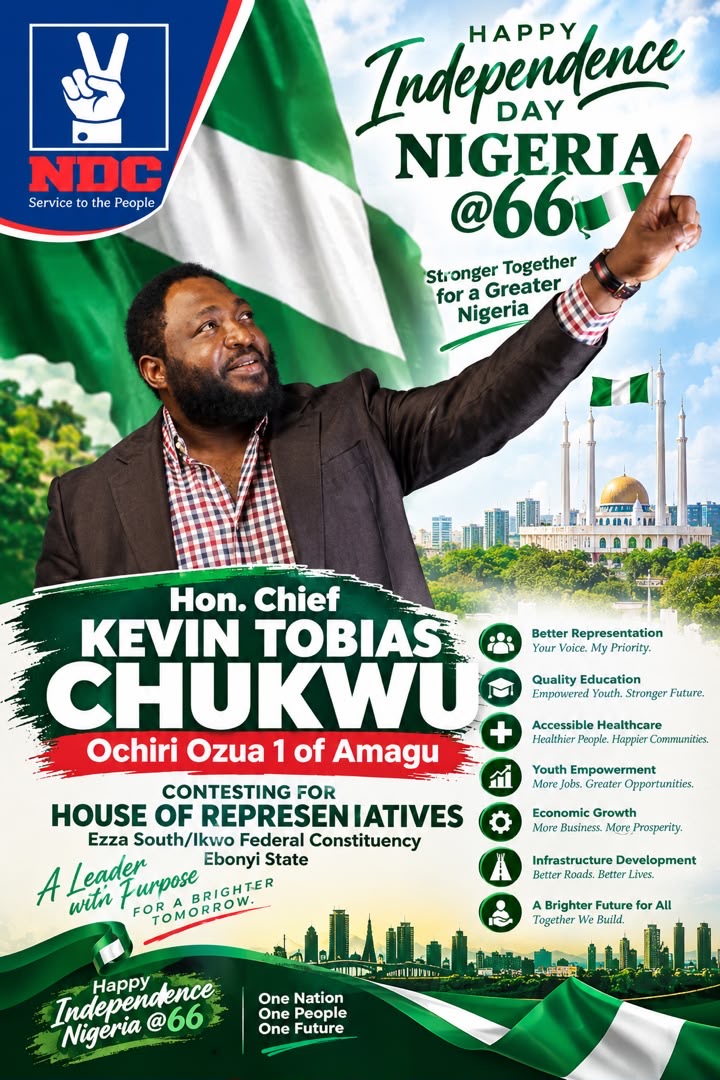
As Nigeria celebrates its 66th Independence Anniversary, the candidate for the House of Representatives seat representing the Ezza South/Ikwo Federal Constituency, Hon. Chief Kevin Tobias Chukwu, has called on Nigerians to remain hopeful and committed to building a better country.
Chukwu, also known as Ochiri Ozua 1 of Amagu Ikwo, made the call in an Independence Day message to Nigerians, particularly the people of Ezza South/Ikwo Federal Constituency and Ebonyi State.
He described the anniversary as not only a moment for celebration but also an opportunity to reflect on the state of the nation and the responsibilities of leaders in building a Nigeria that meets the aspirations of its citizens.
According to him, Nigeria’s journey since independence has been marked by significant challenges, with millions of citizens currently facing economic hardship, while young people continue to search for opportunities and many communities contend with insecurity and uncertainty.
Despite these challenges, the Ebonyi politician said the resilience of Nigerians remained a source of hope for the country’s future.
“I believe in the resilience of our people. I believe in the ingenuity of our youths, the strength of our women, the wisdom of our elders and the determination of ordinary Nigerians who wake up every morning and refuse to give up on this country,” he said.
Chukwu, however, stressed that hope must be matched by responsible leadership, arguing that public office should be viewed as a responsibility rather than a privilege.
He called for leadership that prioritises the protection of lives, creation of economic opportunities, provision of infrastructure, strengthening of institutions and responsible management of national resources.
The candidate also emphasised the need to create an environment where young Nigerians can pursue successful lives within the country and where hard work, merit and enterprise are rewarded.
He said Nigeria had “come too far to surrender to hopelessness,” urging citizens and leaders alike to remain committed to the country’s progress.
“A better Nigeria is still possible, but it will require responsible leadership, accountable institutions and citizens who refuse to give up on their country,” he said.
Chukwu concluded by expressing optimism about Nigeria’s future, declaring: “Nigeria will rise. Nigeria must rise. And together, we must build the Nigeria we deserve.”
He also paid tribute to the nation’s past heroes, praying that their sacrifices would continue to inspire the country.
“May the labour of our heroes past never be in vain,” he said, as he wished Nigerians a happy 66th Independence Anniversary.
By Okey Maduforo, Awka
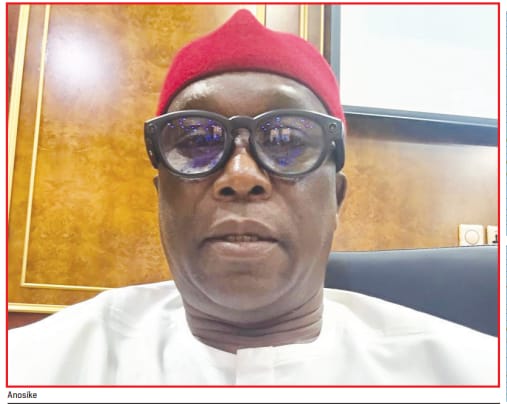
As Nigeria celebrates its 66th anniversary of independence from colonial rule, democracy in the country has continued to evolve and deepen, the Anambra State Chairman of the All Progressives Congress (APC), Senator Emma Anosike, has said.
Anosike made the observation in a message to mark Nigeria’s Independence anniversary, noting that despite the challenges the country had encountered since 1960, its democratic system had continued to improve under successive administrations.
According to him, since the return to democratic rule in 1999, Nigeria has witnessed relatively smooth transitions from one administration to another, while citizens have continued to exercise their fundamental rights to hold governments accountable for their performance.
“Before the return of the democratic process, it was indeed difficult and near taboo to challenge the leadership of the country, and those who may have attempted it in the past faced grave consequences.
“Similarly, we have had smooth transitions from one dispensation to another, producing five presidents through the ballot and not through the barrel of the gun. These elected presidents were produced by different political parties.”
Anosike said the administration of President Bola Ahmed Tinubu had sustained the country’s democratic principles and created an avenue for Nigerians, irrespective of tribe, race or religion, to express their views on government policies and programmes.
“Under the stewardship of President Bola Ahmed Tinubu, Nigerians have been enjoying the freedom to express themselves over issues, policies and programmes of government, and those expressions have been shaping and guiding the administration of Mr President,” he said.
The APC chairman said Nigeria’s 66th independence anniversary provided an opportunity for citizens to reflect on the country’s journey as a nation and the progress made since independence.
He said President Tinubu’s Independence Day broadcast had offered another opportunity for Nigerians to renew their hope for a greater and more prosperous country.
Anosike also commended what he described as the “enormous infrastructural development” taking place across the country under the Tinubu administration.
He urged Nigerians to continue to support and have faith in the administration as the country approaches the 2027 general elections.
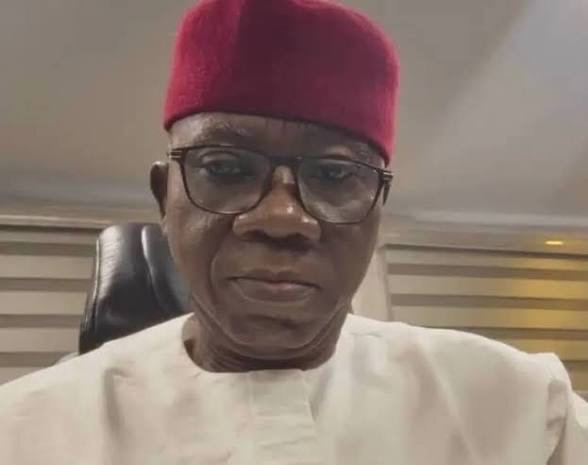
An Elder Statesman, Chief Hycienth Ngwu, has called on political leaders and policies formulators to ensure governmental policies and programmes directly touch lives of the people and reduce hardship in the country.
Ngwu, who is a prominent community leader in Enugu, urged Nigerians to maintain peace within neighbourhoods and communities, as no meaningful development can take place without peace.
The statesman made the call on Thursday in Enugu while reacting to the developmental efforts of Nigeria at its 66th Independence.
He said that previous and present administrations had put in place policies and programmes to reset the socioeconomic fabric of the nation.
Ngwu said that while the removal of fuel subsidy, and unification of the foreign exchange had good intentions, their impact is yet to reflect on the lives and livelihoods of vast majority of Nigerians.
He urged leaders to ensure that public resources were properly managed while citizens remained patient with reforms aimed at improving the socioeconomic status of the country.
The elder statesman noted that at 66th independence, the country was still struggling on keeping its peace and co-existence as a country; adding that the founding leaders of Nigeria envisaged a closely united, bonded and peaceful country.
He called for return to policies that promote local production, indigenous industries and entrepreneurship, arguing that excessive dependence on imports had continued to weaken the country’s productive capacity.
According to him, we are yet to achieve economic independence even as we needed to do more on non oil revenue earns as the greater part of the world is moving towards greener and clean energy.
“Greater emphasis should be on skills acquisition, creativity and entrepreneurship education system, as academic qualifications without practical skills could leave graduates dependent on scarce white collar jobs.
“We ought to be economically productive nation capable of producing and exporting goods while developing its human capital,” he said.
Ngwu noted that current insecurity and social instability could be partly attributed to poverty and ignorance, while calling for greater honesty and trust between leaders and citizens.
“Corruption, tribalism and selfishness must be addressed if Nigeria is to achieve peace and lasting progress,” he added.
He also called for the scrapping of state electoral commissions as they have not helped in deepening democracy at that level. The National Election body should take over that responsibility.

As Nigeria marks its 66th Independence Day, Macmaduson Concepts Limited, a leading provider of HVACR,industrial parts, sensors, electrical and plumbing materials, has extended warm Independence Day greetings to its customers, clients and business partners across the country.
In a goodwill message to mark the occasion, the company expressed appreciation to its valued customers for their continuous support, trust and partnership over the years.
Macmaduson Concepts Limited, which specialises in HVACR,Industrial Materials, sensors, air-conditioners, refrigerators, cold rooms, chillers, refrigerants, electrical materials and plumbing materials, said the occasion provides an opportunity to celebrate Nigeria and reflect on the nation’s journey.
The company wished Nigeria continued growth, unity, peace and prosperity, while expressing hope for a brighter future for all Nigerians.
The message from the company reads in part:
At Macmaduson Concepts Limited, we celebrate our great nation, Nigeria, and appreciate our valued clients for their continuous support, trust and partnership. May Nigeria continue to grow in unity, peace and prosperity.”
The company concluded its Independence Day message with the theme: “One Nation, One People, A Brighter Tomorrow.”
Happy Independence Day, Nigeria!
Happy 66th Independence Anniversary from Macmaduson Concepts Limited.

-
 Business3 days ago
No Bad Blood Over New Cement Factories, But Our Mining Rights Run Till 2045 — Ibeto Tells Ebonyi Govt
-

 Sports3 days ago
Enugu Speaker’s boxing talent hunt unearths 5 budding stars
-
News3 days ago
Nigeria at 66: Macmaduson Concepts Limited Sends Independence Day Greetings to Clients
-

 Crime4 days ago
Five Arrested By Police For Wearing ‘Tinubu Must Go’ T-Shirts
-

 Politics4 days ago
EBONYI 2027: The People, Not Individuals Will Decide Who Becomes Governor – Igwe
-
 News3 days ago
66th Independence: Elder statesman wants policies to reduce hardship, calls for peace
-

 Politics3 days ago
Ebonyi Guber: ‘Our People Deserve Better Government,’ Odii Insists
-
 News3 days ago
Nigeria @66: Democracy Evolving, Says Anambra APC Chairman Anosike