



Opinion
Peter Mbah and the burden of leadership


By Prince Ejeh Josh
The stage for a new dawn in the history of our nation is beginning to phase in with current administrations winding down on May 29, and new administrations taking over the mantle of leadership in Nigeria and its federating units. The coast has become clearer after the February 25 and March 18 general elections as to which power blocs are forming governments at different levels.
The formation of new governments by emerging class of leaders, however, is not the fundamental issue bulging the minds of citizens. The shapes and dynamics of the last elections pointed unambiguously to the primary concerns of Nigerians, more so, the youths who constitute a sizeable determinant demography of who leads them. The general elections, although consigned to the rubble of history, have been described by watchers and analysts as a bloodless revolution which, to an extent, defied political parties, tribal and clannish affiliations and religious sentiment to personalisation assessment. It became what the social scientists would usually refer to as the principle of behavioralism. It is no longer about the abstract entity called political party even though the constitution and the electoral law recognise political parties as inevitable vehicles that must convey individuals canvassing to lead or rule the people.
The recent political wave left a strong message behind which many analysts had failed to predict accurately. The message was clear: it is no longer business as usual. It is no longer about politics of political parties but individuals. Voters became increasingly cognizant of their political environment and the role their votes could play in charting a new course in their lives, future, destiny and shared patrimony. They became even more participatory in the political and electoral process in the build-up to the general elections. In an international conference organised by the Faculty of Law, University of Nigeria, last year, where I presented a paper on the “Impacts of Political Culture and Electoral Process on Political Behaviour” with my focus on Nigeria, I bemoaned the triggers of political apathy among voters and how the end products benefitted some accidental candidates that found themselves in power by the benevolence and dictates of political godfathers rather than riding on the general assessment of the electorate based on independent phenomena such as competence, capacity, character, credibility, track records, and above all, clear vision on the pathway to socio-political harmony and economic recovery.
Indeed, we are all disgruntled as voters spanning and stretching from years of unfulfilled promises and unmet expectations from rulers in the context of democracy. Years of frustration and bottled up anger from the wasteful lifestyle of political actors, deceit, unemployment, poverty, lack of basic amenities in the midst of vexatious and scandalous waste and plenty aroused Nigerian voters to action. Economic depression, inflation, weak legal tender, insecurity and mindless lack of empathy by supposed representatives of the people led to the accumulated provocation leading to a major electoral explosion. The Southeast zone became a theatre of electoral battle. Lagos, Anambra, Enugu, Benue, Abia, Rivers, Kano, Federal Capital Territory, Abuja, among other states and constituencies were lost and won. It was ostensibly, the battle of Armageddon. The people queried individual candidates on their proposed programmes and policies and how they intended to implement them. Their capacities were tactically assessed despite the fact that some candidates rode on the altar of the wave of the tsunami that swept across the nation.

By the time the storm was over, some people were not lucky enough to be accommodated in the sweeping hurricane for obvious reasons; gross incompetence and history of leadership failure. Like the former Nigeria President, Chief Olusegun Obasanjo, once wrote: “You do not reinforce failure.” This was the case in Enugu State. The electorate had vehemently refused to reinforce failure in the governorship election. Peter Ndubuishi Mbah emerged victorious from the electoral struggle. He won free, fair and square despite the malignant character assassination, fake news, falsehood and calculated attempts by opposition traducers to misrepresent him before the people. Mbah won laudably based on his antecedent as a successful manager of the economy, wealth creator, employment generator and competence. Among all the candidates that contested the election in the state, he was rated the best in terms of competence, capacity, character, and preparedness. The people voted for him. They handed over their collective mandate to him. They are all looking up to him for another revolution in governance and administration.
Let me note this with sly aloofness. I am not envious of Mbah’s governorship seat. Uneasy lies the head that wears the crown. Enugu people are desperate for good governance just like Nigerians are. Mbah will have to do the impossible out of sheer ingenuity and leadership dexterity to meet up with the high expectations and craves from the people. He has to be audacious, step on toes in order to correct some festering anomalies, take some firmer resolutions, unsettle some sensitive establishments through alternative displacement, and set up a functional system with immediacy. He shoulders burdens expected of someone with a magical wand. I will, however, not be surprised if he delivers on these expectations taking account of his background. Will Mbah become another Lee Kuan Yew who turned Singapore from a poor country; an island of mudflats and swamps into a developed metropolitan country competing as one of the world’s best today? Time will tell.
The brazen fact about Mbah’s leadership is that he would face multiple challenges, ranging from how to manage and reconcile disparate interests with that of his core administration policies, reform the prevailing socio-economic policies for meaningful improvement, avoid distraction by critics posing as agents of democracy, distance self from sycophants and political demagogues, think inwards on revenue generation, favourable tax regime, and prepare for frequent but unavoidable clashes with elitist philosophy especially in the redistribution of income and recapitalization of the economy through small and medium scale enterprises.
To succeed on his promises to the people of the state, Mbah would have to take a radical approach on the economy and those he employs to manage critical sectors of the economy. This will require political will that will ultimately resist political pressure and blackmail. The best hands must be engaged, regardless of political leaning. Experts and technocrats must be sourced to run the system in order to encourage investors. At all times, the governor must have in mind that, whatever be the credit or blame arising from administrative inefficiencies, recklessness or incompetence from his appointees goes to him. He bears the direct consequences and impact. This is why politics should not be the first consideration in making appointments. The people that voted for him and how he intended to fulfil his social charter with them should be the first consideration.
Although, we have seen Mbah take some decisive steps pointing to the direction of his administration. His appointment of a 64-man transition committee described as seasoned “technocrats, good governance, transparency and accountability advocates, financial and management experts, entrepreneurs as well as tech and innovation specialists” to streamline the state development plan to implementable charter. Like he noted in his 62-page manifesto, his governance philosophy is to deliver quality, people-focused governance by making the state the preferred destination for investment, business, tourism and living, and to also make it one of the top 3 states in Nigeria in terms of gross domestic product, and achieve a zero percent rate in poverty headcount index, these steps have far-reaching effect on the economy and welfare of the people. One would, however, query the extent this tactical operation can go without extraneous influence and scuttling by political actors who are or may likely consider some of the policies as too complex to manage their interest.
Mbah would also work hard to win the confidence of both local and foreign investors since his economic blueprint will be taking a shift from public sector to private sector driven economy. He wants to industrialize. He wants to build world tech hub. He wants to attract Google, Twitter, Meta (Facebook) and other tech giants. Policies must be transparent with easy accessibility of information by interested investors. Mbah has laid his roadmap for agro-allied revolution through land tenure reform. To achieve this, he must urgently address the burning issue of land grabbing among the citizens by those in positions of public trust and ensure justice is served. Writing in his, The Prince, the Italian diplomat, Niccolo Machiavelli, warned leaders against willful land grabbing as it could spark off violence and protracted resentment. According to him, “But above all, he (leaders/rulers) must refrain from seizing the property of others, because a man is quicker to forget the death of his father than the loss of his patrimony (property).” Addressing accusations of land grabbing by the government will restore people’s confidence in the land administration, and this will be a win for the planned agro-industrialisation.
While I hope Mbah would look at the different economic models and stimulus that could help him navigate the lean and dwindling state’s resources in order to manage the all time rising debt profile of the state, I would want to commend him on the drastic steps he has been taking to fulfill his promise of giving water to the people within 180 days in office. This is a herculean task laying ahead of him. It is, however, not insurmountable. In one of his unreported journeys in search for water in the forest as an assurance that he meant business, I was privileged to be in the tour. Mbah was in the bush, drenched in swamp, asking questions as to the millions of litres or cubic meters of clean water the Ajali Water Scheme, Oji River Waterworks, Iva Valley water etc, could supply in a day in their full capacity. We spent hours in the forest with his team of engineers assessing the upstream and midstream infrastructure. To be frank, Mbah would have to buckle his belt to fulfill this promise. We saw decayed infrastructure. We saw abandonment. We saw waste. Most interesting, the state still depends on the badly damaged, outlived infrastructure laid by the colonial masters to run. But Mbah said he is bringing respite. I hope Enugu people will support his efforts by keying into the collective agenda.
Tapping into the unmined natural resources and other deposits in the state to boost the revenues accruing to the government will be the best bet. However, this is not always easy because of the time, plan, capital, expertise and policies involved. Mbah would have to take courage in grabbing this space to break even in his administration. He would partner not only with private investors but also with the federal government for license and concession, and with the people who would see the project as a collective responsibility and patrimony for the greater good of the state. The Mbah’s administration will definitely come under attacks and campaign of calumny by profiteers of the massive corruption and thievery of the state resources. There are presently illegal mining activities in the state by some elements. Enugu has one of the best coal in the world. Over the years, mining activities are illegally going on while government is losing huge revenue as a result of that. This would have to stop. Resistance is expected.
The incoming leadership must carefully negotiate the state’s political economy to avoid pitfalls of its predecessors. A government that wants to succeed must never strive to please everybody. According to the English philosopher, Jeremy Bentham, the job of government must be to champion and promote the greatest good of the greatest number of the people. That means that some selfish interest from few segments of the society aiming detrimentally at the majority interest, regardless of how powerful the group is, must be ignored. The present Enugu State is in dire needs of sanitation and clean environment, infrastructure, robust health programmes that will enhance citizens’ wellbeing, and education reform that will inculcate modern curriculum such as concentration on science, technology, engineering and mathematics. Mbah has a lot of workloads on his shoulder and he must drive that with sense of urgency. After all, he is fond of the famous quote by the former American First Lady, Rosalynn Carter that, “A leader takes people where they want to go. A great leader takes people where they don’t necessarily want to go, but ought to be.” I hope Mbah will be the great leader that will take his people to where they ought to be.

By Ibrahim sani
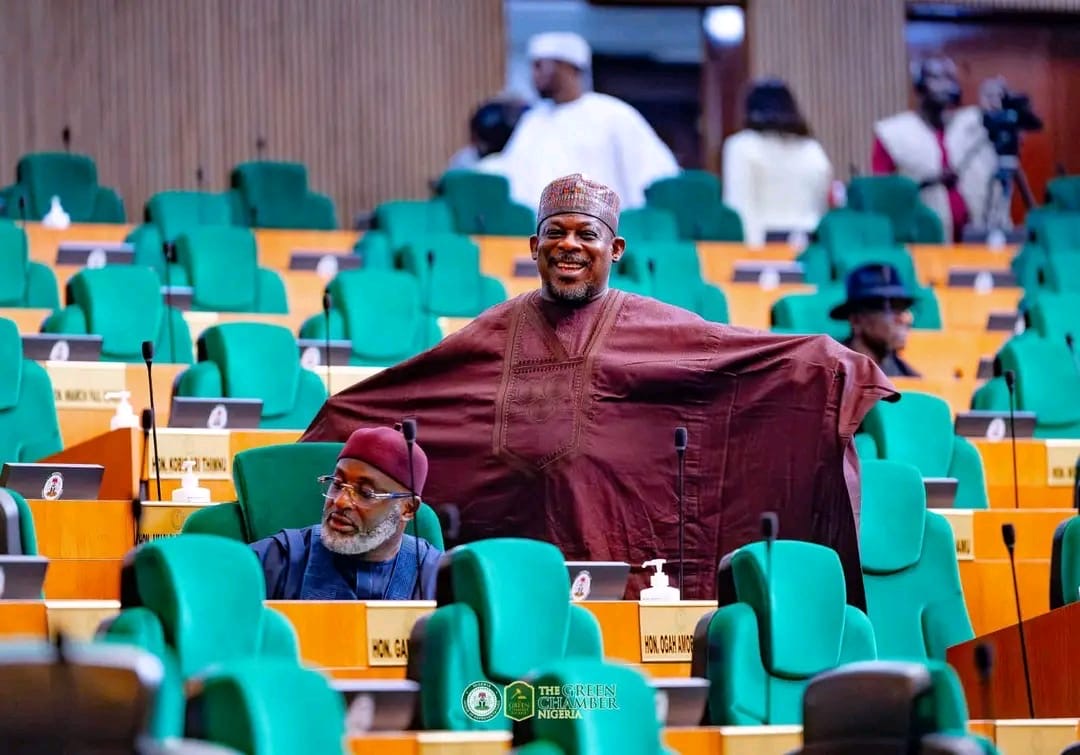
From the historic lands of Kaduna State where leadership finds its home, Arises a statesman, a visionary, whose legacy is beautifully engraved in stone. Born on 28th May, 1968, under a destiny divine, Rt. Hon. Bashir Zubairu Usman stepped forward to make his community shine. With a blessed heart and a blessed mind, his path of service began to unfold, A narrative of resilience, courage, and a promise more precious than gold.
Long before the hallowed green chambers, his wisdom guided the state, As the honorable Speaker of the Kaduna House of Assembly, navigating its fate. Under the administration of Makarfi, he mastered the art of the law, Governing with fairness, legislative precision, and checking every structural flaw. As the Ciroman Birnin Gwari, he bridges traditions and modern governance with pride, A true cultural icon, a trustworthy guardian, with the people always by his side.
When the call of the nation echoed in 2023, The people of Birnin-Gwari and Giwa chose a leader to set their potential free. With 41,023 votes, the mandate was won, And a glorious era of unmatched federal representation had proudly begun. In the 10th National Assembly, his vibrant voice rings out exceptionally clear, Sponsoring 7 profound bills and moving crucial motions that his people hold dear.
When fierce security challenges cast dark shadows upon our agrarian ground, And local maize farmers lost over ₦100 million to sudden attacks around, He stood firmly on the House floor, demanding federal protection and swift defense, Collaborating with security agencies to restore safety and common sense. He partnered closely with NGOs to bring critical, free medical care to our lands, Providing life-saving surgeries and essential treatments through his caring hands.
Look upon the schools where classroom blocks are beautifully built and new, Look upon the modern Primary Health Care Centre at Anguwan Shehu coming into view. Over 5,000 eager students now hold life-changing educational scholarships, While vital farming fertilizers are distributed to ease our local communities’ hardships. From strategic SMEDAN economic empowerment programs designed for youth and women, To constructing modern skill acquisition centers, he lifts up families time and again.
This is not a leader of empty rhetoric, or one who rules from an ivory tower, He is a loyal, tested, and highly trusted bridge-builder of monumental power. His outstanding record from day one to date proves his absolute merit and worth, Bringing the dividends of genuine democracy to the very grassroots of our earth. As we lift our eyes toward re-election 2027, the path ahead is bright, We choose continuous progress, visionary development, and unyielding protective might.
Let the trumpets blow for continuity, let the entire constituency confidently align, For the journey of excellence must march forward under this historical sign.
HONOURABLE REP. BASHIR ZUBAIRU USMAN — CONSOLIDATING THE VISION FOR 2027!

The visit of the Forum of Peoples Democratic Party (PDP) State Chairmen to Ebonyi State is politically significant as the country moves towards the 2027 general elections. Beyond the allegations of political violence that prompted the visit, it raises a fundamental question: could the handling of opposition politics in Ebonyi undermine President Bola Ahmed Tinubu’s re-election prospects?
The developments surrounding Governor Francis Ogbonna Nwifuru deserve closer scrutiny, particularly given their potential implications for the All Progressives Congress (APC) and its presidential candidate.
The PDP chairmen deliberately took the allegations of attacks, killings, abductions, intimidation and restrictions on opposition activities to the national stage. By visiting Ebonyi, they elevated what might have been treated as a state-level political dispute into a matter of national democratic concern.
The allegations are serious and require independent investigation. But beyond the question of who is responsible, the political implications of the unfolding situation deserve attention.
Why attack those supporting Tinubu?
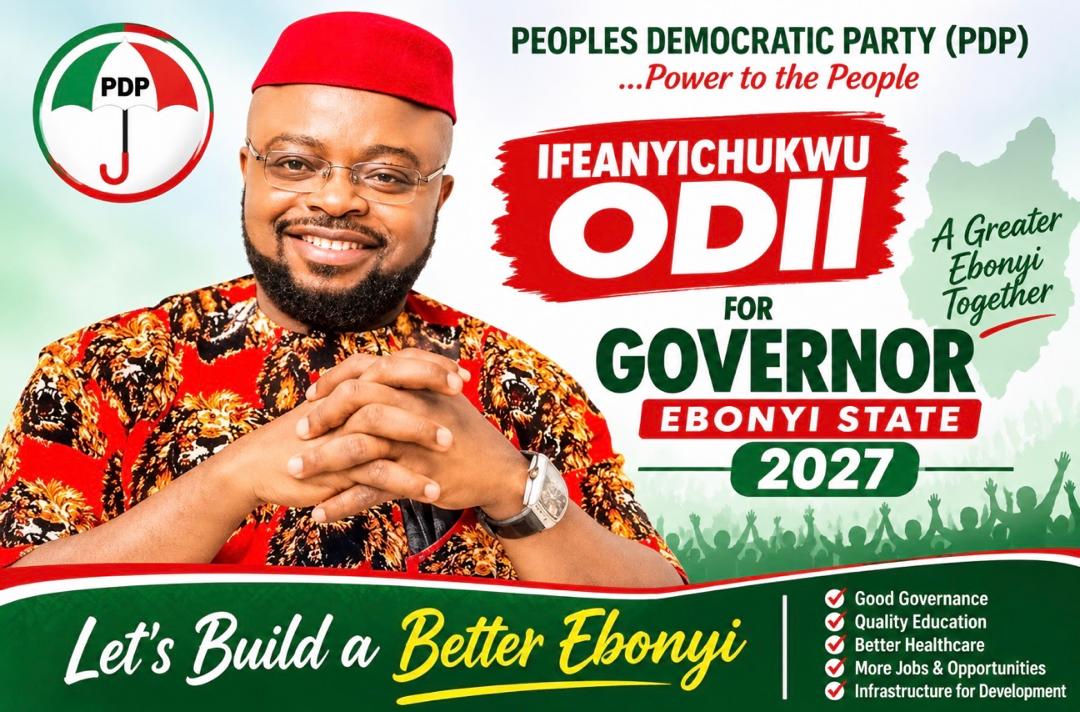
One intriguing aspect of the controversy is that the alleged victims are members and supporters of the PDP, whose Ebonyi governorship candidate, Chief Ifeanyi Chukwuma Odii, has openly declared support for Tinubu’s re-election.
This creates a political contradiction. If PDP members are being intimidated because of their political affiliation, what is the ultimate objective? And if such hostility discourages people who might otherwise support Tinubu, who benefits?
Ebonyi is an important state in the South-East, where the President and the APC would naturally seek to consolidate their support. Consequently, any political development that alienates potential supporters could have implications beyond the state’s governorship contest.
This is where Nwifuru and his political advisers need to be careful. The pursuit of a governorship victory should not be allowed to undermine the broader objective of securing support for the President.
Perhaps more revealing is the Forum’s allegation that the Nwifuru administration has allowed the All Progressives Grand Alliance (APGA) and the Nigeria Democratic Congress (NDC) access to public spaces for political activities while restricting or threatening venues used by the PDP.
The Forum also raised questions about a possible political understanding between the governor and the NDC, suggesting that such an arrangement could have implications for Tinubu’s re-election prospects.
These claims require verification, and the governor’s administration should be given an opportunity to explain the circumstances surrounding access to public facilities.
Nevertheless, the allegations raise an important question: if political parties are being treated differently, what criteria determine who can organise meetings and conduct political activities in Ebonyi?
Political alliances are legitimate in a democracy. But if public authority is being used to facilitate some parties while restricting others, that would raise concerns about fairness and the freedom of political association.
The alleged Nwifuru-NDC understanding also deserves scrutiny, particularly in view of Odii’s stated support for Tinubu. However, the existence of such an arrangement and its implications for the President’s electoral interests leaves much to be desired.
Unresolved political grievances
Other developments may help explain the tensions surrounding Ebonyi politics.
There have been reports that Nwifuru was unhappy about his initial omission from the Presidential Campaign Council. Although he was subsequently included in the revised council inaugurated by Tinubu on October 14, 2026, the initial development reportedly generated disquiet in political circles.
Another issue is the reported replacement of Barr. Idu Igariwey, whom the governor favoured for the Afikpo North/Afikpo South Federal Constituency seat. Attempts to reverse the party’s decision were reportedly unsuccessful.
There have also been reports of tension between Nwifuru and Minister of the Federal Capital Territory, Nyesom Wike, following the governor’s alleged accusation at a zonal party gathering that the minister was plotting his defeat in 2027.
Whether these developments have contributed to any grievance against the party’s national leadership remains an issue. They nevertheless illustrate the political tensions that can emerge when interests over nominations, appointments and electoral influence collide.
It could be suggested that these disagreements have influenced the governor’s handling of opposition politics. However, the APC’s national leadership should be concerned about any internal disputes that could affect political cooperation ahead of the elections.
Is Nwifuru sabotaging Tinubu?
At this point, the question must be asked; is Nwifuru deliberately working against Tinubu’s re-election? This question deserves consideration because political decisions can have consequences beyond the intentions of those making them.
A governor may be pursuing his own political interests while inadvertently weakening the broader political platform on which he depends. With allegations of intimidation and attacks substantiated, the resulting resentment could damage confidence in the political process and alienate voters who might otherwise support the President.
That is the danger the APC should not ignore.
The critical distinction is between deliberate sabotage and political actions that produce unintended consequences. The former requires evidence of intent; the latter can be assessed by examining the effects of political decisions.
The truth is that Nwifuru must be conscious of the wider implications of the situation in Ebonyi. His immediate political interest may be to secure his future in 2027, but that objective should not come at the expense of peaceful political participation or the broader interests of his party and its presidential candidate.
Tinubu must pay attention
President Tinubu and the APC national leadership should take the allegations seriously and act fast before the situation degenerates.
They should encourage impartial investigations, insist on equal treatment of political parties and examine the reported tensions within the party. The governor, in turn, should address the allegations and clarify the administration’s position on access to public facilities and the protection of opposition members.
No political grievance should justify violence or unlawful restrictions on another party.
The situation in Ebonyi presents a question that extends beyond Nwifuru and the PDP: can the pursuit of state-level political interests undermine a party’s wider electoral objectives?
The Forum of PDP State Chairmen has brought serious allegations into the national spotlight. Those allegations must be tested against evidence, and those accused must be given an opportunity to respond.
Ultimately, the unfolding developments deserve urgent attention because of their potential implications for political participation and the relationship between Ebonyi’s political contest and Tinubu’s re-election campaign.
Whether the situation amounts to deliberate sabotage remains an open question. What cannot be ignored is the possibility that unresolved political grievances, unequal treatment of parties and poorly managed power struggles could have consequences extending beyond the governorship race.
Nwifuru’s political contest in Ebonyi and Tinubu’s national re-election campaign are separate battles, but developments in one could affect the other. That is why the APC leadership should pay close attention to the situation before the political tensions deepen.

By Onyekwere Nwobodo
Barely one week after Chinyeaka Ohaa wrestled the Enugu NDC guber ticket from the rightful winner, Prof Peter Eneh-Nwangene, in an unprecedented, odious chicanery, painted for the optics as voluntary abdication by the beleaguered academic, Enugu was immediately inflicted with strange tales of political violence !
In a single day, Mr Ohaa imported dangerous touts whom he claimed were supporters,unleashed them against security agents on duty at the Akanu Ibiam International Airport, Enugu, in the guise of campaign flag-off!
It was a near-mayhem, but the besieged gallant officers apparently prevailed,repelling the marauding gang into retreat, but that was hardly the end of the story : another round of violence reportedly broke out same day, at the NDC headquarters; that one ultimately claimed the life of an innocent bystander!
An ostensibly fulfilled Ohaa, his goons and ‘data gang’ went to town, accusing state agents indiscriminately without a shred of evidence, as perpetrators of the violence which became the signature of the day.
Governor Peter Mbah, a man of peace and due process, has distanced himself and government from the unfortunate occurrences of that day, while urging security agents to spare no efforts to bring perpetrators to book !
While we await the outcome of investigations,it is important to painstakingly evaluate, between the state government and Chinyeaka camps, which had the need and/or the predilection to orchestrate lawlessness: between the two camps, which would expect or hope to leverage from the atmosphere of insecurity and fear in Enugu state?
Is it a Governor that has invested humorous resources, made enormously unprecedented sacrifices to take the state back from the vile grip of criminal gangs and swashbuckling non-state actors?
Or, is it a deluded candidate, without a program of action, by way of blueprint, that needs to ebb viciously, even violently, by any means possible, from the irrefutable, imperishable goodwill of an uncommon leader, to have a chance in hell to make any inroads, in pursuit of a vaulting ambition, that had become dead on arrival?
Chinyeaka has not told Ndi Enugu what he would do if he became governor, has he?
The last time I checked, he had only attempted to glamorize his inglorious resume as administrator of many years. May I, please ask : Is it how long or how well?
It’s almost TWO full weeks since that ill fated political outing that took a precious human life; Chinyeaka has not unveiled the manifesto he promised Enugu!
Did he go back to work on the document after he had made the public declaration?
He had obviously put the cart before the horse…this is the kind of cluelessness he had so carefully plotted to mask with exaggerated and misattributed tales of violence and obfuscation of opposition in the state.
But Odalije nwanne, there’s no hiding place for you or your ilk; not while you are on this mission, or in this dispensation!
Remember you had abandoned this same guber ambition in 2022 after your plot to surreptitiously ‘use’ His Excellency, Senator Jim Ifeanyichukwu Nwobodo, unraveled, as soon as you set it in motion?
You had tricked the elder statesman to your new GRA residence allegedly to bless the mansion before you put it to use. The innocent leader, oblivious of your devious intentions, obliged: before he got back to his home after the brief visit, the news was all over the place that he had blessed and anointed Odalije as Enugu East official candidate !
The mortified Chief summoned you in a matter of minutes, unbraided you for your treachery in the strongest words possible, whereupon you apologized, seemingly profusely, removed your shoes and swore you never authorized the publication and sacked your dutiful media aide, Ajay, on the spot! You made the innocent guy a scapegoat, threw him under bus, and had him run over; you made him pay the price for your unabashed desperation for power, dishonorable capitulation from your own instructions, and unquenchable vaulting ambition!
You tout yourself as experienced technocrat who would govern Enugu like no other, didn’t you?
Pray, as Pro-Chancellor and Chairman of the Governing Council of ESUT, Nigeria’s premier university of science and technology from March 2024 to February 2926, what were your imprints?
The Governing Council of a university is the highest policy and administrative body responsible for governance, oversight and strategic direction. In fulfillment of any or all of these roles, at ESUT, what and what did you bring to the table as pro-chancellor, during your tenure, Mr Technocrat?
You were docile, unimaginative and added no value, and despite your current grandstanding as supper former perm sec., subordinated yourself to a vice chancellor you were meant to superintend over! Is that the character and personality of someone ready to lead Enugu of today, dear Odalije?
You do not possess the presence of mind, the mental enablement to govern Enugu; even the position of Secretary to the State Government (SSG) has become too big for you, based on what the world has seen Professor Chidiebere Onyia, make of that role, today!
Mr Democrat,Odalije, but you clung to the position of President-General of Awkunanaw Welfare Association for nearly three decades, rebuffed attempts to elect your replacement and turned the clan association into your personal estate; didn’t you?
Where are your handover notes, after your prolonged tenure? Do they really exist?
As president General, you regularly launched appeal funds, year in, year out, raked in humongous donations from folks at home and in diaspora but had the notorious reputation of initiating snd building the Akpasha Civic Center, the only visible project of your era, for the entirety of your endless tenure, without completing it!
Thanks to Honorable Nnoli Nnaji, for his personal intervention ; the civic center would never have been reality. And you want Ndi Enugu to trust you with their future?
The man who eventually took over as your predecessor at Awkunanaw Welfare Association, didn’t live long after, or last in that role, did he? It could’ve been a coincidence, and without imputing culpability,the truth remains that he was assassinated! That man was Chief Stephen Aniagu.
Those who know violence preach violence; those who know peace, preach peach!
When the President-General of your Obuoffia homestead, Chief Osita Mambo, was assassinated in Amechi in 2025, was it ordered by APC?
What a hypocrite! You want Ndi Enugu to ascribe vicariously to the government of the day, any incident of violence anywhere in Enugu!
You conveniently ignore the fact of history which you can’t possibly obliterate: criminals took over and governed territories outside the reach of previous Enugu Governments: Agu ibeje in Igboeze North, Agu udele, in Akpawfu and parts of Awgu and Uzo Uwani, were criminal havens, until the advent of the Governor Peter Mbah administration!
Enugu people cannot forget where they were coming from…and they know and trust where Peter Mbah is taking them!
They are neither forgetful nor deluded…
Let Chinyeaka Ohaa reel out his own program of action, his blueprint for his own Enugu; the truth, however, is that he is incapable of anything close to what we see today under Governor Peter Mbah!
His predicament is akin to that of a butterfly that thinks it’s a bird…
Onyekwere is Special Adviser to the Enugu State Governor on Media.
Opinion
EBONYI GUBER 2027: Are Clergy, Youths, Political Stakeholders Becoming Accomplices in Bad Governance?
When respected voices fall silent, society is left at the mercy of bad leadership.
By Emma Igwe
There comes a time in the life of every society when silence becomes more dangerous than the actions of those perpetuating injustice. When respected voices that once spoke courageously against oppression, injustice and bad governance suddenly go silent, every well-meaning citizen should be concerned.
As Ebonyi State approaches another defining political moment ahead of the 2027 governorship election, a fundamental question demands urgent attention: Are the clergy, youths, political stakeholders and other influential voices still prepared to defend the interests of the people, or are they gradually becoming comfortable spectators in the face of growing concerns over governance?
The clergy, in particular, occupy a unique position in society. Beyond their spiritual responsibilities, they have a moral obligation to speak truth to power, defend the vulnerable and remind those in authority that political power is a sacred trust, not a licence for personal aggrandisement.
My thoughts go particularly to Rev. Fr. John Odey, whose voice was once prominent in the struggle for good governance and the protection of ordinary citizens.
Father, I recognise the difficult experiences and alleged persecution you endured while standing up for the common people, including reports of a punitive transfer following your courageous interventions. One can only imagine the personal sacrifices involved in defending a cause greater than oneself.
However, my concern today extends beyond those sacrifices to the very constituency whose interests you once championed.
What has become of those people? Have their circumstances improved so remarkably that your voice is no longer needed? Have the injustices you once challenged disappeared, or have we simply surrendered to the prevailing political atmosphere?
These questions are not intended to diminish your sacrifices but to remind you, and indeed other courageous clergymen, that the struggle for a just society cannot end merely because those who speak out encounter resistance.
Ebonyians still need courageous moral voices. They need religious leaders who will stand with the oppressed, challenge injustice and demand accountability, irrespective of who occupies Government House.
The youths must equally awaken to their responsibility.
Politics must not be reduced to the sharing of money, securing political appointments, attending rallies or defending political personalities on social media.
The 2027 election is about their future. It is about employment opportunities, quality education, accessible healthcare, infrastructure, economic empowerment and the kind of society the next generation will inherit.
Young people who mortgage their future for temporary political patronage must realise that the consequences of bad leadership often outlive the immediate benefits of political loyalty.
Political stakeholders are equally challenged to rise above personal interests, political patronage and the pursuit of relevance.
A society cannot make meaningful progress when its influential citizens become more interested in protecting those in power than demanding accountability from them. Leadership should be assessed by its impact on the people, not by the privileges it extends to a select few.
2027 Must Be About the People, Not Political Interests
As the governorship election approaches, Ebonyians must resist every attempt to intimidate, manipulate or deny them the freedom to make independent political choices.
The people must be allowed to determine who governs them based on competence, character, verifiable achievements and a credible development agenda.
Good governance must never be sacrificed on the altar of political loyalty, zoning arguments or the ambitions of a privileged few.
Those who once condemned injustice must not suddenly become its defenders simply because political circumstances or personal interests have changed.
Similarly, those who previously demanded accountability from political leaders must not abandon those principles when their preferred personalities assume positions of authority.
The standard for assessing governance must remain consistent, regardless of who holds power.
I therefore respectfully appeal once again to Rev. Fr. John Odey and other respected voices across Ebonyi State: Do not allow the sacrifices of yesterday to become forgotten chapters in our political history.
The people still need your voices. The vulnerable still need defenders. The political class still needs to be reminded that public office exists for public service.
History will not judge us merely by the injustices we witnessed, but also by what we did, or failed to do, when our voices mattered most.
Silence in the face of injustice does not promote peace; it merely gives injustice room to grow.
Ebonyi deserves better, and the responsibility to demand better belongs to all of us.
Emma Igwe, a public affairs commentator, writes from Abakaliki.
Reduce repetition and tighten the opening
Clarify the appeal to Father Odey
Balance the criticism with specific actions
By Felix Oboagwina
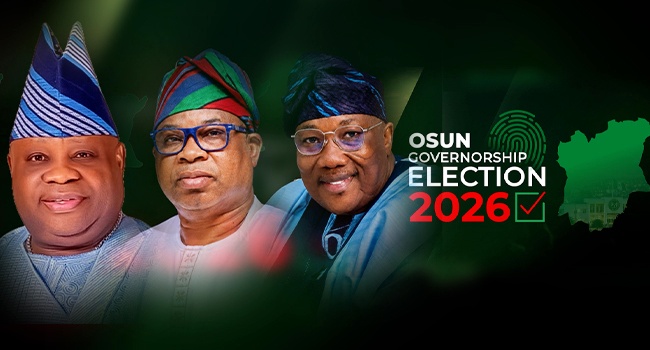
Towards the Osun State governorship election of August 15, not a few expected heaven to fall. All the signs were there. “Dead body surplus,” as they say on the streets. No fewer than 29 corpses laid underneath the soil, lives cut short for a purely political reason. Records cited 79 violent incidents. Thugs had been imported to complement local thugs.
When E-Day came, Nigeria’s ruling All Progressives Congress (APC) invaded Osogbo, the state capital, with all its Federal might. Up to 16 governors, alongside national figures like the Senate President and Speaker, vacated their comfort zones and migrated with brazenly loud–mouthed and foul–mouthed foot–soldiers into Osun, a state their party had declared a warzone they must conquer at all costs.
It did not matter to these APC goons that what they desired did not desire them. Osun people did not hide their love for their dancing Governor Ademola Adeleke. For these citizens, this beautiful soul with a distinguished family pedigree had not only waltzed his way into their hearts, he had in performance and projects surpassed the last two APC governors.
The Nigerian police had taken sides. They were unabashedly pro-APC. For all the killings unleashed against Accord, Adeleke’s party, the police still haven’tbrought any murderer to trial. Unfettered andunrestrained, the death squad roamed the streets of Osun seeking Accord people to devour. But as the Yoruba say, the craftiness of a concubine’s inner-circle can be equally matched by the cunningness of the husband’s own. Accord supporters also showed that, when pushed to the wall, they could match fire for fire. They made APC members too to pay the supreme price. Miffed with the fight-back, a certain Senator publicly egged his people to “kill Accord” members on sight. He spoke openly and on record. Yet the police failed to rein him in. On the other hand, Osun State Government VIPs, like the Chief of Staff, were rounded up. The Chief of Staff to the Governor, ANY GOVERNOR, is His Excellency’s nerve centre. Picking up Adeleke’s CoSamounted to going for Adeleke himself. But this was police victimising the victim.
The Progressives’ usual bad boys breezed in from Lagos and Abuja. They dared the Governor. They brazenly defied his efforts to enforce the peace. With police serving as their rear guard, they raided bus–stops. When Navyofficers, equally brought in to provide security, picked up these goons and guns, police trampled upon “espirit de corps,” attacked this sister Force and freed the hoodlums.
In the midst of all this bizarreness, Grammy nominee musician and nephew to the Governor, Davido, internationalised APC’s iniquity. He swore to drag the Federal-ruling party to the US, the UN, the UK and the EU if it rigged the election results.
However, the most important element in Nigeria’s election is the umpire: INEC. Would the Independent National Electoral Commission (INEC) withstand or would it kowtow to the Federal ruling party like the police had done? It all boiled down to the new man running the commission.
When the newest Sheriff landed in INEC in October 2025, sceptics shook their fists in anger. Like the President, Professor Joash Amupitan is Yoruba. And sceptics quickly disparaged the appointment of this University of Jos Law Professor as fitting into the established profile of the President as a regional, Yoruba-centric leader. Multifarious attacks landed from several sides. The appointee’s anonymity did not help matters. Who was this Amupitan? Unlike Professor Attahiru Jega, Justice Victor Ovie–Whiskey, Justice Tayo Akpata, Professor Maurice Iwu, Professor Humphrey Nwosu and others who hugged the klieg–lights long before securing the electoral umpire job, Amupitan came from the shadows. No one knew him. UNIJOS, from where he obtained his Bachelor’s, Master’s and Doctorate degrees, hardly made the news –much less this Professor of Law who earned his silk as a Senior Advocate of Nigeria in 2014. Even the little known about this UNIJOS teacher, who rose to become its Deputy Vice Chancellor, sparked controversy and rendered him politically incorrect to the powers-that-be in the Northern establishment. Why? One paper he wrote undid him. In the paper he presented in 2020, this Christian Prof had dared to pontificate against the terrorism that ravaged the North and the Fulani militants behind the bloodshed. Titling his paper as, “Nigeria’s Silent Slaughter,” the Senior Advocate of Nigeria called for urgent international intervention to stop what he termed “pogrom and attacks against the Christians and minority groups in Nigeria” by two extremist movements —Boko Haram and Fulani herdsmen. He didn’t stop with just naming and shaming these two genocide squads. Amupitan went ahead and committed the unpardonable sin of criticising the government for recognising Boko Haram as a terrorist organisation but failing to officially label Fulani herdsmen as terrorists. And in 2020, when Amupitan wrote that paper, remember, the Pan-Fulani Muhammadu Buhari held sway as President.
For that singular literary work, the Northern oligarchydeclared the North-Central Kogi State-born Amupitan an anathema. They piled pressure on Tinubu to discard him like a menstrual rag. The President stubbornly paid them deaf ears.
Amupitan appears to have justified Tinubu’s confidence, and that of those who spoke up for this SAN. Under this 62-year-old Prof, INEC has held by-elections and off-cycle elections, and not one governorship poll has been returned inconclusive. None!
Think! This was the same INEC which, under its last Chairman Mahmood Yakubu, littered the entire country with “inconclusive” elections. In Mahmood’s first four years (2015-2019), his INEC conducted 46 inconclusive elections. In 2019 alone, Mahmood delivered seven inconclusive governorship elections: Sokoto, Bauchi, Adamawa, Benue, Kano, Plateau, Rivers and Kano. But Amupitan’s tenure looks like a breath of fresh air.
Same INEC!
Same Commissioners!
Same Resident Electoral Commissioners!
So what changed? A new man steers INEC’s wheel! A new sheriff came to town! Not many have sung his praise. But the Osun elections proved just how stubborn and principled this gentleman can be. Governors, 16 of them, encamped in Osun. They came with tons of cash and foot–soldiers primed to snatch, grab and run. But all theirthunder and their shenanigans fizzled out into a whimper. But their efforts didn’t die easily. Phone calls assailed Amupitan from all corners –the National Assembly, The Presidency– ordering him: Stop the counting! Announce the election as inconclusive! But the UNIJOS Prof turned deaf ears and insisted the process ran its course. At the end of the day, votes counted. This unsung hero, Amupitan, ensured this happened in Osun. It took guts! It took strength of character! Say it: Yes, it took the fear of God!
What many don’t know is that Amupitan happens to be one of these public servants who cannot but flaunt their born-again toga. He is an Elder of the Christ Apostolic Church, CAC. Those who know him testify that he has lived by the CAC creed and grail. To boot, he holds no less a position than the Pro-Chancellor of the CAC-owned Joseph Ayo Babalola University, JABU. The Prof practises not orthodox Christianity, but the fire-bred brand of fundamental Christianity.
What does all this portend for 2027? When it matters mostto Nigerians, will the saintly principles of this unsung hero of the Osun State election goad him to deliver a credible election? Can he? Will he?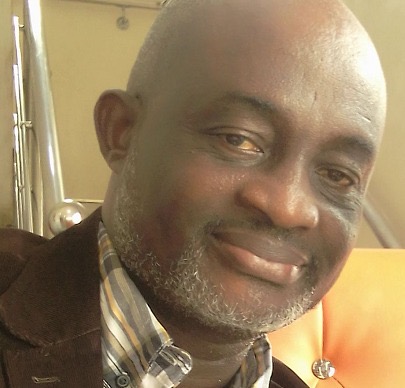
OBOAGWINA, JOURNALIST, AUTHOR AND MEDIA CONTENT PROVIDER, SENT THIS PIECE FROM LAGOS, AND WILL WELCOME FEEDBACK VIA “FOBOAGWINA@GMAIL.COM”


-
 Politics3 days ago
Wike Defends ₦10m Reward for Councillors, Insists It Is Not Vote-Buying
-
 News5 days ago
FG Seeks Fresh $500m World Bank Loan Ahead of 2027 Presidential Inauguration
-
 Health3 days ago
Enugu Shuts Down Four Illegal Private Hospitals, Warns Operators Against Unsafe Practices
-

 Entertainment4 days ago
Mbah Appoints Nollywood Actress Destiny Etiko as Senior Special Assistant
-
 News5 days ago
Mass Protest Looms in Abacha Community, Anambra, Over PG Election Dispute
-

 Crime1 day ago
Tragedy At UNN As Six Fresh Graduates Are Found Dead In Nsukka Apartment
-
 News4 days ago
US Lecturer Alleges Tinubu Never Attended Chicago State University
-
 Sports4 days ago
Toxic Politics: NFF Officials Block Peter Obi From Greeting Flamingos