


Opinion
How Is Tinubu Better Than Abba Kyari?



By Reno Omokri
On Monday, February 14, 2022, while the rest of us were either expressing or receiving words and gifts of love, being that it was Valentine’s Day, the disgraced so-called super cop, Deputy Commissioner of Police, Abba Kyari, was being caught in a sting operation, and was exposed as a member of a drug cartel. Well, well, well, you might say. And you would be right to say that.
But, when you look at it, Abba Kyari was a bottom feeder in the drug cartel that he was caught working for. He was a corrupt policeman. A muscle. He was far from being the cartel boss. At best, he was a small fry. A foot soldier. No. A food soldier.
But now, compare him to Bola Tinubu. Just like Abba Kyari, Bola Tinubu was exposed during a sting operation on a white heroin drug cartel in Chicago.
On November 28, 1990, a member of that cartel, by name Abiodun Agbele, was nabbed in a federal sting operation wherein he sold $7000 worth of heroin to an undercover FBI agent. His testimony led to a federal case against multiple Nigerian members of his cartel, of whom Bola Tinubu’s name was mentioned.

It has now been judicially established beyond all reasonable doubt that Bola Tinubu was indicted as a co-defendant in a federal case involving white heroin drug cartel.
Not only was he indicted, he was fingered as the bag man (read money man) for a drug cartel. And rather than fight those charges, Tinubu agreed to forfeit $460,000 to the US government in 1993. A colossal sum today, and a king’s ransom at the material time.
As anyone with prosecutorial knowledge of the law would tell you, forfeiture is equivalent to a conviction, in the sense that you are not fighting the charges against you on their merits, and have rather reached a plea bargain.
So, I ask, how is Tinubu better than Abba Kyari?
In fact, if anyone is better, it will be Abba Kyari, who was not directly linked to drug cartels, other than as an outsider. Bola Tinubu, according to court documents, opened an account and named a known drug baron as someone with whom he shared an address.
How do we explain that Abba Kyari was exposed as a member of a drug cartel, and Nigerians turned on him? The police suspended him. He is currently facing trial. But Tinubu has been exposed as a KNOWN DRUG LORD. Instead of facing prosecution, APC is asking Nigerians to vote him. My people, no be juju be that?
Who is worse? A member of the cartel or the drug lord himself? If Abba Kyari belongs in jail, then why should Tinubu belong in Aso Rock?
In fact, Tinubu should have just made Abba Kyari his running mate, and let us all know that Nigeria is now a drug haven! After all, Abba Kyari is Kanuri, like Kashim Shettima, and comes from the same Borno state.
We as citizens should not turn our beloved country into the butt of jokes in the international community by electing a person with such a history as our President. As the Igbo man says, Tufiakwa!
The cartel lifestyle that Tinubu lived in the late eighties and early nineties is so ingrained in him that it has permeated Lagos and the Southwest.
Kofoworola Bucknor, deputy Governor under Tinubu between 1999 and 2003 has described working with Tinubu as working with the mafia. Those were her words. She is still alive. She worked closely with Tinubu and understands him better than most.
Listen to what Tinubu himself told Raji Fashola, after he had installed him as Governor.
At the 4th annual Bola Tinubu Colloquium, Raji Fashola, the then Governor of Lagos, had the temerity to speak on merit as a means of getting into office in the public sector, to which Bola Tinubu responded publicly as follows:
“If there’s no partiality, you cannot be governor yourself.”
Tinubu would not have so publicly and brazenly rebuked the Governor, if he did not still control the government behind the scenes. And when he installed a Governor who refused to be a puppet, Tinubu promptly ensured he was not re-elected as he did to former Governor Akinwunmi Ambode
He replaced him with his mini-me, Jide Sanwo-olu, who is so sycophantic that he even publicly mimics Tinubu’s physical posture and gestures!
And Nigerians may want to ask Bola Tinubu who is Olufunke Philips and how she was able to get a cushy job in Sanwo-olu’s government.
So while Tinubu may think he has fooled Nigerians with his glad-handing around the nation, he should remember the immortal words of the late Bob Marley:
“You can fool some people sometimes.
But you can’t fool all the people all the time.”
We will still visit the bullion van issue. Why is the EFCC prosecuting the former Accountant General of Federation, Ahmed Idris, and not Bola Tinubu? We provided evidence of Tinubu’s corruption to the EFCC, including photos of bullion vans going into his house on Election Day, contrary to The Money Laundering (Prohibition) Act 2011. Why Idris and not Tinubu?
And what is true for the EFCC is also true for the National Drug Law Enforcement Agency. Why are Buba Marwa and his NDLEA agents prosecuting Abba Kyari, but have not invited Bola Tinubu for questioning since it has been established that he had links with a white heroin drug cartel? Tinubu should be dealing with NDLEA, and not the Independent National Electoral Commission!
I thought Marwa declared that he would have zero tolerance for drugs? Is this how to show zero tolerance?
I am not playing politics here. I am being patriotic. Having a man with judicially established links to a white heroin drug cartel, such as Bola Tinubu, as President, is a serious national security risk. He will be vulnerable to blackmail from foreign intelligence agencies.
On Atiku’s AriseTV Interview
The major issue that some people, especially those who describe themselves as Obidients, appear to have with Waziri Atiku Abubakar’s AriseTV interview (because the interview was so good, they had nothing else to hold on to) was the fact that Alhaji Abubakar said, “In the north, 90 percent of our people are not tuned to social media.”
Was the former Vice President of Nigeria wrong?
Let us focus on what cannot lie. Let us focus on the facts, not sentiments.
Almost every working-class Northerner in the Northwest has a small portable transistor radio. It is their essential life tool. They get their news from BBC Hausa.
Research this. BBC Hausa has 18 million unique listeners every week. VOA Hausa service reaches a combined weekly audience of 21 million. Another 10 million a week listen to DW Hausa. That is more than the number of Nigerians on Twitter and Instagram combined. A lot of these folk who have issues with the ‘90%’ assertion live in a social media echo chamber and think there is no life outside Twitter.
You trend on Twitter and it gets to your head, you begin to insult Waziri Atiku Abubakar. You boast that your candidate will win on February 25, 2023. Do you know how many Nigerians are not on Twitter? 190 million. You saw those humongous crowds that came to see Buhari in Kano? They listen to BBC, VOA and DW Hausa service!
This does not mean they are not on the Internet. This does not also mean that they are not educated. You can be educated and have access to the Internet, without being on social media. They are not mutually exclusive. Take time to understand the North, because they understand you!
The average core Northerner, rightly or wrongly, sees social media as an indecent place. A place of much haram, where their mind will be corrupted by ungodly tendencies. So they tend to avoid social media, in preference for radios. However, it does not make you and I more informed than them!
Twitter is a platform that Northerners tend to shy away from, because of its very high level of toxicity. But that is not to say they do not use the Internet. They do.
They are big on TikTok. They also have taken to Facebook ever since that platform adopted Hausa as one of its domesticated languages. They use the Internet for online banking. To watch tafsir on YouTube and even to read the Al-Quran online. They buy mobile phone credit on the Internet. They are Internet savvy, but social media shy. They may not show up on social media, but they will definitely show up at the polling unit on February 25, 2023.
#BBNaija began last week. Southern Nigeria was completely focused on it to the point of fixation. But observe the North. Big Brother is not big over there. We have different values. What Northerners come to do on social media and TV is VERY different from what Southerners come to do!
Now that #BBNaija has started, I am experiencing less insults and threats from Obidients than usual. Now, do you see this Southern fixation with Big Brother? It is seasonal. But in Northern Nigeria, they have the same zeal, but for radio. And it is a daily fixation, not a seasonal one!
Many of us inaccurately see them as ignorant folk, but they are largely more informed than us as a people. Many Northerners choose to filter out social media. The vast majority of them elect to ignore BBNaija. They largely consider these things haram. But they follow political and other social events the way BBNaija enthusiasts follow naked yeyebrities!
This is the basis for the assertion by Waziri Atiku Abubakar that 90% of Northerners are not on social media, even if they are online. A lot of us in the South are too wrapped up in ourselves to notice that there are others who think and behave differently from us.
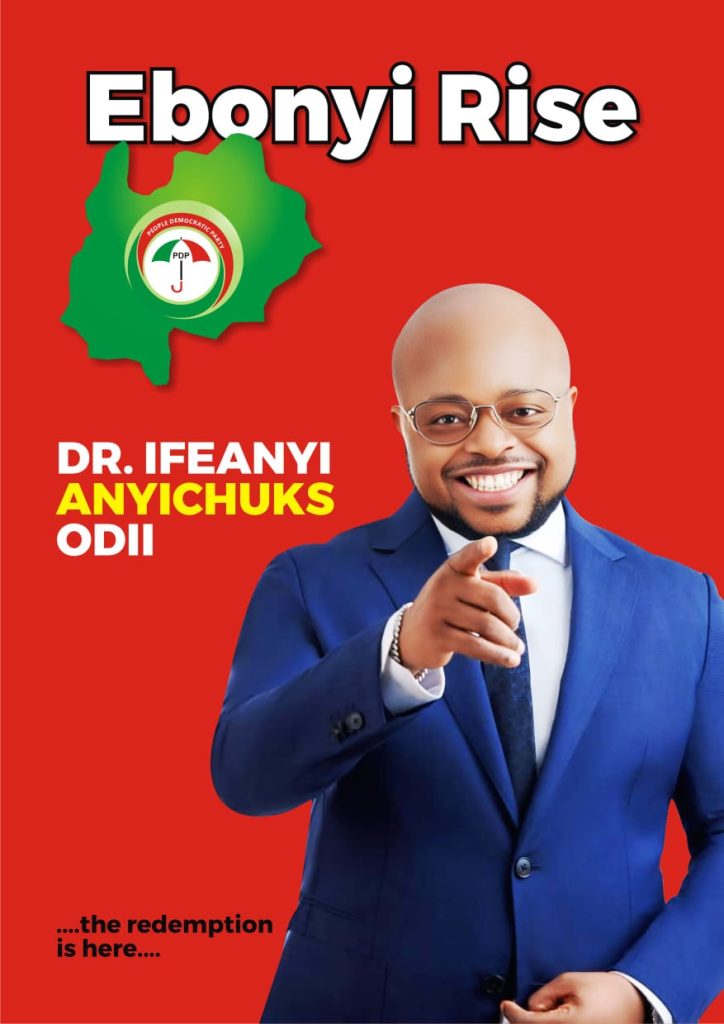
The 2027 governorship election in Ebonyi State must not be viewed as just another political contest. For many Ndi Ebonyi, it represents a defining moment — an opportunity to reflect on the direction of the state and make a decisive choice about the kind of leadership they want for the future.
Across the vast lands of Ebonyi, there is a growing sense of frustration and uncertainty. Many citizens are asking difficult questions about security, youth empowerment, employment opportunities, poverty alleviation and the welfare of vulnerable groups, particularly women and young girls.
The concerns are real, and they deserve serious political attention.
A state blessed with human and natural resources should be one where young people can look to the future with confidence, where women have meaningful opportunities to thrive, and where government policies translate into tangible improvements in the lives of ordinary citizens.
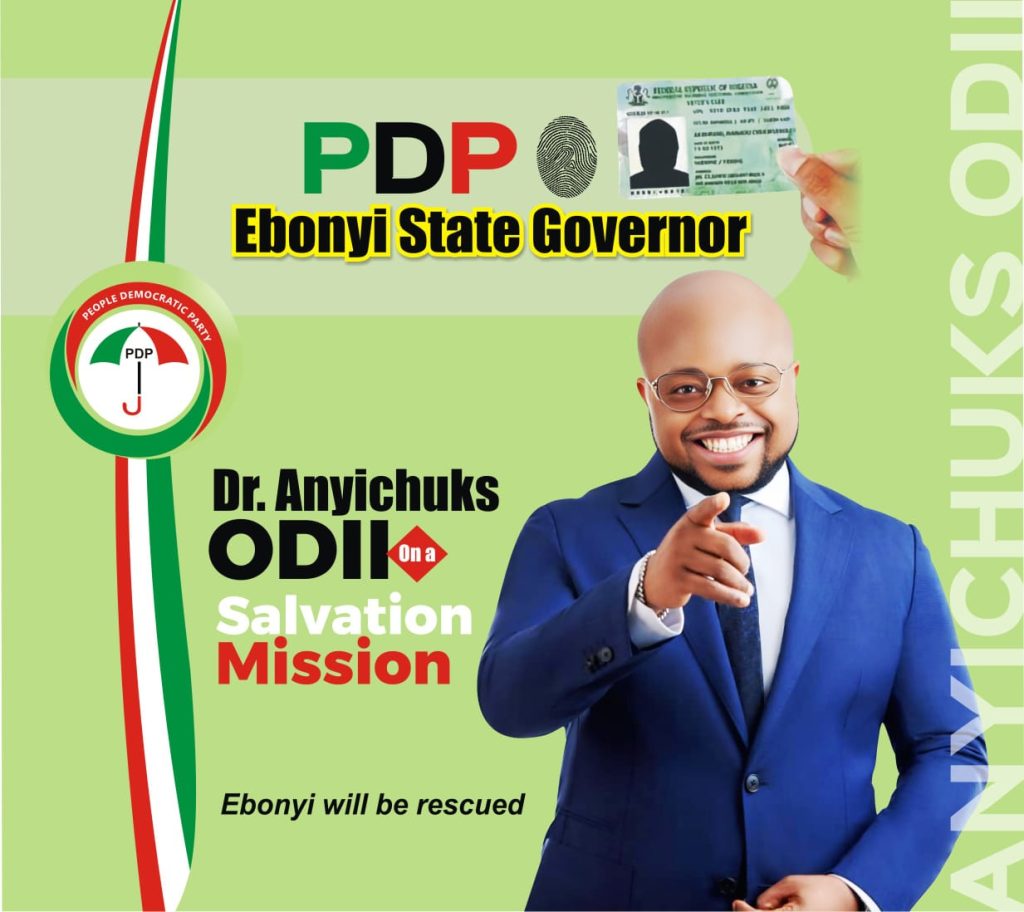
It is against this backdrop that Anyichuks Odii has emerged as a political figure attracting growing attention among those seeking a different direction for Ebonyi.
To his supporters, Anyichuks Odii represents a combination of experience, vision, capacity and determination — qualities they believe are necessary to reposition the state and restore hope among its people.
The argument is straightforward: Ebonyi needs leadership that does not merely administer the state but actively creates opportunities for its people.
The youths need more than political promises. They need practical skills, access to opportunities, entrepreneurship support, employment pathways and an environment where their talents can translate into sustainable livelihoods.
Women need more than symbolic representation. They need economic empowerment, access to finance, skills development, education and policies that enable them to become stronger contributors to their families and communities.
And every citizen deserves to feel secure enough to live, work and pursue legitimate aspirations without fear.
The 2027 election therefore provides Ndi Ebonyi with an opportunity to critically assess the records, ideas and capacity of every candidate seeking their mandate.
Democracy ultimately belongs to the people. Their voter cards are their instruments of choice, and their votes should reflect their aspirations for a better Ebonyi.
Already, political conversations are intensifying across the state. One of the songs gaining attention among supporters captures the mood of those calling for a change in political direction:
“Nwifuru kwakoro naba, onye ndozi abiago, naba, onye ndozi abiago, naba… Ka Anyichuks bata.”
For the supporters of Anyichuks Odii, the message is clear: they believe a new chapter is possible and that the 2027 governorship election could be the moment when Ndi Ebonyi choose the leadership they believe can deliver that change.
But beyond slogans and political songs, the real test will be the issues.
Ebonyi deserves a serious conversation about security, economic development, infrastructure, education, healthcare, youth employment, women’s empowerment and inclusive governance.
The people must demand clear plans, measurable commitments and accountability from all contenders.
If 2027 is indeed to become a moment of redemption, it must ultimately be a redemption achieved through the informed choice of the people.
And for those who believe Anyichuks Odii embodies the leadership Ebonyi needs, the journey to 2027 has already begun.
The message from his supporters is unmistakable:
Ebonyi is ready for a new conversation. Ebonyi is ready to choose. Ebonyi is ready for a new direction.
By Dr. Kenneth Anozie, Political Strategist
By Emma Igwe
The decision by the Minister of Works, Engr. David Umahi, to institute a defamation action against Linda Ikeji, Linda Ikeji TV Limited and Stella Ifeoma Okengwu should not be dismissed as an attempt to silence criticism.
At the heart of the case is a much more fundamental question: how far can individuals and media platforms go in publishing serious allegations against a person’s character and reputation without being held accountable if those allegations are found to be false?
Umahi has approached the High Court of the Federal Capital Territory, Abuja, with suit No. GWD/CV/264/26, filed on August 24, 2026. He alleges that publications and videos circulated between March 2025 and March 2026 contained allegations of bribery, corruption, intimidation, sexual misconduct, land grabbing, sexual harassment and claims that he was unfit for public office. He maintains that the allegations were false, malicious and calculated to damage his reputation.
These are not minor accusations.
A public official can be criticised over policies, projects, political decisions and performance. That is an essential part of democracy. But allegations of corruption, bribery and sexual misconduct are qualitatively different. If such allegations are published without adequate factual foundation and are ultimately found to be false and defamatory, the damage to the subject’s reputation can be enormous.
THE SCALE OF PUBLICATION MATTERS
Another important consideration is the alleged reach of the publications.
According to the reports on the suit, Umahi alleges that material posted by Stella Okengwu was subsequently amplified through Linda Ikeji’s media platforms, including Linda Ikeji TV and its Instagram platform.
That distinction matters.
An allegation whispered privately to a few people is one thing. An allegation disseminated through platforms with substantial online audiences is another.
If the court ultimately finds that defamatory statements were repeatedly disseminated to a large audience, the extent of publication would naturally become relevant when assessing the injury allegedly suffered by the claimant.
UMAHI SAYS HE DID NOT RUSH TO COURT
The minister also says that his lawyers first demanded that the alleged publications be removed, that an unreserved apology be issued and that the defendants undertake not to repeat similar allegations.
He alleges that those demands were not complied with.
If that account is established before the court, it strengthens the argument that litigation was not necessarily his first response, but followed an alleged failure to resolve the dispute through a demand for correction and retraction.
WHY THE CLAIM FOR DAMAGES IS SIGNIFICANT
Umahi is seeking ₦500 million in general damages and ₦2 billion in exemplary damages, making ₦2.5 billion in damages. He is separately seeking ₦500 million as costs of the action and 10 percent post-judgment interest.
The amount claimed should not, however, be confused with an amount already awarded by a court.
It is a claim that must be proved.
And that is precisely why the court process is important.
If Umahi can establish that the publications were false and defamatory, that they caused serious injury to his reputation and that the defendants were legally responsible for their publication or republication, then compensation would serve more than a personal purpose.
It would reinforce the principle that freedom of expression does not automatically translate into freedom from responsibility for demonstrably false and defamatory statements.
THIS IS NOT ABOUT PROTECTING POLITICIANS FROM CRITICISM
There is a dangerous tendency in Nigeria to treat every defamation action involving a politician as an attempt to suppress free speech.
That approach is too simplistic.
Democracy requires vigorous criticism of public officials. Journalists, bloggers and citizens must remain free to investigate government and expose genuine wrongdoing.
But democracy also requires accountability for what is published.
If a journalist has evidence of corruption, the appropriate response is to present the evidence and defend the publication in court. If a person makes an allegation and can prove its substantial truth, that too is a legitimate defence.
But if a court eventually determines that serious allegations were knowingly or recklessly published without justification and caused reputational damage, the law must provide a remedy.
THE COURT SHOULD DECIDE — NOT SOCIAL MEDIA
This is perhaps the most important aspect of the Umahi case.
At present, the allegations made by Umahi in his Statement of Claim remain allegations before the court. The defendants had not, according to reports available as of August 25, been served with the writ, and no hearing date had been fixed. They will have the opportunity to present their defence.
Therefore, neither Umahi nor his opponents should declare victory prematurely.
The proper question is not whether Umahi is powerful enough to sue.
The proper question is whether the publications complained of were true, substantially true, fair comment, privileged, or defamatory and unjustified.
That is what evidence and the judicial process should determine.
THE REAL TEST
Umahi deserves compensation if he proves his case.
If the court establishes that he was falsely accused of serious criminal, corrupt or sexually improper conduct; that the allegations were defamatory; that the defendants were legally responsible for the publications; and that he suffered compensable injury, then a substantial award would not be an attack on journalism.
It would be an application of the law.
Conversely, if the defendants can substantiate their allegations or establish a recognised legal defence, the court should equally protect their right to publish matters of legitimate public interest.
That is the essence of the rule of law.
The court — not social media, not political supporters, and not bloggers — should have the final word.
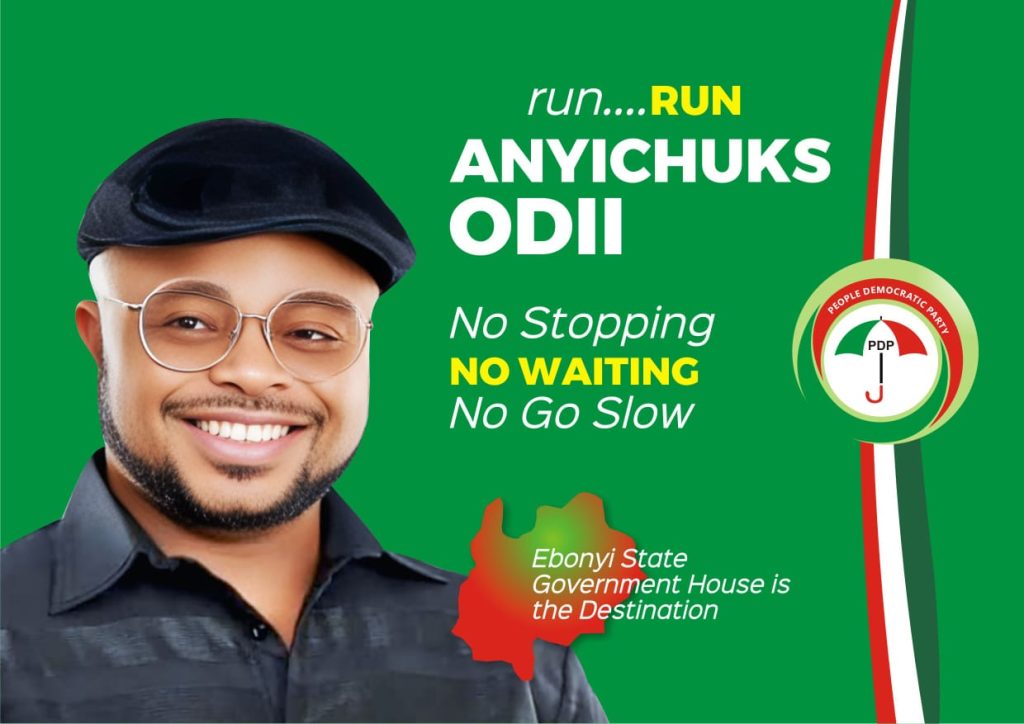
In life, evil never lasts forever. *Change must always come*! Many believe today that 2027 is *FREEDOM TIME FOR EBONYI PEOPLE*
In the midst of these cacophonic political noise, a man of the people has arisen to clean the tears that Ebonyi has suffered under an *ifuru* guy whose legendary for corruption and sleaze is unquantifiable..
*DR. ANYICHUKS ODII IS FINALLY HERE*! The people are excited. The vision is classic which will turn Ebonyi around.
1. Infrastructure.
2. Industrialization.
3. Farming improvement
4. ICT development
5. Youth empowerments
6. Government restructuring.
7. Securing lives and property
8. Expanded governance to touch all parts of Ebonyi
9. Education expansion and offer of scholarships to indigent students & pupils.
More will come with a leader who, as a private businessman made all these possible, as well as developed sporting activities around Ebonyi State.
Ndi Ebonyi, look at the man; *ANYICHUKS ODII*
Dr. Kenneth Anozie
Political Analyst
Kenneth Anozie
Soon, the INEC regulations will lift the lid on campaigns to start. In Ebonyi state, there will be a lot of political noise. The political timberlines will be sounding cacophonously. The noise will be unbearable.
However, only one campaign, the Governorship candidate of People’s Democratic Party, PDP, *DR. ANYICHUKS ODII* will be the only mandate the good people of Ebonyi need to be hearing and standing on. His mandate merits all the noise because he has served the people and has been a source of succour for thousands of families in many aspects.
The vision of Anyichuks Odii on health care, education, social safety, security and agriculture/industrialization as well as youth empowerments are all top notch. They are all well spelt out, which will be released as his manifesto will be released soon.
Already, we have seen a glimpse of it in our previous revelations and analysis. As it stands today, only on the mandate of Anyichuks Odii as the governorship candidate of PDP are people expected to stand on.
The mandate has character, capacity, compassion and great vision.
*EBONYI PEOPLE, BLIGHT ANY OTHER MANDATE, ANYICHUKS ODII IS THE MANDATE WE SHALL ALL STAND ON*
Dr. Kenneth Anozie
Political Analyst
Opinion
SEYI TINUBU AND THE CITY BOYS MOVEMENT: Building A New Architecture For Nigerian Youth In Politics And Nation-Building
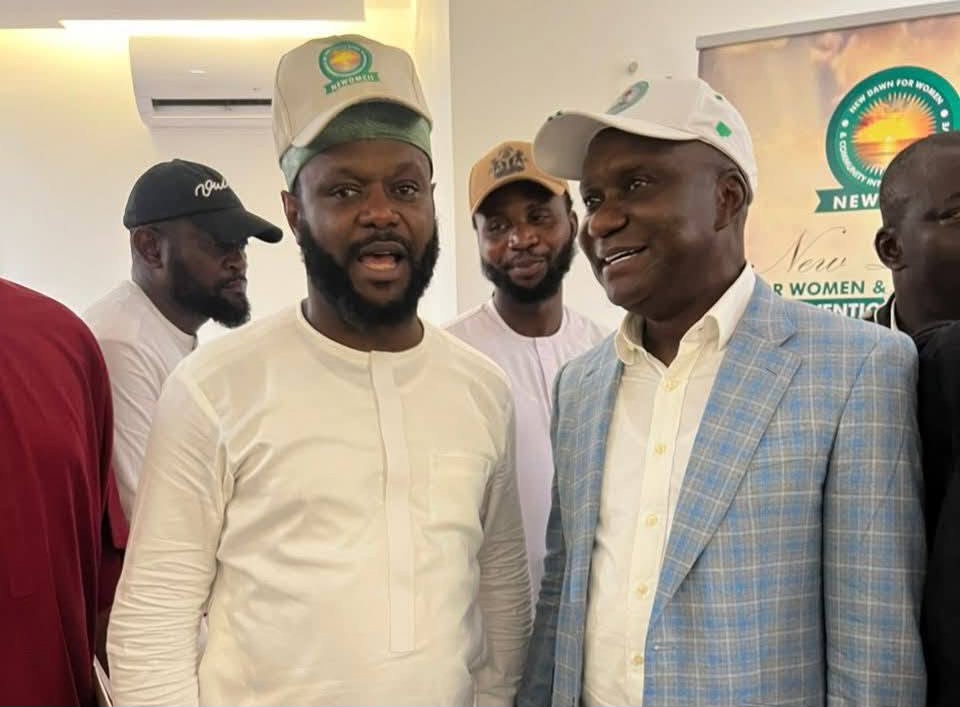
When history records the political organizing of Nigeria in the 2020s, the name Seyi Tinubu will feature prominently not just as the son of a president, but as the convener who gave structure to youthful energy through the City Boys Movement.
What began as a campaign vehicle in 2022 has since evolved. Seyi Tinubu himself described it at the movement’s national retreat in Abuja as “more than just the opening of a retreat. It is the beginning of a movement” dedicated to service and the Renewed Hope vision.
That evolution matters. For too long, youth engagement in Nigeria oscillated between protest and apathy. The City Boys Movement offers a third lane: organized, institutional, and solution-driven participation.
On youth advocacy, the CBM has redefined what advocacy can look like. Instead of shouting from the sidelines, its members are being trained to enter rooms, ask questions, and propose answers.
Seyi Tinubu challenged the movement to move beyond defending government to “reconnecting Nigerians with government.” That is advocacy with responsibility — explaining policy, listening to feedback, and carrying both back to Abuja.
In governance communication, the gap between policy makers and citizens has been Nigeria’s oldest problem. CBM is attempting to close it by deploying young people as policy translators.
With reforms like subsidy removal and naira floatation straining households, the movement positioned itself as a buffer — not to deny the pain, but to explain the purpose with facts and empathy.
The directive from its Patron was clear: engagement must be “responsible, factual and compassionate.” That is a maturity we rarely demand of youth politics, and it is changing the tone of conversations in markets, campuses, and wards.
Visible participation is where the theory meets the street. CBM has deliberately taken its meetings out of Abuja hotels and into communities across the 36 states and FCT.
From free medical outreaches to campus visits, members are showing up where government is felt most — in clinics, in schools, in queues.
That visibility sends a message to young Nigerians: politics is not a distant game. It is something you can touch, join, and shape.
Perhaps the most consequential shift is institutionalization. The movement has moved from a loose WhatsApp group to a formal structure with a National Working Committee, State Directors, and representation down to Zonal, LGA and Ward levels.
This matters because structure creates accountability. It creates a ladder for a 24-year-old in Oron, a 28-year-old in Kano, or a 30-year-old in Enugu to rise through service, not just slogans.
The stated target of mobilizing 10 million youth votes for 2027 is ambitious, but the method is instructive: “real people, real members, real engagement and hard work at the grassroots,” according to the Director-General.
On relief and welfare, the City Boys Movement has chosen to lead with service. Nationwide food distribution during Ramadan and Lent, medical missions, and direct support to vulnerable households have become part of its brand.
These are not photo ops. In a season of economic adjustment, relief builds trust. Trust is the currency of governance, and youth are spending it in their communities.
Direct empowerment is the next pillar. Through programs tied to Seyi Tinubu’s initiatives, thousands have received grants, business support, and tools to start or scale.
In Ogun State alone, the model included ₦500,000 grants for 50 SMEs, ₦200,000 for 100 micro-businesses, and up to ₦5m for tech innovation winners.
Furniture donations to primary schools and cash grants to market women show the movement understands that empowerment must be both aspirational and immediate.
This is advocacy that pays school fees, stocks a shop, and buys drugs. It tells a young person: your government sees you, and your peers are in the room making it happen.
Geopolitical outreach is another area where CBM is breaking new ground. By appointing high-profile regional directors and pushing into the South-East, the movement is testing whether youthful messaging can transcend old party lines.
The goal is not to erase differences, but to create a national conversation where youth in every zone see themselves in the same project.
That is nation-building work. It is slow, unglamorous, and necessary.
The movement also offers a critical safety valve: channeling youthful frustration into structured civic engagement rather than into street confrontations.
That is not about silencing dissent. It is about giving dissent an address, a process, and a path to influence.
Critics will argue that youth groups tied to power risk becoming echo chambers. The test for CBM will be whether it can carry hard feedback upward as boldly as it carries policy downward.
Early signs suggest the leadership knows this. The repeated calls for empathy, for listening, and for “scratching only the surface” of what can be accomplished point to an awareness that legitimacy must be earned daily.
Seyi Tinubu’s role has been to provide patronage without suffocation — to fund, to convene, and then to step back enough for members to own the work.
If the City Boys Movement sustains this model, it could leave behind more than votes. It could leave behind a template: how to institutionalize youth energy, communicate governance honestly, and turn relief into resilience.
Nigeria does not need more spectators. It needs more builders. In Seyi Tinubu and the City Boys Movement, we are watching an experiment to see if Nigerian youth can be organized not just to win elections, but to govern, to serve, and to stay. The early chapters suggest it is possible.
CHINEDUM ENYINNAYA ORJI writes from Amaokwe Ugba, Umuahia Ibeku, Abia State.

-
 News5 days ago
Major Generals to Receive Up to ₦25.91m Yearly as Tinubu Approves New Military Pension Structure
-
 Crime4 days ago
Murder of Aiza Nwosu: Niece, 12 Suspected Cultists Arrested, Nephew at Large
-

 News4 days ago
Anambra Community Petitions Soludo Over Erosion Caused by Illegal Sand Mining
-
 Crime5 days ago
Anambra Police Deny N600,000 Bribe Demand, Explain Arrest of Suspected Cultist’s Sister
-
 Politics5 days ago
2027: Former Deputy Governor Resigns From APC
-

 Entertainment4 days ago
Davido Reveals How Dangote Drove His Mother Home
-

 News2 days ago
FCC Urges Enugu Youths to Prepare for Federal Job Opportunities
-
 Crime4 days ago
Woman Recounts Rape By Nigerian Jailed 17 Years In UK