


Politics
Enugu Deputy Governor vs Chief of Staff: War without end in Ezeagu

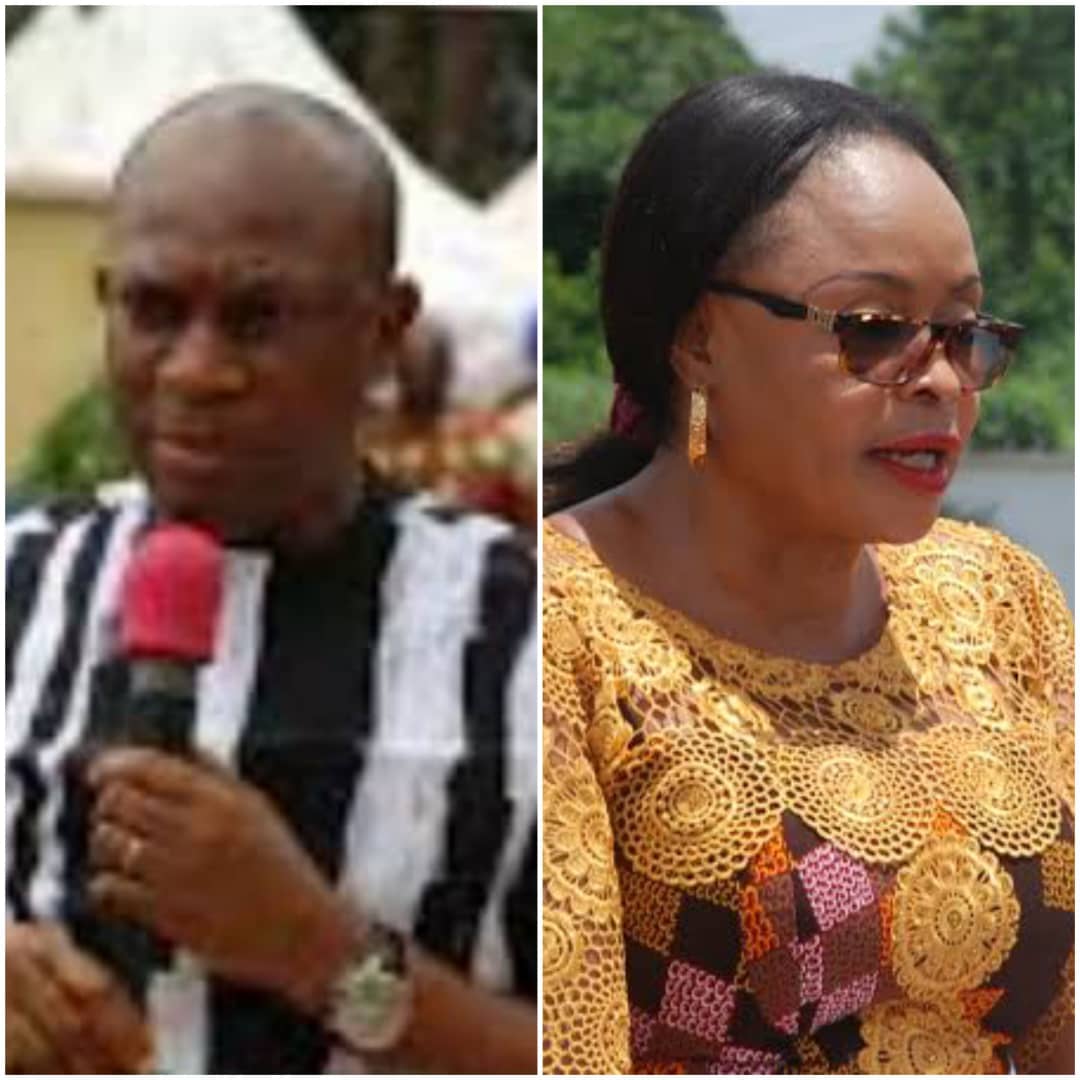

The battle for Supremacy between the Deputy Governor of Enugu State Mrs. Cecelia Ezillo and the Chief of Staff to the Governor Chief Festus Uzor is as old as the current administration in the state.
Coming from the same local government Area, a thin line has existed and continued to widen. Polical appointments, positions have become a tug-of-war as one leader tries to outsmart the other.
Consensus opinion on political issues has become impracticable just as adhering to old zoning arrangement becomes a vexed issue.
Tension continue to rise at every turn and like the saying goes, the grass has continued to suffer in this fight between two elephants.
Beyond the cold war lies ambitions ahead 2023. Both leaders are scheming for Federal Legislative positions; either Senate or House of Reps.
The face off is exacerbated by the fact that only one person could be favoured at end of the day as Ezeagu may not get both positions.

This has further split loyalty at the grassroots and across party line. Monies are paid monthly to numbers of individuals to sustain loyalty and support.
As usual the same ‘crack’ has always reared its ugly head when decisions on Local Government elections come up.
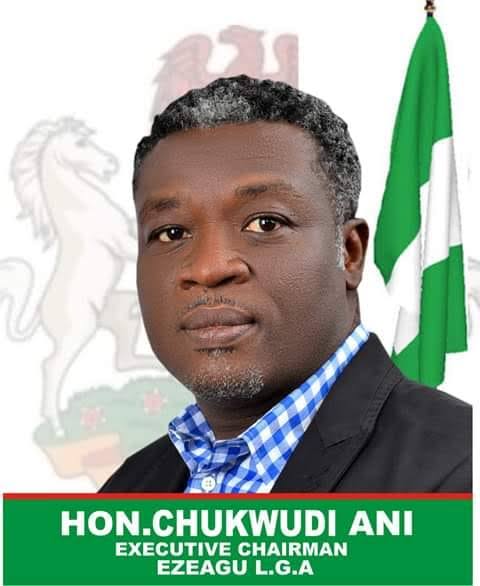
Hon Chukwudi Ani, the executive Chairman of Ezeagu Local Government Area is on the ‘firing line’ because his second term which should have been ‘fait accompli’ is now being made an issue by pockets of opposition. Those who should speak cannot do so based on interest rooted in the fight of the Titans.
Already the Leadership of Ohanaeze Ndigbo in the Local Government has given the Chairman a clean bill of health and award for outstanding performance.
The Ohanaeze Exco led by Hon George Nwajuani also urged the people to respect the existing zoning formular which gurantees a second term for the Chairman.
EverydayNews has it on good authority that the Chairman is favoured because he has not done a second term as is the tradition; and nobody from his zone has ever done Chairman two terms. This is said to be the first time a candidate from the Central Zone is going for a second term.
The Chairmanship position which started with Chief Joe Mammel in1999 has always seen each beneficiary do two terms. After Mammel there were certain disruptions due to the creation of development Centres, which did not however take away the centrality of the Council.
From Mammel it went down to the North with Julius Ogbuke who enjoyed two terms.
Then came Emeka Ozoagu, which was kicked against due to disruption of the process yet it never stopped the zoning arrangement moving forward.
From Emeka Ozoagu to Chukwudi Ezinwa from the South and now back to the Central.
It is posited that after the second term of this Chairman which is almost guaranteed the position will move to the North.
Other examples being put forward is the position of State Assembly which started with Dr. Festus Uzoh.
From there it went to the South – Hon Paul Anikwe, then to Central Mrs Cecelia Ezillo. From Central it moved to the North – Hon Chima Obieze. From there is expected back to the South.
EverydayNews reoprts that the problem in Ezeagu is not the Chairman but who is who that are interested in who becomes the chairman based on ambition.
Strategic stakeholders at the top are not comfortable with him because it may foreclose other personal ambitions ahead 2023. And whether he is due for another term or not they are opposed to it because of personal ambition in 2023.
In all, the Chairman appears to have done enough to deserve another term. He is also supported by the zoning formular.
His obstacles are therefore not rooted and may not stand the test of time. His second term is thus very positive.
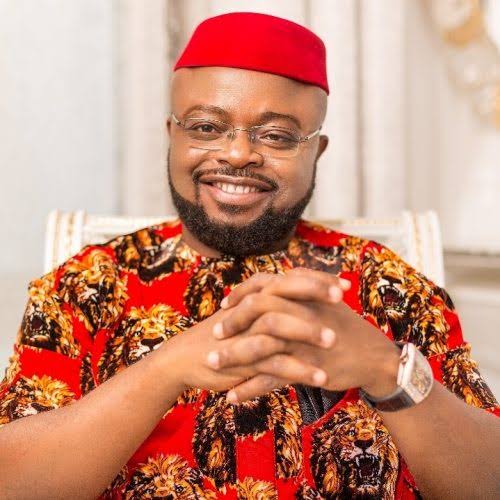
The Peoples Democratic Party (PDP) governorship candidate for the 2027 Ebonyi State election, Chief Ifeanyi Chukwuma Odii, has pledged to attract more than ₦2 trillion in private-sector investment to the state within six months of assuming office if elected.
Odii made the pledge while addressing supporters in Lagos ahead of the formal commencement of his campaign.
He said his investment strategy would cover key sectors of the Ebonyi economy, including mining, hospitality, real estate and manufacturing.
According to the PDP candidate, he has identified more than 2,000 prospective investors, each capable of investing about ₦1 billion in the state.
“I have over 2,000 people who can invest ₦1 billion each. When you multiply it, you will get over ₦2 trillion. This has been structured in such a way that all aspects of the economy will be involved,” Odii said.
He said the proposed investment drive was designed not only to inject capital into the state but also to create jobs, expand the productive base of the economy and provide opportunities for young people and entrepreneurs.
Odii said Ebonyi’s natural resources and strategic location placed it in a strong position to attract large-scale investments if its economic potential was properly harnessed.
He promised that his administration would prioritise private-sector participation, industrialisation and job creation while creating an enabling environment for both local and foreign investors.
The candidate also said existing businesses in the state would be supported to expand, while new investors would be encouraged to establish operations across various sectors.
His pledge comes amid growing political activities ahead of the 2027 governorship election, with economic development, employment generation and wealth creation featuring prominently in his campaign message.
The proposed ₦2 trillion investment target within six months, if achieved, would represent a significant boost to Ebonyi’s economy and rank among the most ambitious private-sector investment mobilisation plans proposed in the state.
By Okey Maduforo, Awka
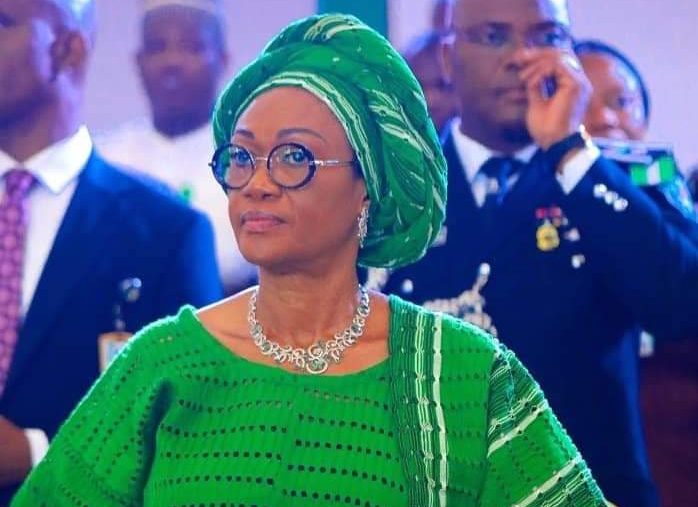
The planned visit of the First Lady of Nigeria, Senator Oluremi Tinubu, to Anambra State has sparked controversy following a protest by the state Chairman of the All Progressives Congress (APC), Senator Emma Anosike, that the party was not informed about the visit.
Anosike said the APC in Anambra was never consulted or briefed about the proposed visit, adding that the party was taken aback by reports that the wife of the party’s national leader and presidential candidate, President Bola Ahmed Tinubu, would be visiting the state without recourse to the state chapter.
He said, “It is indeed strange that the First Lady of our presidential candidate is visiting Anambra State without recourse to the party in the state.
“The party wishes to state categorically that we are not part of the arrangements for the reception of our First Lady, Senator Oluremi Tinubu, because the party was never put in the picture.”
Anosike also dismissed the mantra that “The Progressives Are Working Together”, being canvassed by the All Progressives Grand Alliance (APGA), describing it as a smokescreen by the ruling party in Anambra to hijack President Tinubu’s re-election from the APC.
He said, “For instance, the APGA-led government in Anambra State did not interface with us on the organisation of the visit, and the party wonders if the progressives are indeed working together.”
The APC chairman, however, said the development would not compromise the First Lady’s visit, urging all APC members and supporters in the state to turn out and give Senator Oluremi Tinubu a warm welcome.
He stressed that despite the party’s reservations over the arrangements, APC members remained committed to welcoming the First Lady to Anambra State.
Former Deputy Governor of Bauchi State, Sagir Saleh, has resigned his membership of the All Progressives Congress (APC).
Saleh, who served as deputy governor under former Governor Isa Yuguda, announced his resignation in a letter submitted to the party leadership in Katagum Local Government Area.
He cited personal reasons for his decision but did not provide further details.
His exit comes amid growing disagreements within the Bauchi APC following the party’s 2027 governorship primary. Other prominent members, including former governorship aspirant Bala Jibrin and Sunusi Kunde, an associate of Coordinating Minister of Health and Social Welfare, Prof. Ali Pate, have also reportedly left the party.
Jibrin, a former National Auditor of the defunct Congress for Progressive Change (CPC), resigned on August 31, 2026, following his opposition to the emergence of former Bauchi Governor Muhammad Abubakar as the APC’s 2027 governorship candidate.
He had criticised the primary process and questioned how the candidate emerged.
Kunde also resigned from the APC in August, submitting his resignation to the party chairman of Beti Ward in Misau Local Government Area.
The latest departures are coming as efforts continue to resolve internal disputes and disagreements among APC members in the state.
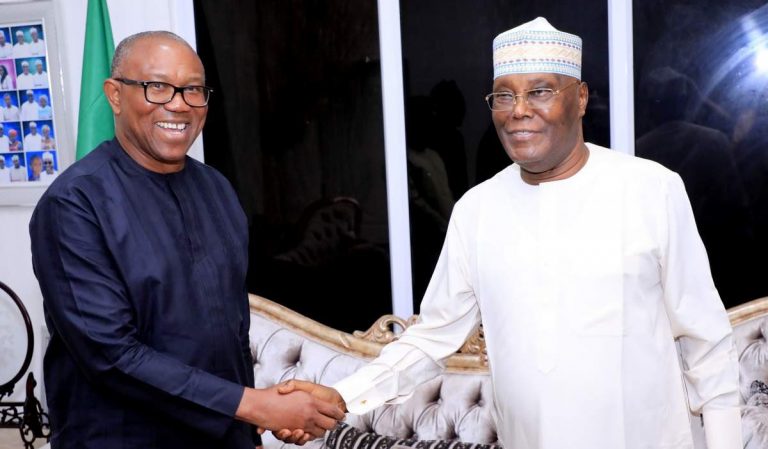
The Leader of INRI Evangelical Spiritual Church, Primate Elijah Ayodele, has raised the alarm over an alleged plot to assassinate former Anambra State Governor, Peter Obi, and former Vice President Atiku Abubakar ahead of the 2027 general election.
Ayodele issued the warning in a video shared on his verified X account on Sunday, urging both opposition figures to strengthen their security and remain vigilant.
The cleric did not identify those allegedly behind the purported plot but claimed that attempts were being made to eliminate Obi and Atiku.
According to him, divine intervention would prevent the alleged plan from succeeding.
“Obi and Atiku, be very conscious of your security. They are looking for any means to eliminate Obi and Atiku.
“But God will never allow it to happen. Watch out and be cautious about your security,” he said.
Ayodele also urged President Bola Tinubu to reconsider travelling to the United States, alleging that there were forces in America working against his political fortunes.
The claims come as political activities and realignments intensify ahead of Nigeria’s 2027 general elections.
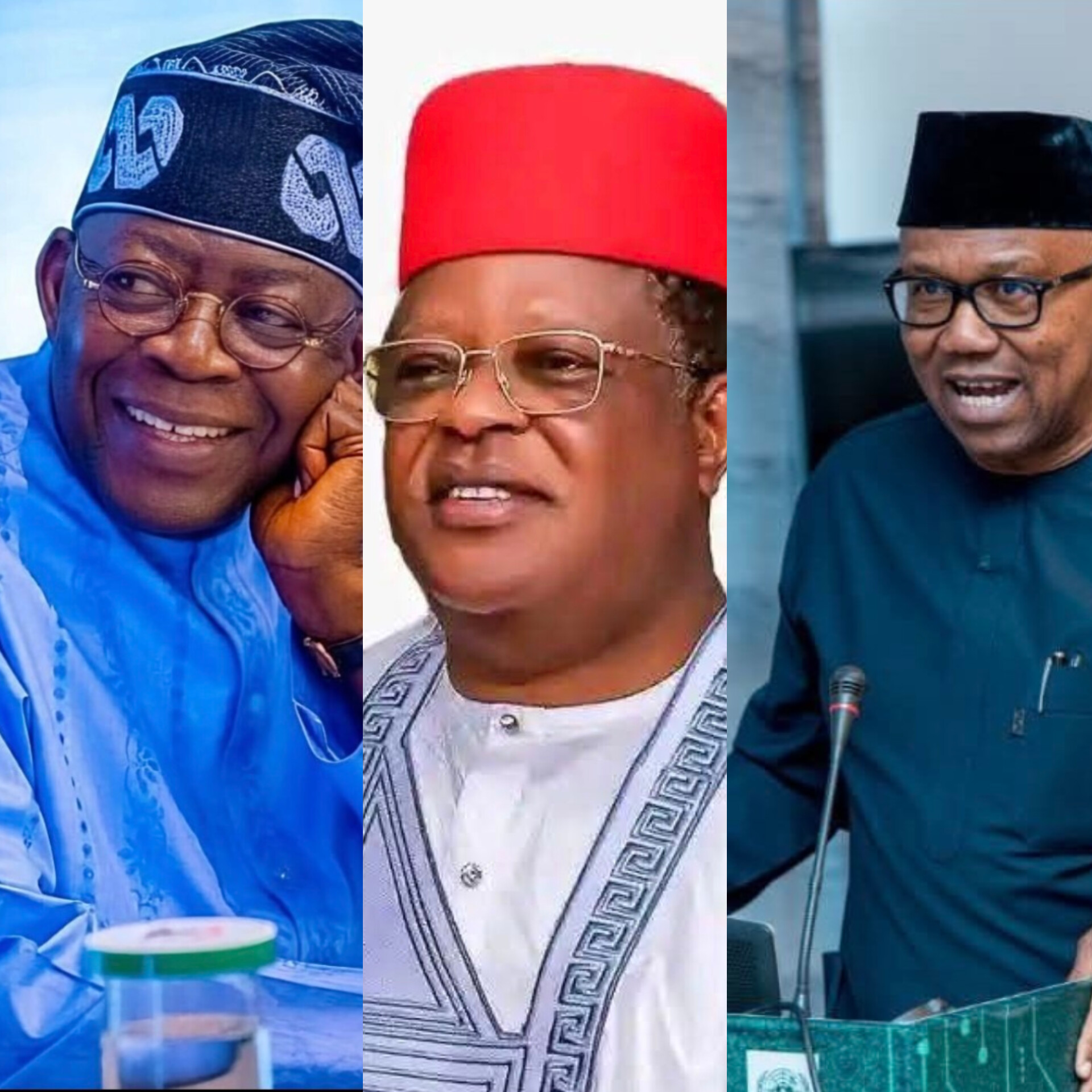
Why the Igbo Must Choose Political Strategy Over Emotional Politics
By Emma Igwe
There comes a moment in the political history of every people when sentiment must give way to strategy.
For the South-East, 2027 may be that moment.
The question before the Igbo nation is not whether an Igbo man should one day become President of Nigeria. Of course he should. The question is whether the Igbo people are prepared to do the difficult political calculations required to make that aspiration a reality.
And that is where the 2027 presidential election becomes more than a contest between political parties.
It becomes a referendum on the political intelligence of the South-East.
Will the region continue to vote primarily to satisfy ethnic emotions and demonstrate loyalty to its own?
Or will it begin to think several political moves ahead—like a chess player who understands that sometimes the best way to capture the king is to first control the board?
THE HARD TRUTH THE SOUTH-EAST MUST CONFRONT
Peter Obi has demonstrated something remarkable.
He has shown that an Igbo politician can generate extraordinary enthusiasm among millions of Nigerians, particularly young people. His political movement has changed the conversation about presidential politics and created a new generation of politically conscious voters.
But enthusiasm is not the same thing as electoral mathematics.
The South-East must ask a difficult question:
Can regional popularity, without a sufficiently broad and durable national coalition, deliver the presidency?
That question is not an attack on Obi.
It is the central question of Nigerian politics.
The same principle applies to Rabiu Musa Kwankwaso. His influence in Kano and parts of the North is considerable. Historically, Mallam Aminu Kano demonstrated how powerful regional political mobilisation could become.
But regional strength alone has never been enough to guarantee the Nigerian presidency.
Nigeria is a federation of competing interests.
The presidency is won by coalition.
And the Igbo must learn to build coalitions without surrendering their identity.
AZIKIWE, EKWUEME AND THE POLITICS OF REALISM
History provides the South-East with a political textbook.
Dr. Nnamdi Azikiwe was one of Nigeria’s most influential nationalist leaders. Yet his enormous stature and regional influence did not automatically translate into the presidency.
Alex Ekwueme took a different route.
In the Second Republic, he became Vice-President through a political arrangement that placed an Igbo leader at the very heart of the federal government.
That distinction is important.
Zik represented the grandeur of the national dream. Ekwueme demonstrated the power of political positioning.
The lesson is not that the Igbo should abandon presidential ambition.
The lesson is that presidential ambition must be accompanied by political architecture.
This is precisely why the David Umahi argument deserves a more sophisticated examination than the usual name-calling that accompanies it.
UMAHI’S POLITICAL GAMBLE
Like him or hate him, David Umahi understands one fundamental principle of politics:
You cannot negotiate from the margins if you want to control the centre.
His decision to work with President Bola Ahmed Tinubu has attracted criticism from many quarters of the South-East.
But political history will ultimately judge whether that decision was merely opportunistic or whether it represented a calculated attempt to reposition the South-East within Nigeria’s governing establishment.
As Minister of Works, Umahi is also uniquely positioned to make the infrastructure argument.
The Federal Government says major road and bridge projects are currently being executed across Ebonyi and the wider South-East, including sections of the Calabar–Ebonyi–Benue–Nasarawa–Abuja corridor and the Ndi-Egbe Bridge linking Ebonyi with Cross River.
Umahi has repeatedly argued that the Tinubu administration is reversing decades of infrastructure neglect in the region. In June 2026, he specifically cited projects that he said had remained unrealised for decades.
These claims should be scrutinised, not blindly accepted.
But neither should they be dismissed simply because they come from a politician whose political position many people dislike.
THIS IS NOT ABOUT LOVING TINUBU
Here lies the fundamental misunderstanding.
The argument for the South-East supporting Tinubu in 2027 does not have to mean that every Igbo man suddenly becomes an APC loyalist.
It does not mean that every policy of the Tinubu administration must be applauded.
It does not mean that the South-East should surrender its independent political voice.
It means something much more sophisticated:
The South-East should negotiate with power instead of permanently positioning itself outside power.
There is a difference between loyalty and strategy.
A political party is not a religion.
A presidential candidate is not a tribal deity.
Politics is transactional.
Every serious political region negotiates.
The Yoruba negotiate.
The North negotiates.
The South-South negotiates.
Why should the Igbo be the only people expected to vote purely from emotion?
THE 2031 CALCULATION
This is where the debate becomes particularly interesting.
If Tinubu wins in 2027, the political conversation will inevitably move toward the succession question.
Who takes over after Tinubu?
Which region?
Which coalition?
Which political bloc has accumulated sufficient goodwill, influence and bargaining power to negotiate the next presidential arrangement?
The South-East cannot wait until 2031 before asking these questions.
The political preparation must begin in 2027.
That is the strategic argument behind Umahi’s position.
If the South-East becomes a critical component of the governing coalition in 2027, it potentially creates a stronger negotiating platform for the future.
That does not guarantee an Igbo presidency.
Nothing in Nigerian politics comes with such a guarantee.
But it may create a better platform from which to negotiate one.
And that is the difference between political fantasy and political strategy.
THE BIGGEST MISTAKE WOULD BE TO TURN OBI AND UMAHI INTO ENEMIES
There is perhaps a more important question.
Why must Peter Obi and David Umahi be treated as political enemies simply because they have chosen different routes?
They are both prominent Igbo political figures.
One has demonstrated extraordinary grassroots mobilisation and national visibility.
The other currently occupies one of the most influential positions in the federal infrastructure establishment.
One understands mass political mobilisation.
The other understands the mechanics of government and federal power.
Why should these strengths not be brought together?
Why must the argument always be:
Obi versus Umahi?
Why can’t it become:
Obi and Umahi—what is the best strategic route for the Igbo nation?
The two men do not have to belong to the same political party.
They do not have to endorse the same presidential candidate.
They do not even have to agree on every issue.
But they can sit down as Igbo leaders and discuss the future beyond their personal political ambitions.
That conversation is long overdue.
THE SOUTH-EAST NEEDS A POLITICAL RESET
The greatest danger facing the South-East is not that it supports the wrong candidate.
It is that it continues to approach Nigerian politics primarily through the prism of emotional solidarity.
Every election becomes:
“This is our turn.”
“This is our brother.”
“This is our son.”
But Nigeria does not operate on sentiment.
The presidency is a national institution.
To occupy it, you need national numbers.
To acquire national numbers, you need alliances.
To sustain alliances, you need political relevance.
And to achieve political relevance, you must be present where national decisions are being made.
That is the political centre.
THE PRICE OF PERMANENT OPPOSITION
The South-East has spent years complaining about marginalisation.
Yet political marginalisation cannot be defeated by political isolation.
That is the paradox.
You cannot complain that Abuja is ignoring you while simultaneously refusing to develop a sustainable strategy for influencing Abuja.
You cannot demand inclusion while permanently behaving as though participation in the governing coalition is a betrayal of your identity.
The Igbo are too politically sophisticated for that contradiction.
The region must move beyond the politics of grievance to the politics of negotiation.
WHAT SHOULD THE IGBO DEMAND FROM TINUBU?
If the South-East is to support Tinubu, it should not be a blank cheque.
It should be a contract of political expectations.
The region should demand:
accelerated completion of strategic federal roads and bridges;
stronger federal presence in industrial and economic development;
greater political inclusion;
protection of businesses and investments;
improved security and regional connectivity;
greater representation in national appointments;
deliberate inclusion in future national power-sharing negotiations; and
a credible pathway toward greater political participation in the post-2027 era.
That is how mature politics works.
You do not merely vote. You negotiate.
UMAHI’S MESSAGE MAY BE UNCOMFORTABLE—BUT SHOULD NOT BE DISMISSED
Umahi has reportedly urged South-East political stakeholders to rally behind Tinubu in 2027, and has even framed the choice in terms of continued access to federal development projects.
That formulation will certainly provoke controversy.
But perhaps controversy is precisely what the South-East needs.
For too long, political debate has been reduced to accusations of betrayal.
Anyone who disagrees with the dominant regional political position is quickly labelled an enemy of the Igbo cause.
That mentality must end.
A political argument should be defeated with a better political argument—not with abuse.
If Umahi is wrong, prove that his strategy cannot deliver greater political influence.
If Obi is wrong, demonstrate why his strategy cannot build the coalition necessary to win the presidency.
But let the debate be about strategy, not personality.
THE CHOICE BEFORE THE SOUTH-EAST
The South-East now stands at a crossroads.
One road offers emotional satisfaction.
The other offers strategic uncertainty but potentially greater access to the political centre.
One says:
“Let us vote for our own because he is our own.”
The other asks:
“What political arrangement gives our people the greatest bargaining power?”
The second question is the question of statesmen.
The Igbo presidential dream should not be abandoned.
It should be redesigned.
It should be negotiated.
It should be built upon alliances stretching across the six geopolitical zones.
And if supporting Tinubu in 2027 can place the South-East in a stronger bargaining position for 2031 and beyond, then the question should not be whether such a strategy is emotionally satisfying.
The question should be whether it is politically intelligent.
LET UMAHI AND OBI SIT DOWN
Ultimately, this debate should not end with Tinubu.
It should begin with the future of the Igbo nation.
David Umahi and Peter Obi should sit down.
Not for a television debate.
Not for political combat.
Not to determine who is more popular.
They should sit down as two influential Igbo sons and ask one question:
“How do we get the Igbo nation back to the centre of Nigerian political power?”
If the answer requires supporting Tinubu today, let them say so.
If the answer requires another route, let them articulate it.
But let the South-East have the conversation.
Because the real tragedy would not be losing an election.
The real tragedy would be winning the argument for ethnic pride while losing the opportunity for political power.
The Igbo do not need another election of emotional satisfaction.
They need a political strategy.
And perhaps, for the first time in decades, the South-East must learn to choose not merely the candidate it loves—but the political arrangement that can take it where it wants to go.
National relevance must become more important than ethnic ego.
That is the uncomfortable conversation 2027 demands.

-

 Crime5 days ago
Murder of Aiza Nwosu: Niece, 12 Suspected Cultists Arrested, Nephew at Large
-

 News5 days ago
Anambra Community Petitions Soludo Over Erosion Caused by Illegal Sand Mining
-

 Entertainment5 days ago
Davido Reveals How Dangote Drove His Mother Home
-

 News3 days ago
FCC Urges Enugu Youths to Prepare for Federal Job Opportunities
-
 News5 days ago
Nigerian Army Announces Major Reshuffle, Appoints New Theatre Commander
-
 Crime5 days ago
Mob Burns Suspected Motorcycle Thief to Death
-
Politics5 days ago
Anambra APC Sidelined Over First Lady’s Visit, Says Chairman Anosike
-

 Crime5 days ago
Woman Recounts Rape By Nigerian Jailed 17 Years In UK