



Health
FG MDAs bar unvaccinated visitors, Lagos to demand jab cards at parties



Federal and Lagos State governments on Tuesday got tougher with the enforcement of their directives on compulsory COVID-19 vaccination.
The central government, which on December 1 disallowed unvaccinated civil servants from accessing their offices, on Tuesday barred visitors that were not vaccinated from government buildings in Abuja.
On its part, the Lagos State Government stated that all attendees of social events in the state must present their vaccination cards.
The Presidential Steering Committee on COVID-19 led by the Secretary to the Government of the Federation, Boss Mustapha, had in October said civil servants without proof of vaccination and negative coronavirus tests would not be allowed to enter their offices as from December 1, 2021. On Wednesday last week, security agents started barring unvaccinated civil servants from government buildings.
On Tuesday, the Federal Government went a step further in enforcing its compulsory vaccination order when it stopped contractors, journalists and other regular visitors from entering various ministries in the Federal Capital Territory. Responding to a question on whether the restriction of unvaccinated workers ought to be extended to journalists and others, the Head of Technical Secretariat, Presidential Steering Committee on COVID-19, Mukhtar Muhammad, simply said, “it is not out of order.”
Over 10 federal ministries are located in the Federal Secretariat complex and the Office of the Civil Service of the Federation.

The ministries located at the secretariat include The Ministry of Labour and Employment, the Ministry of Health, the Ministry of Information and Culture, the Ministry of Science and Technology, the Ministry of Special Duties, the Ministry of Aviation, the Ministry of Youth and Sports Development, the Ministry of Education, the Ministry of Police Affairs and the Ministry of Communications and Digital Economy.
Also affected were agencies at the Federal Capital Development Authority including the Federal Ministry of Agriculture and Rural Development.
Three of our correspondents were denied access to various ministries for failing to present vaccination cards.
One of our correspondents was informed by an unnamed security guard that the move had become necessary because civil servants could pose as visitors and gain access.
“We were asked not to allow anyone without vaccination cards to gain access. Some people who are civil servants could easily pose as visitors or contractors in order to gain access. So, the instruction is that anyone without vaccination cards should not be allowed in,” he said.
A reporter who was going to cover an event at the Ministry of Communications and Digital Economy, showed the security man his identity card, stating that he is a journalist, and was there to cover an event but he was not allowed to access the building around 11 am on Tuesday.
“The only thing I want to see is your vaccine card, not an ID card,” he said.
He further directed our reporter and others without the COVID-19 vaccination card to a tent opposite the secretariat, where the vaccine was being administered.
It was, however, observed that after 12pm, the security guards left the entrance.
It was observed that both guests and employees of the Federal Ministry of Agriculture and Rural Development were asked to show their vaccination cards before being allowed entry into the FMARD’s building.
Employees of the ministry who had been vaccinated gained entry into the ministry’s building located at Area 11 in the Federal Capital Territory.
The development made guests who had yet to be vaccinated to leave the vicinity, to avoid being denied entry at the entrance of the building.
A Professor of Medical Virology, University of Maiduguri, Marycelin Baba, in an interview stated that barring unvaccinated visitors from government facilities might help to promote rate of vaccination among Nigerians. According to the expert, allowing unvaccinated visitors to the government facilities might endanger the lives of vaccinated workers.
But human right lawyer, Victor Giwa, said it was wrong of the government to make such a move, adding that medical issues are personal.
He said, “My position is that the issue of the medical status of any individual is personal. Telling anyone to present his or her vaccination card or PCR test is a breach of his own right to private life.”
Attempts to reach the Office of the Head of Service proved abortive as the Spokesperson, Abdulganiyu Aminu, did not pick calls or reply messages.
In Lagos State, Governor Babajide Sanwo-Olu released new COVID-19 guidelines for social events and gatherings in the festive season.
Social event organisers must register to obtain safety clearance – Sanwo-Olu
Sanwo-Olu disclosed that all social events in the state must be duly registered to obtain an event safety clearance from the Lagos State Safety Commission website.
The governor, who said this on Tuesday in a press statement by the Commissioner for Information, Mr Gbenga Omotoso, said that every attendee of a social gathering must now present their evidence of vaccination.
He said, “Where possible events should be held in an outdoor space. Occupancy limit at any event must not exceed 60 per cent of maximum design capacity of the commission.
“Every attendee of a social gathering must present their vaccination cards or digital bar code page, showing at least first dose but preferably double dose full vaccination. In unvaccinated people, a negative Polymerase Chain Reaction within 72 hours will be an exemption.
Every attendee must be tested irrespective of vaccination status – Sanwo-Olu
“Everybody irrespective of vaccination status must be subject to Rapid Diagnostic test (antigen) to be conducted at the event venue within 24 hours prior to the event at the laboratories listed below. (Request for rapid tests at the venue requires an application through the LSSC).
“Under 18 years of age are unvaccinated and the above applies. Guests and service providers with high temperature (above 37.5) are to be politely turned back and referred to paramedics or the emergency response team on ground.”
Sanwo-Olu added that all-inbound passengers who refused to adhere to COVID-19 protocols would be prosecuted.
“While it is a stringent requirement that all inbound passengers perform a day two test within 48 hours of arrival into the country; and an additional day seven PCR test for all partially or unvaccinated inbound passengers, we cannot stress enough how important the strict adherence to these protocols are.
“These tests are mandatory to assist the state monitor the inflow of positive passengers, which we have identified as a veritable source of our waves and community spread.
“Based on this, we will commence the prosecution of those who refuse to submit themselves for these mandatory tests by blacklisting their passports for a period of one year. This would be carried out in partnership with the Presidential Steering Committee.
Meanwhile, the Nigeria Centre for Disease Control on Tuesday announced the discovery of three additional cases of the Omicron variant in the country.
The agency had on Wednesday detected the first three cases of the variant. With Tuesday’s discovery, the total number of the omicron variant cases in Nigeria stands at six.
Last week, Canada after it said it detected three cases with travel history to Nigeria, banned travellers from the country.
Also, on Saturday the United Kingdom placed a travel ban on Nigeria following the discovery of 21 Omicron cases with travel history to Nigeria.
On Tuesday, the NCDC, in a statement signed by its Director General, Ifedayo Adetifa stated that three additional cases of the variant had been discovered.
He said, “The Nigeria Centre for Disease Control has confirmed three more cases of COVID-19 with the B.1.1.529 SARS-CoV-2 lineage, i.e., the Omicron variant, in Nigeria. In addition to the three cases announced earlier on 1st December 2021, this brings the total number of confirmed cases of the Omicron variant detected in Nigeria to six .”
The NCDC also added that it had been notified by the UK of seven cases of the omicron variant which were linked to passengers from Nigeria.

ENUGU — The Presidential Candidate of the National Democratic Congress (NDC), Mr Peter Obi, and the party’s Enugu State Governorship Candidate, Sir Chinyeaka Ohaa, on Thursday, August 13, 2026, visited Parklane Specialist Hospital, Enugu, to show solidarity with patients battling kidney disease and other related illnesses.
They arrived at about 5:00 p.m. in the company of other party leaders, including the NDC Senatorial Candidate for Enugu East, Ada Ogbu; Hon. Kentus Eze; Hon. Ike Ezugwu; Architect Everastus Odo; Comrade Obi Mamah, H(JP); Hon. Odo Joel; and other party faithful who turned out to receive Peter Obi.
The visit followed a humanitarian gathering convened by Okwuluora to draw attention to the plight of more than 500 kidney patients and their families struggling to afford treatment.
Over 500 Kidney Patients Cry for Help as Families Battle for Survival
It was an emotional scene as men, women and children living with kidney-related illnesses converged at Parklane, hoping to receive urgent assistance.
Many of the patients showed visible signs of prolonged illness and hardship. Some were due for dialysis but could not afford the treatment, leaving them and their families trapped in a painful struggle for survival.
The severity of their condition was evident, with some displaying swollen hands, arms and legs, while others had bloated abdomens and anxiety-filled faces as they awaited assistance.
Among those present was a 13-year-old boy from Akure, Ondo State. His mother said she had sold virtually everything she owned to sustain his dialysis treatment for the past five years. Despite the sacrifices, the boy was at Parklane hoping to benefit from the intervention.
The large turnout has renewed concerns over the growing burden of kidney disease and the rising cost of dialysis and transplant care in the South-East and other parts of the country.
Speaking at the event, Okwuluora commended the stakeholders who supported the initiative and called for sustained assistance for kidney patients and their families.
The national and state leadership of the NDC also commended Okwuluora for his consistent commitment to Nigerians in need, particularly those battling critical health challenges.
In his remarks, Peter Obi expressed concern after listening to the testimonies of the patients. He called on well-meaning Nigerians, corporate organisations and governments at all levels to support kidney patients in dire need of assistance.
The organisers and families of the patients expressed gratitude to Obi for honouring the invitation and using his platform to draw attention to the plight of sick and vulnerable Nigerians.
They also thanked Sir Chinyeaka Ohaa for standing with the people of Enugu during the difficult moment and for demonstrating what they described as leadership that places human lives first.
Appreciation was equally extended to NDC supporters who attended the gathering, with attendees saying their presence offered hope and reassurance to the patients and their families.
The NDC leadership reaffirmed its commitment to advocating for improved healthcare funding, greater access to dialysis and policies aimed at reducing the burden of catastrophic healthcare expenses on families in Enugu State and across Nigeria.

Gov. Peter Mbah says Enugu State remains fully ready to support Nigeria Centre for Disease Control and Prevention (NCDC) on health security facilities and projects within the state.
Mbah said this on Wednesday in Enugu when the Director-General of Nigeria Centre for Disease Control and Prevention (NCDC), Dr Jide Idris, paid him a courtesy call during a working visit to the state.
Represented by the Deputy Governor, Chief Ifeanyi Ossai, the governor said that the government had prioritised all issues concerning security especially those dealing on health security and invested heavily on health and related concerns.
According to him, we are fully ready and committed to work with you by providing land, logistics and other necessary requirements to make all health security projects/initiatives a reality.
He said, “We are fully aware of the need to focus and give priority to health security projects and issues.
“As a state, the high volume of travellers coming in their thousands to the state each day have increased our socioeconomic activities, made more investment possible and increased all forms of tourism.
“However, we recognise that only two weeks of a confirmed outbreak of any dreaded disease will scare away these large inflow of people coming into the state.
“This alone will affect and wipe away the striving tourism industry, our people’s vibrant trade and commerce, striving transport ecosystem, investors influx and the huge investment we have put to make Enugu the most attractive city in Africa.”
Mbah said that every effort or investment in health security “is in the right direction to secure our selves, investments, hopes and future.”
The governor commended the NCDC on their recent fight against COVID-19 and all initiatives to ensure prevention of Ebola virus as well as containing other outbreaks in the country.
“I must commend NCDC team for inspecting the ongoing South-East High Definition Molecular Laboratory and other health projects meant to serve our people, South-East and every Nigerian,” he said.
He assured that the government would undertake any responsibility to ensure that NCDC facilities continue running as well as protecting such facilities notwithstanding the premises they are domiciled in within the state.
On the issue of Ebola Virus, the govenor said that the state was taking the designation of Enugu State as a state with high importation risk “very serious”.
“From assessment, the scare of the disease coming to Enugu is real through the Akanu Ibiam International Airport. We are tightening all preventative measures and protocols, while ensuring robust synergy with relevant stakeholders on it.
“The state ministry of health and its partners are on alert over the issue and we are providing necessary support and access to our office on it,” he said.
Mbah called on the NCDC to give the state needed support in terms capacity building and training, close coordination and guidance as well as awareness materials and support in its preventive efforts.
Earlier, Idris said that visit was meant to access uncompleted South-East High Definition Molecular Laboratory, the level of Ebola Prevention and Preparedness at the Akanu Ibiam International Airport and other related projects.
He commended the state government on huge investment in Primary Healthcare Centres, general hospitals, tertiary hospitals and recently the Enugu International Hospital meant to attract medical tourism.
The director-general said that the NCDC wanted the state government to get involved in protecting And maintaining the South-East High Definition Molecular Laboratory and other facilities of the agency coming up in Enugu.
“We are here to strengthen the existing cordial relationship with the state and see how both NCDC and Enugu State Government can collaborate to strengthen issues of health security,” he said.

The Enugu State Government and key health sector partners have pledged a commitment to sustain the gains of the IntegratE Project.
The IntegratE Project is a five-year family planning initiative that expanded access to reproductive health services through Community Pharmacists (CPs) and Patent and Proprietary Medicine Vendors (PPMVs) within the state.
The Commissioner for Health, Prof. George Ugwu, gave the commitment on Wednesday during the dissemination of the Enugu State Private Sector Family Planning performance under the IntegratE Project, which ran from Oct. 2021 to July 2026.
Ugwu said that the project had significantly improved reproductive health services and positive outcomes for women in the state over the past five years.
He described family planning as a sensitive but essential service, assuring that the government would continue expanding access while ensuring responsible use.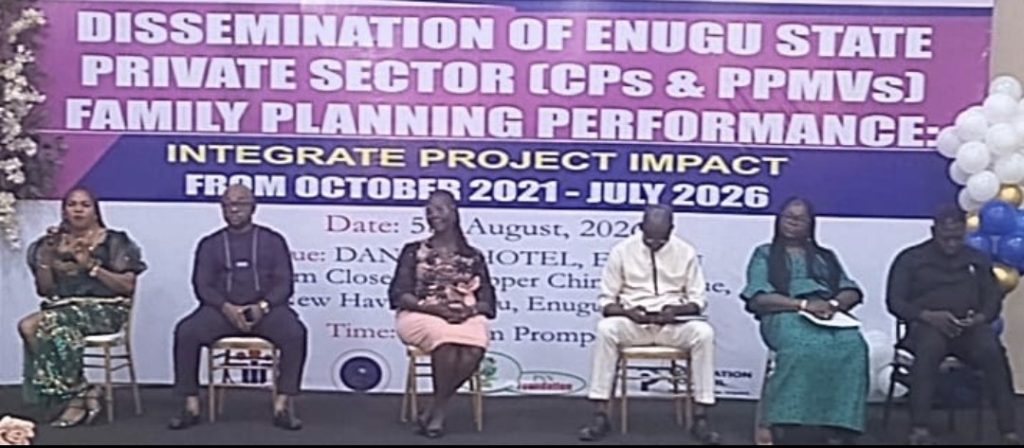
Ugwu said that Gov. Peter Mbah’s administration remained committed to strengthening primary healthcare outcomes in all ramifications
He revealed that more than 100 new primary healthcare centres would become operational before the end of the year.
The commissioner said that the state government’s commitment to innovation would continue to position the state as a leader in modern healthcare delivery.
Speaking, the representative of the Pharmacy Council of Nigeria (PCN), Mrs Ifeyinwa Ohiaeri, described the project as a major intervention that strengthened family planning services through pharmacy practice.
Ohiaeri stressed that “family planning remains critical” to reproductive, maternal and adolescent health.
She said that the dissemination provided an opportunity to review achievements, challenges and strategies for sustaining the project’s impact, while reaffirming its commitment to professional ethics and quality service delivery.
The representative of the Enugu State Primary Health Care Development Agency, Mrs Maureen Nwankwo, said the agency would sustain the gains achieved.
Nwankwo noted that the programme had helped reduce unintended pregnancies, maternal and child deaths through improved access to family planning services.
Group Director of Donor-Funded Programmes at the Society for Family Health, Mr Emeka Okafor, said the national project tested the pharmacy-led delivery model for family planning in Enugu State.
Okafor noted that while about 70 per cent of residents patronise private health providers, much of the state’s routine health data comes only from the public sector, leaving a significant gap.
He said that according to the project’s implementation report, 29,262 women accessed family planning services through trained PPMVs in Enugu State, while 14,541 referrals were made to public health facilities.
He said that the project also exceeded training targets, introduced digital supportive supervision and contributed to the institutionalisation of the Tiered Accreditation System for PPMVs.
The Pharmaceutical Society of Nigeria (PSN) and the National Association of Patent and Proprietary Medicine Dealers (NAPPMED) also pledged continued support for the initiative/project at the grassroots.

No fewer than 20,966 Nigerian health workers relocated abroad within one year, according to official figures contained in the State of Health of the Nation Report 2025, obtained by Saturday PUNCH.
The mass exodus comprised 3,919 doctors, 7,487 nurses and midwives, 6,861 medical laboratory professionals, 702 pharmacists, 658 physiotherapists and hundreds of other healthcare specialists.
The growing migration came under the spotlight following the relocation of a Senior Consultant Neurosurgeon at the University of Ilorin Teaching Hospital, Dr Salamat Aliu-Ibrahim, to the United States.
Aliu-Ibrahim, a renowned neurosurgeon, now serves as Medical Director, Paediatrics, at Freeman Children’s Clinic, a facility under Freeman Health System in Joplin, Missouri.
Data obtained from the United Kingdom’s General Medical Council showed that 4,691 Nigerian-trained doctors joined the UK medical register between May 2023 and April 2026.
According to the GMC register, 15,896 Nigerian-trained doctors are currently licensed to practise in the UK, comprising 9,664 males and 6,232 females.
However, President Bola Tinubu, on Friday, appealed to Nigerian medical professionals in the diaspora to encourage more Nigerians abroad to return home and contribute to the country’s development, stressing that there is no place like home.
20,966 Nigerian Health Workers Migrated
An analysis of the State of Health of the Nation Report 2025 showed that only 60,551 of Nigeria’s 95,456 registered doctors currently hold active practising licences, representing 63 per cent. Only 51 per cent of licensed doctors are actively employed within Nigeria’s health system.
The nursing and midwifery workforce, Nigeria’s largest health profession, has also suffered substantial losses, recording the highest level of migration among health professionals.
Although Nigeria has 267,951 registered nurses and midwives, comprising 73,130 nurses, 21,031 midwives and 173,790 nurses with post-basic qualifications, only 113,123 currently hold active practising licences, representing an effective licensing ratio of 42 per cent.
Of those with active licences, 78 per cent remain employed in the country.
The report further showed that 658 physiotherapists have migrated, leaving only 852 of the country’s 8,642 registered physiotherapists with active practising licences.
Similarly, 21 occupational therapists have migrated, while only 11 of the 176 registered professionals currently hold active licences.
There are 257 registered occupational therapist assistants, but only 51 currently possess practising licences.
The report also showed that 431 optometrists have migrated abroad. Of the 6,975 registered optometrists, only 2,156 hold active practising licences, while 66 per cent remain employed locally.
Among opticians, only 307 of the 2,976 registered professionals currently hold practising licences, while 18 have migrated abroad.
UK, US, Canada, Saudi Arabia Top Destinations
The United Kingdom remains a leading destination for Nigerian health workers, particularly doctors and nurses, due to easier professional registration, better remuneration, structured specialist training and persistent workforce shortages within the National Health Service.
Although international recruitment has slowed since 2025, Nigeria remains one of the major source countries for overseas-trained nurses practising in the UK.
A breakdown of data obtained from the UK GMC register showed that 7,875 Nigerian-trained doctors were licensed to practise in the UK in 2020, rising to 9,976 in 2022.
In 2023, the number rose further to 12,198, making Nigeria the third-largest source of foreign-trained doctors in the UK, behind India, with 38,228 doctors, and Pakistan, with 27,739.
Figures from the UK Nursing and Midwifery Council also showed a sharp rise in the number of internationally educated nurses and midwives on its register, driven largely by recruitment from countries including Nigeria, India, Ghana and the Philippines.
According to the council, the number of Nigerian nurses and midwives in the UK has risen above 16,000.
Beyond the UK, the United States and Canada have also become increasingly attractive destinations for Nigerian healthcare professionals.
As of 2020, a total of 3,895 Nigerian-trained doctors were licensed to practise medicine in the US.
Australia has also intensified recruitment of overseas-trained doctors and nurses to address shortages in regional and rural health services, while Saudi Arabia and the United Arab Emirates continue to attract Nigerian healthcare professionals with tax-free salaries, subsidised accommodation and other employment benefits.

The Enugu State Government, through the Ministry of Health, has sealed four private health facilities in Enugu North Local Government Area for operating without valid licences and failing to meet regulatory requirements.
The ministry’s Public Relations Officer, Mrs. Chidiogo Ugodu, disclosed this in a statement issued on Thursday in Enugu, noting that the enforcement action was carried out on July 8.
According to the statement, the ministry has intensified the monitoring and supervision of private health facilities across the state to ensure quality healthcare delivery and strict compliance with regulatory standards.
The renewed enforcement exercise was initiated by the Commissioner for Health, Prof. George Ugwu.
As part of the exercise, the Director of Medical Services, Dr. Chinyere Ezeudu, led a team of senior ministry officials on an unscheduled inspection of private health facilities in Enugu North LGA.
The ministry explained that the exercise was aimed at ensuring that all private hospitals and healthcare providers operating in the state comply with statutory requirements, including the renewal of operating licences and the registration of facilities yet to be captured by regulatory authorities.
During the inspection, the team visited seven private health facilities, assessing their operational status, licensing documentation, and compliance with established healthcare standards. Four of the facilities were subsequently sealed for regulatory violations.
Speaking on the exercise, Commissioner for Health, Prof. George Ugwu, reaffirmed the commitment of the state government, under the leadership of Governor Peter Mbah, to protecting residents by ensuring the delivery of safe, effective, and quality healthcare services.
He stressed that the monitoring and enforcement exercise would continue across the state to ensure that only duly registered and licensed healthcare facilities operate.
Ugwu also urged operators of private health facilities to regularise their operations by renewing expired licences and registering facilities that are yet to be approved.
“The ongoing monitoring exercise is not only a regulatory measure but also a critical step towards strengthening the health system and safeguarding the lives of citizens,” he said.
The latest enforcement follows a similar operation carried out a few weeks ago, during which the Ministry of Health sealed three illegal health facilities in Enugu South Local Government Area for operating without valid licences.

-

 Crime5 days ago
Murder of Aiza Nwosu: Niece, 12 Suspected Cultists Arrested, Nephew at Large
-

 News5 days ago
Anambra Community Petitions Soludo Over Erosion Caused by Illegal Sand Mining
-

 Entertainment5 days ago
Davido Reveals How Dangote Drove His Mother Home
-

 News3 days ago
FCC Urges Enugu Youths to Prepare for Federal Job Opportunities
-
 Politics5 days ago
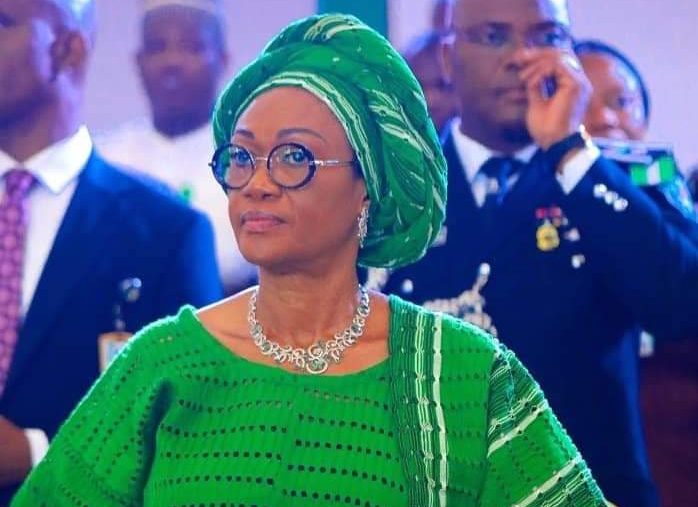
Anambra APC Sidelined Over First Lady’s Visit, Says Chairman Anosike
-

 Crime5 days ago
Woman Recounts Rape By Nigerian Jailed 17 Years In UK
-

 Crime5 days ago
Mob Burns Suspected Motorcycle Thief to Death
-

 News5 days ago
More than 24 feared dead in suspected poisoning incident in Ondo