



Education
98 million children still out of school in Sub-Sahara Africa — UNESCO



UN Educational, Scientific and Cultural Organisation (UNESCO) says new data shows that 98 million children and youth between the ages of six and 18 worldwide are still out of school in Sub-Sahara Africa.
This is as the new school year begins in many parts of the world.
UNESCO, in new data published online on Thursday, shows that Sub-Saharan Africa remains the region with the most children and youth out of school, with a total of 98 million children.
“It is also the only region where this number is increasing, out-of-school rates are falling more slowly than the rate at which the school-age population is growing.
“The region with the second highest out-of-school population is Central and Southern Asia, with 85 million,’’ it stated.

Globally, the new UNESCO data shows that 244 million children and youth between the ages of six and 18 worldwide are still out of school.
“No one can accept this situation,” Ms Audrey Azoulay, the UNESCO Director-General said, underlining the need to respect every child’s right to education.
“In view of these results, the objective of quality education for all by 2030, set by the United Nations, risks not being achieved,” she warned.
“We need a global mobilisation to place education at the top of the international agenda.”
Azoulay will renew her call at the landmark Transforming Education Summit on Sept.19, at UN Headquarters in New York.
UN Secretary-General António Guterres has convened the Summit to mobilise action and solutions, including to reverse learning losses due to the COVID-19 pandemic
On a more positive note, the UNESCO data has confirmed that the difference in the rate of girls and boys out of school has closed worldwide.
Back in 2000, the gender gap was 2.5 percentage points among primary school age children, and 3.9 percentage points among their upper secondary school counterparts.
These gaps have been reduced to zero, although regional disparities persist.
Relatedly, four million boys and girls in Ukraine are facing the start of an uncertain school year, the head of the UN Children’s Fund, UNICEF, said on Thursday.
Catherine Russell concluded a three-day visit to the country, where she met students, parents and teachers scarred by the war, now in its seventh month.
“Children are returning to schools – many of which have been damaged during the war – with stories of destruction, uncertain if their teachers and friends will be there to welcome them.
“Many parents are hesitating to send their children to school, not knowing if they will be safe,” Russell said in a statement.
Thousands of schools across Ukraine have been damaged or destroyed due to the fighting, with less than 60 per cent deemed safe and eligible for reopening.
Russell visited a rehabilitated primary school that had been damaged during the early weeks of the conflict.
Only 300 students can attend at any one time due to the capacity of the school’s bomb shelter, representing a mere 14 per cent of the school’s pre-war capacity.
Education
Ihejirika Hails Mbah’s Infrastructure Drive as Coal City University Inaugurates Governing Council

Former Chief of Army Staff, Lt. Gen. Azubuike Ihejirika (rtd.), has commended Enugu State Governor, Peter Ndubuisi Mbah, for his infrastructural development efforts across the state.
Ihejirika gave the commendation in a special message to Governor Mbah during the inauguration of the Governing Council of Coal City University, Enugu, held on Wednesday, October 7, 2026.
The former Army Chief’s commendation came as the university formally inaugurated its new Governing Council, with its chairman pledging to provide strategic leadership aimed at strengthening academic excellence, good governance and sustainable growth.
In his inaugural address, the Chairman of the Governing Council described his appointment as both an honour and a major responsibility, saying the council had been entrusted with the future of an institution impacting thousands of young people.
He commended the Chancellor and Proprietor of the university, Sir Chinedu Ani, for his vision, determination and personal commitment to establishing and developing Coal City University.
According to him, building a university requires enormous resources, infrastructure, courage and perseverance, stressing that universities remain critical to nation-building because they prepare young people for employment, responsible citizenship and leadership.
The council chairman said the new Governing Council would work closely with the Chancellor, Vice-Chancellor and management to ensure that the university remained faithful to its founding vision.
He identified five major principles that would guide the council: academic excellence; good governance and accountability; student development; institutional growth and sustainability; and preservation of institutional values and integrity.
He said the university would support initiatives aimed at strengthening teaching, research, innovation and scholarship, while promoting transparency, prudent management of resources and adherence to regulatory standards.
On student development, he stressed the need to produce graduates who combine intellectual excellence with discipline, integrity, entrepreneurship, creativity, leadership and respect for human dignity.
The chairman also noted that the higher education sector was changing rapidly due to technology, artificial intelligence, evolving workplace demands, research and innovation.
He therefore called for stronger partnerships, international outlook, research capacity, infrastructure development and financial sustainability to enable Coal City University to anticipate and respond effectively to emerging challenges.
He further warned that the reputation of the university would depend not only on its physical infrastructure but also on the integrity, professionalism, fairness and accountability of members of its community.
The council chairman assured the university’s management of the council’s support while emphasising that the governing body would respect the distinction between governance and administration.
He charged the Vice-Chancellor and principal officers to maintain high standards of excellence, transparency and accountability, while commending members of staff for their contributions to the development of the institution.
He also urged students to take full advantage of the opportunities offered by the university, pursue knowledge with seriousness and cultivate discipline and integrity.
He said the long-term ambition should be for Coal City University to gain recognition for the quality of its graduates, relevance of its research, integrity of its leadership and positive contribution to society.
The chairman expressed appreciation to the Board of Trustees and the Chancellor for the confidence reposed in the newly inaugurated council and prayed for wisdom and courage for its members.
The event was attended by the Chancellor and Proprietor of Coal City University, Sir Chinedu Ani; the Vice-Chancellor; members of the Board of Trustees; principal officers; members of the newly inaugurated Governing Council; university staff and other distinguished guests.
The event ended with prayers for the continued growth of Coal City University, the development of Enugu State and the progress of Nigeria.

The Ondo State Ministry of Education has summoned a public secondary school principal in Oke Aro, Akure, following reports that prospective students were subjected to blood tests as a condition for admission into Junior Secondary School 1 (JSS1).
The development reportedly occurred during the 2026/2027 academic session and has raised concerns among parents and education stakeholders in the state.
Newly admitted students at the school were allegedly directed to undergo blood tests at a small retail shop located opposite the school before their admission could be completed.
A parent alleged that she was instructed to pay ₦8,000 for what was described as an emergency JSS1 admission test, adding that her ward would not be admitted without undergoing the test.
Following the report, the principal was reportedly summoned by officials of the state Ministry of Education to explain the circumstances surrounding the blood-testing exercise.
The principal, according reportedly acknowledged being aware of the blood-taking exercise but denied involvement in organising it. She reportedly told officials that the practice had been in place before she assumed office as the school’s principal.
The Permanent Secretary of the Ministry of Education confirmed that the principal had been summoned on the directive of the Commissioner for Education, Prof. Igbekele Ajibefun, to clarify the circumstances surrounding the development. A query was also reportedly issued to the principal.
The commissioner, in a separate interview said the state government did not authorise any school principal to make blood sampling a requirement for admission.
He described the practice as strange to the ministry and stated that no such directive had been issued by the government.
Meanwhile, the Nigeria Security and Civil Defence Corps (NSCDC) in Ondo State has reportedly taken over the investigation.
The Corps’ spokesperson in the state, David Dan, confirmed that a man identified as Alfa had been arrested in connection with the incident.
According to him, although Alfa’s shop was allegedly used for the blood-taking exercise, the individual who carried out the actual procedure was said to be at large.
The NSCDC reportedly assured that efforts were ongoing to apprehend the fleeing individual, while further information obtained during the investigation could help determine whether other persons were involved.
The development has also renewed concerns among some parents over alleged illegal charges and other practices in public schools.
A parent, Mrs Olaoba Josephine, from Estate High School, Shagari Village, Akure, alleged that parents were instructed to come to the school with their ATM cards to pay school fees, claiming that a POS operator was already stationed at the school to receive payments.
Parents also alleged that some principals continue to engage in practices such as the sale of textbooks to students, despite the reported abolition of such practices.
One parent who spoke on the broader issue alleged that some school principals had adopted different methods of collecting money from parents and newly admitted students, while calling for closer monitoring of public schools by relevant authorities.
The Ministry of Education and security agencies are expected to determine the circumstances surrounding the alleged blood-testing requirement and establish whether any individuals or officials should face further action.
Source: Germane reporters
Education
Governor Mbah Increases Monthly Subvention to ESUT by N115m, Appeals to ASUU to Suspend Strike
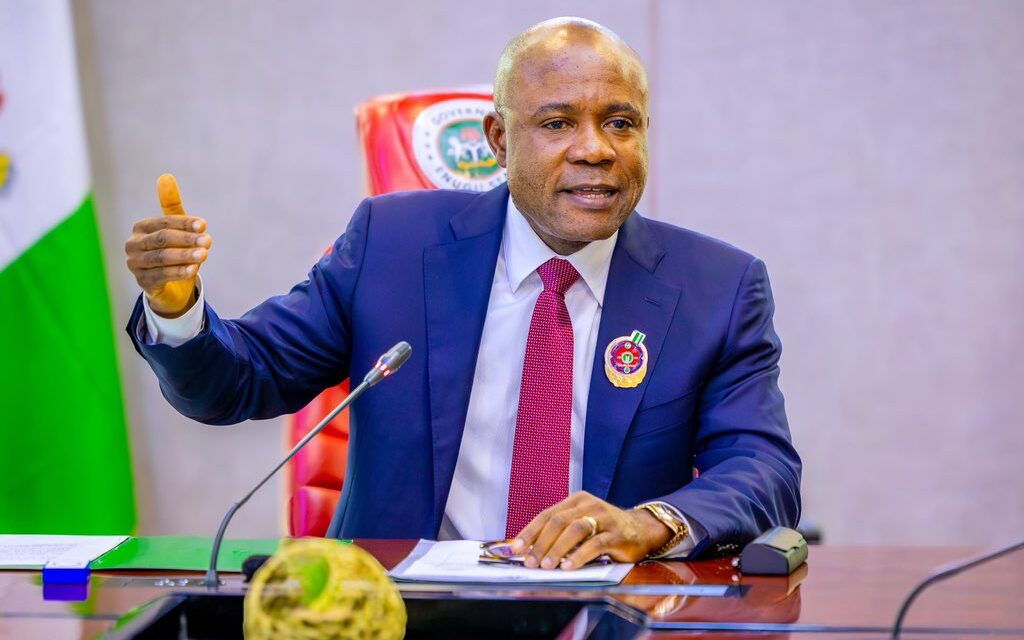
Governor Peter Mbah of Enugu State has approved an additional N115 million monthly subvention for the Enugu State University of Science and Technology (ESUT), as part of efforts to address concerns surrounding the ongoing strike by the Academic Staff Union of Universities (ASUU), ESUT chapter.
The additional funding will raise the state government’s monthly subvention to ESUT from the current N161 million to N276 million, representing a cumulative increase of N140 million since February 2026.
The Secretary to the State Government (SSG), Prof. Chidiebere Onyia, who made this known in a statement on Monday, said the additional funding underscored the administration’s commitment to strengthening ESUT’s capacity to meet its financial obligations, particularly its responsibility to staff and the continued delivery of quality academic services.
“Governor Mbah has demonstrated once again that his administration places the welfare of workers and the uninterrupted education of our young people at the heart of its priorities. This additional N115 million monthly intervention is a substantial commitment of public resources aimed at strengthening ESUT and ensuring that the institution can meet its obligations to its staff and students,” Prof. Onyia said.
He explained that prior to February 2026, the state government was providing N136 million monthly to ESUT. However, beginning in February, the government commenced an additional monthly intervention of N25 million specifically for the ESUT College of Medicine (ESUCOM) to support the payment of 120 additional staff, bringing the total monthly government support to the university to N161 million.
Prof. Onyia said the latest approval of an additional N115 million would raise the state government’s total monthly subvention to ESUT to N276 million.
He further said the increase would help ESUT towards achieving the salary agreement reached between ASUU and the Federal Government.
He appealed to ASUU members at ESUT to reciprocate the government’s intervention by suspending the industrial action and resuming academic activities, in the interest of students whose academic progress may be disrupted by the strike.
“We appeal to ASUU-ESUT to reciprocate this gesture by resuming academic activities, while all outstanding issues are addressed through constructive dialogue. Our students should not be made to bear the consequences of disagreements that can be resolved amicably,” the SSG said.
The SSG reaffirmed Governor Mbah’s commitment to the welfare of workers and the sustained development of ESUT, saying the substantial increase in government funding demonstrated the priority the administration places on education and the uninterrupted academic calendar.
He urged all stakeholders, including the university management and ASUU, to embrace dialogue and work collaboratively towards resolving the outstanding issues, stressing that the ultimate objective should be to ensure that ESUT students receive uninterrupted and quality education.
He further assured the university community that the Mbah administration would continue to support ESUT within available resources, while taking necessary steps to strengthen the institution and position it to fulfil its mandate as a leading university of science and technology.

United Nigeria Airlines has pledged N20 million to sponsor the prestigious annual Chinua Achebe Prize for Fiction, administered by the Association of Nigerian Authors (ANA) for the next 10 years.
The sponsorship deal was disclosed today by the executive chairman of the airline, Professor Obiora Okonkwo, following a discussion with the ANA president, Dr. Usman Akanbi.
Under the arrangement, the airline will provide N2 million every year for the next 10 years to ANA, bringing the total sponsorship to N20 million, a commitment the association says would guarantee the continuation of the prize regardless of the change in the state government.
The yearly award which was initiated by the Anambra State government in 2021 in conjunction with the ANA leadership, has faced financial constraints in the last three years following the failure of the present state administration to continue its sponsorship.
Though the Governor Willie Obiano administration began the sponsorship with one million naira, the Governor Chukwuma Soludo administration that succeeded it in 2022 continued the sponsorship and agreed to ANA’s request to double it in consideration of inflation and administrative costs like payments to judges.
However, after two years, the organisers say the state government appears to have lost interest in continuing with the sponsorship despite several letters reminding it of its promise.
The apparent lack of commitment caused United Nigeria Airlines to intervenee and rescue the prize from uncertainty.
Announcing the airline’s decision to step in, Dr. Akanbi quoted Prof Okonkwo as saying: “Prof Achebe is too precious in our consciousness for the award to continue to suffer the current epileptic funding.”
Speaking on why the airline made the decision to take over the sponsorship, Prof. Okonkwo said that Achebe’s legacy demands this level of commitment.
“Very few men and women of letters and culture in recent history”, he stated, “have brought as much attention and honour to the black race and the African world as the great Achebe through his writings, lectures, speeches, intellectual activism, ethical conduct, and intermittent interventions in political affairs which has made him an authentic conscience of the Nigerian people.
Reacting to the sponsorship, the ANA president, who is a senior academic at the University of Ilorin in Kwara State said: “We are immensely grateful to Prof. Okonkwo and his airline for their patriotic intervention. Prof was not just a world-class raconteur and essayist, but also the ANA founder who started our association in 1981 at the University of Nigeria at Nsukka and accepted to serve as its first president, thus giving it the credibility and platform that has made the association highly respected beyond Nigeria’s shores.”
Akanbi also highlighted Okonkwo’s consistent record of honouring Achebe, stating that Prof. Okonkwo has for some been hard to preserve the late author’s legacy.
For instance, he was solely responsible for financing the erection of a statue of the late Prof. Achebe which was unveiled in July by Governor Chukwuma Soludo of Anambra State at the Ugwunwasike Roundabout in Ogidi, Idemili North Local Government Area, Achebe’s own hometown.
The prize sponsorship is the latest effort made by Prof. Okonkwo and United Nigeria Airlines to cement Achebe’s legacy.
In June, one of the two Boeing 737-800NG aircraft purchased by United Nigeria Airlines was named after the late author, while the other was named after His Royal Majesty, Igwe Nnaemeka Achebe, the Obi of Onitsha.
Naming these two aircraft after both men is in line with Prof. Okonkwo’s determination to uphold their values.

The Peoples Democratic Party (PDP) governorship candidate in Ebonyi State, Chief Ifeanyi Chukwuma Odii, has pledged to overhaul the welfare system of university lecturers and other academic and non-teaching staff in the state if elected governor in 2027.
Odii made the commitment when a delegation of university lecturers from Ebonyi State visited him at his Banana Island residence to discuss areas of possible cooperation and synergy ahead of the 2027 governorship election.
The PDP candidate said his administration would introduce a comprehensive welfare scheme for staff of Ebonyi State University (EBSU) and workers in the state’s newly established tertiary institutions, including the Aeronautic University in Onueke and the ICT University in Oferekpe.
He said the welfare of university workers must be treated as a priority because of their crucial role in producing the skilled manpower needed for the development of the state.
Odii described as “embarrassing and condemnable” a situation where lecturers struggle to afford decent accommodation, maintain reliable means of transportation or pay their children’s school fees, including in some cases where the children attend institutions where their parents teach.
He expressed particular concern over the remuneration of university professors, arguing that a professor earning less than the equivalent of $500 monthly should be considered an emergency requiring urgent government intervention.
The PDP candidate promised that the welfare challenges confronting lecturers and other workers in the tertiary education sector would receive attention within the first six months of his administration if elected.
He said his government would review the remuneration and welfare packages of university workers and introduce measures to make academic careers more attractive, while creating an environment that would enable lecturers and other university staff to perform their duties effectively.
Odii stressed that improving the education sector was central to his vision for Ebonyi State, adding that universities could only produce the quality manpower required for sustainable development when their workers were adequately motivated and supported.

-
 Politics4 days ago
2027: Nigeria Risks Civil War If Election Results Are Manipulated, Pat Utomi Warns
-

 Politics4 days ago
2027: Igbo Presidency Not Subject to Anyone’s Approval, Onoh Tackles Sowunmi
-

 News5 days ago
Breakaway Looms in Awka Anglican Diocese Over Archbishop Ibezim’s Compulsory Leave
-
 News2 days ago
C’RIVER 2027 BUDGET: GOV OTU PRESENTS ₦987.8bn ESTIMATES TO ASSEMBLY
-

 Crime5 days ago
Okechukwu lauds FG for acknowledging military operations alone cannot end banditry
-

 EverydayNews Telescope2 days ago
Enugu East Senate: The Dark Side of Ada Ogbu, NDC Candidate
-

 News4 days ago
BREAKING: Former Delta Governor, Emmanuel Uduaghan, Dies at 71
-

 Opinion4 days ago
Christian Chinyeaka Ohaa: THE BUTTERFLY THAT THINKS IT’S A BIRD!