
Uncategorized
Experts warn Nigeria as World Bank predicts global recession


Economic and financial experts have warned that Nigeria could face serious economic consequences if the global economy contracts into a recession, as predicted by the World Bank.
The President of the World Bank Group, David Malpass, told a United States business event on Wednesday that it was difficult to “see how we avoid a recession.”
His comments are the latest warning over the rising risk that the world economy may be set to contract with the protraction of the ongoing Russia-Ukraine war.

“As we look at the global GDP… it’s hard right now to see how we avoid a recession,” Malpass said.
“The idea of energy prices doubling is enough to trigger a recession by itself,” he added.
Last month, the World Bank cut its global economic growth forecast for this year by almost a full percentage point, to 3.2 per cent.
Malpass also said that many European countries were still too dependent on Russia for oil and gas.
That’s even as Western nations push ahead with plans to reduce their dependence on Russian energy.
He also told a virtual event organised by the US Chamber of Commerce that moves by Russia to cut gas supplies could cause a “substantial slowdown” in the region.
He said higher energy prices were already weighing on Germany, which is the biggest economy in Europe and the fourth largest in the world.
Developing countries are also being affected by shortages of fertiliser, food and energy, Mr Malpass said.
Speaking in an interview with our correspondent, the Chief Executive Officer, Centre for the Promotion of Private Enterprise, Dr Muda Yusuf, said a global recession would have a catastrophic effect on Nigeria’s economy.
Yusuf said Nigeria was already dealing with challenging economic problems which would be further compounded by a contraction of the global economy.
He said, “The impact of a global recession will obviously be very adverse. That means that the challenges that we are facing currently will get even worse because already, we are dealing with a lot of issues around inflation. We are dealing with a lot of problems around foreign exchange and macroeconomic issues generally, which are things that are driven by external factors.
“So, if you have a global recession then we may see some effects on some of these things that may make those variables much more difficult. We have so many issues which are internal to us. So when you combine those internal issues with these external variables or factors, you can imagine the impact it will have not just on the economy but on the lives of the citizens, on investments and so many other things. It’s not going to be palatable at all.”
According to him, the war between Russia and Ukraine will continue to have far reaching consequences due to interests from foreign countries that have caused a ripple effect across the global economic space.
On the other hand, a professor of Economics at the Olabisi Onabanjo University, Prof Sheriffdeen Tella said a global recession, particularly one driven by the energy crisis resulting from the Russia-Ukraine war would spotlight Nigeria’s continuous inability to meet its global crude oil supply quota, as pegged by the Organisation of the Petroleum Exporting Countries.
He noted that a global recession, if prolonged over an extended period of time, could have serious consequences on the Nigerian economy.
“Actually, it is supposed to have a positive impact, but it didn’t have because we have no oil to sell. We are not producing to meet demand. What is meant by the global recession is that most of Europe depend on gas and oil from Russia; since it is not forthcoming, the cost of things there has risen. So, consumers are likely going to demand less. When that happens, it also has many effects on developing countries. It is what we call the contingent effect.”
“When you have a global recession. It affects consumption in those countries, and when it does, the demand for our products will also fall. By now we should be swimming in money because of the fact that there is high demand for oil, but because we have not been able to meet our quota, that’s why we are not enjoying anything. When there is a global recession, after some time it will affect us because we are already in a recession. Even though they claim there is improvement in output, what is the significance of that improvement? We are not doing well currently.”
PUNCH



…Lament Absence Of Ngige, Moghalu Others
By Okey Maduforo Awka
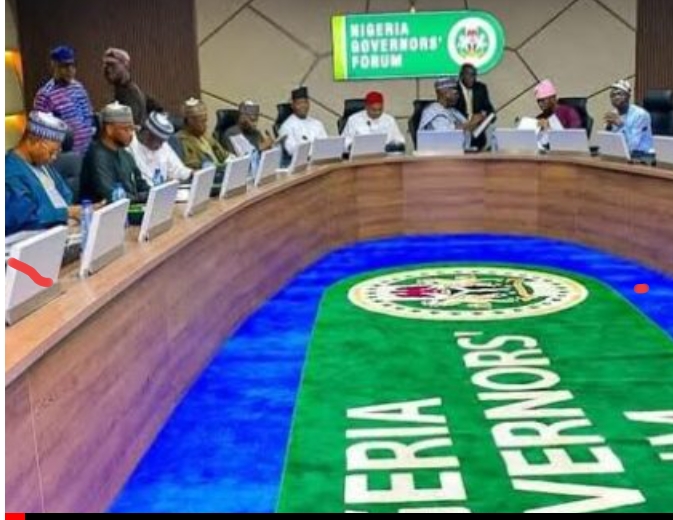
Foundation members of the All Progressives Congress APC in Anambra state have protested what they call the hijack of the party by members of the People’s Democratic Party PDP at just concluded State Congress.
They further lamented the absence of former governor and Minister Sen Chris Ngige, former National Auditor of the party Chief George Moghalu, former National Youth leader of the party Chief Uzoma Igbonwa and others during the Congress.
According to the spokesman of the foundation members Mr Uchenna Adika from Onitsha North local government area ; members such as Chief Ike Ekwensi and Chief Kene Nzekwe were both disqualified and denied access to purchase forms for the post of Deputy Chairman and Chairman, most original members of the party.
“What you saw that took place there at the party Secretarate is a hijack of the party by the People’s Democratic Party (PDP) and not the real APC stalwarts”
“Some of us went to buy forms for the post of state Chairman they refused to sell to us and there are some of us who actually purchased forms for the post of Deputy Chairman but they were disqualified by them and you call it internal democracy in the party ”
The group questioned that ; “,At what point did all these people join the APC ? ”
“There should be a demarcation between the Renewed Hope Ambassadors campaign organization of Mr President and the leadership of the APC in Anambra state” he said.
But Sen Uche Ekwunife during the Congress contended that what the party did was I line with the provisions of the APC constitution adding that the party at this point do not need Photoshop executive members who do not have capacity or anything to offer for the growth and progress of the party .
“Our outgoing Chairman Chief Basil Ejidike is not going because he did not do well or that he is incompetent but he has been there for seven years and there is the need to regig the party ”
“It is not about becoming an executive member of the party for Photoshop or just to be there ”
“We did basketing and consensus in line with the provisions of our party Constitution and we are looking at people that had capacity to work and deliver and not rubber stamp executive ” she said.
By Chinedu Sabastine
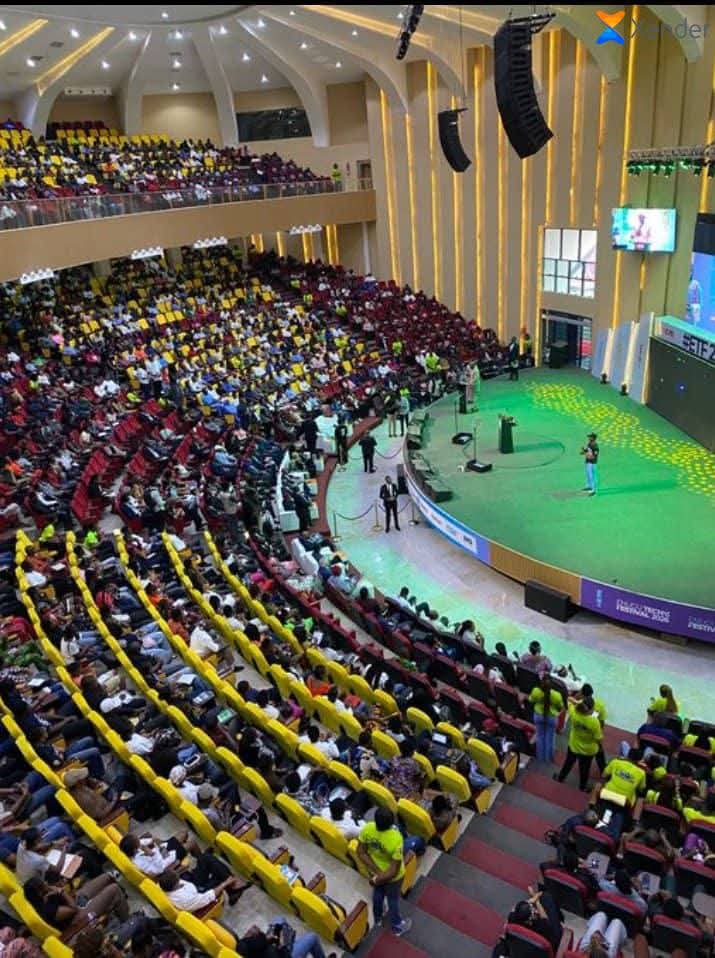
The second edition of the Enugu Tech Festival (ETF 2.0) has concluded with a record-breaking 53,000 physical participants, reinforcing Nigeria’s growing ambition to emerge as a continental hub for digital innovation.
Held from 24 to 27 February 2026 at the Enugu International Conference Centre, the four-day festival exceeded its projected target of 50,000 attendees, drawing innovators, founders, investors, policymakers and students from across Nigeria and beyond.
Convener of the festival and Enugu State Commissioner for Innovation, Science and Technology, Prince Lawrence Ezeh, described the turnout as “a resounding validation of Enugu’s vision to become a technology trailblazer in Africa.” He noted that the festival also attracted hundreds of online participants globally.
The event was broadcast live on Africa Independent Television (AIT) and reportedly ranked among the top five trending global events on social media during its run—an unprecedented level of digital engagement for an African technology convergence.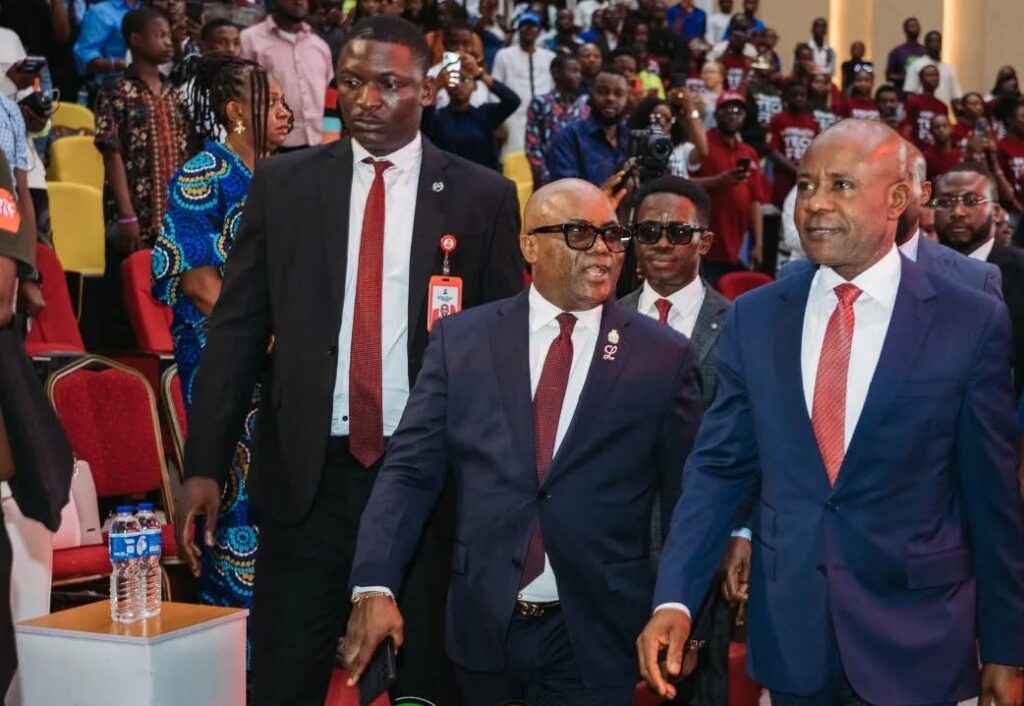
“We set out to inspire 50,000 innovators, thinkers, founders, investors and digital talents. To see nearly 60,000 people here—not registrations but real engagement—shows that the African tech narrative is shifting from perception to measurable impact,” Dr Ezeh said.
Attendance Breakdown and Daily Focus
Organisers disclosed that Day One recorded 20,000 participants, Day Two 15,000, Day Three 13,000, and Day Four 5,000 attendees. Each day was structured around a central theme, featuring contributions from government, global tech firms, startups and academia.
The theme for ETF 2.0 was “Coal to Code: Energy in New Form.”
Policy, Investment and Innovation
Day One focused on policy and governance and was officially declared open by Enugu State Governor Peter Mbah, who emphasised technology and innovation as central pillars of his administration’s development agenda.
“We are witnessing an economic renaissance powered by technology… The global economy is now driven by ideas, code, data and innovation,” Mbah said, adding that Enugu has chosen to be “a producer, not a spectator” in the Fourth Industrial Revolution.
Dignitaries including Sweden’s Ambassador to Nigeria, Anna Westerholm, toured exhibition halls showcasing startups, coding boot camps, robotics demonstrations and AI-powered agricultural tools.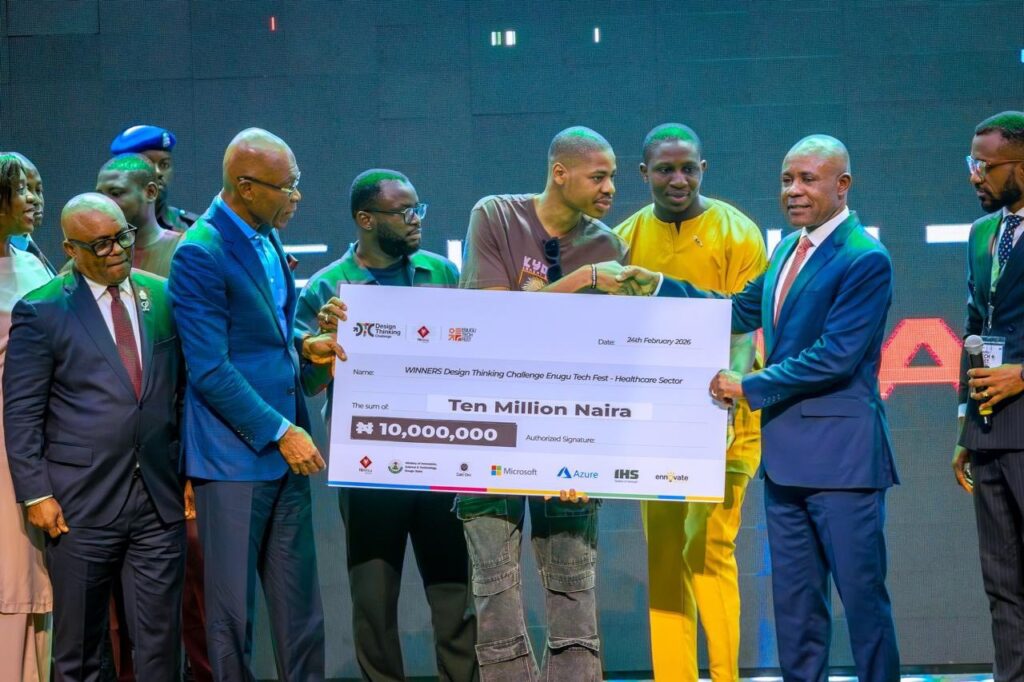
Observers from Britain and other European markets noted a shift in Nigeria’s tech discourse—from aspirational rhetoric to implementation-driven frameworks with measurable outcomes.
Day Two spotlighted entrepreneurship and investment. A curated “Deal Room” facilitated engagements between startups and venture capitalists, while masterclasses addressed scaling, product-market fit and cross-border expansion. Investors from Lagos, Nairobi, London and Dubai attended, reflecting rising global interest in African digital enterprises.
Dr Ezeh described the festival as “a bridge between talent and capital,” positioning Enugu as an emerging investment gateway to South-East Nigeria’s technology corridor.
Day Three explored artificial intelligence, blockchain and Web3 technologies, featuring a live hackathon with teams developing solutions in fintech, healthcare diagnostics and climate-smart agriculture. Panels also examined responsible AI governance and decentralised finance regulation.
Youth Empowerment and Lasting Impact
The closing day blended innovation showcases with awards and cultural performances. Nigeria’s Minister of Innovation, Science and Technology, Kingsley Tochukwu Udeh, reaffirmed federal support for youth-led innovation and research commercialisation.
Secretary to the Enugu State Government, Chidiebere Onyia, described ETF 2.0 as “a landmark achievement” that has elevated Enugu’s global profile.
One of the festival’s most tangible outcomes was its youth empowerment initiative. Hundreds of young participants received laptops and tablets, while selected startup founders and innovation teams were awarded ₦10 million grants each to accelerate product development and market entry. Additional groups received smaller grants to support training, prototyping and community tech hubs.
“Inspiration without tools is incomplete,” Dr Ezeh said. “We are placing real resources in the hands of those who will shape the ecosystem.”
A Growing Continental Signal
Beyond speeches and exhibitions, ETF 2.0 functioned as a marketplace of ideas, ambition and opportunity. Cultural performances and digital art installations underscored the festival’s message that technology and cultural identity can coexist.
For international observers, the festival reflects a broader continental shift: Africa’s youthful, tech-savvy population is increasingly entrepreneurial and globally connected.
Against persistent challenges such as infrastructure gaps and regulatory uncertainty, Enugu’s successful convening of over 53,000 innovators sends a clear signal—subnational governments are stepping forward as active ecosystem builders.
As the curtains fell on ETF 2.0, Dr Ezeh reflected on what he termed “Africa’s defining decade.”
“This festival is not an endpoint,” he said. “It is the foundation. We are building from Enugu to the world.”
If ETF 2.0 is any indication, that ambition is already gaining momentum.
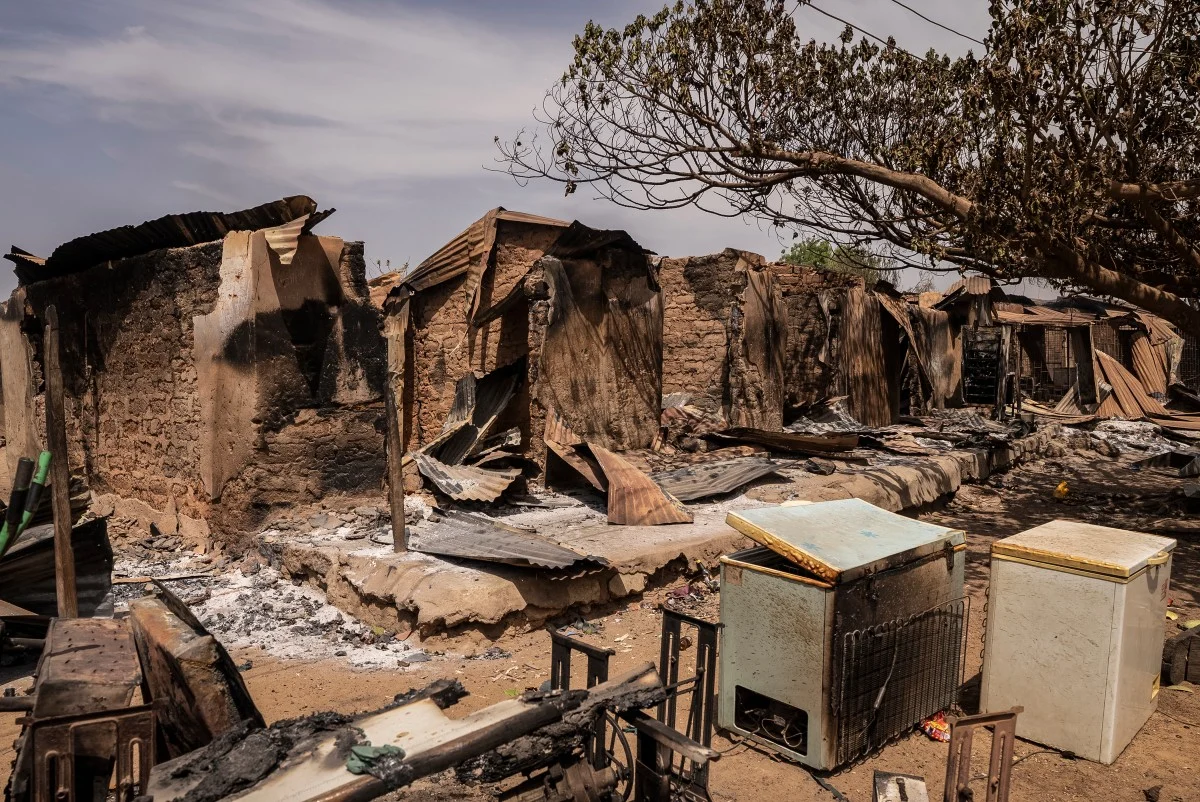
While the Nigerian Police Force said 75 persons were confirmed killed in the assault on Woro and Nuku communities, local sources and international observers put the death toll significantly higher.
In a statement on X on Friday, the US Mission in Nigeria described the attack as “horrific,” saying more than 160 people were feared dead, with many still unaccounted for.
“The United States condemns the horrific attack in Kwara state in Nigeria, which claimed the lives of more than 160 people, with the death toll still unconfirmed and many still unaccounted for.
“We express our deepest condolences to the families of those affected by this senseless violence,” the statement read.
It welcomed President Bola Tinubu’s directive to deploy security forces to protect affected communities.
The reaction adds to international condemnation of the attack, which had earlier drawn rebukes from the United Nations and the Republic of Türkiye.
Tinubu had ordered the deployment of an army battalion to Kaiama and approved the creation of a new military command to lead the operation, following the assault on Woro and Nuku communities.
The Inspector-General of Police, Kayode Egbetokun, had also ordered the immediate deployment of tactical and intelligence teams to Kaiama and surrounding communities to restore calm and prevent further attacks.
Kwara State Governor, AbdulRahman AbdulRazaq, said the deployment of troops under Operation Savannah Shield would help deter further violence, adding that security forces were already on the ground.
By Okey Maduforo, Awka
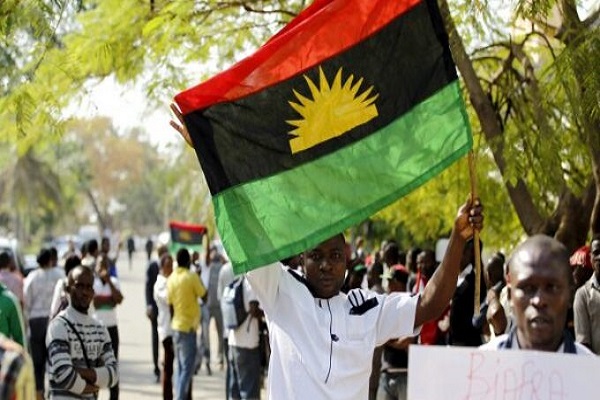
The alleged sit-at-home order reportedly issued by the Indigenous People of Biafra (IPOB) for Monday, February 2, 2026, in Anambra State has suffered a major setback, following a firm denial by the group that it authorised such a directive.
IPOB dismissed the order as false and further disowned the use of the pseudonym Emma Powerful as the signatory to any of its press statements, warning that any statement issued under that name did not originate from the organisation.
In a statement attributed to the Head of the Directorate of State (DOS), Mazi Chukwukadibia Edoziem, the group said it never approved any sit-at-home or lockdown across Biafraland on the said date.
“Furthermore, the Directorate of State categorically states that it did not authorise any individual or group whatsoever to issue a lockdown or sit-at-home order across Biafraland on Monday, February 2, 2026,” the statement read.
IPOB also announced new guidelines for its official communications, resolving that all press statements representing its position must henceforth be issued exclusively on the organisation’s official letterhead.
The group explained that due to the abuse and compromise of the pseudonym Emma Powerful, it would no longer use the name for issuing statements.
“For the avoidance of doubt and in the interest of clarity, any press statement released under the pseudonym ‘Emma Powerful’ going forward does not emanate from IPOB leadership and does not represent the position of the IPOB Directorate of State,” the statement added.

President Bola Ahmed Tinubu has cancelled the posting of an ambassadorial nominee to Turkey, clarifying that no ambassador has been appointed to Ankara despite an earlier announcement suggesting otherwise.
The clarification came on Friday, hours after the Presidency initially announced the posting of former Kebbi State Governor, Usman Dakingari, as Nigeria’s ambassador-designate to Turkey.
Earlier in the week, President Tinubu had approved the posting of four ambassador-designates from a pool of more than 60 nominees confirmed by the Senate last December. However, the Presidency has now confirmed only three appointments, effectively leaving the Turkish diplomatic mission without a nominee.
In a statement issued late Thursday night, the President’s spokesman, Bayo Onanuga, had announced that President Tinubu approved the posting of four ambassador-designates.
The initial list named Kayode Are, former Director-General of the Department of State Services (DSS), as ambassador-designate to the United States; Ayodele Oke, former Director-General of the National Intelligence Agency (NIA), as ambassador-designate to France; Amin Dalhatu, former Nigerian ambassador to South Korea, as High Commissioner-designate to the United Kingdom; and Usman Dakingari, former Governor of Kebbi State, as ambassador-designate to Turkey.
Following the revision, the Presidency directed the Ministry of Foreign Affairs to formally notify the governments of France, the United States and the United Kingdom of the confirmed ambassador-designates, in accordance with diplomatic procedures.
-
 News1 day ago
“Go and Verify”: How Sunday Umeha Is Redefining Representation in Ezeagu/Udi
-
 Politics5 days ago
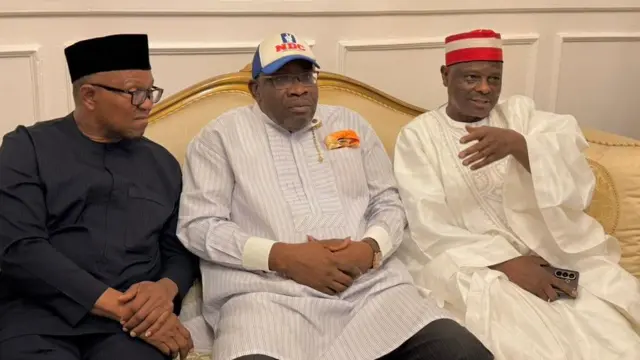
Mass exodus: Obi, Kwankwaso exit rocks ADC, 18 lawmakers join NDC
-
News2 days ago
Chief Sir Paul Chukwuma Lays His Beloved Sister to Rest
-
 Politics2 days ago
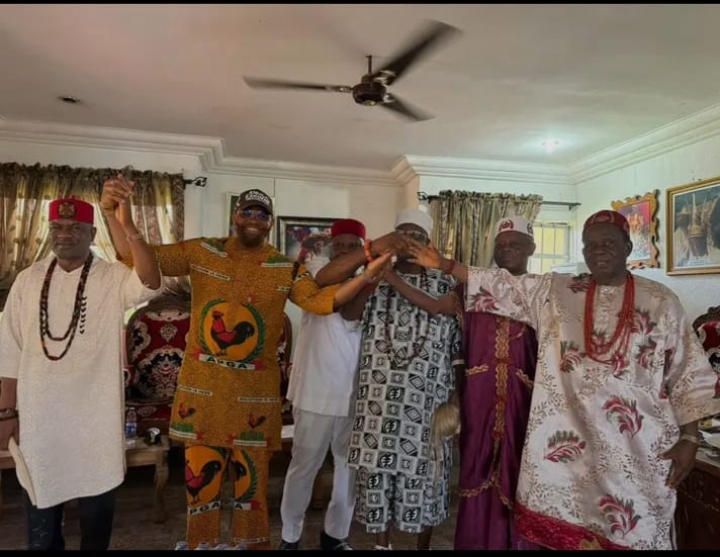
Anambra Communities Boil As Group Carpets Traditional Rulers Over Zoning
-
 Politics5 days ago
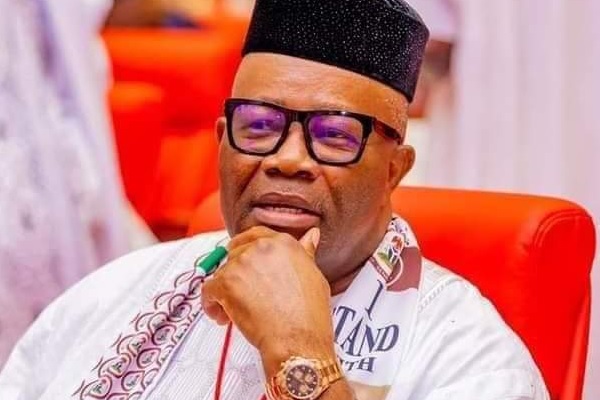
2027: Akpabio Moves to Block Ex-Governors from Contesting for Senate President
-
 News3 days ago
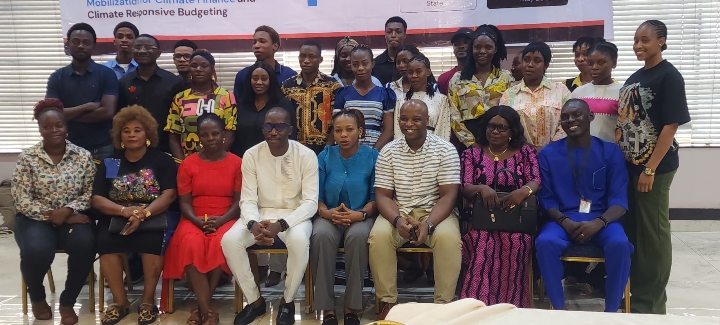
Enugu, SSDO advance domestic resource mobilisation for climate responsive budgeting
-
 Crime3 days ago
Anambra Police Burst Gunmen Armoury in Orumba
-
 News2 days ago
2027: Anambra ADC Intact Despite Obi, Kwankwaso Departure – Guber Candidate