



News
The Yahaya Bello Factor: Allegations of Political Protection Behind Kogi West’s Mining Crisis


Beneath the rich soil of Kogi West, vast deposits of gold, lithium, and other rich mineral deposits promise prosperity. But for the local communities, this mineral wealth has become a wave of insecurity, land grabbing, and fear that residents and security sources directly attribute to powerful political figures and their foreign proxies.
Based on reports from 2024 and 2025, by David Hundeyin there are allegations linking former Kogi State Governor Yahaya Bello to illegal mining activities, particularly involving the extraction of solid minerals in the Yagba area of Kogi West.
An investigation spanning several weeks, involving interviews with community leaders, security personnel, and mining experts, reveals a disturbing pattern: licensed and illegal miners, allegedly backed by prominent politicians, are suspected of arming bandits to terrorize local populations, driving them from their ancestral lands to allow for unchecked and highly profitable mineral extraction.
The Kogi West Blueprint: Politicians, Proxies, and Fear

The epicenter of this crisis is in the communities of Kogi West Senatorial District. Residents, who spoke exclusively on condition of anonymity for fear of violent reprisals, point fingers at a well-known network.
“The mining sites are not run by our people,” one community elder from Yagba West Local Government Area explained, his voice barely a whisper. “They are being done by proxy by some Chinese who are holding it for prominent Kogi politicians. Among them is a former Chief of Staff and a former Governor. They have the cover, and the Chinese have the machines. We have the suffering.”
The modus operandi, as described by multiple sources, follows a chillingly consistent script:
Mineral-rich communities are identified, often through covert surveying.
Large parcels of land are acquired through a combination of coercion, deceit, and the exploitation of poverty. Locals report being offered paltry sums for land they did not fully understand the value of.
For those who refuse to sell or who later protest, intimidation begins. This starts with threats and escalates to violent attacks by armed men who arrive on motorcycles, often in the dead of night.
Once the community is sufficiently terrorized and displaced, the mining operations begin in earnest. Heavy machinery, operated primarily by Chinese nationals, moves in, guarded by private security forces that locals view as an occupying army.
“Most of these lands were sold ignorantly and secretly,” lamented a youth leader from Yagba East LGA. “Our fathers were given crumbs for what they thought was barren land. They were told it was for farming. Now, we see trucks upon trucks leaving with our gold and that black stone [lithium]. When we try to ask questions, we are met with bullets.”
The state government has repeatedly announced initiatives to curb illegal mining, but residents claim these efforts are cosmetic, targeting only small-scale, local artisanal miners while leaving the large, politically-connected operations untouched.
A Disturbing Pattern: From Niger to Zamfara
The situation in Kogi West is not an isolated incident but part of a broader, more sinister pattern replicated across Nigeria’s mineral-rich regions.
Niger State: In areas like Shiroro, a direct nexus has been established between armed bandits and illegal miners. Bandits attack villages, killing and kidnapping locals, creating a security vacuum. They then offer “protection” to illegal miners operating in the seized territory, taking a cut of the profits. This creates a perverse economy where insecurity becomes a profitable business model for both the bandits and their sponsors.
Zamfara State: This state became the textbook case of the phenomenon. Illegal gold mining was so rampant and so deeply tied to armed banditry that the federal government declared a no-fly zone and implemented a full-scale ban on mining activities in 2019 to cut off the funding source for the terrorists. Despite this, reports persist of operations continuing under the protection of armed groups.
Katsina and Kaduna States: Similar reports echo from these states, where communities accuse “outsiders” of collaborating with bandits to dispossess them of their land, particularly gold-rich areas.
In each case, the playbook is the same: use violence to create fear and displacement, then move in to exploit the resources. The profits from this illegal trade are then used to purchase more weapons, fund more attacks, and bribe officials, creating a vicious, self-sustaining cycle of violence and exploitation.
Land Grabbing: The Arm-twisting Tactics of Economic Terrorists
A sad case of land grabbing is the ongoing legal dispute by Iddo-Ojesa community in Yagba East local government with Relix Mining Company Limited (Chinese company) who through alleged wrong negotiation with Joshman Multiconcept Limited (Nigeria Company owned by current Chairman of Yagba East LGA) and other impersonators reportedly swindled an unsuspecting Chinese company in the fraudulent purchase of a large expanse of land that is up to a quarter of the entire LGA!
On the 17th of January 2023, a consent was signed between the Omo Meru Family of Iddo Ojesa community and Joshman Multiconcept Company, owned by the current Chairman Yagba East Local Government Area, Mr Dare Joshua, for a mining exploration licence covering a small portion of the family land.
Mr Dare’s company failed to stick to earlier agreement by selling the entire Meru family land to the unsuspecting Chinese company (Rellix Mining Limited) aided by unscrupulous representatives of Meru’s family and others who appended their signatures to the illicit deal without the consent of the family head and other principal members of the family.
Meru’s family has an ancestral land in Odo- Osin. There has never been any dispute in the past and interestingly, Meru Family are one of the largest land owner in Yagba land and Okun nation in general.
Joshman Multconcept Limited only came into the scenario January 2023 for a consent letter towards mining exploration which was given to him. It was later discovered that the consent letter signed on 17th January 2023 for the exploration licences was doctored by Mr Dare’s company and resubmitted for the purpose of small scale mining lease, but both documents bear the same date which is quite impossible if due process was followed.
By July 2023, Mr Dare came seven months after the consent letter was issued to his company and connived with some elders who are illiterates and created the impression to the elders that a compensation will be paid to the family as a result of the consent granted to his company. He told them they must append their signatures on some document in the palace of Agbana of Isanlu, His Royal Majesty, Oba Moses Etombi. The elders includes: Chief Osadumi Sunday, Elder Elder Rowland Olorunsola, among others. They were made to sign agreement for the sale of the entire land covering over 253 square kilometres which is over a quarter of the Local Government Area.
With documents presented to the Chinese company, the land mass currently in dispute has encroached into many other communities including Idofin, Makutu, Odogbe, Ilafin and part of Ifare, Iboro, Ofe, Ipele clans in both Yagba East and Yagba West Local Government Areas.
Curiously, the Certificate of Occupancy (CofO) for the disputed land has been issued by the state government. More curious is the fact that the date on the CofO showed it was issued within 24 hours after the land agreement was signed. This further proves the interest of some state actors in the ongoing land grabbing activities in Kogi West.
The Forgotten Communities: Minerals Rich Villages’ Neglect a Deliberate Act?
Most of the communities under intense bandit attacks across Kogi West are ‘forgotten towns, villages and hamlets’. With near zero social amenities, the obvious neglect by government is glaring in these communities.
When bandits began to attack communities like Okoloke, Isanlu Esa in Yagba West LGA, Olle Bunu and other interior communities in Kabba Bunu LGA, Odogbe, Idofin and Ilafin in Yagba East LGA, many wondered why they were being attacked. These are communities populated mainly by poor peasant farmers and low-income traders. There are no security posts in these forgotten communities.
Emerging evidence showed that these poor communities have diverse economically viable mineral deposits in their soil.
A registered Nigerian Company with Registration No RC 1091756, Sincerity Mining And Construction Co Ltd, posted on their corporate website that the company was granted an Exploration License on 4 Cadastral Units by the Mining Cadastral Office an Agency under the Ministry of Solid Minerals & Mines on the 8th of September 2015 to get involved in mining activities.
The allocation was at Okoloke, Yagba West, Kogi State, Nigeria. The Exploration License is for Tantalite & Gold Exploration but surprisingly, the Geology and Geochemical Survey discovered arrays of Minerals that were not quoted to be in Nigeria. These strange discoveries at National Geological and Mineral Laboratories Kaduna further led the Geologist from Nigeria Geological Survey Agency to send the report of the tests to Bureau Veritas Laboratories of Canada to conduct further tests of the materials which led to the discoveries of the following in the other of importance – (1) Nickel (2) Chromium (3) Cobalt (4) Copper (5) Barium (6) Marble (7) Gold etc.
“Further Exploration exercises carried out include a Geotechnical Survey, Aeromagnetic Data Interpretation among others that led to the Government granting of expansion of the Cadastral Units from the initial 4 units plus an additional 148 units on the 2nd Exploration License and subsequently the grant of SSML (Small Scale Mining Lease) while Exploration exercises continue the 148 Cadastral.
“On record, it was on our Okoloke Site, Kogi State that the Nickel, Chromium, and Cobalt were first discovered in Nigeria before that of Kaduna State for which a visiting Australian Minister of Mines a few years ago quoted as a strange occurrence in Nigeria.
“The Laboratory Tests conducted at FUTA (Federal University of Technology) Akure, Ondo State this year 2022 further confirm the presence of Lithium Ore through Geochemical Analysis with further tests on other associated minerals ongoing on the same site,” the company wrote on its website.
It is confirmed that many of these communities in Kogi West have huge solid mineral deposits. Also, these communities are grossly under-developed. They were deprived basic amenities and now being ruthlessly displaced by unchecked armed terrorists. People are already asking if these communities were deliberately sidelined in the development initiatives to frustrate them and probably force them to leave their lands for better communities.
Mining Activities Remain a Black Market Operation in Kogi West
Indigenes of host mining communities are largely unaware of what is going on in their forests. Only a few sellouts know the companies mining in their communities and they prefer it remains so.
They approach local miners, usually artisanal, and ask about mineral-rich communities. They know the areas better than these foreigners, so they take them to the mining sites and introduce them to the traditional rulers. They pay these monarchs between five hundred thousand and two million naira, depending on the sincerity of the middlemen. The excited traditional ruler readily gives them letter of consent to operate in their forests. They also sign the mandatory Community Development Agreements (CDAs) without input from their subjects. In almost all mining host communities, contents of CDAs are not known by indigenes. A preferred black market operation. The traditional rulers are usually excited because they felt the coming of ‘investors’ will bring rapid development to their communities. It is worth mentioning that these are usually ‘forgotten communities’ with little or no government presence. Of course, the ‘greek gift’ also encouraged these tradition rulers to act without carrying out due diligence.
The state government has not been transparent in its dealings in this sector as well. Few months ago, the incumbent Governor announced the acquisition of 15 mining licenses and promised to involve communities in the operations. He is the first Governor to make public the state government acquisition of mining licenses. Truth is, this is not the first time Kogi state government is securing licenses and seeking ‘investors’ to trade with in the extractive industry. Since the acquisition was done in secret, these licenses usually ended up in private hands without public knowledge.
Hostile Takeover of Mining Sites
The battle that began in the forest is currently consuming communities. Quite a number of mining sites across Kogi West are not known to Ministry of Solid Minerals Development or the cadastre office. Legal, illegal and unlicensed artisanal miners control these sites. For the illegal miners, their men largely live in the forests, sleeping in makeshift huts and are usually armed to protect themselves. Battle for control of these mining sites have seen the weaker players being displaced violently by the sides with state backing. Changes in government also brings about change in power play in these forests. When the lesser ones are displaced they usually find it difficult to re-integrate themselves back into normal society having spent years being ‘Lords of the Forests’. They are still armed and now jobless. Crime becomes the easiest route to survival.
In March 2025, while celebrating one year success of the mining marshals, the Minister of Solid Minerals Development, Mr. Dele Alake, announced that 3,000 illegal gold miners had been flushed out.
He alluded to the fact that these illegal miners had some sort of of corporate backing.
“The gravity of illegal mining worsened with the emergence of companies that collaborate with individual miners to perpetrate this evil. While individual illegal miners are unable to excavate deeply due to the limitations of modern equipment and finance, corporate collaborators encourage deeper excavation and scale up the criminality.
“The first clearance operation took place at Mining Lease 19325 of North-South Extractive Industries Limited, located in Jagula, off Isanlu in Yagba East Local Government Area of Kogi State. Over 3,000 illegal miners were digging and carting away precious grams of gold, whereas threats barred the real owners, who obtained the license in 2016, from operations.
“The Mining Marshals flushed them out completely and stationed men on site to maintain law and order till date,” he said.
This clearance operation was carried out by federal government without recourse to sub-national authorities. Nobody monitored where those dislodged moved to after the clearance operation.
Our Lives Better Off Before the Coming of ‘Investors’
The communities that have come under severe attacks in Kogi West are largely agrarian communities. They have lived in peace for decades living and enjoying their simple lives. Though not rich to afford luxury lifestyles, they were happy people.
When miners started coming in, their hopes were high that mother fortune had smiled on them. They thought their communities will get benefits that had eluded them for decades but years after, there is nothing to show for their hospitality.
Instead of getting a better lease of life, their fortunes sadly nosedived. Their dusty but motorable roads are now in sorry state. Their main source of sustenance, farms, are no longer accessible due to activities of armed hoodlums. Despondency sets in.
Peace has eluded their communities and the usual low-budget fun activities have all ceased.
Is it a curse to have mineral deposits in their communities?
Observations and The Human Cost
Our investigation observed several key issues:
The mining sites are ecological disaster zones. Forests are cleared, deep, unregulated pits are dug and left open, and waterways are contaminated with mercury and other chemicals, poisoning the primary source of water for remaining communities
The promise of jobs for locals is a mirage. The skilled operation of heavy machinery and security is handled by outsiders. Young men in the communities, stripped of their farmlands, are left in poverty, making them vulnerable to recruitment by the very bandits terrorizing them.
Beyond the land, communities are being stripped of their heritage. Sacred sites and ancestral graves have been desecrated and bulldozed minerals.
The most palpable observation is the overwhelming climate of fear. No one is willing to speak on the record. The names of the powerful politicians are an open secret in whispered conversations, but the fear of being labeled, attacked, or “disappeared” ensures public silence.
The illegal mining in Kogi West and beyond is more than an economic crime; it is a primary driver of Nigeria’s internal security crisis. It represents a brutal form of resource-backed colonialism, where local populations are violently subdued so that national resources can be carted away with impunity.
Until there is a sincere, unbiased effort to dismantle the powerful political and corporate networks behind this trade—and to address the complicity of elements within the security forces—the cycle of violence will continue. The land in Kogi West may hold the key to a technological future powered by lithium and a prosperous future built on gold, but for now, it only yields fear and bloodshed.
Source: https://x.com/davidhundeyin/status/1801546826165727303?s=48&t=6183R9SJ6i9BggqMHCBt5g

By Chinedu Sabastine
Mainpower Electricity Distribution Limited (MEDL) has announced a planned power outage in Nsukka and surrounding communities from November 5 to 10, 2026, to enable the Transmission Company of Nigeria (TCN) to carry out maintenance work on equipment at its Nsukka station.
The outage, scheduled to run daily from 9 a.m. to 5 p.m., will affect electricity supply to customers served by the University of Nigeria, Nsukka (UNN), SUMAS and Orba 33kV feeders.
The announcement comes amid a current reduction in electricity supply across Enugu State, which MEDL has attributed to a drop in energy generation and low system frequency, forcing TCN to implement load shedding.
In a public notice issued on Monday, MEDL’s Head of Communications, Emeka Ezeh, said the planned maintenance was necessary to improve electricity supply in the affected areas.
“The planned outage is to enable the TCN technical team to carry out maintenance work on some equipment at the station,” Ezeh said.
He added that the exercise was aimed at improving the reliability and quality of electricity supply to customers.
The communities expected to experience interruptions include Ukopi, Opi Agu, Eha-Alumona, Orba Town, Obollo-Afor, parts of Obollo-Eke, Enugu Ezike, Ibagwa, Nkalagu Obukpa, Okpaligbo, Iheaka, Edem Ani, Agbani, Uzo-Uwani, Obimo, Nkpologu, Lejja, Nguru, Aku and Ogbede.
Other affected locations are Odim Gate, Nkpor, UNN, Nru, Ede Oballa, El Tabera Estate, Ikenga Estate, Wilson Company, Umakashi, Isiakpu, G.R.A. and Ogige Main Market, alongside surrounding communities.
MEDL apologised to customers over the anticipated inconvenience and appealed for their patience and understanding during the maintenance period.
“The exercise is necessary to facilitate essential technical work aimed at improving the reliability and quality of electricity supply to customers,” the company said.
Why electricity supply has dropped
In a separate public notice issued on Monday, the company explained that the current reduction in electricity supply across Enugu State resulted from a decline in energy generation, which had affected the stability of the power system.
MEDL said the situation had resulted in low system frequency, prompting TCN to ration available electricity through load shedding.
“The current reduction in power supply availability is due to a drop in energy generation, which has resulted in low system frequency,” the company stated.
It added that the situation had necessitated TCN’s decision to implement load shedding of the available energy.
“Consequently, the energy allocation to MEDL has been affected, limiting its ability to meet the daily service-level commitments,” the statement said.
The company, however, assured customers that it was monitoring the situation and distributing the available electricity allocation across its network.
“MEDL wishes to assure its customers that it is closely monitoring the situation and will continue to distribute the available energy allocation fairly across its network,” Ezeh said.
The company expressed optimism that normal electricity supply would soon be restored, while regretting the inconvenience caused by the reduction in supply.
It also thanked customers for their patience, understanding and continued cooperation.
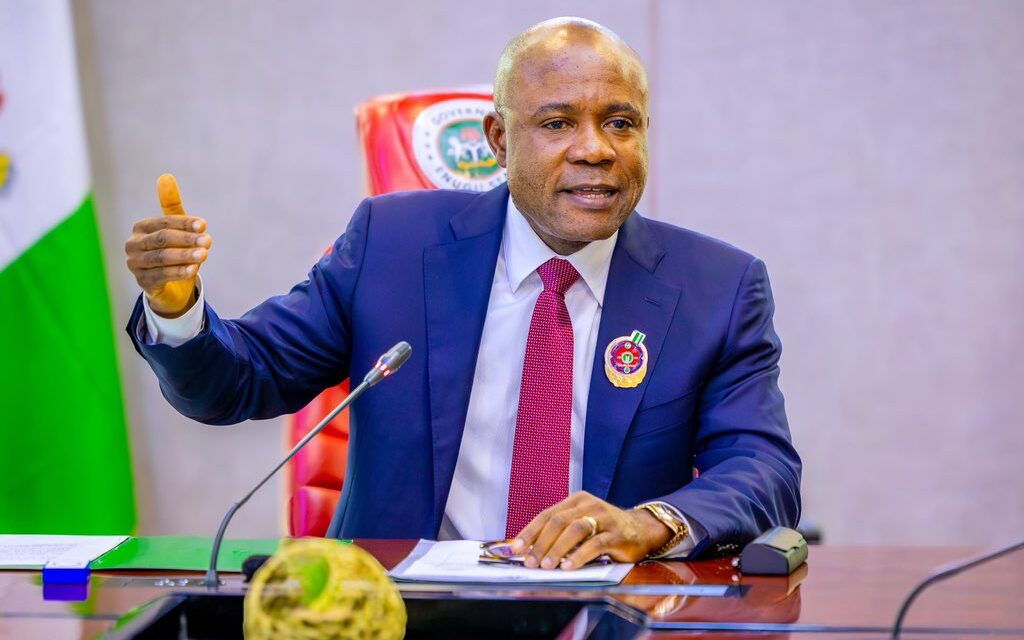
Enugu State Governor, Dr. Peter Mbah, has taken steps to address the rising cost of renting accommodation in the state by forwarding an executive bill to the State House of Assembly seeking to regulate agency and legal fees charged by property agents and lawyers.
The proposed legislation seeks to amend the Landlord and Tenant Law, Cap. 101, Revised Laws of Enugu State, 2004, with a view to protecting tenants from excessive charges while ensuring fairness and transparency in the property market.
Speaker of the Enugu State House of Assembly, Rt. Hon. Uche Ugwu, disclosed this in a statement posted on his Facebook page on Monday, October 26, 2026.
Ugwu explained that the executive bill would complement an earlier legislative proposal sponsored by the member representing Nkanu East State Constituency, Hon. Anthony Okey Mbah, which had already passed first and second readings and undergone a public hearing.
According to the Speaker, the proposed amendment would introduce measures to regulate estate agents, place limits on agency and legal fees, and establish clear procedures for the collection and refund of caution fees.
The legislation also seeks to check arbitrary rent increases and minimise disagreements between landlords and tenants over property damage through joint inventories and professional valuations where necessary.
Ugwu noted that the Assembly would harmonise the proposals to produce comprehensive legislation that addresses longstanding concerns in the state’s housing sector.
“When we are done with dotting the i’s and crossing the t’s, we shall have a document that shall make tenancy-related charges more transparent and predictable, control and limit agency and legal fees, establish a formal regulatory framework for agents,” he stated.
He added that the proposed law would provide a structured mechanism for handling caution fees and refunds while creating an enabling environment for investors in the housing sector.
The development comes amid growing concerns among residents over the financial burden associated with securing rented accommodation, particularly agency commissions, legal charges and other tenancy-related payments.
The Speaker maintained that the initiative was consistent with Governor Mbah’s broader development agenda of positioning Enugu as an attractive destination for investment, business, tourism and residential living.
“According to the Governor’s vision, indeed we can make Enugu the preferred destination for business, investment, tourism and living,” Ugwu added.
The proposed amendment, when passed into law, is expected to provide a clearer legal framework governing the relationship between landlords, tenants and property agents across the state.
By Okey Maduforo, Awka
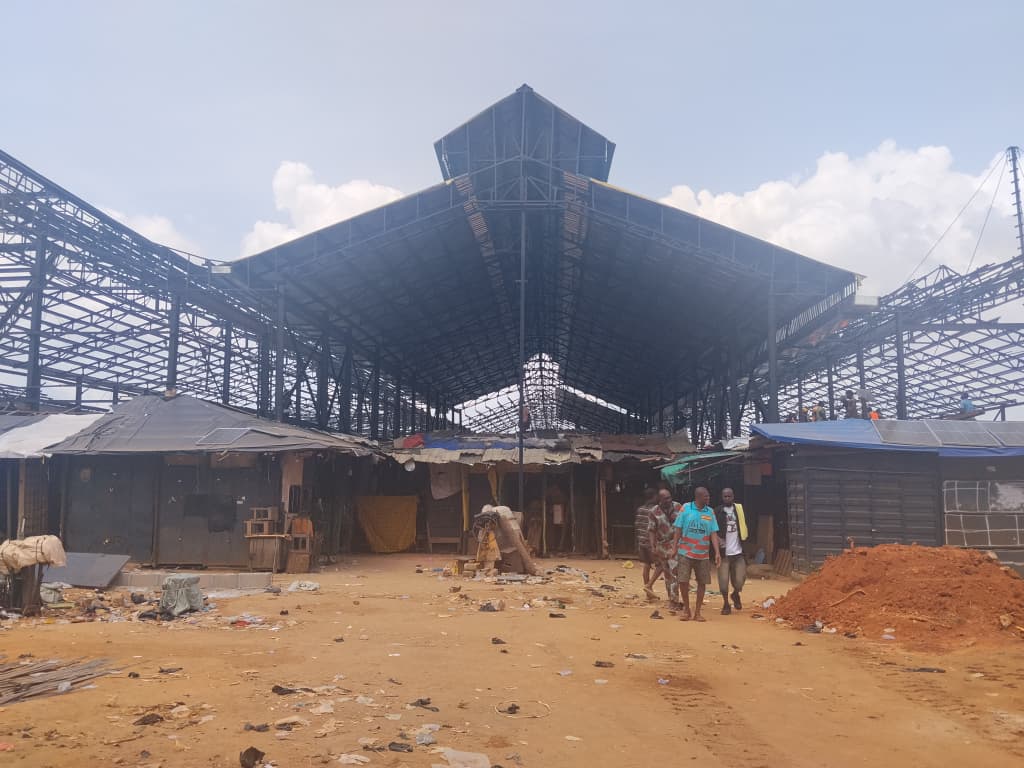
The ongoing modernisation of the Onitsha Main Market in Anambra State is expected to be completed ahead of the Christmas festivities, with over 6,000 shops and modern facilities designed to boost commercial activities in the historic market.
The project, which commenced two months ago, has reached 90 per cent completion and is being executed on a 24,000-square-metre expanse of land, with an Independent Power Plant (IPP) designed to provide uninterrupted electricity to the market and its environs.
Other facilities include five additional boreholes to complement the existing one, a health centre, modern toilet facilities, a motor park, solar-powered streetlights, CCTV surveillance cameras and four access roads.
The market will also feature three major entrance gates, eight minor gates and a dedicated firefighting station to enhance security and emergency response.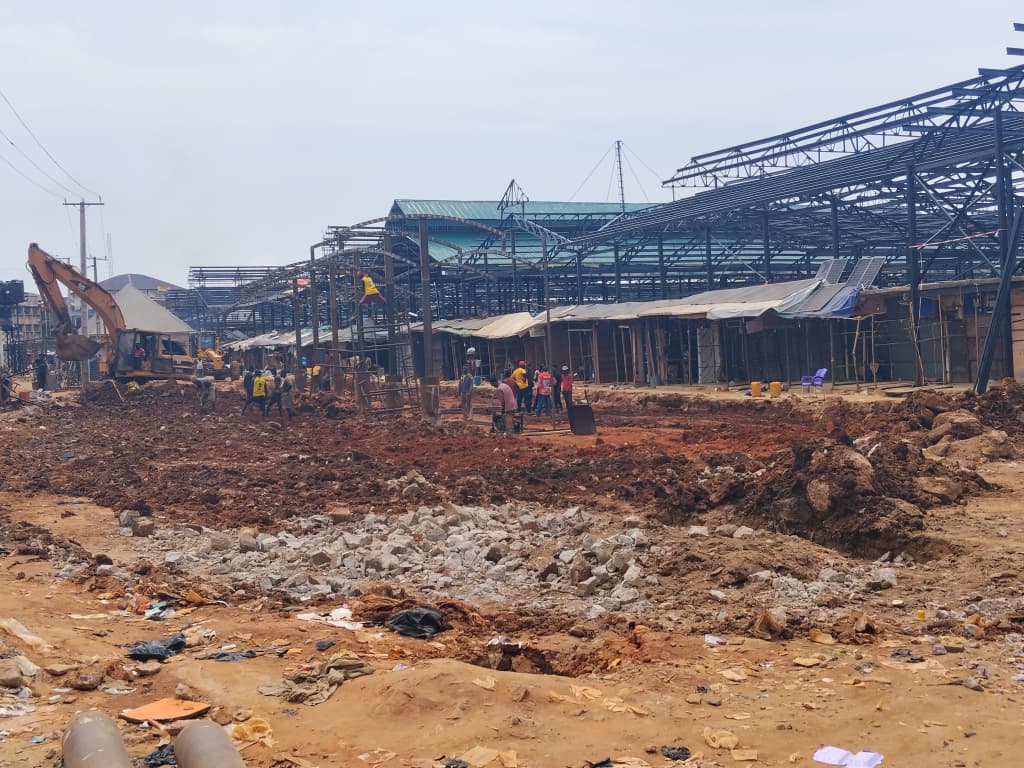
Speaking during an inspection of the project, the Commissioner for Housing, Arc. Henry Arinze, said the initiative was designed to provide a conducive business environment for traders and their customers.
“The project is aimed at providing ease of doing business for both traders and their customers, and with over 6,000 shops in the market, we are good to go,” he said.
Arinze explained that the project forms part of Governor Charles Soludo’s urban regeneration programme, adding that the provision of an Independent Power Plant would enable traders to extend commercial activities from the current closing time of 5 p.m. to 10 p.m.
“We did not demolish the market shops. What we are carrying out is part of the urban regeneration programme of the state government. With the new facilities, the market will remain open until 10 p.m. as against the present 5 p.m. closing time,” he stated.
He further disclosed that construction activities were deliberately restricted to nighttime and Sundays to minimise disruptions to trading.
“We would have gone farther than this, but we work only at night and on Sundays so that traders can continue their businesses while construction is ongoing,” he explained.
Also speaking, the Special Adviser to Governor Soludo on Projects Monitoring, Prof. Ebuka Nwankwo, recalled that the market had not witnessed any major government-led modernisation since its post-civil-war reconstruction in 1971 under the administration of the then Sole Administrator of East Central State, the late Ukpabi Asika, with assistance from the Federal Government.
According to him, the market has experienced four major fire incidents since its reconstruction, with affected traders largely undertaking the rebuilding of their shops themselves.
“Since 1971, when the market was reconstructed after the war, there have been four fire incidents, with traders carrying out the reconstruction of their affected shops. The state government is not only desirous but deliberate about restoring the past glory of the market,” Nwankwo said.
The Head of Civil and Structural Engineering, Prof. Henry Aginam, commended the Anambra State Government for embarking on the project, describing it as a bold intervention in the redevelopment of the commercial hub.
He expressed satisfaction with the quality of construction materials and the calibre of professionals engaged in executing the project.
Similarly, the representative of the Council for the Regulation of Engineering in Nigeria (COREN), Engr. Prof. Akaolisa Ezeadi, gave the project a positive assessment, noting that the construction work complied with professional standards and engineering best practices.
Ezeadi said the regulatory body was satisfied with the quality of work so far and would continue its monitoring visits until the project was completed.
In his remarks, the Commissioner for Commerce and Industry, Mr. Nonso Ebonwu, described the market modernisation as a major step towards reviving the commercial fortunes of Onitsha and attracting increased patronage from within and outside Nigeria.
He disclosed that a similar redevelopment initiative was also being undertaken at the Nkwo Nnewi Auto Parts Market.
The Chairman of the Onitsha Main Market Traders Association, Chief Chijioke Okpalaugo, expressed satisfaction with the transformation of the market, noting that patronage had continued to increase despite the ongoing construction.
He reaffirmed the traders’ support for the Soludo administration and expressed optimism that the completed project would further strengthen Onitsha Main Market’s position as one of the leading commercial centres in West Africa.

ENUGU, October 25, 2026 — A new association, Online Media Professionals (OMP), has been established to unite online media practitioners, protect their interests and promote professionalism in Nigeria’s media industry.
The association, according to a communiqué issued in Enugu on Sunday, aims to provide a common platform for practitioners to collaborate, share ideas and address challenges affecting their work and welfare.
OMP said the growing influence of online publications in informing the public, shaping public discourse and holding public officeholders accountable had made it necessary for practitioners to organise under a recognised professional body.
The association will bring together individuals who own or work with online media platforms, providing opportunities for cooperation, professional development and engagement with relevant institutions and stakeholders.
It also plans to establish working relationships with government officials, security agencies, educational institutions, corporate organisations and other bodies whose activities affect the media industry and society.
According to the communiqué, OMP is beginning its activities in the South-East, with plans to expand into a national organisation representing online media professionals across Nigeria.
The association said its long-term objectives included building a credible professional body capable of giving practitioners a collective voice, promoting responsible journalism and providing a platform for addressing issues affecting members.
It added that the growth of online media must be accompanied by professionalism, accountability and respect for the responsibilities associated with informing the public.
OMP also pledged to encourage cooperation among practitioners and promote standards capable of strengthening public confidence in online publications.
The association noted that achieving its objectives would require the commitment of members, a clear sense of purpose and programmes designed to address their needs.
It therefore called on online media practitioners across the South-East and other parts of the country to identify with the initiative and contribute to building a strong professional association.
Membership, according to the communiqué, is open to professionals who own or work with online media publication platforms and are willing to support the association’s objectives.
The communiqué was signed by Jude Chinedu and Chukwumerije Aja on behalf of the Communiqué Drafting Committee of Online Media Professionals.
The emergence of OMP marks an effort to strengthen the professional identity of online media practitioners and create opportunities for collaboration and growth within Nigeria’s evolving media landscape.

The Federal Commissioner representing Kaduna State at the National Population Commission (NPC), Hon. Sa’adatu Garba Dogonbauchi, has presented letters of permanent and pensionable appointment to three youths drawn from different local government areas of the state.
The presentation, according to a statement issued by Dogonbauchi, is aimed at expanding employment opportunities for young people and supporting youth empowerment in line with the Federal Government’s development objectives.
The beneficiaries are Shamsuddeen Abdulaziz Bagi from Igabi Local Government Area, Abdulfatah Abdulwakil from Kaduna South Local Government Area, and Aisha Adamu from Birnin Gwari Local Government Area.
Speaking during the presentation, Dogonbauchi described the appointments as more than an administrative exercise, saying they provide beneficiaries with an opportunity to build sustainable careers in public service while improving their economic prospects and contributing to national development.
She said the initiative aligns with President Bola Ahmed Tinubu’s Renewed Hope Agenda, which prioritises employment generation, economic empowerment and improved living standards for Nigerians.
The NPC commissioner expressed appreciation to President Tinubu for the opportunity to serve and represent Kaduna State, pledging to continue supporting programmes that create opportunities for young people and strengthen public institutions.
She also acknowledged Kaduna State Governor Uba Sani, Speaker of the House of Representatives Abbas Tajudeen, and Hon. James Abiodun Faleke for their support, which she said contributed to her appointment and service.
Dogonbauchi urged the new employees to discharge their duties with discipline, integrity and professionalism, while adhering to public service rules and serving as worthy representatives of their communities.
She congratulated the beneficiaries and encouraged them to justify the confidence reposed in them through excellence, accountability and dedication to public service.


-

 News5 days ago
Holy Ghost Transformation: How Enugu North Chairman Ibenaku Onoh Ended Years of Traffic Chaos, Roadside Trading
-
 Politics4 days ago
One Feared Dead, Several Injured as Thugs Attack Ebonyi NDC Assembly Candidate, Burn Campaign Vehicle
-

 News4 days ago
Onitsha North LG Boss Reads Riot Act to Traders, Residents Over Poor Sanitation
-
 Entertainment4 days ago
Nollywood Thrown Into Mourning as Veteran Actor Francis Duru Dies at 57
-
 Politics4 days ago
2027: APGA, APC Set for Joint Meeting in Anambra to Mobilise Support for Tinubu’s Re-election
-

 Health4 days ago
Nigeria’s Ebola Patient Identified as Wife of Swiss Diplomat, Infection Traced to Uganda
-
 Politics4 days ago
2027: It’s Not South-East’s Turn, Obi Not Our Best Presidential Candidate – Umahi
-

 Crime5 days ago
Awaiting-Trial Inmate Escapes From Court