
Politics
Presidential poll: Kwankwaso, Obi threaten APC, PDP dominance


The New Nigeria Peoples Party and Labour Party, with their popular candidates, may pose a serious threat to the dominant All Progressives Congress and Peoples Democratic Party in the 2023 general elections.
Before the primaries conducted by various political parties to field candidates for the 2023 general elections, several parties, political groups and prominent Nigerians were in the news over their search for a ‘Third Force’ that would dislodge and end the dominance of the ruling All Progressives Congress and the opposition Peoples Democratic Party. The two dominant parties have been governing Nigeria at the presidential level since 1999.
While the PDP governed for 16 years, from 1999 to 2015, the APC took over in 2015 and has spent seven years in power. The next presidential election will hold in 2023 when the APC would have spent eight years and the ‘smaller’ parties are currently aligning and realigning forces in their bid to take on the APC and the PDP. However, the planned mergers and alliances seem not to have materialised yet.
However, individual parties and candidates seem to be making efforts, perhaps from the regional and zonal levels. Out of the 18 parties presently registered with the Independent National Electoral Commission, the APC and the PDP included, two other parties are getting the attention of the electorate, especially in their strongholds.

They are the New Nigeria People’s Party and the Labour Party. The NNPP and the LP have been in existence before now, with the latter winning elections in previous general elections. But, perhaps, due to their presidential candidates, they are now under the public spotlight.
While a former Governor of Kano State, Senator Rabi’u Kwankwaso, is the candidate of the NNPP, a former Governor of Anambra State is running for the Office of the President on the platform of the LP.
Not only that, close watchers of events and the politicking going on in Kano State, which is considered to be the base of the NNPP and Kwankwaso, have expressed fears over the widening popularity of the opposition party under Governor Abdullahi Ganduje of the APC.
It is worthy to note that Kano presently has three influential politicians – Ganduje, Kwankwaso and another former governor, Ibrahim Shekarau. It will be noted that the trio have always formed alliances – two against one – in the previous elections. This time, Kwankwaso dumped the PDP for the NNPP while Shekarau quit the APC to join Kwankwaso.
The fears are also based on the fact that Kano is strategic to the electoral victory of the APC, especially that of its presidential candidate, Asiwaju Bola Tinubu. The North-West is said to have the highest voting population in the country (followed by the South-West), with Kano, which Ganduje often describes as a swing state, having the biggest voting bloc in the geopolitical zone.
In the South-West, it is Lagos where Tinubu was its two-term governor. The block votes in Kano were said to have been so attractive that the annual Tinubu Colloquium, a lecture series marking his birthday, which is usually held in Lagos and Abuja, with political heavyweights and allies in attendance, was moved to the state in 2021.
However, Kwankwaso and his NNPP are said to be staging a political tsunami against the APC in Kano, with mass defections recorded in the state already, including close aides to Ganduje and prominent members of the Tinubu Campaign.
Obi of the Labour Party was a member of the PDP until a few days before the presidential primary that produced former Vice-President Atiku Abubakar as its standard-bearer. Some presidential aspirants like Obi in the PDP had left the race, with one of them describing the scramble for delegates’ votes as “obscenely monetised.”
Perhaps, Obi saw the handwriting on the wall. He defected from the PDP to the LP. Being from the South-East where there are agitations over an alleged marginalisation of the zone – a zone that has never produced a president for the country, sentiments from the area have been in Obi’s favour.
Those following Obi’s campaign have also noted the massive youth support he enjoys especially on social media. Though INEC has said virtual support doesn’t count but actually ballot votes, several ‘influencers’ are now mobilising for registration and collection of Permanent Voter Cards by eligible Nigerians, also in the move to end APC and PDP’s reign.
On June 12 when Nigeria was marking Democracy Day, Obi had addressed the issue of lacking the political structure to defeat the ‘principalities and powers’ called the APC and the PDP. Speaking via his verified Twitter handle (@PeterObi), the presidential candidate tweeted, “Whenever I hear of no structure, my answer to it is simple: the 100 million Nigerians that live in poverty will be the structure. The 35 million Nigerians who don’t know where their next meal will come from will be the structure. The elderly, our mothers, fathers and the old ones (who are) dying or being owed gratuity/pension will be the structure. ASUU: the lecturers that are being owed and the students who are not in school will be the structure. We’ll create the structure, and they’ll see what the structure is all about. The structure is about human beings. — PO”
A Professor of Political Science at the University of Nigeria Nsukka, Emmanuel Onyebuchi, stated that should parties have to choose their vice-presidential candidates from the South, and they cannot pick Obi from the South-East geopolitical zone, then they should look for one in the South-South.
Onyebuchi said, “Let me start by saying that one of the mistakes made by the PDP was to frustrate Obi out of the party. Things are changing seriously in Nigeria. The frustration and the hardships that the citizens are suffering have made them start looking for men of integrity and impeccable character, and such people are very few, and Obi is one of them. I don’t know what actually transpired. Obi leaving the PDP is a very big minus for the party because some of us had already concluded that he was going to be the running mate to Atiku because we have looked around and there are just one or two credible candidates remaining. I don’t know what happened, even with Atiku himself. It is a real problem now. It is a very big problem now because I don’t know any other candidate that commands the respect and trust within the South-East like Obi. He has the backing of the Church and so on. I can see people awakening from their deep slumber; you can see the rush for PVCs. People are charged; people are highly mobilised right now.”
The lecturer added, “For the PDP, I think the best option left for them now is to look for a credible candidate from the South-South.”
The professor dismissed the claim that parties were sceptical about picking candidates from the South-East due to its low voting population, stating that Nigerians would be shocked with the mass turnout of voters in the 2023 general elections to support Obi. He said, “What I am telling you now is that people have awoken from their slumber. The problem with the South-East is not voters’ turnout. If you can see what is happening now with the level of mobilisation, people would be shocked by the (huge) turnout in 2023. People would be surprised by the level of turnout from the South-East and all over the federation where the people of the South-East are living. They are now mobilising to get their PVCs. And if they match it with coming out to vote, Nigerians would be surprised by the number of votes coming from the South-East. As I said, the PDP made a very big mistake by frustrating Obi out of the party and most of the votes from the South-East and the major cities where the Igbo are living would go to Peter Obi.”

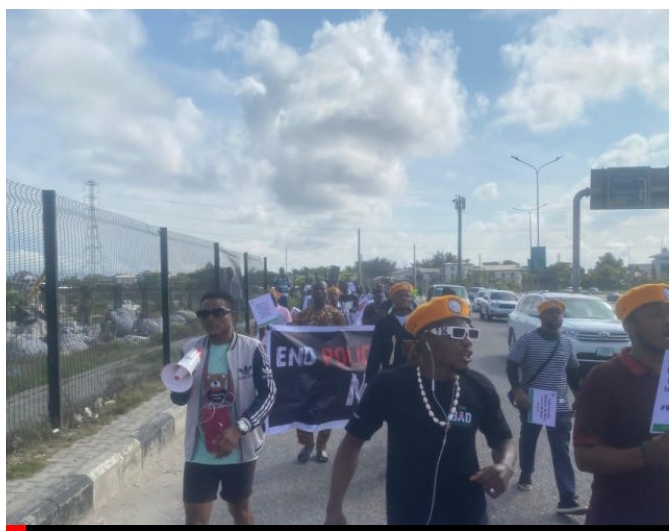


Aggrieved aspirants in Taraba, Kano, Jigawa, Anambra, Benue, Kogi, Kaduna, Ebonyi, Rivers and Plateau states are mobilising petitions and posapc-screening-crisis-deepens-ahead-of-2027-primariessible legal challenges over the outcome of the party’s screening exercises.
The screening process, designed to prune the number of aspirants ahead of party primaries, has generated controversy in multiple states, with several disqualified hopefuls preparing to seek redress through appeal committees.
In some states, protests have already erupted, while party stakeholders warned that attempts to impose candidates could trigger defections, anti-party activities and deepen internal divisions ahead of the primaries.
Taraba: Backlash Over Senator Lau’s Endorsement
In Taraba State, the endorsement of Senator Shuaibu Isa Lau reportedly backed by party stakeholders after the screening exercise, sparked fierce backlash, especially in Taraba North Senatorial District.
Stakeholders and youth groups rejected the endorsement, accusing the senator of poor performance.
A stakeholder from Karim Lamido LGA, Paul Penuel, described the senator’s tenure as “a complete failure,” insisting there was no record of impactful projects or measurable achievements to justify another term.
Another constituent, Dickson Kwinde, warned that repeating what he termed a “costly political mistake” could alienate voters.
Similarly, the Coalition of Concerned Youths and Voice of the Proletariat in Karim Lamido also rejected the endorsement.
Party sources disclosed that some aggrieved aspirants had begun preparing petitions alleging procedural irregularities, manipulation by political godfathers and attempts to impose consensus candidates without proper consultation.
Kano: Consensus Deal Sparks Protest
In Kano State, over 20 aspirants seeking Senate, House of Representatives and State Assembly tickets were reportedly screened out despite earlier consensus arrangements.
Among those affected were former Head of Service, Usman Bala; former lawmaker, Sha’aban Sharada; Muhammad Zango; Danyaro Yakasai; Abbas Abbas; Shehu Driver and Abdulkarim Abdulsalam Zaura in the Kano Central Senatorial contest.
However, APC Publicity Secretary Auwal Soja confirmed that six aspirants eventually stepped down for former Governor Ibrahim Shekarau after a reconciliation meeting.
Despite the arrangement, protests persisted, with a group known as Coalition for Better Kano faulting Shekarau’s endorsement and warning against sacrificing loyalty for political expediency.
Efforts by Governor Abba Kabir Yusuf to reconcile aggrieved aspirants reportedly suffered setbacks after key stakeholders boycotted the peace meeting.
Jigawa: Disqualification Triggers Defection
In Jigawa State, the fallout from the screening exercise resulted in resignation and defection.
Former Speaker of the Jigawa State House of Assembly, Isah Idris, resigned from the APC after he was disqualified and replaced by another aspirant.
In his resignation letter, Idris lamented what he described as the party’s departure from its founding principles before defecting to the Peoples Democratic Party.
Another former Speaker, Idris Garba, and serving lawmaker Abubakar Sadiq were also edged out, heightening fears of deeper cracks within the state chapter.
Benue: Zoning Dispute Emerges
In Benue State, about 40 aspirants were reportedly disqualified during the screening of House of Assembly hopefuls in Makurdi.
The disqualifications generated anger among supporters who accused the party of violating zoning arrangements and excluding certain blocs from representation.
Supporters warned that failure to address the grievances could hurt the party electorally during the general elections.
Kogi: Aspirants Allege “Commando Arrangement”
In Kogi State, protests and accusations of authoritarianism followed allegations that nomination forms were selectively distributed to preferred aspirants under what critics described as a “Commando arrangement.”
A party chieftain, Chief Femi Olugbemi, accused the state leadership of abandoning democratic principles and sidelining aspirants with strong grassroots support.
The controversy has fuelled fears of mass defections and legal disputes within the state chapter.
Anambra: APC Expels 30 Members
In Anambra State, the APC expelled 30 members, including Senate and House of Representatives aspirants, for instituting legal action against the party.
The state Publicity Secretary, Valentine Iyiegbu, said the expulsions were in line with the party constitution.
According to him, the affected members could only be reconsidered if they withdrew their court cases against the party.
Kaduna: Consensus Crisis Intensifies
In Kaduna State, controversy erupted over moves to impose consensus candidates for National Assembly positions, despite peaceful House of Assembly screening exercises.
The crisis is particularly intense in Kaduna Central Senatorial District, where former lawmaker and activist Shehu Sani is reportedly being favoured as a consensus candidate.
The arrangement has been rejected by former Speaker Yusuf Ibrahim Zailani and activist Yarima Shettima, who warned against political manipulation and backroom deals.
Ebonyi: Aspirant Resigns Over Consensus Arrangement
In Ebonyi State, disqualified candidates also expressed dissatisfaction with the process.
An aspirant for Ebonyi Central Senatorial District, Chief Christian Nwali, resigned from the APC in protest after losing out in the consensus arrangement adopted by the state chapter.
Nwali, an ally of Works Minister David Umahi, announced his resignation with immediate effect.
Rivers: 65 Aspirants Disqualified
In Rivers State, no fewer than 65 aspirants were disqualified by the APC House of Assembly Screening Appeal Committee.
The committee chairman, human rights lawyer Abdul Mahmud, disclosed that only 33 aspirants were cleared ahead of the primaries.
Mahmud revealed that the panel had already received multiple petitions from aggrieved aspirants, many of whom complained that their disqualification was only discovered through social media posts rather than official communication from the party.
He advised the party to improve its communication process in future exercises.
Plateau APC Braces for Fallout
In Plateau State, the APC is reportedly preparing for possible fallout following reports that several House of Assembly aspirants were screened out ahead of the official release of results.
Party insiders fear that unresolved grievances could trigger further divisions within the state chapter ahead of the primaries.
By Okey Maduforo Awka
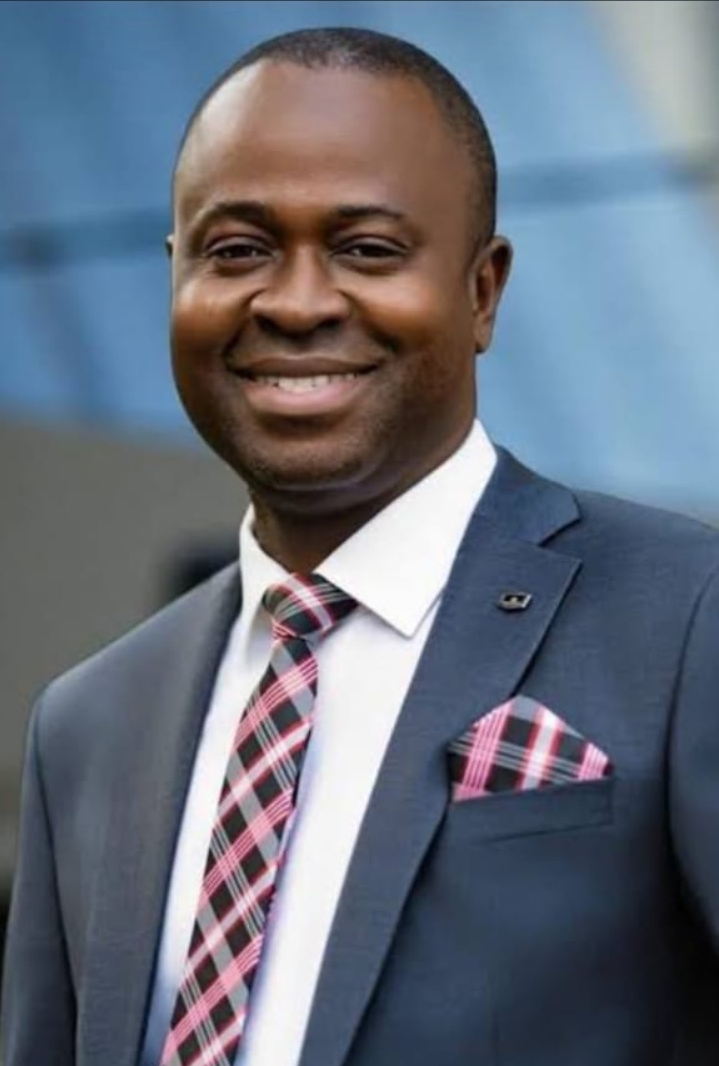
The former member that represented Anambra East and West Federal Constituency Chief Chinedu Obidigwe has denied a social media handle where he was said to have made Prof Charles Soludo the Governor of Anambra state.
Obidigwe further stated that the report did neither emanate from him or from his Media Aides urging the party not to believe what he called attempt at setting a negative agenda in the All Progressives Grand Alliance (APGA).
Obidigwe who is an Aspirant of the party for the Anambra East and West Federal Constituency accused enemies of the party being sponsored by opposition parties to creat problems .
According to the Media Assistant to Obidigwe Mr Dominic Okagbue in a statement;
“The attention of Hon. Chinedu Benjamin Obidigwe has been drawn to misleading and unfounded claims/propaganda being circulated on various social media platforms through a pseudo account, alleging that Obidigwe said he installed the Governor of Anambra State, Prof. Charles Chukwuma Soludo, CFR, as Governor in 2021”
“We wish to state, without any iota of equivocation, that such a statement never emanated from Hon. Chinedu Obidigwe. It is a desperate move by his political enemies who are bent on tarnishing his image as a tool and technique to advance their unmerited aspirations”
“Obidigwe, in 2021, was merely an electorate with just one vote. Even though he voted for the Governor and APGA, the question remains: can one man’s vote make a Governor?”
“Governor Soludo was elected and made Governor through the collective votes of Ndi Anambra, both in his first and second terms. We therefore call on the reading public to disregard such rumours and treat them as faceless and unfounded allegations geared towards the character assassination of an innocent man” he said.
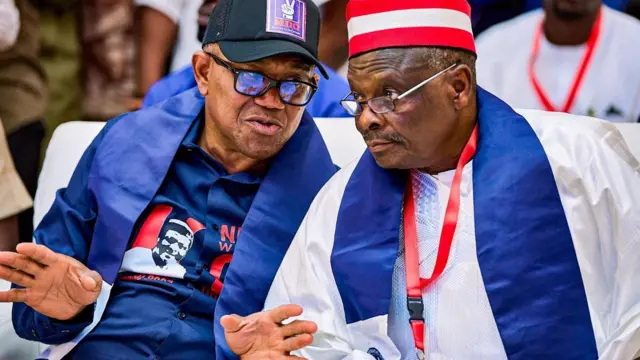
A former Kano State Governor and leader of the Kwankwasiyya Movement, Rabiu Kwankwaso, says northern political leaders conducted a deliberate assessment of potential allies before settling on Peter Obi as the most capable partner to prosecute the 2027 presidential campaign.
He dismissed concerns about a hidden power struggle between his camp and Obi’s.Politics
Kwankwaso made the disclosure in an interview on Arise TV on Monday, offering one of his most detailed accounts yet of how the North-Southeast political alliance within the NDC was formed.
“I looked around together with our leadership in the north to say, okay, who do we think is capable? Who can come and work together with us honestly so that we can move this country? Along the line, we realised that Peter Obi is at the forefront of it. That’s why we all accepted to work together,” he said.Political candidate profile
Kwankwaso, a two-term former governor of Kano State and the presidential candidate of the New Nigeria Peoples Party in 2023, leads the Kwankwasiyya movement, a grassroots political force with deep loyalty across Kano and parts of northern Nigeria.Nigeria travel guide
He left the NNPP amid internal disputes before joining the NDC alongside Obi earlier this month.
Obi, a former governor of Anambra State, ran on the Labour Party platform in 2023 and drew massive youth-driven support across the South and urban centres, though he did not win.
Both men formally joined the NDC on Sunday, May 3, defecting from the crisis-hit African Democratic Congress.Politics
At the party’s national convention on Saturday in Abuja, Kwankwaso backed the NDC’s decision to zone its 2027 presidential ticket to the South, describing it as a step toward fairness, healing and national cohesion.
Responding to a question about whether the alliance concealed a quiet rivalry between both camps, Kwankwaso argued that friction between principals and their deputies was a product of greed, not structural tension.
“The problem people are having, especially leaders, is that they are too greedy to the extent that they begin to have issues. There is so much to do. You don’t have to fight your deputy,” he said.
He said his record as a former deputy speaker of the House of Representatives, and later as governor of Kano State, showed that political partnerships could hold under pressure.
“I had an opportunity to work with my speaker and we worked very well. I was in Kano for eight years despite the difficulty of my then deputy governor. We were able to work for eight years amicably to the extent that I handed over to him,” he said.
Kwankwaso extended the argument beyond his personal experience, saying the same principle applied at the federal level.
In the Senate and other places, in the NDDC, we worked amicably with people. There is so much to be done and that’s why you have even ministers, other executives, advisors and so on. I don’t see from my experiences of the past why deputies or vice would fight with the president or governor,” he said.
He grounded the alliance in Nigerian political history, tracing a lineage of productive North-Southeast partnerships from the first republic to the present.Nigeria travel guide
“Right from the beginning, this sort of alliance has been in existence. Now we are going back to what Tafawa Balewa did during their time,” he said.
He also referenced the collaboration between former Prime Minister Tafawa Balewa and leaders of the NCNC, as well as that of former President Shehu Shagari and his vice president, Alex Ekwueme, in the second republic.
“So also in the second republic, immediately after the war, our leaders, Shagari and others, worked very closely with the southeast, with Alex Ekwueme as his vice president. They are our friends. We want to work together with them,” he said.Politics
Kwankwaso also noted that subsequent administrations had shifted power-sharing away from the South-East, a pattern he suggested the current alliance was correcting.
“There was a change during the third republic where for many obvious reasons an election was annulled and the government under the military decided to bring in Shonekan from the South-West.
Even after that, the military and other leaders worked together and brought in Chief Olusegun Obasanjo from the South-West again. Even Bola Tinubu probably is a beneficiary of all that,” he said.
He was emphatic that the choice of Obi was not driven by regional sentiment alone.
“It wasn’t just because we are going to the South-West just because of the South-West. No. We realised that Peter Obi is at the forefront of it and that’s why we all accepted to work together,” he said.Political candidate profile
The movement of both men into the NDC has triggered a wave of defections, with senators, House of Representatives members and political blocs aligned with their former coalition gravitating toward the new party, rapidly reshaping calculations ahead of the 2027 elections.
The alliance pairs Kwankwaso’s northern grassroots structure and disciplined voter mobilisation with Obi’s national youth engagement and urban electoral momentum, positioning the NDC as one of the main opposition platforms set to challenge President Bola Tinubu and the ruling All Progressives Congress in 2027

Former Kano State Governor Rabiu Kwankwaso has dismissed suggestions that his exit from the African Democratic Congress has created a damaging split in the opposition.
He said he and Atiku Abubakar may yet work together before the 2027 general election.
Kwankwaso spoke in an interview on Arise TV on Monday, responding to concerns that his move to the Nigeria Democratic Congress alongside Peter Obi had effectively divided the opposition into two competing blocs ahead of the polls.
“Now, we may still work together before the election. I personally, and I think even Obi himself, decided to leave ADC not because we are fighting with Atiku or anybody there. We decided to leave that party because we realised that there are some issues,” he said
He said the ADC was contending with three major unresolved problems that he believed would make it difficult for the party to field candidates, without specifying what those issues were.
“Whether they will be able to field candidates in that party or not is just a matter of time. It’s not like we had a primary election,” he said
The remarks come after Atiku recently claimed on Arise TV that Kwankwaso’s popularity was confined to Kano State and further divided there by Governor Abba Yusuf.
Atiku, who is seeking the presidency on the ADC platform, also described himself as the most popular politician of northern extraction, saying none of his contemporaries, including Kwankwaso, Aminu Tambuwal and Nasir El-Rufai, commanded a voter base across the North as wide as his.
Kwankwaso did not engage the slight directly, but made clear he bore no grudge.
“Politics is just like a game. I’m not fighting anybody and I’m not expecting anybody to fight me. I have no issue with that. I think we are past that level now,” he said.
He challenged those predicting a vote split in Kano to wait for the election result before drawing conclusions.
“Let’s wait for the election and see whether votes are split in Kano or not,” he said.
Kwankwaso also acknowledged a history of working with Atiku, recalling that he served as the former vice president’s northern coordinator during the 2019 presidential election.
“There was an election in 2019 in Port Harcourt. He won the election. I was his coordinator for the north. We worked for him,” he said.
He traced his broader relationship with Atiku to the 2015 APC presidential primary in Lagos, where he placed second behind Muhammadu Buhari, with Atiku third.

By Okey Maduforo, Awka
The Anambra State chapter of the All Progressives Congress (APC) has expelled 30 members of the party for instituting legal actions against the party.
The affected members include some aspirants for the National Assembly, and their expulsion may disqualify them from participating in the party’s primary elections.
Disclosing this shortly after the meeting of the State Executive Committee (SEC) of the party, the State Publicity Secretary, Dr. Sir Valentine Iyiegbu, told reporters that the decision was in line with Section 21, Subsection 5 of the party’s constitution.
“The party discussed those who took the party to court, and many of them are contesting for the House of Representatives tickets of the party,” he said.
“The matter comes up tomorrow, and the SEC stated that what the party constitution stipulates would be followed, which is outright expulsion from the party under Article 21, Subsection 5.”
“The SEC actually ratified their expulsion because they did not exhaust all the internal avenues provided by the party to resolve their grievances,” he added.
Iyiegbu noted that the only reprieve available to the expelled members would be for them to withdraw their court cases.
“It is only when the matters are withdrawn from the court that the party can consider listening to them,” he said.
Speaking on the party’s primary elections, he explained:
“In the case of those contesting for the tickets of the Federal House of Representatives, all the eleven positions have aspirants, while for the Senate, the three positions are also being contested. The screening committees were here to perform their duties,” he noted.
The party also ratified the appointment of a five-man Primary Elections Committee headed by Sir Izuchukwu Okeke, the State Organising Secretary of the party.
-
 News4 days ago
“Go and Verify”: How Sunday Umeha Is Redefining Representation in Ezeagu/Udi
-
News4 days ago
Chief Sir Paul Chukwuma Lays His Beloved Sister to Rest
-
 Politics5 days ago
Anambra Communities Boil As Group Carpets Traditional Rulers Over Zoning
-
 News5 days ago
2027: Anambra ADC Intact Despite Obi, Kwankwaso Departure – Guber Candidate
-

 Tech3 days ago
How Chatgpt Detector Tools Are Changing Content Verification
-
 Politics2 days ago
APC House of Reps Screening: Onwuegbu Clears Exercise Ahead Of Primaries
-
 Crime2 days ago
Fake Pastors Arrested in Anambra as Soludo Begins Crackdown
-
 Education2 days ago
Enugu: CIC Student Drowns While Trying To Retrieve Bucket From Water Reservoir
Nwokolo o Nwokolo
June 15, 2022 at 9:03 am
Nigerians get you pvc and vote wisely.