

Opinion
Mburubu Leadership Crisis: No Smoke Without Fire, Enugu Commissioner’s Aide


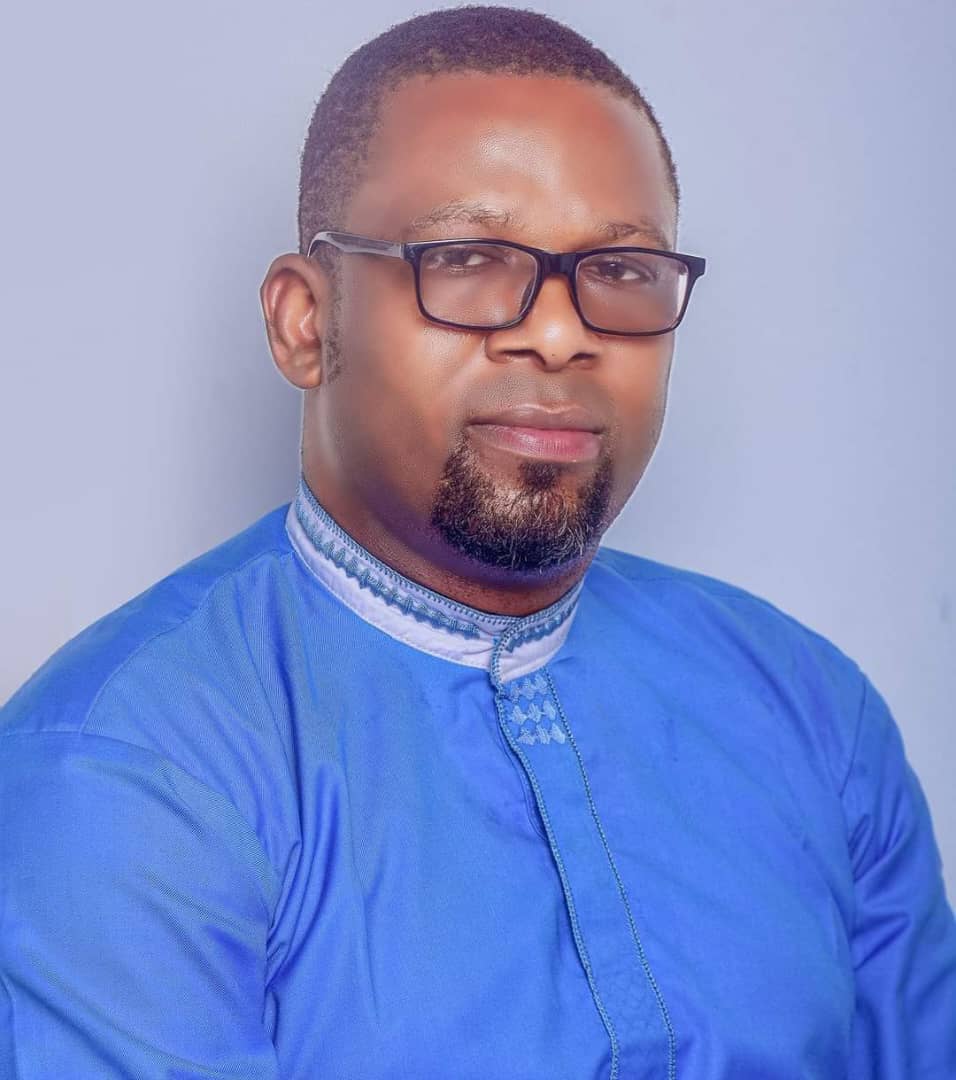
*Rebuttal to the Misrepresentation of My Position on Mburubu Leadership Affairs*
*By Dr. Chidipeters Okorie*
My attention has been drawn to a publication that seeks not only to misrepresent my position on the current leadership matters in Mburubu but also to malign my person, insult my intelligence, and peddle falsehoods under the guise of defending government interest. I respond now—not out of bitterness, but out of responsibility to truth, community, and constitutional governance.
Let me begin by stating, unequivocally, that I, Dr. Chidipeters Okorie, am the author of the open letter titled “We Want Our Election, Not a Caretaker.” I wrote that letter in my personal capacity as a citizen of Mburubu and a stakeholder in its peace and progress. The opinions I expressed are mine and mine alone. It is therefore deeply offensive and utterly false to suggest that the Honourable Commissioner for Innovation, Science and Technology, Dr. Prince Lawrence Ezeh, sponsored or authored the letter on my behalf. I reject this insinuation with the contempt it deserves. It is not only untrue but deliberately designed to distract from the real issues at stake.
Mburubu, as a peaceful and law-abiding community has a constitutionally recognised, rotational leadership structure enshrined in its town union constitution that was duly approved and gazetted by the Enugu State Government. That rotational model, which ensures equity among our seven villages—Umudara, Uhuegbe, Uhuagu, Umunafor, Obinagu, Amanato, and Amachi—has guided our leadership transitions peacefully for years.
In line with that constitution, the Mburubu Town Union (MTU), the only legally recognised administrative organ of our community, scheduled its general election for September 27, 2025. The election date was formally communicated in writing to the Honourable Commissioner for Local Government, Rural Development and Chieftaincy Matters, and to other appropriate channels of the Enugu State Government. Weeks before the scheduled election, a reminder letter was again sent by the MTU. In all these communications, not once did we receive any formal response from the Ministry.
Then, only after the scheduled election date had passed, a meeting is convened for October 2, 2025, under the label of a “pre-election” gathering. At this meeting, as the “author” posited, is “where the constitution of the community, if any, would be examined, modalities set, and constitutional procedures for electing an electoral panel as well as fixing the date for the election would be made.” This action is procedurally flawed, legally untenable, and factually offensive. How can there be a “pre-election” meeting after the election date has passed? How can one refer to the community’s constitution—“if any”—when the said constitution is on file with the Ministry and has guided all prior elections?
It is important to point out that the tenure of the executive of MTU, led by High Chief Hon. Emmanuel Edeh, is officially ending on Friday, October 3, 2025. The natural question then arises: What happens next? Who takes over leadership when no election has been conducted? The so-called pre-election meeting is only scheduled for October 2nd, one day before the tenure expires—while the election was initially expected to hold on September 27th, 2025. This sequence of events makes it painfully obvious that someone, somewhere, either delayed the process deliberately or failed to act in good time. These are the questions we must ask.
The article insists that no caretaker committee is being planned. I ask—why, then, are these fears so widespread in the community? Why have certain individuals boasted, even before the meeting, about who will be “installed”? Where there is smoke, there is often fire. I simply called attention to that smoke. I did not create it.
The Ministry calls for a “pre-election meeting serves as a smokescreen for predetermined outcomes – Caretaker-ship of MTU.
It is regrettable that instead of addressing the substance of the concerns raised, the authors of the publication resorted to ad hominem attacks, deliberate obfuscation, and rhetorical acrobatics. The people of Mburubu deserve better — not just in leadership, but in the processes that produce their leaders. While the author of the publication suggests that the meeting of 2 October 2025 is a “pre-election” gathering, it bears restating that no credible electoral panel was constituted by the people prior to scheduled meeting. A community election, by both legal and democratic standards, cannot be retroactively justified. Procedures must precede outcomes. Asserting otherwise is to invert the very principles of procedural justice. Moreover, it is disingenuous to challenge critics to “name who formed the electoral panel” when the Ministry failed to facilitate an open and participatory process in the first place. The burden is not on the community to validate what did not exist, but on the Ministry to demonstrate that due process was, in fact, followed.
Let us call things by their real names. The Oxford English Dictionary defines “impose” as “to force (an unwelcome decision or ruling) on someone.” When the Ministry ignores repeated letters from a community, allows a lawful election date to pass without engagement, and then convenes a meeting to discuss starting the electoral process afresh, what else can we call that but an imposition? It is, by all standards—legal, linguistic, and moral—an act of interference.
It has also been claimed that my reference to a circulating allegation of ₦20 million was “baseless.” In my open letter, I did not affirm the allegation; I stated, clearly, that while the allegation remains unverified, it exists within the community discourse. Mocking or trivialising the concern will not make it disappear. In fact, this exact same figure—₦20 million—was the subject of a past controversy in 2023 involving a similar leadership issue in Mburubu, and an apology was later issued after the matter. The repetition of this same figure again now is not a coincidence; it is a red flag.
The writer accused me of seeking to “plant confusion”. Again, the Oxford English Dictionary defines “confusion” as “a lack of understanding; uncertainty.” It is precisely this confusion that arises when a community follows constitutional processes, communicates its plans lawfully, and is met with silence—only for the Ministry of Local Government, Rural Development and Chieftaincy Matters to appear afterward with undefined motives and opaque plans. What I have done is raise a legitimate concern. That is not sowing confusion; that is civic duty.
I am not anti-government. I respect authority and the structures of governance. I do not oppose Governor Dr. Peter Ndubuisi Mbah. In fact, I believe he is committed to advancing Enugu State. However, that belief does not mean I should remain silent in the face of actions that threaten democratic processes. According to the Oxford English Dictionary, “criticism” is “the expression of disapproval of someone or something on the basis of perceived faults or mistakes.” To criticise is not to defame. It is not disloyalty. It is, in many cases, an act of patriotism.
Let us also not forget the example of Obeagu-Ugwuaji, another community in Enugu State where a caretaker committee was imposed under unclear circumstances. That decision fractured the community and led to unresolved disputes, litigation, and tension that remain to this day. We in Mburubu do not want the same fate. Our election was planned, peaceful, and supported by all stakeholders. The rotational principle was honoured. All villages nominated their candidates. There was no crisis, no violence, no legal barrier. So why interfere?
If the imposition of a caretaker committee proceeds, I will join my community in challenging it legally. That is our constitutional right. But litigation is not our desire. Peace, order, and constitutional respect remain our preference.
Let me summarise what is already clear:
Mburubu has no leadership crisis. A lawful election was scheduled for September 27, 2025. The government was notified in writing. No reply came until after the fact. A belated “pre-election meeting” was called to derail a concluded process. And worst of all, instead of engaging with the substance of these concerns, some actors have chosen to attack my integrity and fabricate stories about sponsorship and partisanship.
Let it be known: my voice is mine, my opinion is independent, and my motive is community progress. As I wrote in my open letter: “We are united, and that unity is our greatest defense. History is watching. The people are watching. And the law is clear.”
Let the election stand. Let democracy be respected. Let truth, not propaganda, prevail.
*Dr. Chidipeters Okorie, journalist and community advocate*
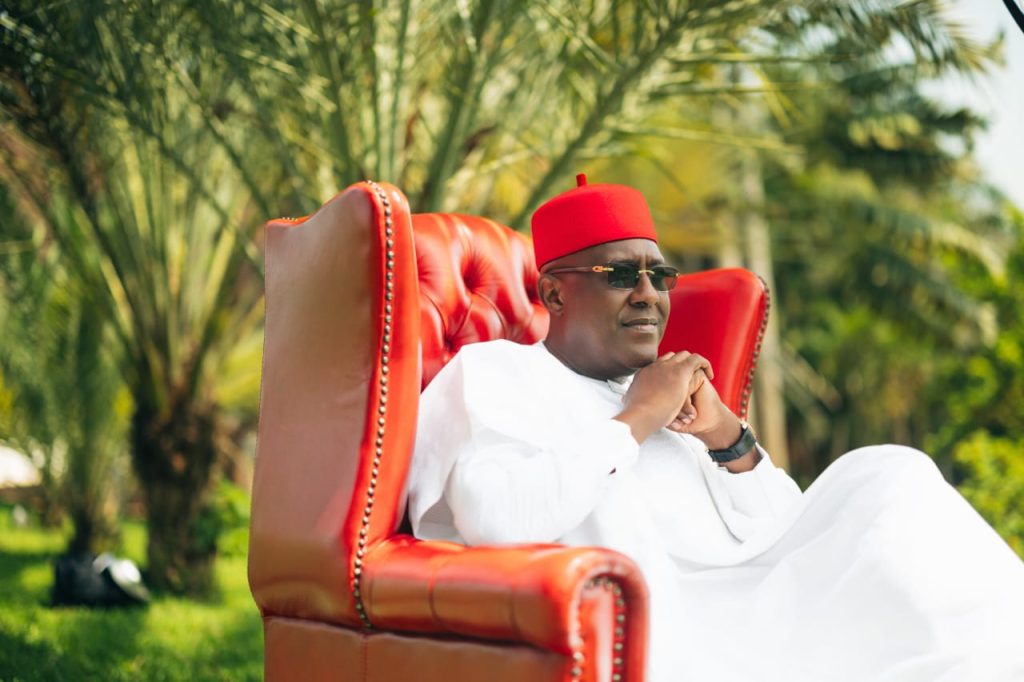

*By Kamen Chuks Ogbonna*.
The political landscape of Nigeria, particularly in the Southeast, has been set abuzz following the announcement by the Governor of Imo State and National Coordinator of the Renewed Hope Ambassadors (RHA), His Excellency Hope Uzodinma.
The appointment of 16 high-caliber directors to lead the RHA’s nationwide directorates is not merely an administrative exercise; it is a clear signal that the countdown to 2027 has begun with a surgical focus on grassroots mobilization.
While the list features several heavyweights—including Tunde Rahman (Media), Sunday Dare (Digital Media), and Muiz Banire, SAN (Legal)—one name has sent a specific jolt through the opposition: Chief Olisa Metuh.
For those who observed the peak years of the People’s Democratic Party (PDP), the name Chief Olisa Metuh is synonymous with high-stakes political engineering.
Metuh, often described as a “political warhorse,” rose through the ranks from ex-officio, auditor to the formidable National Publicity Secretary of the party whose big shoes never got filled after his exit.
He was the “Maverick” who preferred the shadows but whose tactical fingerprints were visible on every major victory the PDP recorded during its era of dominance.
History recalls that when the PDP faced its darkest hours post-2015, it was Metuh who acted as the anchor, preventing the party from sinking.
He was the mastermind behind the emergence of Bukola Saraki as Senate President alongside PDP’s Ike Ekweremadu as deputy and the elevation of Hon. Yakubu Dogara as Speaker—moves that effectively ran rings around the then-ruling APC under President Buhari.
His track record in the Southeast is equally legendary. From orchestrating Peter Obi’s move into the PDP to the yeoman efforts that secured governorships for PDP’s Okezie Ikpeazu in Abia and David Umahi in Ebonyi, Metuh’s ability to deliver electoral mandates is undisputed.
Critics might wonder what brings a man out of a self-imposed retirement—announced just two years ago—into the fold of the RHA.
However, for a man who recently dedicated over half a billion naira to charity, it is evident that pecuniary interests are not the driver.Instead, it appears that the “political legend” has answered a call of strategic importance.
By accepting the role of Director of Organisation and Mobilisation, Metuh is being positioned exactly where his talents shine brightest: at the intersection of strategy and execution.
President Bola Tinubu, through Governor Uzodinma, has played a deft hand. The Southeast has long been a complex battleground for the ruling party. By bringing in a man who understands the regional political DNA better than most, the Renewed Hope administration is moving beyond rhetoric.
Metuh knows the backroom because he built it. His appointment is a massive blow to the opposition in the Southeast because it replaces theoretical campaigning with proven, battle-tested electoral dexterity.
The Renewed Hope Ambassadors (RHA) was designed by President Tinubu in November 2025 as the primary vehicle to disseminate the achievements of his administration.
With the appointment of this dream team of directors, the RHA has moved from a conceptual framework to a fully operational political machine.
In the chess game of Nigerian politics, Governor Uzodinma has just moved a queen.
As the January elections approach, the inclusion of Chief Olisa Metuh ensures that the Renewed Hope Agenda will not just be heard in the Southeast—it will be felt.
In the street parlance- E Go Loud !
For Ndi Igbo and the nation at large, this appointment is a testament to the fact that in politics, strategy is the only currency that never devalues.


-
 News17 hours ago
“Go and Verify”: How Sunday Umeha Is Redefining Representation in Ezeagu/Udi
-
News1 day ago
Chief Sir Paul Chukwuma Lays His Beloved Sister to Rest
-
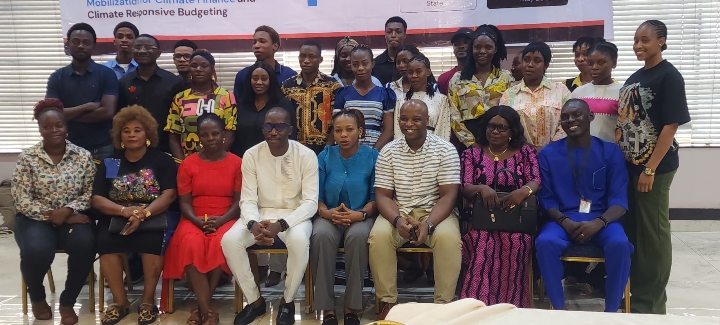 News3 days ago
Enugu, SSDO advance domestic resource mobilisation for climate responsive budgeting
-
 Politics2 days ago
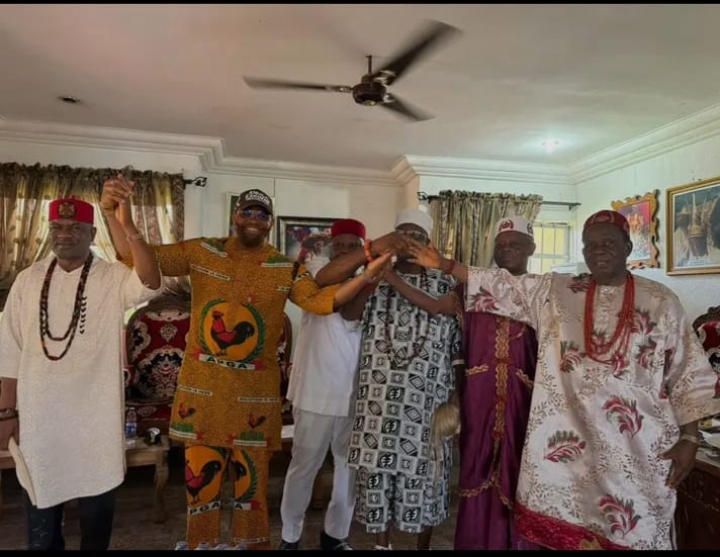
Anambra Communities Boil As Group Carpets Traditional Rulers Over Zoning
-
 Crime3 days ago
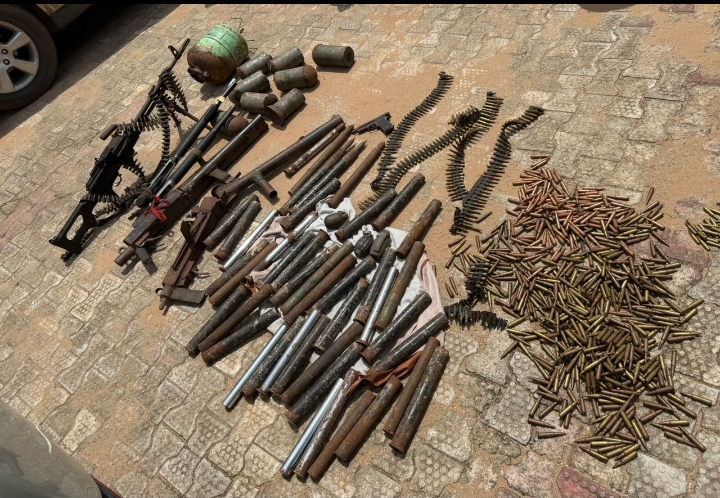
Anambra Police Burst Gunmen Armoury in Orumba
-
 News2 days ago
2027: Anambra ADC Intact Despite Obi, Kwankwaso Departure – Guber Candidate


