
Opinion
Bello Kirfi and the price of insubordination


By Suleiman Abbah
It is an established custom that emirs and key traditional title holders should only be seen and not heard.
Some Emirs and title holders however violate this important tradition and would talk like parrots anywhere, anytime and on any topic — this erodes the mystic and prestige around their persons and the institution in the eyes of the people.Historically, this attracts summary dismissal in the case of title holders and outright dethronement in cases that involve emirs.
The latest case of insurbodination related discipline meted on high profile traditional title holders in Northern Nigerian emirate system, is perhaps the sacking Alhaji Muhammadu Bello Kirfi by the Bauchi Emirate Council as a council member and Wazirin Bauchi.
Thisis the second time that Kirfi would be sacked as Wazirin Bauchi. He was suspended in 2017. However, on August 5, 2020, he was reinstated.

It was gathered that the Bauchi governor, Bala Mohammed, facilitated his reinstatement.The council hinged his sack on disloyalty and disrespect toward the state governor amounting to gross insubordination.
Alhaji Kirfi is not the first Waziri to have faced disciplinary action for insubordination and by far might not be the last.
A recent example is when in 2020, Wazirin Zazzau Ibrahim Muhammad Aminu, chairman of the Zazzau Kingmakers committee was suspended by the Kaduna Kaduna state government for dishonouring an informal invitation and was subsequently taken to court claiming violation of the government’s rule.
Whilestill in court, Aminu was expelled and stripped of the Waziri title who was the administrative officer or prime minister; and replaced by Khadi Muhammad Inuwa Aminu in 2021.
The history of palace discipline that involves dethronement of emirs or dismissal of palace chiefs particularly in the Northern part of Nigeria, has been around for ages.
Thedethronement of traditional rulers can be referred back to the early 1900, when some emirs from the North refused to pledge allegiance to the colonial administrators, as a result, many of them were dethroned and banished from their respective kingdoms.
It will be recalled that in the 1950s, the Emir had plotted the dethronement of the then Atta of Igala Ameh Oboni (Agaba Idu).The Atta’s offence was his refusal to bow before the Sultan of Sokoto, Chairman of Northern Nigeria Council of Chiefs during the Council’s meeting in Kaduna, capital of Northern Nigeria.Ameh Oboni was given the option to remove his crown and bow or be removed from office. But the Atta was a god and could not bow to any human being.
Knowingthat by the Igala tradition, the implication of his dethronement was that none of his descendants would ever be allowed to be crowned Atta after him, Ameh Oboni accepted to remove his crown and bow. Several years afterwards, in April 1963, as Mohammed Sanusi was chauffeured from Kaduna to his palace in Kano after a council meeting, he heard in the car radio of his own dethronement by the Government of Northern Nigeria.
Mostrecently, Muhammad Sanusi II: The former Nigerian apex bank chief ascended the throne after the death of his uncle, late Alhaji Ado Bayero, in 2014. The powerful emir is known to have vast knowledge in both Islamic and Western education; he was also the most outspoken traditional ruler in Northern Nigeria during his reign.
The deposed emir was in a political war with the Governor of Kano State, Abdullahi Umar Ganduje, just before the 2019 general elections.The tussle became apparent when the Governor sent a bill to the State House of Assembly seeking to add four additional emirates, in the State.On March, 9, 2020, the Government of Kano State announced the dethronement of Muhammad Sanusi II, on grounds of Insurbodination. He was also banished from the State.
Previously, Mustapha Jokolo, a retired military officer who ascended the throne of Gwandu as the 19th emir following the demissal of his father in 1995, was dethroned as well after spending 10 years on the throne. He was also banished from the State, and moved to Obi in Nasarawa State.His dethronement was announced in June, 2005, by the Government of Kebbi State which accused him of Insurbodination.
The famous Sultan Ibrahim Dasuki, ascended the throne of Sultan of Sokoto, and President Supreme Council for Islamic Affairs in Nigeria, succeeding Sultan Siddiq Abubakar III after his death, in November, 1988.
Sultan Ibrahim Dasuki was removed from the throne, on April, 20, 1996, on grounds of Insurbodination, by former Head of State and Commander in Chief of the Arm Forces Federal Republic of Nigeria, General Sani Abacha and banished from living within the Sultanate.Muhammad Sanusi I, the powerful emir of Kano ascended the throne, in 1954, following the death of his father, emir Abdullahi Bayero.
His vast knowledge and influence made him to become among the most influential traditional rulers in Sub-Saharan Africa during his reign.The emir was accused of insurbodination by the Northern Nigeria administrators, and was dethroned in April,1963.
He was also banished from staying in Kano, he was asked to leave for Azare, in Bauchi State.Emir Abubakar Dallaje of Katsina was removed from throne in 1906, by Sir Fredrick Lugard, who was then the Governor General of Northern protectorate, the dethronement came to many as a surprise, because the king was so powerful and popular during his reign.
EmirAbubakar was accused of insurbodination and refusing to pledge allegiance to the colonial administrators and was replaced by emir Muhammadu Dikko, who ruled Katsina until his death in 1944.
Note that all the dethronements that happened were as a result of allegations of Insurbodination.
When you work in the field of management, you will inevitably have to deal with an insubordinate employee or staff member.
While this is a common occurrence, it does not make it any easier to deal with what happens to you.
Verbal abuse, such as the use of profanity and insults, may or may not be grounds for dismissal. Commonly referred to as “shop talk,” the manager must decide whether the language was out of the ordinary. If not, then insubordination may not have been intended.
Another cause for dismissal due to insubordination is the refusal to perform a manager’s direct order. This may manifest itself in a verbal or nonverbal refusal. As a result, each incidence of refusal or delay should be carefully documented in an employee’s file for the purpose of verifying a history of insubordinate conduct, and this was exactly the way the Bauchi State government and the Emirate Council approached Kirfi’s serial and serious misdemeanor.
When the Emirate Council felt that there was a pattern of willful disobedience on the partof BelloKirfi, it took care to document it and reported it to superior authority, in this case, the state’s Governor.
Relicsfrom a period when monarchies dominated this region, they rely now on regional governments for their funding and their succession is regulated by elected officials.Granted people have differing opinions.
Sometimes a subordinate disagrees with the leader or boss. Although this is not insubordination on its own, but where the person confronts and disagrees with the boss in front of everyone else as regular outbursts like in the case of Bello Kirfi, then it becomes ground for insubordination.
Often, insubordination may be the result of inexperience or bad judgment that can be remedied with a quick word. When it’s chronic and willful, it’s a different matter entirely.
Inthe case of Bello Kirfi, he was confrontational in front of the rest of the state’s Governor, and in the public; questioning the governor’s authority, which can led to poor overall morale in the Council, defaming Bala’s person, spreading rumours that divided the Bauchi community and making inappropriate comments on a regular basis.
While in particular the Waziris and other traditional title holders lack practical power, their patronage can be key at elections when Nigeria’s politicians jostle for votes.
But their role remains ambiguous — and when Bello Kirfi began to talk up, some cautioned that he was overstepping the boundaries and flouting the strict protocol of the palace. What followed is now history.
(Abbah, a history graduate of ABU, wrote from Zaria)
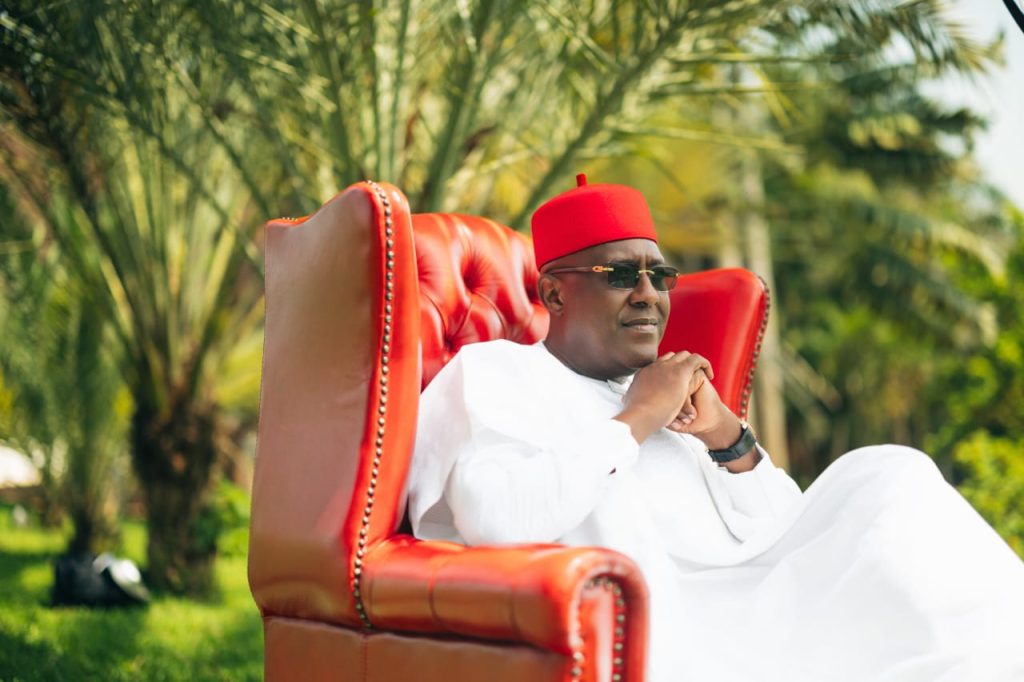
*By Kamen Chuks Ogbonna*.
The political landscape of Nigeria, particularly in the Southeast, has been set abuzz following the announcement by the Governor of Imo State and National Coordinator of the Renewed Hope Ambassadors (RHA), His Excellency Hope Uzodinma.
The appointment of 16 high-caliber directors to lead the RHA’s nationwide directorates is not merely an administrative exercise; it is a clear signal that the countdown to 2027 has begun with a surgical focus on grassroots mobilization.
While the list features several heavyweights—including Tunde Rahman (Media), Sunday Dare (Digital Media), and Muiz Banire, SAN (Legal)—one name has sent a specific jolt through the opposition: Chief Olisa Metuh.
For those who observed the peak years of the People’s Democratic Party (PDP), the name Chief Olisa Metuh is synonymous with high-stakes political engineering.
Metuh, often described as a “political warhorse,” rose through the ranks from ex-officio, auditor to the formidable National Publicity Secretary of the party whose big shoes never got filled after his exit.
He was the “Maverick” who preferred the shadows but whose tactical fingerprints were visible on every major victory the PDP recorded during its era of dominance.
History recalls that when the PDP faced its darkest hours post-2015, it was Metuh who acted as the anchor, preventing the party from sinking.
He was the mastermind behind the emergence of Bukola Saraki as Senate President alongside PDP’s Ike Ekweremadu as deputy and the elevation of Hon. Yakubu Dogara as Speaker—moves that effectively ran rings around the then-ruling APC under President Buhari.
His track record in the Southeast is equally legendary. From orchestrating Peter Obi’s move into the PDP to the yeoman efforts that secured governorships for PDP’s Okezie Ikpeazu in Abia and David Umahi in Ebonyi, Metuh’s ability to deliver electoral mandates is undisputed.
Critics might wonder what brings a man out of a self-imposed retirement—announced just two years ago—into the fold of the RHA.
However, for a man who recently dedicated over half a billion naira to charity, it is evident that pecuniary interests are not the driver.Instead, it appears that the “political legend” has answered a call of strategic importance.
By accepting the role of Director of Organisation and Mobilisation, Metuh is being positioned exactly where his talents shine brightest: at the intersection of strategy and execution.
President Bola Tinubu, through Governor Uzodinma, has played a deft hand. The Southeast has long been a complex battleground for the ruling party. By bringing in a man who understands the regional political DNA better than most, the Renewed Hope administration is moving beyond rhetoric.
Metuh knows the backroom because he built it. His appointment is a massive blow to the opposition in the Southeast because it replaces theoretical campaigning with proven, battle-tested electoral dexterity.
The Renewed Hope Ambassadors (RHA) was designed by President Tinubu in November 2025 as the primary vehicle to disseminate the achievements of his administration.
With the appointment of this dream team of directors, the RHA has moved from a conceptual framework to a fully operational political machine.
In the chess game of Nigerian politics, Governor Uzodinma has just moved a queen.
As the January elections approach, the inclusion of Chief Olisa Metuh ensures that the Renewed Hope Agenda will not just be heard in the Southeast—it will be felt.
In the street parlance- E Go Loud !
For Ndi Igbo and the nation at large, this appointment is a testament to the fact that in politics, strategy is the only currency that never devalues.
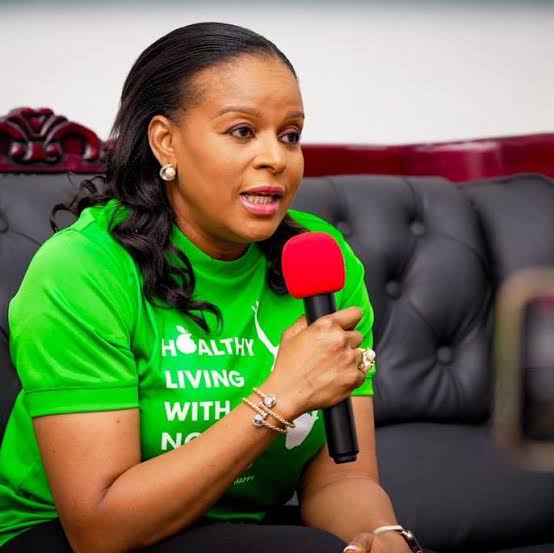
– Kamen Chuks Ogbonna
In the landscape of sub-national governance in Nigeria, the office of the First Lady has often been seen through the lens of ceremonial duties. However, in Anambra State, Dr. (Mrs.) Nonye Soludo—affectionately known as Mama Anambra—is fundamentally redefining this role. Through a series of bold, unprecedented interventions, she has evolved from a pillar of support to a strategic driver of socio-economic transformation.
The impact of Mama Anambra’s leadership first gained significant momentum in the healthcare sector. Championing the cause of the vulnerable, she has been at the forefront of the free maternal and child healthcare initiative. This program has provided thousands of women and children across the state with access to life-saving services that were previously out of reach. Beyond clinical care, her “Healthy Living” crusade has introduced a paradigm shift in domestic wellness, promoting organic products and nutritional education as a primary defence against preventable diseases.
The Anambra First Lady’s vision quickly extended to the fields and farms of the state. Recognizing that food security is the bedrock of community stability, she successfully mobilized women at the grassroots level into productive farming. By providing tools, seedlings, and technical support, she has empowered the home-front to become a formidable force in Anambra’s agricultural value chain, ensuring that empowerment is not just a slogan but a harvest.
Mama Anambra has raised the bar once again by moving into the territory of high-impact vocational empowerment. Her current focus on skills acquisition for females in male-dominated fields is perhaps her most strategic move yet. By opening doors for women in technology, construction, welding, solar energy installation, and mechanics, she is actively dismantling age-old barriers. These sectors, long regarded as “no-go areas” for women, are now being flooded with talented female trainees ready to compete in the modern economy. This initiative does more than provide a job; it destroys the gender limitations that have historically stifled the potential and prosperity of the girl child.
For Ndi Anambra, the work of the First Lady is a clear signal that leadership fueled by empathy and vision delivers tangible results. Her interventions are not merely philanthropic gestures, as they are strategic investments in the human capital of the state. Through her tireless efforts, Dr. Mrs Nonye Soludo is proving that when leadership has a heart, change is not just felt—it is seen and touched.
As she continues to break new ground, the prayer of the people remains constant: May God continue to strengthen her for the journey ahead.
By Emeka Nwobodo Jr
There is a saying in Akpugo that elders often repeat whenever a son brings public disgrace upon his people and yet appears completely oblivious of it. They say the mad man dancing naked at Oriemba market never feels ashamed of himself, but his kinsmen do. The mad man laughs loudly, beats his chest, and continues his strange dance as though nothing is wrong, utterly unaware of the embarrassment he has caused, while his people are left to pass through the same market with their eyes lowered, quietly enduring the humiliation that someone from their own kindred has turned himself into a public spectacle before the entire community.
That local saying has suddenly become painfully real for many sons and daughters of Akpugo today, because what we are experiencing at this moment mirrors exactly the kind of shame those elders spoke about.
Our son, Chief Uche Geoffrey Nnaji, the former Minister of Innovation, Science and Technology, has dragged the good name of Akpugo through the mud in a manner so appalling that it has now become a constant conversation, and the painful truth is that the disgrace echoes loudly across the country.
When the first murmurs of the certificate controversy surrounding Uche Nnaji began to circulate months ago, many of us in Akpugo initially dismissed the allegations as the usual mischief of Nigerian politics, where accusations are often peddled, sometimes driven by rivalry, jealousy, or the relentless struggle for power. After all, Nigerian political life is crowded with smear campaigns, and it is not unusual for public figures to be accused of things that later turn out to be exaggerated, distorted, or entirely fabricated.
But this particular story refused to fade away. Instead, it lingered stubbornly, gathering more evidence, and attracting more scrutiny in a way that made it increasingly difficult for any discerning observer to dismiss as mere political gossip.
For nearly two years, investigative journalists at Premium Times searched for documents, spoke with university officials, filed Freedom of Information requests, and examined records that had long been buried. As these revelations began to surface, the scandal exploded with extraordinary force. The shit literally hit the ceiling fan!
The entire country was stunned that the man entrusted with overseeing scientific research and technological innovation in Nigeria could find himself entangled in a scandal involving forged academic credentials, an irony that might have been amusing if it were not so embarrassing.
Even those who were prepared to give him the benefit of the doubt were thrown into confusion when, in a self-indicting overreach, he rushed to the Federal High Court in Abuja and filed a suit against UNN, with a sworn affidavit supporting his motion wherein he admitted that he had not been issued a degree certificate by UNN, even though a certificate bearing the university’s name had earlier been submitted by him to the Nigerian Senate during his ministerial screening. How then did he come into possession of the one he submitted to the Senate, many people asked?
To the credit of the federal authorities, rather than rushing to conclusions or reacting impulsively to the media storm, the presidency reportedly moved discreetly, dispatching a team of DSS officers directly from the Abuja headquarters to the UNN, where they conducted their own verification of academic records and examined the files connected with Uche Nnaji’s student history. The operatives reportedly examined the registry archives, scrutinized correspondences, and verified documentary evidence relating to his academic history. Their findings reportedly corroborated the mounting evidence that had already begun to surface in the public domain.
Once the facts had been assembled and verified, the information was reportedly relayed to the highest levels of government. When Uche Nnaji was subsequently summoned to Aso Rock, the outcome was his quiet exit from the seat of power as an ex-Minister. His purported resignation was widely interpreted as a move to save the image of the government before the scandal could inflict grave reputational damage on the administration both within Nigeria and in the eyes of the international community.
But the matter did not end there. The federal government set up an investigative panel under the Federal Ministry of Education to determine the truth once and for all. The panel did not rely on hearsay or political narratives. Members of the panel physically travelled to the UNN, where they examined the institution’s archives, reviewed Senate graduation lists, inspected registry movement logs and academic files, and interviewed university officials who were directly involved in keeping academic records.
When the panel eventually submitted its report, the conclusion was devastating. It found that our brother had indeed forged his UNN degree certificate, confirming earlier investigative findings which had already raised serious questions about the authenticity of the documents he submitted when he was nominated and confirmed as minister.
The records examined by the panel showed that although he had been admitted to study Biological Sciences at the UNN in the 1981/82 academic session, he never graduated from the university because he failed a core course, Virology (MCB 431). His name did not appear on the Senate-approved graduation list for the class of 1985, and correspondences found in his academic file showed that he was still communicating with the university in 1986, requesting for permission to retake the same failed course.
Yet somehow, despite these records, a certificate dated July 1985 surfaced, the very certificate he presented to the presidency and the National Assembly as proof that he had graduated from one of Nigeria’s most prestigious universities.
When the details of this investigation became public two weeks ago, the scandal again spread across the country like wildfire.
But for many of us in Akpugo, the shock went beyond the scandal itself. What worsened the embarrassment was the astonishing mediocrity of the inconsistencies surrounding the documents. If someone were attempting to deceive the entire country in such a serious matter, one would at least expect that the deception would be executed with careful attention to detail. Instead, what Nigerians saw were contradictions so glaring that even a primary school pupil could detect them without difficulty.
Imagine claiming to have graduated from university in July 1985 while records show that you wrote a letter in your own handwriting in 1986 applying to resit the exam for the same course that had prevented you from graduating. Imagine presenting an NYSC discharge certificate claiming that you began national service in April 1985, three months before the supposed graduation that made you eligible for service in the first place. The absurdity of such a claim leaves one wondering whether the basic chronology of university education and national service was ever considered in constructing that narrative.
But it got even worse. The NYSC certificate that was presented bore the signature of Colonel Animashaun Braimoh, who only served as Director-General of the National Youth Service Corps between 1988 and 1990, yet the certificate was supposedly issued in 1986.
Even the serial numbering exposed the forgery. NYSC certificates issued during that period were known to carry six-digit numbers without alphabetic characters, yet the certificate attributed to him carried the serial number A231309, complete with a letter prefix that did not exist in the numbering format of that period.
At that point, many of us in Akpugo began to ask a painful question. Who actually handled the contract for this forgery, and why was it done so carelessly?
For those of us who have known Uche Nnaji over the years, especially as Minister of the Federal Republic, always immaculately dressed in sparkling white attire, projecting confidence, speaking with bravado, and presenting himself as a man of class and sophistication, the revelations were shocking because they suggested a man operating at a surprisingly low, inept and dull-witted level.
It was not merely the allegation of forgery that hurt us the most, it was the clumsiness, the mediocrity, and the lack of intellectual rigour reflected in the inconsistencies that riddled it.
For a community like Akpugo that prides itself as one of the most human-resource rich communities in Nkanuland, perhaps even in Enugu State, the humiliation has been profound.
When the revelations exploded across the country, something unusual happened within our community. Akpugo WhatsApp groups fell silent. The chatter that usually fills our platforms disappeared almost immediately. Nobody seemed able to muster a convincing defence. Nobody could confidently explain what was happening. The silence itself spoke volumes.
Many of us expected that our son would at least address his people directly, perhaps by releasing a brief statement assuring us that the allegations were false and that he would clear his name.
Instead, a group of young men whom he had helped secure federal appointments suddenly emerged as his defenders, flooding social media with accusations against political enemies and elaborate theories about conspiracies orchestrated by opponents.
They blamed political enemies, they blamed Governor Mbah and anyone who could possibly be blamed, while leaving the the central question unanswered. But even if we assume that political rivalry played a role in exposing the matter, the question that still demands an answer is: Did Uche Nnaji forge the certificates or not?
The federal government’s investigative panel has already delivered its conclusion with findings that leave very little room for ambiguity, and the next logical outcome is arraignment and prosecution before a court of competent jurisdiction. Why that has not happened is a matter for lawyers to enlighten us on.
Yet what has been happening since then has been even more bewildering. Even by Nigerian standards, when a public figure is caught in a scandal of such magnitude, humility usually follows. The person withdraws from the spotlight, keeps a low profile, and allows time and reflection to restore whatever dignity remains. But what we are witnessing instead is a relentless attempt to project normalcy. An aggressive social-media campaign filled with praise songs, banners, and political slogans announcing grand ambitions for the future suddenly appeared everywhere, with posters declaring “Uche Ndi Enugu Ga Eme” and “Uche Nnaji for Governor 2027” circulating as though nothing had happened.
It leaves many observers wondering which political party would willingly entrust its governorship ticket to someone whose academic credentials have been publicly discredited in such a dramatic fashion. Even more troubling is that since the scandal erupted, Uche Nnaji himself has carefully avoided direct engagement with the press to answer questions on the certificate saga. At one point he invited journalists to a press conference but failed to appear, leaving proxies behind to answer questions they could not adequately address. Yet if there is anyone who can narrate the story of his academic records better than anyone else, it is Uche Nnaji himself.
This is why the situation pains many of us in Akpugo to the marrows of our bones. Our community has never been associated with this level of public scandal. Our elders often boast that Akpugo have it all. Our land has produced true legends and giants whose contributions have brought honour to our people. From distinguished military officers like Navy Commodore James Aneke, who once served as a military governor, and Colonel Anthony Obi, another respected former military governor, to national figures like Ogbonnaya Onovo, the first Igbo Inspector-General of Police, Akpugo has produced individuals whose careers were defined by excellence and integrity. The intellectual and spiritual leadership of Very Rev. Father Emmanuel Edeh, founder of Madonna University, Caritas University, and the Osisatech institutions, has shaped generations of students and professionals. Scholars such as Prof. Onyemaechi Ogbunwezeh, Prof. B. A. Okorie, Prof. Gozie Ogbodo (current Rector of the IMT Enugu), to mention but a few, have continued that tradition of academic excellence.
These men and women represent the values of hard work, honesty, discipline, and integrity that Akpugo holds dear. That is why this scandal hurts so much.
Our elders must call our son home, sit him down, and remind him that wherever he goes he carries the name of Akpugo with him, and that name must not be dragged through the mud of public scandal.
So with heavy hearts, we say to our son Uche Nnaji, Enough is Enough. Although we still love you as our own flesh and blood, although we can longer disown you, you must however be a man, face the truth and clear your name if you can. But please, do not continue to parade this disgrace before the world.
Because whether you feel the shame or not, your shame dey shame us!
- – Nwobodo writes from Akpugo, Nkanu West LGA.
By Lanre Ogundipe
“The institutional goal of science is the extension of certified knowledge.”
— Robert K. Merton
Certification is not ceremonial. It is procedural. It is earned through disciplined inquiry, supervised research, peer review, and intellectual defence. It is recorded, verified, and preserved within the institutional memory of academia. When certification becomes ambiguous, authority itself becomes fragile.
Nigeria today faces a quiet but consequential erosion in the meaning of one of its most recognisable academic distinctions—the title “Dr.” What was historically reserved for individuals who completed rigorous postgraduate research and successfully defended original scholarship is increasingly treated as a decorative prefix in public life.
An earned doctorate represents methodological discipline, intellectual labour, and verified scholarly contribution. An honorary doctorate represents institutional recognition of achievement or service. Both possess value. But they are not equivalent. They were never intended to be.
Yet across Nigeria’s public sphere the distinction is often blurred. Recipients of honorary doctorates frequently adopt the unqualified prefix “Dr.” in political campaigns, corporate communication, religious platforms, and public identity branding. Over time repetition normalises equivalence. Equivalence dilutes meaning. And dilution erodes standards.
This development is no longer merely a matter of etiquette. It has become a question of institutional governance.
The 1999 Constitution of the Federal Republic of Nigeria vests authority in the state to regulate educational standards. Section 4 grants legislative powers to the National Assembly, while Item 60 of the Exclusive Legislative List empowers the Federation to coordinate university education and regulate institutions responsible for academic standards. Sections 16 and 18 further mandate the State to promote efficient and dynamic education.
Pursuant to this constitutional authority, the National Universities Commission (NUC) was established under the National Universities Commission Act (Cap N81, Laws of the Federation of Nigeria 2004). Section 4 of that Act empowers the Commission to lay down minimum academic standards and accredit academic awards.
If the state can regulate degrees, it must also protect the integrity of the titles that represent those degrees.
Yet a troubling regulatory gap persists. While the NUC accredits programmes and supervises universities, its authority to regulate the public representation of honorary doctoral titles remains largely advisory. It may discourage misuse, but it lacks explicit statutory enforcement powers to prevent confusion between honorary recognition and earned scholarship.
This silence has created a dangerous grey zone.
Under current criminal law, misuse of academic titles becomes actionable mainly when it intersects with fraud—such as impersonation or obtaining benefits under false pretence. Outside those circumstances, ambiguity persists even when the representation misleads the public.
Ambiguity, even when not criminal, has systemic consequences.
Academic titles function as signals within a knowledge economy. Employers rely on them. International collaborators rely on them. Funding agencies rely on them. When those signals become elastic, credibility contracts.
Nigeria aspires to global competitiveness in research, innovation, and higher education. Universities seek international partnerships, research grants, and improved global rankings. These ambitions require the reliability of academic certification. A doctoral title must convey the same meaning in Abuja as it does in Oxford, Berlin, or Toronto: verified scholarly attainment.
Recent developments within Nigeria’s legal profession illustrate that this concern is no longer theoretical. The Body of Senior Advocates of Nigeria (BOSAN) recently cautioned Senior Advocates against using the prefix “Dr.” in court where the title derives solely from an honorary doctorate. The warning reflects a growing awareness among professional institutions that honorary recognition must not be mistaken for certified academic achievement.
When even the legal profession begins to safeguard the distinction between honour and scholarship, the message is clear: precision in professional titles matters.
Nigeria’s own regulatory culture already recognises this principle in other fields. The Medical and Dental Council of Nigeria, for example, strictly regulates who may present themselves as a medical doctor. Misrepresentation in clinical settings attracts sanction because professional trust depends on verified training and licensure.
No one interprets such regulation as hostility to honour. It is simply protection of public trust.
Academic titles deserve similar clarity.
The proliferation of honorary doctorate awards—sometimes conferred by institutions whose accreditation histories are unclear or contested—has intensified the urgency of reform. Universities have every right to celebrate distinguished citizens who contribute meaningfully to society. Recognition of excellence beyond academia enriches national culture.
But recognition must not become credential simulation.
There is also a democratic dimension to this issue. Citizens rely on public titles to assess authority and expertise. When honorary awards are presented indistinguishably from earned academic credentials, the public may infer scholarly competence where none was formally conferred. Such ambiguity undermines transparency.
Transparency is the foundation of democratic trust.
Nigeria therefore needs deliberate regulatory clarity. The National Assembly should consider legislative amendments that explicitly distinguish honorary doctoral awards from earned doctoral degrees within statutory language governing higher education.
Such reforms could empower the National Universities Commission to issue binding regulations on the formal use of academic titles, require honorary degree recipients to indicate “Honoris Causa” in official representations, and introduce proportionate civil sanctions for deliberate academic misrepresentation.
These measures would not diminish honour. They would protect scholarship.
Nigeria’s intellectual infrastructure depends on reliable academic signals. When the meaning of “Dr.” becomes negotiable, the value of earned scholarship depreciates. When scholarship depreciates, the credibility of universities declines. And when universities lose credibility, national development itself suffers.
Academic integrity is not symbolic. It is structural.
The State’s constitutional duty to promote efficient and dynamic education cannot coexist with permissive ambiguity surrounding the nation’s highest academic distinction. Protecting the meaning of “Dr.” is not about prestige. It is about preserving the integrity of certification—the very mechanism through which knowledge becomes credible.
Nigeria possesses the constitutional authority. The legal framework already exists. What remains is regulatory courage.
Honour is important.
Scholarship is indispensable.
They must never be confused.
Ogundipe, Public Affairs Analyst, former President Nigeria Union of Journalists and the Federation of African Journalists, writes from Abuja.
Opinion
Sen. Ezea’s Replacement: Young Persons Suspected to Be Favoured Mapped for Media Attacks, Blackmails
By Asogwa Damian
(Damasogwa212@gmail.com)
As the wait for INEC to release the schedule for the conduct of the by-election to replace the senator who represented Enugu North Senatorial District continues, a group of greedy and power-drunk politicians from the zone have started their selfish games against some persons perceived as young and vibrant blood from the area. They believe that Governor Peter Ndubuisi Mbah may go for a younger person full of energy and vision who can represent the district well, consolidate on his good works, and introduce a new approach compared to what was previously obtainable.
These greedy politicians, many of whom secretly worked against the Governor during the 2023 election and failed woefully in their polling units, even as they were given contracts and appointments, have set up a media team that will attack young people from the zone, especially those from Nsukka/Igboeze South federal constituency.
As part of their plan, their first target became the council chairman of Igboeze South, whom they see as a prolific disciple of the Governor’s administration, who relates with the people irrespective of class across the senatorial zone. The aim is to make him appear overambitious in the eyes of the Governor and other decision-makers so as to remove him from any consideration table or idea. Another strategy is to sponsor write-ups in both traditional and social media portraying him as supporting those who criticise the Governor in order to damage his image.
It was reported that these men, including a former Gubernatorial aspirant, former commissioners, former DGs of parastatals, retiring public servants, a former state party chairman, a former candidate for the position, and a few businessmen, are working together and holding meetings both offline and online to this effect.
Some of them held their first meeting a few days after the burial of late Senator Okey Ezea, where names of young people from the zone who might likely be favoured by the Governor were listed for attacks and blackmail. The cabals perceive them as the likely favoured candidates by the powers that be and thus want to malign their integrity so as to put them off the race.
These cabals also have their individual plots of alternative means to maneuver themselves into the position and have held meetings with a former minister from Nkanu West Local Government Area, who is currently seen as a political enemy of the Governor. The plan is to work against the Governor if he does not protect their interest.
It was also reported that other names being mentioned for this negative media framing include the member representing Nsukka/Igboeze South federal constituency, Hon Chidi Obetta; the current chairman of Nsukka Local Government Area, Hon Jude Asogwa; current Commissioner for Special Duties, Hon Sunday Ajogwu; former chairman of Igboeze South Local Government, Hon Peter Andy Omeje; former chairman of Nsukka Local Government, Hon Tony Ugwu; Board Member of Federal Polytechnic Oko, Amb Favour Asogwa; Special Adviser to the Governor on Experiential Learning, Dr. Mrs Chinyere Onyisi; former member, Enugu State House of Assembly, Rt Hon Erochukwu Ugwueze, amongst others.
According to some sources, the attacks and blackmails on the council chairman of Igboeze South Local Government Area didn’t work as planned, and some of the cabal members see him as being innocuous of any intention to run. The next target is Hon Chidi Obetta, who they see as their worst enemy owing to his closeness to the Governor and some powers that be at the National Assembly and APC national secretariat.
Sources within the political circle in the zone also revealed that the group has begun reaching out to some bloggers and media handlers known for aggressive online campaigns. Their assignment is to gradually introduce damaging narratives against the identified individuals while presenting their preferred aspirant in a favourable light. The strategy is to flood the media space with negative reports so that such impressions may influence public opinion and create doubts about the competence and loyalty of the young leaders, which they have started with the current chairman of Igboeze South Local Government Area.
Some observers believe that the unfolding development may deepen political divisions within the zone if urgent steps are not taken to manage the situation. Many party faithful are already expressing concern that the activities of the group may weaken unity in the zone and distort their collective effort to support the administration of Governor Peter Ndubuisi Mbah.
There are also fears that the continuous spread of unverified allegations and sponsored attacks may create unnecessary tension among political stakeholders in the zone. Political watchers therefore urge restraint and advise that the process of selecting a suitable replacement should be guided by fairness, competence, and the overall interest of the people of Enugu North Senatorial District.
-
 News22 hours ago
“Go and Verify”: How Sunday Umeha Is Redefining Representation in Ezeagu/Udi
-
 Politics4 days ago
Mass exodus: Obi, Kwankwaso exit rocks ADC, 18 lawmakers join NDC
-
News1 day ago
Chief Sir Paul Chukwuma Lays His Beloved Sister to Rest
-
 Politics2 days ago
Anambra Communities Boil As Group Carpets Traditional Rulers Over Zoning
-
 News3 days ago
Enugu, SSDO advance domestic resource mobilisation for climate responsive budgeting
-
 News5 days ago
Enugu Govt Disowns Group Accused of Defrauding Traditional Medicine Practitioners
-
 Politics4 days ago
2027: Akpabio Moves to Block Ex-Governors from Contesting for Senate President
-
 Crime3 days ago
Anambra Police Burst Gunmen Armoury in Orumba