

Education
Japa blamed as lecturers shortage hits varsities



The Academic Staff Union of Universities branches in separate interviews with The PUNCH on Sunday confirmed this, adding that the shortage was due to the surge in the exit of the lecturers out of Nigeria and the concerns around the Integrated Personnel and Payroll Information System.
ASUU at the Usmanu Danfodiyo University, Sokoto, said about 100 lecturers had left the university, while the union at the Federal University, Gusau, Zamfara, disclosed that the institution was in need of about 1,000 lecturers to fill the vacancies created by those who had left.
The union at the Federal University of Agriculture, Abeokuta, Ogun State said over 350 academic vacancies were available at the institution, while 27 lecturers had left two faculties at the University of Lagos, as 100 workers at the University of Uyo travelled out of the country.
The union disclosed that about 500 academic vacancies existed at the University of Ilorin in Kwara State, while both academic and non-academic staff of the Olusegun Agagu University of Science and Technology were leaving the country.
The Chairman, Olusegun Agagu University of Science and Technology, Okitipupa, Ondo State, Dr. Rotimi Olorunsola, said many of the staff of the institution, both academic and non-academic, had left the university.
Japa in varsities
Olorunsola said, “Yes, some have japa (travelled out of the country), both the academic staff and non-academic.”
The Head of the Media and Protocol, Adekunle Ajasin University, Akungba Akoko, Mr Victor Akinpelumi, confirmed that many workers of the institution had moved out of the institution.
“It is true many workers, both academic and non-academic, have left the university, but as I am now, I can’t give a specific number. I can confirm that many workers of the university have gone,” he stated.
The Chairman of ASUU, University of Benin, Dr Ray Chikogu, said the shortage of staff in UNIBEN and other universities had been a problem that existed for a long time due to the embargo on employment by the Federal Government.
He said this constituted undue interference by the government in the running of the universities, especially as it affected the recruitment and promotion of staff.
He said, “The teaching staff department is grossly understaffed. For a very long time, academic staff have been overburdened with work in the University of Benin and many other universities in the country.
“It has been a problem for a number of years now because of the embargo on employment in federal universities and the process of recruitment of staff is a very cumbersome one. The university has to obtain permission from the head of service through the accountant-general’s office.
“This is interference by the Federal Government on the internal affairs of the school. What should have been handled by university senates and councils has now been centralised to the point that everything has been muddled up in the university system. It is a very sad situation.
“Many are retiring and they are not being replaced and due to the unfavourable condition much academic staff work under, they have left their jobs and travelled abroad to seek greener pastures, adding to the big problem of brain drain, which is taking its toll on the university system and nothing is being done about it. It appears that the Federal Government is deliberately suffocating the system for reasons best known to them.”
Bureaucratic bottlenecks
The ASUU Chairman at the Federal University of Kashere, Gombe State, Dr Shehu El-rasheed, said a lot of vacancies existed in the varsity due to bureaucratic bottlenecks.
He said, “A lot of vacancies exist but filling the vacancies has become very difficult due to the tough bureaucratic bottlenecks. A vice-chancellor needs to get clearance from about seven Federal Government agencies and parastatals before a single staffer is recruited.
“Senior professors are retiring and no replacement. In FUK, academic staff are leaving in numbers to countries such Malaysia, Oman, New Zealand, and the US.”
El-Rasheed noted that inadequate academic staff in FUK could be associated with inadequate funding, “by the Federal Government and bureaucratic bottlenecks brought by IPPIS; poor remuneration and harsh economic conditions.”
IPP was introduced by the Federal Government a few years ago as part of measures to solve the problem of ghost workers and civil servants who earned multiple salaries.
However, a lot of workers, particularly those in universities, are not comfortable with the initiative, as it does not enable the institutions to employ workers even when such universities are highly understaffed.
The management of the Obafemi Awolowo University and the leadership of ASUU in the institution, while speaking in separate interviews, said there was a shortage of staff members in the university.
The Chairman of the OAU ASUU, Prof Tony Odiwe, decried the poor treatment of academic staff members and demanded a better working environment for the lecturers.
He said, “The government doesn’t care about the system, treating us as if we are slaves, terrible conditions of service, no motivation, and poor facilities. In addition to this, retired members are not being replaced, we are extremely overworked.”
On the shortage of lecturers, Odiwe said, “Our members have gone and many are still planning to leave especially, the younger ones in the system.
“Yes, Japa has contributed immensely to it. It is natural as humans that we want to work or live in a place where we are valued, where we will be fulfilled and contribute to the growth and development of our society.
“Yes, retirement has contributed to it. For example in my department, over five of our members have retired in the last five years and they have not been replaced. You should also add the fact that some of our members have passed on. The IPPIS has caused enormous damage and the earlier it is scrapped the better for all of us.”
Speaking on behalf of the management, OAU Public Relations Officer, Abiodun Olanrewaju, said the institution was facing a shortage of both academic and non-academic staff.
Olanrewaju, however, could not give the number of vacancies in the institution.
He urged the Federal Government to allow the Vice Chancellor of the university, Prof. Simeon Bamire, to fill vacancies that exist within the institution’s workforce.
In Katsina State, the issue of inadequate academic staff in the state-owned Umaru Musa Yar’adua University was raised by workers in the institution.
Findings showed the institution made use of visiting lecturers from the nearby Federal University, Dutsinma, and from other universities across Nigeria.
It was also found that many of the university lecturers also handled extra courses aside from those assigned to them because of inadequate academic staff.
Meanwhile, the ASUU Chairman of the Federal University, Dutsinma, Dr Jibrin Shagari, said, “The FUDMA is affected by mass academy staff exodus, two professors exited the Faculty of Management Sciences last month, as well as a lecturer.
“Some of the staff died, while some slumped and are suffering from stroke. Many academic staff have lost interest in their jobs because of insecurity, overloaded work, non-living wages, no leave due to semester running, withheld salaries, wages, and promotion arrears.
The ASUU Chairman, Usmanu Danfodiyo University, Sokoto, Prof. Nurudeen Almustapha, called on the government and other relevant authorities to urgently address the issue of brain drain in Nigerian universities.
He said the brain drain was a result of the japa syndrome, as well as the non-replacement of retiring staff.
“We are having a serious shortage of lecturers here at UDUS, and I know the issue of Japa syndrome among university lecturers cannot be overlooked.
“Most of the young lecturers who are still very energetic now look for opportunities outside the country where they can explore their God-given talent better.
“Also, there has not been any recruitment in the last few years to replace those who are retiring or leaving the profession for greener pastures.
He, however, confirmed that between the year 2000 and now, at least 100 persons had left the school either due to retirement or japa syndrome.
The chairman further said the introduction of IPPIS also contributed to the problem faced by the universities in the country.
“The introduction of IPPIS was also a major factor contributing to Japa in the school as most of those leaving the system are citing irregular payments,” he stated.

By Okey Maduforo Awka .
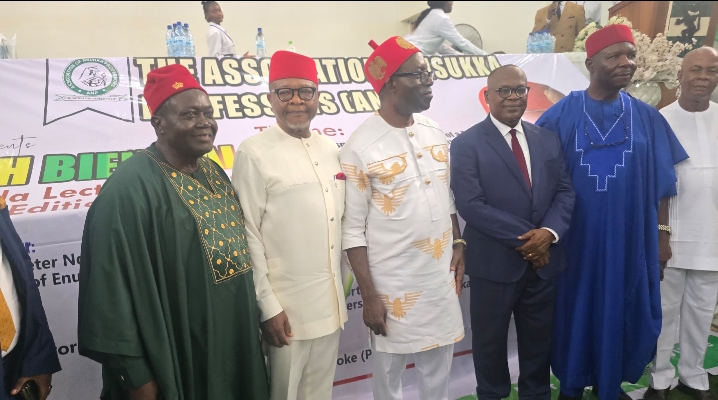
Governor Charles Soludo of Anambra state has lamented lack of research in public policy making contending that academic research with positive impact on governance is sterial.
He further challenged the academic community to step up it’s intellectual works towards solving contending issues that shape the wellbeing of the immediate society.
The Governor who delivered a lecture at the 6th Biennial Adada Lecture Series 2026 convened by Association of Nsukka Professors noted that gone are those days when intellectual works end up at the University book shelf without transforming the socioeconomic needs of any given society.
Soludo observed that the “fusion of thought and action” remains the only bridge to a national rebirth.
Soludo questioned why academic discussions have seemingly lost their authority in national life. Despite producing thousands of professors and journals, he noted a “severed link” between academic research and public policy.
“If you have 200 Professors as members, how is the Adada zone not a first world?” he asked, challenging the audience to move beyond the walls of the university. “We produce journal articles, but how many have become policies? Intellectualism without activism is sterile.”
The Governor further advocated for “Productive Intellectualism,” where critical thinking guides public purpose. Drawing from his first tenure as Governor over the last four years, Governor Soludo highlighted how he has attempted to bring intellectualism to governance through “sacrificial volunteerism” and how he succeeded in laying the foundation for the African Dubai-Taiwan-Silicon Valley.
He emphasized that nations do not develop by resources alone, but by ideas that precede institutions; citing historical giants like Isaac Newton, Nnamdi Azikiwe, Obafemi Awolowo, Kwame Nkrumah, Ahmadu Bello, and a host of others, as examples of a shared pattern of logical thinking that yield ideas and then built.
“This is a challenge to the intellectuals and the wider academic community: to multi-task, as the modern intellectual must be both a thinker and a doer, Question the Status Quo which remains a fundamental element of true intellectualism”
“Standing akimbo is too expensive,” Soludo warned. “We don’t just live; we live to matter. It is time to get back to basics and drive the African renaissance through active participation.”
Speaking earlier, Professor Osita Ogbu, presiding as Chairman, observed that the true benchmark of academic excellence is not found in the complacency of achievement, but in an unyielding hunger for discovery and the courage to apply that knowledge to real-world challenges. He asserted that intellectuals are never satisfied, they keep working.
Also speaking, the Vice Chancellor of the University of Nigeria, Nsukka, Professor Simon Ortuanya, framed the gathering as a significant homecoming for Governor Soludo. He offered a glowing tribute to the Governor, commending his transformative contributions to the Nigerian state and his broader dedication to the service of humanity.


Enugu East Local Government Area has formalised a strategic partnership with David Umahi Federal University of Medical Sciences following the signing of a Memorandum of Understanding (MoU) aimed at strengthening human capital development in the council area.
The agreement, signed during a high-level meeting between officials of the council and the university’s management, is expected to open new opportunities in medical education, training, and healthcare capacity building.
Speaking at the signing ceremony, the Executive Chairman of Enugu East LGA, Engr. Pst. Beloved-Dan Obi Anike, described the partnership as a major step toward building a healthier and more prosperous society through deliberate investment in education.
He noted that the initiative aligns with the broader development agenda of the Enugu State Government under Governor Peter Ndubuisi Mbah, particularly in the area of human capital development.
As part of the agreement, the council unveiled plans to sponsor 100 students from Enugu East to study medical-related courses at the university, a move aimed at addressing manpower gaps in the health sector while empowering local youths.
“This partnership is not just about education; it is about securing the future of our people. By investing in medical training, we are building a foundation for sustainable healthcare delivery in Enugu East,” Anike said.
In his remarks, the Vice Chancellor of the university, Jesse Uneke, commended the council for its forward-thinking approach, describing the MoU as a mutually beneficial arrangement that would enhance both academic excellence and community impact.
He assured that the institution would provide the necessary support to ensure the success of the scholarship programme and other areas of collaboration captured in the agreement.
The MoU is also expected to cover research collaboration, capacity building, and possible medical outreach programmes within Enugu East communities.
Stakeholders say the partnership marks a significant milestone in the council’s drive to improve access to quality education and healthcare, while positioning Enugu East as a model for grassroots-driven development.
Implementation of the agreement is expected to commence in the coming weeks, with both parties set to outline detailed modalities for its execution.

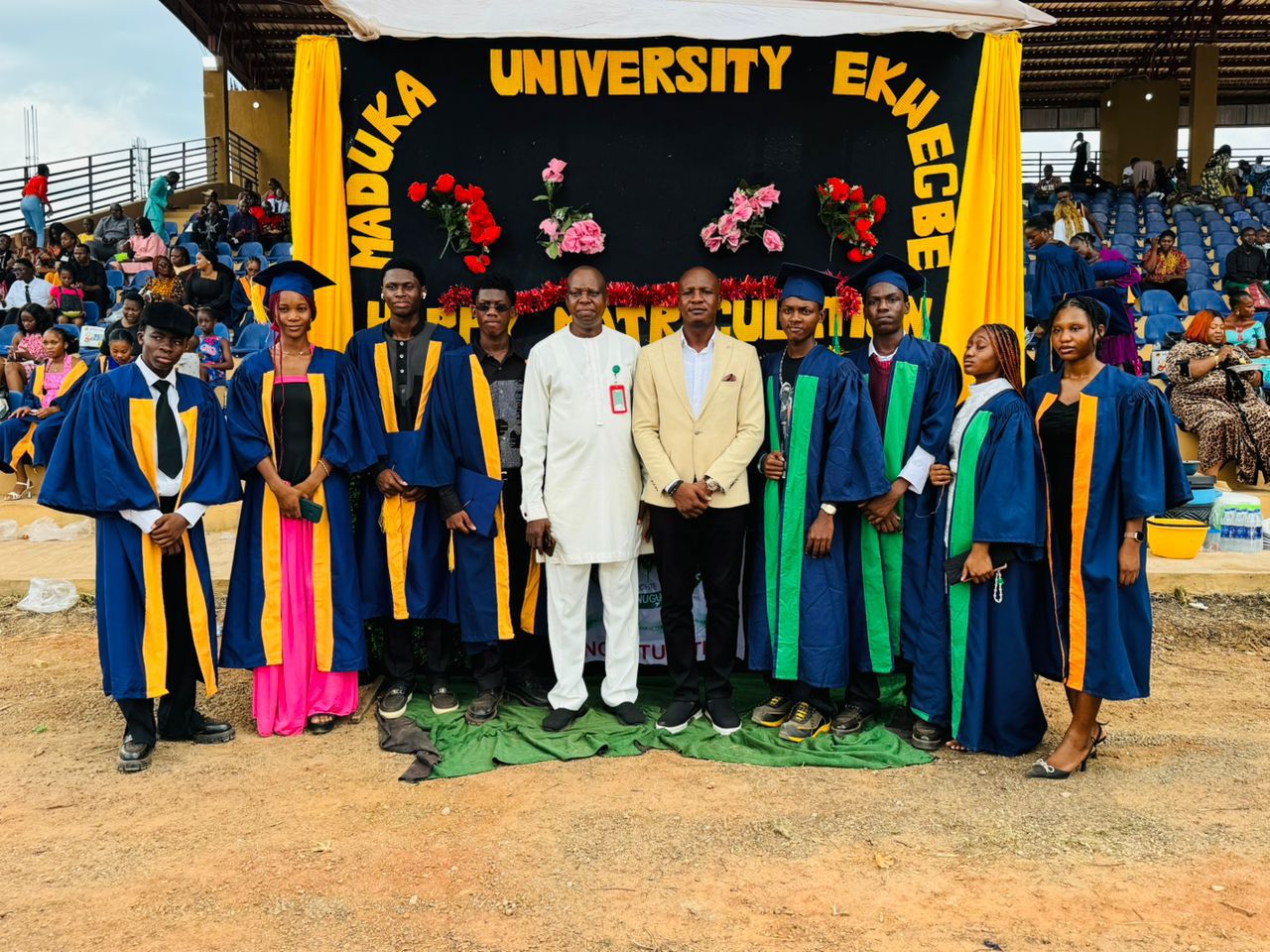
Fifteen students from Enugu East Local Government Area who were awarded scholarships to study medicine and engineering at Maduka University have officially matriculated, marking a major milestone in their academic journey.
The scholarship initiative, driven by the Enugu East Local Government Council under the leadership of Engr. Pst. Beloved-Dan Obi Anike, is part of efforts to boost human capital development through strategic investment in education.
The council facilitated admission for the beneficiaries into high-demand professional courses, positioning them to become future leaders in medicine, engineering, and related fields.
The matriculation ceremony was attended by key government representatives, including Barr. Uche Mbaeke, Secretary of Enugu East LGA, and Pst. Polycarp Ugwu, Secretary of the Enugu East Human Capital Trust Fund, who represented the council at the event.
The ceremony signals the beginning of a new academic chapter for the students, who are expected to make meaningful contributions to their community and beyond.
The initiative has been widely commended as a bold step toward youth empowerment and sustainable development in Enugu East.


“Go and Verify”: How Sunday Umeha Is Redefining Representation in Ezeagu/Udi
Chief Sir Paul Chukwuma Lays His Beloved Sister to Rest


2027: Anambra ADC Intact Despite Obi, Kwankwaso Departure – Guber Candidate






-
 News5 years ago
Uncompleted structures in Enugu to undergo integrity test – Authority
-
 News4 years ago
BREAKING: FG to release Nnamdi Kanu tomorrow, fixes emergency hearing
-
 News2 years ago
BREAKING: Former Anambra Governor is Dead
-
 Entertainment4 years ago
Chrisland School Girl’s Online Activities Leak [Video]
-
 Social event4 years ago
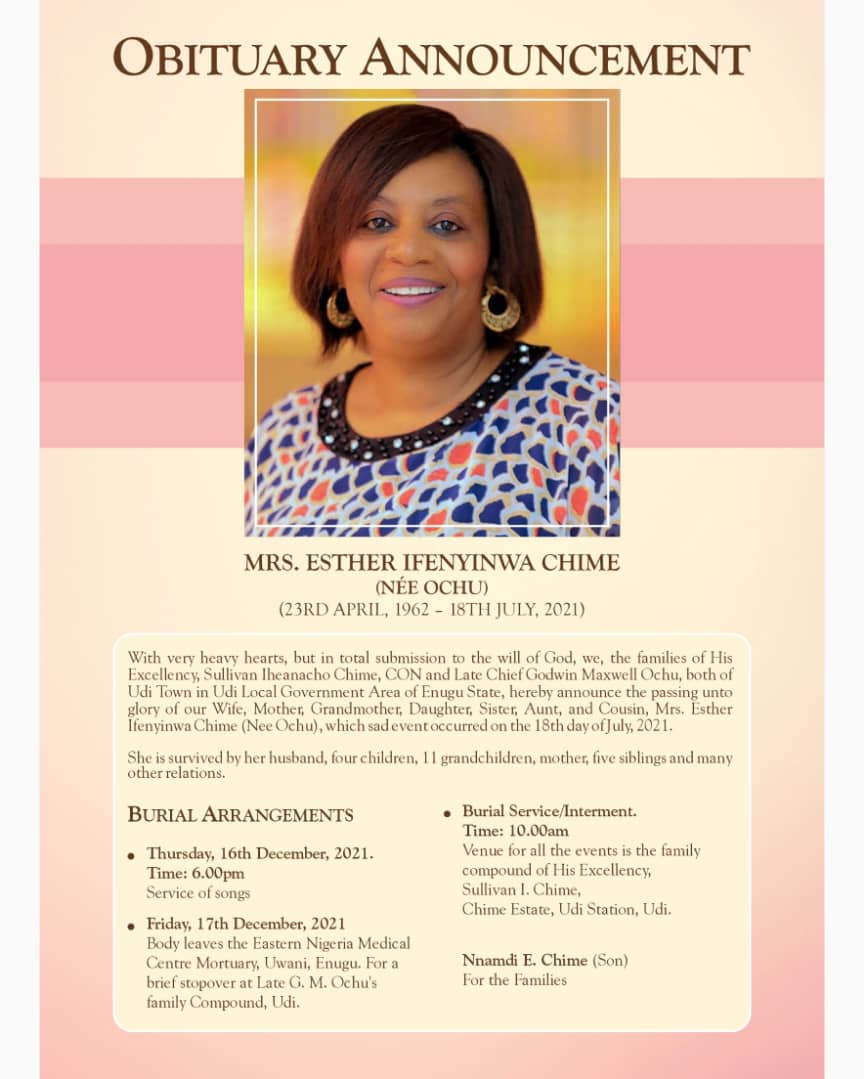
Ex-Enugu governor, Sullivan buries wife December 17
-
 Politics2 years ago
Enugu spends the least as 30 govs burn N968.64bn on refreshments, others in 3 months
-
 Foreign2 years ago
Denmark announces visas for, welders mechanics, bricklayers, others
-
 Crime5 years ago
BREAKING! Sit-at-home: Vehicle conveying tomatoes, set ablaze in Enugu


