

Economy
Naira depreciation pushes drug imports to N900bn


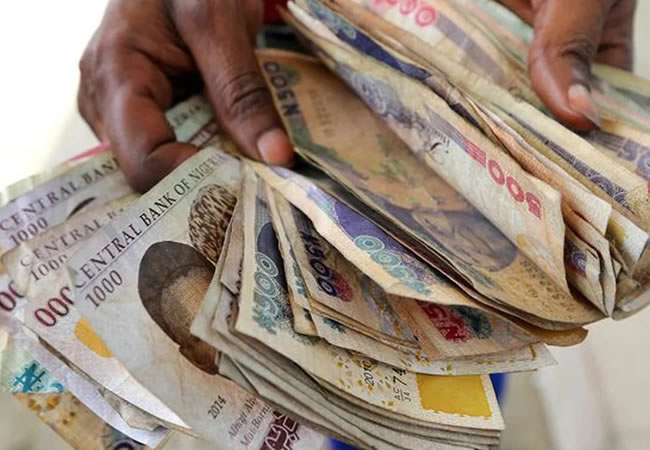
Drug prices are set to remain high in 2024 as import prices of pharmaceutical products may hit over N900bn due to the depreciation of the naira.
This is set to further put pressure on Nigerians who had grappled with high drug prices in 2023. According to data from the International Trade Center, Nigeria imported $1.05bn worth of pharmaceutical products in 2022. At the exchange rate of the time (N451/$), it cost N475.17bn. At the exchange rate of February 19, 2024, (N902.45/$), it will cost N950.81bn.
The multilateral agency, which has a joint mandate with the World Trade Organisation and the United Nations, gets its data from the National Bureau of Statistics and the United Nations COMTRADE, and since the NBS is yet to release foreign trade records for the fourth quarter of 2023, data for the year is unavailable hence the usage of 2022’s data.
Pharmaceutical products involve more than drugs. According to ITC, it include, “Dried glands and other organs for organo-therapeutic uses, whether or not powdered; extracts of glands or other organs or their secretions, for organo-therapeutic uses; heparin and its salts; other human or animal substances prepared for therapeutic or prophylactic uses.
“Medicaments consisting of two or more constituents mixed together for therapeutic or prophylactic uses, not in measured doses or put up for retail sale. Medicaments consisting of mixed or unmixed products for therapeutic or prophylactic uses, put up in measured doses “incl. those for transdermal administration” or in forms or packings for retail sale.
“Wadding, gauze, bandages and the like, e.g. dressings, adhesive plasters, poultices, impregnated or covered with pharmaceutical substances or put up for retail sale for medical, surgical, dental or veterinary purposes. Pharmaceutical preparations and products of subheadings, and more…”
Nigeria imports most of its pharmaceutical products from India, China, Malaysia, Netherlands, and Belgium.
Since 2019, Nigeria’s pharmaceutical imports have remained above the $1bn mark. It was $1.45bn in 2019, $2.84bn in 2020, $1.37bn in 2021, and $1.05bn in 2022. This is set to increase in 2024 following the move of some foreign drug companies to focus on importation this year.
In August 2023, GlaxoSmithKline Consumer Nigeria Plc announced plans to shut down its operations in the country and transition to a third-party direct distribution model for its pharmaceutical product.
The company which had operated in the country for 51 years said, “In our published Q2 results we disclosed that the GSK UK Group has informed GlaxoSmithKline Consumer Nigeria PLC of its strategic intent to cease commercialization of its prescription medicines and vaccines in Nigeria through the GSK local operating companies and transition to a third-party direct distribution model for its pharmaceutical products.”
In November 2023, Sanofi, a French pharmaceutical multinational also announced plans to exit and adopt a third-party distribution model in the country. It stated that its third-party distributor will begin to handle its commercial portfolio of medicines from February 2024.
Since then, the cost of drugs has surged above 100 per cent. According to SBM Intelligence, Nigeria’s climbing inflation and foreign exchange crisis are a strain on businesses and consumers, with the pharmaceutical industry not left out.
A pharmaceutical professor at the University of Lagos, Boladele Silva, who spoke to the firm, explained that Nigeria’s pharmaceutical industry was very exposed to shocks from foreign exchange volatility.
Explaining the recent hike in the prices of medicines, he said, “In Nigeria, what we have are packaging hubs. The active pharmaceutical ingredients used by the manufacturers are imported. That makes them very vulnerable to economic shocks.”
In its analysis, the data insight firm stated that on a year-on-year basis, the cost price of Ampiclox recorded the highest rate of increase between 2022 and 2023, jumping by 346 percentage points, while the selling price of Amoxil recorded the fastest rate of increase in the same period, jumping by over 400 percentage points. These two drugs are both manufactured by GSK.
In a recent interview with The PUNCH, the Founder and Chief Executive Officer of HunPharm Africa, Sesan Kareem, blamed the exchange rate for surging drug prices.
He said, “In our free-market system, prices are subject to influence from diverse factors, allowing each player to independently determine the cost of medicines. The fluctuating exchange rates significantly impact the cost of importing pharmaceutical products and raw materials.
“When the local currency weakens against foreign currencies, the expenses incurred in procuring these essential medical supplies rise, consequently driving up the overall prices of medicines in the country. The scarcity or limited availability of foreign exchange exacerbates the situation.
“Pharmaceutical companies heavily rely on importation of medicines and pharma manufacturers also rely heavily on imported materials for manufacturing medicines, and the scarcity of forex hampers their ability to acquire these materials at stable prices. This scarcity creates a ripple effect, forcing manufacturers to compensate by increasing the prices of medicines to cover their higher operational costs.”
Drawing the government’s attention to the hike in drug prices, a chieftain of the All Progressive Congress in Osun, Olatunbosun Oyintiloye, tasked the Federal Government to intervene.
The Nigeria Medical Association, Lagos State chapter, recently expressed concern over the increasing prices of drugs and medical services.
The Chairman of the state branch of the NMA, Dr Benjamin Olowojebutu, said, “The unaffordability of medical services must be addressed. In an era of expensive healthcare and budget constraints, we must explore sustainable models that ensure both the financial stability of healthcare institutions and the affordability of services for patients.”
President Bola Tinubu, at a recent Federal Executive Council meeting, endorsed three resolutions to tackle rising cost of pharmaceuticals in the country.
Announcing it, the Coordinating Minister of Health and Social Welfare, Prof. Ali Pate, said, “Today at the Federal Executive Council, Mr. President took three far-reaching decisions relating to the health sector.
“The first is on the rising cost of pharmaceuticals, the hike in prices that we have in the pharmaceutical, which is going beyond the reach of many Nigerians, life-saving commodities, devices like syringes and needles, and the exit of major companies from our market.
“Those decisions also include the regulation of the sector to protect the health and well-being of humans and the third decision is regarding how we deal with the crisis of human resources in the health sector.”


By Francis Onoh
It is the right of every Nigerian to be financially included in the system. Data from the country’s foremost financial institution, the Central Bank of Nigeria (CBN) and the organisation Enhancing Financial Innovation and Access show that approximately 40% of Nigerians adults are financially excluded.
Attaining the 3.4% projected growth in the economy’s GDP will be difficult if not impossible, if the petty traders, the local skill workers and the roadside sellers are excluded from financial services and products that can aid their businesses. Enhancing financial inclusion for economic growth requires that financial literacy be extended and incorporated into the activities of organisations that work at the grassroots, for example, religious institutions.
Although with low levels of literacy, Emeka, Haruna or Bankole as devoted adherents of their various religions, are more likely to understands that their money is secure in the financial sector, that products such as pension plan, health insurance schemes and access to credit are available for citizens who are financially included, if and only if leaders of their religion introduce financial literacy to them. Combining their obligation to teach articles of their faith with introducing their members to financial literacy is one way to go if our country has to remedy the financial exclusion created by poverty and limited access to formal education.From the Global Multidimensional Poverty Index, the dimensions of poverty are Health, Education and Standard of Living.
Access to financial services can encourage people to enrol in a health insurance scheme to ensure good health within a manageable expenditure. A financially included person will have formal or informal education by association, which will invariably improve the living standard.
A financially included person is more likely to increase their business share if they access credit facilities in the financial sector and stand a better chance to benefit from government poverty alleviation programmes or even access funds from international development.
Making about 40% of Nigerian adults, which is about 35 million people, financially included will enhance capital formation assets, improve citizens’ disposable income, grow the nation’s financial sector and in extension catalyse industrialisation, which the country direly needs at this time. Financial inclusion for all is a necessary good that should be pursued by the Nigerian government at all levels, and stakeholders, such as religious leaders, must be made aware of their obligation in this space.
The time to do this is now.
Francis Onoh writes from Enugu
The Bank gave this warning on Monday during the public presentation of its latest Nigeria Development Update report titled ‘Building Momentum for Inclusive Growth’ in Abuja.
President Bola Tinubu signed the 2025 Appropriation Act into law, approving a record budget of N54.99tn, the highest in Nigeria’s history.
The budget was raised from the initial proposal of N49.7tn submitted to the National Assembly.
The fiscal plan makes provisions for N13.64tn in recurrent expenditure, N23.96tn for capital projects, N14.32tn for debt servicing, and N3.65tn for statutory transfers, while projecting a deficit of N13.08tn, to be financed through domestic and external borrowing.
The budget assumptions include a crude oil benchmark of $75 per barrel, oil production at 2.06 million barrels per day, an average exchange rate of N1,400/$, and an inflation target of 15 per cent.
Speaking at the event, the World Bank’s Lead Economist for Nigeria, Mr Alex Sienaert, said that despite strong revenue gains recorded in 2024, Nigeria’s 2025 budget assumptions remain optimistic and may prove difficult to meet.
He said, “It’s a very ambitious budget. Even with the very positive revenue sort of tailwind that we have… even considering that, it looks like it’s going to be pretty hard to meet some of the ambitious revenue targets that are in there.”
According to him, key assumptions such as average daily crude oil production of 2.1 million barrels per day and a benchmark oil price of $75 per barrel are unlikely to hold, noting that current production figures are closer to 1.6 million barrels per day.
He also cited uncertainty over how much revenue would flow from the removal of the petrol subsidy and the planned windfall tax on foreign exchange gains, saying these could weaken the Federal Government’s revenue position.
“This is important because if it does turn out that the revenue targets are not met, then that could mean that the financing requirements are more than budgeted. And if the financing requirements exceed what’s budgeted, then that’s either going to create arrears pressures… or it could renew risks of recourse to things like deficit monetisation under large-scale Ways and Means,” he said.
Sienaert warned that although Nigerian authorities had pledged not to resort to the CBN’s overdraft facility, doing so again could derail the country’s fragile macroeconomic recovery.
“The authorities have been very clear that they will by no means be going back to large-scale use of Ways and Means, but were that to happen, it would be just extremely disruptive to the whole rebuilding of confidence in fiscal sustainability and in the naira ultimately,” he noted.
On broader fiscal matters, the World Bank called on the Federal Government to eliminate the electricity subsidy, which it described as a “wasteful, regressive subsidy.”
Sienaert said key fiscal reforms such as the removal of the petrol subsidy and the adoption of a market-reflective exchange rate had helped improve the government’s fiscal position, but further reforms were needed.
“There’s still a range of fiscal policy and fiscal management issues where more can be done to safeguard the gains that have already been achieved… just to name, there is still one kind of wasteful regressive subsidy, which is the electricity subsidy. So work to address that,” he said.
He also advocated for improved oil revenue transparency and a reduction in the cost of governance, saying efforts to increase non-oil revenue must continue.
Sienaert noted that although the Nigerian National Petroleum Company Limited began applying official exchange rates for fiscal transactions in October 2023, only half of the revenue gains from the subsidy removal had been remitted to the Federation Account by January 2025.
“It’s just going to be important in the coming months to keep tracking this, and ultimately that the full revenue gains from the difficult job of eliminating the subsidy do flow to the Federation so that that can support a continued healthy fiscal picture and, in turn, spending on development priorities,” he said.
On inflation, the World Bank economist said monetary policy reforms had helped reduce inflationary pressures but noted that consumer prices remained high.
“We do need to acknowledge that price pressures remain elevated,” he said. “The battle against inflation continues, and to extend the military analogy a little bit, there’s a kind of fog of war… quite dense just at the moment.”
He added that recent changes to the Consumer Price Index by the National Bureau of Statistics had made it difficult to determine the current trend in inflation, noting, however, that continued coordination between fiscal and monetary authorities would be critical to restoring confidence.
The World Bank further urged the government to ramp up implementation of its targeted cash transfer programme aimed at cushioning the cost of reforms on poor households. The programme currently offers N25,000 monthly for three months to 15 million recipients.
“The implementation has just been quite slow. So only about a third of those recipients have received transfers so far. The good news is that this is being scaled up… and just important that that effort really continues so that as many people as possible get help,” Sienaert said.
Looking ahead, he called for a new growth strategy based on a “private-led, public-facilitated” model.
The World Bank also stressed the need to reduce costs of governance, including cutting “wasteful expenditures that are not essential, such as purchase of vehicles, external training, etc.” and reducing “the cost of collection of GOEs (FIRS, NCS, NMDPRA, NUPRC, etc.).”
He emphasised the need for increased investment in education and health, noting that Nigeria’s combined spending in these sectors remained among the lowest globally.
“In 2022, Nigeria was only spending 1.2 per cent of GDP on education and 1.8 per cent on health, or $23 per Nigerian per year on education, $15 per Nigerian per year on health,” he said.
He said private sector growth must also be supported by improving the competitive landscape and reviewing trade policies that restrict access to essential production inputs.
“Competition is like the sort of secret sauce that drives innovation and economic transformation. And in Nigeria, there’s some evidence… that actually there are elements of competition policy, and there are conditions that are needed for good competition that actually even compared to some of Nigeria’s immediate peers… the Nigerian competitive landscape lags some of those,” he said.
The Bank believes that following through with these reforms will position Nigeria to achieve its goal of becoming a $1tn economy by 2030.

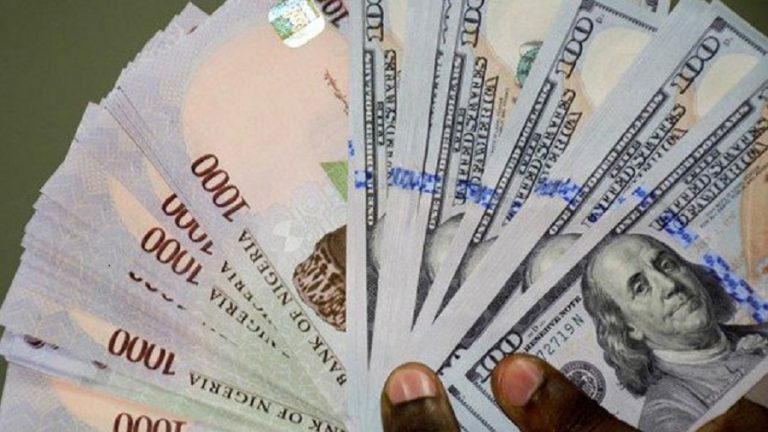
The Naira depreciated to N1,600 per dollar in the Nigerian Foreign Exchange Market (NFEM) today after three months of being on the N1,500 per dollar threshold.
Data published by the Central Bank of Nigeria, CBN, showed that the indicative exchange rate for the naira rose to N1,600 per dollar from N1,569 per dollar on Thursday, indicating N31 depreciation for the naira.
Likewise, the naira depreciated to N1,565 per dollar in the parallel market from N1,555 per dollar on Thursday.
Consequently, the margin between the parallel market and NFEM rate widened to N35 per dollar from N14 per dollar on Thursday.
Vanguard News


“Go and Verify”: How Sunday Umeha Is Redefining Representation in Ezeagu/Udi
Chief Sir Paul Chukwuma Lays His Beloved Sister to Rest


2027: Anambra ADC Intact Despite Obi, Kwankwaso Departure – Guber Candidate






-
 News5 years ago
Uncompleted structures in Enugu to undergo integrity test – Authority
-
 News4 years ago
BREAKING: FG to release Nnamdi Kanu tomorrow, fixes emergency hearing
-
 News2 years ago
BREAKING: Former Anambra Governor is Dead
-
 Entertainment4 years ago
Chrisland School Girl’s Online Activities Leak [Video]
-
 Social event4 years ago
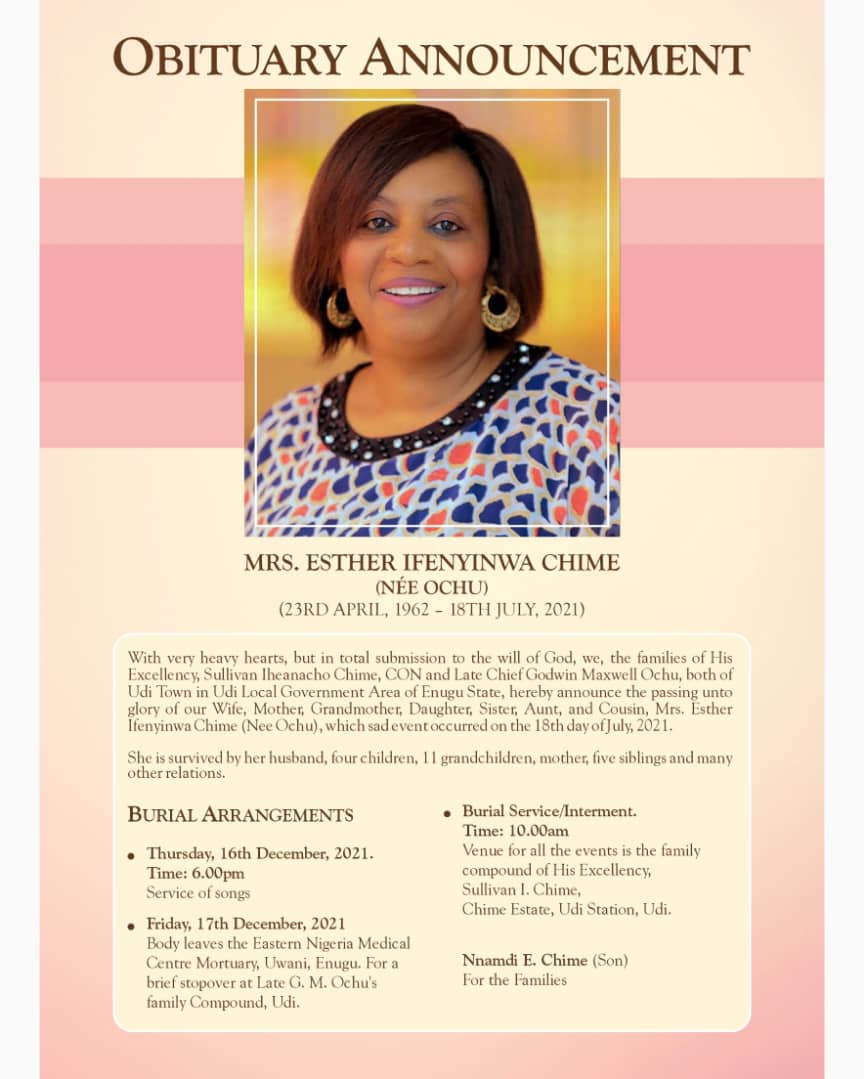
Ex-Enugu governor, Sullivan buries wife December 17
-
 Politics2 years ago
Enugu spends the least as 30 govs burn N968.64bn on refreshments, others in 3 months
-
 Foreign2 years ago
Denmark announces visas for, welders mechanics, bricklayers, others
-
 Crime5 years ago
BREAKING! Sit-at-home: Vehicle conveying tomatoes, set ablaze in Enugu


