

Economy
Cash limits: Banks adamant as Rep orders CBN to stay action


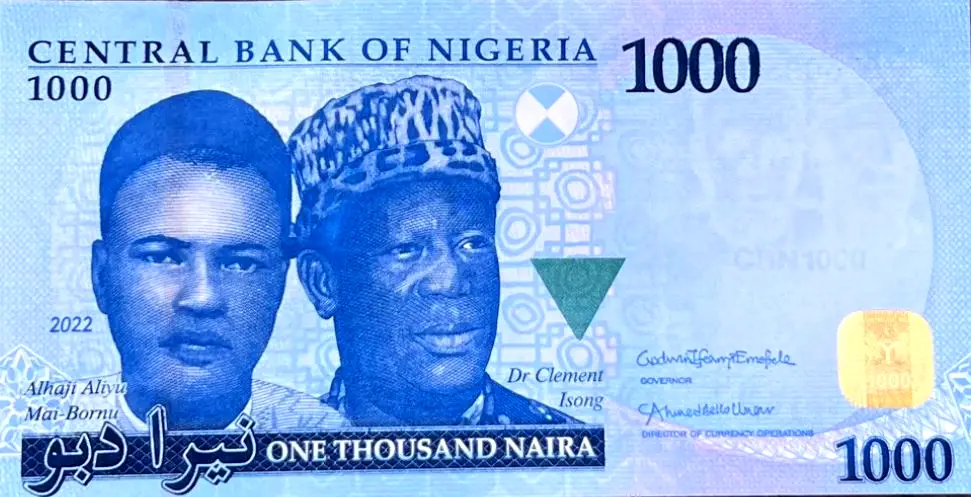
Although the CBN Governor, Godwin Emefiele, for the second time, failed to appear before the House, the lawmakers said their December 8 directive to the apex bank to put the policy on hold had not changed.Amid protests and condemnation, the lawmakers rescheduled the CBN governor’s appearance for Thursday (tomorrow).
Checks however, indicated that the apex bank had not circulated any counter directive to banks and other financial institutions stopping the policy despite the resolution of the lawmakers.
The House at its plenary on December 8 summoned Emefiele to appear before it on Thursday last week to explain the latest policy by the CBN which, among others, sets limits to cash withdrawals at the Deposit Money Banks and other financial institutions.
Among others, the CBN, in a statement on December 6, indicated that beginning from January 9, 2023, the amounts individuals and corporate organisations could withdraw per week would not exceed N100,000 and N500,000, respectively.
The lawmakers wanted to grill Emefiele on the policy on Thursday last week but he failed to appear at the green chamber.
The Deputy Governor, Corporate Services, CBN, Edward Adamu, in a communication to the House told the lawmakers that Emefiele was part of the entourage of the President, Major General Muhammadu Buhari (retd.), on an official trip to the United States.
Deputy Speaker of the House, Ahmed Wase, who read out the letter at the opening of plenary said Gbajabiamila had rescheduled Emefiele’s appearance to Tuesday (yesterday).
At the opening of plenary on Tuesday, the Speaker of the House, Femi Gbajabiamila, notified members that Emefiele would not be appearing before them.
Gbajabiamila said, “First, I think it is important that I communicate back to the House because a couple of weeks ago, the House resolved to, and in compliance with the Central Bank Act and the Constitution of the Federal Republic of Nigeria; we invited the Central Bank governor to brief us last Thursday on policies and what was going on; to brief the House on both the redesigning of the naira and, more importantly, the new cash policy.
“The Central Bank governor was supposed to come in last Thursday but he wrote to the House stating that he was unavoidably absent as he was in the United States on an official visit with Mr President. The House did write back to give him another date since he was officially out with Mr President, and that other date was for today, Tuesday, 10 am.
“Just yesterday, I received a letter from the Central Bank…rather, the Clerk (to the House) received a letter which I have with me. It was not addressed to me, but to the Clerk, since he was the one that wrote the invitation letter in the first place.”
The Speaker went on to read out the latest letter from the Deputy Governor, Corporate Services, CBN, Edward Adamu, titled ‘Re-Invitation for Briefing.’
It read in part, “We refer to your letter of December 15, 2022, inviting the Governor of the Central Bank of Nigeria, Mr Godwin Emefiele, to appear before the House of Representatives on a rescheduled date of Tuesday, December 20, 2022.
“Regrettably, the governor is unavailable to brief the House of Representatives at this time because he has other pre-scheduled official engagements he is currently addressing abroad.
“Accordingly, he has requested that we respectfully convey his inability to honour the invitation on the rescheduled date. The governor regrets this and will contact the House of Representatives as soon as he returns to the country from his official assignment.”


By Francis Onoh
It is the right of every Nigerian to be financially included in the system. Data from the country’s foremost financial institution, the Central Bank of Nigeria (CBN) and the organisation Enhancing Financial Innovation and Access show that approximately 40% of Nigerians adults are financially excluded.
Attaining the 3.4% projected growth in the economy’s GDP will be difficult if not impossible, if the petty traders, the local skill workers and the roadside sellers are excluded from financial services and products that can aid their businesses. Enhancing financial inclusion for economic growth requires that financial literacy be extended and incorporated into the activities of organisations that work at the grassroots, for example, religious institutions.
Although with low levels of literacy, Emeka, Haruna or Bankole as devoted adherents of their various religions, are more likely to understands that their money is secure in the financial sector, that products such as pension plan, health insurance schemes and access to credit are available for citizens who are financially included, if and only if leaders of their religion introduce financial literacy to them. Combining their obligation to teach articles of their faith with introducing their members to financial literacy is one way to go if our country has to remedy the financial exclusion created by poverty and limited access to formal education.From the Global Multidimensional Poverty Index, the dimensions of poverty are Health, Education and Standard of Living.
Access to financial services can encourage people to enrol in a health insurance scheme to ensure good health within a manageable expenditure. A financially included person will have formal or informal education by association, which will invariably improve the living standard.
A financially included person is more likely to increase their business share if they access credit facilities in the financial sector and stand a better chance to benefit from government poverty alleviation programmes or even access funds from international development.
Making about 40% of Nigerian adults, which is about 35 million people, financially included will enhance capital formation assets, improve citizens’ disposable income, grow the nation’s financial sector and in extension catalyse industrialisation, which the country direly needs at this time. Financial inclusion for all is a necessary good that should be pursued by the Nigerian government at all levels, and stakeholders, such as religious leaders, must be made aware of their obligation in this space.
The time to do this is now.
Francis Onoh writes from Enugu
The Bank gave this warning on Monday during the public presentation of its latest Nigeria Development Update report titled ‘Building Momentum for Inclusive Growth’ in Abuja.
President Bola Tinubu signed the 2025 Appropriation Act into law, approving a record budget of N54.99tn, the highest in Nigeria’s history.
The budget was raised from the initial proposal of N49.7tn submitted to the National Assembly.
The fiscal plan makes provisions for N13.64tn in recurrent expenditure, N23.96tn for capital projects, N14.32tn for debt servicing, and N3.65tn for statutory transfers, while projecting a deficit of N13.08tn, to be financed through domestic and external borrowing.
The budget assumptions include a crude oil benchmark of $75 per barrel, oil production at 2.06 million barrels per day, an average exchange rate of N1,400/$, and an inflation target of 15 per cent.
Speaking at the event, the World Bank’s Lead Economist for Nigeria, Mr Alex Sienaert, said that despite strong revenue gains recorded in 2024, Nigeria’s 2025 budget assumptions remain optimistic and may prove difficult to meet.
He said, “It’s a very ambitious budget. Even with the very positive revenue sort of tailwind that we have… even considering that, it looks like it’s going to be pretty hard to meet some of the ambitious revenue targets that are in there.”
According to him, key assumptions such as average daily crude oil production of 2.1 million barrels per day and a benchmark oil price of $75 per barrel are unlikely to hold, noting that current production figures are closer to 1.6 million barrels per day.
He also cited uncertainty over how much revenue would flow from the removal of the petrol subsidy and the planned windfall tax on foreign exchange gains, saying these could weaken the Federal Government’s revenue position.
“This is important because if it does turn out that the revenue targets are not met, then that could mean that the financing requirements are more than budgeted. And if the financing requirements exceed what’s budgeted, then that’s either going to create arrears pressures… or it could renew risks of recourse to things like deficit monetisation under large-scale Ways and Means,” he said.
Sienaert warned that although Nigerian authorities had pledged not to resort to the CBN’s overdraft facility, doing so again could derail the country’s fragile macroeconomic recovery.
“The authorities have been very clear that they will by no means be going back to large-scale use of Ways and Means, but were that to happen, it would be just extremely disruptive to the whole rebuilding of confidence in fiscal sustainability and in the naira ultimately,” he noted.
On broader fiscal matters, the World Bank called on the Federal Government to eliminate the electricity subsidy, which it described as a “wasteful, regressive subsidy.”
Sienaert said key fiscal reforms such as the removal of the petrol subsidy and the adoption of a market-reflective exchange rate had helped improve the government’s fiscal position, but further reforms were needed.
“There’s still a range of fiscal policy and fiscal management issues where more can be done to safeguard the gains that have already been achieved… just to name, there is still one kind of wasteful regressive subsidy, which is the electricity subsidy. So work to address that,” he said.
He also advocated for improved oil revenue transparency and a reduction in the cost of governance, saying efforts to increase non-oil revenue must continue.
Sienaert noted that although the Nigerian National Petroleum Company Limited began applying official exchange rates for fiscal transactions in October 2023, only half of the revenue gains from the subsidy removal had been remitted to the Federation Account by January 2025.
“It’s just going to be important in the coming months to keep tracking this, and ultimately that the full revenue gains from the difficult job of eliminating the subsidy do flow to the Federation so that that can support a continued healthy fiscal picture and, in turn, spending on development priorities,” he said.
On inflation, the World Bank economist said monetary policy reforms had helped reduce inflationary pressures but noted that consumer prices remained high.
“We do need to acknowledge that price pressures remain elevated,” he said. “The battle against inflation continues, and to extend the military analogy a little bit, there’s a kind of fog of war… quite dense just at the moment.”
He added that recent changes to the Consumer Price Index by the National Bureau of Statistics had made it difficult to determine the current trend in inflation, noting, however, that continued coordination between fiscal and monetary authorities would be critical to restoring confidence.
The World Bank further urged the government to ramp up implementation of its targeted cash transfer programme aimed at cushioning the cost of reforms on poor households. The programme currently offers N25,000 monthly for three months to 15 million recipients.
“The implementation has just been quite slow. So only about a third of those recipients have received transfers so far. The good news is that this is being scaled up… and just important that that effort really continues so that as many people as possible get help,” Sienaert said.
Looking ahead, he called for a new growth strategy based on a “private-led, public-facilitated” model.
The World Bank also stressed the need to reduce costs of governance, including cutting “wasteful expenditures that are not essential, such as purchase of vehicles, external training, etc.” and reducing “the cost of collection of GOEs (FIRS, NCS, NMDPRA, NUPRC, etc.).”
He emphasised the need for increased investment in education and health, noting that Nigeria’s combined spending in these sectors remained among the lowest globally.
“In 2022, Nigeria was only spending 1.2 per cent of GDP on education and 1.8 per cent on health, or $23 per Nigerian per year on education, $15 per Nigerian per year on health,” he said.
He said private sector growth must also be supported by improving the competitive landscape and reviewing trade policies that restrict access to essential production inputs.
“Competition is like the sort of secret sauce that drives innovation and economic transformation. And in Nigeria, there’s some evidence… that actually there are elements of competition policy, and there are conditions that are needed for good competition that actually even compared to some of Nigeria’s immediate peers… the Nigerian competitive landscape lags some of those,” he said.
The Bank believes that following through with these reforms will position Nigeria to achieve its goal of becoming a $1tn economy by 2030.

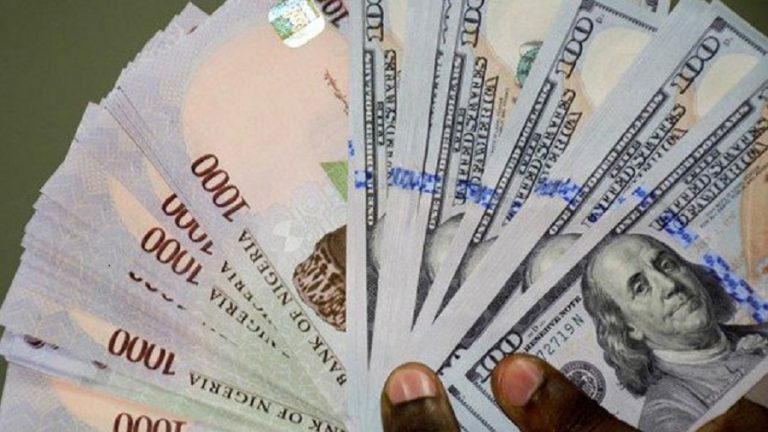
The Naira depreciated to N1,600 per dollar in the Nigerian Foreign Exchange Market (NFEM) today after three months of being on the N1,500 per dollar threshold.
Data published by the Central Bank of Nigeria, CBN, showed that the indicative exchange rate for the naira rose to N1,600 per dollar from N1,569 per dollar on Thursday, indicating N31 depreciation for the naira.
Likewise, the naira depreciated to N1,565 per dollar in the parallel market from N1,555 per dollar on Thursday.
Consequently, the margin between the parallel market and NFEM rate widened to N35 per dollar from N14 per dollar on Thursday.
Vanguard News


“Go and Verify”: How Sunday Umeha Is Redefining Representation in Ezeagu/Udi
Chief Sir Paul Chukwuma Lays His Beloved Sister to Rest

2027: Anambra ADC Intact Despite Obi, Kwankwaso Departure – Guber Candidate






-
 News5 years ago
Uncompleted structures in Enugu to undergo integrity test – Authority
-
 News4 years ago
BREAKING: FG to release Nnamdi Kanu tomorrow, fixes emergency hearing
-
 News2 years ago
BREAKING: Former Anambra Governor is Dead
-
 Entertainment4 years ago
Chrisland School Girl’s Online Activities Leak [Video]
-
 Social event4 years ago
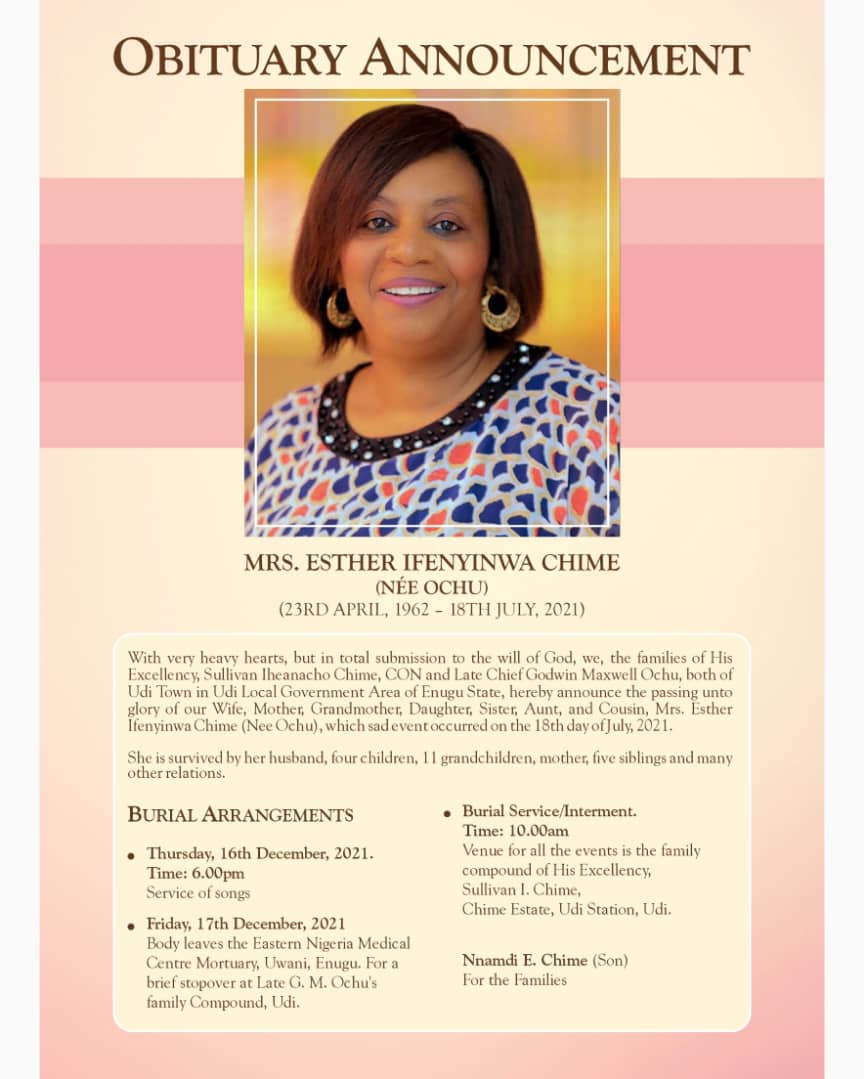
Ex-Enugu governor, Sullivan buries wife December 17
-
 Politics2 years ago
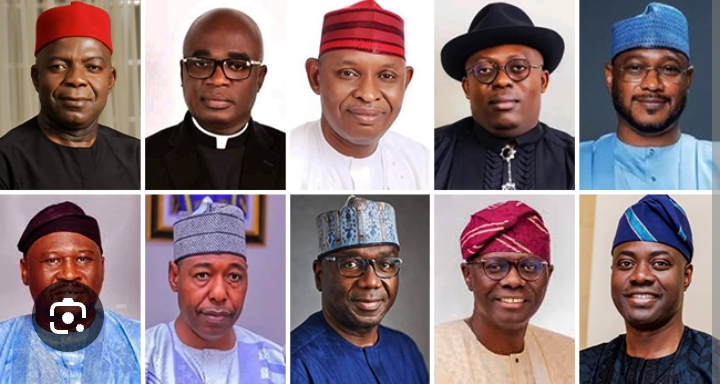
Enugu spends the least as 30 govs burn N968.64bn on refreshments, others in 3 months
-
 Foreign2 years ago
Denmark announces visas for, welders mechanics, bricklayers, others
-
 Crime5 years ago
BREAKING! Sit-at-home: Vehicle conveying tomatoes, set ablaze in Enugu


