

Economy
BREAKING: CBN devalues Naira to 630/$1


The Central Bank of Nigeria (CBN) has devalued the Naira to N631 to the dollar from N461.6 it sold at the Importers and Exporters (I&E) window the previous day, Daily Trust gathered.
The devaluation came 48 hours after President Bola Ahmed Tinubu announced the plans of the federal government to unify the country’s exchange rate to stimulate the economy.
In his inaugural speech, minutes after he was inaugurated as the 16th president of the country, Tinubu said, “Monetary policy needs a thorough house cleaning. The Central Bank must work towards a unified exchange rate. This will direct funds away from arbitrage into meaningful investment in the plant, equipment and jobs that power the real economy.”
There has been a wide margin between the I&E window and the parallel market, a situation that experts say encouraged round-tripping with Bureau de Change operators.
The situation has seen the CBN devise several measures to check the practice as well as completely stop the sale of forex to BDCs.
On Tuesday, President Tinubu met with the top echelon of strategic institutions including the CBN Governor, Godwin Emefiele, at the presidential villa.
At the end of the meeting, neither the presidency nor Emefiele disclosed the outcome of the briefing. It was, however, gathered that the issue of the exchange rate was discussed at the meeting.
The President also met with the Group Chief Executive Officer of the Nigerian National Petroleum Company Limited, Mele Kyari. The removal of petrol subsidy was discussed, it was gathered.
Findings, however, revealed that at the resumption of the weekly bidding for foreign exchange, the apex bank sold the spot rate to banks on behalf of their customers at N631 to a dollar and most bidders got the full amount they requested.
One of the customers told this paper that they applied and that their request was fully granted at N631 as against N461.6.
The move has also seen prices at the parallel market trend downwards. Checks by this paper revealed that prices dropped from N750 to a dollar in the early hours of yesterday to N745 by evening in Abuja and Kano respectively.
The naira weakened in the parallel market to the lowest level in a year on expectations of a possible change in exchange rate management after Tinubu takes office on Monday.
The naira dropped to N762 a dollar on Friday from 775 the previous day in the unauthorized market in Lagos, said Umar Salisu, a BDC operator who tracks the data in the nation’s commercial capital.
The unit has weakened steadily in the parallel market since last week after stabilizing for most of this year.
The market arbitrage (difference between the official and parallel markets) has widened in the past three years from N100 per dollar or about 30 per cent in 2020 to over N400 per dollar (above 100 per cent) sometime last year when the black market rate spiked to N880/$.
Development institutions, including the International Monetary Fund (IMF), are wary of exchange rate differential in excess of five per cent and warn that such could trigger unhealthy manipulation that could negatively affect other efforts on market stabilisation.
From 2020 to 2022, the CBN spent about $42 billion intervening in the foreign exchange market to stabilise the naira. The amount was sold to the end-users, including students and tourists, at the official rates, which are way off the effective exchange rate of the naira.
According to the Financial Stability Report, a publication of the CBN, the apex bank sold $9.2 billion in the market in the first half of last year.
The full data for the second half are not available, but the annualised value is assumed to have surpassed that, especially with the level of social and economic activities associated with the second half.
Whereas the black market rate averaged N730/$, the I&E window finished at suppressed N447/$ on average. That puts the arbitrage at N283/$, pushing the CBN’s FX subsidy in the year to about N3.65 trillion.





By Francis Onoh
It is the right of every Nigerian to be financially included in the system. Data from the country’s foremost financial institution, the Central Bank of Nigeria (CBN) and the organisation Enhancing Financial Innovation and Access show that approximately 40% of Nigerians adults are financially excluded.
Attaining the 3.4% projected growth in the economy’s GDP will be difficult if not impossible, if the petty traders, the local skill workers and the roadside sellers are excluded from financial services and products that can aid their businesses. Enhancing financial inclusion for economic growth requires that financial literacy be extended and incorporated into the activities of organisations that work at the grassroots, for example, religious institutions.
Although with low levels of literacy, Emeka, Haruna or Bankole as devoted adherents of their various religions, are more likely to understands that their money is secure in the financial sector, that products such as pension plan, health insurance schemes and access to credit are available for citizens who are financially included, if and only if leaders of their religion introduce financial literacy to them. Combining their obligation to teach articles of their faith with introducing their members to financial literacy is one way to go if our country has to remedy the financial exclusion created by poverty and limited access to formal education.From the Global Multidimensional Poverty Index, the dimensions of poverty are Health, Education and Standard of Living.
Access to financial services can encourage people to enrol in a health insurance scheme to ensure good health within a manageable expenditure. A financially included person will have formal or informal education by association, which will invariably improve the living standard.
A financially included person is more likely to increase their business share if they access credit facilities in the financial sector and stand a better chance to benefit from government poverty alleviation programmes or even access funds from international development.
Making about 40% of Nigerian adults, which is about 35 million people, financially included will enhance capital formation assets, improve citizens’ disposable income, grow the nation’s financial sector and in extension catalyse industrialisation, which the country direly needs at this time. Financial inclusion for all is a necessary good that should be pursued by the Nigerian government at all levels, and stakeholders, such as religious leaders, must be made aware of their obligation in this space.
The time to do this is now.
Francis Onoh writes from Enugu


-
 News17 hours ago
“Go and Verify”: How Sunday Umeha Is Redefining Representation in Ezeagu/Udi
-
News1 day ago
Chief Sir Paul Chukwuma Lays His Beloved Sister to Rest
-
 News3 days ago
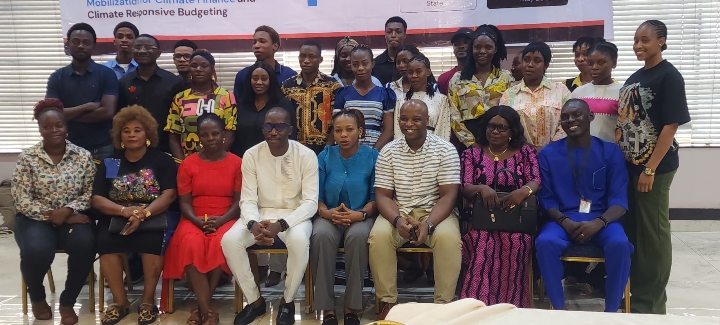
Enugu, SSDO advance domestic resource mobilisation for climate responsive budgeting
-
 Politics2 days ago
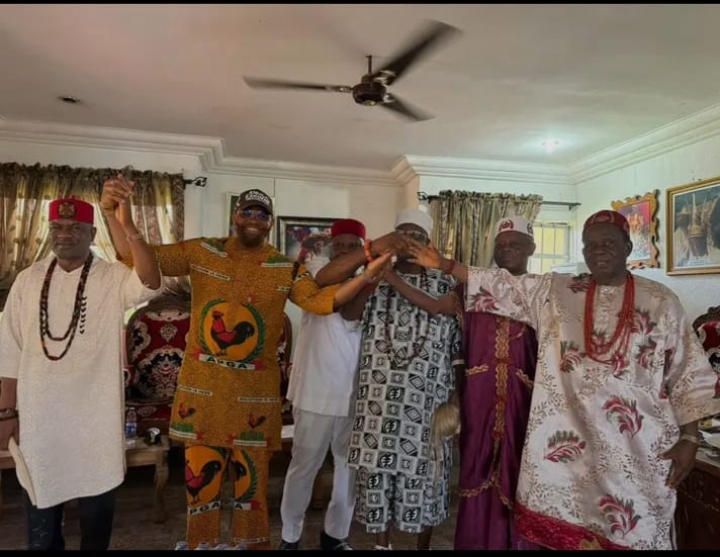
Anambra Communities Boil As Group Carpets Traditional Rulers Over Zoning
-
 Crime3 days ago
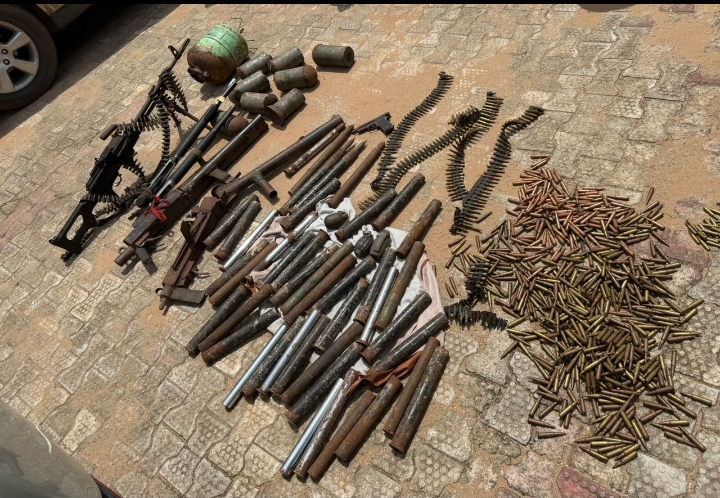
Anambra Police Burst Gunmen Armoury in Orumba
-
 News2 days ago
2027: Anambra ADC Intact Despite Obi, Kwankwaso Departure – Guber Candidate


