


Politics
Don’t cross the lines, Dele Momodu, warns Wike, Ortom, Makinde, Ikpeazu


ADVERTISING
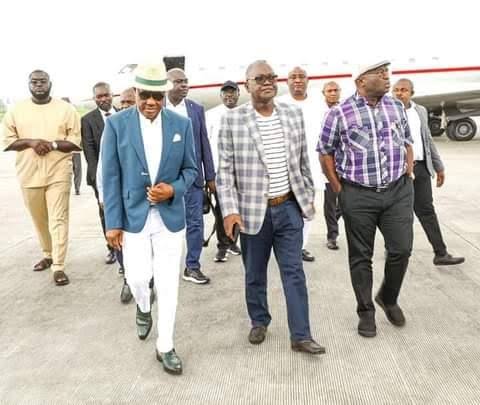
It appears your party’s Campaign Council is in trouble. Two governors have apparently disowned your presidential campaign and chances are that you might lose votes in their states, Benue and Rivers. How much of blow is this for your party?
I don’t see it as any blow and before I continue, you know that I am a great fan of Governor Wike and Governor Ortom happens to be one of our good governors but you know they work together and, when you look at the pattern, you will see that it is like a deliberate orchestration for maximum effect and impact. It is not true that our candidate did not want to involve them, our candidate reached out to them, several times, at home and abroad, but they remained very rigid in their position. In every reconciliation effort, it is expected that there would be a shift and they said they are not going to shift and anyone who knows Atiku Abubakar very well will know that he is a man who conducts himself very well. His comportment in fact is unprecedented. He does not exchange verbal attacks with anybody. He has been talking to them and he will continue to dialogue with them.
Even some of them (associates) whose names were published, they pulled them out, saying they will not participate in the in the campaign after the Presidential Campaign Council was announced. So, what do you want him to do?

He can’t wait forever and that is why he has moved on, thinking that maybe one day, they will have a change of heart to look favorably in his direction, but, as it is, he has carried on with his campaign without attacking any governor. Calling him an agent of Meyitti Allah is to the extreme. Anybody who has followed the trajectory of Atiku will know that he is detribalized, has friends in every part of Nigeria. I currently work in his office, where a lot of young men and women from every part of Nigeria are doing their work. Atiku Abubakar cannot be an agent of Miyetti Allah, I think that is carrying it too far.
Is it a coincidence that Chief Femi Fani-Kayode stated part of what Governor Orton is re- echoing; allegations of ethnic bigotry, bias and perceived alliance in the manner in which Atiku is said to have aligned.
Govs Wike, Ortom, Makinde and Ikpeazu are asking for equity in the party and Chief Bode George is saying they need a southern face that could give them some sense of relevance in the party’s presidential election. Is it not equity they are asking for?
It is too late in the day for anybody to be asking for a southern candidate. We had a primary election…
Is it a southern candidate they are asking for or a southern representation that is meaningful?
We have it in our party. In fact, PDP has done far better than any other political party in Nigeria. If you look at our trajectory between 1999 and 2007, PDP presented former President Obasanjo, who served for eight years, then we had Yar’ Adua who was in power for three years, then we had former President Jonathan, who was there for five years. So, we (South) would have had 13 years out of 24 years (of democracy) by next year. So, we don’t have that problem in PDP, you can talk about other parties, but I can tell you that the last President the PDP fielded was a southerner. So, nobody is going to accuse us of entrenching Hausa/Fulani interest. There is a major campaign of calumny against the Hausa/Fulani in Nigeria today, which I find very dangerous.
They are Nigerians. They are part of Nigerians and elections are about numbers. If the Hausa/Fulani are able to manage themselves better than southerners, so be it. I was in that race, and I can tell you that southern candidates never worked together. I even tried to reach some southern governors who would not receive me, whereas when you go to the North, there is open door.
I went to Sokoto, Governor Tambuwal was personally driving me round in the state. In the South I was just like nobody. It is the nature of politics. It is whosoever has the capacity to carry every other person along. Let me warn, whenever in the past we had two strong southern candidates, they lost to the North. We did it in 1979 when we had Chief Obafemi Awolowo and Dr. Nnamdi Azikiwe, the scenario repeated itself in 1983. The South must learn about politics and politicking. It is not about sentiments.
Are you saying the South is naive, politically?
I didn’t use the word naive or naivety but I am telling you history.
The history you are portraying is that the southern political force has gotten it wrong. Is that what you are saying?
Democracy is different from revolution. We must choose between democracy and revolution. South cannot blackmail the North, just like the North cannot blackmail the South. We must work together. When you refuse to do that, you are heading to failure.
President Buhari is a Fulani man and Atiku Abubakar a Fulani man too. A school of thought is asking, irrespective of their political parties, is it fair for a Fulani man to hand over to another Fulani man after leading for eight years?
Democracy is not always about fairness. For instance, how long did it take former President Obama to emerge as US President? It is a game of numbers and not sentiment. You and I can cry from now till kingdom come, until we learn to conduct politics properly, we will continue to lose. Look, before former President Obasanjo emerged as President, he made sure he reached out to everybody, the same thing applied before former President Yar’ Adua. As popular as Buhari was in 2007 and 2011, he couldn’t make it; he was only able to make it in 2015, not because of his tribe but because he was able to reach out to the South. Any southerner who wants to become the President of Nigeria must reach out to the North.
The question is that all the comments and allegations of ethnic beliefs and biases are buttressed by what Atiku said at the Arewa Forum in Kaduna…
What did he say in Kaduna?
What he said was in simple English but people decided to cut away the conclusion. It was the North that asked him a question and he replied by urging them not to vote anybody on account of region. A lot of people today are whipping up emotional sentiments; that it is because of where I come from, the ‘Emilokan syndrome’, “because I am a Yoruba man, then I deserve to be President”, “because I am an Igbo man, I deserve to be President”.
Nobody has championed Igbo presidency more than some of us. (But) that cannot be your only qualification. Go and sell your credentials and manifestos. Atiku Abubakar does not need any of that any longer, he has sold his over the years and everybody is familiar with him. You can call him names, he will not respond, but don’t call him an ethnic jingoist. Never!
Are you saying that what Governor Ortom said is wrong?
He is carrying it too far. He is a man I like so much. Of course it is wrong to label him (Atiku) an agent of Miyetti Allah. You can say anything about Atiku Abubakar but calling him an agent of Miyetti Allah, I disagree vehemently with that. It is wrong. If you don’t want to support a man, it is very easy to give a dog a bad name in order to hang it, but it is wrong to disparage a man who has served his country meritoriously, who has done everything he could for every part of this country; but because you are playing politics, disagree with him, you will use such weighty words against him? Well, there is always another time.
If words are weighty, but are true…
That is what I am telling you, that even Governor Wike, who is supposed to be the angriest of them all because he participated in our primary, has not used such word against Atiku. I give him credit. In getting angry, in trying not to work for him, if that is their decision, let us conduct ourselves well. People get angry, there is nothing wrong in that, they have every reason to be angry, but they should not cross certain lines. I have written in the last couple of months to Governor Wike, the closest to me among them, because I call him the ‘poster boy in PDP’, great guy, doing very well, advising him not to cross certain lines. That night, he called, we spoke briefly and we continued to respect his opinion but I will continue to appeal, don’t destroy the bridge you crossed because you don’t know whether you will need that bridge again, if you don’t need it, a member of your family might need it.
Can your presidential campaign team do without the governors of Oyo, Benue, Rivers and Abia states that are not supporting your candidate? Isn’t you party in trouble in these four states?
My party is not in trouble. I am a child of destiny and God is responsible for everything on earth. If it is God’s wish that Atiku will be the next President of Nigeria, 20 governors cannot stop him. It has happened in Osun State where we counted on Governor Makinde, but for whatever reasons, he couldn’t make it.
We never made an issue of it. We didn’t have Governor Wike when we were campaigning in Osun. (But) we were able to defeat the fire power of Asiwaju Bola Tinubu, who hails from the state. Despite the absence of all those we expected to support us, we won that election, convincingly. That is how it should be. That is why I keep begging Governor Wike not to be found wanting on a day you are needed most. Whether he likes PDP or not, the party has done very well for him, just as he’s has done very well for PDP. Governor Makinde has an election, next year, you think he will destroy the PDP and still use the platform? He won’t do that.
He is a smart gentle man that I know reasonably well; even though they are very angry, I know they are forming a very powerful bloc, but trust me PDP is so big that it can’t be threatened because our governors are angry. PDP will not go into any fight for anything whatsoever. We will continue to appeal to them, we love them like a man would love members of his family and we are hoping that very soon, we will be able to put everything behind us and embrace one another, again.
A lot of people attribute Nigeria’s current situation to non-inclusion and marginalization and you are saying that politics is a game of numbers. So, you are saying that another northerner should succeed President Buhari for another four or eight years?
Nothing is impossible. I am a very frank person. I am just giving you an example of America, we have the same style of democracy. If it took America over 200 years to produce Obama, it can happen anywhere else in the world. People must work. Sunak just became the British Prime Minister, he didn’t do it by sentiments; he did it by working towards his goal, by reaching out to everyone. Nobody can hand over power to the South free of charge. For instance, when former President Jonathan wanted to contest the 2011 election, a lot of people opposed it. Did he not eventually contest? He did. When he came out for second term, people opposed it again, PDP allowed him. We don’t have the issue of marginalization in PDP.
You referred to the British situation of Sunak. That cannot apply because they operate a different system. They go into election because it was the mandate of the party from the 2019 election. Your party has a constitution that provides for rotation and balance. You have it cast in stone.
We don’t have it cast in stone. As a matter of fact, it was this same Governor Ortom who sat on the panel to look at the issue of whether we should zone or not. Some of us even kicked at that time, asking why he allowed aspirants to buy form before their meeting on the issue. They recommended to the NEC of the party which asked to have favourable competition in the party, “let us throw it open”. No governor opposed it at that stage. Trouble only started after those who thought they would win lost. There was never a time that…if I didn’t believe in it when they set aside the zoning, I will not contest.
Do you think Atiku will win this election?
Oh…his time has come. Every man has his time. By God’s grace, his time has come. He has paid his dues and has conducted himself well. He has gone through trials and tribulations, they have thrown dirty things at him and he has remained focused. In fact, his story will be one of the biggest stories in Africa; of a man who pursued his dream and on the 30th anniversary of June 12, on the 25th anniversary of the late Chief Abiola’s death, that he will be President. He stepped down for the late MKO in the 1993 Jos Convention. I was there, barely 33 years old at that time and, today, I am honoured that, after working for the late Chief, nearly 30 years after, I am here and we are about to crown the man who gave my adopted father that opportunity to get a ticket
You think he can beat the likes of Peter Obi and Bola Tinubu?
Oh! Let’s be fair. I won’t write off anybody but I have stated it historically and maybe I won’t be right but I am right. There is no way you will have two strong southern candidates like we have now and anyone of them wins and Atiku is the only one who can penetrate the South more readily than either of the two penetrating the North.
What about the permutation that most of the votes from the South that will go for Peter Obi were traditionally for your party?
Peter Obi is not Goodluck Jonathan, and Atiku Abubakar is not former President Jonathan; the most formidable force who has always had his network in PDM with the late General Yar’ Adua is Atiku. None of the other people ever built such network in the North, now they are struggling to catch up in the next four months. The ready-made President of Nigeria is Atiku Abubakar.
If Atiku does not win this time, that will be the very end…
If Tinubu does not win this time around, that will be the very end. That is not new but I am telling you that…
Will you be surprised if Atiku does not win?
There is nothing that can stop him this time. A man if his time has come…
What if voters don’t want him?
Who are the voters? The voters are from every part…I am telling you he is the only one who has been the bridge builder. He is the only one who has been able to cross to the South, the others are struggling to build up network in the North.
You see the kind of crowd that Bola Tinubu is commanding in the North in some of the rallies and the ones Peter Obi is getting. Is it not enough threat for the party?
Have you seen the level of crowd Atiku is pulling without having a rally? In Bauchi State, the sea of human beings, I couldn’t believe it. We were in Edo, we have been to Uyo. The only man today who readily cuts across every part of the country is Atiku Abubakar. Hate him or love him, you can’t take that away from him.
You said that when two strong southern candidates are contesting, there is always a problem, historically. What about Atiku and Senator Kwankwaso, both from the North?
I didn’t forget Senator Rabiu Kwankwaso. He is a man I love and respect. We have come way back and I am telling you, the North understands the game of power. Whether we want to accept that power or not, that is the truth. In the South, I have told you how difficult it is for us, even as aspirants, to work together.
In the North, if the decision is that Atiku is favoured to win ahead of Kwankwaso, the North will converge and give it to Atiku. That is what is going to happen. I know it for a fact. Why do you think our Director General, Governor Tamubwal, stepped down for Atiku? It was a game of numbers, that was the master stroke which a lot of people did not see coming.
In fact, that was why the governors are very angry because they didn’t see it, coming. But a few of us saw it coming. As far back as March, I had written Governor Wike, telling him precisely what was going to happen, I copied Chief Mike Ozekhome, SAN, former Attorney General of the Federation and Minister of Justice, Mohammed Adoke, SAN, telling them how the thing would flow.
Two weeks to the primary, I wrote in my column, I asked Governor Wike not to spend money hoping that he will carry the day at the convention. Two days later, he dismissed me in a television program. People called me to complain but I told them that Wike is my man. He is our best governor; no matter what he says, I will take it; if he slaps me on the right cheek, I will turn the right but, today, I am right and they were wrong
• Interview first aired on Channels TV Politics Today
Politics
2027: Your votes do not count, the Courts Will Endorse It Unless We Do Something-Dele Farotimi warns
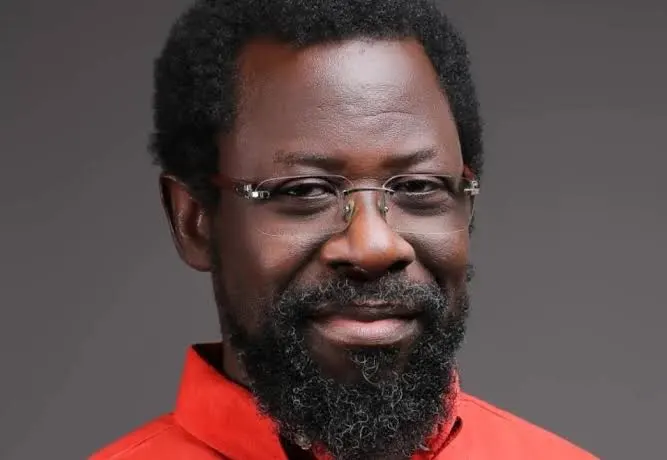
Human rights lawyer and political activist Dele Farotimi has called for a revolution to save Nigeria, urging citizens to unite behind a common national vision and push for fundamental changes to the country’s political and governance systems.
Farotimi made the remarks while expressing concerns about Nigeria’s democracy, the credibility of its electoral process and the role of the judiciary in resolving electoral disputes.
According to the activist, Nigerians risk losing confidence in democracy if their votes are not adequately protected and electoral outcomes are not respected. He warned that public passivity could create conditions for authoritarian rule.
“Your votes do not count and the judiciary will endorse it unless we decide to do something about it, because we are sleeping whilst a dictatorship is being installed in our country, demon-cratically,” he said.
Farotimi argued that Nigeria needs to be restructured and reimagined to address its persistent political challenges. He maintained that meaningful change would require citizens to come together around a clearly defined vision for the country’s future rather than placing their hopes solely in individual politicians.
He said a critical mass of Nigerians who are dissatisfied with the existing system must be mobilised to support an alternative approach to governance.
“The one thing I have never been shy about is to tell you what it will take to save Nigeria. It will take a revolution to save Nigeria,” Farotimi declared.
The activist suggested that such a revolution could be achieved through the ballot box, although he expressed doubts about whether the current political process, on its own, could deliver the transformation Nigeria needs.
He stressed that a credible national vision, backed by purposeful leadership, could encourage greater citizen participation and strengthen public resolve to defend electoral choices.
Farotimi’s remarks highlight broader concerns about electoral integrity, judicial accountability and the need for structural reforms in Nigeria. His call for a democratic revolution centres on collective action, political restructuring and the emergence of a shared vision capable of mobilising citizens towards meaningful change.
As the country approaches another general election cycle, debates over electoral credibility, institutional trust and the future of Nigeria’s democracy are likely to remain central to the national conversation.

By PETRUS OBI.
Veteran journalist and ARISE News presenter, Dr Reuben Abati, appeared uncertain about the name of Ebonyi State Governor, Francis Nwifuru, during a live television interview with the Peoples Democratic Party (PDP) governorship candidate in the state, Chief Ifeanyi Odii, popularly known as Anyichuks.
While questioning Odii on the political situation in Ebonyi ahead of the 2027 general elections, Abati, in a video which has gone viral on social media remarked:
“…Are you aware that Governor Nwifuru, I think that’s the name of Ebonyi Governor…”
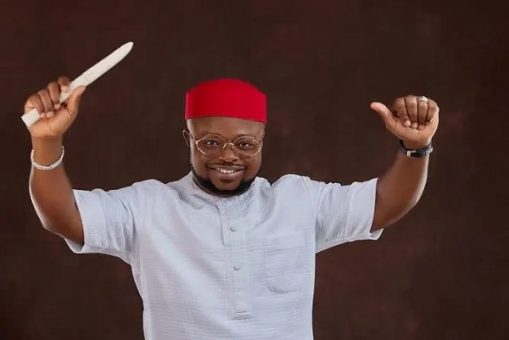
Popular Ebonyi Guber Candidate ANYICHUKS
The remark, which appeared to be an attempt to confirm the governor’s name, has raised questions about Nwifuru’s visibility beyond Ebonyi State, particularly amid growing criticism of his administration over allegations of poor performance.
During the interview, Odii accused Governor Nwifuru of allegedly intimidating opposition parties in the state, claiming that incidents involving attacks on opposition supporters had been reported to security agencies.
He also criticised an alleged threat by the governor to sack local government chairmen who allow opposition parties to campaign in their council areas, describing such a move as unconstitutional and an affront to democratic principles.
Odii urged his supporters to remain peaceful and law-abiding, stressing that the governor has a constitutional responsibility to protect all residents, irrespective of their political affiliations.
Speaking on the PDP’s support for President Bola Tinubu’s re-election bid, the governorship candidate explained that the arrangement formed part of a broader political understanding involving factions of the PDP and the ruling All Progressives Congress (APC).
He dismissed suggestions that supporting Tinubu could undermine his governorship ambition, insisting that the presidential and governorship elections were separate political contests.
On his economic agenda, Odii pledged to attract ₦2 trillion in investments to Ebonyi within his first six months in office if elected governor.
He identified solid minerals, manufacturing, real estate, healthcare and hospitality as key sectors through which his administration would stimulate economic growth, attract investment and generate employment opportunities.
The PDP candidate maintained that his business experience, grassroots connections and record of community interventions had adequately prepared him to attract investors, create jobs and improve the living standards of Ebonyi residents.

President Bola Tinubu has said he will not attend every campaign rally ahead of the 2027 general election, explaining that he must balance his re-election campaign with the demands of governing Nigeria.
Tinubu made this known on Wednesday in Abuja during the inauguration of the All Progressives Congress (APC) Presidential Campaign Council, where he urged members to take the party’s message to Nigerians across the states, local government areas and wards.
The President said he agreed with concerns that the demands of campaigning should not distract him from his responsibilities as head of state, stressing that the country needed his attention at a critical time.
“You’ve warned me not to allow the rigour of the campaign to distract me from governance, I hear you. I am in full agreement with your decision. Nigeria needs more attention now,” he said.
Tinubu explained that his decision to limit his attendance at campaign events was also influenced by the need to meet the country’s financial obligations.
“So, you will excuse me from going everywhere with you, we have bills to pay. The American creditors cannot wait,” the President stated.
He also highlighted the importance of attracting investors who would make long-term commitments to Nigeria, noting that sustained investment was essential to building a better future for the country’s children.
“We want those investors to come in, be here to stay, to invest for the future of our children,” he said.
Despite his plan to reduce his presence at campaign rallies, Tinubu assured Nigerians that he would still engage directly with voters during the campaign period.
“However, I will still make time to speak directly with Nigerians, even as you lead the campaign in the states and local government areas,” he added.
The President described the inauguration of the campaign council as more than a routine political event, saying it represented a renewed commitment to Nigerians and the responsibility entrusted to the APC as the ruling party.
“We have not gathered merely to inaugurate a council. We have gathered to renew a covenant. A covenant with Nigerian people and the historic responsibility they have entrusted to us as Nigeria’s governing party,” Tinubu said.
He charged members of the council to communicate the administration’s vision, achievements and policy agenda to Nigerians nationwide, expressing confidence in their ability to mobilise support for the party at every level.
“This council will carry our vision, our records and our agenda to every Nigerian, and it will carry them to victory every ward of this country,” he said.
Tinubu also praised APC members for successfully completing the party’s congresses, recalling predictions that the exercise could trigger an internal crisis.
According to the President, the party overcame the anticipated challenges and completed the process with members participating from the ward level to the national leadership.
“They said there will be implosion. We passed through it. We did not fail. You didn’t let us down. We got here together,” he stated.
Tinubu’s remarks signal an approach to the 2027 election campaign in which he intends to maintain focus on governance and economic management while relying on the APC Presidential Campaign Council to coordinate nationwide mobilisation and promote the party’s message ahead of the polls.
Politics
Tinubu Inaugurates APC Presidential Campaign Council, Vows to Renew Covenant With Nigerians in 2027
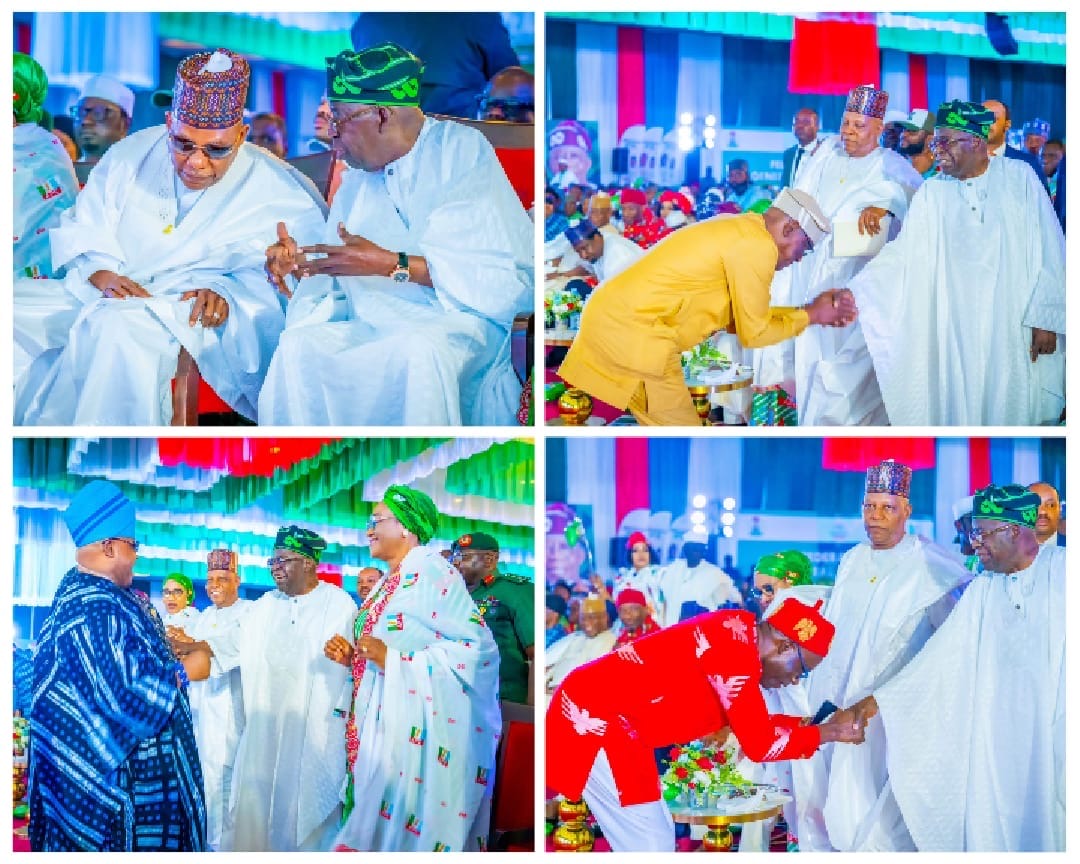
ABUJA— President Bola Ahmed Tinubu has inaugurated the All Progressives Congress (APC) Presidential Campaign Council (PCC) ahead of the 2027 general election, declaring that the party is united and prepared to seek a renewed mandate from Nigerians.
Tinubu inaugurated the council on Wednesday at the State House Conference Centre in Abuja, charging members and party leaders to demonstrate unity, discipline and commitment while sustaining his administration’s governance priorities.
Addressing the gathering, the President expressed gratitude to party members for their support during the previous election but stressed that their political assignment would only be complete when they secured victory in the next polls.
“I thank all of you for the last election, but no one gets credit for an incomplete assignment until you deliver the next election, until you deliver your electoral wards, until you deliver the votes,” he said.
Tinubu acknowledged advice from Imo State Governor and Chairman of the Progressive Governors Forum, Hope Uzodimma, who urged him to remain focused on governance despite the demands of the election campaign.
The President said he would continue to engage directly with Nigerians while the campaign council coordinated mobilisation across states and local government areas.
He also highlighted the need to meet the country’s financial obligations and attract foreign investment, saying international creditors and investors remained important to Nigeria’s economic future.
“We have bills to pay. The American creditors cannot wait. We want those investors to come in and invest for the future of our children,” Tinubu said.
Shettima Defends Tinubu, Criticises Opposition Figures
Vice President Kashim Shettima praised Tinubu’s commitment to democracy, citing his support for former Vice President Atiku Abubakar’s presidential ambition in 2007 under the platform of the defunct Action Congress of Nigeria.
Shettima also defended the dignity of the presidency in response to criticism of Tinubu, insisting that the office must be respected regardless of political differences.
“You can call him Bola, if you like, call him Adekunle, but he is the President of the Federal Republic of Nigeria,” he said.
The Vice President also criticised Peter Obi, the presidential candidate of the National Democratic Movement, accusing him of using misleading statistics and making comparisons between Nigeria and other countries without sufficient context.
APC Promises Nationwide Mobilisation
APC National Chairman, Professor Nentawe Yilwatda, said the inauguration reflected the party’s determination to build a better Nigeria and secure Tinubu’s re-election.
Yilwatda urged campaign council members to communicate the administration’s policies and achievements clearly, while demonstrating how its reforms could translate into tangible improvements in the lives of Nigerians.
He pledged that the party would intensify grassroots mobilisation across electoral wards, local government areas and states to ensure a strong voter turnout in 2027.
The APC chairman also called for a peaceful election focused on ideas, records and policies, rather than hostility.
Uzodimma Defends Tinubu’s Economic Reforms
Uzodimma, who serves as secretary of the campaign council, expressed confidence that the administration’s policies would strengthen the campaign’s message.
He praised Tinubu for removing the petrol subsidy and reforming the foreign exchange system, arguing that previous administrations had avoided tackling the challenges because of their potential political consequences.
According to Uzodimma, the reforms had imposed hardships on Nigerians but were necessary to address longstanding economic weaknesses.
He also cited Nigeria’s economic growth, which he put at 4.43 per cent, compared with 4.23 per cent a year earlier, and praised the administration’s tax reforms.
Uzodimma maintained that the campaign would focus on issues and the government’s record rather than political rhetoric.
Adeleke, Soludo and Wike Back Tinubu’s Re-election
Osun State Governor Ademola Adeleke, Anambra State Governor Charles Soludo and Minister of the Federal Capital Territory Nyesom Wike were among those who delivered goodwill messages in support of Tinubu’s second-term bid.
Adeleke, who belongs to the Accord Party, drew cheers from attendees with his trademark dance moves during the event.
Wike, a prominent figure in the Peoples Democratic Party (PDP), said he supported Tinubu because of what he described as the President’s bold leadership and willingness to address problems previous administrations had left unresolved.
He challenged governors to work towards delivering their states for Tinubu in the 2027 election.
The event also featured messages from Senate President Godswill Akpabio, Speaker of the House of Representatives Tajudeen Abbas, Special Adviser to the President on Political Affairs Ibrahim Kabiru Masari and elder statesman Tanko Yakassai, who called for support for Tinubu’s second term.
Tinubu, meanwhile, urged the campaign council to conduct its activities responsibly, engage Nigerians constructively and promote the administration’s Renewed Hope Agenda while ensuring that governance remains a priority.
The inauguration formally sets the APC’s campaign machinery in motion as the party prepares to seek another presidential mandate in 2027.
…Says Party’s Achievements at All Levels Make Opposition Unnecessary
A political support group, Kwashy and Friends for Peter Mbah, has pledged to mobilise massive grassroots support for President Bola Ahmed Tinubu, Governor Peter Mbah and other candidates of the All Progressives Congress (APC) ahead of the 2027 general elections.
The group said the achievements of the APC-led administrations at the federal, state and local government levels provided compelling reasons for Nigerians to support the party, insisting that good governance should be encouraged rather than opposed.
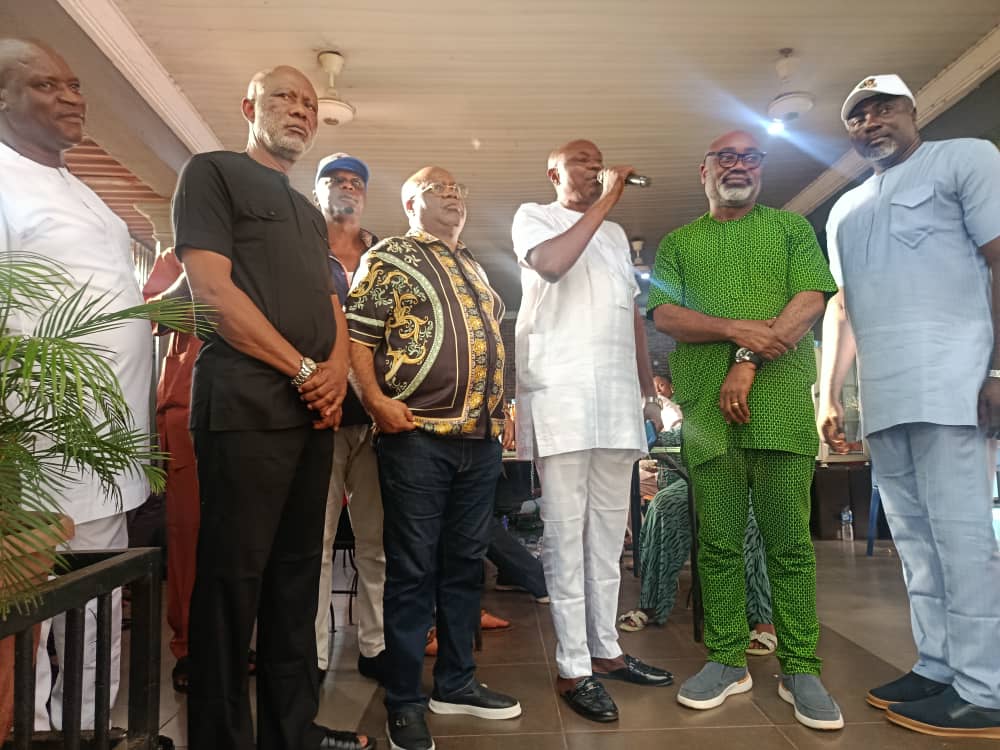
Speaking during the group’s bi-monthly meeting held on Sunday at Rockbase Hotels, Enugu, its Coordinator, Hon. Cletus Chigozie Akalusi, popularly known as Kwashy, said the platform, established in 2023, had consistently mobilised support for candidates seeking various political offices.
Akalusi explained that the meeting was convened to strengthen the group’s grassroots structures and develop strategies for communicating the achievements of the APC to voters across the state.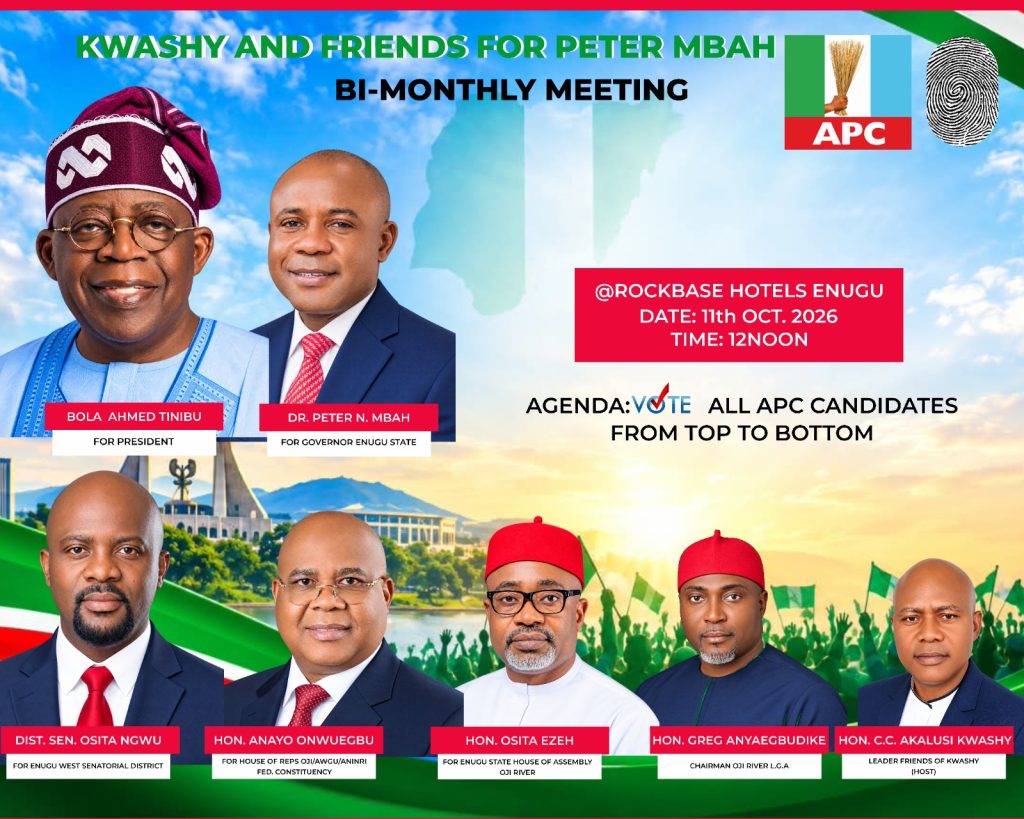
He urged members to sustain the top-to-bottom voting approach adopted during previous elections to guarantee victory for all APC candidates in 2027.
“Our bi-monthly meetings are avenues for us to strategise and re-strategise on how to ensure that President Bola Ahmed Tinubu, Governor Peter Ndubuisi Mbah and all candidates of our party are massively voted for.
“Our support group is not filled with urban guerrillas. We are all grassroots soldiers, and we undoubtedly have the capacity to ensure a landslide victory for our party.
“Considering the achievements our party is recording at the federal, state and local government levels, I have never lost sleep over our victory in the 2027 general elections,” he declared.
Also speaking, the member representing Oji River/Awgu/Aninri Federal Constituency, Hon. Anayo Onwuegbu, who was accompanied by the member representing Oji River Constituency in the Enugu State House of Assembly, Hon. Osita Ezeh, expressed satisfaction with what he described as the growing acceptance of the APC across the state.
Onwuegbu charged members to intensify mobilisation at polling-unit and ward levels, stressing that the party’s developmental strides should translate into overwhelming electoral support.
“What enthrals me most is that you have agreed to vote for APC candidates from top to bottom. Just like our governor always says, we should take the message from polling unit to polling unit and ensure that no vote is lost.
“There is no ward you will go to in Enugu today without seeing a project worth about N2 billion ongoing. It has never happened in the history of this state. Our core mandate is to work towards victory because it is not over until it is over,” he said.
In his remarks, the Chairman of Oji River Local Government Area, Hon. Greg Anyaegbudike, commended the group for its contributions to the party’s success in the last chairmanship and councillorship elections.
He maintained that the performance of President Tinubu, Governor Mbah and other APC leaders had provided sufficient justification for continued public support.
“The manner in which you supported us in the last elections is mind-blowing. If you look around, you will see reasons to support our party.
“There is no ward in Enugu State today without a Smart School, Type-2 Primary Healthcare Centre and other ongoing infrastructure.
“It is on this note that we should not only preach the gospel but also ensure that we protect the interest of our party wherever we find ourselves,” he stated.
The meeting reaffirmed the group’s commitment to expanding its grassroots mobilisation network and working towards securing victory for APC candidates at all levels in the 2027 general elections.
Make the headline more news-focused
Attribute all political performance claims
Tighten the report for publication

-

 Politics2 days ago
UNPOPULAR? Abati Seeks Confirmation of Ebonyi Gov’s Name During Interview With Anyichuks
-
 News4 days ago
Mbah Calls for Impartial Probe into Violence at Political Gathering in Enugu
-
 Politics3 days ago
Ebonyi Students Endorse ANYICHUKS, Declare ‘We Won’t Support a Failure’
-

 Crime4 days ago
Enugu Police Investigate Viral Video of Alleged Torture of 60-Year-Old Woman in Nkanu East
-
 News2 days ago
2027: APC, APGA Rift Deepens Over Support for Tinubu’s Re-election
-
 Politics3 days ago
2027: Kwashy and Friends For Peter Mbah Vows Landslide Victory for All APC Candidates
-
Politics3 days ago
I will be busy fixing Nigeria, will not attend all campaigns- Tinubu
-
News5 days ago
SEDC Prioritises Roads, Rural Electrification, Water and Education in South-East