

Business
Unions raise the alarm over plot to take over Arik, Aero


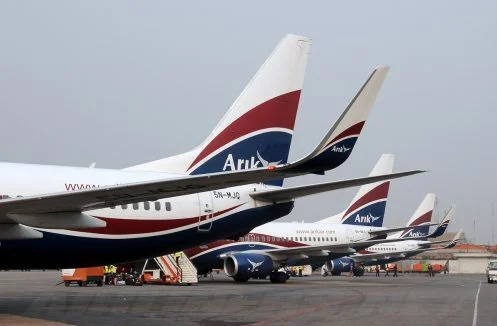
The National Union of Air Transport Employees and the Air Transport Services Senior Staff Association of Nigeria have raised the alarm over an alleged plot by some groups to take over Aero Contractors and Arik.
The Asset Management Corporation of Nigeria, the nation’s bad debt manager created by the Federal Government, owns majority shares in both Arik Air and Aero Contractors.
The General Secretary, NUATE, Ocheme Aba; and Deputy General Secretary, ATSSSAN, Francis Akinjole, said the unions had accused the management of Aero Contractors of planning to reduce 40 per cent of its workforce.
The union leaders also alleged that the management of Aero had refused to address the company’s failure to complete the redundancy payment for those it asked to stay at home since 2016.
As a result, the unions in a joint statement appealed to the National Assembly, ministers of Aviation, and Labour & Employment, to initiate an intervention that could save both Aero and Arik.
In a joint statement, NUATE and ATSSSAN, said, “We would have been silent on Arik Air for now, but for the fact that the House of 5A’s lease arrangement that was chased out of Aero has found its way into Arik Air. Disturbingly, there is evidence of a case of collusion between the management of Aero and Arik Air. As we understand, the new lease arrangement was to come into operation last Friday but got shelved.
“Though we are yet to be furnished with Arik’s share of the spoils under this arranged contraption called a lease, we can say authoritatively that, like in Aero, the House of 5A’s aircraft have been gifted Arik’s juicy routes of Lagos/Abuja/Lagos, Abuja/Port Harcourt/Abuja, and Abuja/Kano/Abuja based on the released schedule.”
It added, “We consider this to be mischief beyond bounds, and a joke taken too far. Surely, we will not co-habit with this toxic agenda. Therefore, we shall immediately direct all Arik workers to withdraw all services from this aircraft if, and when, it comes to our knowledge that indeed the same level of toxicity as in the case of Aero also applies in this case in Arik.”
The aviation union, therefore, asked the Minister of Aviation, Hadi Sirika; the National Assembly and other relevant stakeholders to initiative probes into the circumstances surrounding the rumored selling of one or both of the airlines to “the promoters of 5A’s for cheap after the airlines must have been forced to the ground by an artificially created financial crumbling.”
“We also call for a strong and deeply reflective interface among the Ministry of Aviation, AMCON, and the legacy shareholders of Aero Contractors and Arik Air for the purpose of knocking out a deal that could truly rejuvenate the airlines,” the statement added.
The management of Aero Contractors has, however, responded to the claims of the unions tagging them as “wild and unfounded.”
In a statement released by the management of Aero Contractors, they described the actions of the unions as “pure mischief.”
The statement read in part, “On the House of 5A’s, every partnership was done with the aim of improving the revenues of the airline, particularly in relation to our unserviceable equipment and ensuring standard customer service. The question is what was our revenue before, during and after the exit of the House of 5As? They should please respond.
“We are conscious of the challenges we are facing and have been prudent with our expenses, and doing our best to take care of staff welfare. We urge the staff and unions to desist from this attitude and support the company to overcome its challenges.”
PUNCH


Findings by our correspondent showed that some filling stations now sell petrol below N860 per litre, while Dangote partners, such as MRS, Heyden, and others, sell at N865 or N875 in Lagos and Ogun States.
A filling station named SGR in Ogun State reduced its price to N847 per litre as of Tuesday. Marketers confirmed to The PUNCH that most importers have reduced their ex-depot petrol prices below that of the Dangote refinery.
As of Tuesday, it was learnt that Dangote refinery was selling petrol at N820 per litre while some depots sold the product at N815 per litre. According to Petroleumprice.ng, Aiteo, Menj and others put their prices at N815/litre as of Tuesday.
Our correspondent learnt that the importers were making efforts to remain in business through competitive pricing. Many had previously complained of recording losses when the 650,000-barrels-per-day capacity Dangote refinery began implementing constant price cuts earlier this year.
The National Publicity Secretary of the Independent Petroleum Marketers Association of Nigeria, Chinedu Ukadike, confirmed the ongoing downward price review by the importers.
“Depot owners are dropping their petrol prices. Some of them are selling N815, some are selling N817, while Dangote is selling N820. NNPC is still selling at N825; it has not dropped its prices yet,” Ukadike disclosed.
He described this as the beauty of market liberalisation, saying President Bola Tinubu should not heed calls to ban fuel importation.
“This is the beauty of the liberalisation of the market. That is why we opined that the President should not ban anybody from importing petroleum products. Nobody should be stopped from bringing in petroleum products. That is the beauty of opening up the market. Implementation and local refining will checkmate unfair pricing. As an indigenous country, you must refine to ensure that you have the best price,” Ukadike said.
On claims that toxic and substandard fuels are being imported into the country, the IPMAN spokesman said the Nigerian Midstream and Downstream Petroleum Regulatory Authority is in place to check substandard fuels.
To remain viable, he urged governments across Africa to take deliberate steps as the United States, Canada, and the European Union have done to protect domestic producers from what he called unfair competition.
Dangote did not mince words when he said that the Nigeria First policy announced by Tinubu should apply to the petroleum products sector. “The Nigeria First policy announced by His Excellency, President Bola Tinubu, should apply to the petroleum product sector and all other sectors,” he stated.
This request by Dangote seeks to place a ban on the importation of petrol, diesel, and other products being produced locally. He argued that local refiners were finding it difficult to sell their products because of what he called dumping. The billionaire businessman alleged that importers were dumping toxic fuel that would never be allowed in Europe.
“And to make matters worse, we are now facing increased dumping of cheap, often toxic petroleum products, some of which are blended to substandard levels that would never be allowed in Europe or North America,” he said.
Dangote mentioned that some importers bring subsidised fuel or crude oil from Russia into Nigeria. This, he said, affects local pricing, forcing refiners to lower their prices below production cost.
“Due to the price caps on the Russian petroleum products, discounted petroleum products produced in Russia or with discounted Russian crude find their way to Africa, severely undercutting our local production, which is based on full crude pricing. This has created an unlevel playing field in most African countries. Petrol and diesel are sold for about a dollar net of taxes.
“In Nigeria, due to this unfair competition, this price is just about 60 cents, even cheaper than Saudi Arabia, which produces and refines its own oil. This is due to the fact that we are having too much dumping. To remain viable, we urge the governments across Africa to take deliberate steps as the United States, Canada, and the European Union have done to protect domestic producers from unfair competition,” he stated at a recent event organised by the Nigerian Upstream Petroleum Regulatory Authority in Abuja.
However, marketers disagreed with Dangote, urging the Federal Government not to consider adding petroleum products to the list of items banned from importation under the ‘Nigeria First’ policy.


-
 News17 hours ago
“Go and Verify”: How Sunday Umeha Is Redefining Representation in Ezeagu/Udi
-
News1 day ago
Chief Sir Paul Chukwuma Lays His Beloved Sister to Rest
-
 News3 days ago
Enugu, SSDO advance domestic resource mobilisation for climate responsive budgeting
-
 Politics2 days ago
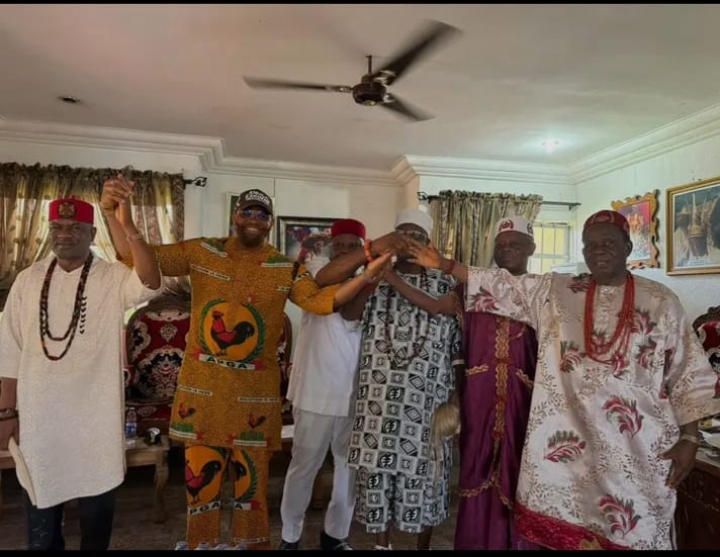
Anambra Communities Boil As Group Carpets Traditional Rulers Over Zoning
-
 Crime3 days ago
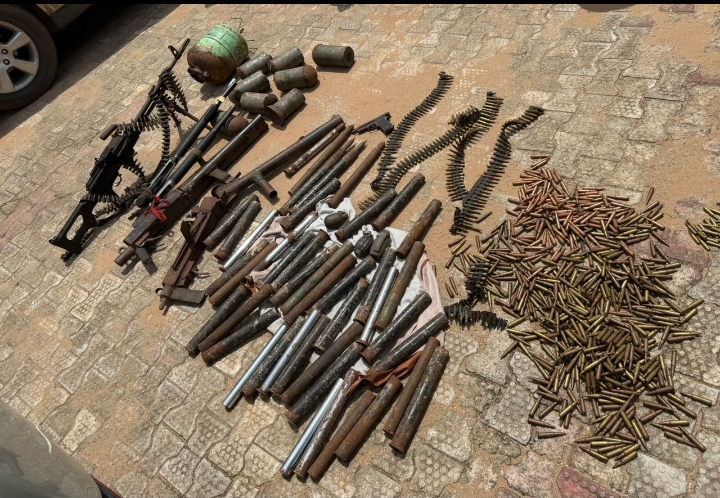
Anambra Police Burst Gunmen Armoury in Orumba
-
 News2 days ago
2027: Anambra ADC Intact Despite Obi, Kwankwaso Departure – Guber Candidate


