Opinion
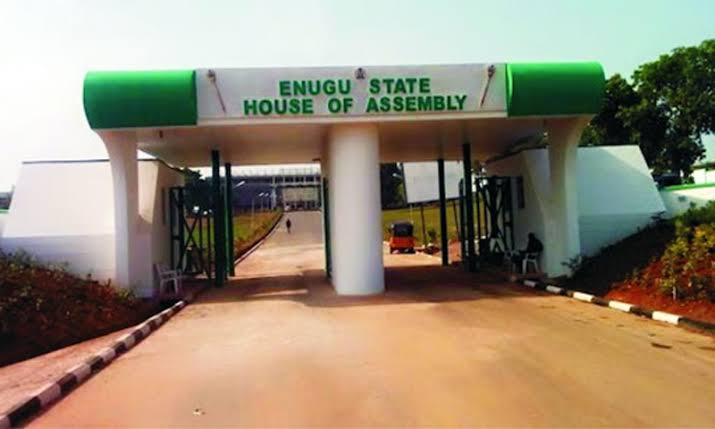
Enugu House of Assembly and Limit to Legislative Rascality


By Uche Aniagboso
Since the month of September 2021, the Enugu state House of Assembly has been harassing the state Ministry of Lands and Urban Development, together with the Enugu Capital Territory Development Authority (ECTDA).
According to the House of Assembly, it is carrying out its statutory legislative oversight function and wants the Ministry and the Agency to produce all their account details, cash receipts, and every form of financial documents for forensic auditing.
The House of Assembly went further to accuse the ministry and the agency of extorting money from the general public and scaring away investors in Enugu state, hence it resorted to the inordinate probe of the ministry and agency which it started wrongly by employing media trial of the Executive arm of the state government.
Ordinarily, the House of Assembly sudden wake from its comatose slumber would not have elicited any ire, except for the suspected hidden agenda of the House which the ECTDA had accused of employing arm twisting tactics to extort the agency, same as the Ministry of Lands have subbed over the behind the stage demand of the leaders of the House of Assembly that shield themselves with what it called a special probe Panel.
The people of Enugu state would be very happy to hear that the (s)elected members of the state House of Assembly have now stood up to assert themselves and live to their responsibility and stopped acting as rubber stamps of those who selected them. This is an Assembly populated by some members whose backgrounds are in scrutiny, with the majority becoming members because of one allegiance or the other. Only recently was a particular member of the so called panel accused of sponsoring criminality in his community and he is yet to extricate himself from the allegation.

Highly placed members of Enugu community had within this year accused the state House of Assembly, particularly the so called Special panel of being responsible for the death of the former commissioner for Transport, Chief Mathias Ekweremadu who slumped and died before the panel earlier this year. Is the special panel looking for another member of the Executive council to ‘kill’ as well?
Some of these things are what members of the public would have overlooked but because the House of Assembly has decided to dance naked in the market square, spectators have therefore gathered to watch their macabre boogie of death. Take for instance the House’s insensitivity to the deaths by kidnap, rape and terrorism of the Fulani herdsmen in the state and was unable to enact a law that will forestall such deaths and destruction of crops and property until the Executive arm had to compel the house to do that, yet the House was not ashamed that it could not add or subtract any clause in the executive bill but passed it as presented in a speed of light.
Getting down to real issue of undue intimidation and harassment of the executive arm of the state, an agency such as Enugu Capital Territory with its busy schedules left its enormous work and have twice honoured the House of Assembly invitations, yet all the Heads of the Departments of the Assembly that left their tedious works were turned back because the Chairman of the ECTDA did not accompany the HODs. Is that not suggestive of the hidden Agenda of members of the House, if it was the forensic probe that was the real issue, is it the Chairman that keeps accounts or documents of a ministry or agency? Did the investigation of the House of Assembly indict the Chairman of ECTDA, requesting that he personally keep a date with the ‘death probe panel’ and he did not do so? Why is the House so particular about dragging the Chairman of ECTDA and the commissioner for Lands to its House of no return alive?
The House of Assembly instead of joining hands with the Executive subordinates to fight the extortion going on in the local government councils in the guise of what they termed ‘Development levies’ and ‘Youth Empowerment’ have rather decided to aggravate and circumvent it because senior members of the House of Assembly are direct actors, beneficiaries and a process through which they used undeservedly to climb to their present echelon. How does local government collection of development levy develop Enugu state or collection of Youth Empowerment levy from land buyers empower the youths of Enugu state? It was Chief Jim Nwobodo who said in 1983 that Eziokwu ga aputaife (Truth will surely prevail).
It is longer news in Enugu state that some political gladiators from Enugu east senatorial district, presently in the corridors of power, are nursing the ambition of succeeding Governor Ifeanyi Ugwuanyi in the 2023 governorship election. Such aspirants include the Speaker of the House of Assembly, the Commissioner for Lands and the Chairman of ECTDA. Could this be the reason the House leadership is using its available weapon to dangerously destroy perceived opponents or is the political opponents of the Governor that are using the House members to achieve their 2023 conspiracy against the executive arm in the state?
How can the House of Assembly be pointing fingers and accusing bystanders of land grabbing whereas the House is actually in the hands of masters of the act who perfected land grabbing right from their cradle. What is the business of Enugu Capital Territory on land allocation or land grabbing? A burden of proof lies on the accuser, hence the House should come out clearly to name the investors that were scared away by this executive subordinate whose agency is even domiciled in the office of the Executive Governor of Enugu state. Is this not a direct indictment on the Governor himself? Have the House members who claim to be lawmakers read the acts establishing the Enugu capital Territory? This is the reason misfits are the real dangers of any society, particularly when armed with constituted powers.
It is on record of the executive arm that all the members of the House of assembly who were freely allocated spacious plots of land at Diamond layout and Golf Annex have no approval for their buildings and paid no premium on the land allocations. These are members who prefer to obstruct waterways by building their structures to inhibit free flow of drainage, yet the executive arm overlooks them. These lawmakers have actually constituted themselves into lawbreakers and there is always a limit to every rascality. So how come that these stubborn members of the House bite fingers that feed them? The House of Assembly has no doubt bitten more that it can chew and the time to tame the Enugu state House of Assembly is now.
Chief Aniagboso lives in Uwani-Enugu
Opinion
The Real Ethnic Bigotry Is Ugwuagbo’s Dangerous Ethnic Stereotyping, Not Governor Mbah’s Appointments

By Dan Nwomeh
There is an obvious irony in a write-up accusing Governor Peter Mbah, an Igbo governing an overwhelmingly Igbo state, of the absurd practice of ethnic bigotry against his own people by favouring Yoruba people over fellow Igbo, while repeatedly reducing Nigerians to their ethnic identities and presenting the presence of a few Yoruba professionals in the Enugu State Government as evidence of “Yorubanisation” of the state. “Since coming into office, Governor Mbah has demonstrated a clear preference to work with Yorubas than with Enugu people” (sic), the author recklessly charged.
The real ethnic bigotry in this disingenuous attempt to contrive a controversy is not in Governor Mbah’s decision to appoint a handful of people from other parts of Nigeria; it is in one Ugwuagbo Chizoba’s dangerous ethnic stereotyping of those appointees and his attempt to turn their Yoruba identity into a reason for questioning their competence or qualification to serve Enugu State.
This is an important distinction, because a governor who searches for the best hands wherever he can find them is not practising ethnic bigotry. He is instead practising the very cosmopolitanism that a modern, ambitious state like Enugu needs. A writer who examines the performance of a public official, regardless of where that person comes from, is doing legitimate scrutiny. But when the principal evidence offered against an appointee is that he or she is Yoruba, and when a few Yoruba professionals serving Enugu State are presented collectively as evidence of a sinister ethnic pattern, the argument ceases to be about competence and becomes an exercise in ethnic stereotyping dressed up as political criticism.
That is precisely what the said Ugwuagbo Chizoba does in his write-up with the inflammatory and inciting title, “Ethnic Bigotry: Governor Mbah’s Yorubanization of Enugu and the Questions That Are Becoming Too Difficult to Ignore”. In the write-up, Ugwuagbo tells us that ethnic bigotry means being prejudiced against people because of their ethnic group. Then, almost immediately, he begins identifying the people he considers unfit for public office primarily by their ethnicity; a “Yoruba woman” here, an “incompetent Yoruba man” there, and even “Yoruba girls” allegedly occupying positions around Government House. Their ethnic identities are repeatedly placed at the centre of the narrative, as though being Yoruba is itself a relevant qualification for determining whether they deserve to hold public office in Enugu.
This is the fundamental contradiction that destroys the entire write-up. You cannot credibly denounce ethnic bigotry while making ethnicity the central basis of your case against public officials and repeatedly highlighting their ethnic origins, yet offering no credible evidence to support the serious allegations of incompetence you make against them, as one would ordinarily expect from a so-called journalist.
If a Yoruba professional is appointed in Enugu, the appointment is presented by Ugwuagbo as evidence of “Yorubanisation.” But he never seriously considers the obvious alternative explanation, which is simply that the governor may have chosen someone he believed possessed the experience or competence required for the job. That is a remarkably convenient way to cobble together a piece of political propaganda. The ethnicity of the appointee becomes the evidence, the conclusion and the accusation all at once.
Beyond the blatant falsehoods, including the false attribution of certain government positions and institutional leadership roles to Yoruba people who do not actually hold them, the write-up is conspicuously devoid of evidence to substantiate the serious allegations it makes.
Take the case of Ladi Akeredolu-Ale, who is described dismissively as an “incompetent Yoruba man.” What is the evidence offered for this sweeping conclusion? Zilch. Yet Akeredolu-Ale came into the Enugu State Broadcasting Service leadership with decades of broadcasting experience, including senior management experience at Channels Television and previous leadership of the Ondo State Radio and Television Corporation.
One may certainly question his performance at ESBS. Public officials should be subjected to scrutiny. But the relevant questions are: What targets were set for him? What resources were available? What did he inherit? What has he accomplished or failed to accomplish? What measurable indicators demonstrate incompetence? His Yoruba ancestry answers none of those questions.
Had Ugwuagbo risen above his clannish insularity and parochial outlook and taken the time to examine the pedigree of these appointees, he might have been far more circumspect, and perhaps even humbled by their credentials rather than scoffing so derisively at their competence and addressing them with such intemperate disrespect.
Adenike Okebu brings formidable professional credentials to her role as Senior Special Adviser on Revenue, including a BSc in Accounting from OAU, Ile-Ife, MSc in Finance from Nottingham Trent University, Fellow of ICAN, Certified Fraud Examiner, Chartered Certified Forensic Accountant, Associate of the Chartered Institute of Taxation of Nigeria and Member of the Institute of Directors. With experience spanning EY Nigeria, Deloitte, BUA Group, Platform Capital and Pinnacle Oil and Gas, she combines Big Four audit experience with expertise in revenue assurance, financial governance and fraud detection. In Enugu, she has been central to efforts to plug revenue leakages, modernise revenue administration and drive the exponential growth of the state’s IGR, while also mentoring accounting students at the University of Nigeria Enugu Campus, helping to bridge academic training and professional practice.
Governor Mbah’s Special Adviser on Health, Dr. Yomi Jaye, is a medical doctor and healthcare-management professional with more than two decades of experience across Africa and the United States, with qualifications including MBBS, MBA and a Master of Public Health from the University of Liverpool, as well as international training at Harvard Medical School and MIT. In his role, he has brought his clinical, public-health and management expertise to Enugu’s healthcare reforms, helping to secure long-delayed accreditation and upgrades for the state’s medical and nursing training institutions, including the Medical and Dental Council of Nigeria’s approval of a 350-student admission quota for Medicine and Dentistry at ESUT (the highest admission quota approved for any medical school in Nigeria at the time), and the Nursing and Midwifery Council of Nigeria’s accreditation of ESUT’s Nursing Sciences programme. Beyond government, his private-sector and philanthropic work includes founding Cecy Health Consult and the Cecilia Oyebola Foundation, which recently supported healthcare interventions including the renovation and re-equipping of the neonatal ward at ESUTH Teaching Hospital, Parklane.
Dr. Akinbayo Olasoji, Commander of the Enugu State Forest Guard, combines advanced academic training with decades of high-level security experience, having retired from the Nigeria Police Force as a Deputy Commissioner of Police just before his appointment, after serving in senior operational positions, including the strategic DCP Operations at the Enugu State Police Command. He holds a PhD and has brought his policing and intelligence experience to the professionalisation of the Forest Guard, strengthening its operational structure, inter-agency collaboration and community-based security strategy. Under his command, the Forest Guard has participated in significant security operations, including the rescue of kidnapped victims from forest hideouts, demonstrating that the organisation is evolving into a serious component of the state’s security architecture.
Captain Tolu Ita, the CEO and Accountable Manager of Enugu Air, is a highly experienced aviation professional whose credentials combine technical expertise, executive leadership and international exposure. She was trained and licensed as a pilot in Nigeria and the United States and has nearly 20 years of professional experience in aviation and business, including a distinguished career at Aero Contractors, where she rose to become Dash-8 Fleet Manager. She has also held other senior executive positions, serving in aviation policy and regulatory advisory roles involving ICAO and AFCAC, and undertaken executive training at Oxford University’s Saïd Business School. As CEO of Enugu Air, she has already overseen a major achievement in securing the airline’s Air Operator Certificate (AOC) in just five months and three weeks, compared with the typical 15–24-month process, with the NCAA commending the airline for meeting the required safety and operational standards.
Taken together, these appointments represent less than three per cent of Governor Mbah’s top-level appointments over the past three years, a statistically insignificant fraction of the administration’s overall appointments, yet each demonstrates its willingness to deploy people with proven professional competence and relevant experience to demanding portfolios.
If then a governor appoints a person from another ethnic group because that person has the required qualification and experience, what exactly is wrong with that? It is called meritocracy, not ethnic bigotry. And Peter Mbah has a particularly compelling personal reason for believing in that philosophy. Mbah is not a man whose worldview was formed within the narrow boundaries of his ancestral community. His business career is a practical demonstration of the benefits of a cosmopolitan Nigeria.
He built Pinnacle Oil and Gas from scratch into a leading energy business in Lagos. The company’s Lekki terminal, inaugurated by President Muhammadu Buhari in October 2022, was described by the Nigerian Investment Promotion Commission as a $1 billion investment and as a strategic national asset. The project was developed as a massive petroleum storage and distribution infrastructure occupying a large expanse of land within the Lekki Free Zone.
Think about it for a moment. An Igbo businessman from Enugu went to Lagos and built a massive oil and gas infrastructure project in Yoruba land. It could not have happened without the accommodating disposition of the Yoruba owners and host communities, Lagos authorities, regulators, financial institutions, and the many Nigerians who worked with him.
The success of Pinnacle is therefore not merely a business story. It is also a powerful demonstration of what is possible when Nigerians are allowed to live, work, invest and build outside the narrow confines of their ethnic homelands. That is the Nigeria Peter Mbah knows. And that is the Nigeria an ambitious Enugu must build. Imagine if Lagos had adopted the parochial logic of Ugwuagbo’s write-up. Someone could have said: Why should an Igbo man be allowed to build a massive petroleum terminal here when there are Lagosians who can do it? Why should an Igbo businessman be entrusted with such a strategic investment? Fortunately, Lagos did not think that way. It judged the investment on its economic value, the company’s capacity, regulatory compliance, financing and the potential benefit to the state and the country. That is precisely how Enugu should work.
And many Igbo have been beneficiaries of the cosmopolitan attitude that Ugwuagbo now seems to regard as anathema when applied in Enugu. Let’s consider Ben Akabueze, an Igbo man who served as Lagos State Commissioner for Economic Planning and Budget from January 2007 to May 2015, first appointed by Governor Bola Tinubu and subsequently reappointed for two terms by Governor Babatunde Fashola. This was not a mere decorative position. Economic Planning and Budget is among the most strategically important portfolios in any state government. Were there no competent Yoruba economists and accountants in Lagos? There is also Joe Igbokwe, an Igbo from Anambra who became a prominent political figure in Lagos and rose through the ranks of the Lagos political establishment before being appointed by Governor Babajide Sanwo-Olu in 2019 as Special Adviser on Drainage and Water Resources.
Unbeknown to Ugwuagbo and his nativistic fellow travellers, people of South East origin have occupied, and continue to occupy, substantial professional and career positions in Lagos State’s public service, including within the directorate cadre and the education system. A friend from Enugu State who lives in Lagos once told me about his wife’s experience at an interview for recruitment into the Lagos State Local Government Service. He expressed his utter surprise that her ethnic origin was never raised or even discussed throughout the process. She is now serving in the directorate cadre of the Lagos State public service. In the state’s education system, a significant number of people of South-East origin also serve as secondary school principals. Lagos has also repeatedly elected state and federal lawmakers of Igbo extraction since the return to democracy in 1999.
The examples go beyond Lagos. In Ekiti State, Governor Biodun Oyebanji appointed four Senior Special Assistants and Special Assistants of Igbo origin to serve in his administration. In Kaduna, Governor Uba Sani appointed Igbo professionals to senior advisory positions. In Osun, Governor Ademola Adeleke appointed Prof. Chinwe Obuaku-Igwe, an Igbo and United Nations-certified climate-change expert, as the Director-General and Special Envoy to the Governor on Climate Change and Renewable Energy, placing her directly under the governor with responsibility for high-level partnerships, climate action and renewable-energy initiatives. This is precisely the sort of thing that should be happening in every Nigerian state.
Take aviation, which is obviously of new interest to Ugwuagbo. When the Ekiti State Government commissioned the Ekiti Airport in Ado-Ekiti, it entered into a partnership with United Nigeria Airlines, owned by an Igbo businessman, Prof. Obiora Okonkwo, to operate commercial flights linking Ado-Ekiti with Lagos and Abuja. A Yoruba state built an airport and its first commercial airline operator was an airline owned by an Igbo businessman. Did anybody in Ekiti scream “Igbonisation”?
The double standard in Ugwuagbo’s argument is as embarrassing as it is insulting to sensibilities. If an Igbo professional is appointed in Lagos, we celebrate it as evidence that Lagos is open and cosmopolitan. If an Igbo-owned company wins a major commercial opportunity in another state, we call it enterprise and success. When an Igbo professional is appointed to the highest echelons of an institution or elected to a sensitive public position in the United States, Canada or Europe, we celebrate it as proof that merit can transcend racial and national boundaries.
But if a Yoruba professional is appointed in Enugu, suddenly the same principle becomes “Yorubanisation”.
The contradiction becomes even more glaring when we consider the Igbo experience as sojourners. The Igbo are among Nigeria’s most geographically dispersed and commercially mobile populations. Our people live, work and invest in virtually every part of the country and around the world. Igbo-owned businesses operate outside the South-East on an enormous scale.
It is therefore difficult to understand why an ethnic group whose economic success has depended so heavily on moving beyond its ancestral homeland would suddenly become threatened by other Nigerians moving into Enugu. Why should the most travelled major ethnic group in Nigeria become xenophobic about who works in Enugu?
There is an even more disturbing dimension to this campaign of ethnic suspicion and antagonism. At a time when Nigerians, including many Igbo, are once again facing the ugly consequences of xenophobic hostility in South Africa, it should concern every responsible Nigerian that anyone would deliberately promote a similar sentiment against fellow Nigerians at home. We know how deeply unsettling such developments are to us, particularly because Igbo constitute a significant part of Nigeria’s commercial and professional community in South Africa. So we should be extremely careful about normalising the same mentality amongst ourselves. If we condemn South Africans for saying Nigerians do not belong in South Africa, we should be extremely careful about saying Yoruba people do not belong in Enugu.
For context, I want to say something directly to Ugwuagbo Emmanuel Chizoba, a local champion of ethnic and primordial bigotry and sectional hatred, and to those who encourage and amplify his xenophobic rhetoric. I welcome the opportunity to work alongside Yoruba colleagues in government. I have never regarded ethnicity as a barrier to competence, friendship or professional excellence. I am a proud product of the University of Lagos, where I was not only a merit-based Unilag Scholar, but also graduated top of my class, winning the Professor Gabriel Olusanya Prize for the Best Graduating Student in History. I studied in a faculty whose teaching staff was predominantly Yoruba. Yet throughout my years at Unilag, I never suffered discrimination from my Yoruba lecturers because I was Igbo. On the contrary, they taught me, challenged me, encouraged me and helped me become who I am today. I also earned a master’s degree from the same institution.
Without mincing words, if, as has been widely alleged in political circles, this campaign of ethnic profiling is connected to interests aligned with the 2027 governorship ambitions of Chief Uche Nnaji, a factional PDP gubernatorial aspirant currently facing multiple criminal charges, and Ugwuagbo is merely serving as one of their political minions and a hack writer, then every lover of inter-ethnic harmony should be deeply concerned. Whatever the political disagreements in Enugu State, no ambition is worth poisoning inter-ethnic relations or encouraging citizens to view fellow Nigerians through the dangerous prism of ethnicity. It is particularly troubling that anyone whose public and political journey benefited from the openness, accommodation and inclusiveness that have long characterised Yoruba society would now be associated with rhetoric capable of breeding suspicion against the very people who exemplified those values. Nnaji was appointed a minister by a president of Yoruba descent, yet it raised no dust. Politics must never descend into ethnic baiting and scapegoating.
History offers painful warnings. Rwanda did not descend into genocide overnight. It began with persistent ethnic labelling, stereotyping and the gradual dehumanisation of fellow citizens until political competition became an ethnic confrontation. Every responsible political actor must therefore reject language that profiles entire people or seeks to make ethnicity itself a ground for public suspicion. Nigeria has paid too high a price for division to permit such dangerous narratives to gain legitimacy in our democratic discourse. No one should ever seek to incite another civil war by exploiting ethnic sentiments merely to advance selfish political interests.
Yet, there is another inconvenient fact the writer seems not to have noticed. Enugu has never been defined by intolerance toward people of other ethnicities. From its emergence as a major administrative, commercial and industrial centre, the city has attracted workers, traders and professionals from different parts of Nigeria and beyond, giving it a distinctly cosmopolitan character. Its history is deeply intertwined with migration, commerce and national integration. As Governor Mbah would say, many of the non-indigenes living in the city for more than 100 years have the placentas of their forefathers buried here in Enugu. Enugu has streets and landmarks carrying the names of prominent non-Igbo Nigerians. There are major streets named after Adegoke Adelabu and Obafemi Awolowo, amongst others. This is part of the history of a Nigerian city that has always been bigger than a village boundary.
Ugwuagbo is perfectly entitled to oppose Peter Mbah or to continue wailing in frustration and despair as his administration exceeds expectations and becomes harder and harder to challenge ahead of the next governorship election. However, the governor’s responsibility is to continue delivering results for the people of Enugu State.
Opinion
OPEN LETTER TO GOV NWIFURU: Time to Stop the Forceful Takeover of People’s Lands in Abakaliki (Part 1)

OPEN LETTER TO HIS EXCELLENCY, THE EXECUTIVE GOVERNOR OF EBONYI STATE, CHIEF FRANCIS OGBONNAYA NWIFURU
Time to Stop the Forceful Takeover of People’s Lands in Abakaliki (Part 1)
“The hottest place in hell is reserved for those who, in times of moral crisis, choose to remain silent.” — Frantz Fanon
I recently came across a statement on social media attributed to the Honourable Commissioner for Lands and Survey, Chief Matthew Nwobashi, in which he announced that the Ebonyi State Government had revoked the EBSU Pocket Layout on the grounds that it was allocated to private individuals for estate development, describing the allocation as a “mistake” made by the previous administration.
This position appears to contradict the fact that, under the administration of former Governor Engr. David Umahi, and pursuant to laws enacted by the Ebonyi State House of Assembly, the land was lawfully allocated to qualified developers following due advertisement by the Bureau of Public Procurement and the completion of the prescribed allocation process. Developers subsequently invested in and began developing the land in reliance on the sanctity of the law.
Against this backdrop, I wish to make the following observations:
Any deliberate attempt to dispossess citizens of lawfully acquired land is not only unjust but also sets a dangerous precedent in our state.
The Commissioner for Lands and Survey has reportedly justified the recovery of lands by describing previous allocations as “mistakes.” If this assertion is accepted, then the reported recovery of over 30 loading bays at the Central Park in Abakaliki, allegedly generating more than ₦100 billion without Executive Council or House of Assembly approval, raises serious legal and accountability concerns.
The Commissioner’s comments could create the impression that your administration is pursuing a policy of land recovery driven by considerations other than the public interest. This perception is reinforced by the forceful takeover of land at Park Residential Estate for the establishment of a batching plant within a residential neighbourhood. The demolition of properties reportedly valued at over ₦10 billion, without compensation to the owners, has raised widespread concern.
It is difficult to reconcile the revocation of the EBSU Pocket Layout with the provisions of the Ebonyi State laws that created the layout and sought to protect investments made therein. Having served as Speaker of the Ebonyi State House of Assembly when these laws were enacted, Your Excellency is well acquainted with their intent. Revoking allocations made under those laws raises questions about respect for due process, legal certainty, and investor confidence.
As Governor, you serve all the people of Ebonyi State, irrespective of clan or political affiliation. Those whose lands have been forcefully acquired deserve justice, appropriate compensation where applicable, and fair treatment under the law.
The welfare and well-being of the people of Ebonyi State should remain the foremost priority of your administration. Government policies should inspire confidence rather than deepen hardship and uncertainty.
I offer these views in good faith and in the interest of justice and good governance. While I recognize that expressing such opinions may attract criticism or even reprisals, I remain undeterred. I have personally suffered substantial losses, which I attribute to actions taken by the state government, and I remain convinced that justice and accountability ultimately prevail.
Chief Igwe Emmanuel
SLA to the Deputy Senate President
Opinion
Uzodinma’s Strategic Masterstroke And The Return Of The Political Maverick


*By Kamen Chuks Ogbonna*.
The political landscape of Nigeria, particularly in the Southeast, has been set abuzz following the announcement by the Governor of Imo State and National Coordinator of the Renewed Hope Ambassadors (RHA), His Excellency Hope Uzodinma.
The appointment of 16 high-caliber directors to lead the RHA’s nationwide directorates is not merely an administrative exercise; it is a clear signal that the countdown to 2027 has begun with a surgical focus on grassroots mobilization.
While the list features several heavyweights—including Tunde Rahman (Media), Sunday Dare (Digital Media), and Muiz Banire, SAN (Legal)—one name has sent a specific jolt through the opposition: Chief Olisa Metuh.
For those who observed the peak years of the People’s Democratic Party (PDP), the name Chief Olisa Metuh is synonymous with high-stakes political engineering.
Metuh, often described as a “political warhorse,” rose through the ranks from ex-officio, auditor to the formidable National Publicity Secretary of the party whose big shoes never got filled after his exit.
He was the “Maverick” who preferred the shadows but whose tactical fingerprints were visible on every major victory the PDP recorded during its era of dominance.
History recalls that when the PDP faced its darkest hours post-2015, it was Metuh who acted as the anchor, preventing the party from sinking.
He was the mastermind behind the emergence of Bukola Saraki as Senate President alongside PDP’s Ike Ekweremadu as deputy and the elevation of Hon. Yakubu Dogara as Speaker—moves that effectively ran rings around the then-ruling APC under President Buhari.
His track record in the Southeast is equally legendary. From orchestrating Peter Obi’s move into the PDP to the yeoman efforts that secured governorships for PDP’s Okezie Ikpeazu in Abia and David Umahi in Ebonyi, Metuh’s ability to deliver electoral mandates is undisputed.
Critics might wonder what brings a man out of a self-imposed retirement—announced just two years ago—into the fold of the RHA.
However, for a man who recently dedicated over half a billion naira to charity, it is evident that pecuniary interests are not the driver.Instead, it appears that the “political legend” has answered a call of strategic importance.
By accepting the role of Director of Organisation and Mobilisation, Metuh is being positioned exactly where his talents shine brightest: at the intersection of strategy and execution.
President Bola Tinubu, through Governor Uzodinma, has played a deft hand. The Southeast has long been a complex battleground for the ruling party. By bringing in a man who understands the regional political DNA better than most, the Renewed Hope administration is moving beyond rhetoric.
Metuh knows the backroom because he built it. His appointment is a massive blow to the opposition in the Southeast because it replaces theoretical campaigning with proven, battle-tested electoral dexterity.
The Renewed Hope Ambassadors (RHA) was designed by President Tinubu in November 2025 as the primary vehicle to disseminate the achievements of his administration.
With the appointment of this dream team of directors, the RHA has moved from a conceptual framework to a fully operational political machine.
In the chess game of Nigerian politics, Governor Uzodinma has just moved a queen.
As the January elections approach, the inclusion of Chief Olisa Metuh ensures that the Renewed Hope Agenda will not just be heard in the Southeast—it will be felt.
In the street parlance- E Go Loud !
For Ndi Igbo and the nation at large, this appointment is a testament to the fact that in politics, strategy is the only currency that never devalues.
Opinion
Mama Anambra Breaks New Ground: From Health To Skills Empowerment


– Kamen Chuks Ogbonna
In the landscape of sub-national governance in Nigeria, the office of the First Lady has often been seen through the lens of ceremonial duties. However, in Anambra State, Dr. (Mrs.) Nonye Soludo—affectionately known as Mama Anambra—is fundamentally redefining this role. Through a series of bold, unprecedented interventions, she has evolved from a pillar of support to a strategic driver of socio-economic transformation.
The impact of Mama Anambra’s leadership first gained significant momentum in the healthcare sector. Championing the cause of the vulnerable, she has been at the forefront of the free maternal and child healthcare initiative. This program has provided thousands of women and children across the state with access to life-saving services that were previously out of reach. Beyond clinical care, her “Healthy Living” crusade has introduced a paradigm shift in domestic wellness, promoting organic products and nutritional education as a primary defence against preventable diseases.
The Anambra First Lady’s vision quickly extended to the fields and farms of the state. Recognizing that food security is the bedrock of community stability, she successfully mobilized women at the grassroots level into productive farming. By providing tools, seedlings, and technical support, she has empowered the home-front to become a formidable force in Anambra’s agricultural value chain, ensuring that empowerment is not just a slogan but a harvest.
Mama Anambra has raised the bar once again by moving into the territory of high-impact vocational empowerment. Her current focus on skills acquisition for females in male-dominated fields is perhaps her most strategic move yet. By opening doors for women in technology, construction, welding, solar energy installation, and mechanics, she is actively dismantling age-old barriers. These sectors, long regarded as “no-go areas” for women, are now being flooded with talented female trainees ready to compete in the modern economy. This initiative does more than provide a job; it destroys the gender limitations that have historically stifled the potential and prosperity of the girl child.
For Ndi Anambra, the work of the First Lady is a clear signal that leadership fueled by empathy and vision delivers tangible results. Her interventions are not merely philanthropic gestures, as they are strategic investments in the human capital of the state. Through her tireless efforts, Dr. Mrs Nonye Soludo is proving that when leadership has a heart, change is not just felt—it is seen and touched.
As she continues to break new ground, the prayer of the people remains constant: May God continue to strengthen her for the journey ahead.
Opinion
Our Son, Uche Geoffrey Nnaji, Your Shame Dey Shame Us

By Emeka Nwobodo Jr
There is a saying in Akpugo that elders often repeat whenever a son brings public disgrace upon his people and yet appears completely oblivious of it. They say the mad man dancing naked at Oriemba market never feels ashamed of himself, but his kinsmen do. The mad man laughs loudly, beats his chest, and continues his strange dance as though nothing is wrong, utterly unaware of the embarrassment he has caused, while his people are left to pass through the same market with their eyes lowered, quietly enduring the humiliation that someone from their own kindred has turned himself into a public spectacle before the entire community.
That local saying has suddenly become painfully real for many sons and daughters of Akpugo today, because what we are experiencing at this moment mirrors exactly the kind of shame those elders spoke about.
Our son, Chief Uche Geoffrey Nnaji, the former Minister of Innovation, Science and Technology, has dragged the good name of Akpugo through the mud in a manner so appalling that it has now become a constant conversation, and the painful truth is that the disgrace echoes loudly across the country.
When the first murmurs of the certificate controversy surrounding Uche Nnaji began to circulate months ago, many of us in Akpugo initially dismissed the allegations as the usual mischief of Nigerian politics, where accusations are often peddled, sometimes driven by rivalry, jealousy, or the relentless struggle for power. After all, Nigerian political life is crowded with smear campaigns, and it is not unusual for public figures to be accused of things that later turn out to be exaggerated, distorted, or entirely fabricated.
But this particular story refused to fade away. Instead, it lingered stubbornly, gathering more evidence, and attracting more scrutiny in a way that made it increasingly difficult for any discerning observer to dismiss as mere political gossip.
For nearly two years, investigative journalists at Premium Times searched for documents, spoke with university officials, filed Freedom of Information requests, and examined records that had long been buried. As these revelations began to surface, the scandal exploded with extraordinary force. The shit literally hit the ceiling fan!
The entire country was stunned that the man entrusted with overseeing scientific research and technological innovation in Nigeria could find himself entangled in a scandal involving forged academic credentials, an irony that might have been amusing if it were not so embarrassing.
Even those who were prepared to give him the benefit of the doubt were thrown into confusion when, in a self-indicting overreach, he rushed to the Federal High Court in Abuja and filed a suit against UNN, with a sworn affidavit supporting his motion wherein he admitted that he had not been issued a degree certificate by UNN, even though a certificate bearing the university’s name had earlier been submitted by him to the Nigerian Senate during his ministerial screening. How then did he come into possession of the one he submitted to the Senate, many people asked?
To the credit of the federal authorities, rather than rushing to conclusions or reacting impulsively to the media storm, the presidency reportedly moved discreetly, dispatching a team of DSS officers directly from the Abuja headquarters to the UNN, where they conducted their own verification of academic records and examined the files connected with Uche Nnaji’s student history. The operatives reportedly examined the registry archives, scrutinized correspondences, and verified documentary evidence relating to his academic history. Their findings reportedly corroborated the mounting evidence that had already begun to surface in the public domain.
Once the facts had been assembled and verified, the information was reportedly relayed to the highest levels of government. When Uche Nnaji was subsequently summoned to Aso Rock, the outcome was his quiet exit from the seat of power as an ex-Minister. His purported resignation was widely interpreted as a move to save the image of the government before the scandal could inflict grave reputational damage on the administration both within Nigeria and in the eyes of the international community.
But the matter did not end there. The federal government set up an investigative panel under the Federal Ministry of Education to determine the truth once and for all. The panel did not rely on hearsay or political narratives. Members of the panel physically travelled to the UNN, where they examined the institution’s archives, reviewed Senate graduation lists, inspected registry movement logs and academic files, and interviewed university officials who were directly involved in keeping academic records.
When the panel eventually submitted its report, the conclusion was devastating. It found that our brother had indeed forged his UNN degree certificate, confirming earlier investigative findings which had already raised serious questions about the authenticity of the documents he submitted when he was nominated and confirmed as minister.
The records examined by the panel showed that although he had been admitted to study Biological Sciences at the UNN in the 1981/82 academic session, he never graduated from the university because he failed a core course, Virology (MCB 431). His name did not appear on the Senate-approved graduation list for the class of 1985, and correspondences found in his academic file showed that he was still communicating with the university in 1986, requesting for permission to retake the same failed course.
Yet somehow, despite these records, a certificate dated July 1985 surfaced, the very certificate he presented to the presidency and the National Assembly as proof that he had graduated from one of Nigeria’s most prestigious universities.
When the details of this investigation became public two weeks ago, the scandal again spread across the country like wildfire.
But for many of us in Akpugo, the shock went beyond the scandal itself. What worsened the embarrassment was the astonishing mediocrity of the inconsistencies surrounding the documents. If someone were attempting to deceive the entire country in such a serious matter, one would at least expect that the deception would be executed with careful attention to detail. Instead, what Nigerians saw were contradictions so glaring that even a primary school pupil could detect them without difficulty.
Imagine claiming to have graduated from university in July 1985 while records show that you wrote a letter in your own handwriting in 1986 applying to resit the exam for the same course that had prevented you from graduating. Imagine presenting an NYSC discharge certificate claiming that you began national service in April 1985, three months before the supposed graduation that made you eligible for service in the first place. The absurdity of such a claim leaves one wondering whether the basic chronology of university education and national service was ever considered in constructing that narrative.
But it got even worse. The NYSC certificate that was presented bore the signature of Colonel Animashaun Braimoh, who only served as Director-General of the National Youth Service Corps between 1988 and 1990, yet the certificate was supposedly issued in 1986.
Even the serial numbering exposed the forgery. NYSC certificates issued during that period were known to carry six-digit numbers without alphabetic characters, yet the certificate attributed to him carried the serial number A231309, complete with a letter prefix that did not exist in the numbering format of that period.
At that point, many of us in Akpugo began to ask a painful question. Who actually handled the contract for this forgery, and why was it done so carelessly?
For those of us who have known Uche Nnaji over the years, especially as Minister of the Federal Republic, always immaculately dressed in sparkling white attire, projecting confidence, speaking with bravado, and presenting himself as a man of class and sophistication, the revelations were shocking because they suggested a man operating at a surprisingly low, inept and dull-witted level.
It was not merely the allegation of forgery that hurt us the most, it was the clumsiness, the mediocrity, and the lack of intellectual rigour reflected in the inconsistencies that riddled it.
For a community like Akpugo that prides itself as one of the most human-resource rich communities in Nkanuland, perhaps even in Enugu State, the humiliation has been profound.
When the revelations exploded across the country, something unusual happened within our community. Akpugo WhatsApp groups fell silent. The chatter that usually fills our platforms disappeared almost immediately. Nobody seemed able to muster a convincing defence. Nobody could confidently explain what was happening. The silence itself spoke volumes.
Many of us expected that our son would at least address his people directly, perhaps by releasing a brief statement assuring us that the allegations were false and that he would clear his name.
Instead, a group of young men whom he had helped secure federal appointments suddenly emerged as his defenders, flooding social media with accusations against political enemies and elaborate theories about conspiracies orchestrated by opponents.
They blamed political enemies, they blamed Governor Mbah and anyone who could possibly be blamed, while leaving the the central question unanswered. But even if we assume that political rivalry played a role in exposing the matter, the question that still demands an answer is: Did Uche Nnaji forge the certificates or not?
The federal government’s investigative panel has already delivered its conclusion with findings that leave very little room for ambiguity, and the next logical outcome is arraignment and prosecution before a court of competent jurisdiction. Why that has not happened is a matter for lawyers to enlighten us on.
Yet what has been happening since then has been even more bewildering. Even by Nigerian standards, when a public figure is caught in a scandal of such magnitude, humility usually follows. The person withdraws from the spotlight, keeps a low profile, and allows time and reflection to restore whatever dignity remains. But what we are witnessing instead is a relentless attempt to project normalcy. An aggressive social-media campaign filled with praise songs, banners, and political slogans announcing grand ambitions for the future suddenly appeared everywhere, with posters declaring “Uche Ndi Enugu Ga Eme” and “Uche Nnaji for Governor 2027” circulating as though nothing had happened.
It leaves many observers wondering which political party would willingly entrust its governorship ticket to someone whose academic credentials have been publicly discredited in such a dramatic fashion. Even more troubling is that since the scandal erupted, Uche Nnaji himself has carefully avoided direct engagement with the press to answer questions on the certificate saga. At one point he invited journalists to a press conference but failed to appear, leaving proxies behind to answer questions they could not adequately address. Yet if there is anyone who can narrate the story of his academic records better than anyone else, it is Uche Nnaji himself.
This is why the situation pains many of us in Akpugo to the marrows of our bones. Our community has never been associated with this level of public scandal. Our elders often boast that Akpugo have it all. Our land has produced true legends and giants whose contributions have brought honour to our people. From distinguished military officers like Navy Commodore James Aneke, who once served as a military governor, and Colonel Anthony Obi, another respected former military governor, to national figures like Ogbonnaya Onovo, the first Igbo Inspector-General of Police, Akpugo has produced individuals whose careers were defined by excellence and integrity. The intellectual and spiritual leadership of Very Rev. Father Emmanuel Edeh, founder of Madonna University, Caritas University, and the Osisatech institutions, has shaped generations of students and professionals. Scholars such as Prof. Onyemaechi Ogbunwezeh, Prof. B. A. Okorie, Prof. Gozie Ogbodo (current Rector of the IMT Enugu), to mention but a few, have continued that tradition of academic excellence.
These men and women represent the values of hard work, honesty, discipline, and integrity that Akpugo holds dear. That is why this scandal hurts so much.
Our elders must call our son home, sit him down, and remind him that wherever he goes he carries the name of Akpugo with him, and that name must not be dragged through the mud of public scandal.
So with heavy hearts, we say to our son Uche Nnaji, Enough is Enough. Although we still love you as our own flesh and blood, although we can longer disown you, you must however be a man, face the truth and clear your name if you can. But please, do not continue to parade this disgrace before the world.
Because whether you feel the shame or not, your shame dey shame us!
- – Nwobodo writes from Akpugo, Nkanu West LGA.
-
Education14 hours agoHostel Building Collapses at Federal Polytechnic Oko, Students Feared Trapped
-
News4 days agoPresident Tinubu Approves Expansion Of Nigerian Army To 12 Divisions
-
Crime4 days agoTension As Gunmen Plot to Establish Camps in Awka Capital
-
News3 days agoYour votes will count in 2027, INEC chair assures Nigerians
-
Politics1 day agoWhy Buhari didn’t openly support Tinubu in 2023 APC primary — Ex-SGF Babachir
-
News17 hours agoFG Budgets About N1tn for SUVs, Empowerment Amid Rising Borrowing Pressure
-
News3 days agoMbah Reassures Nigerians on Enugu Air Safety After Runway Excursion
-
Health3 days ago20,966 Nigerian Health Workers Migrated Abroad in One Year – Report


OKOLO OKOLONKWO
October 13, 2021 at 5:18 am
A clear conscience fears no accusation. Mr Aniagbaoso had just been engaged by “kettle” to call the Pot “black”.
The ESHA has a duty to do OVERSIGHT FUNCTIONS by calling for accountability on the executives including the stinking Lands ministry and the Capital Territory Development Agency.
A combination of these two leprose hands of the gburugbiru government to my mind has not only killed “ease of doing business” and business in Enugu State, but has also been the main cause of public distrust of the current Government.
ENUGU State is not in the hands of God as we have been deceived. These two agencies have taken the state away from God and the people that no credible voice can ride in their defence, even if their attacker is the devil