





Finance
Moniepoint Disburses $700m Loans to MSMEs, Plans Six Regional Offices


Moniepoint Microfinance Bank has disclosed that it disbursed more than $700m in loans to micro, small and medium enterprises (MSMEs) in 2025, as it unveiled plans to establish six regional offices across Nigeria to expand access to financial services.
The bank made this known in a statement on Sunday following the inauguration of its North Central regional headquarters in Abuja, the first of six regional offices planned nationwide.
The expansion comes amid persistent challenges faced by small businesses in accessing formal credit, despite their significant contributions to employment generation and economic activities.
An October 2026 research report by the Development Bank of Nigeria showed that commercial bank lending to small-scale enterprises accounted for only 0.38 per cent of total private sector credit in 2025, compared with 27.04 per cent in 1992.
According to Moniepoint, it disbursed more than $700m, equivalent to approximately N1tn, to MSMEs in 2025, with 75 per cent of the beneficiaries accessing formal business credit for the first time.

The bank said the lending programme was part of its efforts to address financing constraints confronting small businesses and deepen financial inclusion.
The newly inaugurated North Central headquarters, located on Dar-es-Salaam Street, Wuse 2, Abuja, will serve as the bank’s operational hub for the region.
The facility was inaugurated by Vice-President Kashim Shettima, who was represented by the Minister of Finance and Coordinating Minister of the Economy, Taiwo Oyedele.
Speaking at the ceremony, Shettima commended Moniepoint for its investment in Nigeria and contributions to financial inclusion and business development.
He said the investment aligned with the Federal Government’s priorities of financial and economic inclusion, agricultural development and affordable financing for businesses, particularly small and medium-scale enterprises.
According to him, improved access to reliable payment systems, proper financial records and affordable credit would enable small businesses to expand, create employment and contribute to national development.
Moniepoint disclosed that additional regional offices would be established in Kano, Kaduna, Port Harcourt, Ekiti and Ibadan.
It explained that the offices would provide customers with physical access to financial services, strengthen business relationships and create employment opportunities in their host communities.
The bank said the six regional offices would establish its permanent physical presence across key regions of the country, complementing its existing network, which already covers all 774 local government areas.
Managing Director of Moniepoint Microfinance Bank, Babatunde Olofin, said the expansion was designed to complement the company’s digital banking infrastructure with physical customer service centres.
He explained that the offices would provide customers with opportunities for face-to-face assistance and direct engagement with business relationship managers.
Olofin added that the bank planned to establish more locations across additional states to bring its services closer to customers.
Moniepoint said its services currently reached more than 30 million businesses and individuals, while its agency banking network and point-of-sale terminals covered all 774 local government areas.
It also disclosed that it had expanded its physical service network to more than 600 centres nationwide in 2026.
In a goodwill message, Chairman of the Senate Committee on Banking, Insurance and Other Financial Institutions, Mukhail Abiru, commended the bank for its contributions to digital payments, financial inclusion and MSME financing.

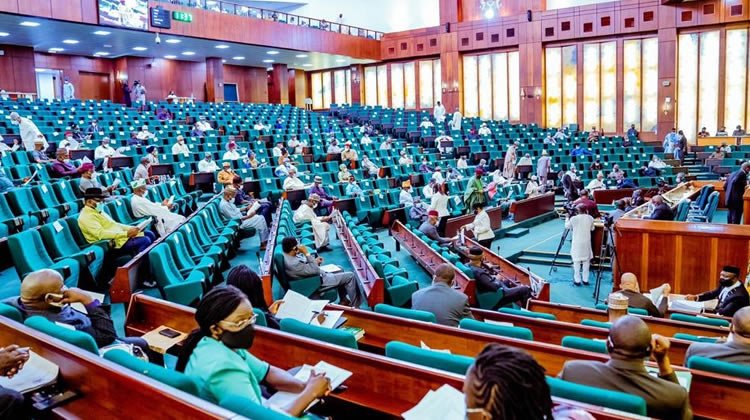
The House of Representatives on Thursday, resolved to carry out a comprehensive audit of loans secured by the federal and state governments since the return to democratic government in 1999.
In the past 25 years, the country has enjoyed democratic governance under the leadership of five presidents, namely Olusegun Obasanjo, Umaru Yar’Adua, Goodluck Jonathan, Muhammadu Buhari and the incumbent Bola Tinubu.
Within the period, billions of dollars were borrowed to fund developmental projects even as the governments of the respective 36 states of the federation also incurred foreign and local debts.
The decision of the House to probe public loans followed the adoption of a motion on notice sponsored by the member representing Surulere II Federal Constituency of Lagos State, Mr Lanre Okunola.
The motion was on the “Need to ensure proper public debt oversight on the federal and state government loans and the proper utilisation of all borrowed funds.”
Citing data from the Debt Management Office, Okunola said, “Nigeria’s public debt profile, including external and domestic debts, recently released indicate that as of March 31, 2024, public debt in the country has grown significantly over the years at N121.67tn ($91.46bn) with loans sourced from domestic and international lenders by the federal and state governments to fund various projects and budget deficits.”
He quoted the same report as indicating that “The nation’s debt rose by N24.33tn in three months from N97.34tn ($108.23bn) in December 2023 to N121.67tn ($91.46bn).”
The lawmaker noted that while borrowing is a vital means for financing development, unchecked debt accumulation poses enormous risks to Nigeria’s fiscal stability and future economic growth.
He said the 1999 Constitution, the Fiscal Responsibility Act (2007), and the Debt Management Office Establishment Act (2003) empower the National Assembly to approve all government loans and ensure proper utilisation.
He further argued that “Over 40 per cent of developing countries, including Nigeria, spend more on debt services and repayments of loans, leading to inefficiencies in government finances at the expense of funding critical sectors of the economy such as education, healthcare, infrastructure and social policy.”
In his words, “Many loans from state governments are drawn from commercial banks and certified by the Federal Ministry of Finance are contracted without full compliance without full compliance with constitutional requirements for National Assembly approval.
“Additionally, there are instances where borrowed funds are not effectively utilised for their intended purposes, undermining the benefits of such loans to the citizens.”
Following members’ support for the motion, the House mandated its Committee on Aids, Loans and Debt Management to carry out a comprehensive audit and oversight of all loans obtained by the federal and state governments since the inception of the current democratic dispensation and report back within a month for further legislative action.

The naira appreciated against the dollar on Tuesday at the official foreign exchange market.
FMDQ data showed that the naira gained at N1630.35 per dollar on Tuesday from N1670.65 exchanged on Monday. This represents N40.3 appreciation.
Meanwhile, at the black market, the naira dropped further to N1748 per dollar on Tuesday from N1746 traded the previous day.
This comes as FX transaction turnover increased to $242.59 million on Tuesday from $81.17 million on Monday when the naira depreciated.
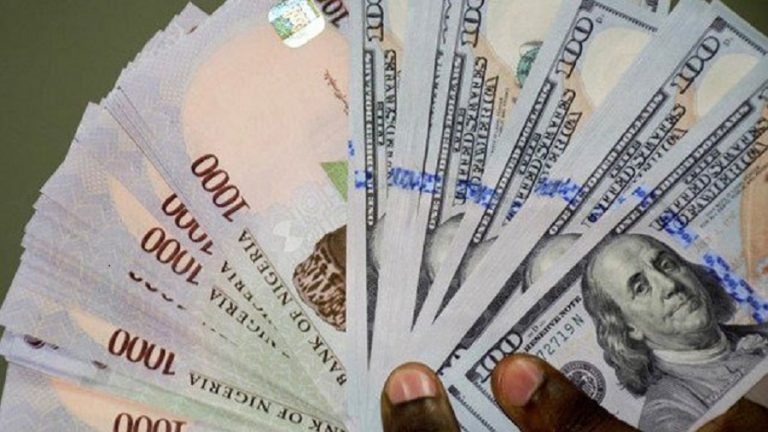
The Naira today depreciated to N1,725 per dollar in the parallel market from N1,710 per dollar on Thursday.
However, the Naira appreciated to N1,600.78 per dollar in the Nigerian Autonomous Foreign Exchange Market, NAFEM.
Data from FMDQ showed that the indicative exchange rate for NAFEM fell to N1,600.78 per dollar from N1,660.49 per dollar on Thursday, indicating N59.71 appreciation for the naira.
The volume of dollars traded (turnover) in the official market grew by 6.2 per cent to $350.72 million from $330.18 million traded on Thursday.
The naira further depreciated against the dollar in the foreign exchange market.
The FMDQ data showed that the naira again weakened to N1660.49 per dollar on Thursday from N1659.69 exchanged on Wednesday.
Though the naira depreciated by N0.8 against the dollar on Thursday, it has lost N107.5 in the last three days.
Meanwhile, at the black market, the naira exchanged at N1705 per dollar on Thursday, the same rate as Wednesday.
This comes as FX transaction turnover stood at $330.18 million on Thursday from $217.86 million recorded on Tuesday.
Olayemi Cardoso, the Governor of the Central Bank of Nigeria, said on Wednesday, while speaking at the Nigerian Economic Summit, NES, that a weak naira is advantageous with adequate investment into the country.
“In terms of persuasion, what we need now is to ensure that investments are here. Take, for example, now it may seem like a threat in the sense that the exchange rate has come down so low,” he said.
The development comes as the World Bank said the naira is among the worst-performing currencies in Africa.
Naira’s fluctuations in the FX market have continued untamed despite interventions by the Central Bank of Nigeria.
The Central Bank of Nigeria said it has sold foreign exchange worth $20,000 to eligible Bureau De Change operators at N1590 per dollar foreign exchange rate to tackle the FX crisis across the country.
This was disclosed by the apex bank in a circular signed by the Acting Director of Trade and Exchange Department, W. J Kanya, on Wednesday.
According to the CBN, the move will help operators meet retail market demand for eligible invisible transactions.
“This is to inform the Bureau De Change Operators and the general public that the CBN will be providing additional liquidity to this segment of the foreign exchange market.
“To this end, the CBN has approved the sale of US$20,000.00 to each eligible BDC at the rate of N1,590/$. This is to meet the demand for invisible transactions,” it said.
This as the apex bank warned BDCs not to sell to Nigerians at a margin of not more than one percent above the N1590 per dollar purchase rate.
“All BDCs are allowed to sell to eligible end-users at a margin of NOT MORE THAN one percent above the purchase rate from CBN.
“Eligible BDCs interested in this transaction are directed to make the Naira payment to the CBN Deposit Account Numbers with them.
“Also, payment confirmation and all necessary documentation for disbursement are to be submitted at the appropriate CBN branches (Abuja, Awka, Kano, and Lagos) for collection of the $20,000.00. Please be guided accordingly,” the statement concluded.
The latest intervention of the central bank comes after the Nigerian naira dropped significantly on Wednesday to N1667.42 and N1705 per dollar at the official and parallel foreign exchange markets.
This is the seventh intervention by CBN in the FX market in recent times.


-

 Uncategorized5 days ago
Minister, Governor’s Marriages Crash Amid Separation Disputes
-

 Uncategorized5 days ago
CP Ogarabe Visits AIG Zone 13, Notifies Him of Assumption of Duty
-
 News4 days ago
Enugu Rent Bill: Landlords New Plans To Frustrate Tenants Exposed
-
 Uncategorized5 days ago
Anambra Police Strengthen Security Ahead of APC, NDC Rallies, Warn Against Inciting Utterances
-
 Crime4 days ago
300-Level Varsity Student Stabbed to Death Near Hostel
-
 News4 days ago
2027 Elections: INEC Deploys 186,277 BVAS Devices to States
-
 News1 day ago
37th NAFEST Kicks Off In Enugu As Mbah Seeks Unity, Economic Gains Through Culture
-

 News4 days ago
Enugu East Council Boss, Anike, Bags 2026 Zik Award For Excellence In Grassroots Leadership