



Crime
Anambara Underworld: 25 Years After Onitsha was liberated from Deri Nwamama

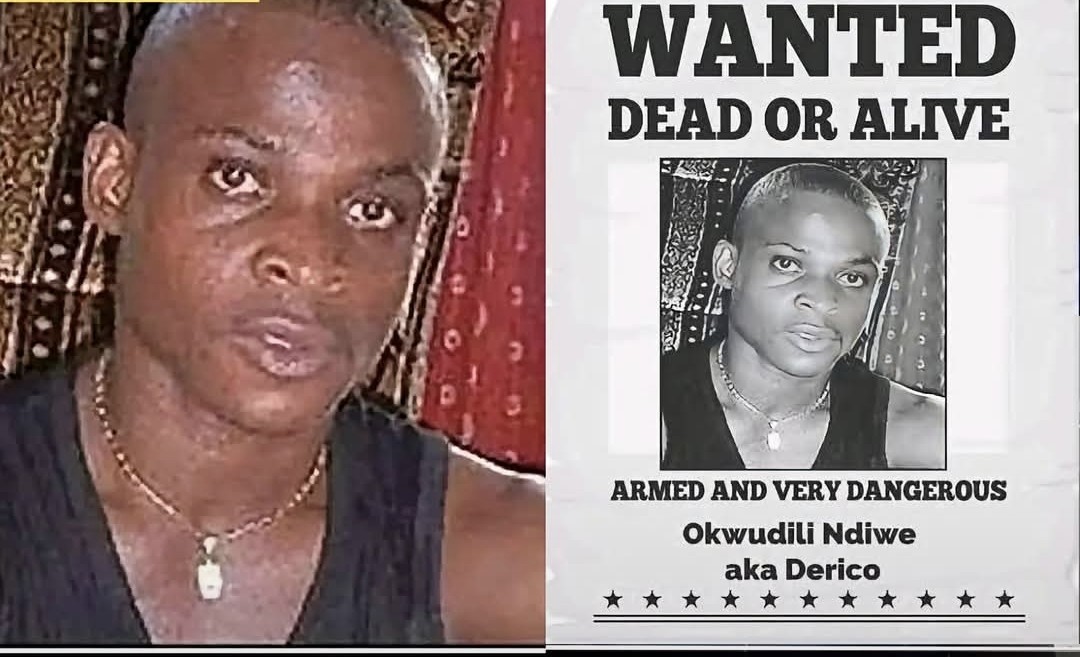

Okwudili Ndiwe, popularly known as Derico Nwamama, was a notorious Nigerian armed robber and serial killer who terrorized parts of Anambra State, particularly Onitsha and its environs, between 2000 and 2001. He became one of Nigeria’s most feared criminals because of his gang’s involvement in armed robberies, killings, and attacks on police officers and civilians. Reports from the time attributed more than 100 civilian deaths and the killing of numerous police officers to his gang, though some figures vary by source.
Derico reportedly began as a street urchin and pickpocket before graduating to violent armed robbery. His activities created widespread fear across southeastern Nigeria, leading traders and residents to demand stronger action against criminal gangs.
In July 2001, he was captured by the Bakassi Boys after the group was invited to help tackle violent crime in Anambra State. Rather than being handed over to the police for trial, he was publicly executed by beheading in Onitsha, an act that drew both public approval from some residents and strong condemnation from human rights organizations because it was an extrajudicial killing.
Derico’s story remains one of the most infamous episodes in Nigeria’s criminal history and is often cited in discussions about crime, vigilantism, and the rule of law in the country.
Derico’s reign of terror lasted only about a year (2000–2001), but it left a lasting mark on Anambra State. Some accounts are well documented, while others have become part of local folklore, so it’s important to distinguish between verified facts and widely repeated stories.
Some of his most notorious escapades include:
The Upper Iweka luxury bus massacre (December 2000): This is considered his most infamous crime. His gang reportedly stopped a Lagos-bound luxury bus at Upper Iweka in Onitsha, robbed the passengers, and then executed most of them. Reports say about 55 of the 59 passengers were killed, with only a handful surviving.
Repeated bank robberies: Derico’s gang carried out daring raids on banks in Onitsha, escaping with millions of naira at a time when police struggled to stop them.
Killing of police officers: He was blamed for the deaths of around 25 police officers, often attacking patrol teams and police checkpoints. His gang became notorious for directly confronting law enforcement rather than avoiding them.
The killing of Chiejina: According to widely circulated accounts, Derico was once allied with another feared criminal, Chiejina. After Chiejina allegedly murdered Derico’s father, Derico tracked him down and shot him dead, ending his rival’s reign before becoming the dominant crime boss himself. This story is widely recounted but is based largely on historical narratives rather than court records.

Control through fear: Traders, transporters, and residents in Onitsha, Nkpor, Nnewi, Ihiala, and nearby towns reportedly lived in fear of his gang. Some accounts claim he would send advance warnings before attacks to demonstrate that security agencies could not stop him.
His downfall came in July 2001 when the Bakassi Boys captured him near the Niger Bridge after an intelligence-led operation. Six days later, he was publicly beheaded in Onitsha without trial, an extrajudicial execution that was celebrated by many residents but condemned by human rights groups.
He was beheaded by Bakassi at the public square at Ochanja Market Onitsha on July 9, 2001.

This is as the agency said terrorist financiers were opening bank accounts in women’s names as well as using phone numbers for mobile banking or account alerts that are not registered to the account holder or the true beneficiary.
The disclosures are contained in the NFIU’s 2025 Annual Report, obtained by The PUNCH from a top official.
According to the report, the crowdfunding scheme involves foreign-based facilitators using social media platforms to solicit donations under the guise of humanitarian relief or educational support, before moving the funds through multiple layers to terrorist operatives in Nigeria.
The NFIU said hundreds of sympathisers were typically encouraged to make relatively small donations, ranging from $50 to $500, through PayPal pages or conventional bank accounts, with the amounts deliberately kept low enough to evade automated anti-money laundering alerts.
“The following is a case study on Crowdfunding Network identified during the year: A foreign-based facilitator runs social-media campaigns claiming humanitarian relief or educational support and uses encrypted apps (Telegram, Signal) to share links to convincing PayPal pages or standard bank accounts.
“Hundreds of sympathiser donors contribute $50–$500 each, amounts small enough to avoid most automated AML alerts,” the report read.
The funds are subsequently pooled into a “master account” controlled by a senior member of the group living legally abroad.
“When the pool reaches a threshold, that account becomes the hub for onward movement,” the report stated.
The NFIU said the funds were then fragmented into dozens of smaller payments and transferred through International Money Transfer Operators and remittance applications to a network of money mules in Nigeria.
It identified students, small-business owners and relatives among those used as mules, noting that the strategy was designed to avoid reporting thresholds and obscure the origin and destination of the funds.
“Rather than sending one large transfer, the senior member fractures the funds and sends dozens of sub-threshold payments through IMTOs and remittance apps to a network of money mules in Nigeria; students, small-business owners, or relatives, avoiding reporting triggers.
“Upon receipt, the money was either converted to cash, used to purchase dual-use items such as motorcycles, fertilisers and satellite internet equipment, or transferred through mobile banking channels to logistics managers and field operatives,” it added.
The report described the final stage as the “integration” of the funds into terrorist operational financing.
The Unit also identified the use of gender-based proxy accounts as another emerging terrorist financing technique, with terrorists opening bank accounts in women’s names while male commanders or logistics managers secretly control them.
“Terrorist financiers are opening bank accounts in women’s names while male commanders and logistics managers secretly control them.
“They exploit cultural norms that make women less likely to be suspected by authorities, using wives, sisters, or female associates as fronts to distance illicit funds from the true operatives.
“This tactic functions as identity laundering: women’s accounts are managed by men who hold ATM cards, mobile-banking credentials, and PINs, while the women often remain unaware of the transactions and volumes,” the report stated.
The report further revealed that terrorist facilitators were using telephone numbers that were not registered to the account holders or actual beneficiaries for mobile banking and transaction alerts.
It said pre-registered SIM cards, numbers registered to deceased persons and SIMs linked to gender-based proxies were being used to break the connection between bank accounts, SIM cards and Bank Verification Numbers.
“Terrorist facilitators use phone numbers for mobile banking or account alerts that are not registered to the account holder or the true beneficiary.
“They bypass the security link between SIM cards and BVNs by using pre-registered SIMs, SIMs registered to deceased people, or SIMs tied to gender-based proxies. This severs the audit trail: when a transaction is flagged, investigators trace the phone to an unrelated person, letting the real facilitator stay anonymous and continue operations,” it stated.
The NFIU also uncovered sophisticated methods of disguising terrorist transactions through detailed or coded narrations.
It said cells, particularly those linked to the Islamic State West Africa Province, used precise transaction descriptions to maintain what analysts described as an internal accounting system.
According to the report, frequent logistics-related payments with detailed narrations were often sent from a single source to multiple recipients, reflecting a structured financial system within the terrorist network.
“Terrorist cells, particularly those linked to ISWAP, routinely use precise, professional-sounding transaction narrations to maintain internal accounting. Operating like “shadow states” with strict bureaucratic controls, they require detailed descriptions so field commanders can justify expenses to central financial controllers. Although truthful narrations appear counterintuitive, they create an internal audit trail; analysts repeatedly observe high-frequency, logistics-related payments with accurate narrations sent from a single source to multiple recipients,” the report said.
However, the NFIU said some facilitators used innocuous words, secret codes and alphanumeric strings in transaction descriptions, sometimes switching between languages, to conceal the purpose of payments and evade automated bank filters.
“Transaction descriptions employ innocuous words, secret codes, or alphanumeric strings to conceal intent. Facilitators use this coded language, often switching languages to evade banks’ automated keyword filters that flag terms like ‘Jihad,’ ‘Arms,’ or ‘Boko.’
“This practice obscures the true purpose of transfers, preventing detection and enabling continued financing,” it said.
The NFIU said its risk and crime analysis during the year identified an increasingly interconnected threat landscape involving financial crime, technology and cross-border activity.
It noted that fraud remained a dominant predicate offence, with growing cases of Ponzi schemes, fraudulent crowdfunding arrangements, cryptocurrency-enabled investment scams and hacking-related fraud.
The Unit said the schemes increasingly exploited fintech onboarding gaps, including tiered accounts requiring minimal identification, while digital platforms were used to rapidly recruit victims and move funds.
The report also highlighted persistent vulnerabilities in public sector financial management, including the diversion of state and local government funds through accounts belonging to finance officers and associated third parties.
It identified procurement processes and cash transactions as significant risk areas, saying the latter complicated audit trails and efforts to trace illicit assets.
The NFIU said its findings were translated into targeted advisories, executive alerts and strategic intelligence products to support competent authorities, reporting entities and policy responses.
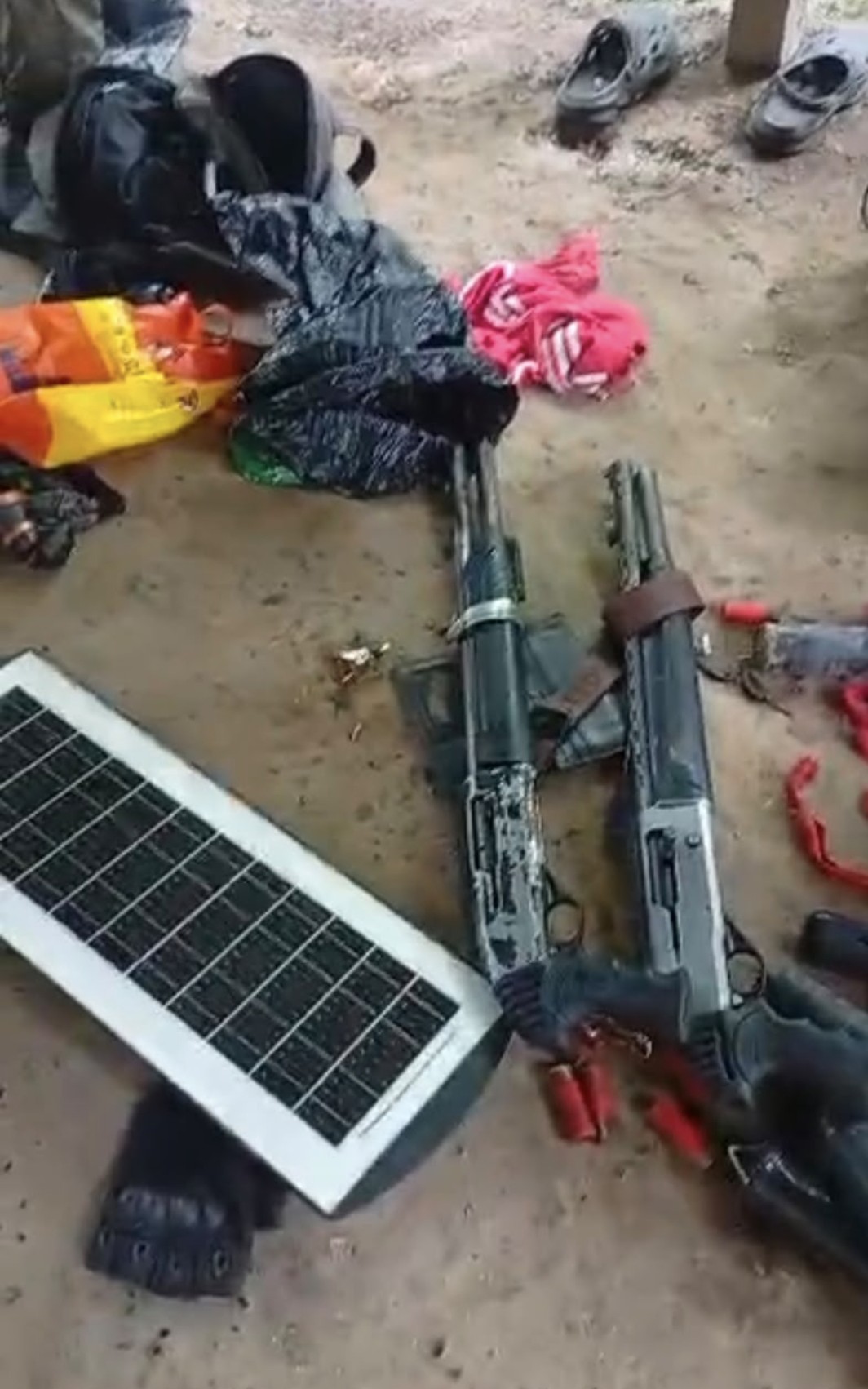
Six suspected members of a gang of gunmen terrorising Amiyi Community and neighbouring towns in Ogbaru Local Government Area of Anambra State have been killed by a joint security task force.
The gunmen met their end after security operatives, acting on intelligence gathered over several days, tracked them to their camp around the River Niger creek.
The operation involved personnel of the Nigeria Police Force Rapid Response Squad, Awkuzu; Department of State Services (DSS); 302 Artillery Regiment, Onitsha; Nigerian Navy personnel from Ogbaru; and Agunachamba operatives from the community.
The security team trekked for about four hours through difficult terrain and dense palm forest before reaching the suspected criminal camp.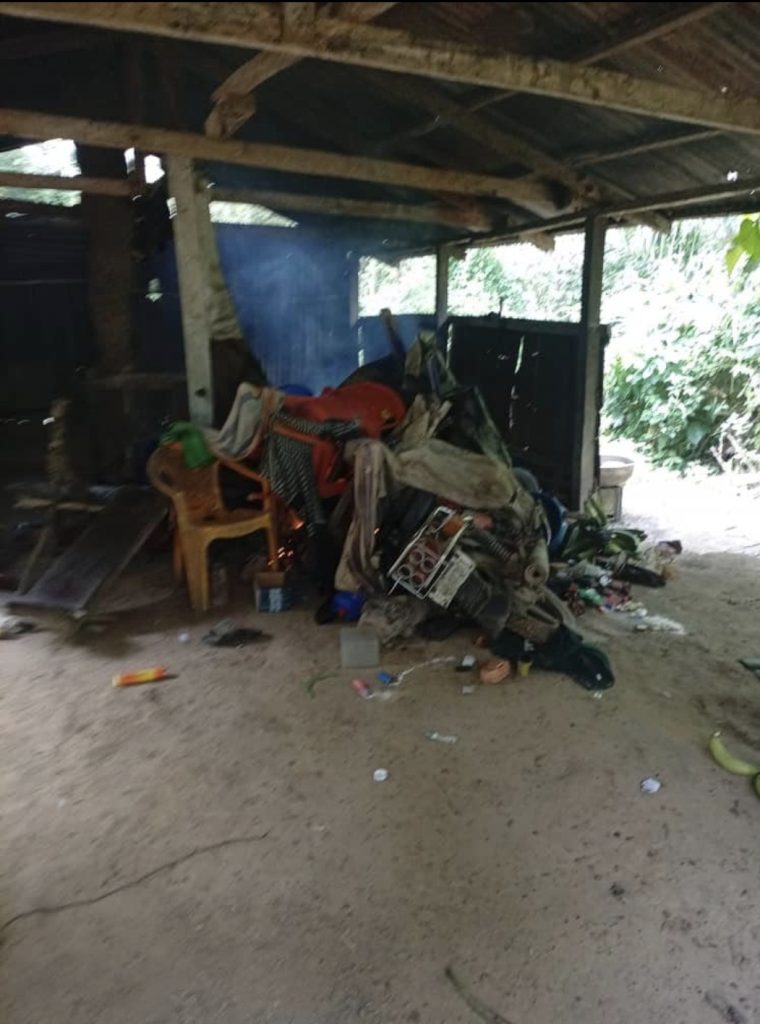
On sighting the operatives, the gunmen opened fire, triggering a prolonged gun battle.
At the end of the encounter, six suspected members of the group were neutralised, while others fled, some reportedly with gunshot wounds.
Two pump-action guns and charms were recovered from the camps, while structures believed to have been used by the gang were subsequently dismantled.
However, the operation came at a cost, as one security operative was killed and another injured after an explosive device suspected to have been planted in the area detonated.
The injured operative is receiving treatment in a hospital.
The Anambra State Commissioner of Police, CP Nnanna Oji Ama, commended the security personnel and community-based operatives for their courage and resilience, describing the operation as a demonstration of the importance of intelligence sharing, inter-agency cooperation and community support in tackling violent crime.
He commiserated with the family and colleagues of the fallen operative and wished the injured officer a speedy recovery.
The Commissioner assured residents that security agencies would sustain intelligence-led operations to dismantle criminal camps, recover illegal weapons and prevent armed groups from establishing operational bases across Anambra State.
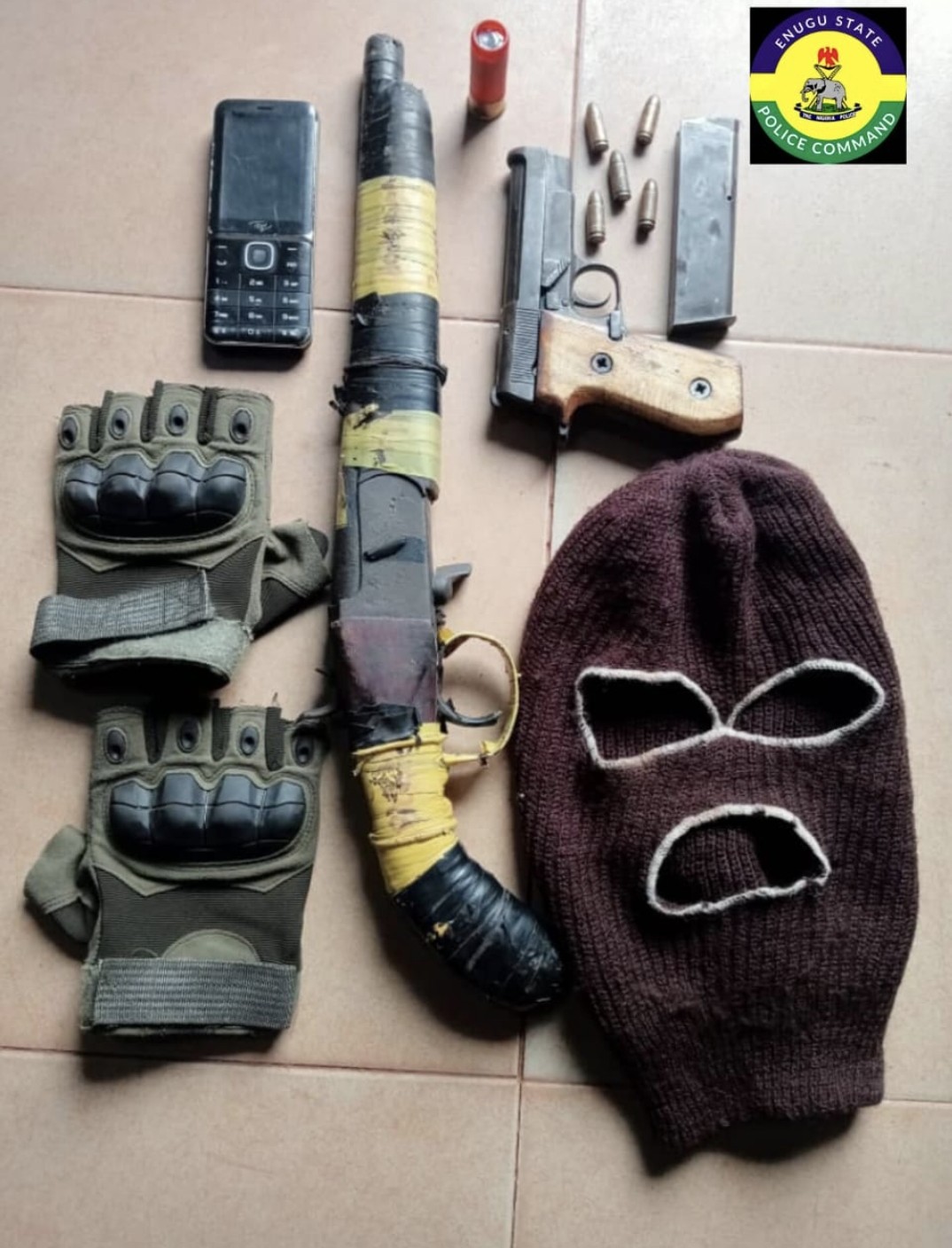
Operatives of the Enugu State Police Command have rescued three victims of abduction and recovered their Lexus RX350, two locally made firearms and ammunition following a hot pursuit of suspected kidnappers in Enugu.
The operation was carried out by operatives of the Anti-Cultism Sub-Unit of the Violent Crime Response Unit (VCRU), with support from members of the Neighbourhood Watch Group and local residents.
According to a statement by the Command’s Police Public Relations Officer, SP Daniel Ndukwe, the operation followed credible intelligence received at about 1:30 a.m. on August 18, 2026, while the operatives were conducting crime-prevention patrols along the Port Harcourt Expressway.
The information concerned the carjacking and abduction of occupants of a Lexus RX350 by armed hoodlums in the Independence Layout area of Enugu.
The operatives immediately launched a hot pursuit which led to Hillview Road, Independence Layout, where the suspects abandoned the vehicle and firearms before fleeing into the area.
The three victims were subsequently rescued unharmed and taken to safety with the assistance of Neighbourhood Watch members and other residents.
Police said they recovered one locally fabricated Beretta-like pistol loaded with five rounds of 9mm live ammunition, one locally made cut-to-size firearm and one live cartridge.
Other items recovered were a pair of hand gloves, a ski mask and a mobile phone.
The Command said investigation had been intensified and a manhunt launched for the fleeing suspects, with efforts ongoing to identify and apprehend them, recover additional exhibits and establish their involvement in the crime.
The Commissioner of Police, Enugu State Command, CP Mamman Bitrus Giwa, commended the police operatives, Neighbourhood Watch members and residents for their swift and coordinated response.
Giwa reiterated the Command’s commitment to intelligence-led and community-supported operations against kidnapping, armed robbery, car snatching and other violent crimes.
He also urged residents to remain vigilant and provide the police with timely and credible information that could assist in preventing and solving crimes.
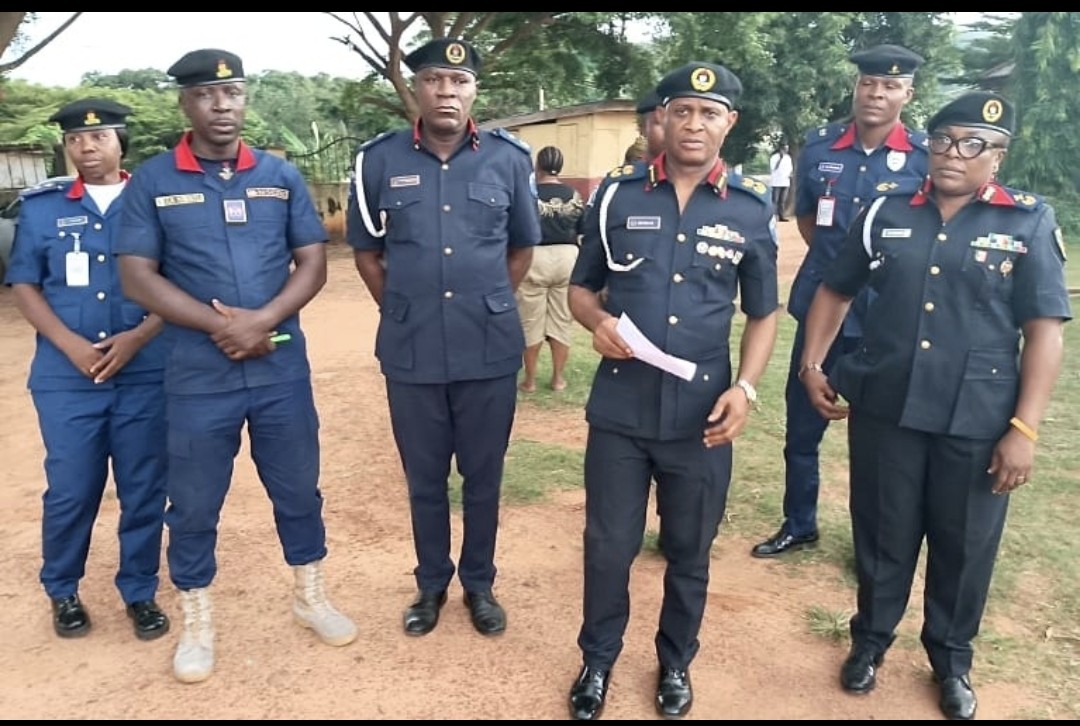
The Nigeria Security and Civil Defense Corps (NSCDC) has arrested a suspect for allegedly swindling 16 job seekers within Enugu metropolis.
The Commandant of NSCDC Enugu State Command, Dr Elijah Willie, disclosed this while briefing journalists on the arrest and investigation on Monday.
Willie said that the suspect collected a total of N6,139,000 from the ignorant and unsuspecting job seekers.
He said that the suspect, Mrs Serah Onyemerela, had been evading arrest by many security agencies until a resourceful officer of the command tracked her down and brought her to the Command.
The Commandant said that the suspect collected the sum of N306,000 from each of the 16 job seekers in the alleged job racketeering or job scam,which totalled N6,139,000.
“On August 12 and 18, 2026, Mrs Love Nnenna Onyema and Mrs Chidimma Ubah, the complainants, reported that Mrs Serah Uchechukwu Onyemerela, the suspect, defrauded them of N770,000 and N424,500 respectively.
“This amount to a total of N1,194,500 from both. However, the ones collected among the remaining people that made up the 16 job seekers at N306,000 each totalled N6,139,000.
“The suspect allegedly promised to assist the complainants in securing employment at the University of Nigeria Teaching Hospital (UNTH).
“However, there is evidence indicating a lack of genuine intent, as there are no current job vacancies available, and the suspect has failed to refund the amounts as promised,” he said.
Willie said that on Aug. 17, 2026, the suspect was summoned, tracked and subsequently detained due to her inability to fulfil the conditions of an administrative bail application facilitated by the NSCDC Enugu State Command.
“The suspect has since confessed to the charges of job fraud and obtaining money under false pretences.
“The funds were transferred to a personnel account linked to Mrs Onyemerela Serah Uchechukwu,” he said.
The Commandant also warned job seekers and people seeking for help in any form to ensure no one places them in a condition to pay first before rendering a help.
Willie called on Nigerians, enlightened or not, to see the red flag that any help being offered even in prayer houses and money payment comes before the job or help is “total fraud”.
He said, “Our people should get wise like people in advance world and stop falling prey to swindlers and wicked people who are bent on taking the little they have from them.
“However, the NSCDC has a mandate to take away these unscrupulous elements out of the society for Nigerians to experience peace as well as the trust and bond in the society continue.”
The suspect would be handed over to the Economic and Financial Crime Commission (EFCC) soon as the NSCDC conclude its preliminary investigations on the matter.

A police inspector has been killed and another officer seriously injured after gunmen allegedly ambushed a joint security team in Jigawa State.
The incident occurred on Saturday, August 22, 2026, after security personnel responded to reports of farmland destruction in Gwaram Local Government Area.
According to a security report obtained by Zagazola Makama, the attack took place at about 3pm in a forested area.
The joint team comprised personnel from Gwaram and Fagam police divisions, the 35 Police Mobile Force and local security outfits. Members of the Vigilance and Community Response Unit (VCRU) and Operation Salama also participated in the operation.
The report said the team had been patrolling the area following recurring complaints involving suspected herders and farmland destruction.
The personnel reportedly came under attack after entering the area, with the assailants said to have used arrows.
Inspector Bukar Wakili, attached to Gwaram Division, was reportedly struck in the face and sustained serious injuries.
Another officer, Inspector Mohammed Shafiu of the VCRU in Dutse, was also injured during the incident.
Both officers were taken to a hospital, where Shafiu was confirmed dead, according to the report.
Bukar was later referred to the Malam Aminu Kano Teaching Hospital for further medical treatment.
The identities and affiliation of the attackers have not been independently confirmed, and no group has claimed responsibility for the attack.
Additional tactical teams were subsequently deployed to reinforce the security personnel and support efforts to identify those responsible.
Police have opened an investigation into the incident and maintained a security presence in the affected area.
The attack comes amid recurring disputes involving farmers and herders in parts of northern Nigeria, where disagreements over farmland and grazing routes can sometimes escalate into violence.

-
 Politics4 days ago
2027: Mbah’s Second Term: A Smooth Ride or Tough Battle?
-

 Politics5 days ago
2027: Wike Explains Why He Rejected Tinubu’s Campaign DG Role, Says ‘I Don’t Want to Lose My States’
-

 News4 days ago
Nwabueze Denies Running ‘Fake Agency’, Says Made-in-Nigeria Project Has Operated Under OSGF for 16 Years
-
 Crime4 days ago
End of the Road: Man Dies While Attempting to Steal Transformer Cables
-
 Crime5 days ago
Over 60 Worshippers Abducted as Terrorists Attack Niger Mosque During Prayer
-
News5 days ago
Former Abia Speaker Chinedum Orji Celebrates Pastor Jerry Eze on Birthday
-
Crime3 days ago
Gunmen Ambush Joint Security Team, Kill Police Inspector, Injure Another
-

 News3 days ago
FAAC bonanza: Govs face questions as payouts hit N47tn