



Crime
Kwara Massacre: Security Forces Unmask Terror Kingpin Sadiku

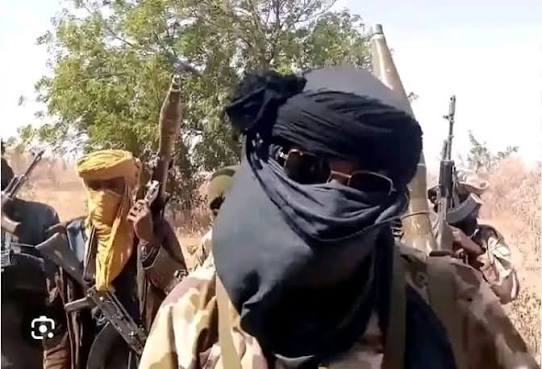

Tuesday’s massacre in Woro, a remote community in Kaiama Local Government Area of Kwara State, which claimed an estimated 176 lives, was not a random act of violence. Investigations indicate that the attack was the outcome of a carefully planned expansion of a jihadist front that Nigeria’s security architecture failed to stop, despite advance warnings.
At the centre of the carnage is Abubakar Saidu, widely known as Sadiku—a seasoned terrorist commander whose violent footprint stretches across more than a decade and multiple regions of northern Nigeria.
From Shadow Figure to Regional Kingpin
For years, Sadiku operated largely out of public view within Nigeria’s insurgency ecosystem. However, security investigations now trace a 12-year trajectory that saw him evolve from a trusted lieutenant of the late Boko Haram leader, Abubakar Shekau, in 2014, to what analysts describe in 2026 as the “Shekau of the North-Central.”
As sustained military offensives weakened Boko Haram strongholds in the North-East, Sadiku shifted westward, embedding himself in the vast forest corridors linking Niger and Kwara states. From these hideouts, he coordinated attacks that devastated farming communities, displaced thousands, and ultimately culminated in one of the deadliest mass killings in Kwara State’s history.
Deployed by Boko Haram
Security findings reveal that Sadiku was originally dispatched by Boko Haram to Niger State as a trusted operative charged with expanding the group’s influence beyond its traditional North-East base.
A counterterrorism analyst on X, MobilisingNigeria, linked Sadiku’s rise to his close relationship with Shekau, who reportedly handpicked him to oversee Boko Haram’s interests in Niger State.
“He later worked with Dogo Gide to expand into the North-Central terrain and also collaborated with the Darul Islam terrorist group before the police dismantled it,” the analyst wrote.
Sadiku’s temporary alliance with notorious bandit kingpin Dogo Gide enabled him to acquire weapons, intelligence, and local leverage. The partnership later collapsed over ideological differences, triggering violent clashes that left casualties on both sides.
Kainji Forest: A New Base of Terror
Following the split, Sadiku withdrew deeper into forest territories, eventually establishing a major base inside the Kainji Forest Reserve in July 2025. Security observers describe this move as a strategic shift from profit-driven banditry to a more rigid, ideology-driven campaign of terror.
Spanning Niger and Kwara states, the Kainji Forest Reserve has increasingly become a strategic hub linking insurgents from the North-East with remnants of bandit groups in the North-West. Security experts now refer to it as Nigeria’s “new Sambisa,” providing cover for recruitment, arms trafficking, and coordinated attacks across Kwara, Niger, Kebbi, and parts of Kaduna states.
A Kwara-based security expert, Hassan, said Sadiku’s relocation marked a dangerous expansion of Boko Haram-style insurgency into the North-Central zone.
“For over a decade, Boko Haram violence was concentrated in Borno, Yobe and Adamawa,” he said. “But splinter factions are now exploiting forests, weak security presence and porous borders to push westward.”
Links to Al-Qaeda Affiliate
In a separate analysis, MobilisingNigeria described Sadiku as a Boko Haram factional leader who relocated from the North-East to establish new operational bases in the North-West and North-Central regions.
International security tracker Brandon Phillips directly linked Sadiku’s faction to the Woro massacre, noting that the attack occurred less than four kilometres from Nuku, where Jama’at Nusrat al-Islam wal-Muslimin (JNIM)—an Al-Qaeda affiliate—claimed its first-ever attack in Nigeria in October 2025.
According to Phillips, the proximity suggests either operational collaboration or a non-aggression pact between JNIM and the Sadiku-led Boko Haram faction. He added that the Woro killings followed a pattern similar to recent attacks in Papiri, Niger State, indicating a continued southward push toward JNIM-dominated zones around the Kainji Reserve.
Between November and December 2025, Phillips said evidence of cooperation between JNIM and Sadiku’s Jama’atu Ahlis Sunna Lidda’adati wal-Jihad (JAS) faction became increasingly clear, with fighters redeployed into JNIM-controlled areas of Kwara, Niger and southern Kebbi.
He also linked JNIM to the kidnapping of Catholic children in Papiri, noting that some victims were held in JNIM camps after an operation executed by Sadiku’s fighters.
Fighters Converge on Kainji Axis
Another security researcher, Raheem Mutiu, confirmed that JNIM fighters have spread across Kaiama, Baruten, Borgu and surrounding communities near the Kainji Forest Reserve.
He noted that these areas were previously controlled by the Mahmuda group, whose influence declined sharply after the arrest of its leader in August 2025.
African conflict researcher James Barnett observed that the extreme brutality of the Woro massacre distinguished Sadiku’s faction from the Mahmudawa group, which had focused largely on preaching and social control, with violence mostly triggered by military operations.
Following the Mahmuda leader’s arrest, Barnett said some fighters defected to Sadiku’s camp, while others fled into Benin Republic, consolidating Boko Haram splinter dominance around the Kainji axis.
A Warning Ignored
Investigations reveal that Woro was warned weeks before the attack.
The village head, Salihu Umar, confirmed receiving a letter written in Hausa and dated 19 Rajab 1447 (January 8), about three weeks before the massacre. Signed by JAS, the letter requested a “secret” meeting with community leaders for preaching purposes and assured residents they would not be harmed.
Umar said he photocopied the letter and submitted it to the Kaiama Emirate, while also forwarding a soft copy to the Department of State Services (DSS) office in Kaiama.
The Night of Bloodshed
On the day of the attack, eyewitnesses said the gunmen arrived around 5pm on motorcycles, armed with AK-47 rifles and explosives. They surrounded the community, sealing all exit routes.
By 6pm, the attackers stormed the Emir’s palace, dragged out his family and set the building ablaze as gunfire echoed across the town. Residents reported seeing a white helicopter with markings hover briefly over the area before departing without intervention.
Between 6:30pm and 8pm, survivors said the attackers entered what they described as an “execution phase,” rounding up men, tying their hands behind their backs, and killing them systematically.
A military aircraft reportedly reappeared around 8pm, forcing the assailants to retreat into nearby bushes. Believing the danger had passed, some residents emerged around 9pm. The attackers regrouped, used the call to prayer as a decoy to lure people out, and resumed the killings.
The violence finally subsided around 2am, when the terrorists withdrew into the forest, abducting women and children and leaving behind a devastated community.


Two police officers have been killed after suspected armed herders ambushed the convoy of the Divisional Police Officer (DPO) in Ayilamo, Logo Local Government Area of Benue State.
The latest attack occurred on Monday evening, barely four days after another deadly incident in the community reportedly left four policemen and seven residents dead.
Community sources said the DPO had travelled to Makurdi on official duty and was returning to Ayilamo when his entourage came under attack.
One of the sources, who spoke on condition of anonymity, said the victims were among newly deployed Mobile Police officers stationed in the area.
He said the officers were attacked at about 6pm while travelling from Ayilamo to escort the DPO back to the community from Makurdi.
Confirming the incident, the spokesperson for the Benue State Police Command, DSP Peter Aondongu, said two officers attached to the DPO’s entourage were killed in the attack.
“The DPO came to Makurdi to collect some things, and while returning to Ayilamo, he was attacked and lost two of his men in the attack,” Aondongu said.
The latest incident has raised fresh concerns over the security situation in Ayilamo, where repeated attacks have resulted in casualties among security personnel and residents.

The Nigeria Police Force has placed its formations nationwide on red alert following intelligence reports of planned terrorist attacks on worship centres, schools, NYSC orientation camps and other public places.
The alert followed fresh intelligence indicating increased mobilisation of terrorist elements for possible coordinated attacks on vulnerable targets across the country.
Police authorities also reportedly received intelligence on the movement of armed elements from Katsina through Kaduna towards Plateau State.
The operational order was contained in a police wireless message dated September 13, 2026, with reference number CB: 0900/FDPS/DOPS/FHQ/ABJ/VOL38/68, issued by the Department of Operations at Force Headquarters, Abuja.
Marked “Security General” and tagged “Treat as Very Important,” the message was circulated to Assistant Inspectors-General of Police overseeing Zones 1–17, Mobile Police formations, counter-terrorism and other specialised units, as well as Commissioners of Police in the 36 states and the Federal Capital Territory.
The police directed formations to intensify vigilance and take proactive measures to prevent criminal and terrorist elements from carrying out attacks.
The warning specifically highlighted places of worship, educational institutions, NYSC orientation camps and other vulnerable public locations as potential targets.

A 16-year-old boy, Favour Ayogu, who was allegedly abducted in Igboeze South Local Government Area of Enugu State, has been rescued in Onitsha, Anambra State, after his abductors reportedly abandoned him near a security checkpoint.
Ayogu was rescued on the evening of September 13, 2026, by a joint security patrol team operating along Oguta Road, Onitsha.
According to the Anambra State Police Command, the teenager was found at Ekene Junction after unidentified persons reportedly pushed him out of a black Toyota Highlander SUV close to a security checkpoint.
The patrol team immediately intervened and rescued the victim, thereby preventing what the police described as further danger to his life.
Following the rescue, the Command said it had intensified surveillance and intelligence-led operations to identify and apprehend members of the suspected criminal gang responsible for the abduction.
The police also appealed to residents of Igboeze South and Ibagwa-Aka in Enugu State who may have useful information about Ayogu or his family to contact the nearest police station or the Anambra State Police Command in Awka.
The Commissioner of Police, Anambra State, CP Nnanna Oji Ama, commended the security personnel involved in the rescue and directed officers to sustain strategic checkpoints, intelligence-led patrols and coordinated security operations across the state.
The Command assured residents and visitors that it would continue to intensify efforts to prevent criminal elements from using Anambra as a safe haven.

At least nine passengers have been killed after gunmen opened fire on a commercial bus at Dungus Junction in Kuru community, Jos South Local Government Area of Plateau State.
The attack reportedly occurred around 9:40 p.m. when the bus, which was travelling towards Jos, stopped at the junction to drop off some passengers.
Several other passengers were reportedly injured in the attack and rushed to hospitals for treatment.
Lawan Suleiman, a neighbour and teacher of one of the victims, identified the driver as Ibrahim and said three of the victims were from his community in Bukuru.
“The driver is Ibrahim and he was my student. Three of them are from our community here in Bukuru. Their bodies have been deposited at the hospital. But relatives are preparing to collect them for burial,” Suleiman said.
The bus was reportedly riddled with bullets, with bloodstains visible inside the vehicle after the attack.
Rwang Tengwong, spokesman for the Berom Youth Moulders (BYM), also confirmed the incident, saying the victims were passengers travelling to Jos when the attackers opened fire on the vehicle.
Tengwong said one of those killed was a member of Operation Rainbow.
“The incident happened around 9.40 p.m. The victims were all passengers travelling to Jos when the terrorists opened fire on the vehicle. Among those killed was a member of Operation Rainbow. It is a very sad development and we lament the loss of lives,” he said.
He added that some passengers sustained gunshot injuries and were taken to hospitals, while some of the injured reportedly later died.
The attack has raised fresh concerns over the safety of commuters travelling along the route at night amid continuing security challenges in parts of Plateau State.
As of the time of filing this report, the Plateau State Police Command had yet to issue an official statement on the incident.

The Enugu State Police Command has ordered an investigation into two separate incidents of alleged disruption of political gatherings in Nkanu West Local Government Area of the state.
The incidents reportedly occurred on Saturday, September 12, 2026, at Ndiuno-Obuoffia community and St. Joseph Primary School, Agbani.
In a statement issued on Sunday, the Command’s spokesperson, SP Daniel Ndukwe, said the Commissioner of Police, CP Mamman Bitrus Giwa, directed the Deputy Commissioner of Police in charge of the State Criminal Investigation Department (CID) to thoroughly investigate the incidents and ensure that those responsible are brought to justice.
According to the statement, armed hoodlums allegedly disrupted a National Democratic Congress (NDC) ward meeting at Ndiuno-Obuoffia with sporadic gunshots, leaving two attendees injured.
In a separate incident at St. Joseph Primary School, Agbani, hoodlums allegedly destroyed canopies and chairs arranged for a Peoples Democratic Party (PDP) rally.
The police said operatives were promptly deployed to both locations after receiving reports of the incidents to prevent further breaches of peace and track down the fleeing suspects.
The Command, however, noted that neither of the political gatherings had been formally brought to the attention of the police for security coverage.
CP Giwa reiterated his warning that all political activities in the state must be conducted peacefully and in accordance with the law.
He stressed that electoral offences are punishable under the law and warned political parties, candidates, supporters and other stakeholders against violence, intimidation, destruction of property and other acts capable of disrupting public peace or the electoral process.
The Commissioner urged political parties and other stakeholders to notify the police ahead of campaigns, meetings, rallies and other political gatherings to enable the Command to make adequate security arrangements.
He assured residents that the police would continue to maintain a peaceful and secure environment for lawful political activities while dealing decisively with anyone found violating the law.

-

 News5 days ago
Commissioner Dies Suddenly at Abuja Hospital
-

 News5 days ago
Sept. 26 Polls: ‘ENSIEC is over 90% ready’ – Chairman
-

 Uncategorized5 days ago
UK Confirms Koi Herpesvirus Outbreak, Restricts Fish Movement
-
News5 days ago
Niger Delta Chambers Unveils Plan to Transform Region Into Investment Hub
-
News5 days ago
Niger Delta Chamber Breaks Silence on Alleged Summit Trademark Dispute
-
 News4 days ago
Dangote Reveals He Bought First Private Jet at 22
-

 Health3 days ago
UNTH Begins Contact Tracing After Suspected Diphtheria Case
-

 Entertainment5 days ago
Poco Lee Granted Bail in UK Ahead of September 15 Court Hearing