



News
Nigeria’s World Bank debt to hit $9.65bn between 2023 to 2025


World Bank loans to Nigeria between 2023 and 2025 are projected to reach $9.65bn by the end of this year as fresh approvals, ongoing negotiations, and disbursements gather pace across key sectors.
The amount covers International Bank for Reconstruction and Development and International Development Association loans only, according to an analysis of data on the bank’s website. When grants are added, total World Bank support rises to about $9.77bn within the three-year window.
The International Bank for Reconstruction and Development provides loans on commercial or near-commercial terms to middle-income and creditworthy low-income countries, while the International Development Association offers highly concessional loans and grants to the world’s poorest nations.
The figures show a steady build-up of commitments with government officials pushing ahead with digital infrastructure, social protection, power, education, and health programmes while defending the concessional nature of the borrowings.
The Federal Government is expected to secure another $500m facility on December 19, 2025, under the Fostering Inclusive Finance for MSMEs in Nigeria project. The operation is being prepared for Board consideration and will be implemented through the Development Bank of Nigeria.

The borrowing cycle under the administration of Bola Tinubu began with $2.7bn in loans in 2023 across four major projects. Financing that year was dominated by power sector recovery, renewable energy access, girls’ education, and women’s economic empowerment.
The Nigeria Distributed Access through Renewable Energy Scale-up project received $750m in IDA financing to expand private sector-led clean energy access. Another $700m IDA credit was approved for girls’ secondary education in participating states. Women’s economic empowerment attracted $500m IDA through the Nigeria for Women Programme Scale Up.
The AF Power Sector Recovery operation received $449m in IBRD financing and $301m in IDA to improve the reliability of the electricity supply and restore financial sustainability in the sector. There were no grant components in 2023, so the entire amount consisted of loans.
The volume of loans rose sharply in 2024 as new approvals reached $4.25bn, representing a 57.4 per cent increase compared with the preceding year. The increase was driven largely by two policy-based operations and three separate $500m IDA investment packages.
The Nigeria Reforms for Economic Stabilisation to Enable Transformation programme provided $1.5bn in loans, split between $750m IBRD and $750m IDA, as the government sought fiscal space and protection for vulnerable populations while reforms continued.
Another $750m IBRD loan was approved for the NG Accelerating Resource Mobilisation Reforms programme to boost non-oil revenues and safeguard oil and gas receipts.
The World Bank also cleared $500m IDA each for rural road access, primary healthcare strengthening, and dam safety and irrigation programmes. The primary healthcare programme included a $70m grant, which lifted total World Bank support for 2024, including grants, to about $4.32bn.
For 2025, the data shows $2.695bn in loans at various stages of project processing alongside $52.18m in grants. Nine operations have already been identified across financial inclusion, digital broadband, health, education, social protection, and institutional capacity.
The largest facilities are tied to $500m IDA each for broadband expansion, basic education, and livelihood support for poor and vulnerable households. Health security, nutrition, and internally displaced communities account for another $630m, while procurement standards receive $65m from IDA.
A $400m IBRD component is included for the MSME finance programme, along with a $100m IDA portion. Also, the Central Bank of Nigeria is to receive a $6.8m grant to strengthen technology-enabled oversight of the banking sector and deepen understanding of payment and remittance systems.
Compared with 2024, the 2025 loan pipeline represents a decline of about 36.6 per cent, though it is broadly in line with the $2.7bn reached in 2023. Across the three years, IDA loans account for about $7.30bn while IBRD loans contribute roughly $2.35bn. Grants add another $122.19m, rising from zero in 2023 to $70.01m in 2024 before easing to $52.18m in 2025.
The portfolio highlights the scale of financing underpinning Nigeria’s reform programme as authorities continue to seek low-cost multilateral resources even as concerns persist over debt sustainability and the need to strengthen domestic revenue mobilisation.
Nigeria’s stock of World Bank International Development Association loans rose to $18.5bn, making it the largest IDA borrower in Africa and the third-biggest in the world.
Fresh data from the IDA’s unaudited financial statements for the third quarter of 2025 confirmed that the country has maintained the ranking it first attained in 2024, when it climbed to third place after overtaking India. The country was the fourth-largest borrower in 2023.
According to the report, Nigeria’s exposure increased from $17.1bn in September 2024 to $18.5bn in September 2025, representing a rise of $1.4bn or 8.2 per cent. The increase reflects the country’s heavier reliance on concessional financing to plug infrastructure gaps, stabilise its reform programme, and support social spending amid volatile oil earnings.
Economists warn that the rising loan pipeline, while potentially beneficial for long-term development, could deepen fiscal pressures if not matched with stronger domestic revenue mobilisation and prudent expenditure management.
Lagos-based economist, Adewale Abimbola, reacting to the rising World Bank commitments to Nigeria, said loans from multilateral institutions such as the World Bank are largely concessionary, with interest rates typically below market levels and longer repayment tenors.
He noted that the critical question is not whether Nigeria should be borrowing, but whether the loans are structured and deployed effectively. “If it’s concessionary and tied to viable projects with medium-term revenue prospects, I don’t think it’s a bad idea,” Abimbola explained. “Borrowing isn’t bad; what matters is utilisation.”
While acknowledging that borrowing is not inherently bad for an economy, he questioned the rationale for taking on more debt at a time when the government claims to have higher revenues. Ilias pointed out that following the removal of fuel subsidy, Tinubu had announced increased revenue inflows.
He added that both the Federal Inland Revenue Service and the Nigeria Customs Service had declared revenue surpluses, further suggesting the government should be able to fund projects without resorting to heavy borrowing.
According to him, the impact of the current borrowing spree is being felt in reduced public service delivery, particularly in capital expenditure, as debt servicing now consumes a significant portion of available revenue.
He warned that this crowding-out effect limits job creation, fuels inflation, and worsens Nigeria’s foreign-exchange imbalance, with the naira trading at historically low levels.
He argued that given the claimed revenue surpluses, the Tinubu administration should not have needed to borrow within its first two years in office, let alone at the scale currently being witnessed.
Economist and CEO of the Centre for the Promotion of Private Enterprise, Dr Muda Yusuf, said the rising World Bank commitments to Nigeria should be examined within the context of the country’s Medium-Term Expenditure Framework and annual budgets, which already provide for both domestic and foreign borrowing.
He noted that deficit financing is a common feature of budgets worldwide and is not inherently wrong, as it allows governments to make critical investments without waiting to generate all the required revenue upfront.
However, he stressed that borrowing should always be backed by sound economic reasoning and clear development priorities. Yusuf emphasised that the key issue is debt sustainability, which depends primarily on the country’s revenue capacity to service its obligations.
Without strong cash flow to meet repayment schedules, he warned, Nigeria risks falling into a vicious cycle of borrowing to service existing loans, thereby perpetuating fiscal vulnerability. He said it is essential that projects funded by loans directly support the economy’s capacity to repay.
According to him, Nigeria should be cautious with foreign loans due to the exchange rate risks they pose, noting that domestic debt is generally easier to manage. Excessive foreign borrowing, he warned, could put pressure on the country’s reserves and further weaken the exchange rate. He stressed that a disciplined approach to debt sustainability will be crucial for Nigeria to avoid long-term fiscal distress.
Meanwhile, data from the Debt Management Office showed Nigeria’s external debt stood at $46.98bn as of June 30, 2025. Of this amount, the World Bank Group accounted for $19.39bn—comprising $18.04bn from the International Development Association and $1.35bn from the International Bank for Reconstruction and Development.
This means the World Bank holds 41.3 per cent of the total, reinforcing its outsized role in funding Nigeria’s development programmes.
The Minister of Budget and Economic Planning, Senator Abubakar Bagudu, recently called on the World Bank to support Nigeria’s Renewed Hope Ward Development Programme, a grassroots initiative he described as central to achieving President Bola Tinubu’s target of building a $1tn economy by 2030.
The minister praised the World Bank for its consistent backing of Nigeria’s reforms, describing the last 28 months of partnership as both challenging and transformative. “The World Bank team has collaborated with us not just as partners but as members of the same team. We could not have achieved the results we have today without your support,” he said.
Speaking with the minister in August 2025, the World Bank Country Director, Matthew Verghis, commended Nigeria for making bold decisions that could reset its development trajectory.
“Nigeria’s recent decisions represent a critical moment. Such choices are not easy, but they create opportunities for a new path,” Verghis said. “The World Bank stands ready to continue supporting Nigeria in maintaining these reforms and increasing their impact.”
Source: PUNCH
News
SEDC to Launch 50,000-Hectare Agro-Mechanisation Project in Enugu to Tackle Unemployment, Insecurity
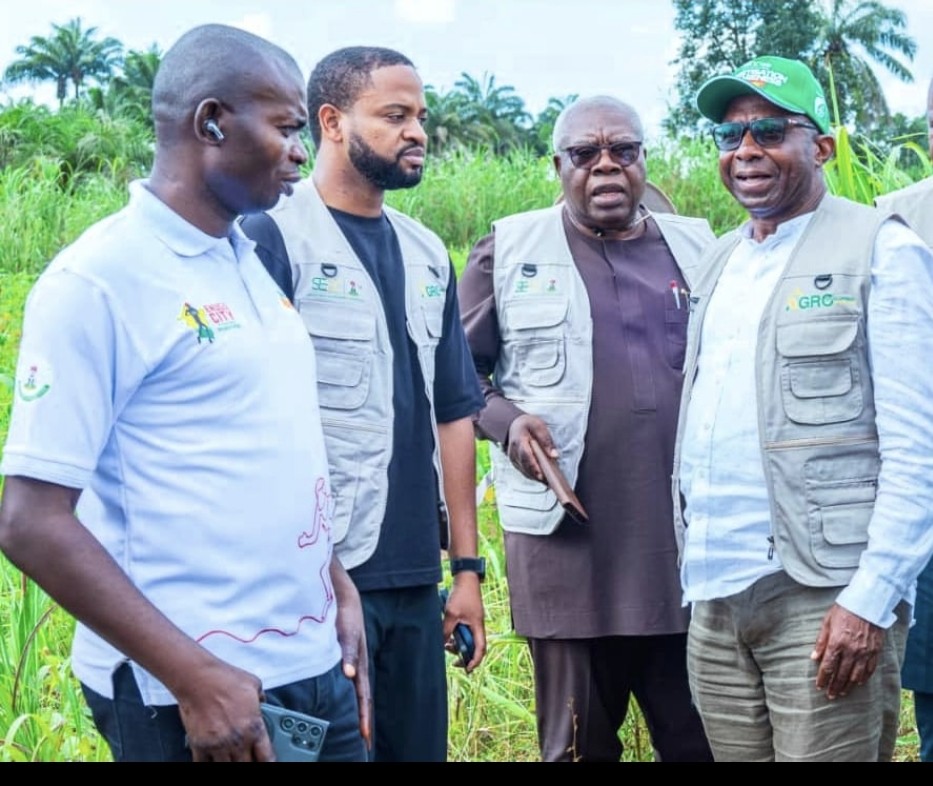
The South-East Development Commission (SEDC) has concluded arrangement for the kick-off the zone-wide 50,000-hectare agro-mechanisation project in Enugu community meant to tackle insecurity, unemployment and food insecurity.
The SEDC zone-wide 50,000-hectare agro-mechanisation, which is meant to be established in each of the 15 senatorial zones of the five South-East states, would commence at a pilot scheme level on Sept. 22.
This is contained in a statement issued by the media aide to the Governor of Enugu State, Chief Uche Anichukwu, on Wednesday in Enugu.
The Managing Director of the Commission, Mr Mark Okoye, disclosed this during a community engagement at the pilot project site in Nomeh Unateze community in Nkanu East Local Government Area of Enugu State on Tuesday.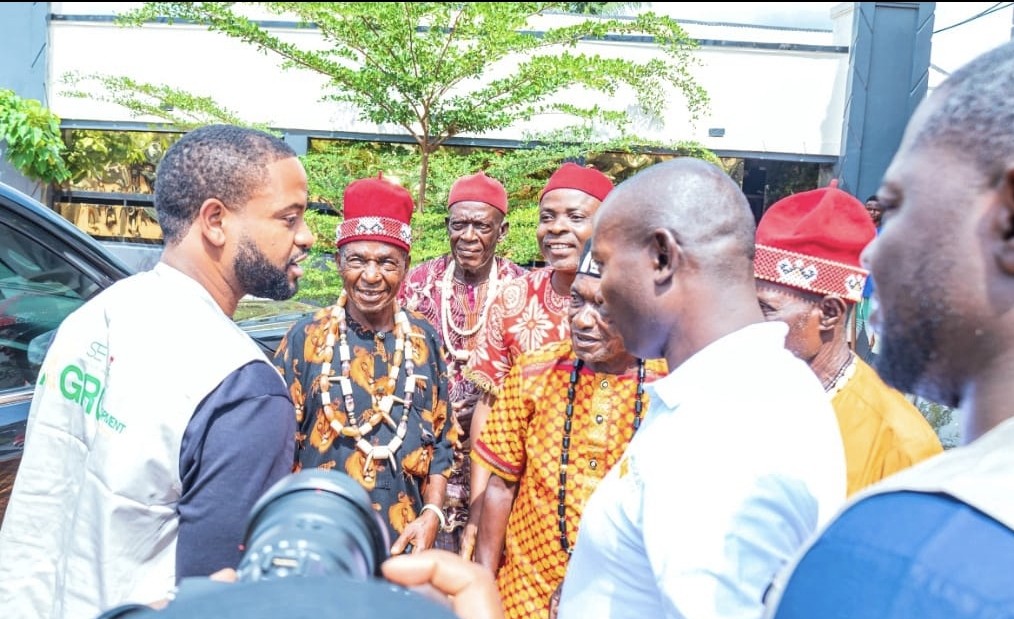
Okoye said the SEDC had, following its establishment in 2024, used the first year to do extensive studies and design a blueprint that cuts across different areas of the South-East economy.
He said the agro-mechanisation projects, remained a major part of the commission’s blueprint, explaining that it would address insecurity, unemployment, and food security.
According to him, so, what we are here for is one of our flagship initiatives, which is called the South-East Agro Mechanisation Programme or the South East Agro Development Programme.
Okoye said that the SEDC was committed to develop up to 50,000 hectares of land and that would be used for mechanised farming across the region.
“We are here for a pre-assessment, pre-flag-off visit to see the area, understand the level of work that needs to be done and ensure that contractors can start mobilising so that once we hit the site we start running.
“Because a big part of what we are looking at is how to address food insecurity and unemployment, ensuring that we are producing what we put on the table.
“We are starting with pilot programmes where we are taking 200 to 300 hectares of farmland across 15 senatorial zones and developing them to standard farms.
“Where you not only have cassava, maize, some of our staple crops, but also some cash crops. In some areas, there will be the centres for learning and centres for productivity,” he said.
Okoye said that Gov. Peter Mbah would flag off the project on Tuesday, adding the SEDC team came to assess the area, meet with the community and ensurr that all the plans are in place.
“And within the second we put this investment here, at least N4 billion or N5 billion of added investment will come in,” he said.
Okoye commended President Bola Tinubu for addressing the long yearning by the South-East for a commission to mobilise resources and coordinate development in the region.
He urged the people to reciprocate the numerous gestures by supporting the Tinubu to continue the development efforts post 2027.
He further revealed that the commission would soon roll ou an investment agency to help mobilise local and Diaspora investments for the region’s speedy development.
A community leader in the community, Chief Uche Anichukwu, described the agro-mechanisation project as one of the blessings of the APC, Tinubu and Mbah administrations to Enugu State in general and Nomeh Unateze in particularly.
Anichukwu, who is also media aide to the Governor of Enugu State, said that the Nenwe-Nomeh-Mburubu-Nara road, with a spur to Oduma, had created ready and multiple access to market for the proposed agricultural project.
Speaking, Chairman, Nomeh Unateze Town Union Caretaker Committee, Dr Chukwudi Anyianuka, and other community stakeholders, reiterated their support for the project.
They commended Tinubu and Mbah for siting the project in their community.
“We are very happy. We cannot wait to see it actualised and we promise that we are going to provide everything that is necessary to make sure that this is established.
“The Commission has taken a methodical approach to regional development.
“Rather than the pitfall of throwing money at development challenges, it undertook a study of the region and came up with a master plan, which includes this initiative, to reinvent the South-East,” Anyianuka added.
Also present at the interactive session were the members of the traditional council of Nomeh Unateze and community heads.
…As Onitsha South Mayor Empowers Workers
By Okey Maduforo, Awka
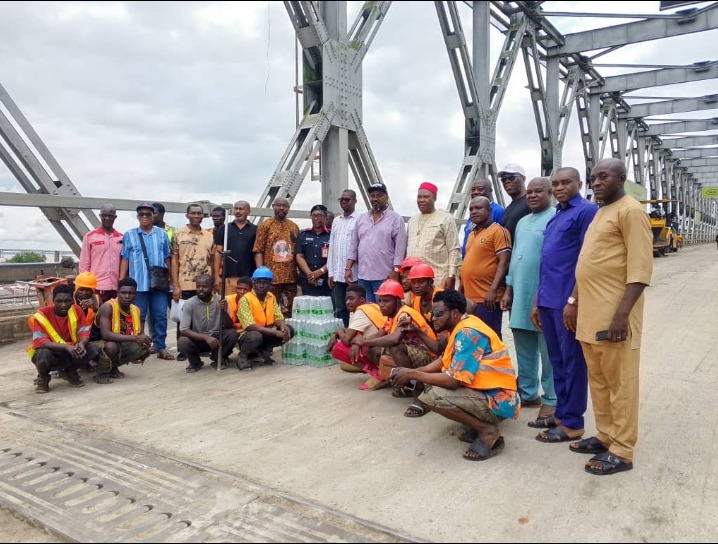
Maintenance and rehabilitation works at the recently closed First Niger Bridge are being hampered by poor lighting during night shifts and inadequate sanitary facilities at the site.
Recall that before the closure of the bridge, the Minister of Works, Engr. Dave Umahi, had disclosed that efforts would be made to carry out some of the rehabilitation works at night.
However, some of the workers at the site said poor lighting was affecting effective monitoring of activities on the bridge, while the poor sanitary condition of the area was also posing a threat to their health.
The workers made the complaints during a working visit to the bridge by the Mayor of Onitsha South Local Government Area, Chief Emeka Orji.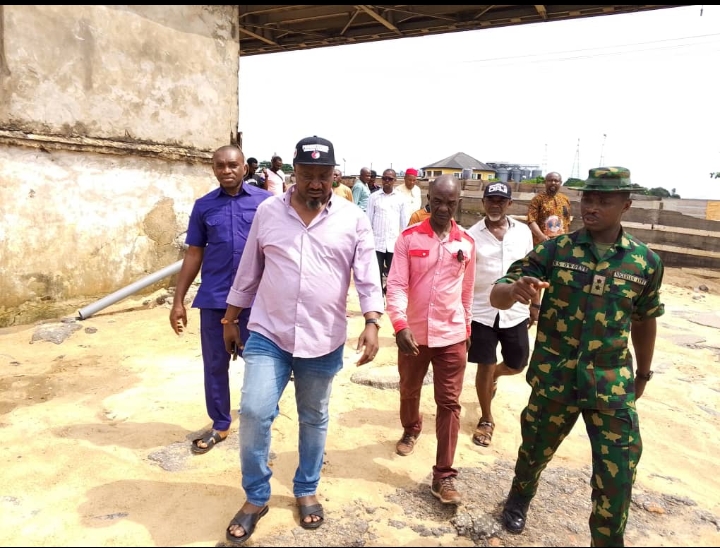
Orji, who was accompanied by the Secretary of the Local Government, Barr. Paul Onuachalla, and executives of the Fegge Community Landlords/Tenants Welfare Association, led by its Chairman, Chief Nnamdi Onugha, provided cooked meals and packs of bottled water to the personnel and workers at the site.
Speaking after the visit, Orji said the gesture was aimed at supporting the workers and showing solidarity with the Federal Government’s rehabilitation efforts on the bridge.
He said, “To support the workers and give them a sense of belonging, that is why we came to appreciate them. We will continue doing so from time to time as part of our Corporate Social Responsibility.”
The Mayor also disclosed that the council had provided facilities, including mobile toilets and water tanks, while arrangements were being made for water tankers to supply water to the tanks.
Orji further stressed the importance of the military presence in Onitsha South, noting that the personnel would contribute to security, rapid response and protection of the bridge, Onitsha South and parts of Ogbaru Local Government Area.
He added that the council would continue to strengthen its collaboration with security agencies to ensure maximum security across Onitsha South Local Government Area.
Earlier, after inspecting the environment with the Mayor, the Officer in Charge, who pleaded anonymity, identified poor lighting at the bridge at night as one of the major challenges confronting the personnel.
According to him, the situation makes it difficult to effectively monitor activities around the bridge, particularly during night shifts.
He also complained about the poor sanitary condition of the under-bridge environment where the personnel camp, saying they had to clean up the area themselves upon arrival.
The officer further appealed for improved accommodation and food support for the personnel.
He, however, commended the Mayor for the visit and assistance, saying the gesture made the workers feel appreciated.
“We feel loved and appreciated. We are happy seeing you around,” he said.

Africa’s richest industrialist, Aliko Dangote, has revealed that he bought his first private jet at the age of 22 and a half.
Dangote made the disclosure on Monday in Lagos during the formal launch of the Initial Public Offering (IPO) of Dangote Petroleum Refinery and Petrochemicals on the Nigerian Exchange.
Reflecting on his business journey, the billionaire said he had enjoyed travelling by private jet over the years but was now comfortable using commercial flights.
He also urged wealthy Nigerians to channel more of their resources into productive investments rather than luxury assets.
Dangote particularly appealed to affluent Nigerians who spend huge sums on private aircraft to consider investing such wealth in industries and businesses that could contribute to Nigeria’s economic growth.
“I try as much as I can to encourage people who are riding $900 million aircraft to please go and put that into production. We are not going to be a great nation without doing something productive,” he said.
He stressed that directing private wealth towards productive ventures would help strengthen the economy, create jobs and provide greater opportunities for national development.
The Niger Delta Chamber of Commerce, Industry, Trade, Mines and Agriculture (NDCCITMA) has rejected claims that it appropriated or “stole” the idea of Niger Delta Economic and Investment Summit from another organisation whose application was reportedly pending before the Federal Ministry of Trade.
NDCCITMA considers the allegation misleading and wishes to set the record straight.
The concept of Niger Delta Economic and Investment Summit is a broad and widely recognised platform used globally to bring together government, the private sector, investors, businesses, development partners and other stakeholders to deliberate on economic growth and development. The use of the term “Economic Summit” does not, in itself, establish exclusive ownership of the concept by any individual or organisation.
More importantly, the chronology of events does not support the allegation being made against NDCCITMA.
While the said application was reportedly still pending before the Ministry of Trade as at September 2025, NDCCITMA had already gone through the appropriate processes and received approval from the Ministry of Trade in August 2025.
NDCCITMA did not rely on, copy, or appropriate the pending application of any other party in arriving at its name or identity
It is also important to distinguish between a concept and legally protected intellectual property, such as a registered trademark, proprietary material or other enforceable intellectual property right.
NDCCITMA remains committed to conducting its activities in accordance with applicable laws and regulatory requirements.Most importantly, in Suit No: FHC/PHC/CS/57/2026 filed on same subject matter in Portharcourt by the petitioner, the learned Judge had restrained the plaintiff from further interfering with the Summit being planned by the NDCCITMA. NDCCITMA will continue respect the rule of law
We therefore urge the public, stakeholders, the media to disregard any narrative unless such claims are supported by verifiable facts and relevant legal documentation.
NDCCITMA firmly rejects the allegation and maintains that its activities and identity were developed and pursued independently and through the appropriate regulatory channels.
The organisation remains focused on its mandate of promoting commerce, industry, trade, agriculture, investment and sustainable economic development across the Niger Delta region.
Signed:
Management
Niger Delta Chamber of Commerce, Industry, Trade, Mines and Agriculture (NDCCITMA)

The Cross River State Commissioner for Power and Renewable Energy, Prince Eka Williams Abang, has died at a hospital in Abuja.
Williams reportedly died suddenly on Saturday, September 12, 2026, while receiving medical treatment.
His death was announced on Sunday by his brother, Nkang William, who expressed shock over the sudden loss.
The deceased was described by family members and associates as a dedicated public servant whose death had left a significant void.
A former councillor representing Abo Ward in Boki Local Government Area, Pius Kejuo Osang, said he was still struggling to understand the development.
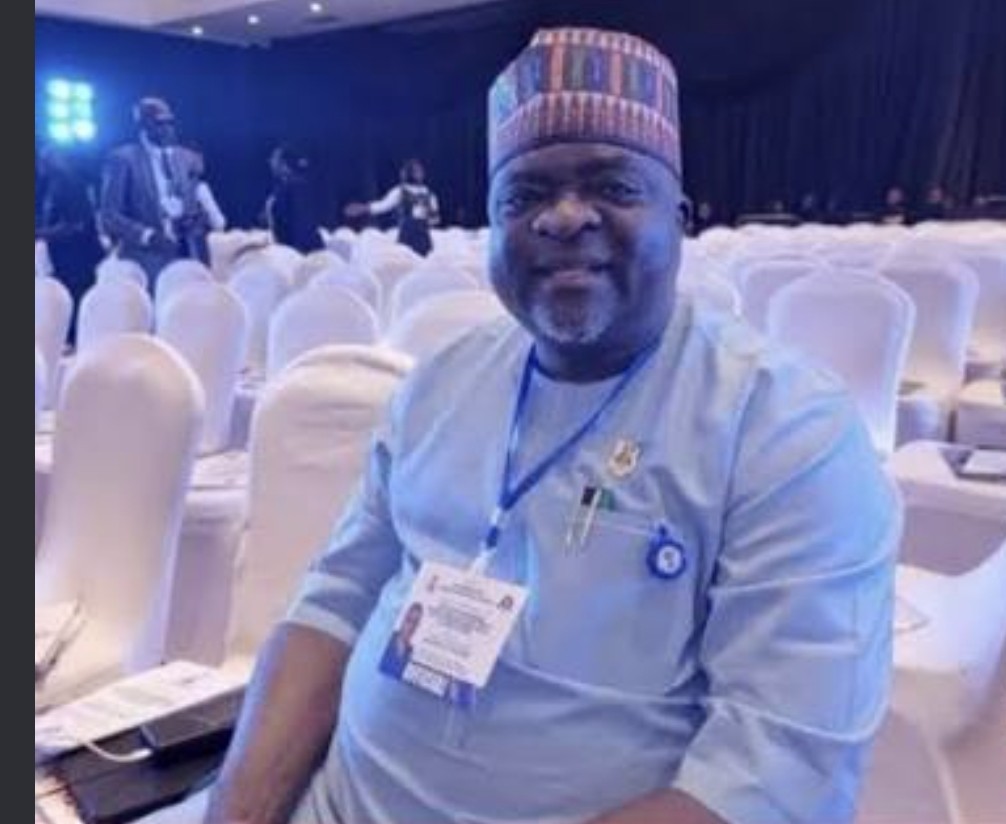
Late Abang
“I don’t understand, I was with him on Tuesday, I slept in his hotel,” Osang said.
Michael Gabriel Jr., Executive Media Assistant to Senator John Owan-Enoh, Minister of State for Industry, also described Williams as “a dedicated public servant and a good man.”
He said Ikom Local Government Area had lost a committed public servant, adding that Williams’ life of service, humility and impact would remain in the memories of those he touched.
The commissioner’s death has thrown Cross River’s political and public service circles into mourning, with condolences pouring in for his family, colleagues and associates.

-

 News2 days ago
Commissioner Dies Suddenly at Abuja Hospital
-

 Politics2 days ago
2027: Odii: I’ll Attract ₦2tn Investment to Ebonyi in Six Months
-
 News2 days ago
Sept. 26 Polls: ‘ENSIEC is over 90% ready’ – Chairman
-
 Crime2 days ago
Gunmen Attack Commercial Bus, Kill Nine Passengers
-
 Crime3 days ago
Enugu Police Probe Alleged Disruption of Political Gatherings, Warn Against Violence
-
 News2 days ago
Why Nigerian Leaders Should Spend Vacations at Home – Ebonyi Reps Candidate
-
 News3 days ago
Hotel Building Collapses in Enugu Kills One, Traps Workers
-

 Crime2 days ago
Kidnappers Dump 16-Year-Old Enugu Boy Near Onitsha Checkpoint, Police Rescue Him