



Politics
Tension in PDP: Govs, BoT reconvene as NEC meeting stalls

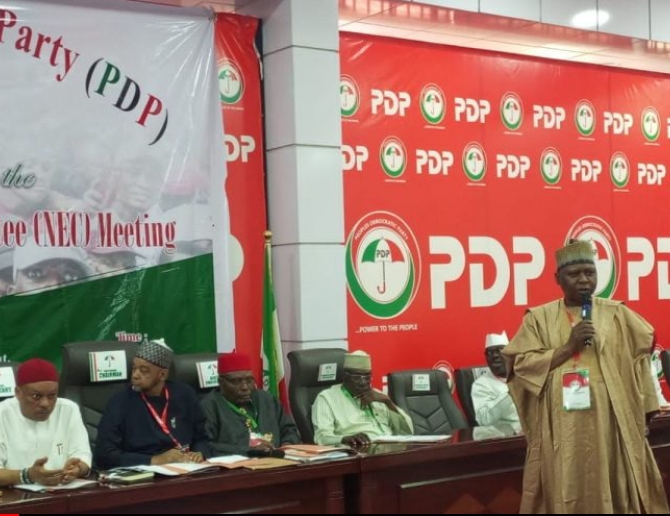

The National Caucus meeting of the Peoples Democratic Party on Monday concluded without a resolution with the Governors’ Forum, the Board of Trustees leadership, and the peace committee headed by former Senate President Bukola Saraki set to meet on Tuesday (today) to decide the way forward for the stalled National Executive Committee meeting.
PDP acting National Chairman, Umar Damagum, told journalists after nearly three hours of the caucus meeting in Abuja on Monday that the discussions would resume today by 10am.
Meanwhile, several prominent members of the PDP National Caucus, including former Vice Presidents Atiku Abubakar and Namadi Sambo, as well as former Senate President David Mark and former Speaker, House of Representatives, Aminu Tambuwal were absent from the meeting, which was intended to lay the groundwork for the 99th National Executive Committee meeting originally scheduled for May 27.
The PDP has been grappling with internal political unrest both before and after the 2023 elections.
Challenges such as the crisis in Rivers State, disputes over the South South Zonal Congress, the controversy surrounding the position of the party’s National Secretary, and most recently, the North Central Zonal Congress, have further destabilised the party.

Minister of the Federal Capital Territory, Nyesom Wike, along with Governors Caleb Mutfwang (Plateau), Ahmadu Fintiri (Taraba), and others, are angered by decisions made by the National Working Committee and the PDP Governors’ Forum.
These decisions, largely shaped by Oyo State Governor, Seyi Makinde, Enugu State Governor, Peter Mbah, and Bauchi State Governor, Bala Mohammed, were seen as undermining the political influence of the Minister of the Federal Capital Territory.
Despite efforts by major party bodies like the NWC, Board of Trustees, NEC, and Governors’ Forum to mediate, the internal conflicts have only deepened, spreading across states and geopolitical zones.
This unresolved tension has stalled the NEC meeting and obstructed vital decisions regarding the party’s future.
The 98th NEC meeting, held on April 18, 2024, failed to resolve key disputes, escalating the division within the party. Although the 99th NEC meeting was originally planned for August 15, it was repeatedly postponed—to October 24, then November 28—before being indefinitely suspended.
Facing mounting pressure, the PDP Governors’ Forum, under the leadership of Bauchi State Governor instructed the NWC in December 2024 to hold the NEC meeting by February 2025. This directive was reinforced during a January 31 meeting in Asaba, where March 13 was proposed. However, the date was again pushed to May 15 after further consultations.
Finally, during a meeting in Ibadan on April 11, a new date of May 27 was agreed upon. To ensure the meeting holds as scheduled, a seven-member committee composed of serving and former governors, led by former Senate President Bukola Saraki, was established to address outstanding issues.
In reaction to their refusal to recognise his allies, including Anyanwu as secretary, and to meet his demands, Wike on Sunday formally pulled out of all previous agreements intended to resolve the PDP’s internal crisis and pledged to continue the fight.
On Monday afternoon, around 2:06pm, the Federal Capital Territory Authority taskforce sealed several properties, including the PDP National Secretariat in Wuse Zone 5, Abuja, over unpaid ground rent.
As a result, the BoT meeting, originally set to take place at Wadata Plaza by 3pm, was relocated to the party’s Legacy House office in Maitama for 4:30 p.m.
The meeting did not take place, and no additional explanation was given.
Additionally, after hours of discussion, the Governors, BoT leaders, and Saraki panel were unable to resolve the issues and postponed the meeting to 10:00 a.m. on Tuesday.
Speaking to the media, Damagum, accompanied by the PDP governors, stated that the results of today’s meeting would decide if the NEC meeting will take place.
He stated, “As you can see, we just adjourned our meeting for today (Monday) till tomorrow (today) 10am. This meeting is going to continue. We just set up a small committee that would give us a report and tomorrow (today) morning, we’ll continue.”
When asked whether NEC meeting would hold as scheduled, Damagum said, “When you come tomorrow (today), we will answer this question after our meeting.”
Reliable sources, who attended the National Caucus meeting, told The PUNCH on condition of anonymity due to lack of authorisation to speak on the issue, that the meeting was adjourned to allow Saraki’s panel meet with some party leaders Monday night.
He stated, “The meeting has been adjourned until tomorrow, Tuesday. Tonight, some of the party leaders will meet. Saraki’s panel will also meet and present solution reports tomorrow.
“These solution-based reports will set the pace to reopen peace discussions and determine if the NEC meeting can hold as scheduled. If not, a new date for the NEC meeting will be announced.”
The PDP is facing one of its most difficult times since its formation in 1998. Having lost several members in the federal parliament, the latest being Oluwole Oke, a five-time member of the House of Representatives from Osun State, more defections, as being touted, would place the party at a competitive disadvantage with the ruling APC, with less than two years to the 2027 general election.
There’s also the dramatic defection of the PDP’s former vice presidential candidate, Ifeanyi Okowa; the Delta State Governor, Sheriff Oborevwori and the entire PDP party structure in Delta, one of the former ruling party’s strongholds, to the ruling All Progressives Congress.
Delta Deputy Governor Monday Onyeme, state commissioners, local government chairmen, and the state’s grassroots machinery all bowed to ‘Hurricane Tinubu’, which had swept the PDP apart, with the opposition claiming the country was drifting towards a one-party state.
Umar Damagum has faced intense criticisms since taking over from Iyorchia Ayu.
The crisis has disrupted operations at all levels, with most state chapters in disarray and zonal structures — particularly in the South-South — severely weakened.
Conflicts over the position of National Secretary have further split the National Working Committee, leaving it largely ineffective.
Additionally, the terms of many Board of Trustees members have lapsed without replacements, and the few remaining are split into opposing camps.
By Okey Maduforo, Awka
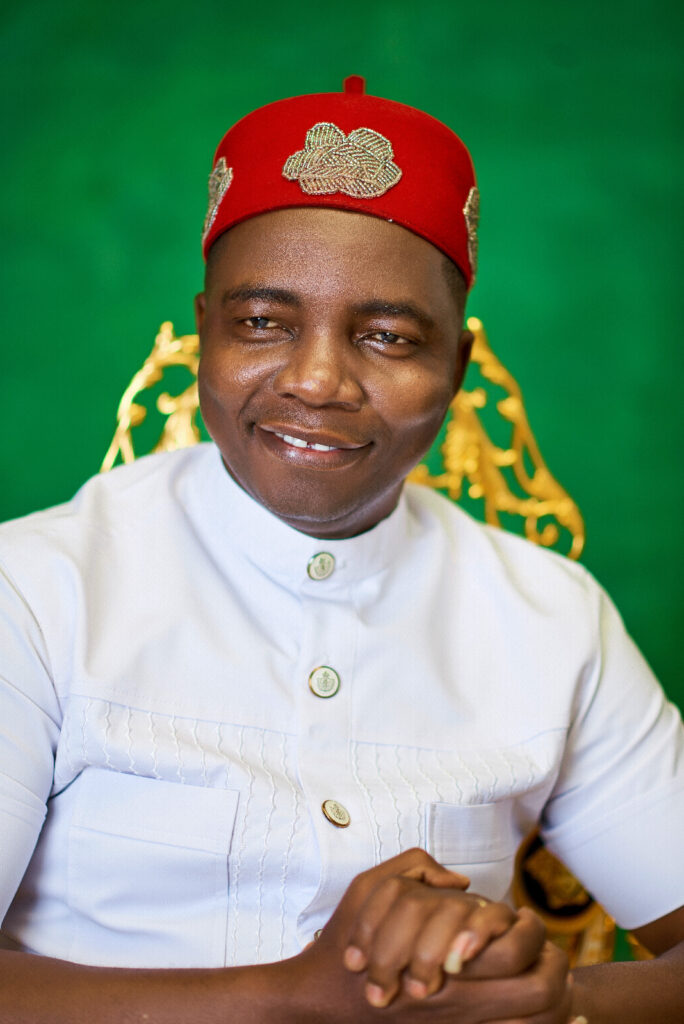
Ahead of the 2027 National Assembly elections, a mass protest voting movement may be building up in Anambra South Senatorial District, following reported moves by members of major political parties to support the candidate of the Nigeria Democratic Congress (NDC), Chief Ebuka Onunkwo.
The development is said to be linked to grievances among some members of the All Progressives Grand Alliance (APGA), All Progressives Congress (APC), African Democratic Congress (ADC) and remnants of the Peoples Democratic Party (PDP) over the treatment allegedly meted out to Onunkwo during previous political contests.
Onunkwo, who had previously contested the Anambra South senatorial seat under APGA, later emerged as the NDC candidate for the 2027 election.
Although the ADC is currently embroiled in legal disputes over the authentic candidates and the conduct of its primary elections, some members of the APC and APGA are also reportedly dissatisfied with developments within their respective parties.
It was gathered that a section of APGA members, in particular, are backing Onunkwo as a form of protest over the conduct of the party’s senatorial primary, while some members of other parties are also believed to be considering voting for him irrespective of their party affiliations.
Confirming the growing support for Onunkwo, the Chief Executive Officer of NOWAS Oil and Gas Limited and a major stakeholder in Anambra South politics, Chief Ignesus Ikechukwudere Nnubia, said the NDC candidate currently enjoys widespread acceptability across party lines.
Nnubia said the growing support for Onunkwo had made his party affiliation less significant, arguing that voters would ultimately vote according to their conscience and assessment of the candidates.
He said, “At the moment, the number of APGA members with him and supporting him makes one wonder what is left of that party. Even the remnants of the PDP have pitched their tents with him, while members of the ruling APC at the national level are also behind him.
“So, the party that he belongs to is not a factor at all. You know that it is a game of numbers, and people are going to vote according to their conscience and not necessarily because of the political party they belong to.
“People are not bound to vote for their party, and some of them are ready and willing to vote for him.
“We are not talking about the party because he will surely get votes from the NDC, APGA, APC and even other political parties that are already closing ranks to support him as their candidate.”
Nnubia further described Onunkwo as the candidate currently standing tall among the contenders for the Anambra South senatorial seat, expressing confidence that his emergence would usher in what he described as a “new dawn” for the district.
He said political parties should not be the major consideration for voters, stressing that what matters most is the ability of elected representatives to improve the lives of their constituents.
According to him, political parties exist because of the people, and therefore the influence of party structures and incumbency has its limits during elections.
Nnubia said those factors would ultimately be tested by the electorate in the 2027 election, which he described as a contest in which voters’ choices would determine the outcome.

The Peoples Democratic Party (PDP) governorship candidate for the 2027 Ebonyi State election, Chief Ifeanyi Chukwuma Odii, has pledged to attract more than ₦2 trillion in private-sector investment to the state within six months of assuming office if elected.
Odii made the pledge while addressing supporters in Lagos ahead of the formal commencement of his campaign.
He said his investment strategy would cover key sectors of the Ebonyi economy, including mining, hospitality, real estate and manufacturing.
According to the PDP candidate, he has identified more than 2,000 prospective investors, each capable of investing about ₦1 billion in the state.
“I have over 2,000 people who can invest ₦1 billion each. When you multiply it, you will get over ₦2 trillion. This has been structured in such a way that all aspects of the economy will be involved,” Odii said.
He said the proposed investment drive was designed not only to inject capital into the state but also to create jobs, expand the productive base of the economy and provide opportunities for young people and entrepreneurs.
Odii said Ebonyi’s natural resources and strategic location placed it in a strong position to attract large-scale investments if its economic potential was properly harnessed.
He promised that his administration would prioritise private-sector participation, industrialisation and job creation while creating an enabling environment for both local and foreign investors.
The candidate also said existing businesses in the state would be supported to expand, while new investors would be encouraged to establish operations across various sectors.
His pledge comes amid growing political activities ahead of the 2027 governorship election, with economic development, employment generation and wealth creation featuring prominently in his campaign message.
The proposed ₦2 trillion investment target within six months, if achieved, would represent a significant boost to Ebonyi’s economy and rank among the most ambitious private-sector investment mobilisation plans proposed in the state.
By Okey Maduforo, Awka
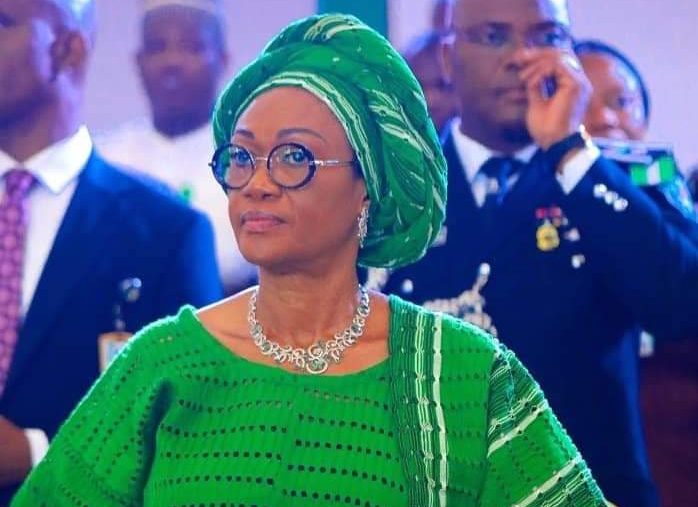
The planned visit of the First Lady of Nigeria, Senator Oluremi Tinubu, to Anambra State has sparked controversy following a protest by the state Chairman of the All Progressives Congress (APC), Senator Emma Anosike, that the party was not informed about the visit.
Anosike said the APC in Anambra was never consulted or briefed about the proposed visit, adding that the party was taken aback by reports that the wife of the party’s national leader and presidential candidate, President Bola Ahmed Tinubu, would be visiting the state without recourse to the state chapter.
He said, “It is indeed strange that the First Lady of our presidential candidate is visiting Anambra State without recourse to the party in the state.
“The party wishes to state categorically that we are not part of the arrangements for the reception of our First Lady, Senator Oluremi Tinubu, because the party was never put in the picture.”
Anosike also dismissed the mantra that “The Progressives Are Working Together”, being canvassed by the All Progressives Grand Alliance (APGA), describing it as a smokescreen by the ruling party in Anambra to hijack President Tinubu’s re-election from the APC.
He said, “For instance, the APGA-led government in Anambra State did not interface with us on the organisation of the visit, and the party wonders if the progressives are indeed working together.”
The APC chairman, however, said the development would not compromise the First Lady’s visit, urging all APC members and supporters in the state to turn out and give Senator Oluremi Tinubu a warm welcome.
He stressed that despite the party’s reservations over the arrangements, APC members remained committed to welcoming the First Lady to Anambra State.
Former Deputy Governor of Bauchi State, Sagir Saleh, has resigned his membership of the All Progressives Congress (APC).
Saleh, who served as deputy governor under former Governor Isa Yuguda, announced his resignation in a letter submitted to the party leadership in Katagum Local Government Area.
He cited personal reasons for his decision but did not provide further details.
His exit comes amid growing disagreements within the Bauchi APC following the party’s 2027 governorship primary. Other prominent members, including former governorship aspirant Bala Jibrin and Sunusi Kunde, an associate of Coordinating Minister of Health and Social Welfare, Prof. Ali Pate, have also reportedly left the party.
Jibrin, a former National Auditor of the defunct Congress for Progressive Change (CPC), resigned on August 31, 2026, following his opposition to the emergence of former Bauchi Governor Muhammad Abubakar as the APC’s 2027 governorship candidate.
He had criticised the primary process and questioned how the candidate emerged.
Kunde also resigned from the APC in August, submitting his resignation to the party chairman of Beti Ward in Misau Local Government Area.
The latest departures are coming as efforts continue to resolve internal disputes and disagreements among APC members in the state.
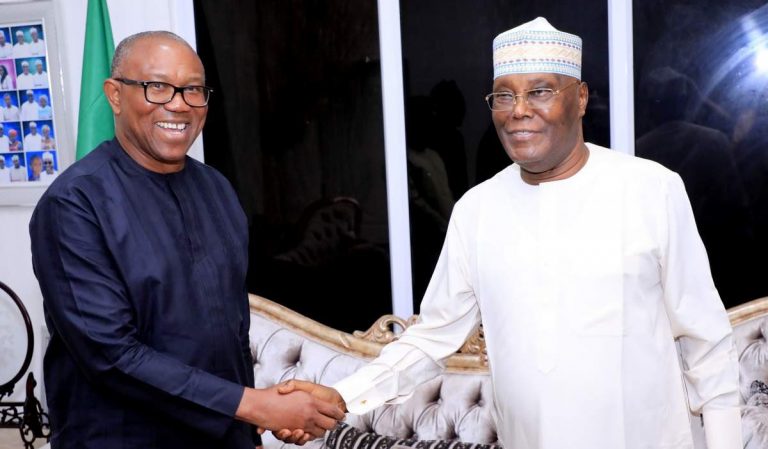
The Leader of INRI Evangelical Spiritual Church, Primate Elijah Ayodele, has raised the alarm over an alleged plot to assassinate former Anambra State Governor, Peter Obi, and former Vice President Atiku Abubakar ahead of the 2027 general election.
Ayodele issued the warning in a video shared on his verified X account on Sunday, urging both opposition figures to strengthen their security and remain vigilant.
The cleric did not identify those allegedly behind the purported plot but claimed that attempts were being made to eliminate Obi and Atiku.
According to him, divine intervention would prevent the alleged plan from succeeding.
“Obi and Atiku, be very conscious of your security. They are looking for any means to eliminate Obi and Atiku.
“But God will never allow it to happen. Watch out and be cautious about your security,” he said.
Ayodele also urged President Bola Tinubu to reconsider travelling to the United States, alleging that there were forces in America working against his political fortunes.
The claims come as political activities and realignments intensify ahead of Nigeria’s 2027 general elections.

-

 News5 days ago
Commissioner Dies Suddenly at Abuja Hospital
-

 News5 days ago
Sept. 26 Polls: ‘ENSIEC is over 90% ready’ – Chairman
-

 Crime5 days ago
Kidnappers Dump 16-Year-Old Enugu Boy Near Onitsha Checkpoint, Police Rescue Him
-
 Uncategorized5 days ago
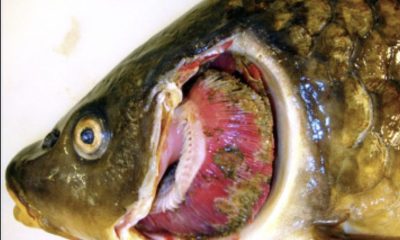
UK Confirms Koi Herpesvirus Outbreak, Restricts Fish Movement
-
News5 days ago
Niger Delta Chambers Unveils Plan to Transform Region Into Investment Hub
-
 News4 days ago
Dangote Reveals He Bought First Private Jet at 22
-
News5 days ago
Niger Delta Chamber Breaks Silence on Alleged Summit Trademark Dispute
-
 Health3 days ago
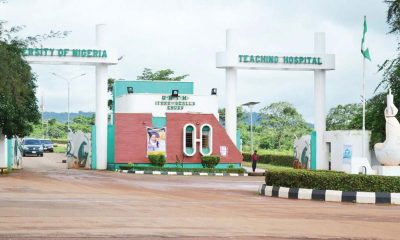
UNTH Begins Contact Tracing After Suspected Diphtheria Case