



Foreign
I’m scared of returning home – US-based bizwoman

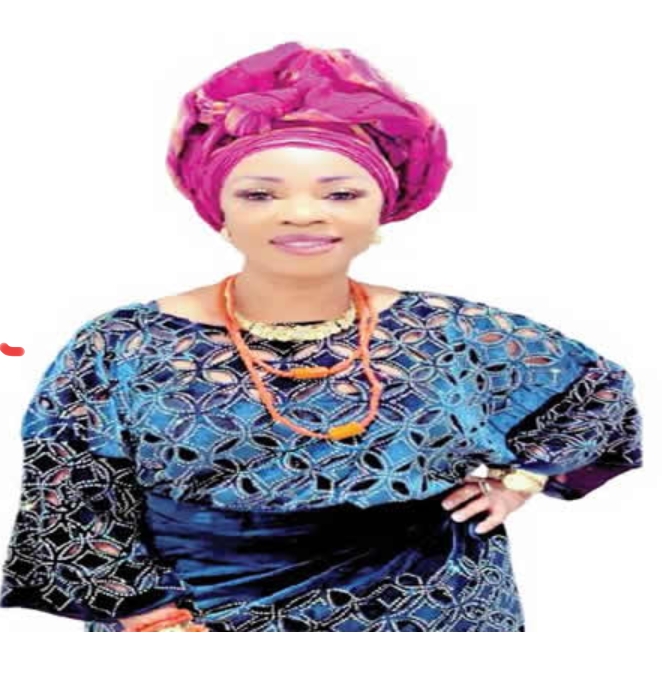

President of the Bini Club of Houston, United States, Lydia Aguebor, speaks on her struggles in search for greener pastures, community leadership in Houston, and why she is scared of returning to Nigeria because of the way her mother died
How will you describe your stay in the US?
I’m a mother of three beautiful children in the US. I relocated to America in 2005. When I first settled here, it was quite challenging because I left my comfort zone to come to a land where I knew nobody. Settling here came with its challenges. I came here to start from scratch. It was a lot of battles. Basically, it was tough for me in terms of job search and career. I studied Law at the University of Benin. And being in the US requires you to have licences for the things you do.
What kind of challenges did you experience?
There were only menial jobs to do in the beginning. Even, there were jobs that I didn’t get because of overqualification. When I submitted copies of my resume to some places, they would tell me I was overqualified for the job. They called it a college degree here, and I was asked to lower my qualifications. I had to do it because I needed jobs to make money. After all, bills were mounting. I started working with a fast food outlet where chickens were sold. I did that for a year. Then I worked for the State of Texas for eight years. Then, I began working on my papers. I wasn’t really happy with what I was doing. Later, I decided to start my business.

You said you didn’t like some of the things you did at scratch. What were they?
When I worked as a cashier or more or less of an attendant at a fast-food outlet, I would pass the money to another person in the inner lobby who would bring the order for me to give to the customers. I also worked as a cashier at a place called Target like a grocery store. It could be likened to ShopRite in Nigeria.
Why did you leave Nigeria in 2005?
I never worked before leaving Nigeria. I was a full-time housewife. I started coming to the US in 2002 when I was a law student at the University of Benin. Anytime I came to the US, I just loved it and dreamed of settling there. So, I came here in search of greener pastures.
What kind of business did you venture into?
I started a legal business. It started in my living room. The company was about helping people file their travel and immigration documents. When my client base was increasing, I moved on to get a place. I still couldn’t afford an office for myself. I had to pair up with someone. I only just had a chair, desk, and printer in that office. I started my business in June 2014.
What factors contributed to your business growth in the US?
The whole factor was narrowed down to the clients in my community. I knew the people I wanted to render services to. I did the feasibility study to know the kind of people to attract to my business. I started giving out fliers. My clients were mostly Nigerians, Africans, and Hispanic communities like Mexicans. Basically, I targeted the immigrants. They were the markets I was looking at. These people needed the services I offered. Apart from that, I gave them good service. I had a passion for helping and serving people. This made my business grow because I began to get referrals. When immigrants came to the US looking for a way to stabilise themselves and get their papers, people referred them to me based on the good services I rendered to them or their relatives. If I wasn’t doing good jobs, I wouldn’t get those referrals. These helped my company.
How did you come about being a community leader?
I’m from Edo State. Therefore, I’m the President of the Bini Club of Houston. I was born and raised as a Bini in Benin City. When I relocated to the US in 2005, I first settled in Dallas for a year, before I moved to Houston. Then, in 2006, I wanted to associate with my people and tell them what I did for a living. That was when one of my aunties introduced me to the Bini Club of Houston. I registered as a member and in the following year, I became their secretary through election. I served as the secretary for eight years to different administrations. It was a two-year tenure, so I had four tenures. Two years ago, I became the vice president. When the president was leaving this year, I ran for the office. I emerged as the first female president of the Bini Club of Houston. This is just my 11th month as the president.
How long has the Bini Club of Houston been in existence?
It has been in existence for 35 years.
Nigerians in the diaspora say that it is not always greener on the other side. Do they say this to discourage those at home not to come and join you abroad?
That word is 100 per cent correct. America is not a bed of roses. I told you when I came here as a trained lawyer, I had to begin as a cashier. Ordinarily, I wouldn’t do that in Nigeria. But coming to the US to succeed requires a process. The mentality we get from our people is that they think when you get to America or other places, you will just start making money, but it isn’t like that. You have to start from scratch. Whoever you are, America will humble you. We’re not saying that word to scare people away from relocating. It is just the reality. The reason is that as a professional in Nigeria maybe a doctor, engineer, or lawyer, you need to get your certifications here. This requires a lot of processes with money. For some people, their immigration status prevents them from working as a professional, so we take all of these into consideration and say, ‘it is not always greener on the other side.’ We pay bills. The first thing is to regularise your papers and we have many ways of doing that. The lucky people were those who came in with a visa lottery and that has been blocked for Nigerians.
How do you cope with pressures from relatives who need financial assistance from home?
We’re Nigerians and have to cope. I have a lot of relatives because my father was a polygamist. I’m number 10 of 24 children from eight mothers. By God’s grace, I can say everyone is successful because the family is big. However, there are still relatives, friends or other people who will come for one help or the other. Notwithstanding, my principle is to teach people how to fish not give them fish when they seek help. I prefer to help people with lasting solutions, not giving stipends here and there. With that, I don’t put unnecessary burdens on myself. This is different from just occasional giving like the festive periods because we are used to it. It is who we are. I learned that things are expensive in Nigeria now so it’s my responsibility to also try and give people more than what I gave last year.
How do you feel when you hear about the economic hardship in Nigeria?
It’s not a pleasant feeling at all. I feel bad. I think of how people survive in Nigeria. Honestly, I don’t understand. I hear people can work for months in some organisations without being paid. How do they cope? You can’t do that in the US. There are bills to pay. I own my home here, but I pay my mortgage every month. If I’m working for someone and I don’t get paid, it means I’ll be evicted from my house, my electricity will be cut, I won’t have food and others. It is a month-to-month country. My heart bleeds for people back at home. I don’t understand why the government treats citizens like that. I hear about the disturbing unemployment rate. I don’t understand how those who have jobs even cope because I was told a bag of rice is around N120,000.
As an American citizen, what are your thoughts on the election that returned Donald Trump?
For me, it is what is good for America that I stand for. I am a businesswoman, so I stick with what is good for the US. Both Kamala Harris and Donald Trump have their qualities but it’s for the American people to decide who they prefer. I voted as a US citizen but won’t tell you who I voted for. American politics is interesting. We don’t have a choice but to embrace Trump as our president. We’re optimistic that he will do better than the last time he was there. Just like when President Bola Tinubu came in as president of Nigeria, a lot of people didn’t want him but he’s there today. There’s nothing anybody could do about it but to respect the process.
Will you lend your voice to the japa syndrome for Nigerians to search for greener pastures around the world or sit at home to survive?
It would have been better for all of us to stay back and use our skills to build Nigeria, but successive governments have proved that they don’t want to support the people. The skills that we’re taking to diaspora are the skills we should have used for our country. For me, if anybody has the opportunity to better their lives somewhere else, it is a welcome development. And there are still people who don’t want to go anywhere but make Nigeria great; that’s also good. We just have to do what is best for our lives as Nigerians.
What project do you have for the people back at home?
I have an initiative called Lydia Aguebor Foundation. I attended Idia College for my secondary school. I finished in 1988. Our alumni is strong in Houston and we give back to our community. So, I started my foundation when I turned 50. I will be 53 next month. So, I used that foundation during my birthday to sponsor students who are brilliant but can’t afford their WAEC fees. I paid for their WAEC fees. I will do it again this year. I also give them money to buy their sandals and backpacks.
Do you plan to relocate to Nigeria in the future?
I can’t decide that yet. Nigeria is my country. I love Nigeria. I’m always happy when I come. That’s the only time I don’t have to work. I make sure I eat all the organic foods that I’ve missed in the US. Having said that, I don’t know if I’ll settle in Nigeria. Maybe I can come when everything gets better. Security and healthcare are a big deal for me. I don’t see that yet in Nigeria. My mother died in 2022 in Nigeria because they removed the oxygen she was using before they could transfer her from one hospital to another. This always gets me emotional when I remember. Imagine, my mother was on oxygen and a particular hospital said they could not take care of her again. So, they took away their oxygen. How did they want her to survive from one point to another? I usually think that the poor healthcare system in Nigeria killed my mother. All of this gets me scared of coming back to Nigeria. But, when the government makes the country better, I’ll come. If the economy is stabilised, all of us in the diaspora will come back home.
Source: PUNCH
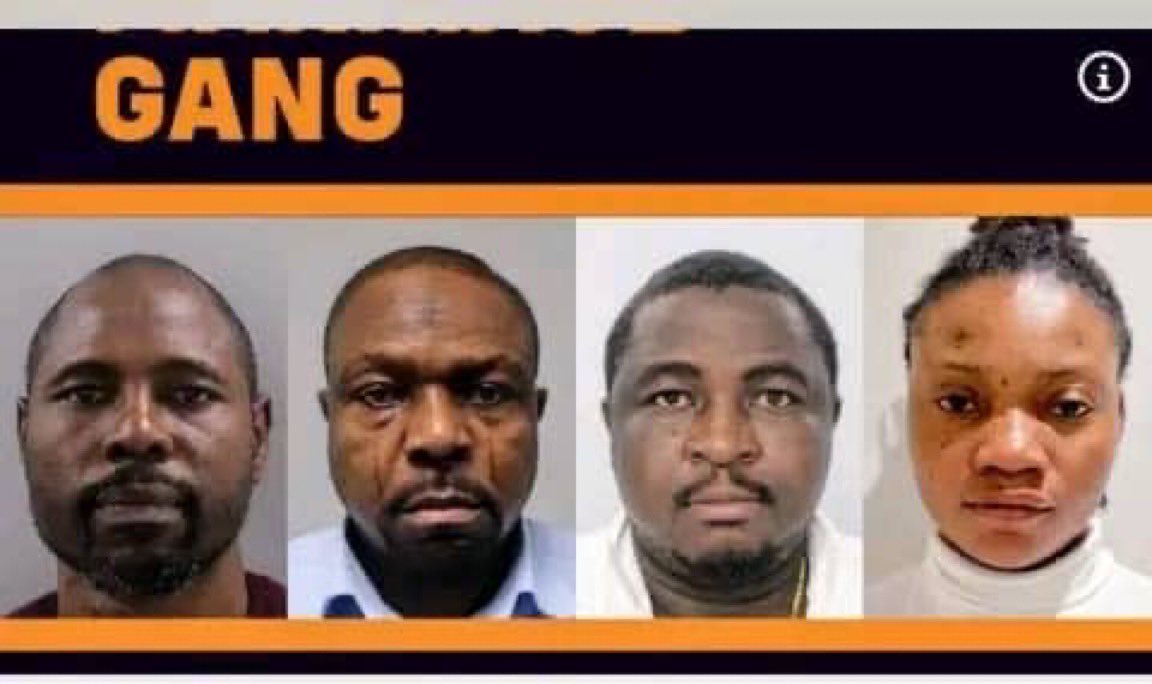
Four Nigerians have been sentenced to a combined 17 years and nine months in prison by a United Kingdom court for their roles in a fraudulent scheme involving thousands of fake Nigerian marriage documents used to facilitate illegal immigration.
The four were sentenced at Woolwich Crown Court after being found to have participated in a network that allegedly produced more than 2,000 forged Nigerian customary marriage certificates between 2019 and 2023.
The fake documents were reportedly used to support applications under the UK’s EU Settlement Scheme, enabling people who were otherwise ineligible to obtain immigration status in the country.
The convicts were identified as Abraham Alade Olarotimi Onifade, 41; Abayomi Aderinsoye Shodipo, 38; Nosimot Mojisola Gbadamosi, 31; and Adekunle Kabir, 54.
Onifade was sentenced to six years in prison for conspiracy to facilitate illegal entry and fraud, while Shodipo received five years for the same offences.
Gbadamosi was sentenced to six years after being convicted of obtaining leave to remain by deception.
Kabir received a nine-month prison sentence for possession of a false identity document.
The case highlights the serious criminal and immigration consequences of using forged documents to obtain UK immigration status.
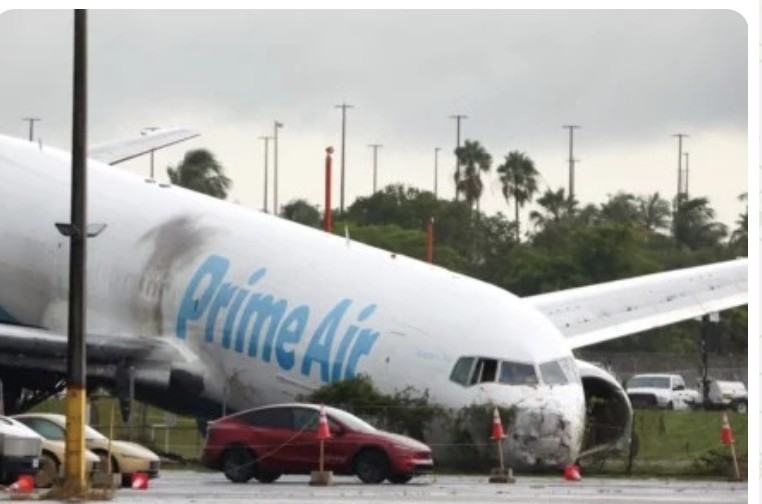
Investigators have recovered the flight recorders from an Amazon cargo plane that crashed while attempting to land at Miami International Airport, as authorities continue efforts to recover victims and determine what caused the deadly incident.
Five people were killed and five others seriously injured when the Boeing 767-300, operated by 21 Air, overran the runway shortly before 2pm local time on Sunday.
The aircraft, which had two crew members aboard, was arriving from San Juan, Puerto Rico, on its third flight of the day when it crashed.
According to the National Transportation Safety Board (NTSB), the plane struck airport navigational equipment before breaking through a perimeter fence and hitting two vehicles—a white Ford cleaning van carrying seven people and a Toyota Corolla with three occupants.
The aircraft eventually came to rest about 1,300 feet (394 metres) beyond the runway.
NTSB Chairwoman Jennifer Homendy said investigators were still in the fact-finding stage and warned against drawing conclusions about the cause of the crash.
She described the scene as “devastating” and said the immediate priority was recovering the victims.
“The investigation and access to the aircraft, as well as evidence, can wait,” Homendy said.
The flight data recorder and cockpit voice recorder have been recovered and will be transported to NTSB headquarters for detailed analysis.
Investigators are expected to examine the aircraft’s flight history, the crew’s experience and training, radar information, aircraft performance, mechanical systems and engines.
A meteorologist will also assess weather conditions at the time of the crash.
Earlier analysis by BBC Verify indicated that an active thunderstorm was near the airport shortly before the incident, with winds reportedly gusting to about 26 knots (48km/h).
The NTSB will also investigate whether the runway should have been equipped with an Engineered Materials Arresting System (EMAS), which is designed to help stop aircraft that overrun runways.
Homendy described the issue as a key part of the investigation.
The NTSB has appealed to members of the public who may have photographs or videos of the crash to submit them to investigators.
The agency said it would issue safety recommendations at the conclusion of the investigation, with Homendy stressing the need to prevent similar tragedies in the future.
Meanwhile, two of Miami International Airport’s four runways remained closed following the crash, with passengers warned to expect further disruption.
The incident occurred during the US Labor Day holiday weekend, one of the country’s busiest travel periods, resulting in flight cancellations and disruption to aircraft and crew movements.
Amazon expressed grief over the loss of lives and said it was working closely with authorities.
21 Air, the company operating the aircraft, also expressed condolences to the victims and their families and said it was cooperating fully with the investigation.
The investigation into the crash is ongoing.
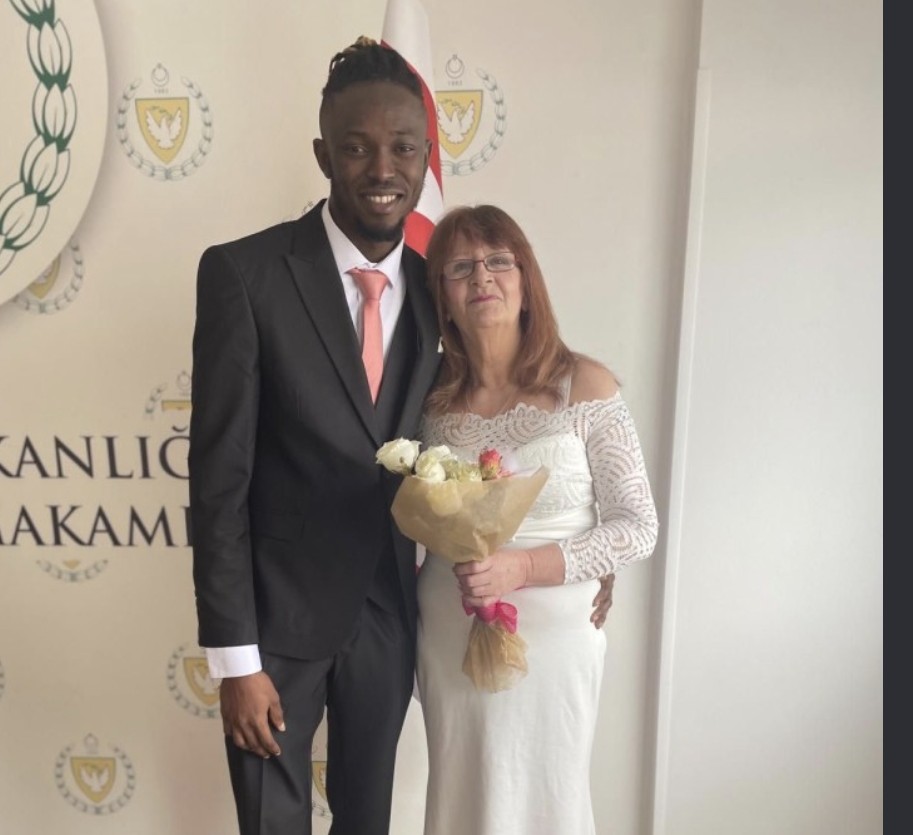
A 68-year-old British woman, Dawn Ottewell, has claimed that her 31-year-old Nigerian husband, Bright Emokpae, disappeared from their home months after moving to the United Kingdom on a spouse visa.
Ottewell, from Dewsbury, West Yorkshire, told The Sun UK that she met Emokpae, an Edo State native, on dating platforms Tinder and Plenty of Fish in 2021 while she was experiencing loneliness and depression.
According to her account, Emokpae initially introduced himself as “Brian Thomas” before later revealing that he was a fashion student from Benin City.
The relationship reportedly developed through regular video calls, after which Ottewell travelled to northern Cyprus, where Emokpae was studying on a student visa.
The couple married at a registry office in Nicosia on March 22, 2022, with two Turkish friends acting as their best man and maid of honour.
Following the wedding, Emokpae returned to Nigeria to process his UK spouse visa. About a year later, after the visa was granted, Ottewell travelled to Heathrow Airport to welcome him to Britain.
However, Ottewell said their relationship deteriorated after his arrival in the UK.
She alleged that Emokpae became increasingly distant, regularly asked her for money and refused to contribute to household expenses, while allegedly sending money to Nigeria.
Her 72-year-old brother, Rory, reportedly helped Emokpae secure a job with a local door manufacturing company.
The couple separated briefly in October 2023 but later reconciled, about six months after the separation. Ottewell said the reconciliation occurred after she received a £63,000 settlement following what she described as a botched NHS prolapse operation.
She now says she regrets taking him back.
Ottewell recalled that shortly before Christmas 2024, she went on a £2,000 Caribbean cruise with her brother. When she returned home, she allegedly discovered that Emokpae had left.
She said he has not returned since and has blocked her on social media, leaving her unable to contact him.
Ottewell believes her estranged husband may now be living in Scotland, where she suspects he runs an online clothing business.
“He’s done a runner and is refusing to sign the divorce papers because I believe he wants to cling on to his spouse visa,” she said.
The woman also expressed concern about what could happen to her estate if she dies before their marriage is legally dissolved.
“My biggest fear is that I’ll die before this is sorted out and he’ll run off with the money my three children should inherit,” she said.
Ottewell said she does not currently have a will and fears Emokpae could potentially make claims against some of her assets, including jewellery, cash and furniture.
She is now seeking assistance from Citizens Advice to help locate her estranged husband and serve him with divorce papers.
“I feel I’m being used,” Ottewell said.
She also advised people to exercise caution when entering relationships that involve international partners, saying she believed her husband had married her primarily to obtain a UK visa.
However, her claims about Emokpae’s motives have not been independently established.

A UK-based Nigerian taxi driver, Kolawole Erunkulu, 45, has been sentenced to six years in prison after falling asleep at the wheel and fatally hitting a 59-year-old man.
Erunkulu, from Bexleyheath, was driving an Audi on August 17, 2025, when he suffered a “microsleep”, causing the vehicle to leave the road and collide with Philip Dray, who had stopped in a lay-by.
Dray was getting into his Volkswagen after taking a break from driving when he was struck.
According to reports, Erunkulu had worked for about 12 hours on the day of the crash, taking only short breaks. In the three days before the fatal collision, he had driven for 53 hours, with his longest rest period being seven hours.
Footage from inside his vehicle showed Erunkulu falling asleep briefly before the Audi swerved off the road and hit Dray. The vehicle continued moving for about 10 seconds after the collision.
A microsleep is a brief episode of sleep that can last only a few seconds, during which the brain fails to properly process information.
Erunkulu pleaded guilty in June 2026 to causing death by dangerous driving.
He was sentenced to six years in prison and disqualified from driving for eight years. He will also be required to pass an extended driving test if he seeks to regain his licence.
Sentencing him, Her Honour Judge Lees said the footage demonstrated that Erunkulu was extremely tired and should have known that he was not fit to drive.
“The footage shows the defendant was extremely tired and, in my view, has continued to drive when he must have known that. He was driving commercially,” the judge said.
She added that the incident could have been prevented if Erunkulu had stopped driving and slept.
Acting Detective Inspector Rob Baldwin of the Serious Collision Investigation Unit said the case highlighted the potentially devastating consequences of driving while fatigued.
He said Erunkulu had worked long hours with insufficient rest, resulting in a “sleep debt”.
“Fatigue can seriously impair a driver’s ability to remain alert and react safely, particularly during the early hours of the morning when the natural drive to sleep is at its strongest,” Baldwin said.
He urged motorists who feel tired not to continue driving.
Dray’s family described him as “an amazing partner and man” who was dependable, caring and respectful.
His sister said Philip was a quiet man who cared deeply about others and had spent his life as a careful and conscientious driver.
“The fact that he, someone who worked every day to keep others safe, had his life taken in such a way makes this loss even more incomprehensible and tragic,” she said.
Dray’s partner described him as “a sweet, gentle, and caring man” and her “soulmate”.
She said his death had left an “enormous emotional and physical void” in her life.
“He would ring me several times a day whenever he was waiting for a client or at lunch, just to see how my day was going. I miss those calls very much,” she said.
Foreign
UK: 11 Drug Couriers Convicted Over £13.8m Cannabis Smuggling Plot Through Birmingham Airport
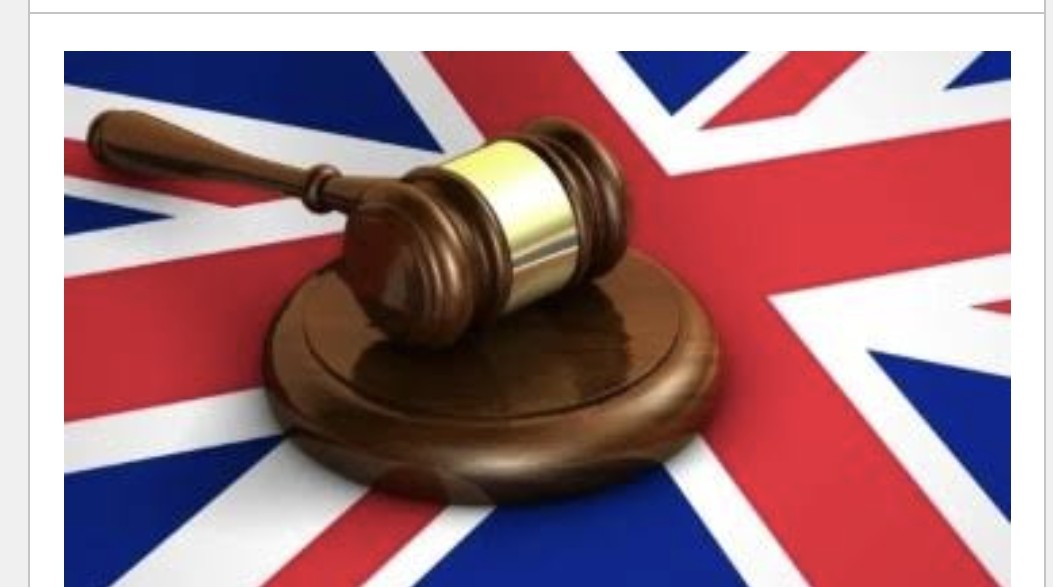
Eleven drug couriers have been convicted for their roles in a plot to smuggle cannabis worth an estimated £13.8 million into the United Kingdom through Birmingham Airport.
The National Crime Agency (NCA) investigated the group after Border Force officers arrested them in August 2024 and seized 460kg of cannabis concealed in 22 suitcases.
According to an NCA statement published on Wednesday, the couriers had travelled to the UK from Thailand via Paris Charles de Gaulle Airport on the same flights.
The convicted couriers were identified as Carsten Kyei, 21, from Newham, East London; Bradley Lloyd, 27, and Claire McCullough, 36, both from Wythenshawe, Greater Manchester; Lewis Ross, 35, from Bolton, Lancashire; Nathan Vitorino, 26, from Welwyn Garden City, Hertfordshire; Ryan Boachie, 32, from Edmonton, North London; Gideon Oluwasetemi Olumoyegun, 26, from Dagenham; Tasia Nelson, 22, from Newquay, Cornwall; Jaden Ramen, 23, from Colliers Wood, South London; Paige Crisp, 24, from Broomhall, Worcester; and Jamal Clarke, 22, from Walthamstow, London.
Birmingham Crown Court heard that each courier had two suitcases, with each suitcase containing about 20kg of cannabis.
The suitcases were reportedly so heavy that the couriers had to pay excess baggage charges at Bangkok Airport to have them placed in the aircraft hold.
The cannabis had been vacuum-packed and concealed beneath a thin layer of clothing. Eight of the suitcases also contained Apple AirTag trackers, which NCA investigators established were connected to the same Apple ID account.
Suspicion was raised after Border Force established that four passengers had travelled from Birmingham to Charles de Gaulle Airport earlier on August 9, 2024, each carrying two large suitcases.
Border Force officers subsequently fully staffed the Nothing to Declare channel and intercepted the group.
One of the couriers had also been instructed by an associate: “my man gonna be on the other side – don’t leave the airport until you see him leave.”
Kyei and Vitorino were convicted on May 26, 2026, following a three-week trial, while Ross and Lloyd changed their pleas to guilty during the trial.
Crisp, Nelson and Ramen were convicted on Wednesday, August 19, following a four-week trial.
McCullough, Boachie, Olumoyegun and Clarke had previously pleaded guilty.
Those convicted on August 19 will be sentenced on October 22, while the others will be sentenced on September 3.
NCA Senior Investigating Officer Paul Boniface said the operation involved extensive planning.
“A huge amount of planning went into this sophisticated attempt to bring hundreds of kilos of cannabis into the UK,” Boniface said.
He said the coordination of flights and luggage demonstrated “the lengths criminals will go to in order to hide their offending.”
“With thanks to Border Force, we were able confiscate these drugs and stop criminals from benefitting financially from the damage they cause,” he added.
Boniface warned people against agreeing to smuggle drugs into the UK, saying anyone who attempted to do so would face justice.
Adam Chatfield, Head of Border Force Midlands Command, said the convictions should serve as a warning to anyone considering transporting cannabis into the UK.
He said the young people involved now faced serious consequences, including criminal records that could affect their employment opportunities and future prospects.
Victoria Norman of the Crown Prosecution Service said prosecutors and investigators had pieced together evidence of a coordinated attempt to smuggle large quantities of drugs into the country.
She said the evidence resulted in six members of the group pleading guilty, while the others were convicted following trial.

-

 Politics3 days ago
Odii Shuts Down Abakaliki, Buys Fuel for Thousands of Supporters at Grand Reception
-

 Business3 days ago
Value Circle Africa berths in Enugu, promises wealth creation
-
Entertainment5 days ago
The Green Panther: Meet the Singer Behind ‘Heal Nigeria’ and ‘Higher Higher’
-

 Crime4 days ago
Freed NYSC Graduates Offered South-West Postings After Kidnap
-
 Crime4 days ago
Court Remands US-Based Car Dealer Over Alleged $680,000 Fraud
-
 Politics3 days ago
2027: Over 30,000 Enugu Teachers Endorse Mbah, Tinubu, Cite Welfare Improvements, Increased Education Funding
-
 Politics2 days ago
2027: Enugu Alleges Opposition Plot to Import Armed Thugs, Bandits
-
 Opinion2 days ago
EBONYI GUBER 2027: Are Clergy, Youths, Political Stakeholders Becoming Accomplices in Bad Governance?