




News
Border closure: Businesses collapse in northern communities, smuggling booms

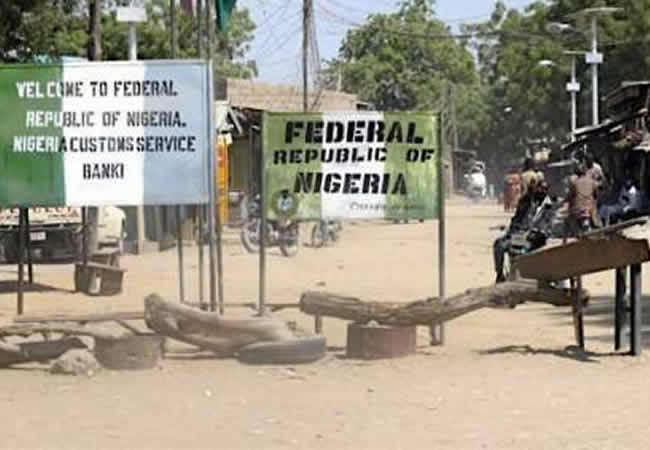

In the Jibia Local Government Area of Katsina State, residents expressed anxiety and anger at the low level of trading.
In Katsina State, aside from the Magamar-Jibia border post, another official border with the Niger Republic in Kwangolam (pronounced Kogolam) was equally closed.
A visit to Magamar-Jibia, Kogolam Maiyardua, Baure, Dankama, and Birni Kuka, among others, showed that economic activities were at the lowest ebb. The majority of traders in these communities now trade in farm produce such as yams and grains.
At Maiyardua, for instance, many traders have shifted from transborder trading to livestock, especially cattle, goats, and poultry. The presence of a cattle market seems to be the saving grace for the transborder traders in the community as no exports and importation businesses are taking place along the Kwangolam border post again.

Security operatives, including the policemen, officers of the Nigeria Customs Service and those of the Nigeria Immigration Service, still maintain their presence and checkpoints along the Kwangolam route.
Indeed, security operatives at the Nigeria/Niger Republic border control station at Kwangolam could be said to be on vacation as no activity was going on there. If not for the presence of some residents, who engage in the car wash business a few metres away from the border post and the rope put across the road at the main gate of the border post, one could easily mistake the place for another part of the town.
During an interaction with our reporter, residents expressed anger over the situation, saying the border closure had eroded their businesses and plunged them into penury.
Ado Usman, 42, said, “Before the border closure in August, I used to come to Kwangolam every day from Zango as I was selling any product brought in through the borders. The products were mainly rice, sugar, spaghetti, and milk. I had my customers then who used to come from Kano and from all over Nigeria because they knew that once they were here, they would get the product. But since the border closure, life has not been easy. Even when some of the products find their way here, they are too expensive for people to buy.
‘’Many of us now eke out a living by assisting people to buy and sell livestock at the Maiyardua Kara market. Many of us have even joined the Okada business to survive, while some of us have relocated to other big cities like Lagos, Ibadan, and Port Harcourt where we have friends and relatives to survive. Things are really hard here but we hope the border will be reopened one day.’’
In Magamar-Jibia and other surrounding communities, including Jibia and Daddara, trading activities are at a very low ebb. Many shops have been closed down while many traders are now trading in farm produce just as in Kwangolam.
Jibia town, which used to be a commercial hub, was a shadow of itself when he visited the town over the weekend.
Many traders in Jibia who volunteered to speak after being assured of anonymity alleged that even before Nigeria closed her border with the Niger Republic, officers and men of the NCS were extorting money from traders bringing goods to Jibia from other parts of the country. The traders added that this had discouraged many traders from conducting trading activities in Jibia.
Husseini Mubarak, 45, whose shop is located in one of the markets inside Jibia town, said, “We are begging the Federal Government to reopen the border in Jibia. The border closure has made many of us poor. No business: nothing is coming in; nothing is going out. Many of us now sell yams and grains to survive since those items we used to trade in are no longer coming in. Those of us who have farms cannot even go to the farms again because of bandits. There is no single week that bandits don’t storm Jibia. Life is really terrible here now.”
At the border control post at Magammar-Jibia a few farmers were seen passing through on foot either on their way to or returning from their farms. Otherwise, the premises of the border post were completely devoid of activities.
The security operatives on duty, who spoke on the condition of anonymity, said they were not facing any harassment from residents.
The Chairman of Jibia Peoples Forum, Alhaji Gide Dahiru, insisted that the border closure had brought hardships on the residents and the traders in the local government. He implored the Federal Government to find an amicable solution to the problem in the Niger Republic.
He declared, “As patriotic Nigerians, we support every action taken by the Federal Government on the border closure. We, however, need to tell the truth that many people, especially traders, now focus on farm products. The closure has made many to close shops as there are no products coming again.
“The situation in Jibia is compounded by the activities of bandits. People cannot go to farms again as bandits would kidnap them and demand ransom before they are released. So, food is scarce; there are no trading activities in all our markets again. Even the local products brought from other parts of Nigeria do not easily get to Jibia because of extortion by security agents along the Katsina/Jibia highway.
“We are only appealing to the Federal Government to know that Jibia is a local government in Nigeria and people residing there are Nigerians. Although some of us have historical links with the Niger Republic, the fact still remains that we in Jibia are Nigerians and should not be allowed to die of hunger and poverty because of the border closure and the activities of bandits.”
The Chairman of the Katsina State chapter of the Civil Society Organisations of Nigeria, Mallam Abdurahman Abdullahi, also declared that the Federal Government should review the current border closure with the Niger Republic.
He said, “Border closure affects economic activities of communities neighbouring Niger Republic. This by extension leads to an increase in criminal activities in those areas as people’s sources of livelihood have been cut off. If you go to Magama Jibia, Kongolom, Baure, Dankama, and other Katsina State communities sharing borders with Niger Republic, you will shed tears. These places that used to be commercial hubs in the past are made dry by border closure. ”
The NCS Comptroller in charge of the Katsina Area Command, Muhammed Umar, has, however, met with stakeholders in 12 border communities in Katsina State where he urged them to discourage trans-border crimes and promote national security.
Smuggling booms at Zamfara’s 100 porous borders
Zamfara State has no border post officially constructed by the Federal Government to check smuggling activities.
However, there are over 100 porous borders between the Zurmi and Shinkafi Local Government Areas of the state that link the country with the neighbouring Niger Republic.
Checks showed that there is free movement of goods and services to and from the neighbouring Niger Republic through these porous borders, a situation which explained that the border closure arrangement has collapsed.
At Gidan Jaja and Gurbin Bore towns in the Zurmi Local Government Area as well as other parts of the Shinkafi Local Government Area, vehicles and motorcycles were seen going out of the country to the Niger Republic and returning without any restrictions.
Essential commodities like rice and clothing materials are now imported to the country from Niger Republic through Gidan Jaja and other porous borders with little or no pressure from the security agents at checkpoints.
A businessman, who gave his name as Abdullahi Kaura, said Customs officers have now relaxed their activities with regard to the seizure of smuggled items unlike before when they pursued and arrested defaulters.
According to Abdullahi, Customs officers at checkpoints have stopped harassing people who import goods from Niger Republic, adding that, “business activities from the two neighbouring countries that have been crippled in the past as a result of the border closure have now returned to normal.”
Efforts to speak to Customs officers in the state proved abortive as none of them was ready to speak on the matter.
Sokoto’s Illela community is now a shadow of itself
In Sokoto State, Illela Local Government Area, which is the one-time busiest and bubbling border town between Nigeria and Niger Republic, is now a shadow of itself as commercial activities have gone down to the lowest level in the history of the town.
Most of the residents who relied on the activities of the border for their day-to-day businesses, which the majority of the youths in the area are known for, said they now find it hard to feed.


A former lecturer at Chicago State University (CSU), Adetokunbo Pearse, has alleged that President Bola Tinubu never attended the American institution, describing him as a “professional crook” amid the lingering controversy surrounding his academic records.
Pearse, a chieftain of the Peoples Democratic Party (PDP) in Lagos State, made the allegations during an interview with News Central on Sunday, claiming that he had personal knowledge of the university’s records and the programme Tinubu allegedly attended.
“The fact of the matter is, I know he never attended Chicago State University. He knows that I know. So the man (Mr Tinubu) has no integrity,” Pearse said.
The former lecturer spoke while reacting to arguments that Tinubu was homeschooled, an explanation reportedly offered by the Minister of Aviation and Aerospace Development, Festus Keyamo, in defence of the President’s educational background.
However, Pearse dismissed the explanation, arguing that it contradicted the academic history Tinubu submitted to the Independent National Electoral Commission (INEC).
“That was not what Tinubu himself said. Look at the record he submitted to INEC. He never said he was homeschooled. He gave names of schools he never attended. This man is a professional crook,” he stated.
Explaining the basis for his claims, Pearse said he lectured at Chicago State University for five years and served as director of the programme Tinubu claimed to have attended.
“I used to be a lecturer at Chicago State University for five years. I was the director of the programme in which Tinubu said he attended at Chicago State University. I was at Chicago State University between 1985 and 1990,” he said.
Pearse further claimed that he was contacted in 1999 when information about Tinubu’s academic records was being sought by the late Funsho Williams.
“When Funsho Williams was looking for information on Tinubu’s record in 1999, it was to me they sent people to come get the information. I had the information. If he is a genius, he is a genius at rigging elections,” he added.
Meanwhile, presidential spokespersons Bayo Onanuga and Daniel Bwala had yet to respond to a request for comments from Peoples Gazette regarding Pearse’s allegations, according to the report.
Tinubu’s academic qualifications, particularly his claim to have attended Chicago State University, have remained a subject of controversy since his emergence in Nigerian politics.
The controversy has also involved legal efforts to obtain records relating to the President’s academic history from the American institution, as well as proceedings concerning the release of his records by the Federal Bureau of Investigation (FBI).
Pearse’s latest comments have renewed public debate over the President’s educational background. However, his assertions remain allegations attributed to him and should be distinguished from independently established findings.

By Okey Maduforo Awka
A fresh crisis is brewing in Abacha Community, Idemili North Local Government Area of Anambra State, following plans by residents to embark on sustained mass protests over the controversial election of the President-General (PG) of the community.
The dispute, which has continued to generate tension among stakeholders, centres on allegations of constitutional violations, an alleged breach of an earlier power-sharing agreement and irregularities in the conduct of the election.
However, leaders of Akanato Quarter and other prominent stakeholders have appealed to the youths of the community to exercise restraint, expressing confidence that the Anambra State Government would intervene and ensure that justice is done.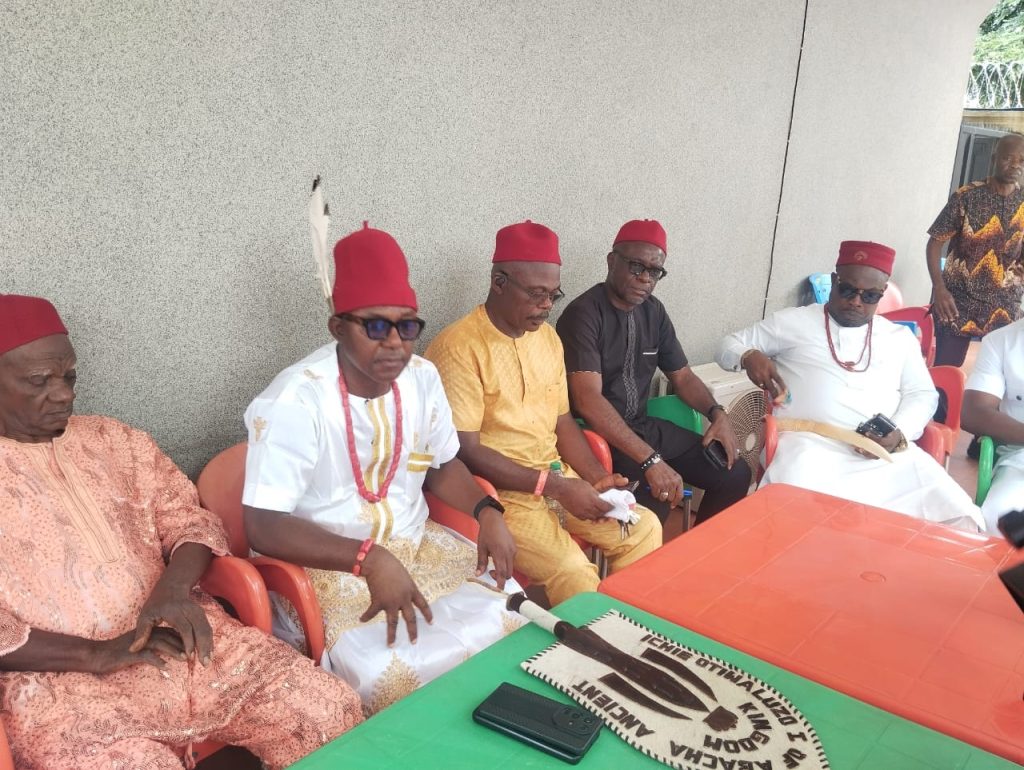
They urged the youths not to take the law into their hands, warning that any breakdown of law and order could further aggravate the situation.
Akanato, one of the two quarters in Abacha, had boycotted the election, arguing that Umudisi Quarter could not legitimately occupy the positions of Igwe, Prime Minister and President-General simultaneously.
The aggrieved quarter also faulted the election process, alleging that it violated the community’s constitution, which provides for an electoral college or delegate system rather than the Option A4 method reportedly adopted during the exercise.
Speaking on the controversy, the Cabinet Secretary of Abacha, Ambassador Geoffrey Uchenna Uba, said elections into the offices of President-General and other positions were expected to be conducted through 105 delegates.
According to him, the delegates are drawn from various branches of the town union, including those in the diaspora, adding that the prescribed arrangement was disregarded during the disputed election.
Recalling the gentleman’s agreement reached before the emergence of the current traditional ruler, Uba said Akanato Quarter had voluntarily relinquished its turn to produce the Igwe to allow Umudisi Quarter to occupy the throne in the interest of peace.
He explained that the decision followed allegations by the dethroned Igwe, Godwin Mbakwe, that some sections of the community were plotting against him.
Uba said Akanato had decided to accommodate Mbakwe’s quarter to demonstrate that it had no personal grievances against him, despite the fact that the traditional rulership position was originally due to the quarter.
“We shelved the Igweship position against the constitution of our town for Umudisi to produce the next Igwe of Abacha,” he said.
He added that the decision was taken to promote peace, recalling that Mbakwe, who was dethroned during the administration of former Governor Willie Obiano, had allegedly accused some sections of the community of fighting him.
According to Uba, the understanding was that Akanato would retain the opportunity to produce the next President-General as part of an arrangement to balance power among the quarters.
He further disclosed that a stakeholders’ meeting convened at the residence of Chief Jonas Okafor of Akanato resolved that since Umudisi was producing the Igwe and already occupied the position of Prime Minister, Akanato should continue to produce the President-General.
“This was agreed by the eventual and current Igwe, Goddy Nwabunwanne. But when it was time to hold the President-General election, the same Umudisi Quarter, alongside the Igwe, insisted on producing the President-General against the gentleman’s agreement we reached,” Uba alleged.
Also speaking, Chief Jonas Okafor, who convened the stakeholders’ meeting, said he had relied on mutual trust and brotherly understanding rather than insisting on a written agreement.
“When it was time for the signing of the agreement, I said no because we are one, and this was based on brotherly trust. The Igwe has been a long-time friend of mine, and I did not see him reneging on the agreement. But, to my total surprise, he did, and that is what is causing problems in our community today,” he said.
In his contribution, Chief Okeluo Emeka expressed concern over the growing restiveness among youths in the community, warning that the situation could escalate if urgent steps were not taken.
He appealed to Governor Chukwuma Charles Soludo and the Anambra State Government to intervene, resolve the dispute and prevent a possible breakdown of law and order.
“Our youths are not happy at all, and we have been able to control them so that we do not witness any ugly incident in our town. We know that Mr Governor has a listening ear and would surely intervene in this matter,” he said.
The stakeholders called on the state government to urgently examine the circumstances surrounding the disputed election and address the alleged constitutional breaches and power-sharing disagreements to restore peace in Abacha Community.

The Federal Government is seeking a fresh $500m loan from the World Bank to establish an infrastructure financing platform, with approval proposed for May 25, 2027, just four days before the inauguration of Nigeria’s next president.
The proposed borrowing comes amid growing political activities ahead of the 2027 general elections, raising questions about the timing of new financial commitments and their implications for the incoming administration.
According to the World Bank’s Initial Project Information Document obtained by The PUNCH, the proposed facility is part of a broader $3.85bn infrastructure financing initiative aimed at attracting private investment into critical sectors of the Nigerian economy.
The initiative, identified as the Nigeria Infrastructure Financing and De-Risking Platform for Growth and Jobs (INFRAGROW), is designed to address the country’s infrastructure financing deficit and improve the mobilisation of private capital.
The document, prepared and updated on November 4, 2026, lists the Federal Ministry of Finance as the borrower, while the Nigeria Sovereign Investment Authority will serve as the implementing agency.
The World Bank has scheduled the project’s technical design review for January 21, 2027, while May 25, 2027, has been proposed as its approval date.
Nigeria’s presidential inauguration is constitutionally scheduled for May 29, 2027, following the expiration of President Bola Tinubu’s current four-year tenure.
This means the proposed loan could receive approval in the final days of the current administration, although approval would not automatically translate into immediate disbursement or implementation.
The financing proposal has yet to receive approval, and the World Bank’s timetable remains subject to change.
The document estimates Nigeria’s annual infrastructure financing gap at approximately $100bn, identifying inadequate investment and weak project preparation as major constraints to economic growth.
It stated, “Nigeria’s infrastructure financing gap, estimated at approx. $100bn annually, remains a binding constraint on growth, fiscal sustainability, competitiveness, and job creation.”
The bank noted that the challenge extended beyond insufficient funding to the difficulty of converting available capital into commercially viable infrastructure projects.
It added that closing the gap would require an integrated approach involving proper project preparation, risk-mitigation instruments and targeted sectoral reforms.
The proposed $500m World Bank facility comprises $400m from the International Bank for Reconstruction and Development and $100m from the International Development Association.
The broader $3.85bn financing structure is expected to include contributions from the government, private investors, commercial lenders and guarantees designed to attract additional investment.
Under the arrangement, the NSIA is expected to contribute $200m in equity as a founding shareholder, while private sector investors are projected to provide another $200m.
Commercial debt financing is estimated at $600m, alongside other financing and guarantee arrangements.
The World Bank document also identifies $100m in IDA payment guarantees and $2.25bn in guarantees from other international financial institutions, bringing guarantee-related financing arrangements to $2.35bn.
The proposed platform will operate through four independently governed subsidiaries, each designed to address specific obstacles to infrastructure investment.
The first, the Project Preparation Facility, will finance feasibility studies, transaction structuring, risk assessments and procurement support to transform infrastructure proposals into investment-ready projects.
The second, the Viability Gap Fund, will support economically important projects that cannot generate sufficient commercial returns while maintaining affordable tariffs or sustainable government payments.
According to the document, the proposed endowment model would preserve the fund’s capital base while financing viability-gap support primarily through investment returns.
The third subsidiary, the Risk Capital Facility, will provide equity and other forms of patient capital to commercially viable infrastructure projects that struggle to attract investors willing to take on higher risks.
The fourth, the Credit Guarantee Vehicle, will provide guarantees against specified credit defaults, public-sector payment failures and political risks affecting eligible foreign investments.
The World Bank said the interventions were intended to encourage participation by commercial banks, pension funds, insurance companies and other institutional investors.
The project will also support reforms aimed at strengthening public institutions responsible for identifying, preparing, procuring and supervising public-private partnership projects.
Its implementation will be divided into four components covering institutional development, project preparation, financing mobilisation and improvements to the regulatory environment.
The first component will finance staffing, professional advisory services, statutory fees and operational infrastructure, with disbursements linked to measurable institutional milestones.
The second will support project preparation and financial viability, while the third will activate the risk capital and credit guarantee facilities.
The fourth component will strengthen government capacity to manage infrastructure partnerships and their associated fiscal risks.
The World Bank described the proposed INFRAGROW project as an institution-building and private capital mobilisation initiative intended to expand sustainable infrastructure development in Nigeria.
The project will also involve the International Finance Corporation as a prospective co-investor, alongside the Multilateral Investment Guarantee Agency, which is expected to provide political risk insurance.
However, the World Bank has classified the proposed project’s environmental and social risks as high, particularly because the financing platform could support major infrastructure developments in the energy, transport and water sectors.
It warned that such investments could result in land acquisition, displacement of communities, environmental damage, occupational hazards and other social consequences.
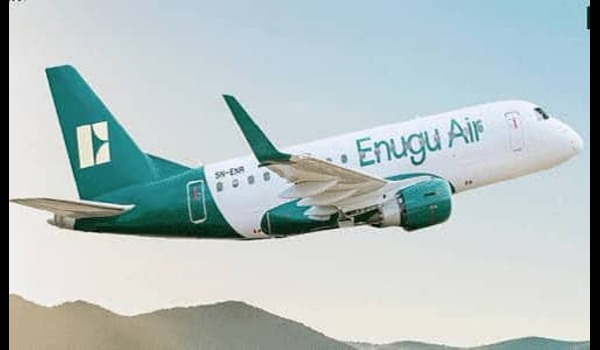
Ebonyi State is still awaiting the arrival of three aircraft Governor Nwifuru reportedly paid for about two years ago.
The governor had promised the arrival of the aircraft years back but as at the time of this report not even one aircraft has landed to start the proposed Ebonyi Air.
This is even as Enugu Air which is taking over the Nigeria Airspace has secured regulatory approval to commence direct flights between Lagos and London Gatwick in December 2026, with bookings for the international route now open.
The state-owned airline announced the development in a statement on Wednesday, describing the approval as a major milestone in its international expansion and efforts to strengthen air connectivity between Nigeria and the United Kingdom.
The Lagos-London Gatwick service will be operated in partnership with Omni-Blu Aviation (OBA), which has been appointed as the designated operating partner for the route.
“Enugu Air has received approval for its Lagos-London Gatwick route, with Omni-Blu Aviation (OBA) appointed as the designated operator under a strategic partnership.
“Bookings are now open, and flights will commence in December 2026,” the statement said.
For an airport that has refused to function the governor may have decided to change the narrative but for some reasons the project may have gone the way of the Vanco flyover which has become a burden to the government.
While the former governor Dave Umahi completed flyover projects in less than one year, Governor Nwifuru has failed to deliver just one in more than three years.
As Enugu Air goes to the United Kingdom, Ebonyi people are whispering the question in hushed tones for fear of the unknown; “when will the planes arrive?
Meanwhile, Enugu Air described the latest development as a significant step towards expanding its international operations, improving passenger connectivity and creating new opportunities for trade and investment between Nigeria and the United Kingdom.
It also credited Governor Peter Mbah’s strategic aviation agenda, saying his administration’s vision was positioning Enugu as an emerging gateway for international connectivity, investment, tourism and economic growth.
The announcement comes barely six weeks after Enugu Air operated its maiden international flight to Douala, Cameroon, on September 23, 2026.
Launched in July 2025 with an initial fleet of three Embraer aircraft comprising the E170 and E190 series, the airline was established as part of the Mbah administration’s integrated plan to develop a modern, multimodal transport system.
The initiative is also aimed at positioning Enugu as a major aviation hub in West and Central Africa.
Since its launch, Enugu Air has expanded its fleet and route network, with the latest regulatory approval representing another step in its international expansion drive.
No wonder the Ebonyi governor took the whole time given to him at the recent APC rally in Enugu to praise the developmental magic Governor Peter Mbah is doing. The governor could not name one project he was able to deliver for his people.
News
Ogarabe Returns To Enugu As Commissioner Of Police As PSC Deploys New Commissioners To Four States
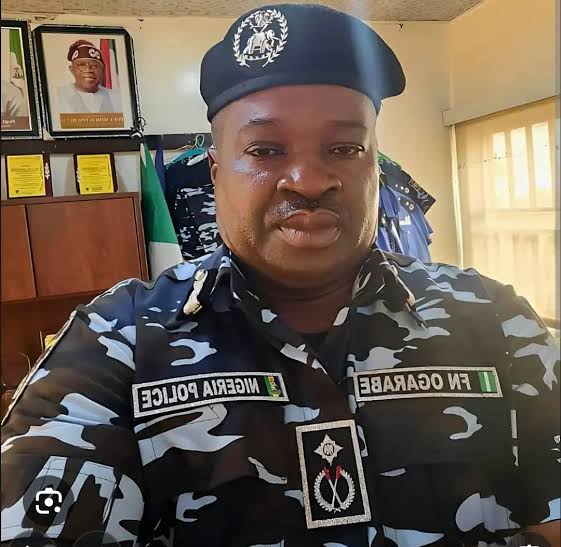
The Police Service Commission (PSC) has approved the deployment of four new Commissioners of Police to Enugu, Plateau, Nasarawa and Ondo states.
Among the newly deployed officers is CP Fidelis Ogarabe, who has been appointed Commissioner of Police for Enugu State.
Ogarabe was formerly the Commissioner of Police in charge of the INTERPOL Annex, Lagos.
Other officers affected by the deployment include CP Sunday J. A. Okoebor, formerly Commissioner of Police, Police Accounts and Budget, Force Headquarters, who has been posted to Plateau State.
CP Sheikh Mohammed Danko, formerly Commissioner of Police, Force Intelligence Annex, Lagos, has been deployed to Nasarawa State, while CP Johnson Ayodeji Babalola, formerly of the Special Inquiry Unit, Force Headquarters, Abuja, has been posted to Ondo State.
The appointments followed a series of interviews conducted by the commission to assess the officers’ fitness, competence and suitability for their new responsibilities.
The deployment was approved on Thursday at the Solomon Arase Conference Hall, Police Service Commission Headquarters, Abuja.
In a statement signed by the commission’s Head of Protocol and Public Relations, Torty Kalu, the PSC said the appointments were made in accordance with its constitutional mandate.
The Chairman of the commission, DIG Hashimu Salihu Argungu, said the appointments were consistent with Section 215(1)(b) of the 1999 Constitution, which provides for the commission’s authority in the appointment of Commissioners of Police for the states and the Federal Capital Territory.
Argungu, who was represented by a board member, Justice Paul Adamu Galumje (JSC, rtd.), said the officers had been found worthy in learning and character following the assessment.
He charged the newly deployed commissioners to discharge their responsibilities with impartiality, professionalism and a strong commitment to the expectations of their respective offices.


-

 News4 days ago
OPay Explains How Nigerians Can Check Eligibility for FG’s ₦50,000 Monthly Cash Suppor
-
 Politics5 days ago
Court Nullifies Enugu NDC Primary, Orders INEC to Delist Candidate
-

 News5 days ago
Mbah Has Wiped Our Tears, Says Enugu Pensioner After Receiving 20-Year Gratuity Arrears
-

 News5 days ago
Enugu Air To Commence Direct Flights To London In December
-
 News5 days ago
Nigeria Discovers Illegal Refinery With 90,000-Litre Underground Tank
-
 Politics5 days ago
Nwifuru Must Go: CSOs, NGOs Plan One-Million-Man Protest Against Ebonyi Governor
-

 Entertainment4 days ago
Soludo’s Wife Denies Son Campaigned for Peter Obi, Threatens Legal Action Over Viral Video
-
 News5 days ago
2027 Budget: C’River Lawmakers Commend Gov Otu for Prioritising Capital Expenditure as Appropriation Bill Scales Second Reading