


Opinion
10th National Assembly; A Call For The Right Man That Will Support The Incoming President



*…..as call for Senator Orji Uzoh Kalu for the post widens and ganners more support….*
By Law Emenike
As the 10th National Assembly gets underway to be inaugurated, many Nigerians are calling on the ruling party, All Progressive Congress, APC not to dispense with the balance of power Nigeria has been known with since independence.
Some youth activists based in the Northern part of Nigeria known as *Nigerians for a Better Future* has pleaded with the President – elect, Asiwaju Bola Tinubu to ensure that the next President of the Senate comes from Southeast. In a well publicized Press Release, the Gouups Leader, Alhaji Mohammed Gulma maintained that “the unity of the country should be most paramount while the incoming government allocates the crucial positions of leadership in the three arms of government to sustain our nation, and ensure equity. It is therefore incumbent on the ruling party, the APC to take the noble step to understand that now we have a Moslem as President, and another Moslem as Vice president, the right thing to do is to ensure that the National Assembly is headed by a Christian, somebody with ability and experience, a senator who has been part of Senate leadership in the past so that navigating through the National Assembly will not be a difficult task for him. From all known indices, the gabbel rightly falls on Senator Orji Uzo Kalu, the current Chief Whip of the Senate”; the group concluded.
Senator Orji Uzoh Kalu is a known political Strategist and truly understands the intricacies in balancing the national tripod. “Sen Orji Uzo Kalu will make a great Senate President”; another group based in South South, *Equity and Sustenance Movement* quipped in.

No doubt, “there are many qualified senators from the Southeast that the bill will fit, but none is as presently qualified as Senator Orji Uzoh Kalu for the position”; a prominent APC leader from the Southwest who wants to remain anonymous quipped in when he was interviewed by PifMedia Correspondent in Ibadan, Oyo State.
Orji Uzo Kalu is currently concluding his second tenure in the Senate, and the 10th Senate will give him the third tenure, and completely make him qualified for Senate President.
Senator Orji Uzoh Kalu has been in the National Assembly, House of Representatives in 1993. So it will be easy for him to hit the ground running from the first day on the seat. Orji Uzo Kalu is a business mogul of no mean Standards. Before the age of 30, Orji Uzo Kalu was already a millionaire. He understands the business skills and what it takes to be a formidable business mogul at that young age. He horned his leadership skills at a very young age.
Orji Uzo Kalu believes in the handshake across the Niger and partnership towards the desert (the North). Orji very well believes in a national discourse; bringing everybody, irrespective of tribe, religion, ethnicity, creed, or status to the table for national harmony. Orji Uzo Kalu has that sagacity to work into any leaders’ house, no matter the status or position, and his voice will not only be heard but taken into firm consideration. OUK is a bridge builder.
In 1998, at the beginning of this democratic dispensation, Sen Orji Uzo Kalu played quite a significant role in giving this democratic era some teeth. He not only deployed his huge resources, he played significant roles in the formation of the Peoples Democratic Party, PDP.
Sen. Orji Uzo Kalu is an experienced politician of no mean standard. The country will feel his positive impact; whether North, West or East. OUK as he is fondly called will be fair to all. Nigeria at this period of our development needs a Nationalist like Orji Uzo Kalu for the crucial role of National Assembly leadership with his vast National and International exposure to balance our democracy. Maintaining balance in our polity is crucial to sustaining our national development. Keeping Nigeria one is a task that must be done. Let’s therefore balance the National equation.
Senator Orji Uzo Kalu represents the good people of Abia North Senatorial District, and he has done very well as a Senator. He was one of the first senators from Southeast elected under the platform of APC. So he stands in a very good staid to be elected by his colleagues in the Senate as the Senate President. The APC has the majority of members in the senate. Therefore, it is pertinent for the colleagues of Orji Uzo Kalu in the Senate to look towards him for this position. He will no doubt aquit himself as in other positions he has held in the past.
*This is Orji Uzo Kalu O’clock as Senate President*; let’s not make a mistake about it. Senator Orji Uzo Kalu will bring to the table his bridge building skills and experience, as well as his political leadership credentials as a builder of men and women to play to make our country better; being the head of the third arm of government; the National Assembly.
The All Progressive Congress, APC stakeholders, the Governors, National Working Committee, NWC, the members of National Assembly should do the needful and ensure that the Senate President is zoned to the Southeast, and to a Christian, to balance our diversity.
Chief Law Emenike
National Coordinator
Igbo Nigeria Diaspora
The 2027 governorship election in Ebonyi State must not be viewed as just another political contest. For many Ndi Ebonyi, it represents a defining moment — an opportunity to reflect on the direction of the state and make a decisive choice about the kind of leadership they want for the future.
Across the vast lands of Ebonyi, there is a growing sense of frustration and uncertainty. Many citizens are asking difficult questions about security, youth empowerment, employment opportunities, poverty alleviation and the welfare of vulnerable groups, particularly women and young girls.
The concerns are real, and they deserve serious political attention.
A state blessed with human and natural resources should be one where young people can look to the future with confidence, where women have meaningful opportunities to thrive, and where government policies translate into tangible improvements in the lives of ordinary citizens.
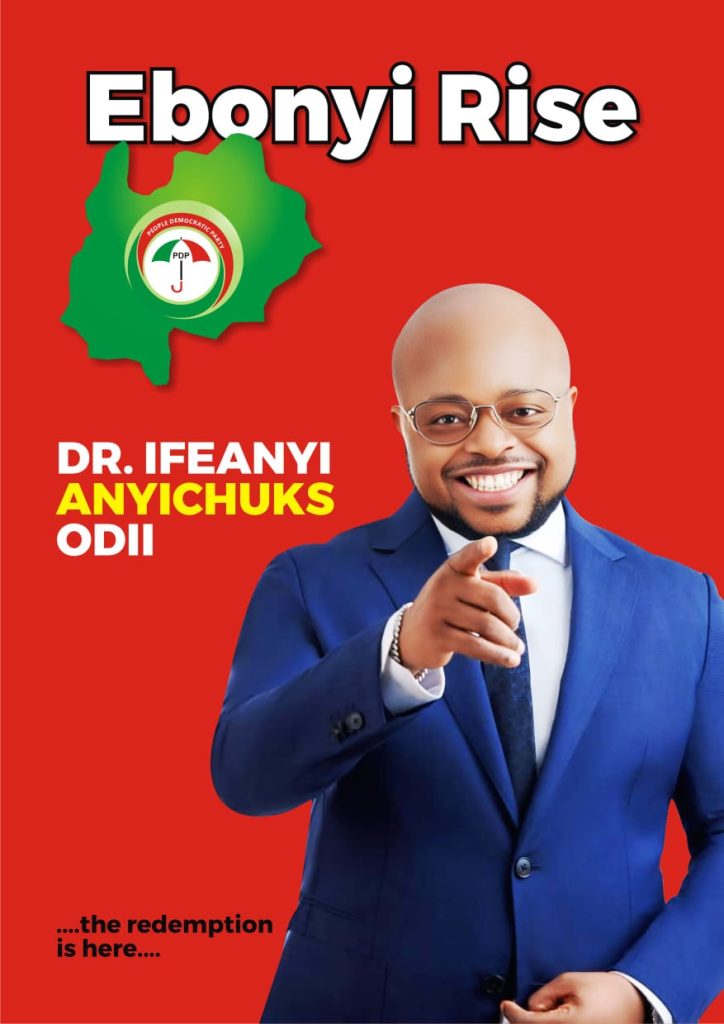
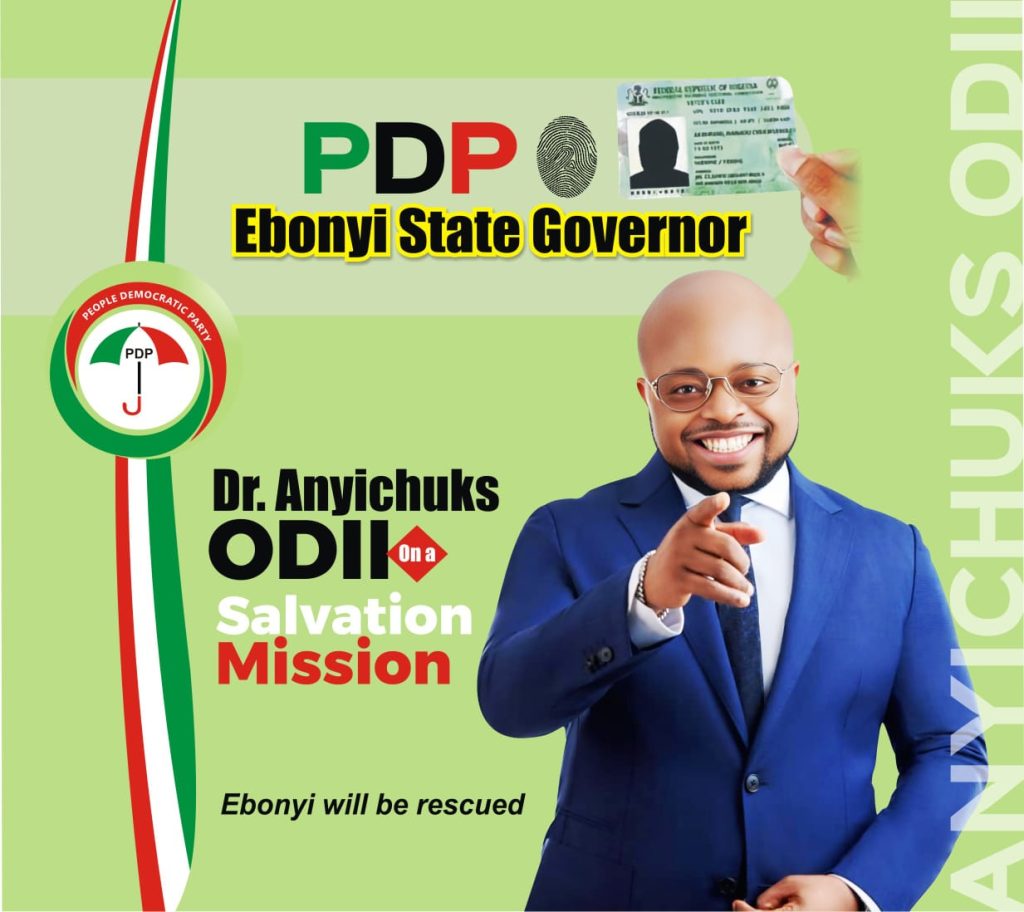
It is against this backdrop that Anyichuks Odii has emerged as a political figure attracting growing attention among those seeking a different direction for Ebonyi.
To his supporters, Anyichuks Odii represents a combination of experience, vision, capacity and determination — qualities they believe are necessary to reposition the state and restore hope among its people.
The argument is straightforward: Ebonyi needs leadership that does not merely administer the state but actively creates opportunities for its people.
The youths need more than political promises. They need practical skills, access to opportunities, entrepreneurship support, employment pathways and an environment where their talents can translate into sustainable livelihoods.
Women need more than symbolic representation. They need economic empowerment, access to finance, skills development, education and policies that enable them to become stronger contributors to their families and communities.
And every citizen deserves to feel secure enough to live, work and pursue legitimate aspirations without fear.
The 2027 election therefore provides Ndi Ebonyi with an opportunity to critically assess the records, ideas and capacity of every candidate seeking their mandate.
Democracy ultimately belongs to the people. Their voter cards are their instruments of choice, and their votes should reflect their aspirations for a better Ebonyi.
Already, political conversations are intensifying across the state. One of the songs gaining attention among supporters captures the mood of those calling for a change in political direction:
“Nwifuru kwakoro naba, onye ndozi abiago, naba, onye ndozi abiago, naba… Ka Anyichuks bata.”
For the supporters of Anyichuks Odii, the message is clear: they believe a new chapter is possible and that the 2027 governorship election could be the moment when Ndi Ebonyi choose the leadership they believe can deliver that change.
But beyond slogans and political songs, the real test will be the issues.
Ebonyi deserves a serious conversation about security, economic development, infrastructure, education, healthcare, youth employment, women’s empowerment and inclusive governance.
The people must demand clear plans, measurable commitments and accountability from all contenders.
If 2027 is indeed to become a moment of redemption, it must ultimately be a redemption achieved through the informed choice of the people.
And for those who believe Anyichuks Odii embodies the leadership Ebonyi needs, the journey to 2027 has already begun.
The message from his supporters is unmistakable:
Ebonyi is ready for a new conversation. Ebonyi is ready to choose. Ebonyi is ready for a new direction.
By Dr. Kenneth Anozie, Political Strategist
By Emma Igwe
The decision by the Minister of Works, Engr. David Umahi, to institute a defamation action against Linda Ikeji, Linda Ikeji TV Limited and Stella Ifeoma Okengwu should not be dismissed as an attempt to silence criticism.
At the heart of the case is a much more fundamental question: how far can individuals and media platforms go in publishing serious allegations against a person’s character and reputation without being held accountable if those allegations are found to be false?
Umahi has approached the High Court of the Federal Capital Territory, Abuja, with suit No. GWD/CV/264/26, filed on August 24, 2026. He alleges that publications and videos circulated between March 2025 and March 2026 contained allegations of bribery, corruption, intimidation, sexual misconduct, land grabbing, sexual harassment and claims that he was unfit for public office. He maintains that the allegations were false, malicious and calculated to damage his reputation.
These are not minor accusations.
A public official can be criticised over policies, projects, political decisions and performance. That is an essential part of democracy. But allegations of corruption, bribery and sexual misconduct are qualitatively different. If such allegations are published without adequate factual foundation and are ultimately found to be false and defamatory, the damage to the subject’s reputation can be enormous.
THE SCALE OF PUBLICATION MATTERS
Another important consideration is the alleged reach of the publications.
According to the reports on the suit, Umahi alleges that material posted by Stella Okengwu was subsequently amplified through Linda Ikeji’s media platforms, including Linda Ikeji TV and its Instagram platform.
That distinction matters.
An allegation whispered privately to a few people is one thing. An allegation disseminated through platforms with substantial online audiences is another.
If the court ultimately finds that defamatory statements were repeatedly disseminated to a large audience, the extent of publication would naturally become relevant when assessing the injury allegedly suffered by the claimant.
UMAHI SAYS HE DID NOT RUSH TO COURT
The minister also says that his lawyers first demanded that the alleged publications be removed, that an unreserved apology be issued and that the defendants undertake not to repeat similar allegations.
He alleges that those demands were not complied with.
If that account is established before the court, it strengthens the argument that litigation was not necessarily his first response, but followed an alleged failure to resolve the dispute through a demand for correction and retraction.
WHY THE CLAIM FOR DAMAGES IS SIGNIFICANT
Umahi is seeking ₦500 million in general damages and ₦2 billion in exemplary damages, making ₦2.5 billion in damages. He is separately seeking ₦500 million as costs of the action and 10 percent post-judgment interest.
The amount claimed should not, however, be confused with an amount already awarded by a court.
It is a claim that must be proved.
And that is precisely why the court process is important.
If Umahi can establish that the publications were false and defamatory, that they caused serious injury to his reputation and that the defendants were legally responsible for their publication or republication, then compensation would serve more than a personal purpose.
It would reinforce the principle that freedom of expression does not automatically translate into freedom from responsibility for demonstrably false and defamatory statements.
THIS IS NOT ABOUT PROTECTING POLITICIANS FROM CRITICISM
There is a dangerous tendency in Nigeria to treat every defamation action involving a politician as an attempt to suppress free speech.
That approach is too simplistic.
Democracy requires vigorous criticism of public officials. Journalists, bloggers and citizens must remain free to investigate government and expose genuine wrongdoing.
But democracy also requires accountability for what is published.
If a journalist has evidence of corruption, the appropriate response is to present the evidence and defend the publication in court. If a person makes an allegation and can prove its substantial truth, that too is a legitimate defence.
But if a court eventually determines that serious allegations were knowingly or recklessly published without justification and caused reputational damage, the law must provide a remedy.
THE COURT SHOULD DECIDE — NOT SOCIAL MEDIA
This is perhaps the most important aspect of the Umahi case.
At present, the allegations made by Umahi in his Statement of Claim remain allegations before the court. The defendants had not, according to reports available as of August 25, been served with the writ, and no hearing date had been fixed. They will have the opportunity to present their defence.
Therefore, neither Umahi nor his opponents should declare victory prematurely.
The proper question is not whether Umahi is powerful enough to sue.
The proper question is whether the publications complained of were true, substantially true, fair comment, privileged, or defamatory and unjustified.
That is what evidence and the judicial process should determine.
THE REAL TEST
Umahi deserves compensation if he proves his case.
If the court establishes that he was falsely accused of serious criminal, corrupt or sexually improper conduct; that the allegations were defamatory; that the defendants were legally responsible for the publications; and that he suffered compensable injury, then a substantial award would not be an attack on journalism.
It would be an application of the law.
Conversely, if the defendants can substantiate their allegations or establish a recognised legal defence, the court should equally protect their right to publish matters of legitimate public interest.
That is the essence of the rule of law.
The court — not social media, not political supporters, and not bloggers — should have the final word.
In life, evil never lasts forever. *Change must always come*! Many believe today that 2027 is *FREEDOM TIME FOR EBONYI PEOPLE*
In the midst of these cacophonic political noise, a man of the people has arisen to clean the tears that Ebonyi has suffered under an *ifuru* guy whose legendary for corruption and sleaze is unquantifiable..
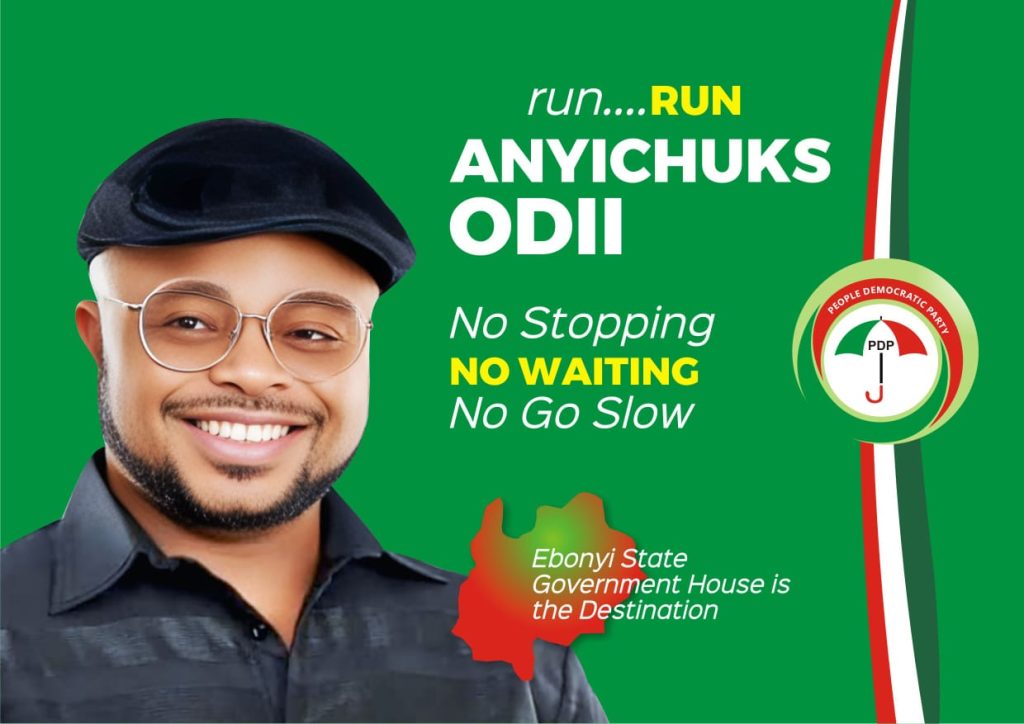
*DR. ANYICHUKS ODII IS FINALLY HERE*! The people are excited. The vision is classic which will turn Ebonyi around.
1. Infrastructure.
2. Industrialization.
3. Farming improvement
4. ICT development
5. Youth empowerments
6. Government restructuring.
7. Securing lives and property
8. Expanded governance to touch all parts of Ebonyi
9. Education expansion and offer of scholarships to indigent students & pupils.
More will come with a leader who, as a private businessman made all these possible, as well as developed sporting activities around Ebonyi State.
Ndi Ebonyi, look at the man; *ANYICHUKS ODII*
Dr. Kenneth Anozie
Political Analyst
Kenneth Anozie
Soon, the INEC regulations will lift the lid on campaigns to start. In Ebonyi state, there will be a lot of political noise. The political timberlines will be sounding cacophonously. The noise will be unbearable.
However, only one campaign, the Governorship candidate of People’s Democratic Party, PDP, *DR. ANYICHUKS ODII* will be the only mandate the good people of Ebonyi need to be hearing and standing on. His mandate merits all the noise because he has served the people and has been a source of succour for thousands of families in many aspects.
The vision of Anyichuks Odii on health care, education, social safety, security and agriculture/industrialization as well as youth empowerments are all top notch. They are all well spelt out, which will be released as his manifesto will be released soon.
Already, we have seen a glimpse of it in our previous revelations and analysis. As it stands today, only on the mandate of Anyichuks Odii as the governorship candidate of PDP are people expected to stand on.
The mandate has character, capacity, compassion and great vision.
*EBONYI PEOPLE, BLIGHT ANY OTHER MANDATE, ANYICHUKS ODII IS THE MANDATE WE SHALL ALL STAND ON*
Dr. Kenneth Anozie
Political Analyst
Opinion
SEYI TINUBU AND THE CITY BOYS MOVEMENT: Building A New Architecture For Nigerian Youth In Politics And Nation-Building
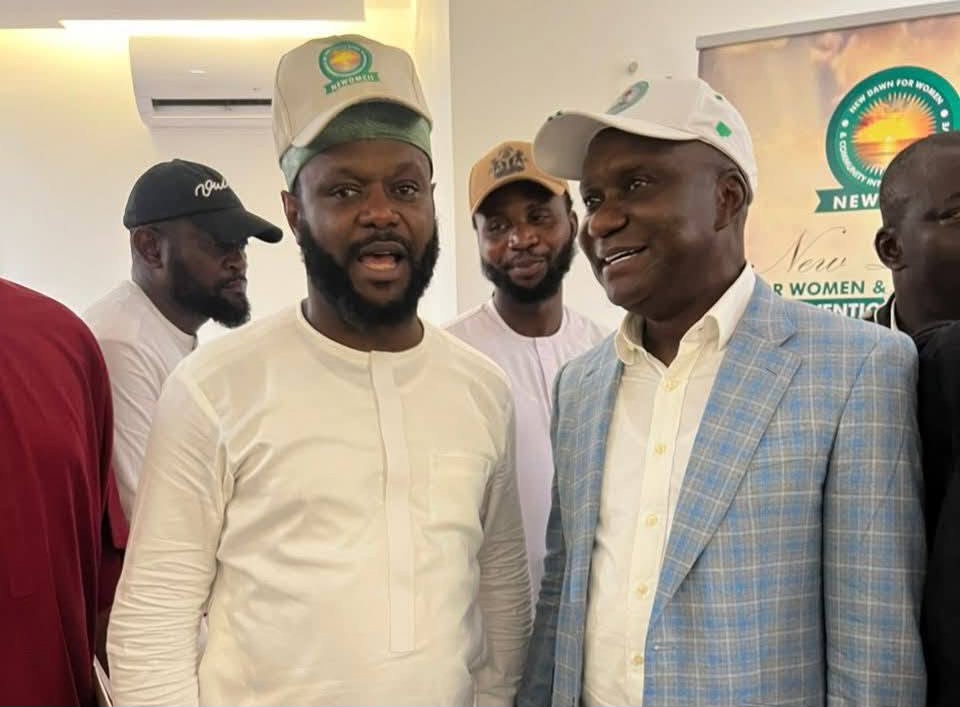
When history records the political organizing of Nigeria in the 2020s, the name Seyi Tinubu will feature prominently not just as the son of a president, but as the convener who gave structure to youthful energy through the City Boys Movement.
What began as a campaign vehicle in 2022 has since evolved. Seyi Tinubu himself described it at the movement’s national retreat in Abuja as “more than just the opening of a retreat. It is the beginning of a movement” dedicated to service and the Renewed Hope vision.
That evolution matters. For too long, youth engagement in Nigeria oscillated between protest and apathy. The City Boys Movement offers a third lane: organized, institutional, and solution-driven participation.
On youth advocacy, the CBM has redefined what advocacy can look like. Instead of shouting from the sidelines, its members are being trained to enter rooms, ask questions, and propose answers.
Seyi Tinubu challenged the movement to move beyond defending government to “reconnecting Nigerians with government.” That is advocacy with responsibility — explaining policy, listening to feedback, and carrying both back to Abuja.
In governance communication, the gap between policy makers and citizens has been Nigeria’s oldest problem. CBM is attempting to close it by deploying young people as policy translators.
With reforms like subsidy removal and naira floatation straining households, the movement positioned itself as a buffer — not to deny the pain, but to explain the purpose with facts and empathy.
The directive from its Patron was clear: engagement must be “responsible, factual and compassionate.” That is a maturity we rarely demand of youth politics, and it is changing the tone of conversations in markets, campuses, and wards.
Visible participation is where the theory meets the street. CBM has deliberately taken its meetings out of Abuja hotels and into communities across the 36 states and FCT.
From free medical outreaches to campus visits, members are showing up where government is felt most — in clinics, in schools, in queues.
That visibility sends a message to young Nigerians: politics is not a distant game. It is something you can touch, join, and shape.
Perhaps the most consequential shift is institutionalization. The movement has moved from a loose WhatsApp group to a formal structure with a National Working Committee, State Directors, and representation down to Zonal, LGA and Ward levels.
This matters because structure creates accountability. It creates a ladder for a 24-year-old in Oron, a 28-year-old in Kano, or a 30-year-old in Enugu to rise through service, not just slogans.
The stated target of mobilizing 10 million youth votes for 2027 is ambitious, but the method is instructive: “real people, real members, real engagement and hard work at the grassroots,” according to the Director-General.
On relief and welfare, the City Boys Movement has chosen to lead with service. Nationwide food distribution during Ramadan and Lent, medical missions, and direct support to vulnerable households have become part of its brand.
These are not photo ops. In a season of economic adjustment, relief builds trust. Trust is the currency of governance, and youth are spending it in their communities.
Direct empowerment is the next pillar. Through programs tied to Seyi Tinubu’s initiatives, thousands have received grants, business support, and tools to start or scale.
In Ogun State alone, the model included ₦500,000 grants for 50 SMEs, ₦200,000 for 100 micro-businesses, and up to ₦5m for tech innovation winners.
Furniture donations to primary schools and cash grants to market women show the movement understands that empowerment must be both aspirational and immediate.
This is advocacy that pays school fees, stocks a shop, and buys drugs. It tells a young person: your government sees you, and your peers are in the room making it happen.
Geopolitical outreach is another area where CBM is breaking new ground. By appointing high-profile regional directors and pushing into the South-East, the movement is testing whether youthful messaging can transcend old party lines.
The goal is not to erase differences, but to create a national conversation where youth in every zone see themselves in the same project.
That is nation-building work. It is slow, unglamorous, and necessary.
The movement also offers a critical safety valve: channeling youthful frustration into structured civic engagement rather than into street confrontations.
That is not about silencing dissent. It is about giving dissent an address, a process, and a path to influence.
Critics will argue that youth groups tied to power risk becoming echo chambers. The test for CBM will be whether it can carry hard feedback upward as boldly as it carries policy downward.
Early signs suggest the leadership knows this. The repeated calls for empathy, for listening, and for “scratching only the surface” of what can be accomplished point to an awareness that legitimacy must be earned daily.
Seyi Tinubu’s role has been to provide patronage without suffocation — to fund, to convene, and then to step back enough for members to own the work.
If the City Boys Movement sustains this model, it could leave behind more than votes. It could leave behind a template: how to institutionalize youth energy, communicate governance honestly, and turn relief into resilience.
Nigeria does not need more spectators. It needs more builders. In Seyi Tinubu and the City Boys Movement, we are watching an experiment to see if Nigerian youth can be organized not just to win elections, but to govern, to serve, and to stay. The early chapters suggest it is possible.
CHINEDUM ENYINNAYA ORJI writes from Amaokwe Ugba, Umuahia Ibeku, Abia State.

-
 News4 days ago
Major Generals to Receive Up to ₦25.91m Yearly as Tinubu Approves New Military Pension Structure
-
 Crime4 days ago
Murder of Aiza Nwosu: Niece, 12 Suspected Cultists Arrested, Nephew at Large
-

 News4 days ago
Anambra Community Petitions Soludo Over Erosion Caused by Illegal Sand Mining
-
 Crime5 days ago
Anambra Police Deny N600,000 Bribe Demand, Explain Arrest of Suspected Cultist’s Sister
-
 Politics4 days ago
2027: Former Deputy Governor Resigns From APC
-

 Entertainment4 days ago
Davido Reveals How Dangote Drove His Mother Home
-

 News2 days ago
FCC Urges Enugu Youths to Prepare for Federal Job Opportunities
-
 Politics4 days ago
Anambra APC Sidelined Over First Lady’s Visit, Says Chairman Anosike