


News
Federal, state lawmakers to earn over N49bn as salaries, allowances



The salaries and allowances for the incoming lawmakers may cost the country about N49bn.
The figure covers the salaries and allowances of state and federal lawmakers.
The salaries and allowances are based on data collated from a document obtained from the website of the Revenue Mobilisation and Fiscal Allocation Commission.
However, the total allowances are higher than reported as the amount for a number of the allowances was not disclosed.
While N32.60bn will be spent at the national level, N16.32bn will be spent at the state level.

A breakdown shows that the annual basic salary of the President of the Senate is N2.48m each year (about N9.94m in four years) while that of the Deputy President is N2.31m yearly (about N9.24m in four years).
Out of 19 allowances assigned to the Senate President and his deputy, only five allowances were assigned a specific figure.
The disclosed allowances include constituency allowance (250 per cent of the basic annual salary), duty tour allowance (N50,000 per night), Estacode ($1,300 per night), Recess (10 per cent of the basic annual salary) and severance gratuity (300 per cent of the basic annual salary).
The allowance of the Senate President will gulp about N33.29m, which includes annual N6.21m for constituency allowance, annual N248,424.25 for recess, and N7.45m for severance gratuity, which is paid at the end of the tenure.
The allowance of the Deputy Senate President is expected to cost the nation about N30.94m, which includes an annual N5.77m for constituency allowance, an annual N230,916.70 for recess, and N6.93m for severance gratuity.
Other senators get N2.03m as basic annual salary (a total of N8.11m in four years) and a total of N72,137,440 each as allowances.
The salaries of the 107 senators will cost N867.3m, while their allowances will cost N7.72bn.
In the section for the salaries and allowances of other senators, out of the 20 allowances mentioned, only 15 were disclosed.
Speakers’ pay
The Speaker of the House gets an annual salary of N2.48m (about N9.91m in four years), while the Deputy gets N2.29m (about N9.15m).
The allowance of the Speaker is about N18.33m which includes an annual N2.48m for constituency allowance, an annual N247,711 for recess, and N7.43m for severance gratuity.
The allowance of the deputy speaker was pegged at about N17.16m and this includes annual N 2.29m for constituency allowance, N 288,703 for recess, and N6.86m for severance gratuity.
Other members of the House of Representatives get N1.99m as basic annual salary-a total of N7.94m in four years or N58.76m each as allowances.
The salaries of the 358 House of Representatives members will cost N2.84bn while their allowances are estimated at N21.04bn.
The Speaker of a state assembly will be paid N1.64m (N6.56m in four years) as an annual basic salary while the deputy speaker gets N1.45m (N5.8m in four years).
In total, the 36 speakers will get about N59.04m as annual basic salary or N236.16m in four years while the deputies will get about N52.1m as annual basic salary or N208.40m in four years.
The allowance of the speaker will gulp about N5.58m (N22.30m in four years) which includes an annual N409,968 for constituency allowance, N163,987.50 for annual leave, and N3.28m severance gratuity.
The allowance of the deputy speaker will be paid about N4.92m (N19.67m in four years), and this includes N361,495 constituency allowance, N144,598 for annual leave, and N2.89m severance gratuity.
In total, the basic allowances for the 36 speakers and their deputies will cost the nation N1.51bn.
There are 784 members in the 36 state Houses of Assembly each of whom is entitled to N1.34m annual salary or N5.34m in four years and an allowance of N12.97m.
In total, the 784 members cost their states about N4.19bn in salary and N10.17bn in allowance.
‘N’Assembly’s N1.2tn budget’
Meanwhile, checks by The PUNCH indicated that the statutory budgets of the National Assembly and its affiliate bodies in the past eight have totalled over N1.084tn.
From 2016 to 2022, the annual budgets of the National Assembly cumulatively amount to about N915.5bn, while the parliament is currently implementing an N169bn budget for 2023, about N30bn more than its expenditure last year.
In 2016, the NASS got N125bn budget; in 2017, N125bn; 2018, N139.5bn; 2019, N125bn; 2020, N128bn; 2021, N134bn; 2022, N139bn while N169bn was allocated for the current fiscal year.
The political arm of the National Assembly has the Senate and the House of Representatives with 109 and 360 members, respectively, while the administrative/bureaucratic arm has the National Assembly Management headed by the Clerk to the National Assembly, and the National Assembly Service Commission.
The federal parliament has affiliate bodies including the National Assembly Service Commission, the National Assembly Institute of Legislative and Democratic Studies (the academic arm), Public Complaints Commission, and the National Assembly Budget and Research Office.
Details of National Assembly’s 2023 budget are as follows: Severance/inauguration of outgoing and incoming 9th and 10th Assembly (legislators and legislative aides) – N30.1bn; National Assembly Office, N30.4bn; Senate, N33.2bn; House of Representatives, N51.9bn; National Assembly Service Commission, N10.5bn; Legislatives Aides, N16.5bn; PAC – Senate, N118.9m and PAC – House of Representatives, N142.7m.
Others are the National Institute for Legislative and Democratic Studies, N7.4bn; Service Wide Vote, N671.3m; Office of Retired Clerks and Permanent Secretaries, N1,059,121,701; Appropriation Committee Department – Senate, N125m; Appropriation Committee Department – House, N165m; National Assembly Library building (ongoing), N4.2bn.
Also in the NASS budget is N11.3bn for General Services; hosting of Conference of Speakers of African Parliament, N127.5m; NASS Liabilities, N8.5bn; NASS E-Library, N255m; NASS Dashboard, N118.1m; Constitution Review, N850m; completion of NASS Library Complex (repeated), N7.5bn; completion of NILDS HQ, N2.5bn and construction of NASC building, N10bn.
Should the National Assembly and its affiliates maintain the same N169bn for the next three years – till 2027, it would constitute an additional N507bn burden on the taxpayers.
The actual allowances and salaries of the lawmakers had remained a controversial subject. A former lawmaker who represented Kaduna Central Senatorial District in the 8th Assembly, Senator Shehu Sani, had in 2018 disclosed that each member of the upper chamber got a basic salary of N700,000 and N13.5m as running cost monthly, a statement that attracted harsh criticisms from his colleagues.
A member of the House of Representatives representing Oriade/Obokun Federal Constituency of Osun State in the current 9th Assembly, Mr Wole Oke, had in an interview with The PUNCH in July 2019 disclosed that his basic monthly pay was N606,000 while his running costs, including allowances, totalled N8.5m.
Oke said Nigerians had been misinformed about the remuneration of the lawmakers, arguing that their counterparts in the United States are paid far more.
PUNCH

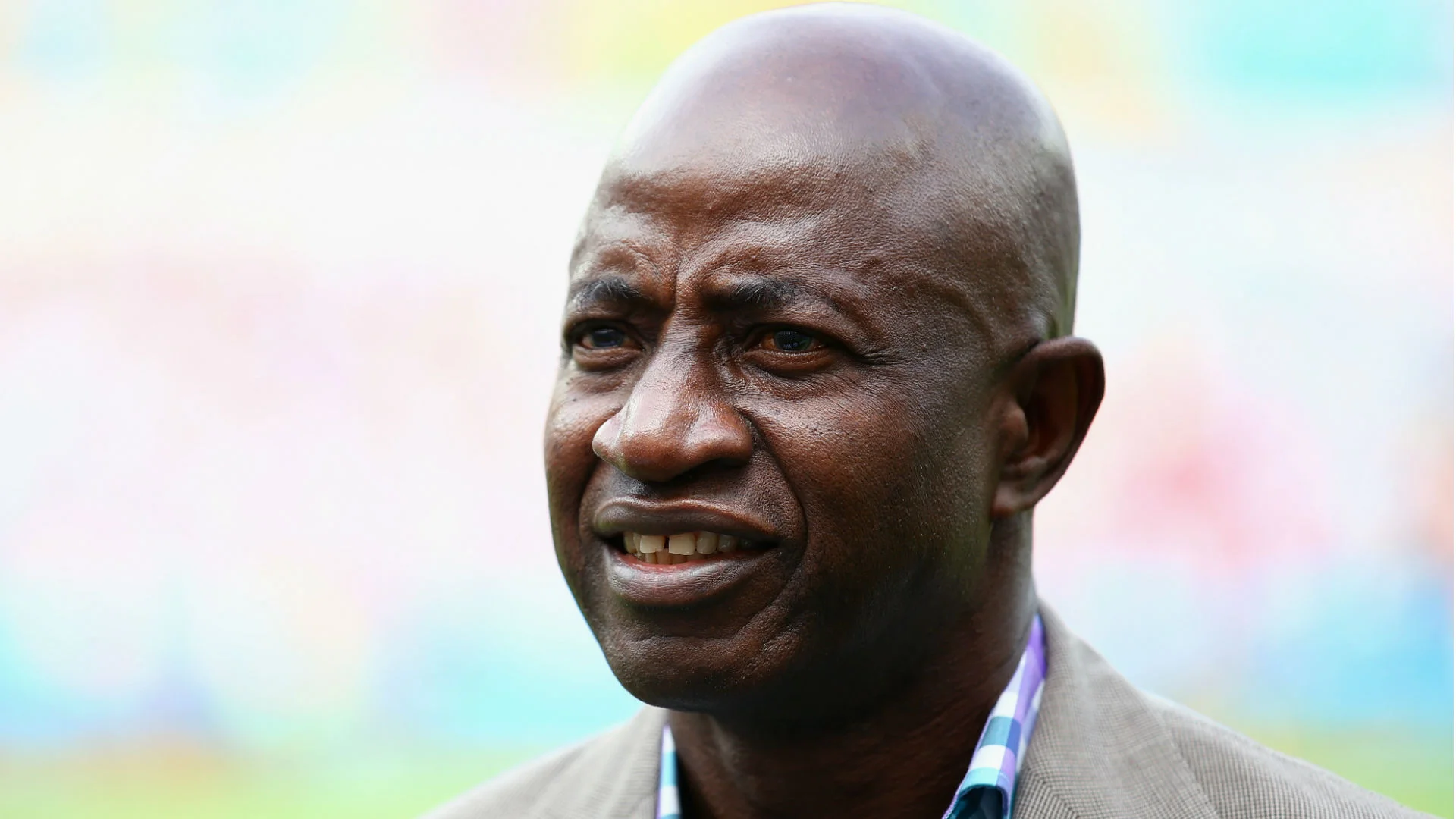
Former Super Eagles captain and football legend, Segun Odegbami, has narrowly escaped death after armed men wielding machetes attacked him at his residence in Abeokuta, Ogun State, in the early hours of Friday.
The Ogun State Police Command confirmed the attack, disclosing that the 74-year-old sports administrator had been discharged from hospital after receiving medical treatment.
The Commissioner of Police, Bode Ojajuni, also visited Odegbami to sympathise with him and assured him that the perpetrators would be tracked down and brought to justice.
Odegbami, proprietor of Eagles 7 Sports Radio 103.7 FM, was reportedly attacked at about 2:30 am on Friday at his residence in the Ibara Government Reservation Area, Abeokuta.
According to accounts from residents, three armed men invaded the property, overpowered his domestic staff and driver before making their way into the football legend’s bedroom.
A resident, who spoke on condition of anonymity, said the attackers initially demanded to know Odegbami’s whereabouts, but the domestic staff denied that he was at home.
However, the suspects reportedly became suspicious after noticing that the generator was running. They subsequently assaulted the domestic workers before locating Odegbami.
“The incident is unfortunate. We heard that the armed men struck in the early hours of today (Friday) and first overpowered the domestic staff. They asked for Chief Segun Odegbami, and his staff denied that he was at home.
“But the generator was on at that time. So, the armed men believed he must be at home and subjected the staff to severe beatings. They immediately found their way to Odegbami’s bedroom and attacked him there,” the resident said.
The attackers reportedly inflicted machete wounds on Odegbami before fleeing the property.
He was subsequently rushed to an undisclosed hospital for treatment.
Confirming the incident, the Ogun State Police Public Relations Officer, Oluseyi Babaseyi, said the command had commenced investigations and was making efforts to apprehend the suspects.
He said, “The Commissioner of Police immediately ordered a thorough investigation into the circumstances surrounding it, with intensive efforts ongoing to identify and apprehend those responsible. We can also confirm that Chief Segun Odegbami has been discharged from the hospital.”
In a separate statement announcing the commissioner’s visit, the police spokesperson said Ojajuni had expressed concern over the attack and wished the former Nigerian international a speedy recovery.
The statement partly read: “The Commissioner of Police has paid a visit to former Super Eagles captain and renowned sports administrator, Chief Segun Odegbami, to express the command’s sympathy following the reported incident at his residence in Abeokuta.
“Ojajuni assured Chief Odegbami that the incident is receiving the command’s utmost attention. He disclosed that he had ordered an immediate and thorough investigation to establish the circumstances surrounding the incident, while intensive investigative efforts are ongoing to identify and apprehend those responsible.
“He emphasised that the command would leave no stone unturned in ensuring that the perpetrators are brought to justice.”
The police urged residents to remain calm and provide credible information that could assist the investigation through established channels.
The motive behind the attack had yet to be established as of the time of filing this report.
News
Anambra APC Presidential Rally: Barr Emeka Okafor Rallies Support for President Bola Ahmed Tinubu & APC
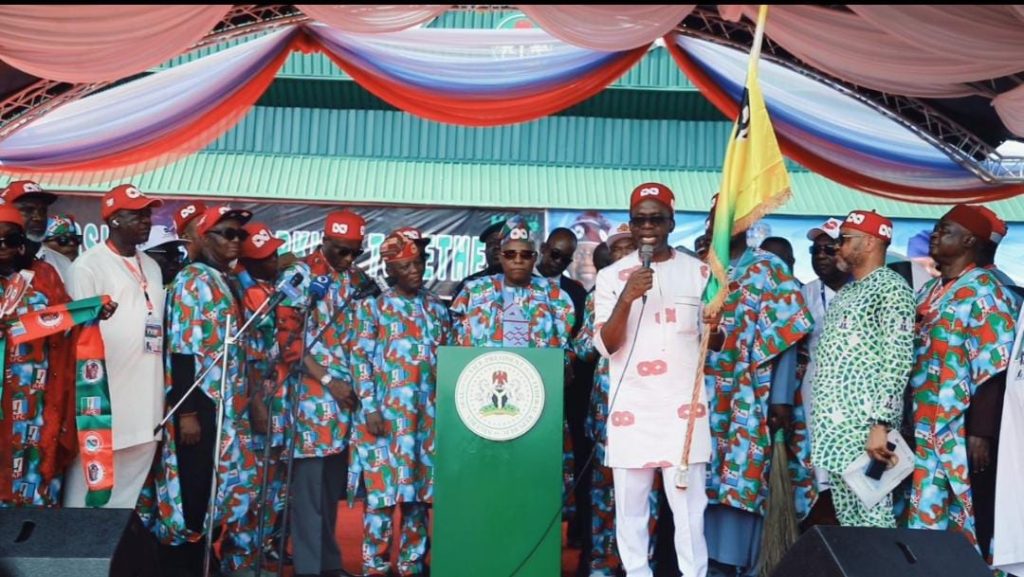
…Thanks Ndi Anambra for the massive Turnout
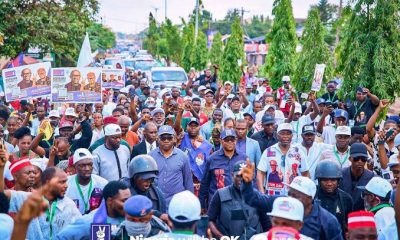
The Deputy National Organising Secretary of All Progressives Congress (APC), Chief Barr Emeka Okafor, on Thursday at Alex Ekwueme Square, Awka rallied support for President Bola Ahmed Tinubu, Vice-president Kashim Shettima and for all APC Candidates for January 16th 2027 General Election.
Barr Emeka Okafor welcomed President Tinubu and APC Presidential Campaign Council to Anambra State, describing Anambra as a home of peace and light of the Nation and a state with a significant place in Nigeria’s political history.
Speaking to the Newsmen at the Campaign ground at Awka,Barr Emeka Okafor expressed optimism of a better and prosperous Nigeria where healthy socioeconomic developments would make life more meaningful for the citizenry.
He thanked President Bola Tinubu for his Continuous support to Anambra State and South East, particularly on road infrastructure, education and healthcare. He said his Ndi Anambra are happy with Mr President.
Chief Emeka Okafor thanked Ndi Anambra for the Massive Turnout to welcome APC Presidential Candidate and members of his Campaign entourage. He also urged Ndi Anambra voters to re-elect President Bola Tinubu. He said Ndi Anambra should compare and contrast the projects done by previous governments with what the current administration is doing today.
Highlights of the Rally was a formal presentation of the All Progressives Grand Alliance (APGA) Party flag to President Bola Ahmed Tinubu,which officially made APGA adopting Mr President and APC as the APGA’s Presidential flagbearer ahead of the 2027 general election.

The Federal Government’s Nigeria Family Strengthening and Development Programme has outlined the eligibility requirements and application process for its N100,000 cash support scheme targeting vulnerable households across the country.
The programme, coordinated by the Hope for Indigenous Family Support Initiative’s Coordinating Office under the Federal Ministry of Youth Development, is designed to cushion the effects of economic hardship, rising food prices and ongoing economic reforms.
According to a statement by the programme’s management board, the intervention was announced by the ministry on September 10, 2026, with selected beneficiaries expected to receive N100,000 in financial support.
The initiative, known as the Nigeria Family Strengthening Programme (NFSP), is a cash transfer scheme targeting poor and vulnerable families across the country.
Who Is Eligible for the N100,000 Grant?
The management board listed the eligibility requirements for prospective beneficiaries, stating that applicants must be Nigerian citizens by birth, possess a valid National Identification Number (NIN) and be between 18 and 65 years old at the time of registration.
It added that applicants’ NIN details would be validated through the National Identity Management Commission.
The programme targets poor and vulnerable households identified through the Social Safety Net Systems and verified national identity records.
However, meeting the stated requirements does not automatically guarantee selection, as applicants will also be assessed based on poverty and vulnerability criteria.
How to Apply for the Grant
The management board identified the programme’s registration portal as https://nfsp.ng/signup, where interested individuals can submit their details for consideration.
According to the board, the selection process will involve identifying eligible households through the Social Safety Net Systems, verifying their national identity records and assessing their circumstances against the programme’s poverty and vulnerability criteria.
“The selection process involves identifying eligible households through the Social Safety Net Systems, using verified national identity records, assessing households based on poverty and vulnerability criteria, and selecting beneficiaries in phases across the six geopolitical zones,” the board stated.
It added that the programme would cover a limited number of households in each phase, meaning beneficiaries would not receive payments at the same time.
The board further clarified that failure to receive an immediate notification does not necessarily mean an applicant has been permanently excluded from the programme.
“If you have not received a notification, it does not necessarily mean you have been permanently excluded from the programme,” it said.
How Will Beneficiaries Receive the N100,000?
The management board said payments would be made directly into the bank accounts provided by selected beneficiaries.
“Selected beneficiaries will receive an SMS notification from their designated payment provider,” it stated.
According to the statement, the phone numbers used for the notifications would be obtained from the records submitted during the beneficiary selection process.
Successful applicants are expected to follow the instructions contained in the messages and provide the required consent before the money is credited to their designated bank accounts.
Warning Against Fraud
The management board warned Nigerians against paying individuals or agents claiming they could secure access to the grant or facilitate their inclusion on the beneficiary list.
It specifically cautioned applicants: “Do not pay anyone to add your name to the beneficiary list.”
The board also warned against paying anyone to facilitate the release of the N100,000, stressing that only selected beneficiaries would receive official SMS notifications from approved payment providers.
It further advised Nigerians to avoid unofficial registration websites and rely on recognised communication channels for information about the intervention.
For enquiries and clarification, the programme provided the email address help@nfsp.ng and advised Nigerians to contact the Federal Ministry of Youth Development through its recognised communication channels.

…Orders Rehabilitation Of Secretariat Road / ICT Center
By Okey Maduforo Awka
in furtherance to his administrations sustained resolve to guarantee workers welfare, motivation and productivity, Governor Charles Soludo has approved as December Bonus the sum of N50,000.00 across board for Civil Servants in Anambra state .
Similarly Soludo has ordered the immediate rehabilitation of the Secretariat road from the Aroma junction to the three complexes which has been a challenge to motorists and other road users to the area .
He made this announcements at a meeting with Civil Servants at the State Secretariat Awka where he interfaced with Anambra workers .
Soludo recognized the economic challenges in the country faced by workers but was quick to add that while government is desirous of providing succour to workers there should also be conseqencial committements to productivity on the part of workers .
“I understand the situation and economic conditions, that we need to be able to do something. The pay that we have all over is not enough; I clearly understand it. But there is one thing I also tell you, and that is that I don’t play to the wind. Before we get into a commitment, we make sure that it is something that we will always honour.”
With those resolute words, Anambra State Governor, Professor Chukwuma Soludo, rolled out an additional ₦50,000 flat payment for all state civil servants, to be reflected directly on their December 2026 payslips.
Speaking at the 2026 Civil Service Day celebration held at the Jerome Udoji State Secretariat Complex in Awka, Governor Soludo paired the financial boost with instant executive approvals to modernize the secretariat environment and enhance productivity.
Addressing demands comparing Anambra’s salary structure with that of other states, the Governor delivered a candid lesson on fiscal federalism, reminding the workforce that states operate with vastly different economic capacities.
He urged workers to always weigh a state’s revenue and resource base before making inter-state wage comparisons, emphasizing that sustainable governance—not empty promises—guides his administration.
Governor Soludo also thanked the workers for standing solidly behind his administration during the governorship election, expressing confidence that Anambra’s public servants overwhelmingly voted for and appreciated his government’s developmental strides.
Acting swiftly on three major appeals presented during the event, the Governor issued immediate directives including, Secretariat Road Rehabilitation, ICT Center Establishment, and granted instant approval for the pruning of overgrown trees across the secretariat complex.
Earlier in her welcome address, the Anambra State Head of Service, Barrister Ngozi Iwouno, lauded Governor Soludo for restoring security and normalcy across the state. She noted that civil servants now report to duty consistently without fear, having completely overcome the dread of the past Monday sit-at-home orders, before presenting the workforce’s appeals to the Governor.
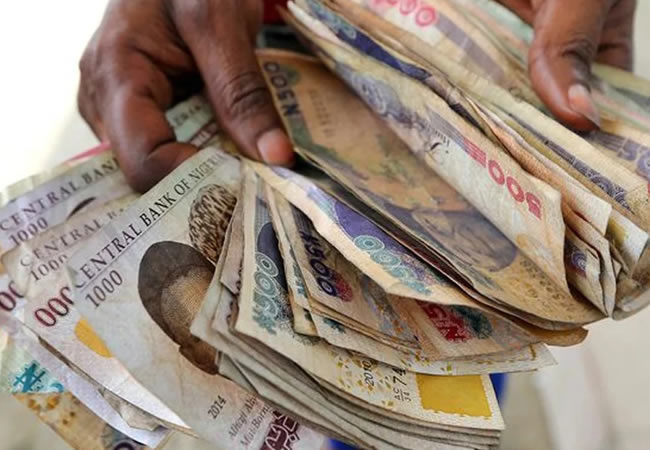
The possibility of cash scarcity is looming as the Central Bank of Nigeria (CBN) intensifies efforts to mop up excess liquidity from the financial system ahead of the 2027 general elections.
The apex bank has reportedly withdrawn more than N90 trillion from the financial system through Open Market Operations (OMO) securities between January and November 2026, representing more than double the N40.9 trillion withdrawn in the whole of 2025.
The aggressive liquidity withdrawal is part of the CBN’s monetary tightening measures aimed at containing inflationary pressures and preventing excess cash from flooding the economy as political activities gather momentum ahead of the 2027 elections.
The development has, however, raised concerns about possible liquidity constraints in the financial system, with businesses and ordinary Nigerians potentially facing tighter access to cash if the aggressive mop-up exercise persists.
According to data from CBN auctions, FMDQ and the Financial Market Dealers Association, the apex bank withdrew N13.41 trillion in January, N6.3 trillion in February and N2.36 trillion in March.
The figure subsequently rose to N4.48 trillion in April, N5.42 trillion in May and N13.96 trillion in June before moderating to N7.18 trillion in July and N4.72 trillion in August.
September recorded the highest allotment, with the CBN raising N17.5 trillion through OMO securities. It subsequently withdrew N7.53 trillion through auctions conducted on November 3, 4 and 10.
The CBN’s aggressive intervention comes amid concerns that increased government spending and political expenditure ahead of the 2027 general elections could inject substantial liquidity into the economy and undermine efforts to control inflation.
Members of the CBN’s Monetary Policy Committee had warned that election-related spending could fuel inflation, weaken fiscal discipline and complicate efforts to sustain monetary stability.
The concerns were expressed following the committee’s 307th meeting held on September 21 and 22, 2026.
The MPC members also pointed to rising money supply and government credit as potential sources of inflationary pressure.
Nigeria’s broad money supply reportedly increased to N146.60 trillion in September 2026, representing an increase of N28.82 trillion within one year, while credit to the government rose by 63.09 per cent to N39.40 trillion.
Deputy Governor of the CBN’s Corporate Services Directorate, Dr Muhammad Abdullahi, warned that election-related fiscal expansion could transmit inflationary pressures through transportation, energy and production costs.
With political activities expected to intensify in the coming months, the apex bank faces the challenge of balancing inflation control with the need to maintain adequate liquidity in the banking system.
The extent to which the ongoing mop-up exercise will affect cash availability for businesses and households remains a major concern as the country approaches the 2027 general elections.


-
 Uncategorized5 days ago
Enugu Assembly Passes Bill Capping Rent Increase at 2 Per Cent
-
 Uncategorized5 days ago
UniAbuja Land Dispute: Five Unions Protest Wike’s Reallocation, Demand Tinubu’s Intervention
-
 Uncategorized5 days ago
US Court Nullifies Trump’s Four-Year Stay Limit for Foreign Students
-
 Uncategorized4 days ago
Enugu Rent Bill: Landlords fight Back, Rush to Increase Rents Ahead of Governor’s Assent
-
 Uncategorized5 days ago
2027: Peter Obi to Storm Anambra for Town Hall Meeting
-

 Uncategorized5 days ago
European Union Bans Airlines From 12 African Countries, Lists 89 Airlines
-
 Politics4 days ago
2027: Jonathan Raises Alarm Over Political Intolerance, Warns of Post-Election Crisis
-

 Uncategorized4 days ago
Disaster Averted As British Airways Flight To Lagos Skids Off Heathrow Runway, Aborts Take Off